
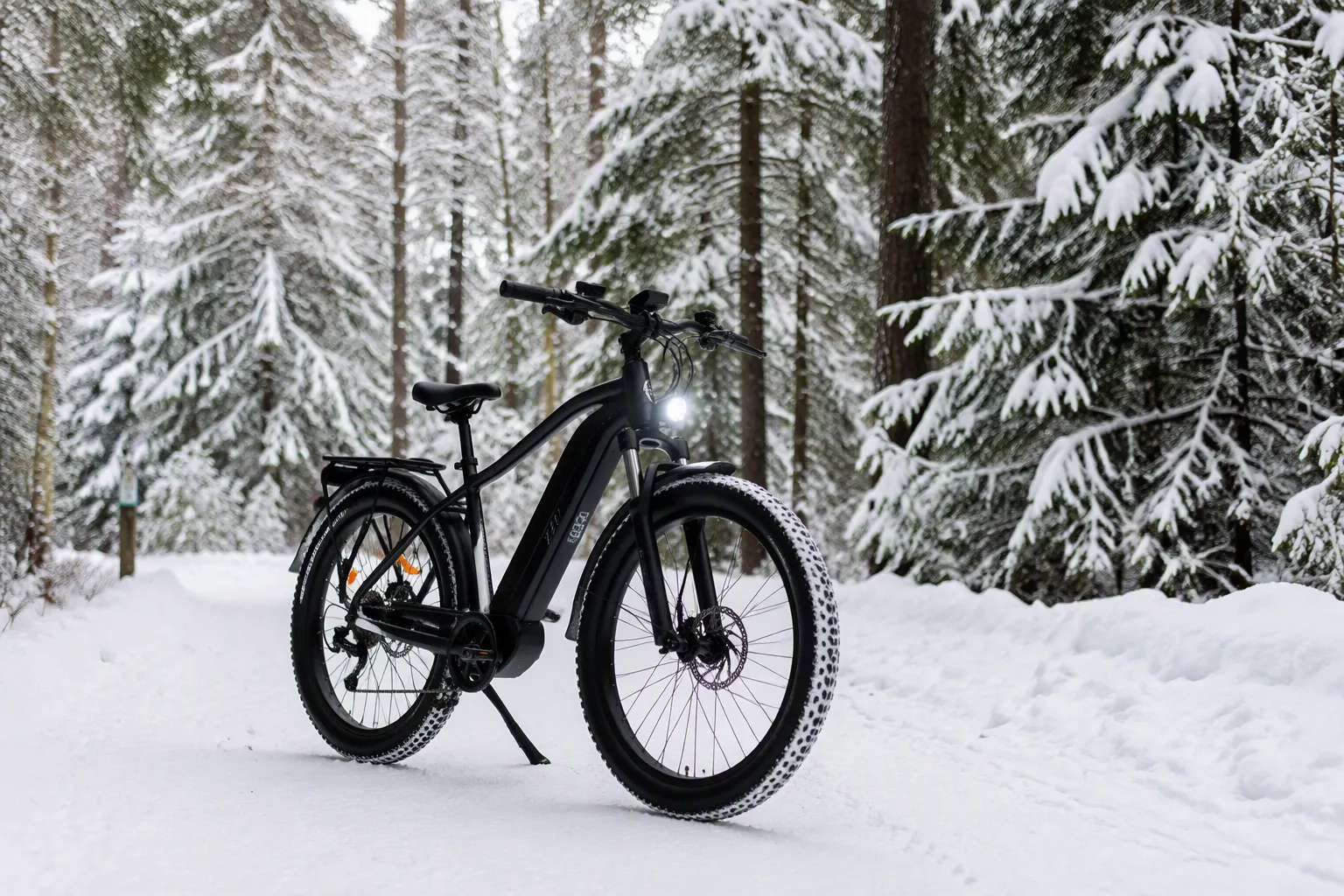
Can you ride your e-bike in winter? Yes, absolutely. With the right preparation, you can ride safely through the cold and snow. Many riders are concerned about the cold. But with a few simple adjustments, riding can be enjoyable. You just need to pay attention to proper care and riding technique. Then nothing stands in the way of enjoying winter rides. Riding in winter offers a special sense of calm and fresh air. Enjoy getting outdoors, even in subzero temperatures. Your e-bike remains a reliable companion when you take good care of it. Go for it and start the cold season well prepared.
Key takeaways
Your battery loses power in the cold. Plan shorter rides.
Charge the battery at room temperature. Wait 15 minutes after your ride.
Use winter tires. They shorten braking distances on snow by 16 percent.
Ride carefully. Brake early and take corners slowly.
Clean your e-bike after every ride. Salt and dirt damage the materials.
E-bike batteries in cold weather
Effects of subzero temperatures
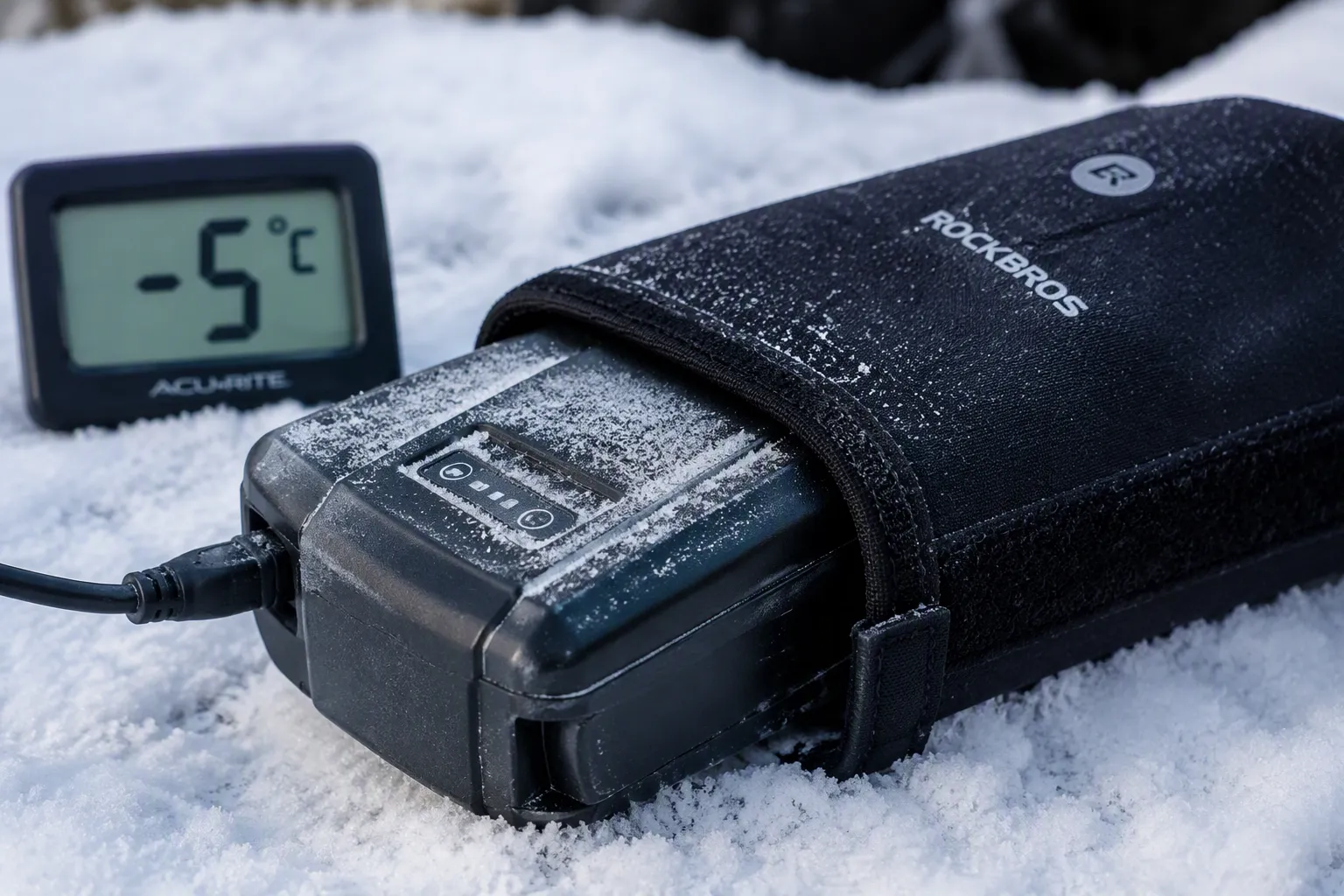
Your battery consists of lithium-ion cells. These cells prefer warmth. Their properties change noticeably in the cold. The liquid inside, known as the electrolyte, becomes viscous at subzero temperatures. As a result, lithium ions move slowly between the anode and cathode. You can think of them as sluggish workers carrying out their tasks at a snail's pace.
The battery's internal resistance increases significantly in cold weather. A larger portion of the stored energy is converted into heat instead of powering the motor. You can feel this directly: the assistance seems weaker. The voltage drops under load, especially when starting off or riding uphill. Your battery management system interprets this drop in voltage as an empty battery. It switches off the assistance even though energy is still available.
The following table shows how different temperatures affect capacity:
Temperature |
Capacity |
Effect |
|---|---|---|
15-25°C |
100% |
Optimal |
5-15°C |
90-95% |
Bring the battery inside after your ride |
0-5°C |
75-85% |
Use a neoprene cover and pre-warm the battery |
below 0°C |
50-75% |
Store the battery at room temperature and install it just before your ride |
Important to know: cold alone does not cause permanent damage. Modern lithium-ion batteries work without problems between minus 10 and plus 40 degrees Celsius. Performance temporarily decreases, but returns as soon as the battery warms up again. Charging in freezing temperatures is what poses a risk. This can cause lithium plating—microscopic deposits that permanently reduce capacity.
Technical data: According to their datasheets, all common Li-ion cells can be discharged from -20 to +60°C and stored from -20 to +50°C. Charging is only permitted between 0 and +60°C.
Plan for reduced range
You should expect a significant reduction in range during winter. At subzero temperatures, your battery loses an average of about 25 percent of its range. Depending on the manufacturer and load, the loss can be as much as 50 percent. A 2024 ADAC analysis of electric cars found an average range loss of 40 percent at minus 7 degrees. Since car and e-bike batteries are based on the same lithium-ion technology, this shows that the effect is a fundamental law of physics, not a product defect.
Outside temperature isn't the only factor. Several factors increase range loss in winter:
Poor road conditions such as snow, slush, and grit increase rolling resistance
Thicker clothing increases your air resistance
Thicker lubricant in the drivetrain increases friction
Reduced physical performance in cold weather means the motor has to work harder
At temperatures below 0 degrees, expect a range loss of 25 to 50 percent. At minus 10 degrees, the loss can be 50 percent or more. This effect is temporary—the full range returns in warmer temperatures.
Plan your rides accordingly. If you normally get 40 kilometers, you should plan for only 20 to 30 kilometers in freezing weather. Fully charge your battery before setting out. Use Eco mode to maximize your range. A 625 Wh battery can cover over 100 kilometers in Eco mode at normal temperatures. At minus 10 degrees, a realistic range would be 50 to 75 kilometers.
Bring the battery inside after every ride. Let it acclimatize at room temperature for 15 to 30 minutes before charging it. The ideal charging temperature is 15 to 20 degrees Celsius. At temperatures below 5 degrees, the battery management system may prevent charging. Never charge the battery immediately after a cold ride. Your e-bike will thank you with a longer battery life.
Battery care in winter
Proper storage
Your battery needs a special place in winter. The ideal storage temperature is between 10 and 15 degrees Celsius. An unheated basement, frost-free storage room or temperature-controlled utility room is ideal. Garages and garden sheds are usually too damp. You risk damaging the electronics and cells there. Condensation or corroded contacts often cause problems in spring. Your battery should always be stored clean and dry.
The charge level before storage is crucial. Manufacturers recommend different levels:
Manufacturer |
Recommended charge level |
|---|---|
Bosch & Fazua |
30–60 % |
Shimano |
70 % or more |
For Bosch batteries, that corresponds to about two to three bars. Charge the battery only halfway before storing it. Check the charge level every two to three months. Never leave the battery connected to the charger permanently. This damages the cells over time.
Charging at room temperature
Charging in cold weather is risky. Below 5 degrees Celsius, chemical reactions slow down. Internal resistance increases, performance drops, and charging takes longer. Below 0 degrees Celsius, there is a high risk of damage and deep discharge. Prolonged exposure to low temperatures can permanently damage the battery. Thermal runaway may then occur during the next charging cycle.
You should always charge your battery at room temperature. The ideal charging temperature is 15 to 20 degrees Celsius. Bring the battery inside after every ride. Let it acclimatize there for 15 to 30 minutes. Only then should you connect it to the charger. A cold battery taken straight off the bike not only charges more slowly; it can also suffer permanent damage.
In freezing weather, follow a special rule: store the battery somewhere warm and install it just before your ride. After use, bring it back into a warm room. If you do have to ride with a cold battery, avoid heavy loads. Use Eco mode only. This protects the cells and prevents voltage drops.
Proper care significantly extends your battery's lifespan. A well-maintained battery lasts for many years. It retains its capacity and reliably supplies you with energy. Put in this little bit of effort—your battery will reward you with years of dependable service.
Winter safety gear
Your safety starts with the right gear. Road conditions change completely in winter. Wet roads, snow, and ice challenge both you and your e-bike. With the right equipment, you can handle these challenges with confidence. You don't have to give up riding. You just need to prepare properly. The right gear can make the difference between a safe ride and a dangerous fall.
Winter tires and studded tires
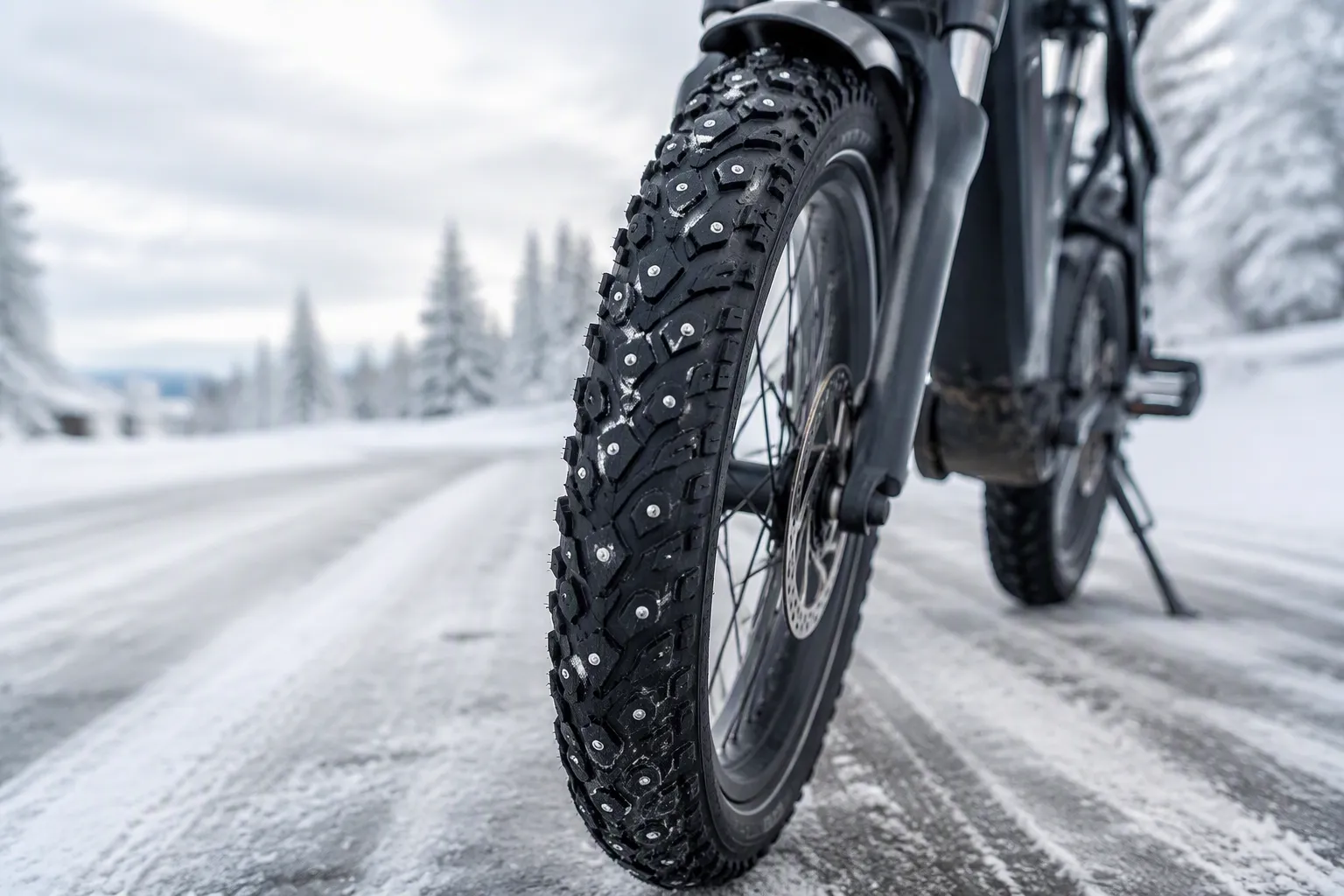
Your tires are your only contact with the road. On snow and ice, they determine grip and braking distance. Summer tires quickly lose traction at low temperatures. The rubber compound hardens and offers little grip. Winter tires use a softer compound. Their open tread pattern grips snow and slush better.
Independent tests show clear differences between tire types:
Grip on snow: Winter tires with an open tread pattern and softer compound provide significantly better grip than summer tires. This is especially true on loose and packed snow, as well as slush.
Braking distance on packed snow: At a tire pressure of 2 bar, winter tires have braking distances that are, on average, 16 percent shorter than those of summer tires.
Grip on ice: Winter tires without studs offer only a slight advantage over summer tires on smooth, flat ice. This is where studded tires shine: they reduce braking distances on ice to less than half. Their greater lateral grip allows for a limited lean angle when cornering.
Comparison on snow: Studded tires have a slight edge over winter tires without studs on snow. Their braking distances are, on average, about 10 percent shorter.
Which tires are right for you? Studded tires are ideal for uncleared, snow-covered roads. They provide maximum grip on ice. Winter tires without studs are a good compromise for occasional rides on snow. They offer more comfort and less rolling noise. You should avoid riding on bare ice with any type of tire. Maintaining control of your bike there is unpredictable.
Lighting and visibility
The dark season significantly reduces your visibility. Fog, snowfall, and early darkness limit how far you can see. Powerful lights are therefore essential. Your e-bike needs a bright front light of at least 30 lux. Make sure it illuminates a wide area of the road. This helps you spot obstacles early. It also makes you more visible to other road users.
Keep your rear light on during the day, too. Many accidents happen because cyclists are not seen. A red rear light with a large illuminated area significantly increases your visibility. Reflective elements on your clothing help as well. A high-visibility vest or reflective strips on your jacket and pants make you easier to see. You can also add reflectors to your helmet and bags. Visibility can quickly deteriorate, especially in snowfall. In those conditions, every light source counts.
Remember: good visibility protects you in two ways. You can see the road better, and others can see you sooner. Invest in high-quality lights and reflective gear. Your safety is worth every penny. With the right equipment, you can ride comfortably through winter. Your e-bike remains a reliable companion—in all kinds of weather.
Riding technique on snow and ice
Brake and steer smoothly
On snow and ice, your e-bike requires a completely different riding style. The e-bike's greater weight significantly increases braking distances. You need to adjust your technique to ride safely through winter. Start with a relaxed posture. Keep your arms and legs loose. This helps you absorb unexpected jolts on uneven, snow-covered surfaces.
Shift more of your weight onto the rear wheel. This increases traction and prevents the front wheel from slipping. Braking is the biggest challenge. Start braking early. Apply both brakes evenly and gradually. Be especially careful with the front brake. A locked front wheel on a slippery surface almost inevitably leads to a fall. Let your e-bike roll to a stop rather than braking hard. This protects the tires and helps you stay in control.
There is a golden rule for corners: slow down before you reach the turn. Don't pedal or brake while turning. Take corners in wide, smooth arcs. Avoid sudden steering movements. Your e-bike reacts much more sensitively to abrupt steering inputs than a regular bicycle. Ride defensively. Spot potential hazards early. Particularly tricky hazards include black ice, bridges, shaded forest sections, and early mornings after a night frost. Keep a greater distance from other road users.
Adjust motor assistance
Your motor assistance plays a crucial role in safety. Choose Eco mode, especially when starting on slippery surfaces. Too much torque when starting can cause the rear wheel to spin on snow and ice. This interrupts power transfer and you lose control.
Eco mode delivers assistance more gently and evenly. This makes starting on slippery surfaces much easier. Start with a low assistance level. Increase it only once you are moving steadily and have enough grip. Maintain a steady pace. Avoid sudden changes in speed. Your e-bike stays more stable when you pedal consistently.
Adjust your support level on uphill sections too. Shift into a lower gear before the climb. Start with low assistance. This prevents your tires from spinning on snow-covered hills. Your own strength is often enough to get your e-bike safely up the hill. With the right technique and adjusted motor assistance, you can confidently handle any winter ride.
Winter E-Bike Maintenance
Cleaning After Your Ride
Road salt and dirt take a heavy toll on your e-bike in winter. Salt builds up on the frame, rims, and drivetrain. It attracts moisture and causes corrosion. You should clean your e-bike after every ride. It only takes ten minutes and protects valuable components.
Start by rinsing off the worst of the dirt. Use lukewarm water from a bucket or garden hose. Never use a pressure washer. It washes grease out of the bearings and can damage the electronics. Then spray on a dedicated bike cleaner. Let it sit briefly and rinse it off thoroughly. For stubborn dirt, use a sponge or soft brush. Rims and spoke nipples collect a lot of salt in particular. Clean these areas thoroughly.
Dry the e-bike carefully afterward. A microfiber cloth works well. Then apply a care spray with corrosion protection. Protective polish or wax forms a barrier against moisture and road salt. Make sure lubricants and care sprays do not get on the brakes. This would affect their performance.
Check the Chain and Brakes
The chain suffers most from moisture and dirt. Clean it regularly with a water-soluble chain cleaner. Then apply chain lubricant. A wet lube or all-purpose lubricant is suitable for winter. Special waxes such as “Ice Wax 2.0” offer long-lasting protection in cold weather. Road salt still takes its toll on components despite lubrication. So lubricate the chain more often in winter.
Check your brakes before every ride. Salt and dirt significantly increase brake pad wear. Disc brakes work better in wet conditions than rim brakes. Check the pads for wear and remove any oil or dirt. Your lights also need attention. Test all lights before every ride. LED lights are sturdy and long-lasting.
Check all screws and connections regularly. Tighten them if necessary. Check tires, grips, and pedals for cracks or material damage. If in doubt, have your bike checked at a specialist workshop. This will keep your e-bike reliable all winter long.
Storing Your E-Bike and Battery
Optimal E-Bike Storage
Your e-bike should not be left outside in winter. Ice, moisture, and frost can damage the frame, electronics, and drivetrain. A heated room with low humidity is ideal. A dry basement, hallway, or storage room works well. Avoid garages and garden sheds. They are often too damp and too cold. Condensation forms on the components, causing corrosion on cables and connectors.
Keep the temperature stable. Rapid changes from a warm house to the cold put strain on the electronics. Temperature fluctuations cause condensation inside the bike. This encourages rust and damage to sensitive components. Store your e-bike somewhere with as constant a temperature as possible. A room between 10 and 20 degrees Celsius is perfect.
The following table shows the most common mistakes and how to avoid them:
Common Mistakes |
How to Avoid Them |
|---|---|
Storage below 10 degrees |
Choose a room at 10–20 degrees; use a neoprene cover |
Rapid temperature changes |
Keep temperature fluctuations to a minimum |
Charging in extreme cold |
Only charge the battery at room temperature |
How to Store Your Battery Over Winter
The battery needs special attention. Always remove it from the bike and store it indoors. Even brief periods of frost can cause damage. The ideal battery temperature is between 10 and 15 degrees Celsius. A bedroom closet, utility room, or wine cellar are good places. Avoid boiler rooms and attics. They are too warm or too damp.
The charge level determines battery life. A fully charged battery ages three times faster in winter. After three months at 100 percent charge, you lose 5 to 10 percent of capacity. A depleted battery risks deep discharge. This causes the anode’s copper foil to dissolve, leading to internal short circuits and irreparable damage.
Recommendation: Charge the battery to about 60 percent before storing it. Lithium-ion batteries self-discharge over time. During extended storage, a deep discharge could otherwise occur. A fully charged battery puts stress on the cell chemistry due to the high voltage.
Follow these steps to store your battery:
Remove the battery and store it at room temperature.
Set the charge level to 40 to 60 percent.
Choose a suitable place – cool, dry, and frost-free.
Check it monthly – if below 30 percent, charge for 15 to 20 minutes; if above 70 percent, discharge it with a short test ride.
If the battery is permanently installed, store the entire e-bike in a room at 10 to 15 degrees Celsius. An insulated box made of polystyrene boards provides additional protection. Turn the bike on briefly every three weeks. The electronics draw a minimal amount of power continuously. This will keep your battery in good shape for spring.
With the right preparation, care, and riding technique, your e-bike will be a reliable companion even in winter. Treat the battery properly. Adjust your riding style. Put the tips in this article into practice. Don’t let the cold and snow put you off. Riding a bike in winter is fun. It’s an environmentally friendly alternative to the car. The fresh air and quiet on snow-covered roads are rewarding. You’re doing something good for your health and the environment. If you’re interested, you’ll find more articles about bike technology and seasonal care on our blog. Stay active and enjoy the colder months. Get ready for winter.
FAQ
Can I charge my battery in freezing temperatures?
No, never charge it below 0 degrees Celsius. This risks lithium plating and permanent damage. First bring the battery to room temperature. Wait 15 to 30 minutes. Only then connect it to the charger.
How much range will I lose in winter?
In subzero temperatures, you’ll lose about 25 percent. At minus 10 degrees, the loss can be as much as 50 percent or more. So plan shorter rides. The effect is temporary. Your full range will return in spring.
Do I need winter tires for my e-bike?
Yes, they’re worth it. Winter tires with a softer compound and an open tread pattern provide significantly more grip on snow. Your stopping distance is reduced by 16 percent. On black ice, studded tires are the safer choice.
How should I store my battery?
Remove it from the bike. Store it at 10 to 15 degrees Celsius with a 40 to 60 percent charge. A dry basement or utility room works well. Check the charge level every two months.
What is the most important riding technique on snow?
Ride smoothly and anticipate what’s ahead. Brake early and gently. Avoid sharp steering movements. Select Eco mode when starting off. Let your e-bike coast rather than braking sharply.