
Are you looking to buy a used e-bike and want to ensure you don't make a bad purchase? The market is growing rapidly: by 2025 alone, over 100,000 young used e-bikes from leasing contracts are expected annually in Germany. However, many underestimate the risks. The motor and battery, in particular, harbor hidden dangers, as their condition is often not apparent to laypeople. With a systematic inspection, you can avoid uncertainty and prevent expensive surprises.
Key Takeaways
Carefully check the frame and exterior for damage and maintenance condition to identify how the previous owner treated it.
Thoroughly test the brakes, chain, gears, and tires, as wear parts impact safety and riding comfort.
Examine the battery and motor closely, as they are expensive and often have hidden defects; a test ride helps identify issues.
Request complete documentation such as the purchase contract, service booklet, and serial number to avoid fraud and accurately assess the value.
Buy only from trustworthy sellers, insist on a viewing, and use secure payment methods to ensure a safe and satisfying purchase of a used e-bike.
Checking a used e-bike
Frame & Exterior
When buying a used e-bike, you should first take a close look at the frame and exterior. Look for visible damage such as scratches, rust, cracks, dents, or signs of crashes. These signs often show how the bike has been treated. Also, pay attention to the general state of maintenance. A clean and well-maintained bike indicates a responsible previous owner.
Tip: Take photos of any noticeable spots. This allows you to compare later or ask an expert for advice.
You will find damage in typical areas:
Rims can have grooves or scratches, especially with rim brakes.
Grips and saddle wear out due to weather and use.
The battery can also show visible traces after many charging cycles.
An objective assessment is best achieved by collecting photos, receipts, and repair records. An independent bicycle appraiser can accurately assess the condition, maintenance, and value of your used e-bike.
Wear Parts
Wear parts affect safety and riding comfort. Therefore, carefully check the brakes, chain, tires, pedals, and derailleur. Proceed step-by-step:
Test the brakes: When pushing the bike, the wheels must lock when the brake is applied.
Squeeze the brake levers. They should not be able to be pulled all the way to the handlebar.
Check the outer casings of the brake cables. They should not have any cracks.
Check the thickness of the brake pads. They must have sufficient material.
After braking, the wheels should not spin freely.
Both brake pads should be the same distance from the rim.
Disc brakes must grip firmly and should not squeal or rub.
The chain as well as the gear and brake cables also show signs of wear from use. You should replace tires with worn profiles or cracks. If you are unsure, a workshop can help.
Electronics
The electronics are the heart of every used e-bike. Common problems involve the battery, motor, and display. Almost every second defect occurs in the battery. Motors are the second most common source of faults. Displays and sensors can also fail, especially if handled improperly.
Test the electronics like this:
Look at the service and operating manual. This shows whether maintenance has been performed regularly.
Take a test ride. Check if the motor, battery, display, and lighting work during operation.
Look for visible damage to the battery, casing, and frame.
When in doubt, have a professional diagnosis done at a dealership. This will tell you how much capacity the battery still has.
Take a second person along who is knowledgeable. Four eyes see more than two.
Note: An independent appraiser can objectively evaluate the electronics and the overall condition of your used e-bike. This gives you peace of mind when buying.
Battery & Motor
Checking the Battery
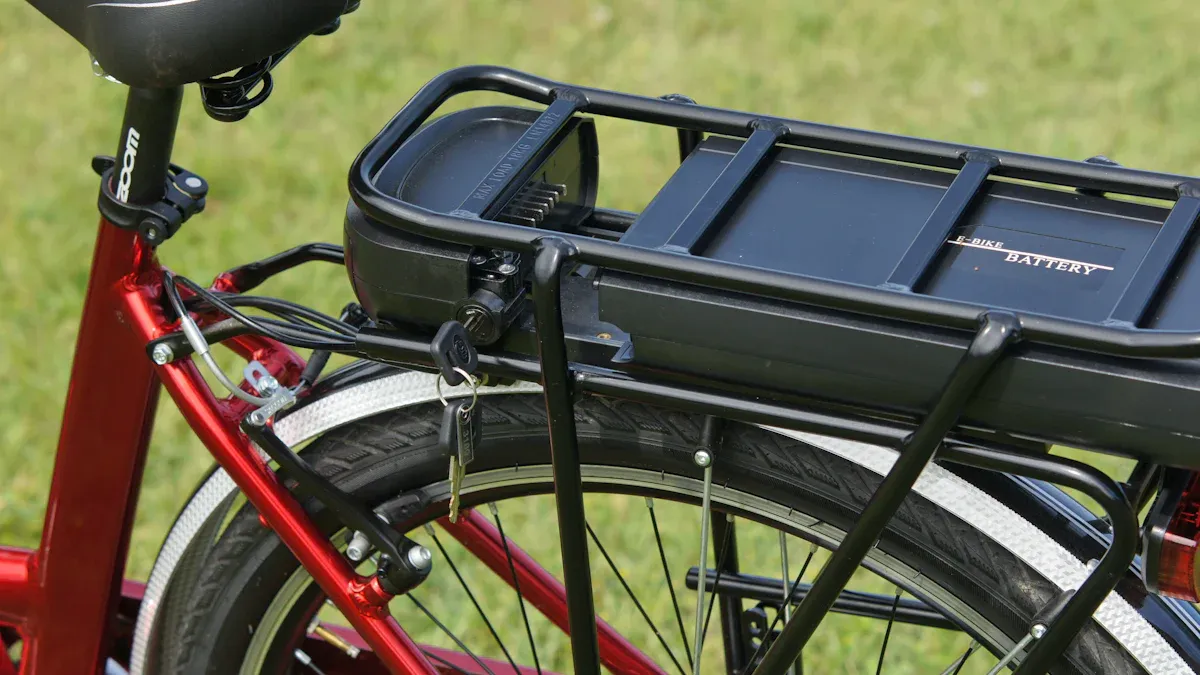
The battery is the heart of your e-bike. Check it particularly carefully, as replacement is expensive. First, ask about the number of charging cycles. After about 500 charging cycles or two years, capacity often drops to 60%. Experts estimate that a battery loses significant performance after around 1,100 charging cycles or six years. A value of 800 charging cycles is considered critical. At that point, the battery usually has only 70% of its original capacity.
This is the best way to measure remaining capacity:
Charge the battery completely.
Remove it from the bike, if possible.
Connect a multimeter to the battery terminals.
Set the multimeter to direct current (DC).
Measure the voltage and compare it with the target values in the manual.
Check the current flow and internal resistance.
Consult an expert if you are unsure.
Tip: The voltage indicates whether the battery still has enough energy. A high internal resistance points to wear. A multimeter provides more accurate values than the display on the handlebars.
Also, watch for visible damage like cracks, dents, or bulges. Ask about the mileage of the used e-bike. If it is under 8,000 km, that is usually a good sign. A battery with many charging cycles or visible damage should make you cautious. A replacement costs between 300 and 900 euros. Original batteries are more expensive, but safer and longer-lasting.
Checking the Motor
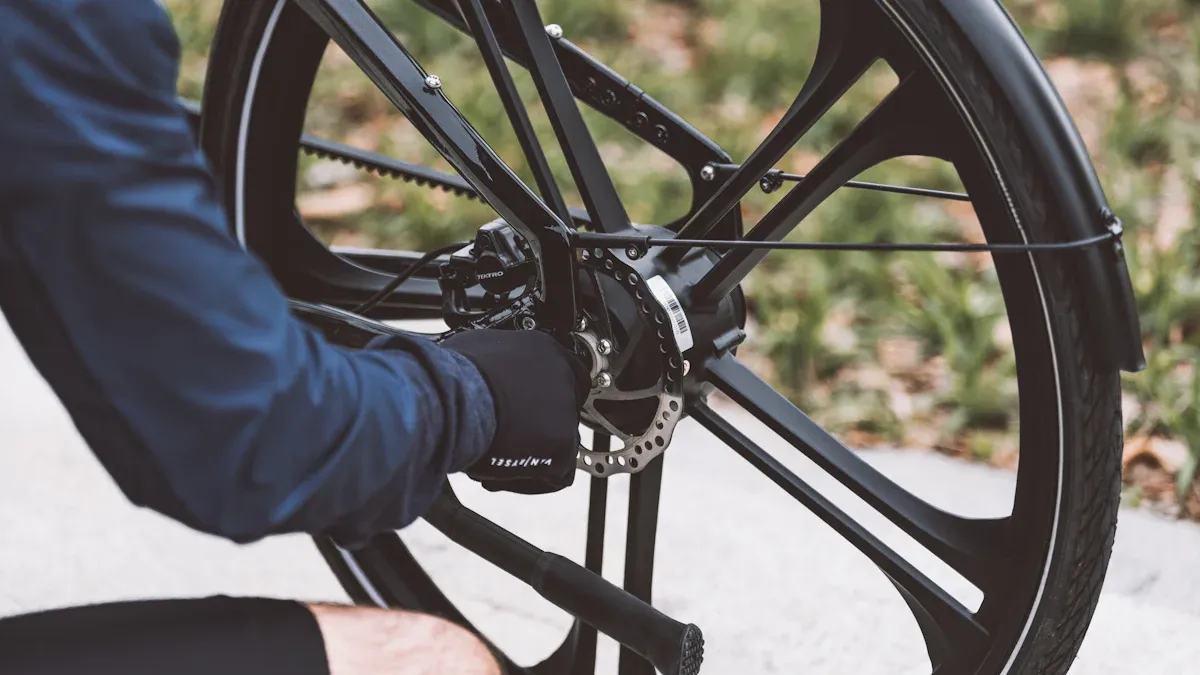
The motor determines how much support you get while riding. Check it for noise, performance, and any signs of crashes. Start the e-bike and listen carefully. Clicking or creaking in the motor area often comes from the chain or loose screws. Tighten the screws between the motor and frame to eliminate noises.
Watch for these signs of a worn or defective motor:
Error codes on the display, for example, 5xx for Bosch or W011/W013 for Shimano Steps.
The motor does not provide support or does so irregularly.
The gears skip or the chain slips even though it is adjusted correctly.
Significant loss of power while riding.
Note: Error codes help with diagnosis but do not always mean a defect. Check the magnet position on the sensor and check the gear system.
Ask about the motor mileage. Values under 8,000 km are usually unproblematic. Defects in the motor or gearbox are rare but possible. Repairing often requires specialized knowledge. Replacement costs between 300 and 1,000 euros, depending on the model. Original parts are recommended as they fit better and last longer.
Note: The battery and motor are the most expensive components on a used e-bike. Check both particularly thoroughly to avoid high follow-up costs.
Viewing & Test Ride

Function Test
Before you buy a used e-bike, you should test all important functions on-site. Proceed systematically so you don't overlook any weak spots.
Battery: Check the housing and contacts. They must not show any cracks or tampering.
Motor: Ensure no signs of tuning are visible. Ask about service updates.
Mileage: Check the odometer via the display or an app.
Tires: They must not be worn out or flat.
Suspension fork and shock: The stanchions must be clean and free of scratches. No oil should leak.
Stem/Headset: Test for stiffness. Nothing should rattle when steering.
Chain and cassette: Check for wear. You should replace the chain after at most 1,500–2,000 km.
Gears: Shift through all gears. The derailleur hanger must not be bent.
Brakes: Check the brake lever travel, noises, and the condition of the pads.
Lighting system: Test if the light works.
Display: It must be readable and show no pixel errors.
Keys: Ensure all keys for the battery and lock are present.
General condition: Look for signs of crashes and scratches.
Tip: Ask to see the service booklet. This will tell you if the used e-bike was regularly maintained.
Test Ride
A test ride is mandatory when buying a used e-bike. It's the only way to see how the bike behaves in everyday life. Test all support levels of the motor. Pay attention to the handling, braking performance, and gears. Listen closely: Unusual noises or vibrations can indicate problems with the motor, battery, or other parts. Not every noise is a defect – sometimes it's just a rattling keychain or bottle. Try to find the source of the noise.
Check if the handlebars move smoothly and don't make cracking noises.
Test the brakes in various situations.
Shift through all gears and pay attention to clean shifting behavior.
Check if the light also works while riding.
Note: Take an expert person with you if you are unsure. They will often recognize defects that you might miss.
Documents & Price
Checking Documents
When buying a used e-bike, you should always ensure you have complete and verifiable documentation. These documents protect you from fraud and help assess the value of the bicycle. The following documents are particularly important:
Brand, frame number, model designation, tire size, and frame height
Description of the condition and all defects
Purchase price and signatures of both parties
Original purchase receipt and warranty documents
Service and maintenance history
Serial number
Tip: A purchase contract protects you from buying stolen bicycles and regulates the exclusion of warranty in private sales.
You can verify the authenticity of purchase receipts and serial numbers by submitting the documents to the manufacturer. Many manufacturers offer online verification. After a successful check, you often receive a certificate of authenticity or a registered tag for the frame. Some providers even use blockchain registration as additional theft protection.
Assessing Price
To find the right price for a used e-bike, you should compare several factors:
Research the original price of your model.
Compare offers on platforms like Kleinanzeigen or Facebook Marketplace.
Pay attention to age, mileage, condition of the battery and motor, as well as included accessories.
Use residual value calculators on the internet or ask a specialist dealer.
Check if the e-bike has been regularly serviced.
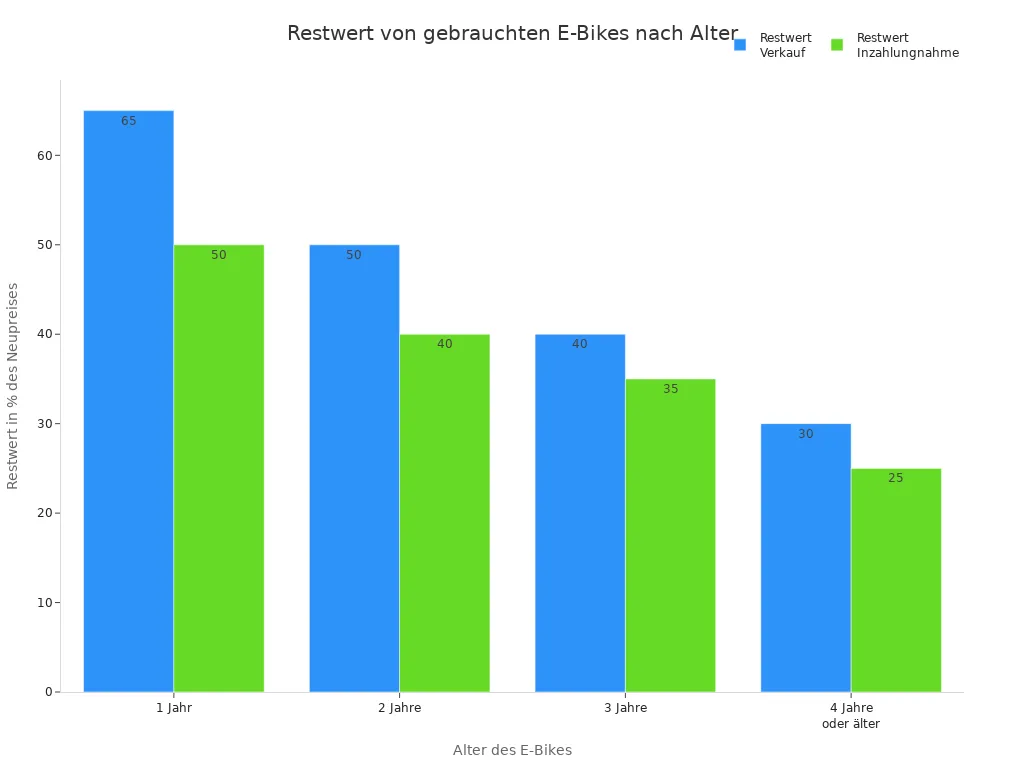
The most important price factors are the battery condition, mileage, quality of components, and maintenance history. Leasing returns with low mileage and new batteries usually fetch higher prices.
Estimated Residual Value for Sale (%) |
Estimated Residual Value for Trade-in (%) |
|
|---|---|---|
1 Year |
approx. 65% |
approx. 50% |
2 Years |
approx. 50% |
approx. 40% |
3 Years |
approx. 40% |
approx. 35% |
4 Years or older |
approx. 30% |
approx. 25% |
Note: Accessories like racks or child seats can additionally increase the value. A well-maintained used e-bike with complete documentation usually achieves the best price.
Avoiding Fraud
Reputable Sources
When buying a used e-bike, you should always look for trustworthy sellers. Spontaneous purchases or offers without a clear origin carry great risks. Check the seller's identity carefully. Always ask to see a purchase receipt, maintenance records, and a bicycle pass. A purchase contract gives you legal security. Check the frame number and match it with the bicycle pass. This ensures the bike is not stolen. Use the free bicycle pass service to verify the origin.
Watch for these warning signs of unserious sellers:
Only prepayment or unusual payment methods such as foreign IBANs
Extremely low prices
Missing or incomplete legal notice (Impressum)
No or fake reviews on portals like Trustpilot
Copied or generic content
Missing or incorrect terms and conditions
No information regarding the right of withdrawal
Tip: Check the legal notice and contact information. Tools like the "Fakeshop-Finder" from consumer protection agencies help you identify fake shops. When in doubt, you should rather refrain from purchasing.
Online buying tips
When buying a used e-bike online, there are special safety measures. Professional dealers inspect the bikes in the workshop and cross-reference them with police databases. They often offer a one-year warranty. Private sales are riskier, as you are on your own. Detailed photos and a comprehensive description make an offer more trustworthy. Compare prices critically, as inflated prices are common.
Measure |
Description |
|---|---|
Only buy from credible sellers to avoid stolen bikes |
|
Bicycle registration |
Registration with the police or online databases facilitates identification |
Bicycle coding |
Individual number helps in case of theft |
Documentation |
Photograph frame number, battery number, and special features |
High-quality locks |
Invest in sturdy locks |
Insurance |
Protect yourself financially against theft or damage |
Note: Always insist on an inspection and a test ride before you buy a used e-bike online. Never pay in advance to unknown providers. Use secure payment methods such as PayPal or purchase on account.
When buying a used e-bike, you should proceed systematically. Experts recommend paying attention to the following points:
Check the original condition and the completeness of the keys.
Test the battery, motor, brakes, and gears.
Examine service records and purchase receipts.
Many buyers underestimate the condition of the battery or skip a test ride. Take your time for the inspection. With a checklist, you can make a safe decision.
Tip: Always have the original charger shown to you and check the documents carefully.
FAQ
How can you tell if an e-bike is stolen?
You check the frame number and compare it with databases like the bicycle passport. Always ask for the purchase receipt. Missing proof is a warning sign.
Tip: Use online registers to check the origin.
How long does an e-bike battery last on average?
A battery usually lasts 3 to 5 years or about 500 to 1,000 charging cycles. The service life depends on maintenance and usage. Charge the battery regularly and store it in a dry place.
A new battery often costs several hundred euros.
What should you keep in mind during a test ride?
Test all assistance levels. Listen for unusual noises. Check the brakes, gears, and lights. Pay attention to the riding feel.
Does the bike feel safe?
Does everything work smoothly?
Can you maintain a used e-bike yourself?
You can perform simple maintenance tasks such as changing tires or cleaning the chain yourself. For the battery, motor, or electronics, you should visit a specialist workshop.
Safety first! Let professionals handle complicated repairs.