
You will find the perfect e-bike for kids by focusing on safety, the right size, comfort, motor power, and good value for money. This way, you ensure that your child is safe and enjoys their ride.
Key Takeaways
Pay attention to the correct size of the e-bike. A well-fitting frame ensures safety and comfort while riding.
Safety is crucial. Choose an e-bike with functioning brakes, good lighting, and reflectors.
A test ride is important. Let your child test different models to find the best feel and the right fit.
Consider the weight of the e-bike. A lightweight model is easier to handle and safer for your child.
Find out about subsidies and financing options. This way, you can find the best e-bike for your child without breaking your budget.
Age & Size
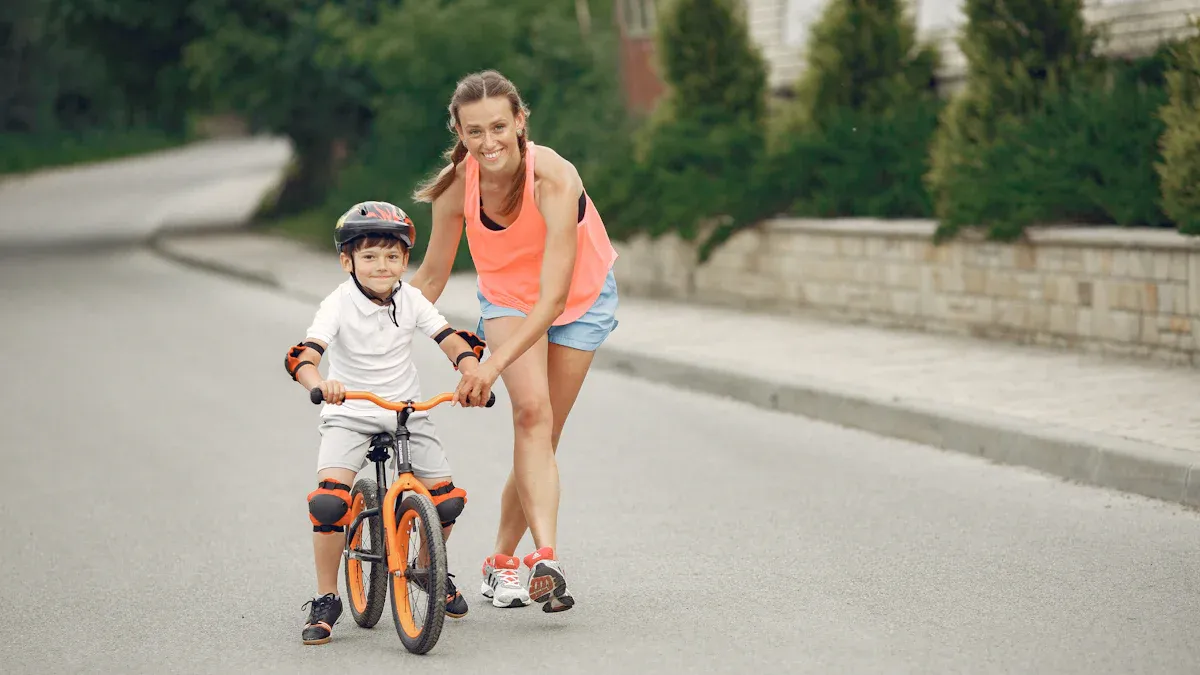
The right size and appropriate weight are crucial for your child's safety and comfort on an e-bike for kids. You should ensure the bike is not too heavy and that your child can easily grip the frame. A suitable frame ensures your child rides safely and enjoys cycling.
Age Groups
Age plays an important role in choosing an e-bike. In Germany, there are clear rules for children and teenagers:
Children must be at least 14 years old to ride a pedelec in road traffic.
Children under 14 are only allowed to use e-bikes on private property and under supervision.
Parents are liable for their children's violations and can be held responsible in the event of an accident.
Teenagers aged 14 and older may ride pedelecs up to 25 km/h, but not S-pedelecs or e-bikes with a throttle over 20 km/h.
At 15 years old and with a moped license, teenagers may ride e-bikes with a throttle up to 20 km/h.
You should definitely observe these requirements before choosing an e-bike for your child.
Frame Size & Fit
Your child's height determines the ideal frame size. A frame that is too small or too large can negatively affect handling. Children grow quickly, so it is worth choosing a slightly larger model. Nevertheless, the frame must fit accurately for your child to feel safe.
Child's Height |
Recommended Frame Size |
|---|---|
120–135 cm |
24–28 cm |
135–150 cm |
28–32 cm |
150–165 cm |
32–36 cm |
You can easily measure the frame size by having your child sit on the bike and checking if both feet reach the ground.
When does an e-bike make sense?
An e-bike for kids is particularly suitable for older children who cover longer distances or ride on hilly paths. You should only consider an e-bike once your child can ride a bicycle safely and knows the traffic rules. A test ride will help you make the right decision.
Safety
Brakes & Lighting
Safe brakes and good lighting protect your child in road traffic. You should ensure that your child's e-bike is equipped with two independent brakes. Disc brakes often offer the best stopping power, especially in wet conditions. A bright front and rear light ensures that your child is clearly visible, even at dusk or in bad weather.
Tip: Reflectors on the spokes and pedals further increase visibility.
Many accidents involving children happen because brakes or lights are missing or not functioning. Especially with cargo bikes, necessary safety equipment is often lacking. Therefore, always pay attention to the following points:
Two functioning brakes
Bright lighting front and rear
Reflectors on wheels and pedals
High-visibility clothing for better visibility
Children are often difficult to see in traffic. With good lighting and high-visibility clothing, you can significantly reduce the risk.
Weight & Stability
The weight of the e-bike affects your child's safety. A bike that is too heavy is harder to steer and tips over more easily. Choose a model that is stable and not too heavy for your child. A sturdy kickstand prevents the bike from tipping over when parked.
A low step-through frame makes mounting and dismounting easier.
A sturdy frame ensures more safety.
The maximum permissible weight must not be exceeded, otherwise handling becomes unsafe.
When choosing an e-bike, always check if your child can safely hold and push the bike. A bike that is too heavy is no fun and can be dangerous.
Test Ride & Helmet
Before you decide on an e-bike, you should take a test ride with your child. This will help you find out if your child can handle the bike and feels safe. Ensure that your child can get both feet on the ground while riding and can operate the brakes easily.
Note: A helmet is mandatory! It protects your child's head during falls and can prevent serious injuries.
Many parents underestimate the importance of a test ride. It gives you peace of mind and shows whether the chosen model really fits. Get advice from a specialist retailer and try out different models. This way, you will find the e-bike that best suits your child and ensures maximum safety.
E-bike for kids: Selection & Types
The selection of e-bikes for kids is constantly growing. Today, you can find many different models that adapt to your child's needs and age. To make the right decision, you should know the most important types, frame shapes, and the differences between a low step-through and a sporty frame.
E-Bike Types
Many manufacturers offer special e-bike types for children. These models differ in equipment, size, and area of use. The following table gives you an overview of the most important variants:
E-Bike Type |
Description |
Age Group |
|---|---|---|
Robust e-MTB for children, e.g., Rocky Mountain Reaper Powerplay. |
Various age groups |
|
E-Balance Bike |
Compact, foldable electric bike with small wheels. |
From 9 years |
Rockrider E-ST 500 |
Hardtail youth bike with 26-inch wheels, ideal for young riders. |
9 to 12 years |
You could, for example, choose an e-mountain bike if your child enjoys riding off-road. An e-balance bike is suitable for short distances and the ride to school. The Rockrider E-ST 500 offers a good mix of sportiness and everyday suitability. When choosing, always ensure that the e-bike for kids matches your child's height and riding style.
Tip: Check whether the model offers child-friendly motor power and simple operation. A motor that is too powerful can quickly become overwhelming for children.
Frame Shapes
The frame shape influences your child's comfort and safety. Many e-bikes for kids have a special geometry tailored to the needs of young riders. You will often find the following features:
Lightweight construction for easy handling
Child-friendly ergonomics for a healthy seating position
Suspension forks and powerful brakes for safety on any terrain
Low top tubes that make mounting and dismounting easier
A frame tailored to your child's height ensures more riding pleasure and less risk. Most e-bikes for kids are throttled to a speed of 20-22 km/h. This makes handling easier and gives you, as a parent, more security.
Low Step-Through vs. Sporty
You are often faced with the choice between a low step-through frame and a sporty frame. Both variants have their advantages. The following table will help you decide:
Advantage |
Description |
|---|---|
High Comfort |
A low step-through allows for easy mounting and dismounting. This is especially important for younger children. |
Transport Options |
A low step-through frame provides space for a child seat or a basket on the luggage rack. |
A low step-through frame reduces the risk of injury during falls. Your child can control the bike more easily and feels safer. A sporty frame is suitable for older children who value speed and sporty riding. Consider how your child wants to use the e-bike before making your choice.
Note: Let your child try out different frame shapes. This will help you find out which version fits best and offers the most comfort.
Motor & Battery
Motor Power
The motor power determines how much assistance the e-bike for kids provides. For children, a 250-watt motor is usually sufficient. A more powerful motor is unnecessary. A motor that is too strong can overwhelm your child. Most children's e-bikes offer gentle support, keeping the riding experience safe and controllable.
Tip: Choose a model with multiple support levels. Your child can adjust the power to the route.
Speed is clearly regulated in Germany. The following table shows the most important requirements:
Regulation |
Description |
|---|---|
Speed Limit |
E-bikes with a maximum motor assistance of 25 km/h are considered bicycles. |
Age Limit |
There is no legal age limit for riding an e-bike, but the ADAC recommends not letting children under 14 ride an e-bike. |
You should ensure that your child's e-bike does not travel faster than 25 km/h so that it remains road-safe.
Battery Capacity
The battery capacity determines how far your child can ride on the e-bike. For the school commute or short excursions, a battery with 250 to 400 Wh is usually sufficient. A larger battery makes the bike heavier, which can make handling more difficult. Consider how far your child actually rides; a lighter battery is often enough.
Check how long the battery takes to charge.
Look for easy removal so you can charge the battery at home.
Operation
Operation should be simple and clear. Children need a clear display and few buttons. Many e-bikes for kids offer intuitive controls. Your child can easily change the support level. A clear display shows speed and battery level.
Note: Let your child test the controls before purchasing to ensure they understand everything.
A well-coordinated system ensures more safety and riding pleasure. Your child feels safe and can concentrate on the traffic.
Price & Budget
Price Range
You will find e-bikes for children in many price ranges. The cheapest models often start at around 800 euros. High-quality e-bikes quickly cost 1,500 euros or more. The price depends on equipment, brand, and technology. A cheaper bike saves money but sometimes offers less comfort or safety. A more expensive model often comes with better brakes, lighter frames, and long-lasting batteries.
Tip: Consider how often and for what purpose your child will use the e-bike. For daily school commutes, a higher investment is worth it.
The value for money plays a major role. Many families make sure they get good quality for their money. The following table shows important aspects:
Aspect |
Description |
|---|---|
Value for Money |
Important for young buyers, despite higher income, due to other expenses. |
Financial Considerations |
Children, retirement planning, and high acquisition costs limit the budget. |
Financing
Not every family can pay the purchase price immediately. Many retailers offer installment payments or leasing. With a monthly installment, you can spread out the costs better. Leasing is worth it if you want to swap the e-bike after a few years. Ask at a specialist shop for suitable offers.
Note: Check the conditions carefully. Pay attention to interest rates and additional costs.
Subsidies
Some cities and municipalities support the purchase of e-bikes. You receive a grant when you buy a new e-bike for your child. The amount of the subsidy varies depending on your place of residence. Find out from your city or municipality. Some employers also offer subsidies for company bikes.
Inquire about current subsidy programs.
Submit the necessary documents on time.
Combine subsidies and financing to save money.
With a clear budget and some research, you will find the best e-bike for your child—safe, high-quality, and affordable.
Accessories & Service
Accessories
The right accessories make your child's e-bike safer and more practical. You should look for some important extras so that your child is well protected and enjoys riding.
A safe child bike seat matches the age and size of your child.
A helmet is mandatory. It protects the head during any fall.
A sturdy bicycle lock prevents theft.
A loud bell ensures that your child is heard in traffic.
Reflectors on spokes and pedals increase visibility.
Functional clothing protects against wind and rain.
Pannier bags offer space for school supplies or provisions.
Tip: Let your child try out the accessories themselves. This way, you can find out what fits and pleases them best.
Maintenance
An e-bike needs regular care. This is the only way to keep it safe and functional for a long time. You should not neglect maintenance. Manufacturers recommend fixed intervals for inspections and checks.
Type of maintenance |
Frequency |
|---|---|
Major inspection |
At least once a year |
First maintenance check |
After 250 km or three months |
Further maintenance checks |
As needed, e.g., before the season |
Regularly check the brakes, tire pressure, and lighting. A clean drivetrain lasts longer. Especially before winter or after long breaks, a check at a specialist dealer is worthwhile. This keeps your child's e-bike in top condition at all times.
Insurance
Insurance protects your child's e-bike from theft and damage. Many providers offer special policies for children's e-bikes. You can use this to insure not only the bike but also accessories like the battery or permanently mounted parts.
The insurance covers theft, vandalism, and improper handling.
Accessories are often covered up to 1,000 euros per claim.
Some policies even offer a pick-up service in case of breakdowns or accidents.
The costs for e-bike insurance start at around 45 to 50 euros per year. The exact price depends on the value of the e-bike and your place of residence.
With the right accessories, regular maintenance, and good insurance, you ensure that your child will enjoy riding safely for a long time.
Avoiding mistakes
When buying an e-bike for your child, you can make many mistakes. These mistakes can severely affect your child's safety and enjoyment. With a few simple tips, you can avoid the most common problems.
Models that are too big
Many parents choose an e-bike that is too big because they hope their child will grow into it. That sounds practical, but it is dangerous.
Your child has difficulty controlling the bike.
Incorrect ergonomics can severely jeopardize riding safety.
Always ensure that the e-bike fits your child's height exactly. A suitable model gives your child safety and control.
Safety defects
Unfortunately, safety defects appear in children's e-bikes time and again. You should look closely, especially with cheap or unknown brands. The following table shows the most common problems:
Safety defect |
Description |
|---|---|
Broken frames |
In some cargo bikes, such as Babboe, hundreds of frames have broken. This endangers children. |
Insufficient measures |
Manufacturers have often not done enough to find the causes of broken frames. |
Recalls of models |
Some models were recalled after serious safety defects were discovered. |
Before buying, check whether the model has had any recalls or possesses known weaknesses. Read test reports and ask in specialist shops.
Lack of advice
Many parents buy an e-bike without seeking advice. This can lead to poor decisions.
You must assess whether your child is ready for an e-bike.
Talk to your child about safety rules and make clear agreements.
Good advice helps you find the right model and avoid mistakes.
Tip: Get advice from a specialist dealer and try out different models. This way, you make an informed decision and ensure greater safety.
The most common technical problems include bicycle computers, sensors, batteries, motor tuning, wiring, and electric motors. Check these parts carefully before purchasing or ask an expert.
With attention and good advice, you will find the right e-bike for your child – safe, suitable, and reliable.
You make the best choice for your child when you pay attention to safety, the right size, and simple operation.
Wait until your child rides a regular bicycle safely and has gained experience.
Choose an e-bike with components suitable for children and low weight.
Arrange a test ride so that your child can test different models and you get honest feedback.
Use the advice at a specialist shop to find the ideal e-bike.
A careful decision is worthwhile, because a good e-bike promotes independence and riding fun.
FAQ
At what age is my child allowed to ride an e-bike?
You may allow your child to use an e-bike in traffic from the age of 14. Younger children may only use e-bikes on private property. Always check the current legal requirements in your state.
How often should I have my child's e-bike serviced?
You should take your child's e-bike in for an inspection at least once a year. Check the brakes, lights, and battery regularly. This keeps the bike safe and reliable.
Does my child need a helmet when riding an e-bike?
Yes, a helmet protects your child's head during falls. You should always ensure that your child wears a suitable helmet. Safety comes first.
What range is sensible for a children's e-bike?
A range of 30 to 50 kilometers is sufficient for most children. This allows your child to easily master the way to school and excursions. A larger battery often makes the bike heavier.
What do I do if the e-bike is stolen?
Report the theft to the police immediately.
Inform your insurance company.
Have your proof of purchase and frame number ready.
With good insurance, you often get a replacement or have repairs paid for.