
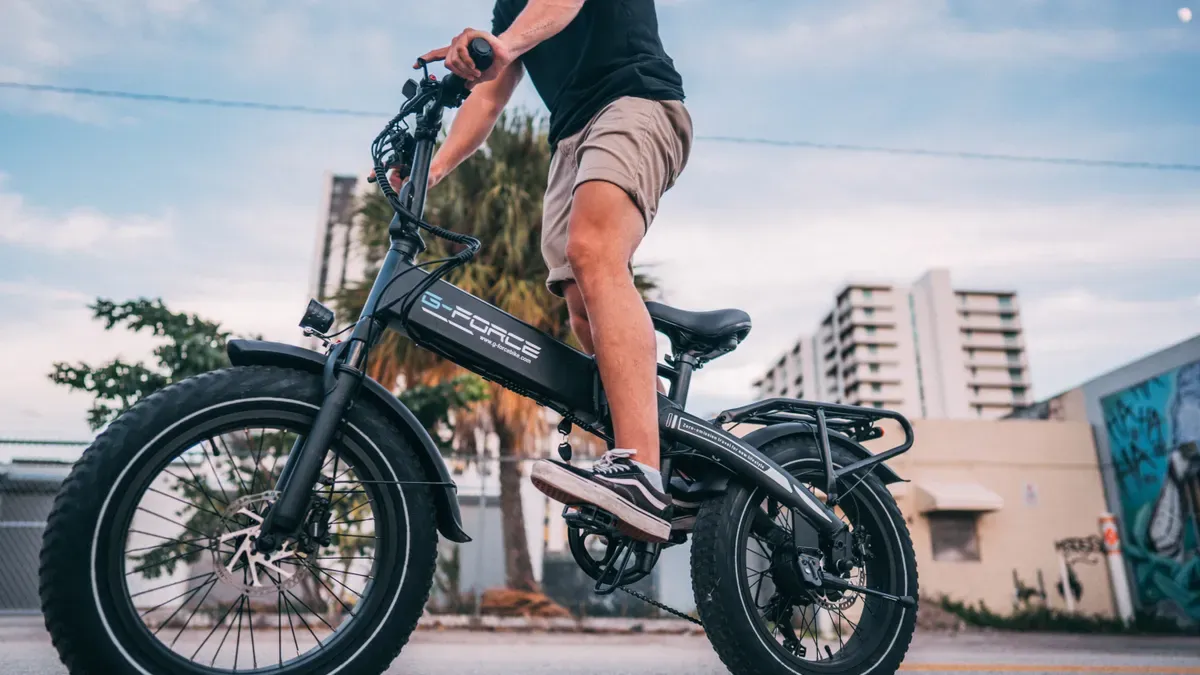
Are you looking for the right model for your everyday life? In 2025, people in Germany purchased an e-bike nearly two million times. In general, you can choose between city bikes, cargo bikes, off-road bikes, and fast commuter models.
Note the legal rules:
Pedelec (up to 25 km/h): The motor assists you while pedaling. Legally, the bike is considered a standard bicycle.
S-Pedelec (up to 45 km/h): This moped requires an insurance license plate, an AM class driver's license, and a helmet. You are not allowed to use bike paths.
Electric bike: The motor runs even without your pedaling effort.
Key takeaways
Pedelecs up to 25 km/h are considered standard bicycles, while S-Pedelecs up to 45 km/h require a driver's license and an insurance license plate.
City bikes, folding bikes, and cargo bikes offer practical solutions for short trips, commuting, and heavy loads in the city.
Trekking e-bikes, e-mountain bikes, and e-gravel bikes are suitable for long distances, excursions, and rough terrain.
The right motor, battery capacity, and seating position determine ride comfort and range.
E-bike categories for city and everyday use
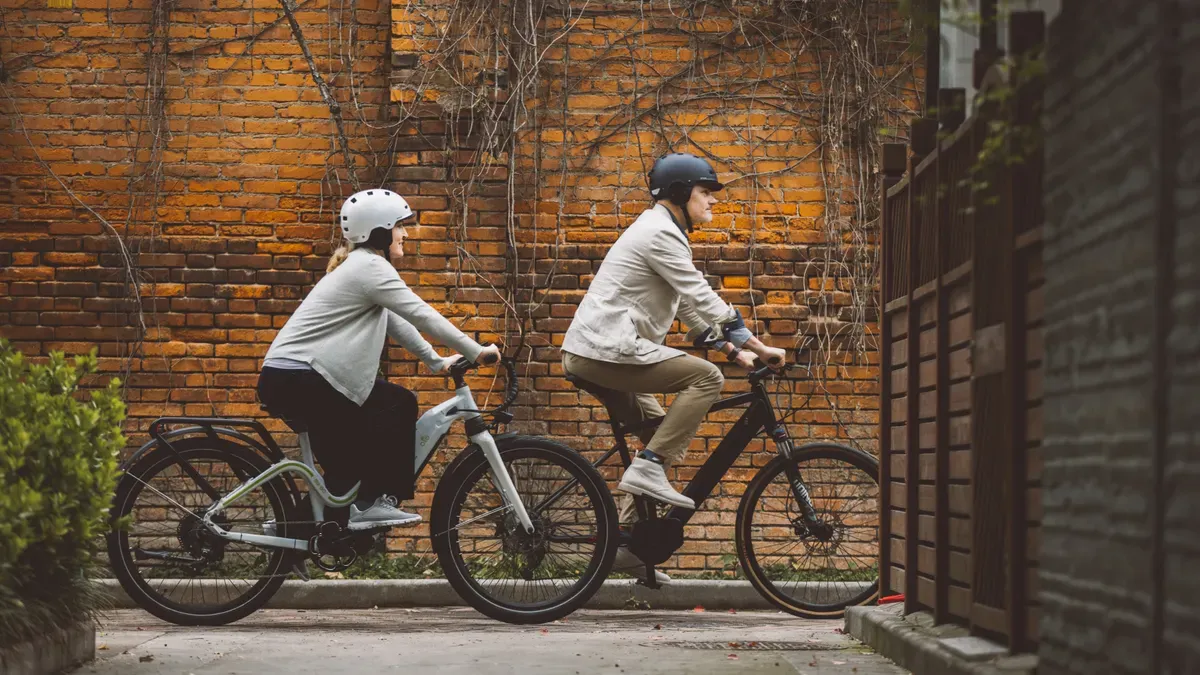
Are you looking for the perfect bike for your daily commute? Different models fit your specific needs in the city.
City e-bikes for the city
The classic city e-bike guarantees maximum comfort. A long head tube and high handlebars ensure an upright seating position. This posture is easy on your back and gives you a good overview in traffic.
Comfortable geometry: The frame allows for easy mounting and dismounting.
Safe equipment: Lights, mudguards, and luggage racks are pre-installed.
Practical shifting: An internal gear hub shifts comfortably while standing still at traffic lights.
Compact and folding e-bikes for commuters
Do you commute daily by bus or train? Folding bikes save a lot of space. You can fold your bike in just a few seconds. In public transport networks such as the BVG, MVV, or Deutsche Bahn, the folded bike counts as free hand luggage.
Important note: Keep the battery attached to the frame during travel on public transport. A removed battery is legally considered hazardous material.
E-cargo bikes for transport and family
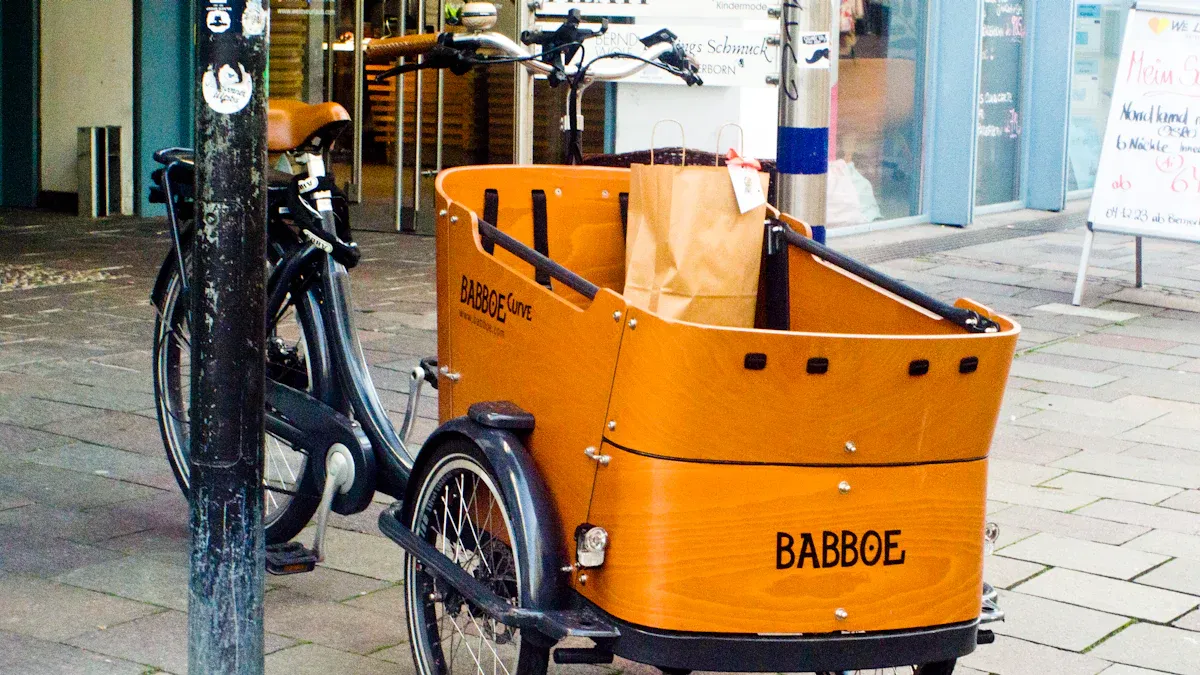
Use your muscles and motor power for heavy transport. An e-bike in this class carries enormous loads. Large versions transport up to 250 kilograms of payload effortlessly.
Feature |
Benefit for your everyday life |
|---|---|
High load capacity |
Convenient transport of weekly groceries or beverage crates |
Child seats |
Secure benches with firmly anchored Y-belts |
Strong brakes |
Hydraulic disc brakes stop even heavy loads safely |
Parking brake |
Safe loading of children without the bike rolling away |
E-bikes for tours, sports, and off-road
Would you like to combine nature and sports? Powerful motors provide reliable support on long paths and in steep terrain.
Trekking e-bikes for long distances
Are you planning extended trips over several days? A trekking model combines high long-distance comfort with robust components. For multi-day tours with luggage, experts recommend a battery capacity of up to 750 Wh. This energy guarantees you sufficient range for long distances and steep climbs.
E-mountain bikes for off-road use
Away from paved paths, off-road bikes offer maximum traction. You can choose between two basic types for your forest use:
Criterion |
E-Hardtail |
E-Fully |
|---|---|---|
Comfort & Control |
Lower in rough terrain |
Higher in demanding terrain |
Weight |
Comparatively lower |
Higher (affects handling) |
Handling (downhill) |
More fluid, but less forgiving |
Additional weight offers extra safety with optimal center of gravity |
Drive influences |
No rear suspension present |
Rear end can tend to bob due to the drive |
Cross e-bikes as flexible all-rounders
Are you looking for a sporty compromise for different surfaces? A cross model combines features from various bike categories:
Hybrid concept: The system links the off-road capability of a mountain bike on gravel with the everyday practicality of a trekking bike on asphalt.
Reduced equipment: Forgoing fixed mudguards or luggage racks lowers the total weight. This creates a sporty look.
Riding characteristics: A low weight ensures high maneuverability and agility.
Frame and ergonomics: A balanced geometry is suitable for long distances and light off-road use.
E-gravel bikes and e-road bikes
You appreciate high speeds on the road or forest paths. Lightweight motors push you gently on steep mountain passes. The drive integrates discreetly into the slim frame. Minimal pedaling resistance allows you to cycle normally above the assistance threshold. A modern e-bike in this category combines maximum performance with a real racing bike feel.
Special and niche models
S-Pedelecs for fast commutes
Are you looking for a real alternative to a car? S-Pedelecs support you with the motor up to a speed of 45 km/h. Legally, these fast bikes are considered two-wheeled mopeds. 🚴♂️
Proof / Prerequisite |
Requirement for S-Pedelecs |
|---|---|
Legal classification |
Moped (up to 45 km/h) |
Documents & Plate |
Operating license (ABE) & insurance license plate |
Driving license & Age |
Class AM (permitted from 15 years old) |
Note the right-of-way rules: You must use the normal road with an S-Pedelec. You are generally not allowed to use bike paths within or outside of town. National authorities only allow bike path use through special additional signs.
XXL e-bikes with high load capacity
Do you want to transport higher body weight or heavy loads? XXL e-bikes offer you maximum stability in everyday life. Specially reinforced frames, particularly robust rims, and powerful brakes ensure your ride is safe.
Manufacturers generally approve such XXL e-bikes for a maximum system weight of up to 200 kg. This total weight includes the bike, your body weight, and the luggage. This allows you to safely transport a payload of up to 160 kg through traffic. Depending on the specification, you can also find versions limited to 170 kg or 180 kg.
Lifestyle and e-fatbikes
Do you value eye-catching design? Lifestyle e-bikes combine an extraordinary look with modern technology for the city.
E-fatbikes are characterized by extremely wide tires:
High grip: The huge air cushions roll effortlessly over deep sand, mud, or snow.
Strong cushioning: The wide tires gently dampen shocks on uneven ground without a heavy suspension fork.
Important technical purchasing criteria
Before purchasing, you need a clear understanding of the technical components. Different motors, batteries, and shifters noticeably influence your riding experience.
Mid-drive motor versus hub motor
The mid-drive motor sits directly at the bottom bracket in the center of the frame. This position creates a low center of gravity for safe riding.
“Due to the central and quite low position of the mid-drive motor, the best possible weight distribution is guaranteed, which translates into very good riding dynamics.” – Christian Malik
The hub motor in the rear wheel, on the other hand, runs particularly quietly and is gentle on the chain drive. The manufacturer specifies the power of the motor in Newton meters (Nm):
Low (35–45 Nm): The system provides gentle support. This range saves energy on flat routes.
High (85+ Nm): The motor accelerates powerfully. You can overcome steep inclines and heavy loads effortlessly.
Battery capacity and range
The capacity of the energy storage determines your action radius. Different influences change the actual distance per battery charge:
Battery properties: The storage capacity in watt-hours as well as the age of the battery limit the range.
Riding behavior & settings: The selected motor level, your cadence, and proactive gear shifting save energy.
Vehicle & environment: High total weight, low tire pressure, headwinds, and steep mountains require more battery power.
Frame shapes and gear types
A good e-bike fits your physical needs. A low-step frame allows for easy mounting without injury risk. Trapezoid and diamond frames, on the other hand, offer you higher stiffness for sporty maneuvers.
For gear shifting, choose between two basic types:
Feature |
Derailleur gears |
Internal gear hub |
|---|---|---|
Design |
Open system at the rear hub |
Closed system in the hub |
Shifting behavior |
Shifting occurs fluidly while pedaling |
Shifting also works comfortably while standing still |
Maintenance |
Regular cleaning required |
Very clean and low-maintenance |
subtle
Choosing the right e-bike type
Are you looking for the perfect electric bike for your needs? You are now comparing your personal riding profile with the technical possibilities of the various models.
Determining riding profile and terrain
Your commute to work and your favorite routes determine the choice of the appropriate type. Different models master different surfaces and gradients.
Type |
Suitable terrain |
Suitability for climbs & unpaved paths |
|---|---|---|
E-Hardtail mountain bike |
Field paths, gravel roads, trails, asphalt |
Excellent stability and traction due to front suspension and wide tires on unpaved ground. |
E-Fully mountain bike |
Daring routes, obstacles (stones, branches), demanding trails |
Maximum control and comfort thanks to full suspension; motor power handles even extremely difficult terrain. |
Trekking E-Bike |
City, unpaved paths, steep mountains |
Large selection of gears thanks to the derailleur offers the right gear ratio for steep climbs and tours. |
E-MTB Hardtail: Ideal for fast laps on forest paths and easy terrain.
E-MTB Fully: The best choice as a powerful companion for more demanding mountain bike rides in the forest.
Choose ergonomics and seating position
The right setting protects your body from pain and strain. You should adjust the handlebars and saddle precisely to your height.
Adjustment element |
Type of adjustment |
Ergonomic impact & posture |
Possible physical consequences of incorrect adjustment |
|---|---|---|---|
Handlebar height |
Set higher |
Promotes an upright and back-friendly seating position. |
- |
Handlebar height |
Set lower |
Leads to a sportier, forward-leaning posture. |
Overloading of the wrists, neck discomfort, numbness in the hands. |
Saddle height |
Too high |
Pelvis tilts laterally while pedaling, legs are completely extended. |
Irritation of the hamstrings, impaired power transmission. |
Saddle height |
Too low |
Knee joint remains at too sharp an angle during the power phase. |
Pain in the knee joint / under the kneecap, increased joint strain. |
Plan budget and accessories
You should plan your finances carefully before purchasing. The price depends on the technology installed and the battery sizes.
Under 1,000 euros: Offers affordable entry-level models of good quality for people on a limited budget or beginners who want to test riding a pedelec first.
Under 2,000 euros: This segment contains slightly higher quality versions compared to the basic entry-level bikes.
2,000 to 3,000 euros: Typical price range for solid models designed for everyday use and leisure activities.
From 3,000 euros: Price category for high-end models with the most advanced equipment.
Also allocate a budget for a protective helmet, a sturdy locking system, and weatherproof panniers.
Different models fulfill different everyday needs. City models offer you great comfort. Trekking bikes ensure endurance on long distances. Mountain bikes get you safely through difficult terrain.
Use this checklist for your decision:
Main category |
Most important criteria to check |
|---|---|
Ergonomics & Fit |
Correct frame size and reach to the handlebars |
Safety & Route |
Strong brakes, good tires, and sufficient battery capacity |
Visit a specialist dealer to make your purchase. Complete an extensive test ride on site. Test the handling without motor support. Check the smooth acceleration of the drive on inclines. Pay attention to a comfortable seating position.
FAQ
Which e-bike suits you best?
Your personal riding profile determines the choice of the right model. A city e-bike offers you high comfort in city traffic. A trekking e-bike is ideal for long excursions. An e-mountain bike gets you safely through difficult terrain. 🚴♂️
Do you need a driver's license for an e-bike?
You do not need a driver's license for a standard pedelec up to 25 km/h. The law treats this model like a conventional bicycle. For a fast S-pedelec up to 45 km/h, you need at least a Class AM driver's license.
How far does an e-bike go on one battery charge?
The range depends heavily on the battery capacity and your riding style. Modern batteries usually allow for distances between 50 and 120 kilometers. Strong headwinds, high tire pressure, and steep inclines directly influence this value.
Where are you allowed to ride an S-pedelec?
Safety notice: Always use the normal road with an S-pedelec.
An S-pedelec is legally considered a moped. Therefore, you are not permitted to ride on normal bicycle paths inside or outside of urban areas.