
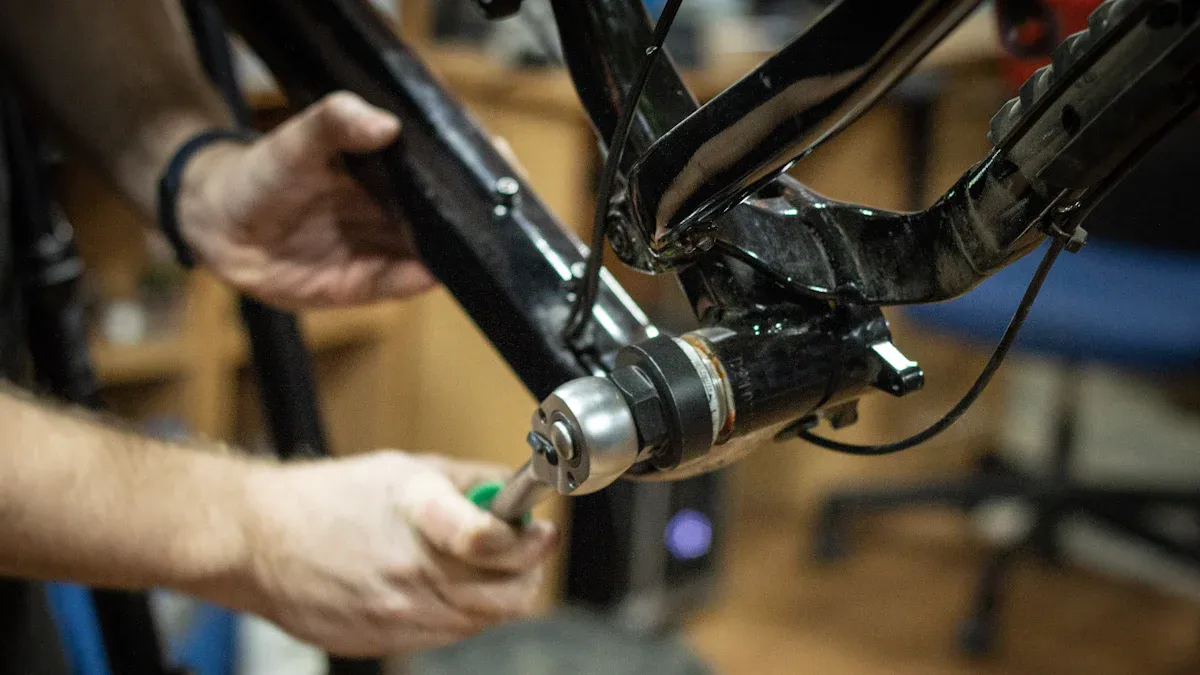
Are you looking to buy a used e-bike? Then you should take a close look. Many underestimate the risk of a defective battery or motor and often overlook expensive defects. The condition of the frame, brakes, and electrical components also frequently remains unchecked. Private purchases offer no statutory warranty, which can quickly become expensive if problems arise. Therefore, use this checklist to examine all important points so you don't experience any nasty surprises when buying an e-bike.
Key Takeaways
Check the frame for cracks and rust. A well-maintained frame increases the lifespan.
Inspect the brakes, chain, and tires. These parts wear out quickly.
Pay attention to the battery capacity. A weak battery leads to high costs.
Test the motor during a test ride. It should run smoothly and quietly.
Ask for service and maintenance records. They show how well the e-bike has been cared for.
Checking the condition of e-bikes
Frame and visible damage
The best way to check the frame of a used e-bike is in a bright room with good lighting. Start at the head tube and work your way systematically along the frame. Look for hairline cracks, chips, uneven light reflections, and rust. Press on the handlebars and pull on the saddle. Creaking or cracking noises can indicate crack formation. A magnifying glass helps you identify fine cracks. You can make stress cracks visible with a dark marker. Check the frame for dents or chipped paint, especially at welds and around the battery area. Feel for suspicious spots and tap lightly on the frame. A changed sound can indicate damage.
Tip: A well-maintained frame without rust and cracks significantly increases the lifespan and value of the e-bike.
Components: Brakes, chain, tires
The most important wear parts on e-bikes are the chain, brakes, suspension, and bearings. The chain often rubs against sand and dirt, leading to rapid wear. Rim brakes and disc brakes lose performance due to external influences. Suspension seals and bearings are damaged by dirt, salt, and water. Check the chain for rust and elongation. Inspect brake pads for wear and test the braking effect. Examine tires for cracks, tread, and air pressure.
Chain, cassette, and chainrings often show wear due to dirt and water.
Braking systems suffer from grit and salt particles, which impairs braking performance.
Suspension can become brittle and cause damage.
Bearings lose lubrication due to fine mud and can seize up.
Note: Almost one in five e-bike damages affects technical components such as the battery and motor.
Maintenance status and cleanliness
A well-maintained e-bike is usually reflected in its cleanliness. You can recognize a good state of care by a clean frame, maintained components, and little dirt around the motor and battery. Check if the e-bike has been cleaned regularly. Look for oil residue on the chain and clean brakes. A well-maintained e-bike has less wear and offers a longer lifespan.
Cleanliness is an important indicator of maintenance.
Little dirt and no rusted parts suggest a responsible previous owner.
Check the tire air pressure and the condition of wear parts.
Tip: A well-maintained e-bike saves you money later on repairs and spare parts.
Year of manufacture and wear
The year of manufacture of an e-bike influences its lifespan and value. Older models often offer fewer spare parts and sometimes have a lower quality of drive systems. The condition of the battery and technical components determines the lifespan. A well-checked battery and high range determine the value of a used e-bike. Brands like Bosch and Yamaha offer reliable quality and good guarantees for spare parts even for older models.
Condition/Features |
Price (refurbished) |
Savings |
|
|---|---|---|---|
High-quality trekking e-bike |
3,500 Euros |
1,900 - 2,300 Euros |
1,200 - 1,600 Euros |
Note: A more recent year of manufacture and maintained components increase the resale value and reliability.
Battery & Motor in e-bikes
Battery capacity and charge cycles
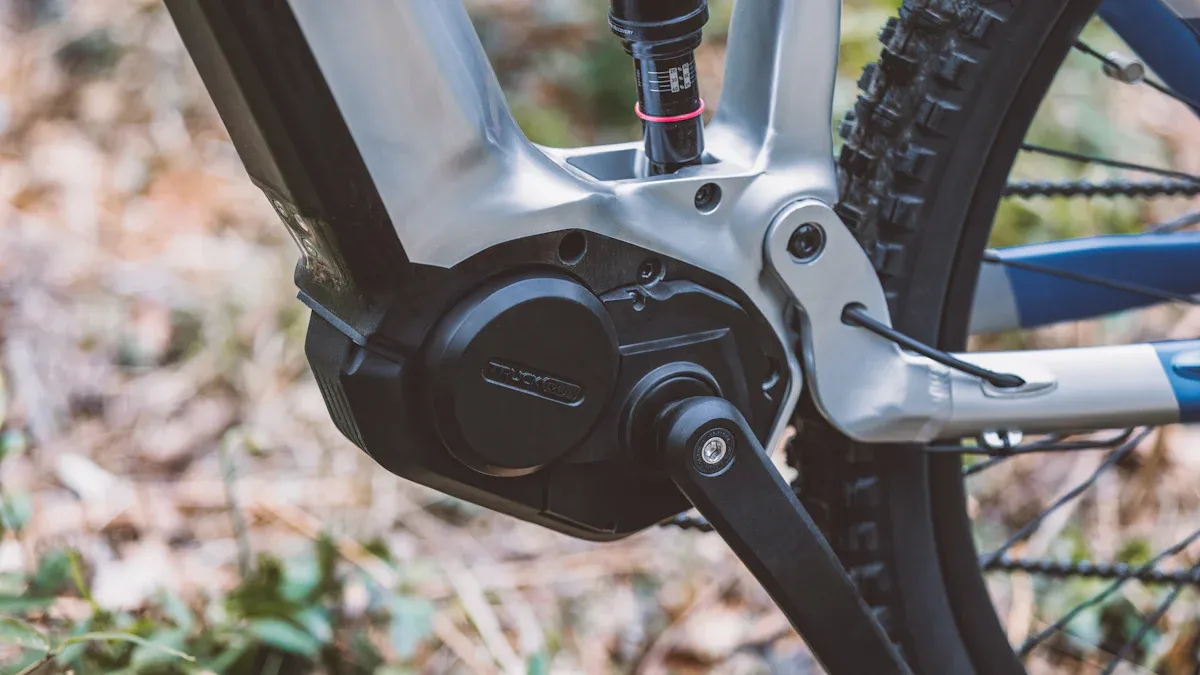
The battery is the heart of your e-bike. Pay particular attention to the remaining capacity when buying. A battery with less than 60 percent capacity will no longer take you far and causes high follow-up costs. Always ask for a current test protocol or readout report. This way you can see exactly how much energy the battery can still store.
Uwe Wöll from the bicycle dealer association VSF advises: "The capacity should still be beyond 60 percent. Or the price of the bike is correspondingly lower, so that one can already plan for the purchase of a new battery for the coming years."
The number of charge cycles gives you an indication of the battery's lifespan. After about 700 charge cycles, a replacement is often necessary. After five to six years, you should also expect to need a new battery. The actual lifespan depends on how the previous owner used and charged the e-bike.
After 500 to 1,000 charge cycles, a battery should still have 70-80% of its original capacity.
A battery with less than 60 percent capacity is a cost risk.
Always ask about the age and usage of the battery.
Motor function and mileage
The motor determines how much fun you have with your e-bike. Test the motor function during a test ride. Switch between the different support levels such as Eco, Tour, or Turbo. The motor should react evenly and show no dropouts. Ride up a small incline and pay attention to the power delivery. Unusual noises or jerky movements indicate defects. The battery display should remain stable and not make sudden jumps.
Switch between different support levels during the ride. Does the motor react evenly?
Test the bike on a slight incline or while accelerating. Watch out for noises and movements.
Observe the battery display. It should remain stable.
Typical motor problems with used e-bikes can be found in the following table:
Problem Type |
Description |
|---|---|
Wear |
Permanent loads lead to wear. |
Technical defects |
Faults in the drive unit or communication problems between the motor, display, and battery. |
Faulty sensors |
Sensors can impair motor function. |
Speed sensor |
Problems with the speed sensor influence motor performance. |
Battery connection |
Poor connection to the battery can disrupt motor function. |
Performance loss on a hill can arise from a weak battery, overheating protection, or a motor at its power limit.
Identifying weak points
Every e-bike has typical weak points. Check especially the drive, the brakes, and the bearings. Moisture and uneven usage lead to problems with the shifting and bearings. The battery range often decreases gradually. You don't notice this immediately. Electrical plug connections age due to weather conditions and lose reliability.
Weak point |
Description |
|---|---|
Drive and brakes |
These parts wear out quickly in everyday life. |
Bearings, shifting, and parts |
Moisture and long periods of inactivity lead to problems. |
Battery |
The range decreases slowly, often unnoticed. |
Electrical connections |
Weather influences make the contacts age and disrupt the system. |
Ask for a readout report of the battery and motor before buying. This allows you to recognize the health status and avoid nasty surprises.
A defective battery or motor causes high costs. Therefore, check both components carefully and demand proof from the seller.
Maintenance & History
Service and maintenance records
You should always ask for service and maintenance records when buying a used e-bike. A service and instruction manual belongs to every privately bought e-bike. Wear-intensive parts like brakes, the chain, and bearings require regular maintenance. Only then is safety maintained. An e-bike that has been regularly serviced has a longer lifespan and fewer unexpected problems. Ask for maintenance intervals, maintenance logs, and invoices. An annual e-bike check, or even twice a year for frequent riders, gives you a good overview of the condition and possible future maintenance costs.
Tip: A complete maintenance log shows you how carefully the previous owner cared for the e-bike.
Indications of improper repairs
You can often identify improper repairs if you look closely. Here are some indications that will help you:
Scratches on the derailleur indicate a fall. This can indicate improper handling or repair.
Interrupted maintenance intervals lead to several small wear processes. These weak points add up and can cause problems later.
Compare the current condition of the e-bike with pictures of the original equipment status. Have parts like the saddle or luggage rack been changed?
Check if the gear shifting runs cleanly through all gears. A bent derailleur hanger can indicate a fall or improper transport.
Warning: Small repair errors can have major effects on safety and ride comfort.
Significance of a maintained maintenance log
A maintained maintenance log is particularly important for the resale value. It shows potential buyers that the e-bike has been serviced regularly. The condition of the e-bike decides the price. A well-maintained e-bike achieves higher prices. The following table gives you an overview of which factors influence the resale value:
Factor |
Influence on resale value |
|---|---|
New price |
Higher value for more expensive models |
Age |
Newer e-bikes have a higher value |
Battery performance |
Better battery performance increases the value |
Condition |
Well-maintained e-bikes achieve higher prices |
Brand |
Well-known brands have a higher resale value |
A maintained maintenance log is a sign of reliability and care. You can use it to increase the value of your e-bike and avoid nasty surprises.
Legal & Papers
Purchase contract and proof of ownership
You should always pay attention to the correct documents when buying a used e-bike. A purchase contract protects you from later disputes. It contains important information such as the condition of the e-bike, accessories, price, payment method, and handover date. Let the seller show you the proof of purchase. This allows you to ensure that the e-bike was not stolen. A service log helps you to check the maintenance history. Ask for all relevant papers such as the purchase contract, warranty documents, and operating manual. The receipt is important to prove the legal acquisition.
Important documents when buying:
Purchase contract with all details
Receipt or invoice
Service and maintenance documents
Warranty papers
Operating manual
Tip: Always have someone show you proof of the purchase of the bike. This minimizes the risk of buying a stolen bike.
StVZO compliance
Your used e-bike must comply with the regulations of the German Road Traffic Licensing Regulations (StVZO). Check the most important points before you buy the bike:
The motor may have a maximum output of 250 watts. Assistance ends at 25 km/h.
The e-bike requires a front headlight and a rear tail light.
Reflectors must be attached to the front, rear, and wheels.
Two independent braking systems are mandatory.
A functional bell is required.
The e-bike must have a CE marking and a declaration of conformity from the manufacturer.
Note: Only an StVZO-compliant e-bike may be used legally in road traffic.
Scope of delivery and accessories
When purchasing, you should carefully check which accessories are included in the scope of delivery. If important parts are missing, you will incur additional costs later. Check whether the charger, the spare key for the lock, and any existing spare parts are included. Ask about further accessories such as luggage racks, mudguards, or a basket. Have all parts shown to you and note them down in the purchase agreement.
Seller type |
Warranty obligation |
|---|---|
Private sellers |
Warranty can be excluded, but must be clearly stated in the contract. |
Dealer |
Liability for defects at the time of handover, for at least one year. |
Remember: There is no statutory warranty for private sales. Therefore, always ask to see an invoice and a service booklet to document the condition of the e-bike.
Test ride & functional test
Testing assistance levels
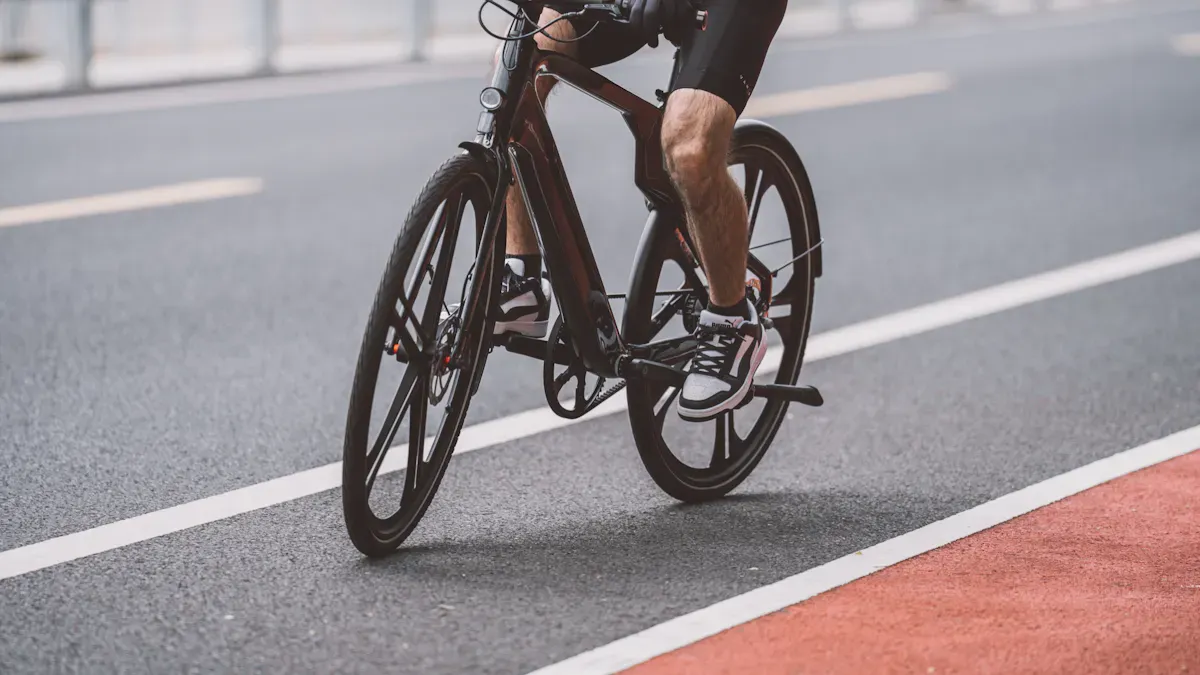
During the test ride, you should try out all assistance levels of your e-bike. Start in Eco mode. This mode offers about 60% assistance and is suitable for relaxed rides on flat paths. Then switch to Tour mode with around 140% assistance. Here you get more comfort and a greater range. In Sport mode, you will feel up to 240% assistance, ideal for hilly routes or athletic rides. Turbo mode provides up to 400% assistance and helps you on steep climbs or fast sprints.
Switch between Eco, Tour, Sport, and Turbo while riding.
Pay attention to whether the motor reacts smoothly and without delay.
Test the e-bike on a small hill or when starting from a stop.
Listen for unusual noises or jerky movements.
Tip: A clean transition between levels indicates that the motor and control system are working perfectly.
Handling and noises
You should observe the handling carefully. The e-bike must run stably and should not wobble. Check the brakes with firm braking. Test all gears and pay attention to the shifting behavior. Listen for the following noises while riding:
Grinding or scraping noise: May indicate worn motor bearings or gearbox damage.
Clattering and rattling: Often a sign of loose frame components or defective spokes.
Squeaking and whistling: Usually points to worn brake pads or a dry chain.
Clicking when pedaling under load: Can be caused by loose motor mounts or worn bottom brackets.
Humming or buzzing in the motor area: Indicates electrical faults or overheating.
Note: You should always take unusual noises seriously. They can point to expensive repairs.
Checking electronics and display
You must test the electronics and the display for functionality. Switch on the e-bike and check whether the display clearly shows all information. Check the battery indicator, speed, and assistance level. Test whether all buttons and displays respond. Watch out for error messages or flickering displays.
Possible display error |
Meaning |
|---|---|
No display |
Check power supply |
Flickering |
Loose connection possible |
Error message |
Check electronics or sensor |
Tip: A functional display is important for your safety and control over the e-bike.
When buying a used e-bike, it is best to check the following points:
Cleanliness and maintenance
Service booklet and accessories
A careful inspection protects you from expensive surprises. The checklist helps you keep track of all important details. This way, you make a safe decision and find an e-bike that suits you. 🚲
FAQ
How do you recognize if an e-bike was stolen?
Please check the frame number. Ask for the purchase receipt. Compare the number with the documents. An honest seller will show you all documents. If these are missing, you should be cautious.
How much does a new battery for an e-bike cost?
A new battery usually costs between 300 and 800 euros. The price depends on the brand and the capacity. You should always check the battery condition before you buy a used e-bike.
Can you insure a used e-bike?
Yes, you can insure a used e-bike. Many insurance companies offer special tariffs for used bikes. Ask about the conditions and check whether theft and damage are covered.
How long does an e-bike motor last?
An e-bike motor often lasts for 10,000 to 20,000 kilometers. The service life depends on maintenance and usage. You should have the motor serviced regularly and pay attention to unusual noises.