
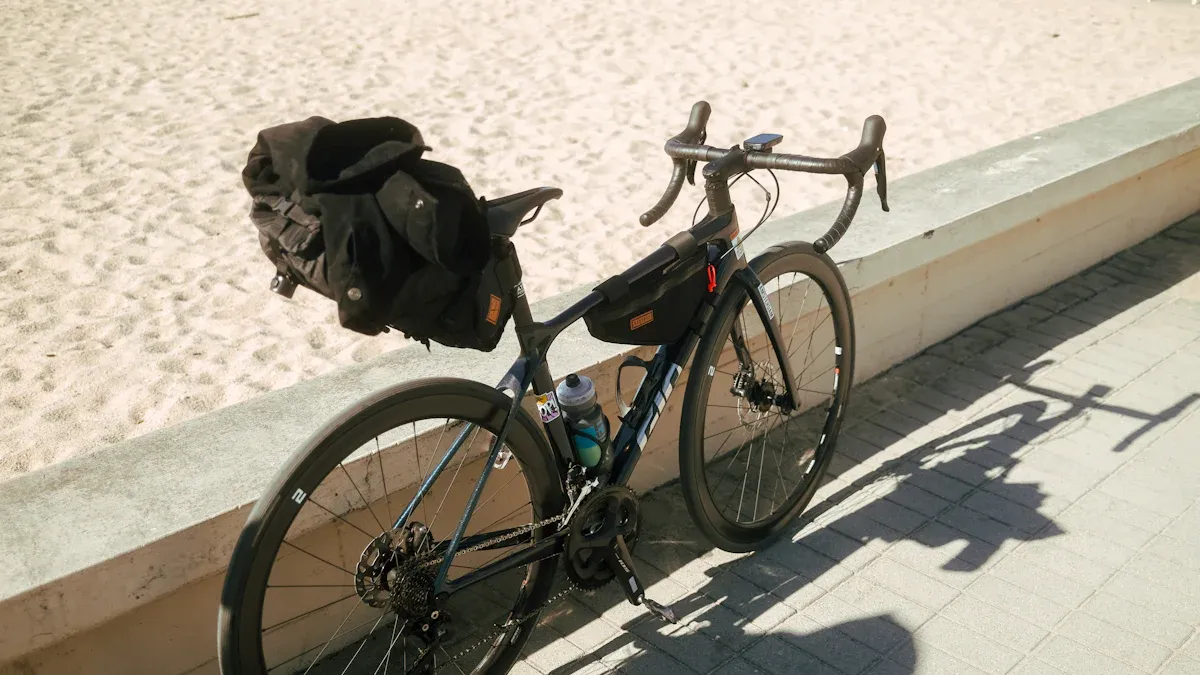
Are you looking to buy a used e-bike and wondering what you need to pay special attention to? Many buyers often experience nasty surprises because they overlook typical pitfalls. Common problems include poor battery condition, hidden damage, and a lack of warranty.
“The battery is a classic wear-and-tear item on an e-bike. If a new battery is needed soon after purchase or if repairs are due, the favorable purchase price can be relativized.”
With the right eye, you can recognize the most important weak points on e-bikes and make a safe decision.
Key takeaways
Check the e-bike’s frame and paint for cracks and damage. Pay special attention to welds and the down tube.
Ask about the condition of the battery. A good battery should have at least 70 to 80 percent of its capacity. Ask to see the charge cycles.
Take a test ride to check how it handles. Pay attention to noises, motor assistance, and the brakes.
Collect all important documents such as the purchase receipt and inspection records. These protect you from fraud and help track the e-bike’s history.
Make sure the e-bike meets all legal requirements. Check its roadworthiness and lighting.
Checking general condition
Frame and paint
You should always take a close look at the frame and paint of a used e-bike first. A structured visual inspection helps you detect hidden defects. Look for hairline cracks in the paint and check every connection from different angles. You will often find damage particularly on welds, the down tube, and high-stress areas.
Look out for cracks, dents, and paint damage, especially near welds.
Check the down tube, as it often sustains impacts.
Ask the seller if parts of the frame look significantly newer than others.
Minor scratches in the paint are usually normal signs of wear.
Large scratches, dents, or repainting can indicate accidents or poor maintenance.
Frame cracks are an absolute dealbreaker. They make the e-bike worthless and unsafe.
Tip: Choose a bright location with good lighting for your inspection. Start at the head tube and work your way through systematically.
Visible damage
Visible damage provides clues about the e-bike’s history. Accidents and improper use often leave traces that you can recognize.
Cause of damage |
Percentage share |
|---|---|
Accidents |
|
Thefts |
4.1% |
Structural damage such as cracks and dents leads to massive loss of value. They also endanger your safety. Cosmetic damage like scratches often reduces the price by 10 to 20 percent. Damage to carbon frames is sometimes invisible. You should therefore always ask if the bike has crashed or had major scratches. Even small dents can significantly lower the resale value, even if they do not directly affect riding safety.
Year of manufacture and model
The year of manufacture and the model play an important role when buying. Newer models often meet higher safety standards and offer modern technology. Check whether the model still has spare parts available and if there are any known weak points.
e-mountain bikes are well-suited for off-road trails and often have powerful motors.
e-trekking bikes are reliable for long tours.
e-city bikes are well-suited for everyday use and are usually cheaper.
S-pedelecs are subject to particularly strict testing and offer a high level of safety.
You should always pay attention to up-to-date technology and safety standards. An older model might be cheaper, but sometimes it lacks important safety features. Research the specific model before buying and ask about the e-bike’s history.
Technology and wear-and-tear parts on e-bikes
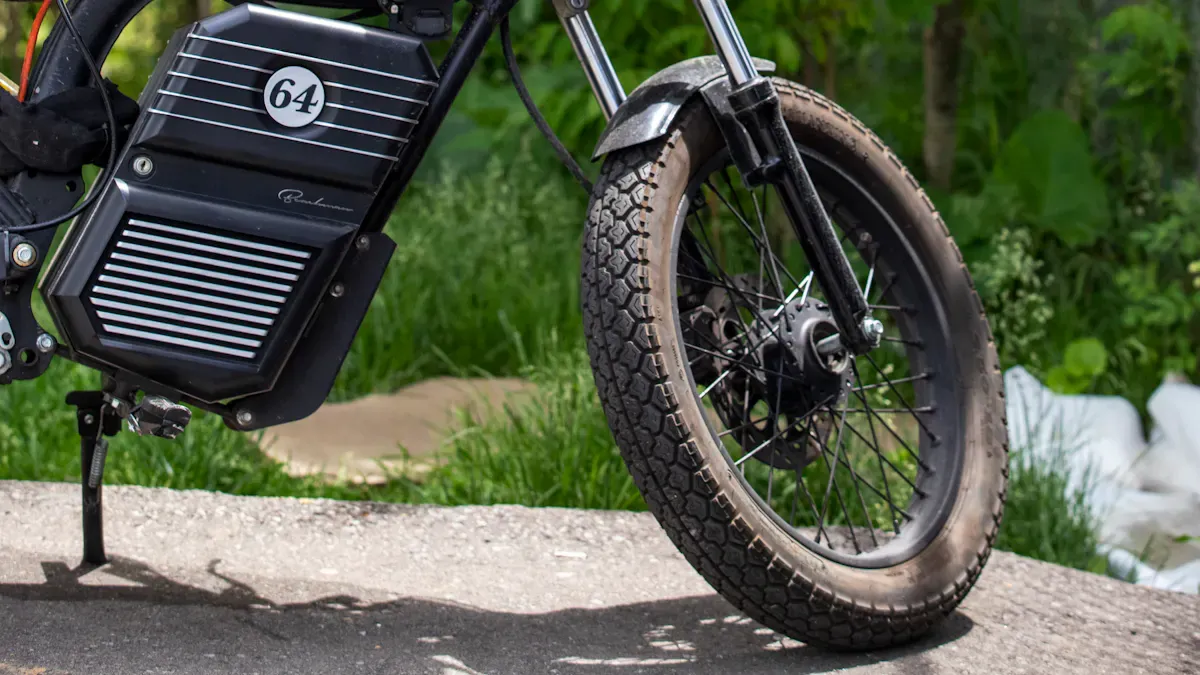
Check the battery
The battery is the heart of an e-bike. You should always know how much capacity is left. A good battery has at least 70 to 80 percent of its original performance. Ask the seller about the number of charge cycles. The fewer the charge cycles, the better the condition. The following table will help you assess the rating:
Charge cycles |
Rating |
|---|---|
0-100 |
Very good, battery almost as new |
100-300 |
Good, normal usage |
300-500 |
Noticeable wear, still 80-90% capacity |
500-800 |
Significant wear, only 70-80% capacity left |
Over 800 |
Battery replacement needed in 1-2 years |
With normal use, a battery lasts for about 1,100 charge cycles, which corresponds to approximately six years. Test the range of the e-bike if possible. Pay attention to whether the motor power is sufficient even on inclines. Modern systems like Bosch or Shimano offer special apps or diagnostic tools. You can have a free diagnosis done at a dealer or use the app to check the condition.
Bosch systems: Diagnosis at a dealer or via app
Shimano systems: E-Tube Project app or dealer
Yamaha systems: Can only be read out at a dealer
Tip: Always ask to see proof of the battery diagnosis. This ensures the battery is still efficient.
Motor function
The motor provides the assistance while riding. You should pay attention to smooth assistance. Check that the motor does not make any unusual noises. A sudden loss of power or complete failure of the assistance are warning signs. Dirty or worn pulleys can also cause problems. Check that all cables and connections are secure.
The following points will help you with the test:
The motor runs quietly and smoothly.
The assistance remains constant, even under changing loads.
The motor does not overheat.
The chain or belt is in good condition.
The gears shift cleanly and without delay.
If you feel uneven assistance while riding, it could indicate a defect. Loose cables or a poorly positioned sensor interfere with function. When in doubt, have an expert take a look at the system.
Brakes and tires
Brakes and tires are crucial for your safety. First, check the brake levers. They must not be bent. The braking system must be sealed; wet spots indicate leaks. The pressure point on the brake lever should feel firm and crisp. If you pull the lever all the way to the handle, maintenance is required. Look into the brake caliper to see how much brake pad is left. Grooves or discoloration on the brake discs indicate wear.
The braking system must remain dry.
A firm pressure point is important.
Brake pads should still have sufficient material.
Brake discs must not show any deep grooves.
The tires also deserve attention. They should have enough tread and the rubber must not be cracked. Look for cuts in the sidewalls and torn-off lugs. Check the tread depth across the entire circumference, especially on the rear wheel. A flat or brittle tire must be replaced.
Remember: Good brakes and intact tires protect you in everyday life and in emergencies. Do not skimp on this check.
Maintenance and service history
Inspection records
You should always ask for inspection records when buying a used e-bike. These documents show you how well the bike has been maintained. A careful owner takes their e-bike to the workshop at least once a year and keeps the paperwork. This way, you can see if the bike has been regularly serviced.
Inspection records give you an overview of the maintenance status.
Original invoice, manual, and warranty documents help you track the e-bike’s history.
A well-maintained service booklet shows that the previous owner valued quality.
Manufacturers recommend fixed maintenance intervals. The following table gives you a quick overview:
Maintenance frequency |
Description |
|---|---|
Annual inspection |
|
Inspection every 2000 km |
Perform an inspection every 2,000 kilometers. |
Tip: If records are missing, be especially careful. A complete service booklet increases the value of the e-bike.
Replacement of parts
Wear-and-tear parts degrade on every e-bike. You should check whether important parts have already been replaced. This will save you costs later and ensure greater safety.
Brake pads: They lose braking power over time and must be replaced regularly.
Drive chain: A clean and oiled chain lasts longer; replacement is necessary when worn.
Sprockets and chainrings: These parts also wear out and should be replaced as needed.
Tires and tubes: Check the tread and look for cracks. Worn tires must be changed.
Rims: They must not show any cracks or heavy wear.
Remember: An e-bike with new wear-and-tear parts is often the better choice.
Repair history
You can trace the repair history of a used e-bike if the seller has kept all documents. Technical inspections and reports from experts document the condition of the bike. In these reports, you will find information about damage and performed repairs.
Expert reports show you whether the e-bike was measured after an accident.
Proof of repairs gives you security when buying.
A measurement is particularly important if the bike has crashed.
Tip: Ask to see all reports and assessments. This ensures you get a reliable e-bike.
Documents and accessories
Purchase receipt and proof of ownership
You should always ensure you have complete documentation when buying a used e-bike. It protects you from fraud and helps clarify the origin of the bike. The most important papers are:
Original invoice with purchase date and price.
Purchase contract with all relevant details about the e-bike and the involved parties.
With these documents, you can prove legal ownership. Check the frame number on the bike and compare it with the details in the documents. A serial number check provides additional security. It helps to better assess the origin and authenticity of the e-bike.
Aspect |
Description |
|---|---|
Origin and authenticity |
A serial number check shows whether the bike was stolen or is genuine. |
Identification feature |
The frame number serves as an important identification feature. |
Building trust |
The check creates trust between buyer and seller. |
You can also have the frame number registered at a registration office. This provides additional protection against theft.
Tip: Always ask to see all documents and check the frame number carefully.
Instruction manual
The instruction manual is an important companion for your used e-bike. It explains all functions and settings. You will find tips there on proper battery care. A well-maintained battery lasts longer and remains safe. The manual helps you avoid errors and use the e-bike optimally.
You learn how to operate the e-bike correctly.
The manual contains important safety instructions.
It shows you how to charge and maintain the battery gently.
If the instruction manual is missing, you can often reorder it from the manufacturer or download it online.
Accessories and spare parts
Accessories make your e-bike more valuable and practical. Pay attention to whether the seller is including useful accessories. The bicycle passport is particularly important. It documents the history of the e-bike and makes it easier for you to resell it later. The bicycle passport always belongs with the bike and is handed over at the time of sale.
A bicycle passport increases the resale value.
It makes the history of the e-bike traceable.
Spare parts like the charger, keys, or luggage rack are a plus point.
Note: The more complete the accessories, the better your start with the used e-bike.
Test ride and functional test
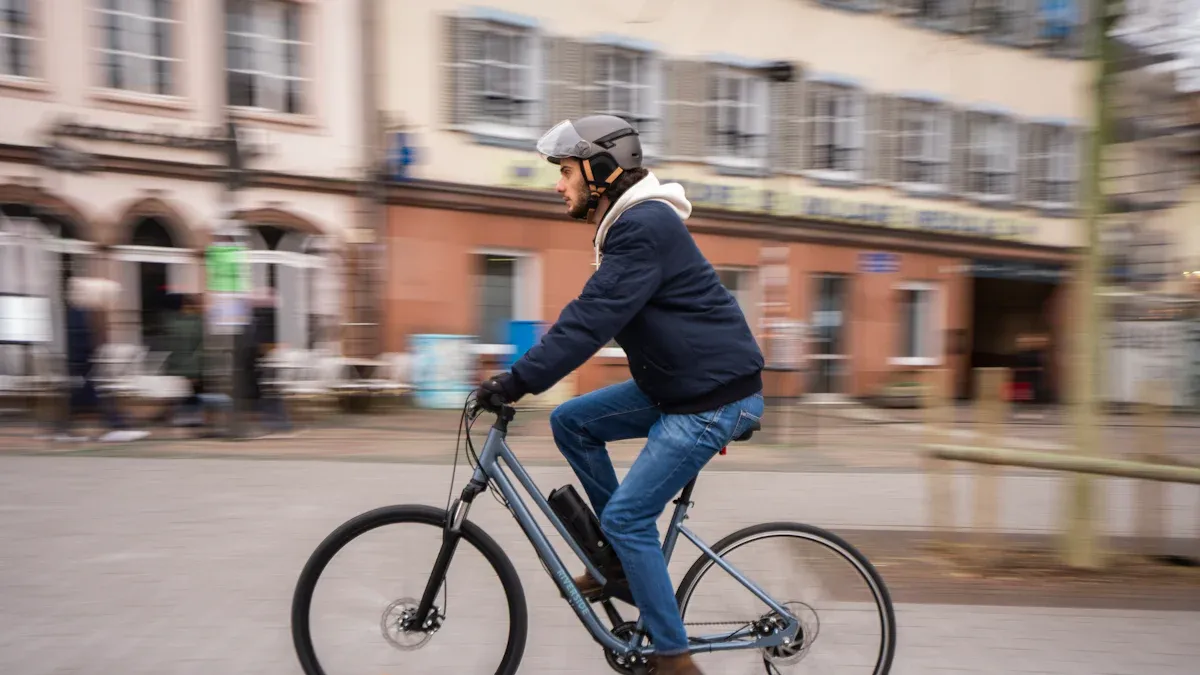
Handling
You should always take a test ride before deciding on a used e-bike. Pay attention to how the bike feels. The e-bike must run safely and stably. Check whether the front and rear wheels are aligned. The bottom bracket should move smoothly. Listen for unusual noises like rattling or clattering. Also, test the bike on a small incline. This will help you notice if the motor provides consistent support without any jerky movements. A secure riding feel is important for your everyday life.
The e-bike should feel secure.
Check if the bottom bracket runs smoothly.
Listen for unusual noises.
Test the bike on an incline.
Tip: A longer test ride will show you more than just a quick lap around the block.
Electronics and display
The electronics are the nervous system of modern e-bikes. Check the display and all electronic functions. Shift between the different support levels and observe whether the motor reacts quickly and reliably. The battery indicator must remain stable and should not drop suddenly. Check that the lights and sensors are working. Common sources of error include battery issues, cable contact problems, speed sensor faults, or a defective display.
Check if the display shows all information.
Test the lighting system and sensors.
Watch for error messages or dropouts.
Check the cable connections.
Note: Electronic faults often only appear after some time. Remain vigilant and ask about the last software update.
Gears and brakes
You should shift through all gears and look for problems. The shifting must not skip and must operate cleanly. Test the brakes during normal riding and simulate an emergency stop. The braking power must be consistent and strong. Check whether the brake pads still have enough material. Ensure that the brakes do not squeak or drag.
Shift through all gears.
Test the brakes at various speeds.
Pay attention to consistent braking power.
Note: Only an e-bike with working gears and strong brakes will provide you with safety in road traffic.
Legal aspects when buying an e-bike
Road Traffic Licensing Regulations (StVZO) compliance
You must ensure that your used e-bike meets all requirements of the German Road Traffic Licensing Regulations (StVZO). Only then are you permitted to use it in road traffic. Check whether the e-bike is roadworthy and has all required components. The following table shows the most important requirements:
Requirement |
Description |
|---|---|
The e-bike must be suitable for road traffic. |
|
Reflectors |
Reflectors must be present on the front, rear, and on the pedals. |
Lighting |
Functional lighting is mandatory. |
Reflective strips |
Tires or rims require reflective strips. |
Tip: The lighting should be at least 10 lux strong. 15 to 30 lux is better for increased visibility. Parking lights and brake lights provide additional safety.
Sales contract
A clear sales contract protects you from future problems. Write down all important details. Also, record any verbal promises in writing. This way, you can avoid disputes. The following points belong in the contract:
Make and frame number of the e-bike
Details about the battery, charger, display, and battery key
Proof of battery condition and the serial number
Accessories that affect the value
Make sure the seller declares that the e-bike is their property and is being sold free of rights of third parties. They must disclose known damage or previous accidents. A well-completed contract provides you with security and helps with later questions.
Note all assurances in writing. This allows you to prove what was agreed upon in the event of a dispute.
Insurance and registration
Not every e-bike requires insurance or registration. The decisive factors are the motor power and maximum speed. The following table will help you keep track:
E-bike type |
Insurance obligation |
|---|---|
No insurance obligation |
|
Up to 1000 watts, max. 45 km/h |
Registration and insurance required |
If you ride an S-pedelec (up to 45 km/h), you need an insurance license plate and must register the e-bike. For standard pedelecs (up to 25 km/h), private liability insurance is sufficient. Check which type it is before purchasing. This way, you are always on the safe side.
You should always proceed carefully when buying a used e-bike. Check the condition, ask for the maintenance history, and inspect the battery and motor. Ensure you have complete documentation and go for a test ride. Experts recommend:
Examine how the previous owner treated the e-bike.
Inform yourself about battery capacity and motor mileage.
Ask for service and maintenance records.
Check all documents.
Test the riding feel.
Take your time for the inspection. If you have any uncertainties, consult an expert. Safety and complete paperwork protect you from unpleasant surprises.
FAQ
How do I know if the battery is still good?
You can check the capacity via a diagnostic test at a dealer. Ask about the charging cycles. A battery with over 70% capacity is considered good. Ask for proof.
What do I do if there are no documents available?
If important documents are missing, you should be cautious. Check the frame number and ask about its origin. Without a proof of purchase, you risk problems in case of theft or warranty claims.
Do I have to register the e-bike after purchase?
You must register an S-pedelec (up to 45 km/h) and require an insurance license plate. A normal pedelec (up to 25 km/h) does not require registration. Check the details in the contract.
How do I find spare parts for older models?
You can often find spare parts at specialized dealers or online. Before purchasing, check if the manufacturer still supplies parts. A current model makes sourcing spare parts easier.