
In recent years, the bicycle has established itself as an environmentally friendly means of transport. Over 80% of Germans use it regularly, and 55% consider it indispensable. The popularity of bicycles and e-bikes has increased, especially in urban regions. Many people prefer the bicycle to protect the environment and remain flexible. But how do men and women differ in their cycling behavior? What role do personal preferences or external influences play?
Key Findings
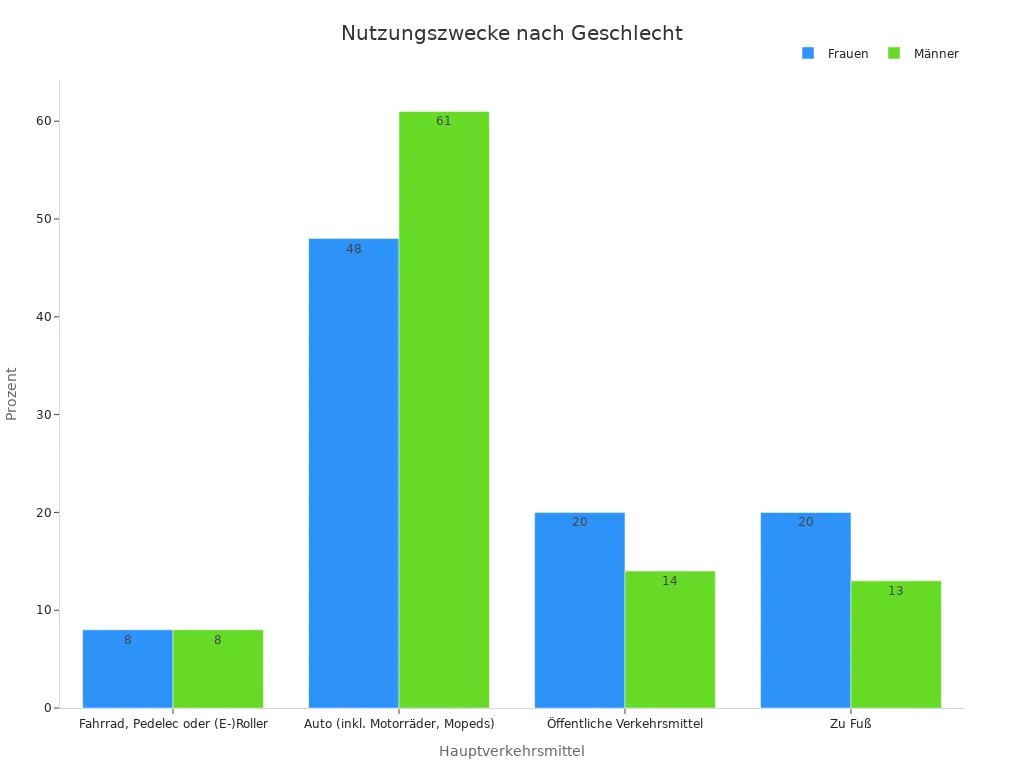
Men cycle more often to work or for sports. Women use it more for shopping and family tasks.
Women like safe and comfortable bicycles. They prefer to ride short distances. Men choose sporty bikes and ride further.
Safe bike lanes are very important. Cities should build more protected paths and bicycle parking to encourage everyone to cycle more often.
Differences in bicycle usage
Purpose of use: Work, leisure, errands
You likely use your bicycle for various purposes. Studies show that men use the bicycle more frequently for commuting to work or for athletic activities. Women, on the other hand, use it more often to do shopping or visit friends. A statistic illustrates this:
Category |
Men |
Women |
|---|---|---|
To work, recreation |
Shopping, errands, meeting friends |
Interestingly, both genders use bicycles and e-bikes for everyday life with similar frequency. However, men show a higher tendency toward athletic activities, while women use the bicycle more frequently for family-related tasks.
Frequency and distances: Who rides more often and how far?
How often and how far you ride often depends on your gender. Men cover longer distances on average. They ride about 46 km daily, while women cover 33 km. The average distance per trip also differs:
Gender |
Average distance per bike ride |
Average duration per bike ride |
|---|---|---|
Men |
1:19:45 |
|
Women |
20.5 km |
1:10:19 |
These differences could be related to professional requirements or leisure habits. Men use the bicycle more frequently for longer tours, while women prefer shorter routes.
Bicycle types: Differences in bicycle selection
The choice of bicycle also shows gender-specific differences. Women often prefer city bikes, which offer comfort and practicality. Men more frequently opt for mountain bikes or road bikes, which emphasize sporty features. For e-bikes, the difference is less pronounced, but men own them more frequently (56% compared to 43% for women). Women also pay more attention to weight and comfort, which influences their choice.
Another aspect is price. Women purchase bicycles in the 300-600 euro range more often, while men are more likely to spend 600-1200 euros. These preferences are also reflected in usage: women value models suitable for everyday use, while men prefer sporty and high-performance bicycles.
Factors influencing cycling behavior
Role of household tasks and family obligations
Your daily tasks influence how often and for what purpose you use the bicycle. Women often take on more household tasks and family obligations. They use the bicycle more frequently to take children to school or run errands. Men, on the other hand, are more likely to use the bicycle for commuting to work or for sports. These differences are also reflected in the choice of bicycle. Women prefer practical and comfortable models that are suitable for everyday life.
Tip: If you plan your time better, you can integrate the bicycle into your daily routine more efficiently.
Professional requirements and commuting behavior
Your occupation and your commute also influence your cycling behavior. Men often commute longer distances and use the bicycle more frequently for the trip to work. Women, by contrast, often combine their commute with other tasks, such as picking up children. This leads them to ride shorter distances and rely more often on city bikes. E-bikes are gaining popularity with both genders as they facilitate longer distances.
Personal preferences and cultural differences
Your preferences and cultural background play a major role. In cities like Berlin, the diversity of cyclists shows how different the needs and expectations for cycling infrastructure planning are. Women often place more value on comfort and safety, while men prefer sporty aspects. Cultural differences also influence how the bicycle is perceived. Some see it as a practical means of transport, others as part of a sustainable lifestyle.
-
Different influences on cycling behavior:
Women prefer bikes suitable for everyday use.
Men use sporty models more frequently.
Cultural backgrounds shape perception and usage.
Note: Cities should consider these differences to create a more equitable infrastructure.
Risk perception and safety concerns
Differences in the perception of traffic safety
You may not always feel safe on your bike. Women often perceive road traffic as more dangerous. Only 49% of women feel safe, while this figure is 64% for men. These differences are related to various factors, such as traffic density or the consideration shown by other road users. Men commit traffic violations more frequently, such as speeding (78%) or ignoring overtaking regulations (88%). Such behaviors increase the risk for all road users, especially for female cyclists.
Gender |
Percentage who feel safe |
|---|---|
Women |
49% |
Men |
64% |
Influence of lighting, bike lanes, and traffic density
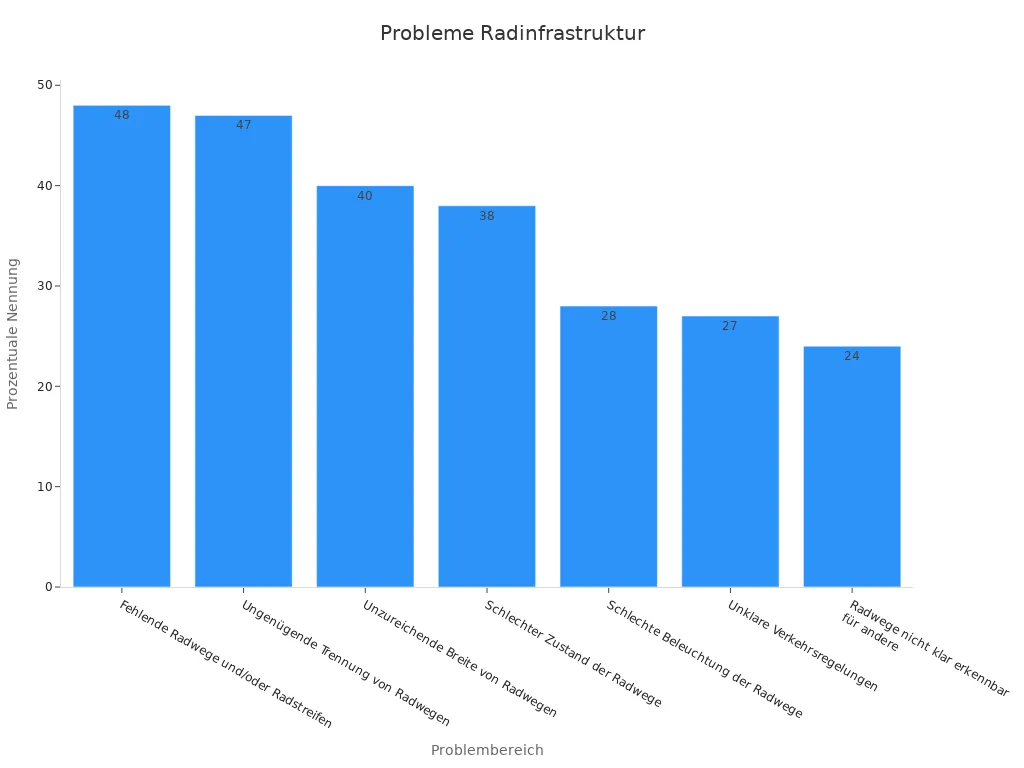
Infrastructure significantly affects your safety. Missing or poorly developed bike lanes represent a major problem. 48% of cyclists name missing bike lanes as the main reason for insecurity. Poor lighting (28%) and insufficient bike lane width (40%) exacerbate the situation. Especially in cities where traffic density is high, the risk of being overlooked increases. In 2020, there were over 80,000 accidents involving cyclists, many of them in urban areas.
Problematic aspects of bike infrastructure |
Percentage of mentions |
|---|---|
Missing bike lanes and/or bike paths |
48% |
Insufficient separation of bike lanes |
47% |
Insufficient width of bike lanes |
40% |
Poor lighting of bike lanes |
28% |
Measures to improve safety for women
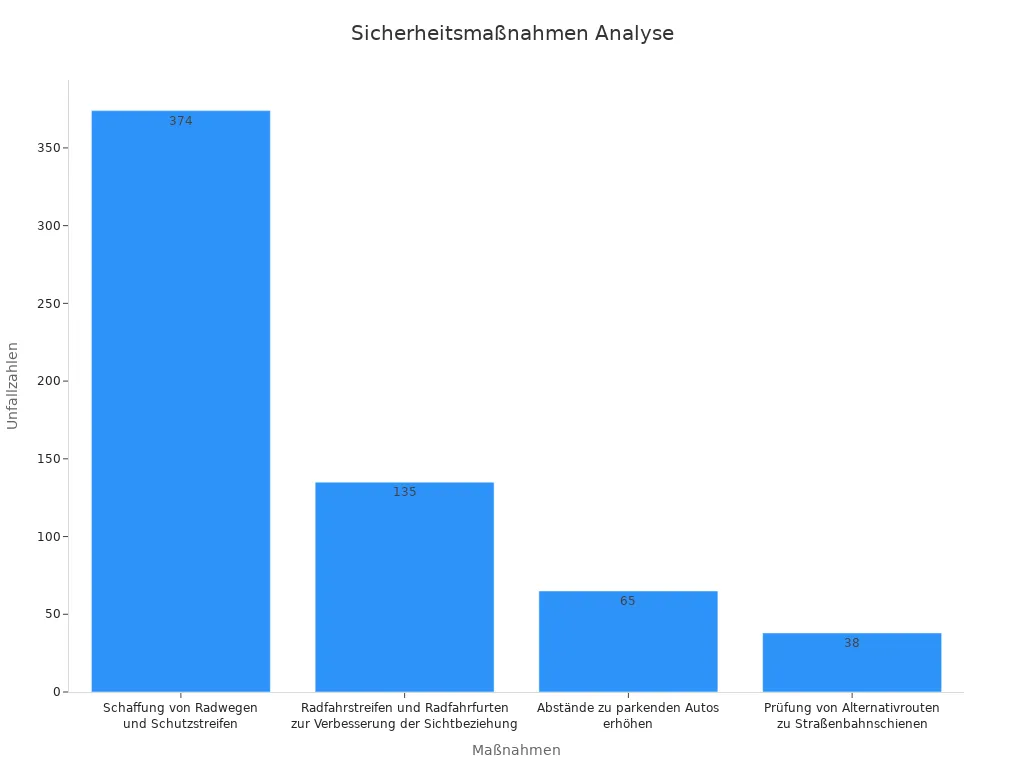
You can cycle more safely when cities implement targeted measures. More bike lanes and protective strips reduce the risk of accidents. In 2018, such measures led to a decrease in accidents. Women feel particularly unsafe at night. 67% are afraid to use public transport. Cities could increase safety through better lighting and clearer traffic regulations. The creation of alternative routes to dangerous road sections also helps.
Year |
Accident numbers |
Safety measures |
|---|---|---|
2018 |
374 |
Creation of bike lanes and protective strips |
2018 |
135 |
Bike lanes and bike crossings to improve visibility |
2018 |
65 |
Increase distance from parked cars |
2018 |
38 |
Checking of alternative routes to tram tracks |
Tip: You can increase your safety by choosing well-lit and less-traveled routes.
Infrastructure preferences and mobility needs
Preferred bike paths and routes
You probably prefer safe and well-developed bike paths. Women often value protected bike lanes that are separated from car traffic. Studies show that women frequently ride shorter distances and choose routes that have less traffic. In Denmark, where 53% of cyclists are women, the infrastructure has played a decisive role. There, 65% of children cycle to school when the distance is one to three kilometers. Such examples show how important well-thought-out bike paths are for mobility.
Tip: Choose routes with clear signage and good lighting to be safer on the road.
Importance of bicycle parking and stations
Bicycle parking facilities influence how often you use your bicycle. Women prefer safe and covered parking options, especially near train stations, schools, or shopping centers. In many cities, however, there is a lack of sufficient parking spaces. This leads to bicycles often being parked unsafely. A good infrastructure with bike stations that also offer repair options can significantly increase usage.
-
Important features of bicycle parking:
Roofing and lighting
Secure locks or surveillance
Proximity to important facilities
How urban planning can consider gender-specific needs
Cities can improve your mobility by considering gender-specific differences. Women make more trips per day, but these are often shorter. The 15-minute city is a concept that aims to make all important facilities accessible within 15 minutes. In Germany, the proportion of women among cyclists is 36%, while Denmark with 53% shows what successful planning can look like.
Note: A better involvement of women in urban planning could further improve the infrastructure.
Differences in cycling behavior show clear patterns. Women prefer safe bike paths and shorter routes, while men choose longer distances and athletic models. Safety and infrastructure play a decisive role. Cities can support both genders through projects such as 211 new bike paths with over 220 km in length and almost 100 million euros in funding 🚴♀️🚴♂️.
Category |
Number / Amount |
|---|---|
Planned bike and foot paths |
211 projects |
Total length of bike paths |
over 220 km |
Funding volume |
almost 100 million euros |
Tip: Secure parking facilities and illuminated bike paths encourage usage for everyone.
FAQ
Why do women prefer shorter cycling distances?
Women often combine multiple tasks, such as shopping or childcare. Shorter routes fit better into their everyday lives. Men use bicycles more frequently for longer, athletic tours.
What role does infrastructure play in safety?
Well-developed bike paths and lighting increase safety. Women feel more comfortable on protected paths. Cities should create more secure parking facilities and illuminated routes.
Tip: Plan your route in advance to use safe paths.
Are there differences in the use of e-bikes?
Yes, men own e-bikes more frequently. However, women appreciate them for daily use, as they make longer distances easier and offer practical advantages.
🚴♀️ Note: E-bikes are ideal for commuters and families.