

E-bike trekking combines a thirst for adventure with modern technology. It lets you cover longer distances while experiencing nature up close. Last year, more than 2 million e-bikes were sold in Germany—a rise of more than 20% compared with the previous year. This trend shows that more and more people want to benefit from electric assistance to take on new challenges.
The advantages are clear: You can tackle steep climbs with ease, cover greater distances, and enjoy the scenery along the way. With an e-bike, even crossing the Alps becomes achievable for many cyclists. This combination of comfort and freedom makes e-bike trekking the perfect choice for your next adventure.
Key Takeaways
With an e-bike, you can ride long distances without getting tired.
Choose the right e-bike for a comfortable trekking experience.
Maintain your e-bike regularly to keep it safe and durable.
Plan your route carefully to find trails suited to your fitness level.
E-bikes are better for the environment and produce less CO2 than cars.
Understanding E-Bike Trekking
What Is E-Bike Trekking?
E-bike trekking combines the joy of cycling with the assistance of an electric motor. It lets you cover longer distances, tackle steep climbs, and fully enjoy the natural surroundings. Unlike traditional bike tours, an e-bike lets you plan challenging routes without overexerting yourself.
E-bikes are growing rapidly in popularity. In Germany, the share of households with e-bikes rose from 11% in 2020 to over 50% in 2022. This development shows that more and more people are recognizing the benefits of this technology.
Year |
Share of households with e-bikes |
|---|---|
2020 |
11% |
2022 |
>50% |
E-bike trekking is more than just a trend—it’s a new way to combine adventure and comfort. It’s ideal for leisure rides, athletic challenges, and even your daily commute.
Advantages Over Traditional Cycling
E-bike trekking offers many advantages that traditional cycling cannot:
Less physical effort: Thanks to the electric motor, you can cover longer distances without tiring quickly.
Higher speeds: An e-bike gets you to your destination faster, which is especially convenient for commuters.
Environmentally friendly: E-bikes consume less energy than cars and can run on renewable electricity.
In addition, 30% of people use e-bikes for leisure rides, and another 30% use them to commute. Studies show that e-bikes can improve physical fitness, especially for older adults.
However, keep in mind that manufacturing an e-bike requires more resources than manufacturing a conventional bicycle. Even so, an e-bike’s environmental footprint remains significantly smaller than that of a car.
E-bike trekking opens up new ways to explore the world without sacrificing comfort or sustainability.
Choosing the Right E-Bike and Gear
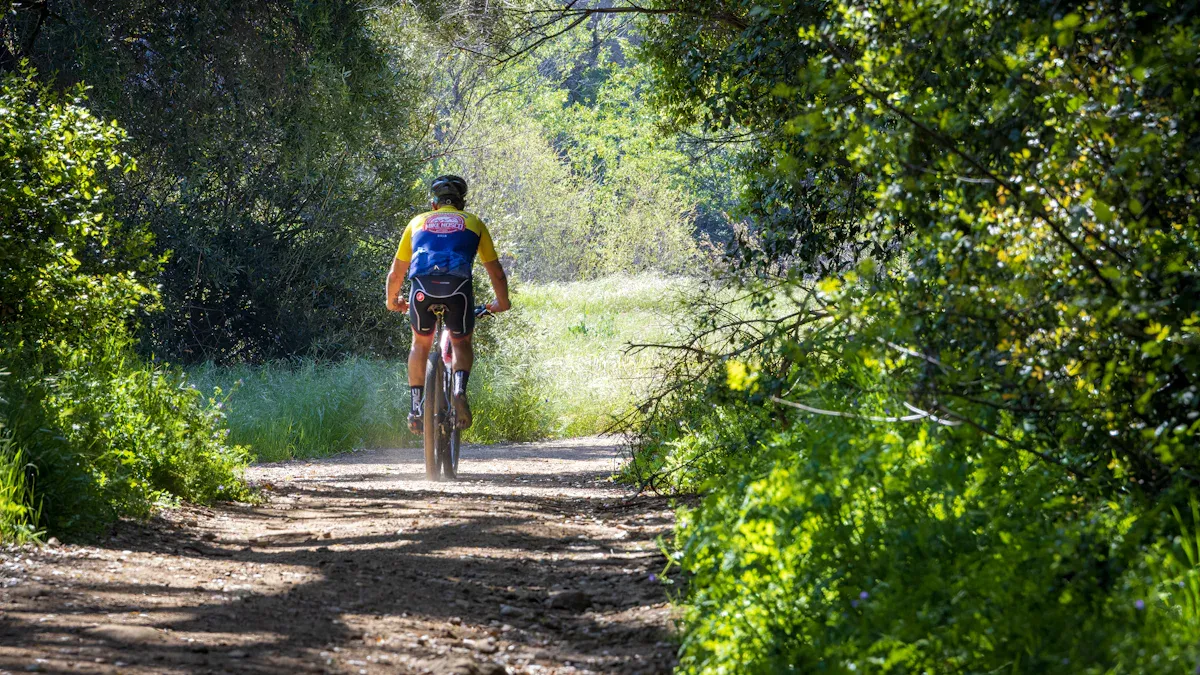
How Do You Choose the Ideal E-Bike?
Choosing the right e-bike is essential for a successful and enjoyable trekking experience. A trekking e-bike should be robust and comfortable, while also meeting the demands of long distances and varied terrain. Here are the most important criteria to consider when choosing one:
Criteria |
Description |
|---|---|
Durability |
The e-bike must be sturdy enough to carry luggage and accessories safely. |
Ride comfort |
A combination of pedal assistance and suspension reduces effort on climbs. |
Motor power |
A powerful motor and a high-capacity battery are essential for long rides. |
Gearing |
High-quality gears make for a comfortable ride, especially on hilly terrain. |
Brakes |
Hydraulic brakes deliver reliable performance in a range of weather conditions. |
Tires |
Wider tires increase comfort, while narrower tires improve efficiency. |
Frame geometry |
The right frame geometry is essential for comfort and performance. |
Suspension |
A suspension fork with at least 50 mm of travel provides comfort on uneven terrain. |
You should also pay attention to the features. A trekking e-bike with a sturdy rack, fenders, and powerful lights is ideal for longer rides. Brands like Bosch and Specialized offer powerful motors with a natural riding feel, making them particularly suitable for e-bike trekking.
Tip: Try out different models before making your decision. Make sure the e-bike suits your height and riding style.
Essential Gear for E-Bike Trekking
The right gear makes the difference between an enjoyable ride and a tiring one. Here are the most important items you’ll need for e-bike trekking:
Helmet: A high-quality helmet protects you in a fall and keeps you safe.
Lights: Powerful front and rear lights are essential, especially in poor lighting conditions.
Rack and bags: A sturdy rack and waterproof bags provide space for clothes, food, and tools.
Tool kit: A small kit with a multitool, spare tube, and pump helps you deal with breakdowns along the way.
Ergonomic grips and saddle: These improve comfort, especially on long rides.
Fenders: They protect you and your luggage from dirt and water.
Rain gear: Weatherproof clothing keeps you dry and warm.
Good suspension and durable tires are also important for smoothing out bumps along the route. Experts also recommend checking the battery capacity. A battery with at least 500 Wh provides a range of 60 to 120 kilometers, depending on the terrain and riding style.
Note: Remember to maintain your e-bike regularly. Before every ride, check the brakes, tire pressure, and battery level.
With the right gear and a suitable e-bike, you’ll be well prepared to discover the world of e-bike trekking.
Planning and Preparing for E-Bike Trekking
Route Planning and Choosing a Trail
Good route planning is the key to a successful e-bike trekking adventure. You can use a range of methods to find the ideal route:
Printed maps: These provide a reliable overview and don’t depend on your smartphone’s battery life.
GPS data: With GPS devices or apps, you can navigate accurately and feel confident on unfamiliar routes.
Online route planners: Platforms like Komoot or Outdooractive let you automatically plan routes based on your starting point and destination.
Other cyclists’ experiences: You can find reports and recommendations in bookstores and online that can help you plan.
Digital tools have the advantage of letting you make changes on the fly. For example, you can adjust your route to suit the weather or how you’re feeling that day. Make sure the route matches your fitness level and your e-bike’s range.
Tip: Plan regular breaks to enjoy the scenery and conserve your battery.
Accommodation and Food Along the Way
Your choice of accommodation and food options has a significant impact on your trekking experience. According to a survey, 71.5% of cycling tourists prefer point-to-point tours with overnight stays at different accommodations. This gives you the opportunity to discover new places each day.
Accommodation: Picturesque guesthouses, campsites, or hotels along well-maintained cycling routes are ideal. Many accommodations offer special services for cyclists, such as secure bike storage or e-bike charging stations.
Food: Plenty of places to stop along the route mean you can refuel whenever you need to. Local specialties make the trip a culinary experience.
Most cycling tourists appreciate the combination of an active vacation and the opportunity to get to know the region and its people. Plan your overnight stays in advance, especially during peak season, to avoid disappointment.
Note: Always pack a small snack and plenty of water in case you can’t find anywhere to eat along the way.
Battery Performance and Charging Options
Your e-bike’s battery performance is crucial for long rides. Modern e-bikes offer a range of options for maximizing their range:
Modular battery systems: These let you adjust the capacity to suit your needs.
Range extenders: Additional batteries increase your range and are especially helpful on remote routes.
Removable batteries: These make charging easier and protect the battery from extreme temperatures.
Factor |
Description |
|---|---|
Battery capacity |
Higher capacity (up to 1,000 Wh) is beneficial for long distances. |
Range |
Depends on the surface, climbs, weight, and outside temperature. |
Spare battery |
Useful for avoiding getting stranded partway through your ride. |
Before your ride, find out about charging points along the route. An additional battery can give you peace of mind if you can’t find a place to charge. Online tools can help you calculate your battery’s range more accurately.
Tip: Always fully charge your battery before setting off, and avoid unnecessary strain, such as using high assistance levels on flat routes.
With careful planning, suitable accommodation, and optimized battery performance, nothing stands in the way of your e-bike trekking adventure.
Safety and Sustainable Riding on E-Bike Treks
Safety Gear and Tips for Riding Safely
Safety should always come first when e-bike trekking. The growing popularity of pedelecs has also led to an increase in accidents. Statistics show that the number of accidents involving injuries has risen by 30%, while sales of electric bikes have increased by only 20%. Older adults and people with limited mobility are at greater risk, particularly because of higher speeds.
To stay safe on the road, follow these tips and use the following gear:
Always wear a helmet: A well-fitting helmet protects your head in a fall.
Wear reflective clothing: This increases your visibility, especially in poor lighting conditions.
Check your e-bike regularly: Inspect the brakes, tires, and lights before every ride.
Ride defensively: Follow traffic rules and be prepared for other road users to behave unpredictably.
Adjust your speed: Slow down, especially on curves or uneven terrain.
Tip: Practice braking and starting on your e-bike to get a feel for the motor assistance.
Environmentally Friendly Riding and Local Regulations
E-bikes are an environmentally friendly alternative to cars, but they consume more resources than conventional bicycles. You can minimize your environmental footprint by using your e-bike responsibly. Studies show that e-bikes reduce CO2 emissions to under 20 grams per kilometer, including battery manufacturing. The greatest benefit comes from replacing car journeys with e-bike rides.
Here are some tips for riding sustainably:
Maintain your e-bike regularly: Good maintenance extends its lifespan and reduces resource consumption.
Choose local products: Opt for e-bikes and accessories made from recycled materials or produced locally.
Plan your route with the environment in mind: Avoid sensitive nature reserves and stick to designated trails.
Topic |
Description |
|---|---|
Reducing emissions |
By 2024, Trek will reduce the share of air freight by 75% and rely on sea freight. |
Using alternative resources |
Recycled aluminum and ocean plastic are used in production. |
Improving cycling infrastructure |
Investments in bike-sharing programs encourage cycling. |
Also be sure to follow local regulations. Many regions have specific rules for e-bikes, such as speed limits or restrictions on which paths you can use. Check before your ride to avoid fines and protect the environment.
Note: Respect nature and leave no litter behind. This is one way you can actively help protect the environment.
With the right safety gear and an eco-conscious approach, your e-bike trekking will be safer and more sustainable.
Practical tips for a better e-bike trekking experience
Tips for beginners
Getting started with e-bike trekking can be exciting, but it can also come with a few challenges. With the right tips, you can handle your first rides with ease:
Start with easy day trips: Choose routes that aren't too long or demanding. This gives you time to get used to your e-bike and its motor assistance.
Test your gear: Try out your e-bike and accessories before longer rides. Make sure everything works well and is comfortable.
Build up your fitness: Regular rides will improve your endurance and prepare you for longer distances.
Plan your route in advance: Use apps like Komoot to find routes that match your fitness level.
Check the weather: Always pack weatherproof clothing so you're prepared for sudden changes in the weather.
Tip: Take regular breaks to enjoy the scenery and conserve your battery.
With these basics, you'll be perfectly prepared to start e-bike trekking and enjoy your first adventures safely and at your own pace.
Strategies for experienced e-bike trekkers
If you already have experience with e-bike trekking, you can optimize your rides with some advanced strategies:
Choose the right e-bike for the route: E-mountain bikes are suitable for uneven terrain, while trekking e-bikes are ideal for long rides on paved paths.
Factor in battery range: Depending on the assistance level, modern e-bikes can cover between 50 and 120 kilometers. Plan charging stops along the route, especially in mountainous regions.
Use specialized navigation apps: Apps such as Outdooractive provide information about climbs, attractions, and charging stations.
Prepare for the weather: Pack waterproof jackets and sun protection so you're ready for all weather conditions.
City |
Change in commuter numbers |
Increase (%) |
|---|---|---|
Berlin |
57 |
|
Paris |
Number doubled |
100 |
Note: Adjust your speed to the terrain and use your e-bike's assistance levels efficiently to save energy.
With these strategies, you can plan your rides even better and get the most out of e-bike trekking.
The best regions for e-bike trekking
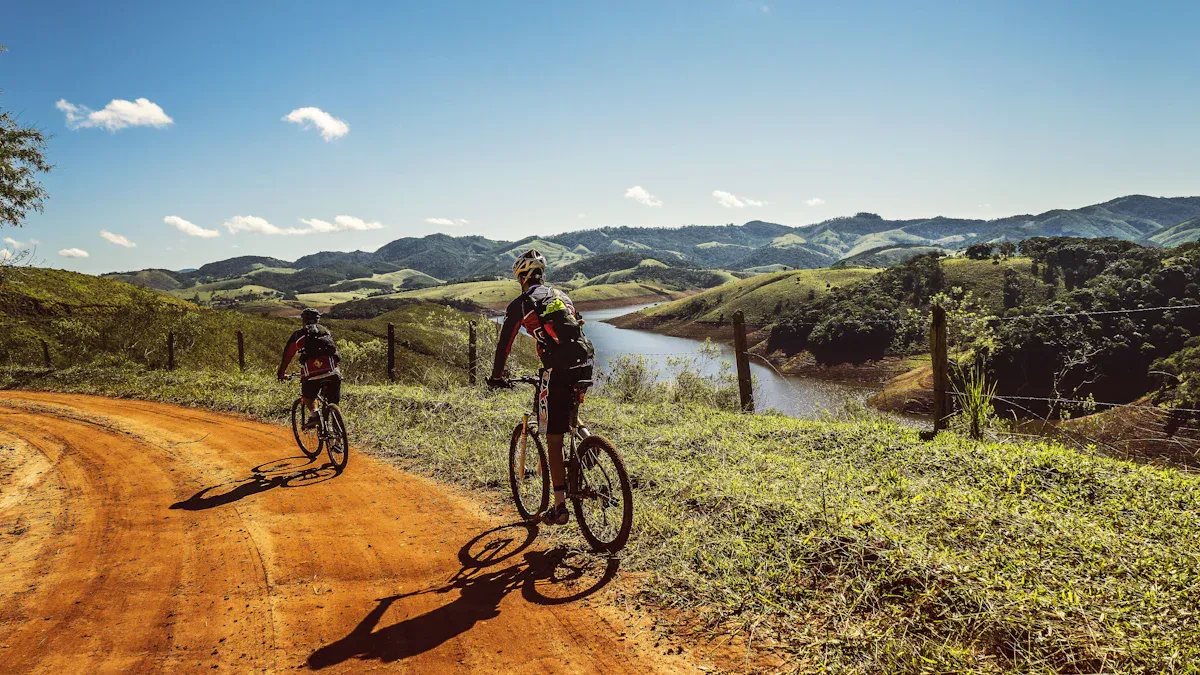
Top destinations for e-bike trekking
If you're looking for the best places for your next e-bike trekking adventure, there are several standout regions. These destinations offer breathtaking scenery, well-maintained cycling routes, and plenty of opportunities to enjoy nature:
Arosa Lenzerheide, Canton of Graubünden, Switzerland: This region is known for its picturesque mountain landscapes and perfectly signposted routes.
Engadin, Canton of Graubünden, Switzerland: Here you'll find wide valleys, crystal-clear lakes, and an impressive Alpine panorama.
Saalbach-Hinterglemm, Salzburg region, Austria: This area offers an extensive network of cycling routes suitable for beginners and experienced riders alike.
Sölden, Tyrol, Austria: The Ötztal Alps are a paradise for e-bike enthusiasts. Here you can combine challenging routes with magnificent views.
These regions are among the most popular destinations for e-bike trekking in Europe. They offer not only varied routes but also numerous accommodations and services designed specifically for cyclists.
Tip: Plan your rides during the off-season to enjoy nature in peace and avoid crowded paths.
Insider tips for lesser-known routes
If you'd like to venture off the beaten path, there are plenty of hidden gems offering a unique experience. These less-traveled routes are notable for their tranquility and closeness to nature:
Adalbert Stifter Cycling Path: An idyllic route through forests and small villages.
Danube–Moldau Cycling Path: This route connects two rivers and takes you through picturesque landscapes.
National Park Cycling Path: Perfect for nature lovers who want to explore local wildlife and plant life.
Dreisessel Tour: A challenging ride with spectacular views of the surrounding mountains.
Gravel Bike Challenge: Ideal for adventurers who love unpaved paths and varied terrain.
These routes give you the chance to experience the beauty of nature in peace. They're less well-known, making them ideal if you want to escape the crowds at popular destinations.
Note: Check the trail conditions and availability of charging stations in advance so you can plan your ride effectively.
With these tips, you can explore both well-known and hidden regions and enjoy e-bike trekking to the fullest.
E-bike trekking offers a unique way to combine adventure, comfort, and sustainability. Here are the key takeaways:
You can cover longer distances without overexerting yourself.
2. Physical activity benefits your health.You actively contribute to environmental protection by reducing CO2 emissions.
Year |
Sales figures (in millions) |
Increase (%) |
|---|---|---|
Last year |
2 |
20 |
Be inspired by success stories. The Drau Cycle Path shows how easy and comfortable e-bike trekking can be. The Amazon of Europe Bike Trail invites you to discover the beauty of unspoiled river landscapes. Experiences like these will leave you wanting more adventures.
With your e-bike, you can experience the world in a whole new way. Plan your next ride and enjoy the freedom that e-bike trekking offers.
FAQ
How far can I ride an e-bike on a single charge?
The range depends on factors such as battery capacity, terrain, and assistance level. On average, you can ride between 60 and 120 kilometers on a 500 Wh battery.
Tip: Use lower assistance levels on flat routes to maximize your range.
Can I ride an e-bike without motor assistance?
Yes, you can use an e-bike like a regular bicycle. The motor only kicks in when you activate the assistance. However, riding without motor assistance is a little more strenuous because the e-bike is heavier.
What clothing is best for e-bike trekking?
Wear breathable, weatherproof clothing. A windproof jacket and comfortable cycling shorts are ideal. For changeable weather, you should bring rain gear.
Note: Reflective details on your clothing improve your visibility in poor light.
How do I properly care for my e-bike battery?
Charge the battery at room temperature and avoid extreme temperatures. If storing it for an extended period, leave it half charged. Clean the contacts regularly with a dry cloth.
Caution: Avoid fully discharging the battery, as this will shorten its lifespan.
Do I need special insurance for my e-bike?
For e-bikes with a top speed of up to 25 km/h, personal liability insurance is sufficient. Faster models (S-pedelecs) require separate liability insurance and an insurance plate.
Tip: Check with your insurer for the exact terms and conditions.