
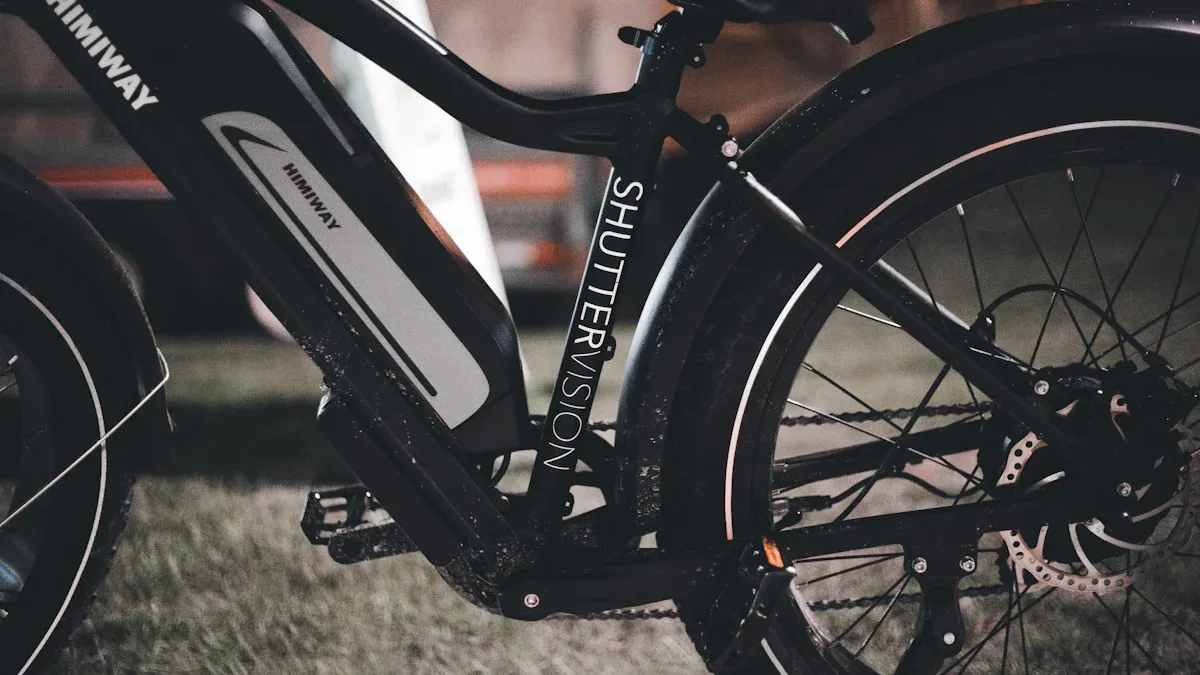
E-bike batteries, also known as e-bike batteries, play a central role in the performance and range of modern e-bikes. In 2025, some models are achieving impressive ranges of up to 200 km under ideal conditions. Advances in cell technologies, such as the innovative 21700 cell generation, are making e-bike batteries not only more powerful but also more compact and lighter. These developments are driving the growing popularity of e-bikes. Experts expect that the market share of e-bikes in Germany could eventually reach up to 30% of the total market. For you as a user, this means a wider selection of efficient and sustainable energy sources.
Key Findings
E-bike batteries are essential for range and performance. Choose a battery with higher capacity for longer rides.
Charging time counts. Fast chargers save time, especially for frequent users.
Lifespan depends on maintenance. Keep the battery cool and charge it in a timely manner.
Pay attention to the price-performance ratio. Expensive batteries often last longer and perform better.
Reviews help with your choice. Read both good and bad opinions to make a smart decision.
Criteria for Evaluating the Best E-Bike Batteries
Capacity and Range
A battery's capacity determines how far you can ride your e-bike. Higher capacity means greater range, but also higher weight. A 500 Wh battery, for example, weighs about three kilograms. However, range depends on more than just capacity. Factors such as assist levels, riding style, and external conditions also play a role.
Standard lithium-ion batteries have a capacity of 400 to 500 Wh.
Battery Capacity (Wh) |
Potential Range (km) |
|---|---|
400 - 500 |
130 - 200 |
If you are planning longer trips, you should choose a battery with higher capacity. Remember, however, that extra cells can increase weight.
Charging Time and Efficiency
A battery's charging time affects how quickly you can use your e-bike again. Efficient chargers play a crucial role here. The average efficiency of modern chargers is about 1.17. This means that energy losses during the charging process are minimal.
Factor |
Description |
|---|---|
1.17 |
Average efficiency of chargers, which has been found to be quite accurate. |
If you use your e-bike frequently, you should look for a short charging time. Fast chargers can be a good solution here.
Lifespan and Cycle Stability
Battery life is measured in charging cycles. Modern lithium-ion batteries last between 500 and 1,000 charging cycles. This corresponds to a service life of three to five years. Even after 1,000 charging cycles, most batteries still retain over half of their original capacity.
Manufacturers state lifespans of 500 to 1,000 charging cycles.
These charging cycles correspond to 25,000 to 100,000 kilometers.
Brose estimates that 1,000 charging cycles correspond to three to five years of use.
If you take care of your battery, you can extend its lifespan. Avoid extreme temperatures and charge the battery regularly to protect the cells.
Price-Performance Ratio
When buying an e-bike battery, the price-performance ratio plays a decisive role. You want to ensure that you get the best combination of performance, quality, and durability for your money. High-quality batteries often cost more but offer a longer lifespan and better range.
Several factors influence the price-performance ratio:
Capacity: Batteries with higher capacity cost more, but allow for longer rides.
Brand Quality: Well-known manufacturers like Bosch or Shimano often guarantee higher reliability.
Warranty and Service: A longer warranty period can justify a higher price.
Price Range (€) |
Typical Battery (Wh) |
Advantages |
|---|---|---|
300 - 500 |
400 - 500 |
Affordable, suitable for short distances |
500 - 800 |
500 - 700 |
Good range, solid quality |
800+ |
700+ |
Premium quality, long lifespan |
If you have a limited budget, you should consider your e-bike usage. For daily commuting, a battery in the mid-price segment is often sufficient. For long tours, however, an investment in a premium model is worth it.
Customer Reviews and Expert Opinions
Customer reviews and expert opinions help you make the right choice. Many buyers share their experiences online, which gives you insight into a battery's actual performance. Experts test batteries under standardized conditions and evaluate aspects such as range, charging time, and durability.
Tip: Read both positive and negative reviews. This will give you a balanced picture.
Some common customer comments:
"My battery lasts longer than expected, even in cold weather."
"The charging time is shorter than stated – a big plus!"
"After two years, the battery still has 80% of its capacity."
Experts often emphasize the importance of maintenance. They recommend not to fully discharge the battery and to store it at moderate temperatures. These tips can significantly extend your battery's lifespan.
If you are unsure which brand or model suits you, tests and reviews can offer valuable guidance. They help you find the best e-bike batteries for your needs.
The Top 10 E-Bike Batteries of 2025
Battery 1: Bosch PowerTube 750
The Bosch PowerTube 750 is among the most powerful e-bike batteries of 2025. With a capacity of 750 Wh, it offers an impressive range that is particularly suitable for long tours and challenging routes. In standardized tests, the battery demonstrated its strength by conquering up to 2000 meters of elevation gain. For comparison: the 726 Wh battery from Darfon reached 1700 meters, while the 630 Wh battery from Shimano only managed 1200 to 1300 meters.
-
Key features of the Bosch PowerTube 750:
Range: Up to 200 km under ideal conditions.
Weight: About 4.3 kg – heavy, but powerful.
Usage: Perfect for long tours in high mountains.
This battery impresses with its efficiency and reliability. If you are looking for an e-bike for challenging routes, the Bosch PowerTube 750 is an excellent choice.
Tip: Ensure your e-bike is compatible with this battery, as its size means it does not fit every model.
Battery 2: Shimano BT-E8036
The Shimano BT-E8036 is a versatile battery particularly suitable for commuters and leisure riders. With a capacity of 630 Wh, it offers a solid range that is sufficient for most everyday rides. This battery is known for its compact design and low weight, making it ideal for lighter e-bikes.
-
Advantages of the Shimano BT-E8036:
Compact size: Fits many e-bike models.
Weight: Lighter than many other batteries in its class.
Charging time: Fast charging function available.
Although the battery cannot keep up with the Bosch PowerTube 750 in terms of elevation gain, it scores points for its ease of use and flexibility. For daily use, it is a reliable and affordable option.
Note: If you value a fast charging time, you should use a compatible fast charger.
Battery 3: Reention Dorado+
The Reention Dorado+ is a versatile battery distinguished by its power bank function and broad compatibility. With a voltage of 48 volts and a capacity of 10.4 Ah, it offers solid performance for various e-bike models. Its compatibility with brands like NCM, LLobe, Fitifito, and DeHawk is particularly practical.
Parameter |
Value |
|---|---|
Voltage |
48 Volts |
Capacity |
10.4 Ah |
Compatibility |
NCM, LLobe, Fitifito, DeHawk |
Power bank function |
Yes |
This battery is ideal for riders looking for a flexible and multifunctional solution. The power bank function allows you to charge other devices like smartphones or GPS devices while on the go.
Tip: If you own an e-bike compatible with this battery, you can benefit from its versatility and additional functions.
Battery 4: 12 Ah Pedelec Battery by Maratron
The 12 Ah Pedelec battery by Maratron is a reliable choice for riders who value solid performance and a long lifespan. With a capacity of 12 Ah and a voltage of 36 volts, this battery offers a range of up to 120 kilometers, depending on the assistance level and riding conditions.
Advantages of the Pedelec battery:
High capacity: Ideal for longer rides.
Robust construction: Resistant to external influences.
Compatibility: Works with many e-bike models.
This battery is particularly suitable for commuters who cover medium to long distances daily. The charging time is about 5 to 6 hours, making it perfect for overnight use.
Tip: Store the battery at room temperature to maximize its lifespan. Extreme temperatures can impair performance.
Battery 5: Panasonic GX Ultimate
The Panasonic GX Ultimate battery is one of the top models of 2025. With a capacity of 750 Wh and a weight of just 3.5 kg, it combines performance and lightness. This battery was developed specifically for demanding riders who need both high range and fast charging times.
Key features of the Panasonic GX Ultimate:
Capacity: 750 Wh for ranges of up to 180 km.
Weight: Light and compact, ideal for sporty e-bikes.
Charging time: Fast charging function for a full charge in less than 4 hours.
Panasonic uses advanced cell technology in this model, which guarantees high cycle stability. Even after 1,000 charging cycles, the capacity remains above 70%.
Note: This battery is especially suitable for riders who frequently ride on mountainous routes or long tours.
Battery 6: Cube Kathmandu Hybrid One 625
The Cube Kathmandu Hybrid One 625 battery is an excellent choice for riders looking for quality and value. With a capacity of 625 Wh, it offers a solid range of up to 150 kilometers. Stiftung Warentest rated this model "good" in 2024, which underscores its reliability and performance.
Why the Cube Kathmandu Hybrid One 625 stands out:
Quality: Use of high-quality components like Bosch Powertube batteries.
Flexibility: Compatible with various Cube models.
Price-performance ratio: An affordable option for riders who do not want to compromise on quality.
Further market studies show that Cube was also awarded as a price-performance tip in previous years with models like the Hybrid One 500. This makes the brand a trusted choice for e-bike riders.
Tip: If you own a Cube e-bike, this battery is a perfect addition. It offers a balanced combination of range and efficiency.
Battery 7: Specialized SL Range-Extender
The Specialized SL Range-Extender is an innovative solution for riders who want to extend their range without significantly increasing the weight of their e-bike. This additional battery was developed specifically for the SL models from Specialized and offers a capacity of 160 Wh. Although this seems low compared to other batteries, it serves as a supplement to the main battery and extends the range by up to 65 kilometers.
Advantages of the Specialized SL Range-Extender:
Lightweight: At just 1.1 kg, your e-bike remains agile and easy to handle.
Easy assembly: The battery is inserted into the bottle cage and is quickly ready for use.
Flexibility: Ideal for longer tours or spontaneous trips.
Parameter |
Value |
|---|---|
Capacity |
160 Wh |
Weight |
1.1 kg |
Range extension |
Up to 65 km |
Tip: If you own a Specialized SL e-bike, you can double your range with this range extender without sacrificing comfort.
This battery is particularly suitable for riders who value a lightweight e-bike and would like to ride longer distances occasionally.
Battery 8: Yamaha External Crossover 500
The Yamaha External Crossover 500 is a versatile battery that stands out due to its robust design and reliability. With a capacity of 500 Wh, it offers a solid range of up to 120 kilometers, depending on your riding style and external conditions. This battery is particularly popular among commuters and recreational riders who are looking for a reliable energy source for everyday use.
Why the Yamaha External Crossover 500 is compelling:
Robustness: The battery is shockproof and weather-resistant, ideal for all seasons.
Ease of use: The external design allows for quick installation and removal.
Compatibility: Works with many Yamaha-based e-bike systems.
Feature |
Description |
|---|---|
Capacity |
500 Wh |
Weight |
3.2 kg |
Charging time |
Approx. 4 hours |
Note: This battery is an excellent choice if you are looking for a reliable model for daily use.
The Yamaha External Crossover 500 offers a good balance between performance, weight, and price. It is particularly suitable for riders who regularly cover medium distances.
Battery 9: Giant EnergyPak Smart 800
The Giant EnergyPak Smart 800 is one of the most powerful e-bike batteries of 2025. With an impressive capacity of 800 Wh, it enables ranges of up to 200 kilometers. Giant has developed this battery specifically for long-distance riders who do not want to compromise on performance.
Key features of the Giant EnergyPak Smart 800:
High capacity: Perfect for long tours and demanding routes.
Fast-charging function: Fully charged in just 3.5 hours.
Intelligent design: The battery integrates seamlessly into your e-bike frame.
Parameter |
Value |
|---|---|
Capacity |
800 Wh |
Weight |
4.5 kg |
Range |
Up to 200 km |
Tip: If you own a Giant e-bike, this battery is the perfect choice for maximum performance and range.
This battery is aimed at riders who regularly cover long distances or mountainous routes. The combination of high capacity and fast charging time makes it one of the best options on the market.
Battery 10: Trek RIB Battery System
The Trek RIB (Removable Integrated Battery) system is an innovative solution developed specifically for Trek e-bikes. You benefit from a battery that is not only powerful but also impresses with its well-thought-out design.
Key features of the Trek RIB Battery System
Capacity: With a capacity of 625 Wh, the battery offers a range of up to 150 kilometers.
Design: The battery is fully integrated into the frame and can be easily removed.
User-friendliness: You can remove the battery with just one movement, without tools.
Robustness: The system is weather-resistant and suitable for use in rain and snow.
Parameter |
Value |
|---|---|
Capacity |
625 Wh |
Weight |
3.6 kg |
Range |
Up to 150 km |
Charging time |
Approx. 4 hours |
Advantages of the Trek RIB Battery System
Ease of use: You can remove the battery directly from the frame and put it back in. This saves time and makes it particularly convenient to use.
Secure design: The battery is firmly integrated into the frame, protecting it from theft.
Aesthetics: The slim design blends seamlessly into the e-bike and provides a modern look.
Durability: Trek uses high-quality materials that guarantee a long service life.
Tip: If you frequently ride in bad weather, the Trek RIB Battery System is an excellent choice. Its weather-resistant construction protects it from moisture and dirt.
Who is the Trek RIB Battery System suitable for?
This battery is ideal for riders who value elegant design and simple operation. Commuters benefit from the quick removal of the battery, while recreational riders appreciate the solid range for longer tours.
If you own a Trek e-bike, the RIB Battery System is the perfect addition. It combines functionality and style without compromising on performance.
Note: Be sure to clean the battery regularly and store it at moderate temperatures. This will extend its service life and maintain consistent performance.
Buying Guide: How to find the right e-bike battery
Which capacity suits your riding style?
The capacity of a battery determines how far you can ride on your e-bike. Your riding style plays a decisive role here. Commuters covering short distances need less capacity than long-distance riders. For recreational riders who take occasional tours, a battery with medium capacity is ideal.
The following table shows how different capacities affect the range:
Parameter |
Value |
|---|---|
Voltage (V) |
36 V |
Ampere hours (Ah) |
10 Ah |
Total capacity (Wh) |
360 Wh |
Minimum range (km) |
54 km |
Maximum range (km) |
108 km |
Higher capacity (Ah) |
14 Ah |
Range with 14 Ah |
76 - 151 km |
If you are planning longer distances, you should choose a battery with a higher capacity. A 14 Ah battery offers you a range of up to 151 kilometers. For shorter trips, a 10 Ah model is sufficient.
Tip: Consider how often and how far you want to ride. This will help you find the right capacity for your needs.
How important is the charging time for you?
The charging time of a battery influences how quickly you can head out again. If you use your e-bike daily, a short charging time is particularly important. Fast chargers can significantly shorten the charging time. A battery with a capacity of 500 Wh takes about 4 to 5 hours with a standard charger, while a fast charger can reduce this time to 2 to 3 hours.
For casual riders who only use their e-bike on the weekends, the charging time plays a smaller role. You can conveniently charge the battery overnight.
Note: Check if your battery is compatible with a fast charger. This saves time and increases flexibility.
Tips for compatibility with your e-bike
Not every battery fits every e-bike. Before buying, you should ensure that the battery is compatible with your model. Manufacturers like Bosch, Shimano, and Yamaha offer batteries specifically developed for their e-bike systems.
Some important points regarding compatibility:
Dimensions and weight: The battery must fit in the designated space on the frame.
Electrical connections: The voltage and the connections must match your e-bike.
Software: Some batteries require special software to communicate with the motor.
Tip: Check the technical specifications of your e-bike and the battery. This will help you avoid problems during installation.
If you are buying a new e-bike, ensure that the battery is easily replaceable. This makes it easier for you to switch if you want an upgrade later.
Budgeting: How much should you spend?
Choosing the right e-bike battery depends not only on performance but also on your budget. You want to ensure that you get the best combination of capacity, service life, and weight for your money. High-quality batteries often cost more, but they offer long-term benefits that justify the investment.
What influences the cost of an e-bike battery?
The cost of a battery depends on several factors. These determine how much you should spend:
Factor |
Description |
|---|---|
Capacity |
Determines how far you can travel on a single charge. |
Service life |
Influences long-term costs and the need for replacement. |
Weight |
Important for handling and the overall weight of your e-bike. |
A battery with a higher capacity allows for longer rides but costs more. A lightweight battery improves handling, while a longer service life reduces the need for a quick replacement.
How do you find the right price-performance ratio?
You should plan your budget based on your riding style and your needs. Here are a few tips:
Choose a battery with a higher capacity if you prefer long tours.
Consider the weight of the battery to make your e-bike easier to handle.
Pay attention to the service life to minimize long-term costs.
If you mainly ride short distances, a battery in the mid-price segment is sufficient. For long-distance riders, investing in a premium model pays off.
How much should you spend?
The following table shows typical price ranges and their advantages:
Price range (€) |
Capacity (Wh) |
Advantages |
|---|---|---|
300 - 500 |
400 - 500 |
Affordable, ideal for short distances. |
500 - 800 |
500 - 700 |
Good range and solid quality. |
800+ |
700+ |
Premium quality with long service life. |
Tip: Consider how often and how far you want to ride. A battery in the mid-price segment often offers the best price-performance ratio for everyday use.
With clear budget planning, you can ensure that you find the perfect battery for your needs without spending too much.
The best e-bike batteries of 2025 offer you a wide selection of options that meet different requirements. For commuters, models with fast charging time and medium capacity are ideal. Recreational riders benefit from batteries with good range and low weight. Long-distance riders should pay attention to high capacity and robust construction. Your individual needs determine which battery suits you best. Consider how often and how far you want to ride to make the right choice.
FAQ
How do you maintain your e-bike battery properly?
Good maintenance extends the service life of your battery. Charge it regularly, but avoid complete discharge. Store it at room temperature and protect it from extreme temperatures.
Tip: Occasionally clean the contacts with a dry cloth to prevent corrosion.
How long does an e-bike battery last?
A modern lithium-ion battery lasts between 500 and 1,000 charging cycles. This corresponds to about three to five years. The service life depends on usage and maintenance.
Note: Avoid extreme temperatures to maximize the service life.
Can you replace an e-bike battery yourself?
Yes, most batteries are easy to replace. Make sure that the new battery is compatible with your e-bike. Read your e-bike's user manual for specific instructions.
Caution: Only use original batteries or compatible models from trusted manufacturers.
How do you dispose of an old e-bike battery?
Take old batteries to a collection point or a specialist dealer. Lithium-ion batteries must not be disposed of in household waste. Proper disposal protects the environment.
♻️ Tip: Many retailers offer take-back programs for old batteries.
What to do if the battery loses power in winter?
Cold can reduce your battery's performance. Store it at room temperature and only insert it shortly before your ride. Use a battery protective cover to shield it from the cold.
Note: Charge the battery at room temperature after the ride to prevent damage.