
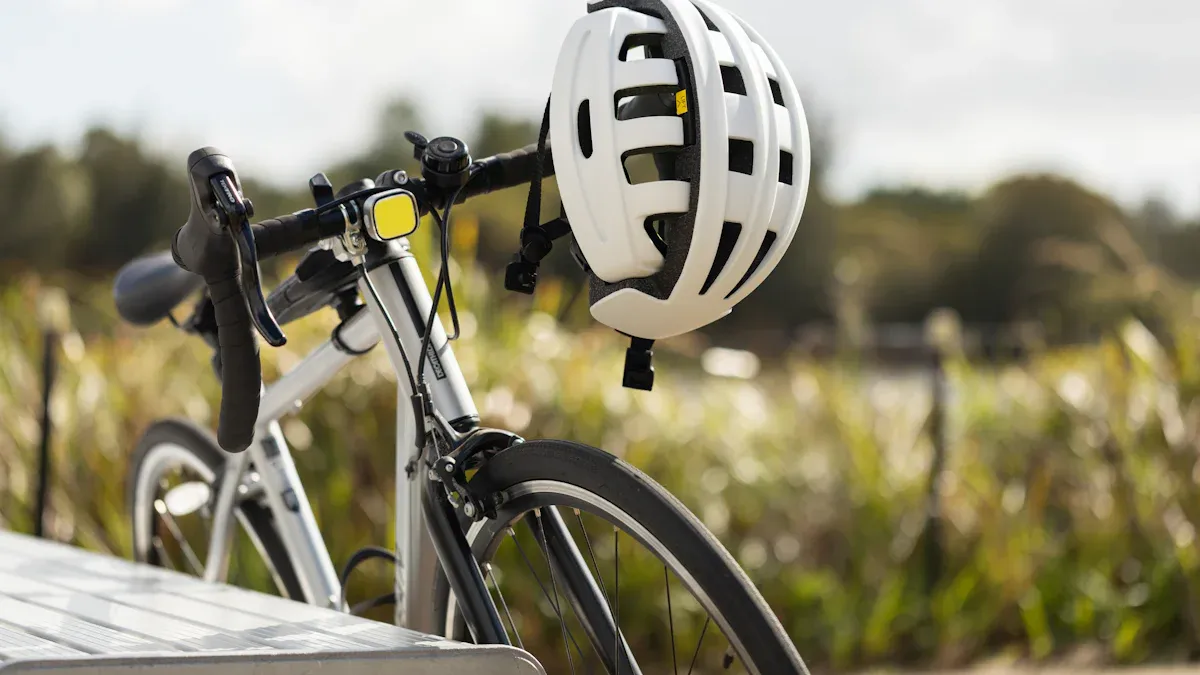
As an e-bike beginner, you will ride safely if you perform a safety check before every ride and stay alert. The number of reported accidents is rising sharply, as these figures show:
Year |
Number of pedelec accidents involving personal injury |
|---|---|
2023 |
Therefore, check the most important components regularly. Pay attention to functional brakes and good lighting. This is how you protect yourself and others. With every step, you will become more confident and secure.
Important Findings
Perform a safety check before every ride. Check brakes, lighting, and tire pressure to avoid accidents.
Always wear a helmet to protect your head. A well-fitting helmet can prevent serious injuries.
Ride with foresight and keep sufficient distance from other road users. This allows you to react quickly to unexpected situations.
E-Bike Safety Check
A thorough safety check protects you and ensures more riding enjoyment. You should check the most important components of your e-bike before every ride. This allows you to identify problems early and prevent accidents.
Checking brakes and lighting
Tip: Make the safety check a regular habit. This way, you always start your day safely!
A functioning brake system and good lighting are vital. Check before every ride:
-
Brakes:
Test both brakes. They must engage immediately and must not drag.
Check the brake pads. They should be at least one millimeter thick. If the grooves are no longer visible, replace them.
Pay attention to the cables. They must not be damaged or too loose.
Always use the front and rear brakes simultaneously and brake early and gradually.
E-bikes are heavier and faster. Therefore, the braking distance increases, especially in wet conditions.
-
Lighting:
Check whether the front headlight and taillight are working.
Turn on the lights even during the day to be seen better.
Good lighting makes you visible to others and lowers the risk of accidents, especially in the dark or in bad weather.
Flashing lights increase visibility, even if they are not always permitted.
Note: Studies show that more accidents happen in the dark and the consequences are often more severe. Those who are recognized earlier ride more safely.
Tire pressure and technical basics
The tires are your contact with the road. They influence how safely you travel.
-
Tire pressure:
Check the air pressure regularly. The right pressure provides more stability and better traction, especially in rain, snow, or ice.
Lower pressure increases the contact area and provides more grip on slippery paths.
Check the tires for cracks, foreign objects, or wear.
-
Technical basics:
Check the tightness of all screws, especially on the handlebars, saddle, and luggage rack.
Keep the chain clean and well-lubricated.
Check the battery and display for charge level and functionality.
Have your e-bike checked by a professional at least once a year or every 1,000 to 1,500 kilometers.
Remember: A regular safety check extends the life of your e-bike and gives you a secure feeling on every ride.
Make the safety check your routine. This way, you protect yourself and others – and have more fun riding!
Riding technique and balance
Basic posture on the e-bike
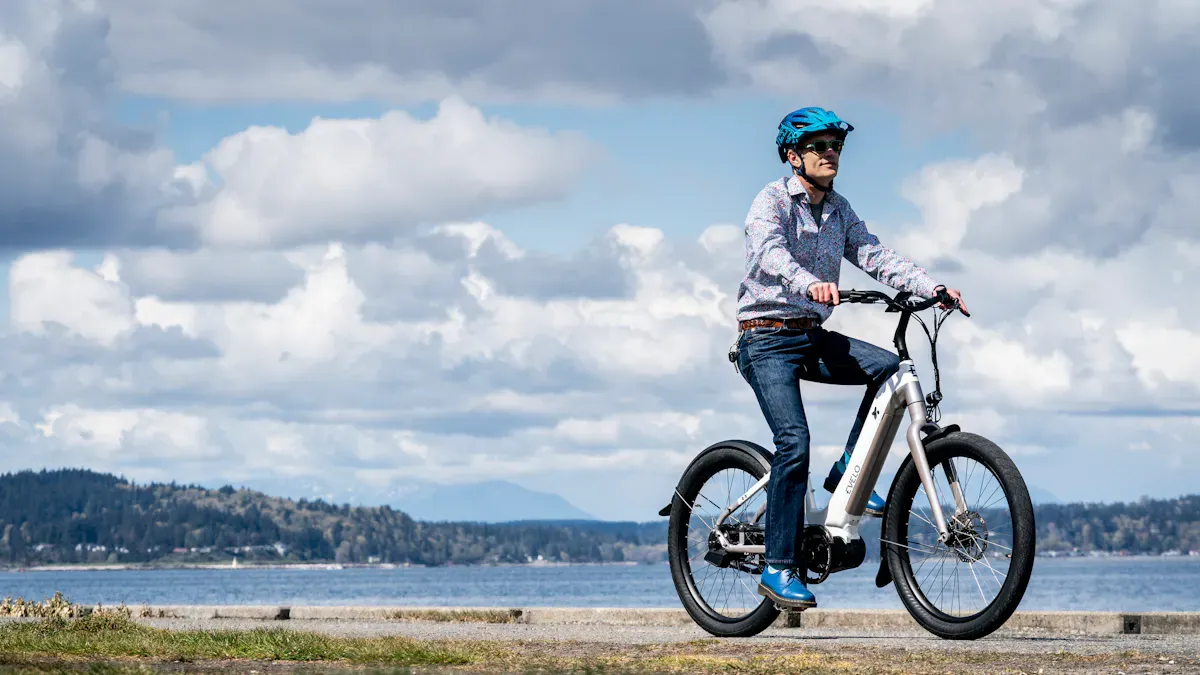
A stable basic posture gives you security and control. You should pay attention to a healthy sitting position. The harmony between saddle and handlebar height is crucial for a pleasant riding experience. The ergonomic triangle of saddle, handlebars, and pedals ensures comfort and prevents tension. Incorrect adjustment can lead to posture problems and make it difficult to control the e-bike.
Description |
|
|---|---|
Sitting |
Keep your back straight. Fingers are on the grip, ready to brake. Elbows are slightly bent. |
Standing |
Use this position when going downhill or on uneven ground. It gives you more security if you feel stable. |
Make sure you choose the right saddle and handlebar settings. This increases comfort and riding safety. Check regularly whether all settings fit your height.
Tip: A healthy sitting posture protects you from tension and gives you more control over your e-bike.
Riding curves safely
Curves represent a challenge for many beginners. With the right technique, you master them safely. Reduce your speed before the curve. Ride as far to the outside as possible to increase the curve radius. Keep your gaze directed forward to the exit of the curve.
Use the entire width of the path. Approach from the outside, steer into the curve, and drift back to the outside at the exit.
Lower the saddle and slow down before the curve.
Look far ahead and fixate on the apex of the curve.
Keep your center of gravity balanced while leaning the e-bike toward the inside of the curve.
Press the outside pedal down to get more stability.
.
“Anyone who takes their eyes off the front wheel and looks ahead rides more safely,” explains Jan Zander, founder of a mountain bike school. Actively turn your head and upper body in the direction of the curve and look out of the curve early.
Many underestimate the speed of e-bikes. You should assess situations quickly and ride with foresight. The viewing direction often decides your safety in the curve.
Mastering obstacles
In everyday life, you often encounter obstacles like curbs, potholes, or roots. With the right technique, you overcome them safely. Wide tires offer more grip and comfort. Lower tire pressure makes riding over obstacles more pleasant. A suspension fork compensates for bumps and improves control.
Wide tires give you more grip on uneven surfaces.
Reduce tire pressure slightly if you expect many obstacles.
A suspension fork helps you absorb shocks and steer the e-bike better.
Cause |
|
|---|---|
Single-vehicle accidents |
Deficient infrastructure, potholes, tree root bumps, drop-offs, obstacles |
Many accidents occur due to bad paths or unexpected obstacles. You should always remain alert and observe the path ahead. With good riding technique and the right equipment, you can master obstacles safely.
Remember: Shift into a lighter gear early, pedal evenly, and shift your weight forward during climbs. This is how you optimally use the motor support and remain safe on the road.
Predictive riding and the right technique make you safer and more relaxed on every ride.
Braking and starting
Braking correctly with the e-bike
You should practice braking with your e-bike regularly. Many underestimate the power and weight. This often leads to longer braking distances. Note these points:
E-bikes reach higher speeds. The braking distance increases as a result.
Especially on inclines, many underestimate the speed and brake too late.
You need more force in critical situations.
New brake pads must be bedded in. Brake firmly about 30 times from medium speed without coming to a complete stop.
Never touch the brake disc with your fingers. Even a little dirt or oil can significantly reduce braking power.
Tip: Always keep both hands ready to brake. Test the brakes before every ride.
Starting and stopping safely
When starting, you should stay calm. Place one foot on the pedal and keep your balance. Start with little force. Make sure you don't start too fast. When stopping, brake early and evenly. Only dismount when the e-bike is almost stopped. This way, you avoid falling.
Starting errors |
Stopping errors |
|---|---|
Selecting too high a level |
Braking too late |
Applying too much force |
Using only one brake |
Uncertain balance |
Dismounting suddenly |
Setting support levels
The right support level helps you start safely. Start with a low level. This gives you more control. The motor adjusts to your pedal pressure. The harder you pedal, the more support you get. This is especially important on steep paths. Observe how the e-bike reacts to your pressure. With some practice, you will find the right setting for every situation.
Remember: A low support level ensures controlled starting and gives you security.
Conduct in road traffic
Keep your distance and ride with foresight
You protect yourself and others if you always keep enough distance. Inside towns, you must leave at least 1.5 meters of distance to other road users. Outside towns, it is even 2 meters.
Location |
Minimum distance |
|---|---|
Inside town |
1.5 meters |
Outside town |
2 meters |
Maintain this distance when overtaking pedestrians, cyclists, and parked cars. This allows you to react to sudden movements. Predictive riding helps you identify dangers early. You should always keep an eye on the road and other road users. Plan your maneuvers in time and never ride frantically. Adhering to traffic rules significantly lowers the risk of accidents.
Scan the road ahead.
Identify obstacles early.
Only overtake with good visibility.
Increasing visibility
You are seen better if you pay attention to good lighting and conspicuous clothing. Turn your lights on even during the day. Reflectors on your bike and clothing make you visible in the dark. Bright or neon-colored clothing helps you stand out even in bad weather.
Use front and rear lights.
Attach reflectors to spokes, pedals, and clothing.
Wear bright or reflective clothing.
Tip: Additional flashing lights increase your visibility in traffic.
Traffic rules for e-bike riders
You must know the most important traffic rules. Pedelecs are considered bicycles. You don't need a license or a helmet, but you should still wear one. E-bikes with more than 25 km/h or S-pedelecs are considered motor vehicles. Here you need a license and must wear a helmet. Only use bike paths if they are approved for your vehicle.
Pedelecs: No helmet requirement, no license.
E-bikes up to 25 km/h: Helmet requirement.
S-pedelecs: License and helmet requirement.
Only use bike paths if permitted.
Adhere to these rules. This way, you ride safely and avoid fines.
Equipment and protection
Helmet and protective clothing
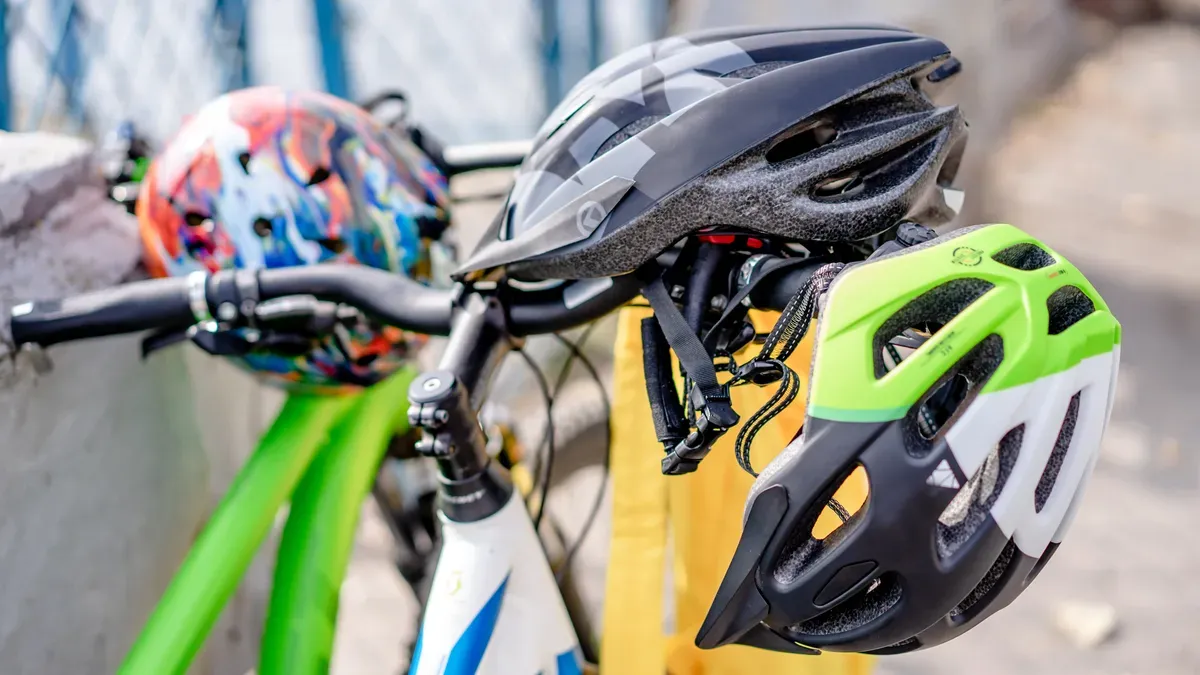
You can best protect your head with a well-fitting helmet. A helmet significantly reduces the severity of head injuries. Safety experts like Martin Schmitt from the ADAC emphasize that a helmet is the most important protective measure when cycling. Make sure the helmet fits firmly and comfortably. The straps must be fastened. Adjust the inner shape to your head. Only a correctly worn helmet will truly protect you. Wear your helmet on every ride, even on short trips. Head injuries can have serious consequences.
Protective clothing such as gloves and padded jackets offers additional protection. They help prevent abrasions and bruises during falls. You should pay particular attention to high-quality protective clothing, especially for S-pedelecs.
Tip: A helmet only protects if it fits properly and the straps are fastened.
Lighting and reflectors
You must always ride with functioning lighting in road traffic. This applies to front and rear lights. S-pedelec riders also switch on their lights during the day, similar to motorcyclists. Reflectors on spokes, pedals, and clothing increase your visibility. This ensures you are seen better, even in bad weather or darkness.
Legal requirements for e-bikes:
Front light is mandatory.
Rear light is mandatory.
S-pedelecs: lights on during the day as well.
Weatherproof clothing
Weatherproof clothing keeps you dry and warm. A rain jacket protects you from getting wet. Breathable materials prevent you from sweating. Wear several thin layers on top of each other. This allows you to quickly adapt to changing weather. Reflective elements on your clothing make you visible even in rain and fog.
Remember: Good equipment protects you and ensures more riding fun – in any weather.
Breakdowns and emergencies
First steps during a breakdown
You can never completely rule out a breakdown. Stay calm if your e-bike suddenly stops working. Move your bike to a safe place. First, check what is not working. Common causes include a flat tire, a broken chain, or a technical defect. Wear and tear is the primary cause of damage to e-bikes. In 2023, the share was approximately 33 percent. Technical defects accounted for around 22 percent of damage. In 2024, wear and tear topped the list again with a good 22 percent. Technical defects were at 12.6 percent. You should always first check if you can fix the problem yourself. If not, call for help or a breakdown service.
Tip: Practice changing a tire or putting the chain back on at home. This will enable you to act faster in an emergency.
Emergency equipment
With the right equipment, you are prepared for many breakdowns. Experts recommend always carrying a small repair kit. This allows you to fix minor damage yourself and continue your ride.
Torx screws
Screwdrivers (flat-head and Phillips)
Chain connector
Cable ties
Patch kit
Spare gear cable
Allen keys in various sizes
Bicycle pump or hand air pump
Tire levers
Multitool
Note: Pack your emergency kit before every tour. A multitool saves space and helps with many problems.
Behavior during accidents
After an accident, you should think about your safety first. Switch off the motor and leave the road if possible. Check if you or others are injured. In an emergency, call 112. Administer first aid if necessary. Wait for rescue services and provide precise information about the scene of the accident. Stay calm and helpful. Note down important data such as the time, location, and people involved.
Remember: A cool head and a clear plan help you to act correctly in emergencies.
You have now learned the most important safety tips for your e-bike:
Check your e-bike before every ride.
Always wear a helmet.
Ride with foresight and keep your distance.
Safety brings you more riding pleasure. Your self-confidence will grow with every day. Keep at it and enjoy every ride!
FAQ
Do I need to maintain my e-bike regularly?
You should have your e-bike serviced at least once a year. This allows you to detect damage early and extend the lifespan of your bike.
What do I do if the battery runs out on the road?
You can keep riding, but without motor assistance. Plan your tours and always charge the battery fully before you start.
Do I need special clothing for the e-bike?
You benefit from weatherproof and reflective clothing. It protects you from rain and makes you more visible in road traffic.