
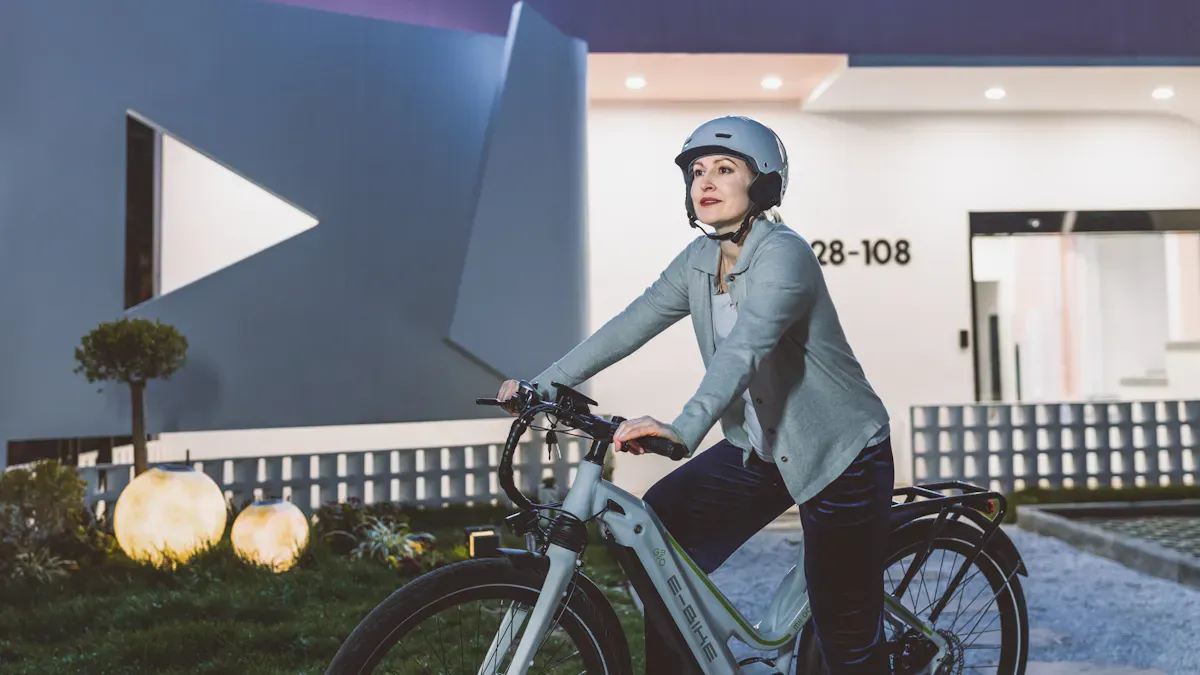
Do you want to be safe on the road as an e-bike beginner? Safety starts with simple measures. Last year in Germany, there were numerous accidents involving e-bikes:
Category |
Number |
|---|---|
4,204 |
|
Seriously injured pedelec riders |
776 |
E-bike fatalities |
33 |
Senior citizens among fatalities |
20 |
With the right tips, you can significantly reduce risks as an e-bike beginner.
Key Insights
Always wear a helmet to reduce the risk of head injuries. A well-fitting helmet can prevent serious injuries.
Ensure your e-bike has good lighting and reflectors. These increase your visibility in the dark and during poor weather conditions.
Perform an e-bike check before every ride. Check brakes, tires, and the battery to avoid breakdowns and accidents.
Safety Equipment for E-Bike Beginners
Helmet and Head Protection
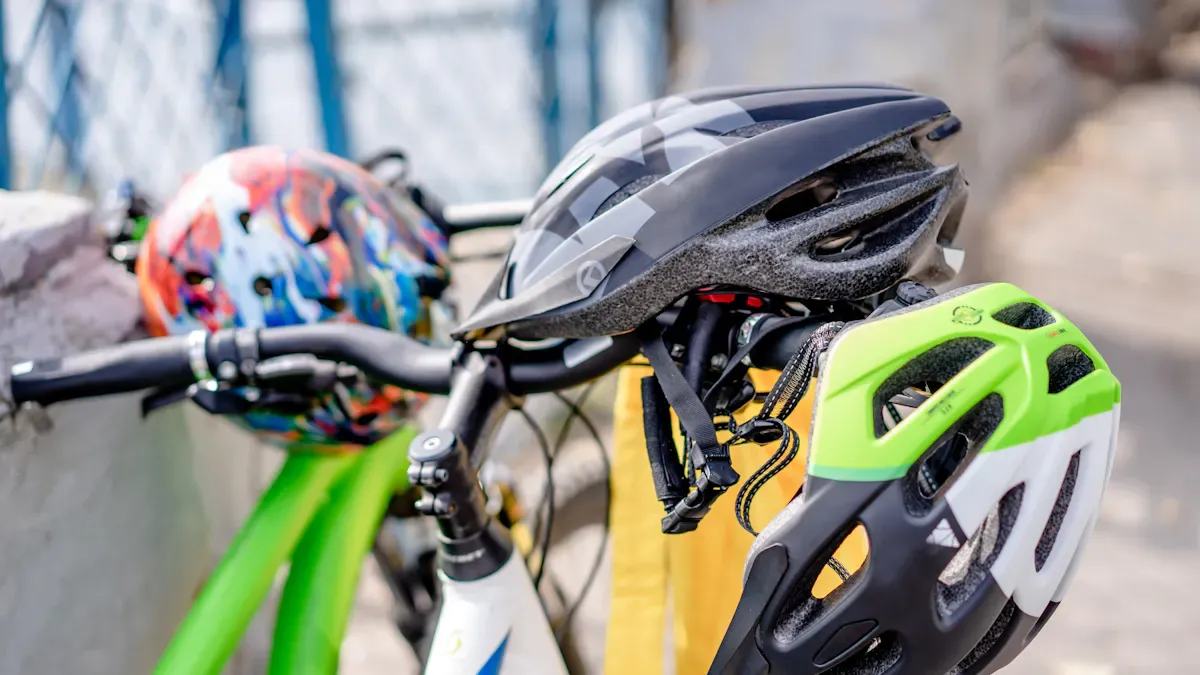
The best way to protect your head is with a helmet. Even though helmets are not mandatory for e-bike beginners in Germany, you should always wear one. A helmet can prevent serious head injuries and significantly lower the risk. Many accidents end less severely if you wear a helmet. The following table shows how effectively a helmet reduces the risk of head injuries:
Type of head injury |
Risk with helmet |
|
|---|---|---|
Minor head injuries |
100% |
80% less |
Serious head injuries |
100% |
20% less |
With a helmet, the likelihood of head, facial, and even fatal injuries decreases. You can do a lot for your safety by using a suitable helmet.
Tip: Choose a helmet that fits well and carries the CE certification mark. This provides you with optimal protection.
Lighting and Reflectors
You must equip your e-bike with good lighting and reflectors. The Road Traffic Licensing Regulations (StVZO) prescribe exact rules. This equipment ensures you are seen in the dark and during bad weather. The following table shows what your e-bike needs:
Requirement |
Description |
|---|---|
Headlight |
White headlight and white reflector at the front (§ 67 Para. 3 StVZO) |
Taillight |
Red taillight and red rear reflector at the back (§ 67 Para. 4 StVZO) |
Power supply |
Lighting powered by a generator or batteries (§ 67 StVZO) |
Pedal reflectors |
Yellow reflectors at the front and back of the pedals (§ 67 Para. 6 StVZO) |
Spoke reflectors |
Two yellow reflectors per wheel or a reflective ring on the tire (§ 67 Para. 7 StVZO) |
You should regularly check that all lights and reflectors are working. This ensures you are always safe on the road as an e-bike beginner.
Visible and Weatherproof Clothing
You are easier to see in traffic if you wear bright and reflective clothing. Studies show that 25% of fatal bicycle accidents are caused by poor visibility. With conspicuous colors like yellow or orange, you can be spotted from 140 meters away. Reflective materials can lower the risk of accidents in the dark by up to 70%.
Wear bright and reflective clothing such as vests or jackets.
Use reflective trouser clips or light bands.
Choose weatherproof clothing so you are protected against rain and wind.
Note: Bright and reflective clothing saves lives and provides you with more safety as an e-bike beginner.
E-Bike Check Before Riding
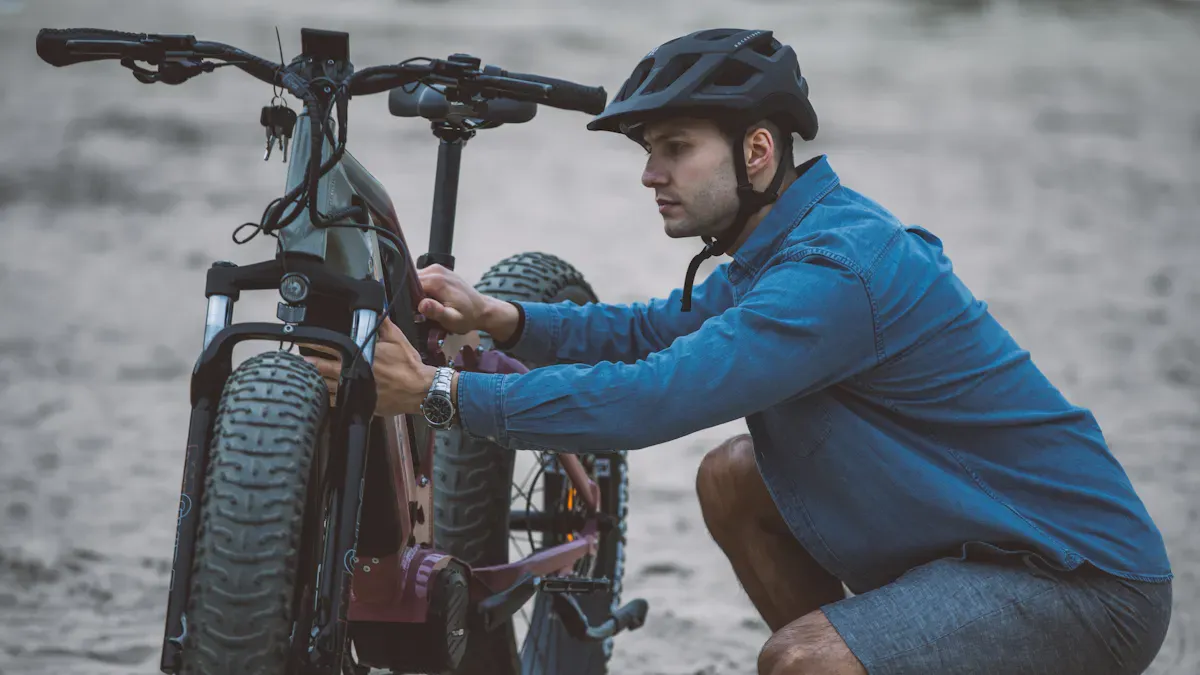
A thorough e-bike check before every ride protects you from unpleasant surprises. Many accidents can be avoided if you check your e-bike regularly. Over time, you will develop a routine that gives you security. Especially as an e-bike beginner, you will benefit from established procedures.
Checking Brakes and Tires
Brakes and tires are among the most important components of your e-bike. Technical defects cause about 22 percent of damage to e-bikes. Wear and tear is actually responsible for about 33 percent of damage. You should therefore perform a quick check before every ride.
Here is a simple checklist for brakes and tires:
Check brake pads for wear.
Test the braking performance. If you are unsure, have them checked in a specialist workshop.
Take your e-bike in for inspection at least once a year or every 1,000 to 1,500 kilometers.
Check tire pressure according to the manufacturer's specifications.
Look for cracks, cuts, or foreign objects in the tires.
Replace worn-out tires immediately.
Tip: A quick check takes only a few minutes and can prevent serious accidents.
Checking Battery and Electronics
The battery is the heart of your e-bike. Battery problems occur most frequently. Usually, individual battery cells fail, not the entire battery. Damaged batteries can lead to short circuits. Short circuits sometimes cause fires or even explosions. Bursting housing parts and leaking substances such as electrolytes pose a risk to your health.
You should check the following before every ride:
Is the battery seated firmly and securely?
Does the display show a full charge status?
Are there visible damages to the battery or cables?
Do all electrical components like lights and motor support work?
Caution: Only charge the battery with the original charger and never leave it charging unattended.
Adjusting Support Levels Correctly
The correct setting of support levels makes riding safer and more pleasant. Adjust the level according to your riding ability and the route. As an e-bike beginner, always start with a low support level. This way, you get used to the feel of the ride and maintain control.
Choose a low level on straight routes.
Increase support only for inclines or headwinds.
Reduce the level before turns and when stopping.
Test different settings on a safe practice area.
Note: With the right support level, you ride safer and save energy.
A regular e-bike check protects you from breakdowns and accidents. You will quickly develop a feel for your e-bike and recognize potential problems early on.
Riding Technique for E-Bike Beginners
Start Slowly and Practice
You should get used to your e-bike slowly. Start with short distances and low speed. This gives you a feel for the weight and the motor support. Many traffic safety associations recommend specific exercises to improve your coordination and reaction. The following table shows two key practice priorities:
Exercise |
Description |
|---|---|
Coordination and reaction |
Train your agility and responsiveness with targeted exercises. |
Riding situations |
Try out different situations to get to know your e-bike better. |
Tip: Mark a spot on the ground and practice starting and braking there. Increase your speed slowly.
Training Braking and Cornering
Many falls occur because riders use the brakes incorrectly or misjudge the road. Common mistakes are over-braking, jerking the handlebars, or riding over curbs and edges. You should practice braking using both brakes simultaneously. Start slowly and then increase speed. Ride a slalom course to practice cornering. This helps you learn how your e-bike reacts in tight turns.
Practice emergency braking on both dry and wet surfaces.
Test braking behavior on different road surfaces.
Ride through curves in a controlled manner while maintaining your balance.
Choosing a Suitable Practice Area
Choose a safe area for your first riding attempts. Many driving schools offer special training grounds for e-bike beginners. Here you can practice without traffic and focus on your riding feel.
Practice area |
Description |
|---|---|
Traffic practice ground Gronau |
Protected environment for starting, braking, and cornering. |
Bicycle school Pinneberg |
Partially covered area, ideal for pedelec safety training. |
Bicycle traffic training |
Traffic-calmed areas with painted roads and intersections. |
Note: Many ADFC branches offer cycling courses. There, you will learn under guidance and get valuable tips.
Safe in Traffic
Choose Quiet Routes
You should choose quiet side streets and designated bike paths for your trips. These routes offer less traffic and less stress. Many experts recommend avoiding heavily traveled roads. You can ride more relaxed on bike paths and avoid conflicts with cars. Plan your route best before the ride. Use maps or apps that show safe bike paths.
Tip: Ride in residential areas or parks when you are trying out new routes. You will get to know your e-bike better there.
Ride Foresightfully and Defensively
You increase your safety if you ride foresightfully and defensively. You should always assume that other road users might make mistakes. It is better to brake early rather than having to stop suddenly. At higher speeds, you must account for your braking distance and react in good time. Many experts say that defensive riding prevents accidents and makes e-biking a safe alternative.
You actively contribute to your own safety.
Relaxed riding provides more overview and less stress.
Defensive riding style is especially helpful in city traffic.
Keep Distance from Others
You should always keep enough distance from other road users. Maintain at least one meter from parked cars so you are not surprised by suddenly opening doors. You should also keep a distance from other cyclists and pedestrians. This way, you can react in time and avoid accidents.
Situation |
Recommended distance |
|---|---|
Parked cars |
At least 1 meter |
Other cyclists |
1 to 1.5 meters |
Pedestrians |
1.5 meters |
Remember: More distance gives you more time to react and protects you from unexpected situations.
Theft Protection and Maintenance
Secure Parking and Locking
The best way to protect your e-bike is to always lock it securely. In Germany, around 135,000 e-bikes were stolen in 2024. The clearance rate remains low. You should never leave your e-bike standing unsecured. Choose a fixed object to lock it to, such as a bike rack or a railing.
Experts recommend the following locks for the best protection:
Choose a lock with a security level of at least 10, ideally 12 or higher.
U-locks and solid chain locks offer very good protection.
Folding locks are practical but vary in quality and weight.
Tip: Combine two different types of locks to make life difficult for thieves.
Regular maintenance
You can maintain the safety and lifespan of your e-bike through regular maintenance. Manufacturers recommend an inspection at least once a year or after 1,000 to 1,500 kilometers. This allows you to identify wear and tear early and prevent breakdowns.
Maintenance frequency |
Description |
|---|---|
Once a year |
Recommended inspection for safety and performance |
Every 1,000 to 1,500 kilometers |
Alternative to the annual inspection, depending on usage |
You should check your brakes, tires, chain, and electronics regularly. A well-maintained e-bike is safer to ride and provides more enjoyment for longer.
Insurance and documentation
You can additionally protect your e-bike with insurance. For pedelecs, private liability insurance is recommended. A special theft insurance also covers the battery and onboard computer. If you ride an e-bike that exceeds 25 km/h, you need liability insurance. Partial comprehensive insurance offers even more protection. Bicycle theft insurance helps if your e-bike is stolen while out and about. Home contents insurance is often insufficient.
Note the frame number and take photos of your e-bike. This allows you to quickly provide proof in the event of a claim.
Special features of speed pedelecs
Speed pedelecs differ significantly from normal e-bikes. They reach up to 45 km/h and are legally classified as mopeds. You must therefore observe special rules to be safe and legal on the road.
Feature |
S-pedelecs |
Normal e-bikes |
|---|---|---|
45 km/h |
25 km/h |
|
Compulsory insurance |
Yes, motor vehicle liability required |
No |
Yes |
No |
|
Driver's license |
Class AM required |
Not required |
Minimum age |
16 years |
No age limit |
Use of bike paths |
Only permitted on the road |
Allowed on bike paths |
Driver's license and compulsory insurance
You need a Class AM driver's license for a speed pedelec. If you were born before April 1965, this requirement does not apply. In addition, you must take out motor vehicle liability insurance. You must attach the insurance license plate to the bike. A helmet is mandatory for speed pedelecs. An approved bicycle helmet is sufficient. You may only ride an S-pedelec from the age of 16. Bike paths are off-limits to you – you must ride on the road.
Class AM driver's license required (unless born before April 1965)
Compulsory insurance with visible license plate
Helmet mandatory (bicycle helmet is sufficient)
Minimum age: 16 years
Use permitted only on the road
Additional safety precautions
You travel faster with a speed pedelec. The risk of accidents is higher than with normal bicycles. Experts therefore recommend additional safety measures:
Always wear a well-fitting helmet.
Check your brakes and lighting regularly.
Pay attention to the required equipment: rearview mirror, horn, brake light, and license plate lighting.
Adhere to speed limits and drive with foresight.
Wear high-visibility clothing so others can see you better.
Tip: With these measures, you protect yourself and others in road traffic. Safety always comes first with speed pedelecs!
You will ride more safely if you follow these three tips:
Practice riding regularly.
Test your brakes specifically.
Always wear a helmet and ensure you have good lighting.
Repeat these tips often. This will improve your skills and allow you to enjoy every ride with more fun and safety. 🚴♂️
FAQ
Do I have to wear a helmet as an e-bike beginner?
You are not required to wear a helmet, but a helmet protects you in case of a fall. Experts always recommend wearing a helmet for added safety.
How often should I have my e-bike serviced?
You should have your e-bike serviced at least once a year. If you use it frequently, check it every 1,000 to 1,500 kilometers.
Am I allowed to ride my e-bike on every bike path?
You may ride a normal e-bike on bike paths. With a speed pedelec, you must ride on the road.