
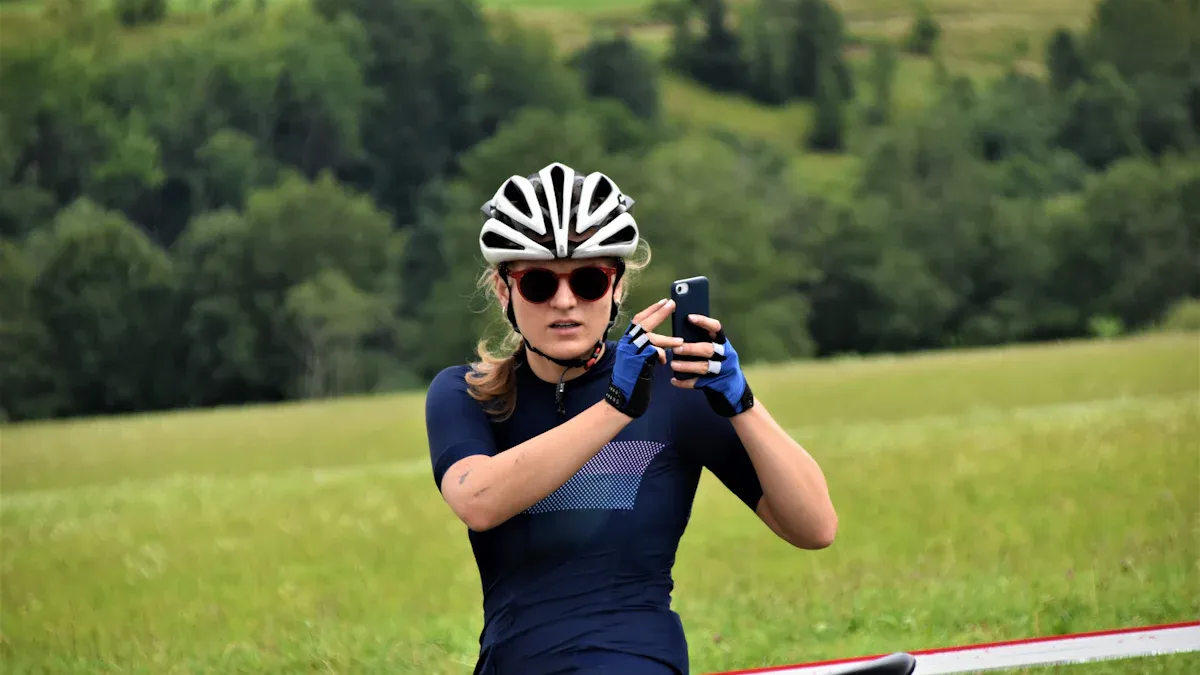
Safety protects you while riding an e-bike, as the accident rate is higher than that of regular bicycles. Even small measures prevent serious consequences. Take a look at the figures:
Bicycle type |
Casualties (2025) |
Fatal accidents per 1,000 accidents |
|---|---|---|
E-bikes |
7.6 |
|
Non-motorized bicycles |
67,000 |
3.6 |
With simple tips, you will feel safer and have more fun.
Key takeaways
Always wear a helmet to avoid head injuries.
Use functioning lighting and reflective clothing for better visibility.
Perform a safety check before every ride to avoid problems.
E-bike safety equipment
Wearing a helmet
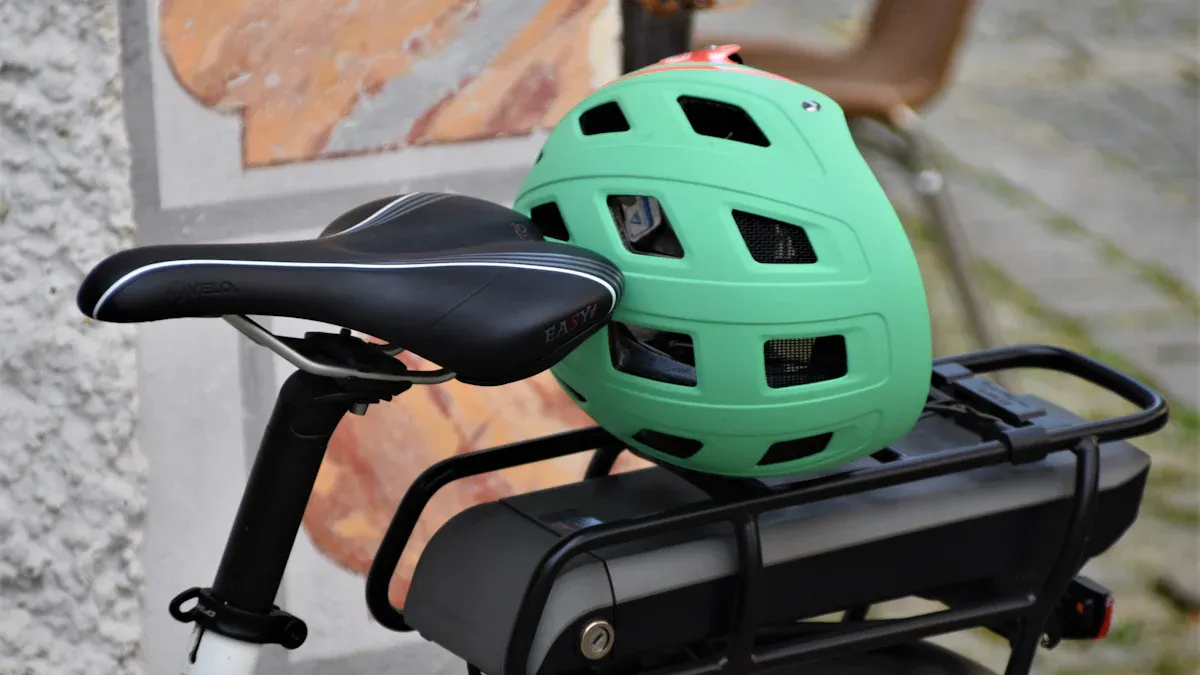
The best way to protect your head is by wearing a helmet. Many underestimate the risk, but a fall can have serious consequences. Studies show that a helmet reduces the risk of serious head injuries by 60%. The probability of ending up in the intensive care unit after an accident drops by 16.4 percentage points. The mortality rate in bicycle accidents also decreases by 34%. This is especially important with e-bikes, as you are often traveling at higher speeds. While a helmet is not legally required, it saves lives.
Tip: Choose a helmet that fits well and bears the CE mark. Regularly check that the helmet is still intact.
Effect of helmet |
Reduction |
|---|---|
Serious head injuries |
60% |
Cyclist mortality |
34% |
Lighting & Visibility
You must equip your e-bike with a functioning lighting system. This is mandated by law. Proper lighting ensures that other road users see you early on. This protects you especially at dusk and in bad weather. The most important regulations are:
White headlight and white front reflector
Red taillight and red rear reflector
Yellow reflectors on the pedals
Reflectors in the spokes or a reflective ring on the tire
Power supply via dynamo or battery
Description |
|
|---|---|
Headlight |
A white headlight and a white forward-facing reflector |
Taillight |
A red taillight and a red rear reflector |
Power supply |
Lighting can be powered by a dynamo or batteries |
Pedal reflectors |
Yellow reflectors on the bike pedals facing forward and backward |
Wheel reflectors |
Two yellow reflectors in the spokes or a reflective ring on the tire |
Note: Without functioning lighting, you risk a fine and jeopardize your safety.
Reflective clothing
You are more visible in traffic if you wear bright or reflective clothing. This is crucial, especially in the dark or during rain. Research shows that reflective clothing and bright colors can increase visibility by up to 400%. Reflective strips on ankles and knees help motorists recognize you as a cyclist. Dark clothing makes you almost invisible. Experienced cyclists therefore recommend reflective vests and special jackets.
Tip: Wear reflective accents on moving body parts. This way, drivers immediately recognize that you are riding an e-bike.
E-bike check before the ride
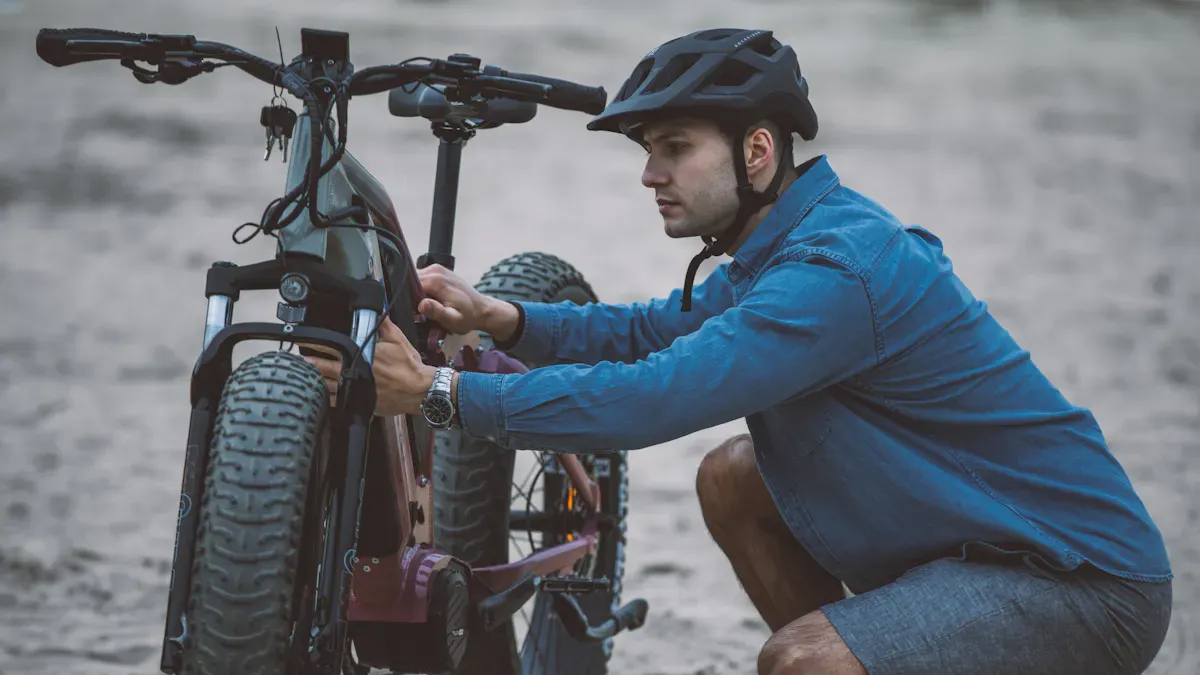
A quick safety check before every ride protects you and gives you peace of mind. You can prevent many problems with just a few simple steps. Experts recommend performing this routine regularly.
Checking brakes & lighting
You should test the brakes before every ride. Squeeze both brake levers and ensure they grip firmly. The brake pads must not squeak or grind. Also check the lighting. Turn on the lights and check whether the headlight and taillight are working. This makes you more visible in road traffic.
Tip: Also check the reflectors on your bike. They increase your visibility in the dark.
Tire pressure & settings
Correct tire pressure makes your e-bike safer and more comfortable. Too little air in the tires leads to a spongy ride and increases the risk of punctures. Too much air reduces traction, especially on wet surfaces. Ideally, check the tire pressure once a week. You can usually find the values on the tire sidewall.
Optimal tire pressure improves handling.
Tire pressure that is too low increases the risk of punctures.
Tire pressure that is too high reduces comfort and safety.
Checking battery status
The battery is the heart of your e-bike. Check the display before every ride to ensure there is enough energy. Manufacturers recommend checking the battery level after each ride.
Component |
Check frequency |
|---|---|
Battery |
After every ride |
Charge the battery in good time. This prevents you from running out of assistance while on the road.
E-bike riding technique & behavior
Riding an e-bike is significantly different from riding a classic bicycle. You feel the motor's assistance as soon as you start moving. The higher speed and additional weight require more attention in traffic. You should familiarize yourself with these unique characteristics to ride safely and relaxed.
Riding with foresight
The best way to protect yourself is to ride with foresight and defensively. This means always paying attention to other road users and anticipating their movements. This allows you to avoid dangerous evasive maneuvers and emergency braking. Keep an eye on your surroundings and expect errors from motorists or pedestrians.
A forward-looking riding style significantly reduces the probability of an accident. You recognize dangers early and can react in time. This helps you reach your destination safely, especially in city traffic.
Keep braking distance in mind
Braking with an e-bike feels different than with a normal bicycle. The motor and the increased weight extend the braking distance. You should always brake in good time, especially on wet surfaces or gravel paths.
The braking distance of an e-bike reaching speeds of up to 25 km/h is almost twice as long as that of a conventional bicycle traveling at 15 km/h. This means you need more space to come to a safe stop. Test your brakes regularly and practice controlled braking on different surfaces.
Keep your distance
You increase your safety by keeping enough distance from other road users. Traffic experts recommend always anticipating the mistakes of others and riding defensively. This gives you enough time to react.
Distance to |
Recommendation |
|---|---|
Sidewalk |
80 cm |
Edge of the road |
up to 1 m |
Parked vehicles |
1.50 m |
Recommendation |
|
|---|---|
To bicycles |
at least 1.50 m |
Maintain a distance of at least 1.50 meters when overtaking other bicycles. You should also keep 1.50 meters away from parked cars so that you are not surprised by suddenly opened doors. These distances help you avoid accidents and stay safe on the road.
Starting off & assistance levels
You will feel the motor's power immediately when starting off. Start slowly and in a controlled manner so that you do not become too fast. Many beginners underestimate the acceleration and select the highest assistance level right away. This can feel unusual and unsafe.
Lower assistance levels like Eco or Tour promote controlled riding. They help you get used to the e-bike.
Higher levels like Turbo offer strong acceleration. You should only use these once you feel confident.
Eco mode: 60% assistance, ideal for relaxed rides and maximum range.
Tour mode: 140% assistance, balanced help for most situations.
Turbo mode: Up to 400% assistance, maximum power for steep climbs.
Proper braking is particularly important at higher speeds. Practice starting and switching assistance levels in a quiet place before heading out into traffic. This will give you a feel for your e-bike and help you ride safely.
Practical exercises for beginners
Practicing braking & starting
You should regularly train braking and starting. Start without motor assistance to get to know your e-bike better. Test starting with different assistance levels. This helps you avoid surprises in traffic. Practice pulling both the front and rear brakes simultaneously. This shortens your braking distance and stops you safely. Stopping safely is particularly important because e-bikes are heavier and faster.
Tip: Practice controlled starting and safe dismounting in a quiet place. This helps you get a feel for your bike.
Balance & cornering
Good balance is the key to safe riding. Sit on your e-bike and lean the front wheel against a solid object. Balance while seated until you feel secure. Then stand up and take the basic position. Pause briefly, balance, and start with a pedal kick. Repeat the exercise on both sides.
Roll on one pedal and squat slightly.
Switch between the left and right pedal.
Shift your weight forward and backward.
When cornering, you should keep your head and shoulders in the direction of travel. Brake before the curve and keep the inner pedal up. This way, you maintain control and do not slip.
Emergency maneuvers
You can specifically practice emergency maneuvers. These include quick evasive actions, controlled braking, and safe dismounting. These exercises help you stay calm in dangerous situations. Many riding safety courses recommend:
Safety in motion
Interaction with other road users
Bicycle knowledge
Correct behavior in road traffic
Safety-conscious behavior
Special features of the e-bike
Practice regularly to react correctly in critical moments and avoid accidents.
Additional tips for e-bike beginners
Theft protection
The best way to protect your e-bike is with a high-quality lock. Choose a U-lock or folding lock that is difficult to break. Always lock your bike to a fixed object. Many thieves look for easy targets. Remove the battery if you leave the e-bike parked for a longer period. Note down the frame number and take a photo of your bike. This makes it easier to find if lost. A GPS tracker helps you locate your e-bike in an emergency.
Tip: Park your e-bike in busy, well-lit areas. This deters thieves.
Riding in a group
You benefit from riding in a group in many ways. You feel safer because drivers see a group better. In a group, you learn new riding techniques and get tips from experienced e-bike riders. Riding together is fun and strengthens the sense of community. You can deepen friendships and meet new people. Many report that they feel more comfortable in a group and gain more self-confidence.
Exchange of experiences and tips
Motivation and support from others
Riding safety courses
You can improve your skills in special riding safety courses. Many courses are aimed at beginners and show you how to handle your e-bike safely. You will practice braking, starting, and cornering under guidance. The instructors explain how to react correctly in difficult situations. In a course, you will also learn how to optimally adjust your e-bike and maintain the battery. This will make you feel safer and enjoy riding more.
Note: Many cities and clubs offer regular e-bike courses. Ask your local municipality or bike shop.
You can significantly increase your safety when riding an e-bike if you regularly wear a helmet, use lights and reflectors, and ride defensively. Experienced riders recommend adjusting your e-bike optimally and practicing your riding technique. Safety and riding enjoyment go hand in hand. Try out these tips and enjoy every ride! 🚲
FAQ
Do I have to take out insurance for my e-bike?
You do not need compulsory insurance for standard e-bikes. For fast S-pedelecs, you must take out insurance.
How often should I have my e-bike serviced?
You should have your e-bike serviced at least once a year. Check the brakes, tires, and battery regularly.
Tip: A professional inspection increases the service life of your e-bike.
What do I do if the battery suddenly runs out?
You can continue riding without motor assistance. Find a safe place and charge the battery as soon as you have the opportunity.