
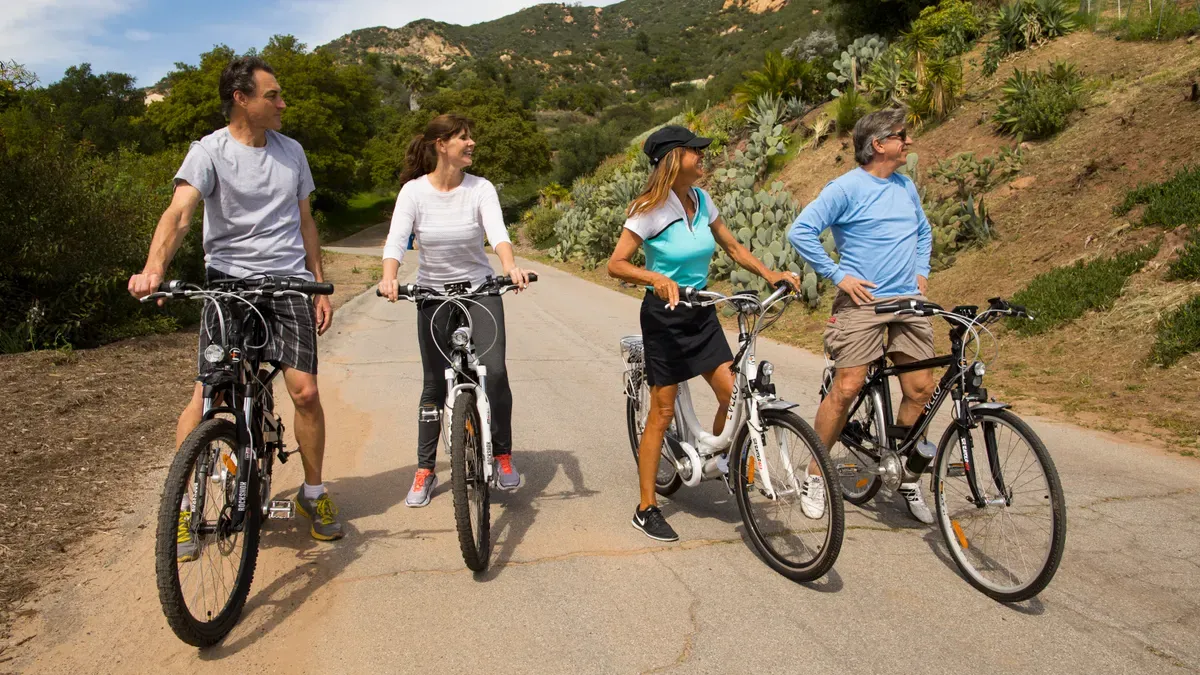
You can confidently master your new e-bike by following three golden rules. Always ride with foresight. Always keep the longer braking distance in mind from an early stage. In addition, always start in the lowest assistance level. This allows you to easily control the heavier weight and rapid acceleration at all times. Gain full confidence immediately and enjoy your ride without fear!
Key takeaways
Always start your ride in the lowest assistance level for a safe and controlled start.
Brake early using both brakes simultaneously to safely stop your e-bike's heavier weight.
Always ride with foresight and maintain a distance of at least one meter from parked cars.
The three golden rules for beginners
Ride with foresight and recognize hazards
Always scan the road ahead of you early on. This allows you to spot potential obstacles in time. Parked car doors sometimes open completely unexpectedly. Pedestrians occasionally step onto the bike path without making eye contact. Therefore, always observe your entire surroundings attentively.
Many accidents occur due to small moments of inattention in dense city traffic. A misjudgment of the situation quickly leads to dangerous scenarios. Adjust your riding style with foresight. This way, you will master every tricky spot with complete calm.
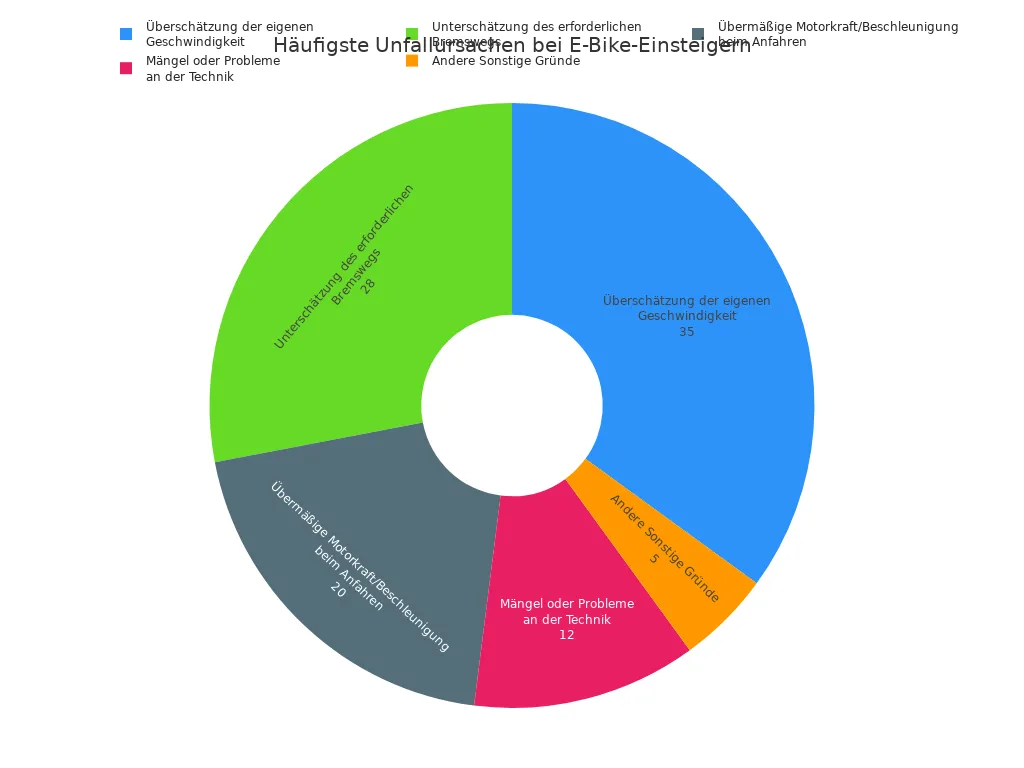
Cause of accident |
Share |
|---|---|
Overestimating one's own speed |
35% |
Underestimating the required braking distance |
28% |
Excessive motor power/acceleration when starting |
20% |
Technical defects or issues |
12% |
Other reasons |
5% |
Correctly estimating the extended braking distance
Your e-bike has a significantly higher dead weight than a conventional bicycle. The motor, battery, and robust frame noticeably increase the moving mass. Therefore, always brake early and with gentle pressure.
The thrust generated extends your braking distance, especially when riding downhill. At the same time, the heavier weight increases the contact pressure of your tires on the asphalt. You will achieve strong braking deceleration as soon as your rear wheel maintains stable traction.
Starting in the lowest level
Before every start, select the lowest assistance level of your motor. Otherwise, the drive will react much too powerfully. A sudden jolt forward can easily throw you off balance.
Typical mistakes when starting occur among beginners particularly often due to the following points:
Motor assistance set too high immediately when starting
Inappropriate use of the brakes
Insecurity and wobbling when getting on and off
Increase the motor power gradually only while riding. This ensures you always maintain safe control over your e-bike.
E-bike check and equipment before the ride
Checking brakes, tire pressure, battery, and chain
It is best to start every ride with a quick safety check. First, check your lights. Switch on the front and rear lights to ensure full functionality. Then, test the brakes by briefly pulling the levers. Both brakes must engage immediately and stop you safely.
After that, take a deliberate look at your tires. On hard asphalt, high tire pressure noticeably reduces rolling resistance. This saves energy and increases your range. On gravel and uneven paths, however, slightly lower pressure improves your traction. Finally, check the battery level and the chain lubrication.
Correct seating position for a stable stance
For the beginning, set your saddle a bit lower. This allows you to reach the ground safely with both feet at any time when stopped. A stable stance on your e-bike prevents tipping over at red lights or intersections.
As you gain more riding experience, adjust the height gradually. An optimal seating position is easy on your knees when pedaling consistently. This allows you to maintain full control over your ride even in surprising situations.
Helmet and visibility through bright clothing
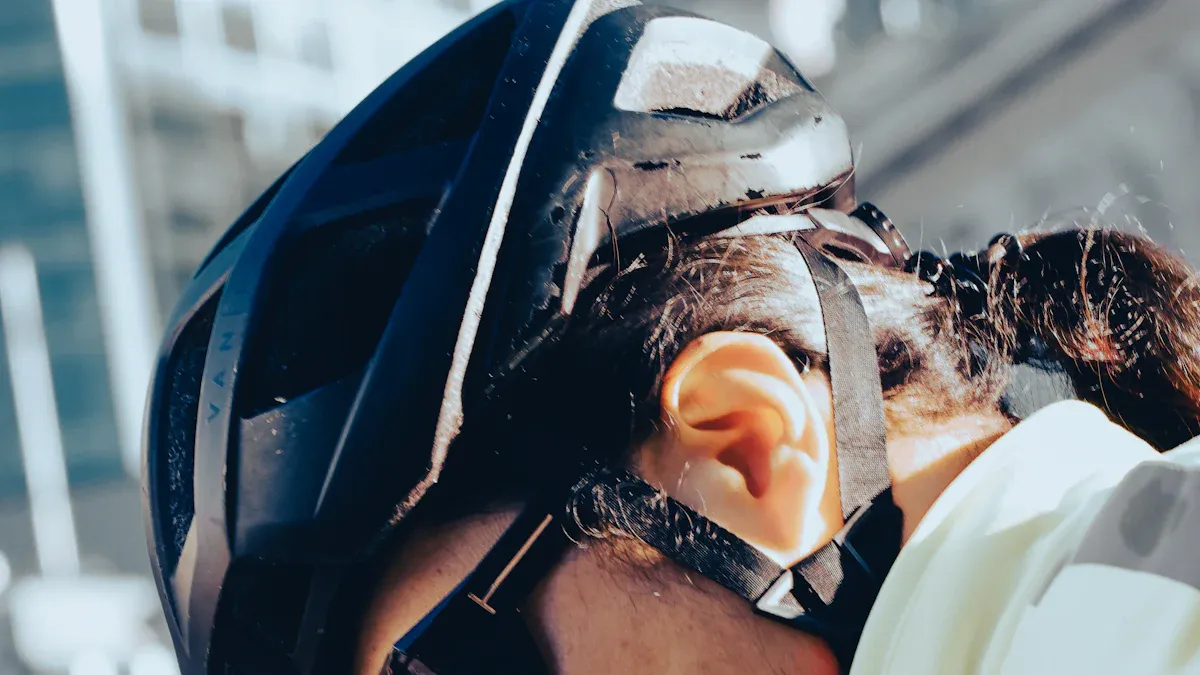
Put on a well-fitting bicycle helmet before getting on the bike. Your clothing also protects you in dense traffic. Bright clothing with simple reflectors makes you visible from up to 40 meters away. Neon-colored clothing with reflective strips even increases visibility for other road users to up to 160 meters.
Additional reflectors on your arms or legs increase your detection distance to up to 140 meters. These moving accessories create the so-called biomotion effect. Drivers recognize your human movements much faster in the dark. After all, an e-bike requires high visibility.
First riding exercises in a protected area
Take enough time for your first ride. Choose a quiet environment without hectic for your start. A protected space immediately removes the pressure. You get to know the riding physics in a relaxed manner.
Choose a quiet parking lot as a practice location
An optimal area for your first attempts offers perfect conditions:
Safety and quiet: You will find no distracting disturbances or sudden sources of danger there.
Free of traffic: The area is completely free of moving traffic.
Flat terrain: The area has no notable inclines.
Large, unused parking lots on Sundays or wide, flat bike paths are excellent. You can fully focus on your new vehicle here. No heavy traffic will distract your attention.
Mastering the heavier weight when starting
Your heavy bike reacts surprisingly powerfully to the first impulse. First, roll a few meters without any motor assistance. This way, you can feel the dead weight directly in the handlebars. Only then switch on the electric drive in the lowest level.
Place your foot on the upper pedal. Push the pedals down gently. The motor will now engage buttery-smooth. Gradually get used to this gentle acceleration behavior. Keep your upper body upright at all times. Ride a few meters straight ahead first and stop gently. Repeat this starting process several times in succession. This will help you quickly gain a natural feel for the heavy mass.
Practicing getting on/off and measured braking
Getting on requires some concentration with a heavy frame. Tilt the bike slightly towards you. Step over the frame very calmly. Always keep one foot firmly on the ground.
Now practice controlled stopping from different speeds. Always use both brake levers simultaneously for optimal deceleration. Follow these points for correct distribution of braking force:
Braking force distribution: You achieve about two-thirds of the total deceleration via the front wheel brake.
Adjustment to the surface: Use the front wheel brake much more carefully and with more modulation on slippery or loose surfaces like gravel or snow.
Locking the front wheel on loose ground quickly leads to a fall. Measured braking maneuvers, on the other hand, ensure you always have full control. Test short braking maneuvers at low speeds first. Then gradually increase your speed. You will quickly develop a precise feel for your stopping distance. This will protect you from surprises in real traffic later on. Every test ride gives you noticeably more safety on your e-bike.
Safe riding with the e-bike in traffic
Handling a speed of 25 km/h correctly
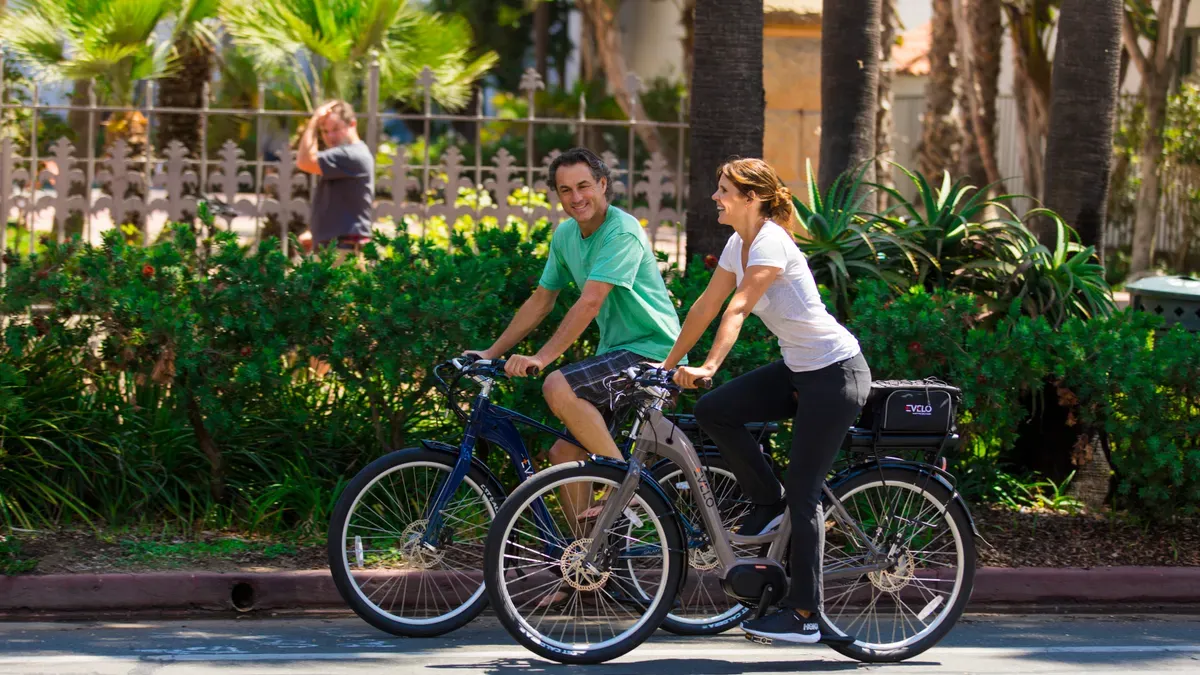
You will reach a speed of 25 km/h with ease. The motor switches off automatically at exactly this limit. This sudden cessation of assistance noticeably changes your own perception. Experts call this sudden sensation the "wall effect." You subjectively feel an abrupt obstacle because your own pedaling must now move the entire weight. Stay completely relaxed at this moment and simply keep pedaling steadily.
Unfortunately, other road users very frequently underestimate your high speed on the road. They react incorrectly due to two typical factors:
Low visible physical effort: You appear extremely relaxed even at high speeds because the electric drive significantly minimizes your physical exertion.
Misleading cadence: Your own pedaling frequency does not allow other people to draw direct conclusions about your actual riding speed.
Therefore, ride particularly attentively. It is better to be cautious when estimating the reactions of other people.
Maintaining sufficient safety distance
Parked cars pose an often underestimated danger to you in everyday traffic. Inattentive drivers sometimes open their doors in a flash. This so-called dooring accident leaves you with hardly any reaction time without enough lateral buffer. Therefore, always maintain sufficient space from stationary vehicles. The average swinging range of car doors is about 75 cm. A distance of one meter thus already offers you a safe buffer outside the danger zone.
The ADFC Berlin advises cyclists to maintain a safety distance of at least one meter, better yet 1.50 meters, from standing or stopping motor vehicles. Cyclists are by no means obligated to ride so far to the right that they endanger their own safety.
Do not let pushy cars unsettle you. Your safety always comes first.
Shoulder check and behavior at intersections
Intersections and junctions require your full attention. Never turn without a thorough shoulder check. Your own speed can easily deceive you when changing direction. A quick glance over your shoulder protects you from following vehicles in the blind spot. Always signal your intention to turn in good time with a clear hand gesture.
Reduce your speed well in advance before areas with poor visibility. Actively seek eye contact with other drivers at intersections. This brief eye contact confirms that they have perceived you. Being ready to brake provides additional security at every junction. With these simple rules, you will master your e-bike confidently and safely even in hectic moments.
With a quick safety check, calm riding practice, and a forward-looking riding style, you will master your new e-bike safely from the start. Before every start, think of your short mental checklist:
Is the technology maintained?
Is the lowest level selected?
Is your gaze kept far ahead?
Keep practicing regularly. Every small training ride strengthens your routine and gives you full confidence.
FAQ
How do you start riding an e-bike most safely?
Always select the lowest assistance level before starting. Press the pedal down gently. This allows your e-bike to accelerate calmly and without a dangerous jolt.
What safety distance should you keep from parked cars?
Maintain a distance of at least one meter from parked cars. This prevents accidents caused by suddenly opening car doors. Consistently maintain this buffer at all times.
How do you brake your e-bike correctly?
Always use both brakes simultaneously. Distribute two-thirds of the braking force to the front wheel brake. On loose surfaces like gravel, brake the front wheel more carefully.