
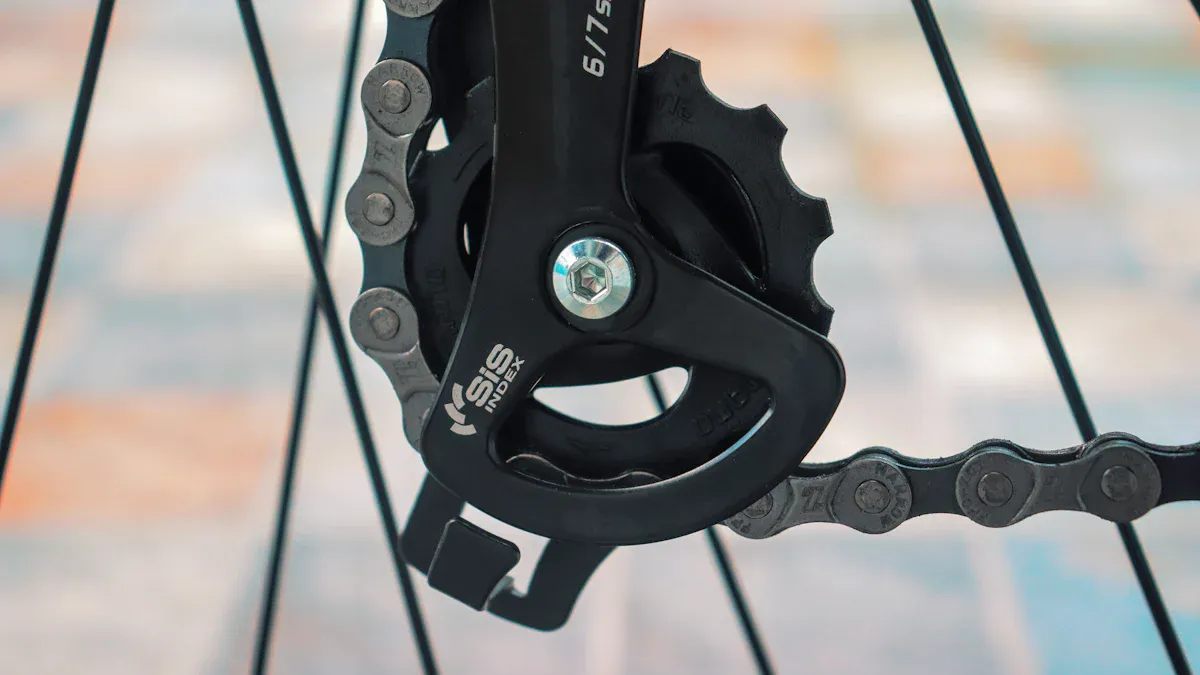
Are you looking for a road bike e-bike that combines speed, efficiency, and low maintenance? With a belt drive, you benefit from a quiet ride and rarely have to worry about upkeep. The combination with an internal gear hub ensures a clean and long-lasting system. You ride almost silently and enjoy high durability.
Key takeaways
A belt drive on a road bike e-bike ensures a quiet, clean, and low-maintenance ride without the need for oiling or greasing.
The service life of the belt is very long, often up to 30,000 kilometers, which is significantly longer than that of a chain.
The efficiency of the belt drive is similar to or even better than that of a chain at high power output; in everyday life, you barely notice any differences.
To install a belt drive, your bike requires a special frame with a frame split that holds the closed belt.
Belt drives are ideal for commuters and everyday riders who value comfort, reliability, and minimal care.
Belt drive
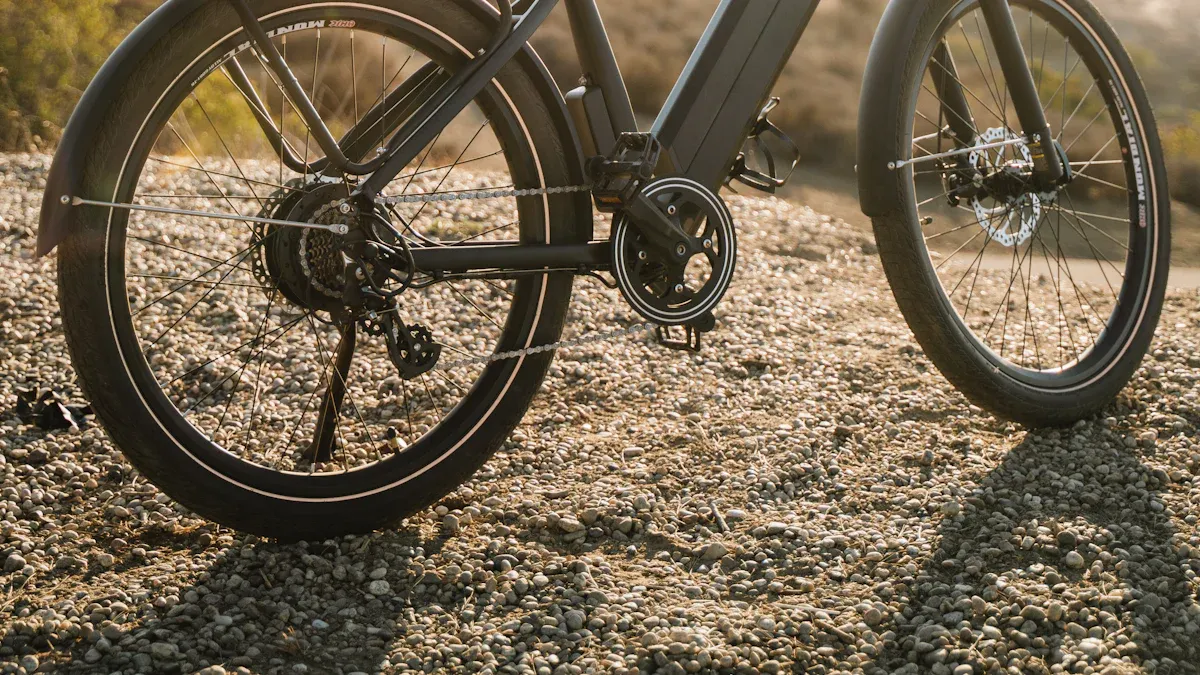
Construction
A belt drive usually consists of a carbon composite material. This material makes the belt particularly durable and resistant. Unlike a chain, you will not find any open links in a belt drive. The belt is a closed system. It runs on special sprockets that are perfectly matched to the belt.
To use a belt drive on your road bike e-bike, you need a frame with a frame split. The frame split is a special mechanism on the bike frame. It allows you to install or change the closed belt. Without a frame split, you cannot mount the belt because it cannot be opened like a chain.
Tip: When changing the belt, the frame split can be difficult to open. The screws are often secured with threadlocker. This prevents them from loosening and protects against water, keeping your system stable and durable.
Many road bike e-bikes with belt drives combine them with an internal gear hub. This combination ensures a particularly clean and low-maintenance system. You do not need to oil or clean the belt, which makes your daily life easier.
Differences from a chain
A belt drive differs from a classic chain drive in several respects:
The belt generates less friction than a chain, making your e-bike ride more efficiently.
You do not need to lubricate the belt, which saves time and effort.
A belt drive wears more slowly than a chain, and its service life is often significantly higher.
Under high load, a belt can snap or slip, so you should check its condition regularly.
For belt drives with Rohloff or Pinion gears, you always need a special frame with a frame split, which is not necessary for chains.
With a belt drive, you benefit from less maintenance and more efficiency. You enjoy a quiet and clean ride, but you must keep the frame split in mind.
Road bike e-bike: speed
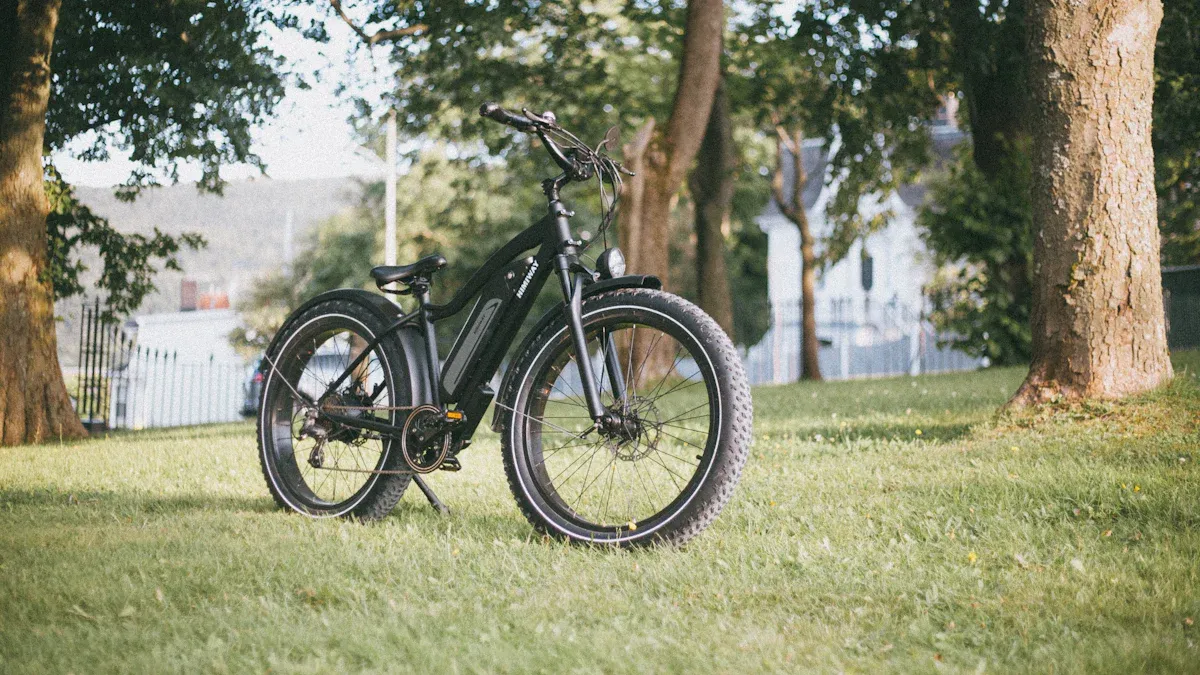
Performance
When riding a road bike e-bike with a belt drive, you reach similar speeds as you would with a chain drive. Many cyclists report that they are slightly faster over long distances with a chain. A direct comparison shows that the chain drive consumes less energy on average. A laboratory test found that a chain drive required about 2.92 watts, while a belt drive consumed 3.93 watts. This means the chain is objectively more efficient and can save you a small amount of time on long tours. One cyclist estimates that on a long trip, he arrives about a day earlier with a chain than with a belt. Nevertheless, you will barely notice this difference in everyday life.
Note: The efficiency differences between belts and chains are barely perceptible to most riders in normal use. Only on very long distances or in competitive sports might the chain offer a small advantage.
The following table shows how efficiency changes at different power levels:
Power (watts) |
Belt drive efficiency (%) |
Chain drive efficiency (%) |
|---|---|---|
50 |
94.2 |
95.7 |
100 |
approx. 96.75 |
approx. 96.91 |
125 |
approx. equal |
approx. equal |
200 |
98.4 |
97.8 |
You can see that the difference is slightly greater at low power levels. As power increases, the values equalize. From about 125 watts, the belt drive is even on par with or better than the chain. This shows that a road bike e-bike with a belt drive operates very efficiently at high power levels.
Laboratory data and field tests confirm these results. At low power, the efficiency of the belt is slightly lower than that of the chain. With more power, the difference decreases. At 200 watts, the belt even achieves a higher efficiency than the chain. In real-world riding, many factors such as wind, incline, or terrain influence speed. Nevertheless, the belt drive remains reliable and efficient even under changing conditions.
Ride quality
The ride quality on a road bike e-bike with a belt drive differs significantly from classic chain bikes. Many testers praise the quiet and smooth handling. You hardly hear any noise while riding because the belt requires no lubrication and there are no metal parts rubbing against each other. This makes every ride more pleasant, especially in the city or on long tours.
Here you will find an overview of various models and their ride quality:
Model / Manufacturer |
Ride quality / Performance |
Features compared to chain drive |
Test result / Recommendation |
|---|---|---|---|
Simplon Kagu Bosch CX 275 TR |
Stable handling, quiet, low maintenance |
Low weight, large tires, high payload |
2nd place in e-bike test |
Kalkhoff Image 7 Excite+ ABS |
Smooth, quiet ride, powerful motor |
Gates Carbon Drive belt, stepless internal hub |
"Good" recommendation from Elektro-Rad magazine |
Diamant 247 Deluxe |
Superior performance, lightweight, low maintenance |
11-speed Alfine gear hub, very quiet |
Overall score 1.3, test winner |
Many users report feeling safer and more relaxed on a belt-driven bike. You do not need to worry about chain maintenance and have less dirt on the drivetrain. This makes the road bike e-bike particularly attractive for everyday use. The longer service life of the belt ensures that you need to change parts less frequently.
Tip: If you value a quiet, low-maintenance, and comfortable ride, a belt drive is the right choice.
In summary: The speed of a road bike e-bike with a belt drive is very good for everyday use. The efficiency is high, especially at higher power outputs. The ride quality is impressive due to its smooth operation, comfort, and low maintenance effort.
Efficiency and range
Energy transmission
Would you like to know how efficiently a belt drive transfers energy from your legs or the motor to the rear wheel? The belt drive scores here with modern technology. The belt consists of carbon fibers, which are particularly stable and durable. This construction ensures that the belt barely stretches and continues to work reliably even after many kilometers.
Technical studies, such as those from the University of Trier, show that at high power, the belt drive can even achieve better efficiency than a classic chain. The correct tension of the belt plays an important role here. If the belt is too loose, it can skip. If it is too tight, wear increases. Manufacturers like Gates Carbon Drive therefore recommend checking the tension regularly. This keeps the energy transmission optimal and wear low.
Tip: You do not need to oil the belt. This saves time and prevents dirty hands or trousers. Cleaning is easy with water. This keeps your drivetrain clean and quiet – ideal for everyday life and longer tours.
Many users report that the belt drive runs particularly quietly. You hardly hear any noise while riding. This makes every ride more pleasant, whether you are commuting to work or planning a long tour. The combination of a belt drive and an internal gear hub additionally protects the gearbox from dirt and weather, keeping energy transmission reliable even in rain or snow.
Efficiency
Efficiency shows you how much of your applied energy actually reaches the rear wheel. With a belt drive, this value is between 96 and 98 percent under optimal conditions. This means almost all of your energy is used for propulsion, with only a small part lost to friction.
The following table provides an overview of the key differences between chain and belt drives:
Drive type |
Efficiency under laboratory conditions |
Influencing factors |
|---|---|---|
Chain drive |
Very high efficiency, but not lossless |
Friction at chain links; larger chainrings improve efficiency |
Belt drive |
Often better than a chain at high power, similar at low power |
Pretension is critical: Too high = more wear, too low = skipping |
General |
Efficiency increases with power (e.g., 50W worse than 400W) |
Riding style, wind, and terrain influence actual efficiency |
Test bench measurements show: At optimal tension and high power, the belt drive works at least as efficiently as the chain. In everyday life, you will barely notice any difference. The chain remains slightly more efficient in an ideal scenario, but the difference is so small that it is virtually irrelevant for you as an everyday rider or touring cyclist.
Note: The belt drive remains efficient even in bad weather. It does not rust and remains flexible, even in the cold or wet. This increases reliability and ensures a consistently good range.
Many manufacturers state that a carbon belt lasts up to 30,000 kilometers. This is two to three times longer than a conventional chain. You therefore benefit not only from high efficiency but also from a long service life and less maintenance.
Advantages of the belt drive at a glance:
Quiet operation
Rust and saltwater resistant
Very durable (up to 30,000 km)
No oil stains on clothing
With a road bike e-bike with a belt drive, you ride efficiently, quietly, and cleanly – for many years to come.
Maintenance and everyday use
Care
With a road bike e-bike with a belt drive, you save a lot of time on maintenance. You do not need to oil the belt. Greasy hands or dirty trousers are a thing of the past. A belt drive remains clean even after many rides. Dust, sand, or mud hardly stick to it. You can simply rinse the belt with water if it ever gets dirty.
Many users report that they see barely any wear on the belt after thousands of kilometers. One rider traveled over 7,000 kilometers with his Gates Carbon Drive, often in rain and mud. He only had to readjust the belt tension from time to time. The drive remained quiet and clean. You should, however, regularly check that the belt is correctly tensioned. A belt that is too loose can skip, and one that is too tight increases wear.
Tip: Check the tension and alignment of the belt every few months. This keeps your e-bike reliable and quiet.
Durability
A belt drive consists of robust carbon fibers. These fibers prevent the belt from stretching. Many touring cyclists report mileages of up to 30,000 kilometers. This is two to three times longer than a chain. Even in snow, rain, or salt water, the belt remains resistant and does not rust.
The service life depends on care and usage conditions. If you ride frequently off-road, sand on the belt pulleys can lead to abrasion. Nevertheless, the comfort remains high. Most riders appreciate the smooth running and low soiling. A maintenance contract is worth it if you use your e-bike very intensively.
A special feature is the frame lock. You need it to install or replace the closed belt. Not every frame has such a lock. Before buying, check if your preferred model is suitable for it.
-
Advantages at a glance:
No oiling or greasing required
Very long service life
Little dirt and almost no maintenance required
Rust-free and weatherproof
With a belt drive, you enjoy a low-maintenance and durable drivetrain that will accompany you for many years.
Target groups and models
Who is it suitable for?
You particularly benefit from an e-road bike with a belt drive if you value low maintenance and high reliability. Commuters who ride to work daily appreciate the clean technology. You don't have to worry about dirty trousers or oily hands. Leisure riders who enjoy going out on weekends also appreciate the smooth running and comfort. The belt drive is especially suitable for city rides and longer tours. If you are a sporty rider and looking for maximum gear variety, a classic chain drive is often a better fit for you. For everyday use, the office, or relaxed rides, however, the belt drive is ideal.
Note: The belt drive is only compatible with specific frames. Retrofitting is usually not possible. Check before purchase whether your desired model is suitable for it.
Popular models
Many manufacturers now offer high-quality e-road bikes with belt drives. Here you will find a small selection of popular models:
Model |
Features |
Suitable for |
|---|---|---|
Kalkhoff Image 7 Excite |
Gates Carbon Drive, hub gears |
Commuters, city, leisure |
Diamant 247 Deluxe |
11-speed Alfine, very quiet |
Everyday, tours |
Simplon Kagu Bosch CX |
Lightweight, high payload, low maintenance |
Tours, commuters |
These models are impressive due to their equipment, smooth running, and durability. Many users praise the easy care and the long service life of the belt. Customer reviews and independent tests show that you are making a good choice with these models if you value comfort and reliability.
Disadvantages
An e-road bike with a belt drive offers many advantages, but also some disadvantages. Spare parts such as belts or special sprockets cost more than those for classic chain drives. You won't find spare parts everywhere when on the road, as not every workshop services belt drives. Power transmission is slightly lower at low power outputs than with a chain, but this is hardly noticeable in everyday use. For sporty riders seeking maximum efficiency, the chain often remains the first choice.
-
Advantages at a glance:
Hardly any maintenance needed
Very quiet and clean
Long service life (up to 30,000 km)
Low weight
-
Disadvantages:
Higher costs for spare parts
Spare parts harder to find
Cannot be retrofitted to all frames
Tip: If you are looking for a reliable, low-maintenance, and quiet bicycle for everyday use, an e-road bike with a belt drive is a very good choice.
With an e-road bike with a belt drive, you benefit from low maintenance, high durability, and a quiet ride. This system is ideal for commuters and everyday riders. When buying, ensure you get a suitable frame with a frame lock and high-quality hub gears. Would you like to learn more? Compare different models and read test reports to find the best e-road bike for you.
FAQ
How long does a belt drive last?
A belt drive often lasts up to 30,000 kilometers. You rarely have to replace it. The service life depends on how you look after it and your riding style.
Do I need to oil or grease the belt?
You do not need to oil or grease a belt. The belt stays clean. You can simply rinse it with water if it gets dirty.
Can I retrofit a belt drive?
You generally cannot retrofit a belt drive. Your bicycle frame needs a special frame lock. Check before buying whether your frame is suitable for it.
Is a belt drive quieter than a chain?
Yes, the belt drive runs very quietly. You hear almost no noise while riding. Many riders find this pleasant and relaxing.
Are there disadvantages to a belt drive?
Spare parts for belt drives cost more. You won't find them in every workshop. For sporty riders, the chain sometimes offers more gear options.