

Proper care of e-bike batteries is crucial to maximizing their lifespan. A well-maintained battery lasts up to ten years and provides a range of about 40,000 kilometers. This not only saves money but also protects the environment.
Well-maintained e-bike batteries can reach a lifespan of up to ten years, which corresponds to a range of around 40,000 kilometers. Furthermore, most e-bike batteries withstand 500 to 700 charging cycles and, with proper care, retain their performance for over six years without significant capacity loss. New recycling processes make it possible to recover valuable materials such as lithium, cobalt, and nickel from discarded batteries.
By performing proper maintenance, you reduce the need for replacement batteries and actively contribute to resource conservation.
Key Takeaways
Keep the battery's state of charge between 40% and 85%. This helps it last longer.
Calibrate the battery often. This makes the charge level indicator more accurate.
Store the battery at normal room temperature. Avoid heat or cold.
Clean the battery contacts regularly to maintain a good connection.
Take old batteries to collection points. This protects the environment.
Basics of E-Bike Batteries
Types of E-Bike Batteries and Their Characteristics
E-bike batteries come in various designs, differing in capacity, weight, and placement. Rack-mounted batteries are particularly popular for e-city bikes. They offer a capacity of 400 to 500 Wh and are easy to install. Down-tube batteries, on the other hand, have a higher capacity of 500 to 725 Wh. They provide better weight distribution and are ideal for e-trekking bikes.
Batteries from leading manufacturers such as Bosch and Shimano offer capacities between 400 and 800 Wh. Standard 500 Wh models are sufficient for most e-bikes. Choosing the right battery depends on your riding style and the requirements of your e-bike.
Lifespan and Charging Cycles: What You Should Know
The lifespan of e-bike batteries is measured in charging cycles. A lithium-ion battery typically lasts for 500 to 1000 charging cycles, which corresponds to about three to five years. With good care, the battery can maintain its performance for over six years without significant loss.
After about 500 charging cycles, the capacity drops to around 60 percent. This means that the range of your e-bike decreases over time. With normal use, you can expect a range of about 30 kilometers per charge, equating to a total distance of 15,000 kilometers over its lifetime.
Factors Affecting Battery Lifespan
The lifespan of your e-bike battery depends on several factors. A state of charge between 40 and 85 percent is optimal. Avoid completely discharging the battery or keeping it at 100 percent all the time.
Storage also plays an important role. Keep the battery at room temperature and avoid extreme heat or cold. Frequency of use, riding style, and external conditions such as headwinds or inclines also affect the lifespan. Aggressive tire treads or low tire pressure increase energy consumption and place additional strain on the battery.
Tip: Always remove the battery from the charger after charging to prevent overcharging and extend its lifespan.
Care and Maintenance of E-Bike Batteries
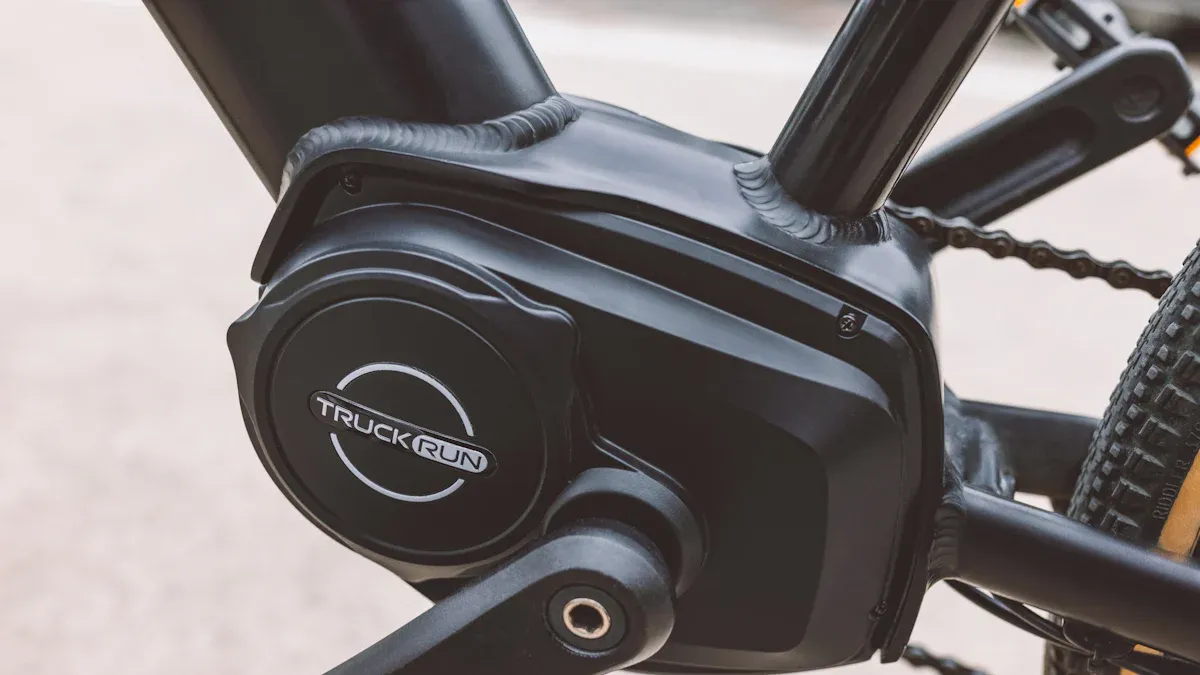
Optimal Charging Habits for a Longer Lifespan
The right charging habit is crucial to maximizing the life of e-bike batteries. Ideally, keep the charge level between 40% and 85%. Avoid completely discharging the battery or charging it to 100% constantly. Dr. Jochen Mähliß recommends discharging the battery completely as rarely as possible, as this reduces the number of charging cycles.
Always use the charger recommended by the manufacturer. This protects the battery from overcharging and ensures an even charge. Charge the battery in a cool, dry room and avoid direct sunlight. A study shows that charging with pulsed current can extend the life of lithium-ion batteries.
Tip: Remove the battery from the charger after charging to avoid unnecessary strain.
Tips for Proper Storage at Different Temperatures
Storing e-bike batteries requires special attention. Temperatures above 30 degrees Celsius accelerate the aging process, while freezing conditions impair performance. Store the battery at basement or room temperature to avoid damage.
For longer periods of storage, the charge level should be between 30% and 60%. Avoid storing the battery fully charged or fully discharged. A dry and cool environment is ideal for extending its lifespan.
Note: Extreme temperatures, whether hot or cold, can permanently reduce your battery's capacity.
Cleaning and Inspection: How to Keep Your Battery in Top Shape
Regular cleaning and inspection help maintain the efficiency of your e-bike batteries. Although the batteries are waterproof, you should clean them carefully with a damp cloth. Do not use harsh detergents, as they could damage the surface.
Keep the battery mount on the frame clean as well. Dirty contacts can impair the electrical connection and reduce performance. Regular visual inspection helps detect damage early and prevents major problems.
Tip: Regularly check the battery for cracks or other visible damage to minimize safety risks.
Battery Calibration
What Does Calibration Mean and Why Is It Important?
Calibrating a battery ensures that your e-bike's charge level indicator works accurately. It ensures that the Battery Management System (BMS) and the state-of-charge display communicate correctly. This helps you recognize the right time to recharge and better estimate your remaining range. Without calibration, incorrect readings can occur, leading to a faulty display. This not only affects your trip planning but can also negatively impact the battery's lifespan.
Note: Regular calibration improves the reliability and efficiency of your e-bike batteries.
Step-by-Step Guide to Calibrating Your Battery
Calibrating your battery is a simple process that can be done in a few steps:
Fully discharge the battery: Use your e-bike until it switches off automatically.
Fully charge the battery: Use the manufacturer-recommended charger and ensure a steady power supply.
Repeat steps 1 and 2: Perform this cycle at least twice to achieve optimal results.
This process helps the battery management system correctly measure the battery's capacity and state of charge. Calibration is especially recommended after long periods of storage, such as in winter.
Tip: Schedule calibration at regular intervals to maintain your battery's long-term performance.
How Calibration Can Help with Common Error Codes
A correctly calibrated battery improves communication between your e-bike's components. This minimizes misinterpreted signals, which reduces the likelihood of error messages. Common error codes, such as code 530, occur less frequently when the battery is calibrated regularly. This saves you time and prevents unnecessary repairs.
Note: Regular calibration can not only extend the life of your battery but also increase the reliability of your e-bike.
Common Problems and Solutions
Signs of a Weak or Defective Battery
A weak or defective battery often shows clear warning signs. Watch for the following:
The charge level drops unusually quickly while riding.
The charge indicator jumps during charging or discharging.
Your e-bike's range decreases noticeably.
You have to charge the battery more frequently than before.
Charging time increases significantly.
If you notice any of these problems, you should have the battery checked. Self-repair is not a good idea because e-bike batteries have a complex design. A specialist dealer can accurately diagnose the cause and help you find the best solution.
Note: A defective battery can also be caused by damaged contacts or problems with the bicycle's electronics. Have these components checked as well.
Typical Problems and How to Fix Them
Some problems with e-bike batteries occur more frequently. Here are the most common ones and how you can solve them:
Overcharging the battery: Always use the recommended charger and monitor the charging time. Charge the battery in a cool, dry room.
Error codes like 530: Remove the battery and reinsert it. This can resolve communication problems between the battery and the e-bike.
Dirty contacts: Carefully clean the contacts with a dry cloth to improve the electrical connection.
Water damage: Avoid pressure washers. Clean the battery with a damp cloth to prevent damage.
Tip: Calibrate the battery regularly to minimize error messages and optimize performance.
When Is a Battery Replacement Necessary?
A battery replacement becomes necessary when performance drops significantly. Here are the most important criteria:
Criterion |
Information |
|---|---|
Charging cycles |
Most batteries last 500 to 700 charging cycles. |
Lifespan |
With good care, they can last up to ten years. |
Performance |
Batteries maintain their performance for over six years with 1-2 charges per week. |
Replacement criterion |
Replacement is necessary when battery performance drops below 80%. |
Dr. Jochen Mähliß explains that the lifespan of e-bike batteries depends on both the calendar age and the cycle life. If you notice that your battery no longer delivers the desired performance despite good care, it is time for a replacement. Contact a specialist dealer to find a suitable battery.
Recycling and Eco-Friendly Disposal
Why Recycling E-Bike Batteries Is Important
Recycling e-bike batteries protects the environment and saves valuable resources. Old batteries contain valuable materials like lithium, cobalt, and nickel. These substances can be recovered through modern recycling processes. This reduces the need for new raw materials and lowers environmental impact.
The German Battery Act (BattG) has regulated the return and disposal of batteries since 2009. It requires manufacturers to set up a take-back system or join a common system. This ensures that batteries do not end up in household waste.
Did you know? Around 90% of returned batteries are recycled. This saves energy and prevents pollutants like mercury or cadmium from entering the environment.
Recycling Processes and Their Environmental Benefits
Recycling processes for e-bike batteries are technically mature and environmentally friendly. They allow for the recovery of up to 97% of valuable materials. These materials can be reused for new batteries or other products.
Separating batteries from waste prevents hazardous substances from entering nature. At the same time, it ensures that metals like cobalt, nickel, and copper are returned to the production cycle. This conserves the environment and reduces energy consumption compared to raw material extraction.
Tip: Always hand in your old battery at an official collection point. By doing so, you actively contribute to environmental protection.
Where and How to Dispose of Old Batteries Properly
Old e-bike batteries are classified as industrial batteries. You can return them free of charge to retailers or municipal collection points. Many recycling centers also accept these batteries. Check beforehand whether your local recycling center offers this service.
Retailers are legally obliged to take back old batteries. This makes disposal simple and convenient. Make sure to transport the battery safely to avoid damage.
Note: Never dispose of batteries in household waste. This is not only harmful to the environment but also prohibited by law.
Technological Innovations in E-Bike Batteries
Advances in Battery Technology and Their Benefits
Battery technology has made enormous progress in recent years. New materials and innovative manufacturing processes improve the performance and durability of e-bike batteries. A groundbreaking discovery at Stanford University shows that a modified charging method during production could extend the lifespan of lithium-ion batteries by up to 50%.
Additionally, nanostructuring allows for the adjustment of materials at a tiny level. This increases both the capacity and durability of the batteries. Advances in material research also improve the safety and efficiency of lithium-ion batteries.
Technology |
Description |
|---|---|
Nanostructuring |
Adapting materials at a tiny level to increase capacity and durability. |
Materials research |
Advances in microelectronics that improve the performance and safety of lithium-ion batteries. |
These developments make e-bike batteries not only more powerful but also more environmentally friendly.
New methods for extending battery life
The lifespan of batteries depends heavily on how they are maintained and the technologies used. Researchers have developed new methods to improve durability. A study from 2024 shows that battery efficiency can be significantly increased through optimized charging processes.
Another example is the use of improved electrode materials. These reduce wear during charge and discharge cycles. The integration of intelligent battery management systems also helps to extend lifespan. These systems monitor the state of charge and prevent overcharging or deep discharge.
Tip: Regularly updating your e-bike's software can help you take advantage of the latest optimizations for your battery.
Future outlook: More sustainable and powerful batteries
The future of battery technology looks promising. Research results from 2024 show significant improvements in battery life. These advances could significantly increase the efficiency of e-bike batteries.
Future batteries will be not only more powerful but also more sustainable. Manufacturers are increasingly focusing on recyclable materials and environmentally friendly production processes. New technologies like solid-state batteries could further improve range and safety.
-
Key future developments:
Batteries with higher energy density for longer ranges.
Environmentally friendly alternatives to lithium-ion batteries.
Improved recycling processes for sustainable use.
These innovations will not only increase the performance of e-bikes but also make an important contribution to environmental protection.
Proper care of e-bike batteries significantly extends their lifespan. Ideally, charge the battery to between 40 and 85% and avoid complete discharges. Regular calibration ensures accurate charge level displays and optimizes performance.
Tip: Old batteries do not belong in household waste. Hand them in at collection points to recover valuable materials such as lithium and nickel.
The future of battery technology looks promising. Advances such as fast charging could increase lifespan by up to 50%. Sustainable materials and recycling processes make e-bikes more environmentally friendly and attractive.
FAQ
How often should I calibrate my e-bike battery?
You should calibrate the battery every three months or after long periods of storage. This is particularly important after winter to optimize the charge indicator and improve performance.
Tip: Schedule calibration regularly to avoid error messages.
Can I use my battery in the rain?
Yes, e-bike batteries are waterproof and suitable for use in the rain. However, avoid high-pressure cleaners, as they can force water into the electronics. Dry the contacts after your ride to prevent corrosion.
What do I do if my battery no longer charges?
First, check the charger and the contacts for dirt or damage. Clean the contacts carefully with a dry cloth. If it still does not work, contact a specialist dealer.
Note: Use only the manufacturer's charger to avoid damage.
How do I know if my battery needs to be replaced?
If the range drops significantly or the charging time becomes much longer, a replacement is necessary. Visible damage or a capacity below 80% are also clear signs.
Can I store my battery outside in winter?
No, cold temperatures damage the battery. Store it at room temperature and a charge level of 30-60%. This preserves performance.
Tip: Bring the battery inside after your ride to protect it from frost.