
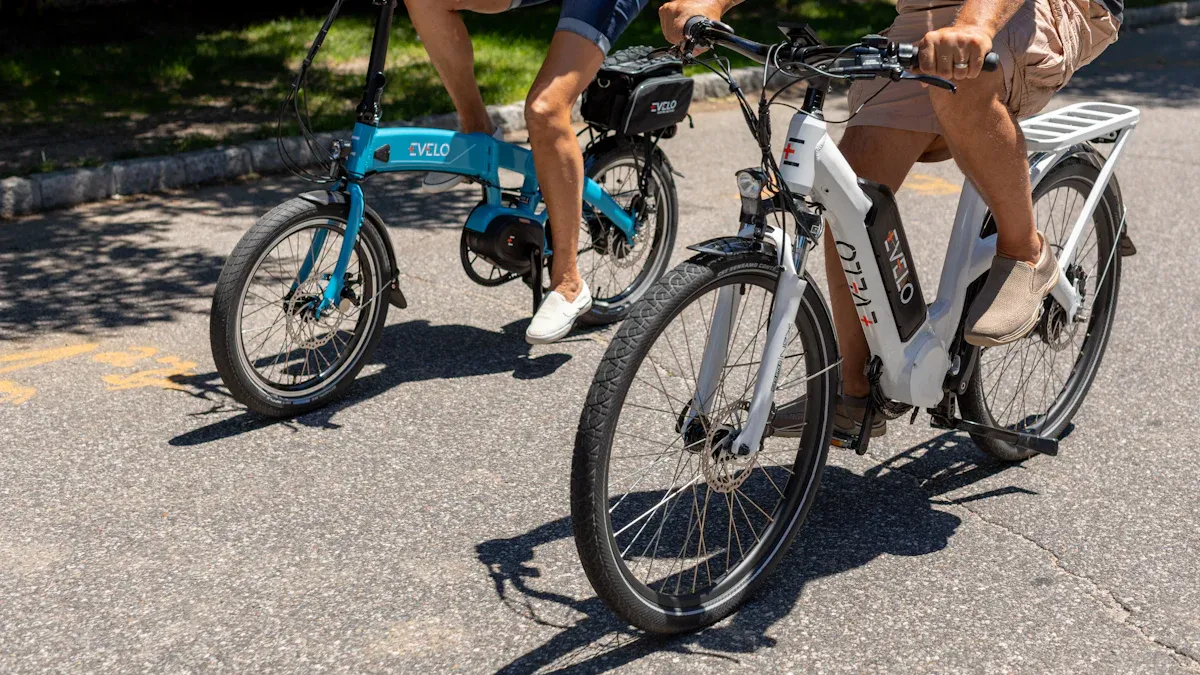
Have you ever wondered how a pedelec e-bike has revolutionized cycling? A pedelec e-bike combines state-of-the-art sensors and a powerful electric motor to optimally support your pedaling. High-precision sensors measure over 1,000 times per second how hard you pedal. The electric motor reacts instantly, adapts automatically to inclines, and offers you an incomparably harmonious riding experience.
Key Takeaways
Pedelec e-bikes have sensors that measure your power. The motor adapts to make riding comfortable.
In Eco mode, you save power and keep riding. Use it for leisurely rides and only switch when necessary.
New batteries last 50 to 150 kilometers. Charge them often and take good care of them so they last longer.
Sensors on Pedelec E-Bikes
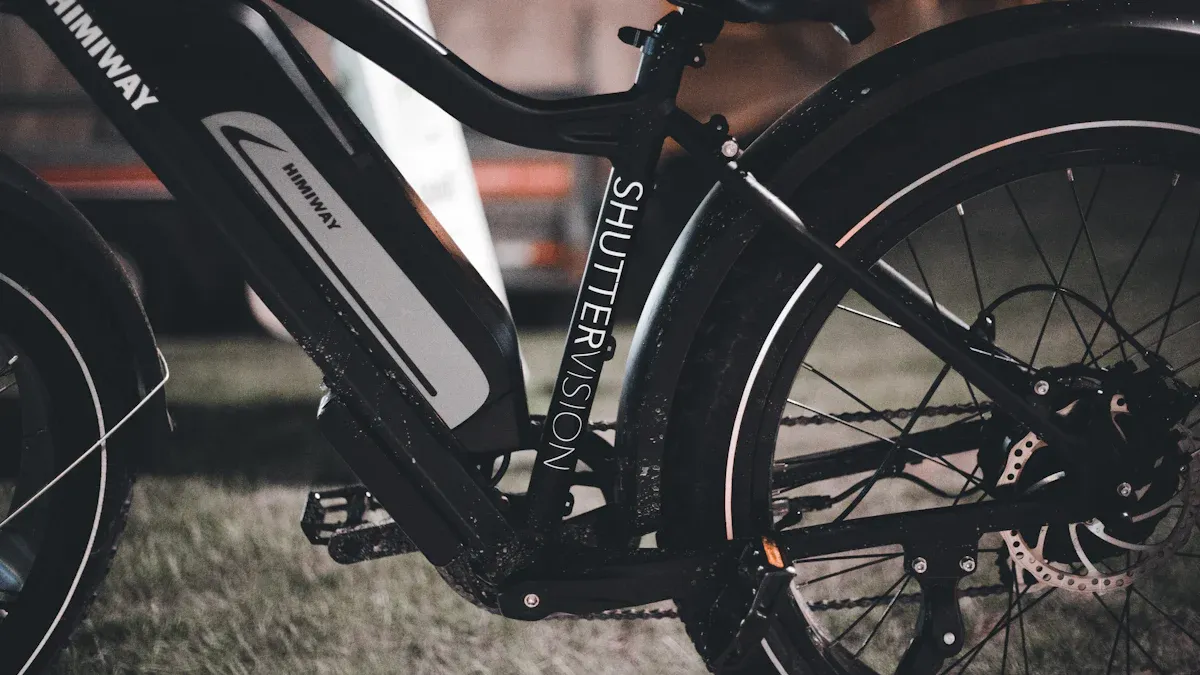
Have you ever wondered how a pedelec e-bike detects how much assistance you need when pedaling? The answer lies in the sensors, which form the heart of the technology. They continuously measure your movements and the force you apply to the pedals. Let's take a closer look at the most important sensors.
Cadence Sensors: Motor Activation Through Pedaling
The cadence sensor is like an attentive observer. As soon as you move the pedals, it detects the rotational movement and activates the motor. This means that the motor only works when you actually pedal. This keeps the riding experience natural and safe.
A major advantage of this sensor is its simplicity. It merely measures whether the pedals are turning and passes this information on to the motor control. Especially on leisurely rides or flat routes, it ensures that the motor starts exactly when you need it.
Tip: When using a pedelec e-bike with a cadence sensor, you can rely on the fact that the motor only consumes energy when you are actively riding. This saves battery and extends your range.
Torque Sensors: Adjusting Assistance to Pedaling Force
The torque sensor goes one step further. It not only measures whether you are pedaling, but also how hard you press on the pedals. The more force you apply, the more assistance the motor provides. This makes riding particularly pleasant, especially on inclines or when carrying heavy luggage.
This sensor works with impressive precision. Studies show that modern e-bikes use up to six sensors to collect real-time data from you and the terrain. This data helps the torque sensor optimally adjust the assistance. The battery supplies the sensors with power, so they are ready for use at all times.
Sensor Interaction: Optimizing Motor Control
The real magic happens when the sensors work together. The cadence sensor ensures that the motor is activated, while the torque sensor regulates the intensity of the assistance. This interaction enables a harmonious riding experience that adapts to your needs.
To better understand the performance of the sensors, let's take a look at the performance data:
Performance Data |
Unit |
|---|---|
Avg. Power |
W, W/kg, z |
Max. Power |
W, W/kg, z |
Max. Avg. Power (20 min) |
W |
Normalized Power (NP®) |
W |
Intensity Factor (IF®) |
- |
Training Stress Score |
- |
FTP Setting |
W |
Work |
kj |
As you can see, the sensors not only provide precise data, but also help ensure that your pedelec e-bike operates efficiently and reliably. The selection of the assistance mode on the control unit additionally influences how the motor interprets the sensor data.
With this technology, cycling is not only easier, but also smarter. You can concentrate fully on the ride while your e-bike takes care of the work in the background.
The Electric Motor and Its Function
How It Works: Assistance Based on Sensor Data
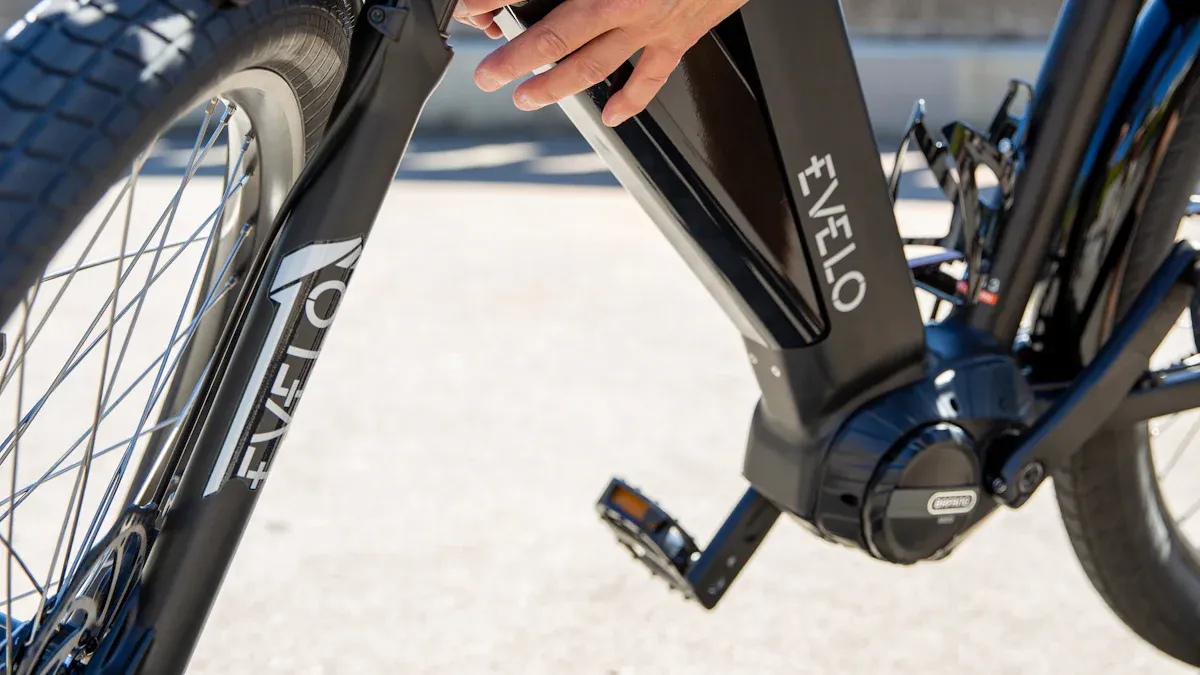
The electric motor is the heart of your pedelec e-bike. It works closely with the sensors to provide you with exactly the assistance you need. As soon as the sensors measure your pedaling movement and force, the motor control processes this data in real time. The motor then delivers the appropriate power to make riding easier for you.
Imagine you are riding up a steep hill. The sensors detect that you are applying more force, and the motor reacts immediately. It increases the assistance so that you can continue riding effortlessly. On flat routes, however, the motor reduces its power to save energy. This intelligent system ensures that your riding experience always remains pleasant and efficient.
Did you know? Modern electric motors are so quiet that you can barely hear them. This makes riding a pedelec e-bike even more relaxing.
Motor Types: Differences Between Hub Motor and Mid-Drive Motor
There are two main types of motors on pedelec e-bikes: the hub motor and the mid-drive motor. Both have their own advantages and disadvantages that you should know to choose the right e-bike for you.
Hub Motor
The hub motor is located in either the front or rear wheel. It is particularly quiet and low-maintenance. It also offers a smooth riding experience because it acts directly on the wheel. However, it can be less powerful on steep climbs because it is not directly connected to the pedaling force.Mid-Drive Motor
The mid-drive motor is located in the center of the bicycle, directly at the bottom bracket. It operates more efficiently because it directly supports the pedaling force. This makes it ideal for hilly terrain or longer tours. Another advantage is the better weight distribution, which ensures a more stable riding experience.
Motor Type |
Advantages |
Disadvantages |
|---|---|---|
Hub Motor |
Quiet, low-maintenance, smooth |
Less powerful on inclines |
Mid-Drive Motor |
Efficient, powerful, stable |
Slightly more expensive, more maintenance required |
Advantages of the Motor: Efficiency and Adaptation to Various Riding Conditions
An electric motor makes your pedelec e-bike a true all-rounder. Whether you are riding through the city, climbing a mountain, or covering a long distance – the motor adapts to every situation.
Efficiency: The motor only works when you need it. This saves energy and extends the battery life.
Adaptability: Thanks to the sensors and the intelligent control, you always get the right assistance. This not only makes riding easier but also safer.
Comfort: You can cover longer distances without overexerting yourself. This is particularly practical when you are traveling with luggage or simply want to enjoy the scenery.
With an electric motor, cycling becomes a completely new experience. You can concentrate on the ride while the motor takes care of the hard work.
Assistance Modes and Power Supply
Assistance Modes: Eco, Standard, High and Their Effects
Your pedelec offers various assistance modes that you can select depending on your needs. The modes range from Eco to High and influence how much assistance the motor provides.
Eco Mode: Perfect for leisurely rides or flat routes. The motor provides minimal assistance, which saves energy and increases the range.
Standard Mode: A balanced choice for everyday use. Here you get moderate assistance, ideal for mixed terrain.
High Mode: Maximum assistance for steep climbs or when you want to get moving quickly. However, this mode consumes the most energy.
Here is an overview of how the modes affect energy consumption and range:
Assistance Mode |
Energy Consumption |
Range |
|---|---|---|
Eco+ |
Low |
High |
Eco |
Medium |
Medium |
Standard |
High |
Low |
High |
Very High |
Very Low |
Energy Consumption and Range: Influence of the Modes
The choice of assistance mode has a direct influence on the energy consumption and range of your e-bike. Higher assistance levels such as Standard or High require more energy, which means the battery discharges faster. At the same time, the range decreases because the motor works more intensively.
Some interesting facts:
The range decreases when the motor has to deliver more power.
Efficient use of the modes can optimize the range.
Tip: Use Eco mode for longer distances and only switch to higher modes when necessary. This way, you can maximize the battery life.
The Battery: Energy Source and Charging Characteristics
The battery is the heart of your pedelec e-bike. Modern batteries are powerful and long-lasting, but their efficiency depends on proper use.
Capacity: Most batteries offer a range of 50 to 150 kilometers, depending on the terrain and assistance mode.
Charging Time: A full charge usually takes 3 to 6 hours.
Care: Store the battery at room temperature and charge it regularly to extend its lifespan.
Tests such as the E-Bike Test 2025 show that batteries are becoming increasingly efficient. They even take into account specific challenges such as extreme temperatures or frequent charging.
Did you know? Bosch motors and batteries are among the most efficient on the market. They consume less energy per meter of elevation gain and offer an impressive range.
Pedal assistance on a pedelec e-bike makes cycling easier and more pleasant. You get help on inclines and long distances without overexerting yourself. The best part? It is environmentally friendly and accessible to everyone. Try it out and experience how relaxing cycling can be!
FAQ
How long does a pedelec e-bike battery last?
The lifespan of a battery is approximately 500 to 1,000 charge cycles. With proper care, you can use it for several years.
Tip: Charge the battery regularly and avoid extreme temperatures to extend its lifespan.
Can I ride a pedelec e-bike without motor assistance?
Yes, you can use it like a normal bicycle. The motor only turns on when you activate the assistance.
How do I properly care for my pedelec e-bike?
Clean it regularly with a damp cloth. Avoid pressure washers, as they can damage the electronics. Also check the tire pressure and brakes.
Note: An annual inspection by a specialist dealer ensures optimal performance and safety.