

You know the feeling when mud and water splash up while you’re riding off-road. Without protection, dirt quickly ends up on your clothes, in your face, and even on sensitive parts of your bike. A mountain bike fender keeps you clean, protects your eyes, and spares important bike components. Different models offer solutions for every riding purpose. Choosing the right fender determines how well you and your bike are protected.
Key Takeaways
A mountain bike fender keeps dirt and water away. This keeps you clean and increases your riding comfort.
The choice of the right fender depends on your riding style and conditions. Consider where and how often you ride.
Pay attention to the width of the fender. It should be at least half a centimeter wider than the tire to provide optimal protection.
Regular maintenance extends the life of your fender. Clean it after every ride and check for damage.
There are various mounting systems. Tool-free models are practical for spontaneous rides, while permanently mounted versions offer more stability.
Why a Mountain Bike Fender?
Protection Against Dirt and Water
You enjoy riding through mud, puddles, and wet terrain. During this, water and dirt often splash directly onto you and your bike. A mountain bike fender blocks most of it. It ensures that you stay clean and your clothes don't need to be washed after every tour. Without a fender, dirt quickly lands on your face and glasses. This can obstruct your vision and disturb your riding experience.
Tip: With a fender, you avoid having water and dirt thrown at you by the wheels. This keeps your helmet, jacket, and pants significantly drier.
Many mountain bikers cite these reasons for using a fender:
More cleanliness while riding
Higher riding comfort in wet conditions
If you don’t use a mountain bike fender, a wet mess often occurs. This affects not only you but also your bike. With a fender, you enjoy more riding pleasure because you can focus on the trail.
Benefits for Rider and Bike
A fender not only provides comfort but also protects important parts of your bike. Dirt and mud attack the seals. When you install a fender, the fork crown, stanchions, and the fork's dust wipers stay cleaner. This increases durability and ensures that suspension forks and shocks function for longer.
Mini-fenders protect the sliding surfaces from dirt.
Fresh mud is easier to wipe off if the fender catches it.
The lifespan of components increases because less dirt enters.
So, you benefit twice: you stay clean and your bike lasts longer. A mountain bike fender is a simple solution that brings many advantages to you and your bicycle.
Types of Mountain Bike Fenders
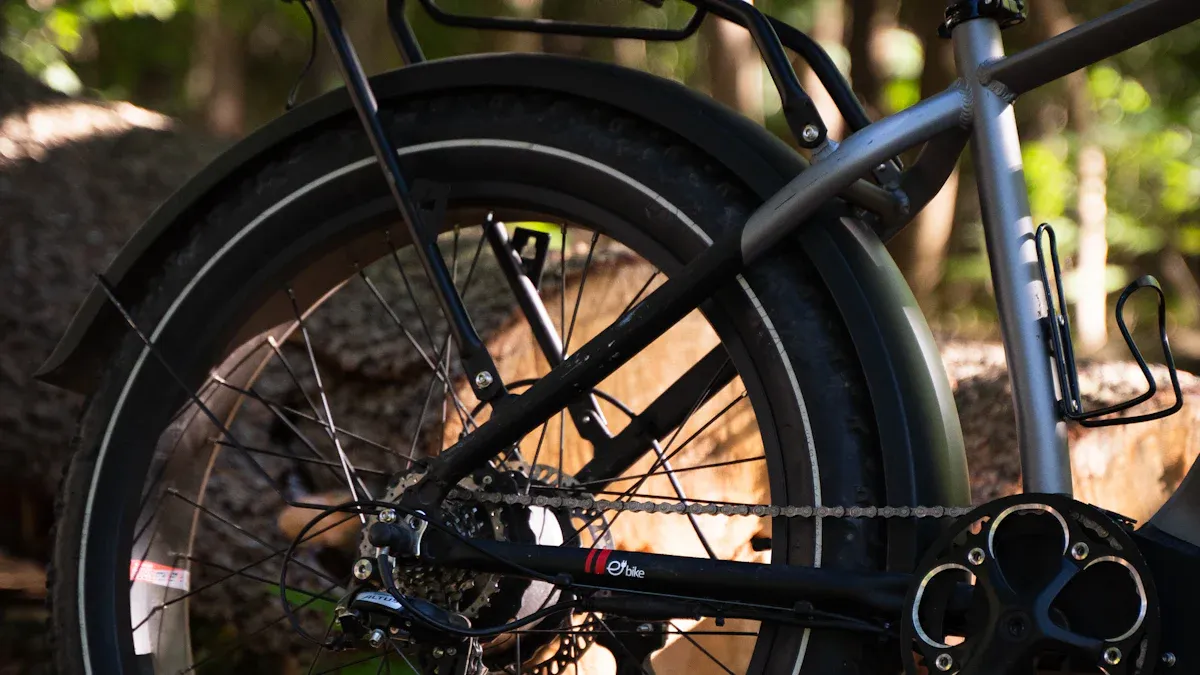
Mountain bike fenders are available in different versions. Each variant protects you and your bike in its own way. The choice depends on how and where you ride.
Front Fenders
Front fenders keep dirt and water away from your face and upper body. You can usually install them quickly and easily. Many models simply slide onto the fork and fit securely. They are especially suitable if you often ride through mud and puddles.
You often install them without tools.
They protect your eyes and glasses from splash water.
Installation is usually faster than for the rear fender.
Rear Fenders
Rear fenders protect your back and seat tube. They are usually longer and cover a larger area. Attachment is often a bit more complex, as they sit at two points on the frame. This keeps your back dry even during fast rides through wet terrain.
They offer more protection for clothing and technology.
The mounting is stable but slightly more complex.
They are particularly useful for long tours in the rain.
Full-Cover vs. Minimalist
You will find fenders in two main forms: full-cover and minimalist. Full-cover models cover the wheel almost completely. They offer maximum protection in heavy rain and mud. Minimalist versions are smaller and lighter. They specifically protect the most important areas without making the bike heavier.
Features |
Mounting System |
|
|---|---|---|
Wide Fender |
Splash guard for rider and technology |
Various options |
Tip: The width of the fender should always be at least half a centimeter wider than the tire. For a 28mm tire, a width of 38 millimeters is recommended.
Special Mud Guard Models
For extreme conditions, there are special splash guard models. They are particularly reliable at blocking splash water and dirt. You can often mount them in a few seconds and usually without tools. These models are lightweight, robust, and fit many wheel sizes, such as 27.5 or 29 inches. The design remains unobtrusive and modern.
Optimal protection in deep mud
Lightweight and easy to install
Durable and made from high-quality materials
Many modern mountain bike fender models are made of plastic, aluminum, or carbon. You can find both fixed and removable versions. Fixed models offer more stability, while removable fenders give you flexibility.
Protection & Performance Off-Road
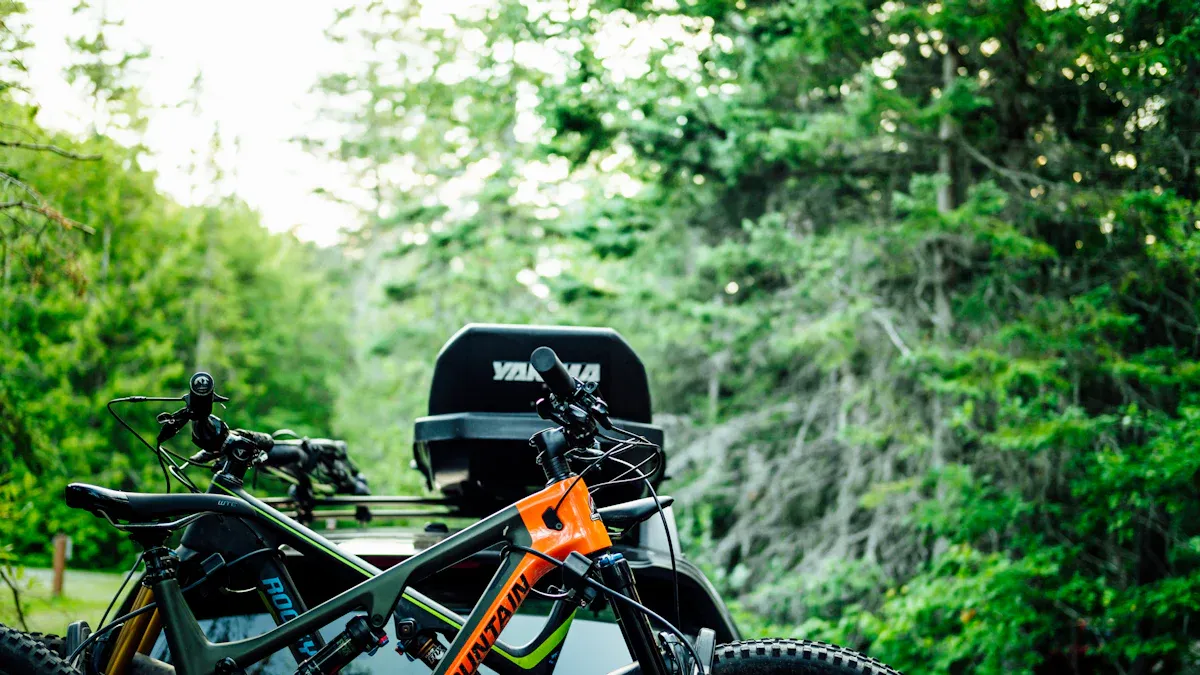
Effective Protection in Wet Conditions
You want to ride safely and comfortably even in rain and mud. A good fender keeps not only you but also your bike clean. Especially in wet conditions, the importance of the right choice becomes clear. Fixed fenders offer the best protection against wetness. They sit securely on the wheel and prevent water and dirt from splashing onto your back or into your face. Clip-on fenders are quick to mount, but protect less reliably and are better suited for short, spontaneous rides in the rain.
Fixed fenders provide good to very good protection against wetness, especially during longer rainy rides.
Clip-on fenders are quick to install, but are only suitable for occasional use in wet conditions.
Many test results show that fenders not only keep the rider clean. They also protect the mechanical parts of your bike from dirt and sand. Stably constructed fenders with sufficient clearance from the tire work best. A Stevens bike with suitable fenders contributes to safety and functionality off-road.
Tip: You don't want to step off the bike with a thick crust of dirt after the tour. A fender ensures that you and your bike are equipped for any weather.
Durability and Material
The durability of a fender depends heavily on the material. You will find different materials that differ in weight, robustness, and price. The following table gives you a quick overview:
Material |
Durability |
|---|---|
Plastic |
Lightweight and inexpensive, but less robust |
Aluminum |
Good balance between weight and durability |
Stainless Steel |
Extremely durable and corrosion-resistant, but heavier and more expensive |
Plastic is a good choice if you are looking for a lightweight and inexpensive fender. Aluminum offers you a good mix of stability and low weight. Stainless steel lasts the longest, but weighs more and often costs more. Think about how often and under what conditions you want to use your mountain bike fender.
Impact on Riding Comfort
A suitable fender significantly improves your riding comfort. It protects you from splash water and ensures you can focus on the trail. Stable and wide mudguards offer you optimal protection and increase comfort on rough tracks. Long and wobbly fenders, on the other hand, can be distracting and reduce riding pleasure.
Fenders provide stability and protection, which improves off-road riding comfort.
Stable, wide models are optimal for maximum protection and comfort.
Long, poorly attached fenders can impair riding fun.
Many users report that they value the functionality and protection of fenders. They don't want to arrive completely filthy in bad weather. For most, there is no sensible reason against fenders, except perhaps the aesthetics. You decide what is more important to you: cleanliness and comfort or a particularly sporty look.
Installation & Compatibility
Mounting Options
You will find various mounting systems for fenders. Many models can be mounted flexibly. The Velmia MTB Fender Set adapts to different wheel sizes. You can attach it without special tools and remove it easily if necessary. This makes handling easier in everyday life.
Clip-on fenders can be slid on quickly.
Velcro straps or rubber rings ensure a firm hold.
Permanently mounted fenders often require tools and more time.
Plastic fenders are particularly easy to mount. Models made of metal or aluminum are heavier and require more effort. With removable fenders, you save time during installation. Permanently mounted variants offer more stability but are less flexible.
Tool-Free Clip-On Fenders
Tool-free clip-on fenders make your life easier. You usually attach them with Velcro straps or rubber rings. Installation is fast, and you don’t need any tools. This is practical if you only want to use the fender in bad weather.
Tool-free installation with six tight rubber rings is wobble-free, and the centrally divided construction allows air to the tire.
Clip-on fenders are particularly suitable for occasional use. They are ideal if you want to react spontaneously to rain or mud. Permanently mounted models are more robust and better suited for year-round use.
Suitable for Different Wheel Sizes
You must ensure that the fender matches the size of your bike. It should fit both the diameter of the wheels and the width of the tires. Wider tires need more space so that the fender protects effectively.
The rule of thumb: The fender should be about 1 cm wider than the tire.
With 24mm tires, installation usually works without problems.
With 28mm tires, it can get tight.
A mountain bike fender only protects you optimally if it fits correctly and matches the wheel size. Check the dimensions of your bike before buying and choose the appropriate model.
Selecting the Right Mountain Bike Fender
Choosing the right fender depends on your area of use, riding style, material, and value for money. You should always ensure that the fender fits your tire width and is easy to attach. Only then will the mountain bike fender protect you optimally on your tours.
Area of Use & Riding Style
Do you often ride on muddy trails or use your bike for long tours? Then you need a fender that suits your riding style. Different designs and versions are aimed at different needs. Think about where you ride most often and what conditions prevail there.
Protection from mud and dirt is particularly important if you ride a lot off-road.
Models with reflective elements increase your visibility in poor light.
Flexible, lightweight plastics are well suited for changing weather conditions.
Easy installation and removal help you to react quickly to the weather.
Adapt the fender to your personal riding conditions and preferences.
Tip: For fast trails and downhill tracks, choose a short, stable fender. For long tours in the rain, a full-cover model is recommended.
Material & Workmanship
The material determines how long your fender lasts and how heavy it is. You will find many variants that differ in weight, flexibility, and durability.
Carbon fenders are flexible and rarely break.
Aluminum struts offer you a good mix of stiffness and low weight.
Carbon fiber reinforced plastic (CFRP) is lightweight and very durable.
CFRP dampens vibrations and does not rust.
Look for clean workmanship. Sharp edges or poorly finished parts can annoy you while riding. A high-quality fender lasts longer and protects better.
Value for Money
Prices for fenders vary widely. You will find inexpensive models for beginners and high-quality variants for demanding riders. The following table shows you some examples:
Model |
RRP |
Current Price |
|---|---|---|
SKS Germany Mudrocker Front MTB front mudguard |
€32.99 |
€17.95 |
SKS Germany Mudrocker Rear MTB rear mudguard |
€34.99 |
€23.95 |
SKS Germany X-BLADE rear mudguard |
€24.99 |
€15.95 |
SKS Germany Shockblade front mudguard |
€24.99 |
€15.95 |
ORTLIEB QUICK RACK MUDGUARD mudguard |
N/A |
€18.95 |
SKS Germany Bluemels Basic 26“ mudguard set 60 mm, incl. stays |
€34.99 |
€26.95 |
SKS Germany SHOCKBOARD MTB front mudguard |
€17.99 |
€9.95 |
Ass Savers Mudder Mini mudguard |
€13.00 |
€10.95 |
SKS Germany Velo 65 Mountain mudguard set 29“ |
€29.99 |
€16.95 |
Topeak XC 11 rear mudguard |
€24.95 |
€15.95 |
Hebie Viper S mudguard set incl. stays front / rear |
€34.95 |
€24.95 |
SKS Germany Mudrocker mudguard set |
€67.99 |
€43.95 |
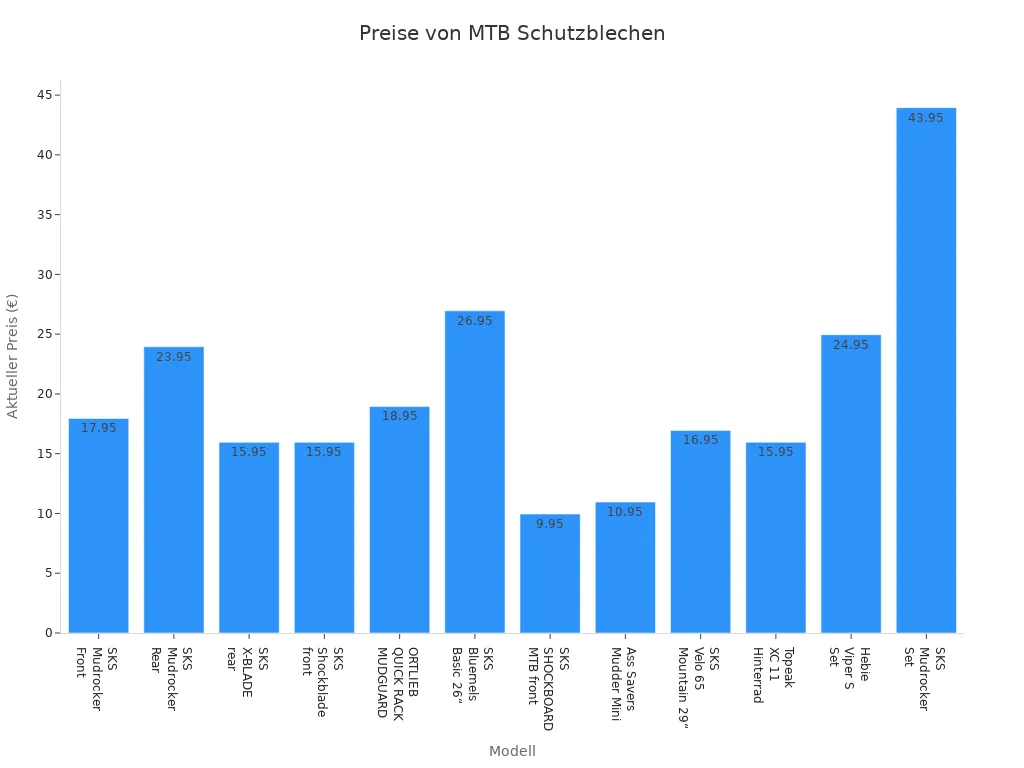
As you can see: you can get a good mudguard for little money. High-end models cost more, but often offer better materials and greater durability.
Recommendations for rider types
Every rider type has different needs. Here you will find tips on which mudguard suits you:
Touring riders: You are often out for long periods and want maximum protection. Choose a full-coverage mudguard with a stable mounting system.
Trail riders: You love fast descents and changing terrain. A short, flexible mudguard made of plastic or carbon fibre protects you well and weighs little.
Downhill riders: You need a robust, compact mudguard that won't slip even when jumping. Models with aluminium stays offer you a lot of safety here.
Everyday riders: You use your bike for school or work. A simple, easy-to-mount mudguard with reflectors provides protection and visibility.
Note: The choice always depends on your area of use, the width of the mudguard and the mounting system. Test different models to find the best mountain bike mudguard for you.
Care & Maintenance
Cleaning tips
You want your mountain bike mudguard to last a long time and provide reliable protection. Proper cleaning plays a major role in this. You should clean your mudguard after every ride in mud or rain. Use lukewarm water and a soft cloth. This removes dirt without damaging the material. For stubborn dirt, a soft brush will help. Avoid aggressive cleaning agents, as they attack plastic and paint.
Tip: Rinse the mudguard immediately after your ride. This prevents dirt from setting in and the material from becoming brittle.
Many riders also use special bike cleaners. These are gentle and remove oil residue as well as fine dust. Make sure you check all mounting points. Dirt often collects there and impairs function. Dry the mudguard thoroughly after cleaning. Otherwise, moisture can lead to rust on metal parts.
Regular maintenance ensures that your mudguard remains ready for use at all times. You avoid unnecessary wear and tear and maintain the appearance of your bike.
Durability and replacement
You want to use your mudguard for as long as possible. The material and workmanship determine how robust it is. Plastic mudguards are lightweight, but they can break under heavy load. Aluminium and stainless steel are more durable but weigh more. Check regularly whether the mudguard shows signs of cracks or deformation.
Material |
Durability |
Replacement interval |
|---|---|---|
Plastic |
Medium |
1–2 years |
Aluminium |
High |
2–4 years |
Stainless steel |
Very high |
4+ years |
If you discover any damage, you should replace the mudguard. A defective mudguard no longer provides reliable protection. You can often find spare parts directly from the manufacturer. Many models are easy to change. This way, your bike remains optimally protected at all times.
Note: A well-maintained mudguard lasts longer and ensures more safety on every trail. Check all parts regularly and replace them if necessary.
You have learned how important a suitable mountain bike mudguard is. It protects you and your bike from dirt and water. When buying, pay attention to the correct width, the material and ease of assembly. Consider how and where you ride. Choose the model that suits your riding style.
Tip: Test different mudguards to find the best one for your needs. This way you stay clean and your bike lasts longer.
FAQ
How do I find the right mudguard size for my mountain bike?
Measure the width of your tyre. The mudguard should be at least half a centimetre wider. Check the manufacturer's specifications. This ensures the mudguard fits your bike perfectly.
Can I mount a mudguard without tools?
Many models offer tool-free mounting. You use Velcro straps or rubber rings. Attachment is quick. You do not need any special tools. This makes changing them easier in changeable weather.
Does a mudguard affect riding performance?
A lightweight mudguard hardly changes riding performance. You feel more comfort and stay clean. Heavier models can increase the weight. Choose a model that suits your riding style.
What is the best way to maintain my mudguard?
Clean the mudguard after every ride with water and a soft cloth. For stubborn dirt, a brush helps. Check the mounting points regularly. This keeps your mudguard functional for a long time.
Are there mudguards for all wheel sizes?
Many manufacturers offer mudguards for different wheel sizes. You will find models for 27.5, 29 inches and other sizes. Check the information before buying. This ensures that the mudguard fits.