
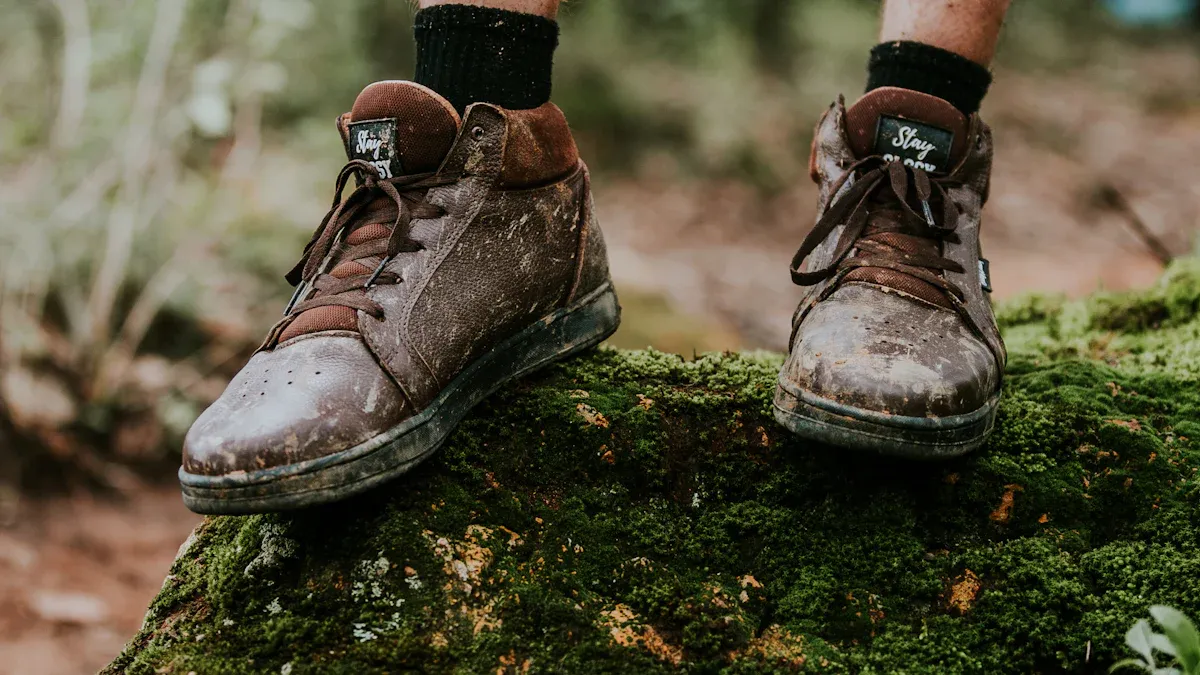
How do you find the perfect mountain bike shoes for your trail? Comfort, performance, and safety play a major role in riding. The right fit ensures comfortable pedaling and prevents pressure points. A suitable sole improves efficiency by optimally transferring power to the pedal. Stiff soles offer you a smooth pedal stroke with clipless shoes, which is especially important during athletic rides. Even small adjustments, such as special wedges, can improve your posture on the bike. The combination of shoe and pedal noticeably influences your ride comfort. If you know the most important criteria, you are guaranteed to find your ideal companion for every adventure.
Key Findings
The right fit is crucial for comfort and performance. Make sure your toes have enough room to avoid pressure points.
Choose the sole according to your riding style. Stiffer soles offer better power transfer, while more flexible soles provide more comfort.
Breathable materials keep your feet dry and cool. High-quality models made of mesh or leather are ideal for long rides.
Consider your preferred mountain bike discipline. Different shoes offer specific benefits for trail, enduro, or downhill.
Test different models and sizes to find the best combination of comfort, functionality, and compatibility with your pedals.
Mountain Bike Shoes: Selection and Features
Sole – Stiffness, Grip, and Vibram
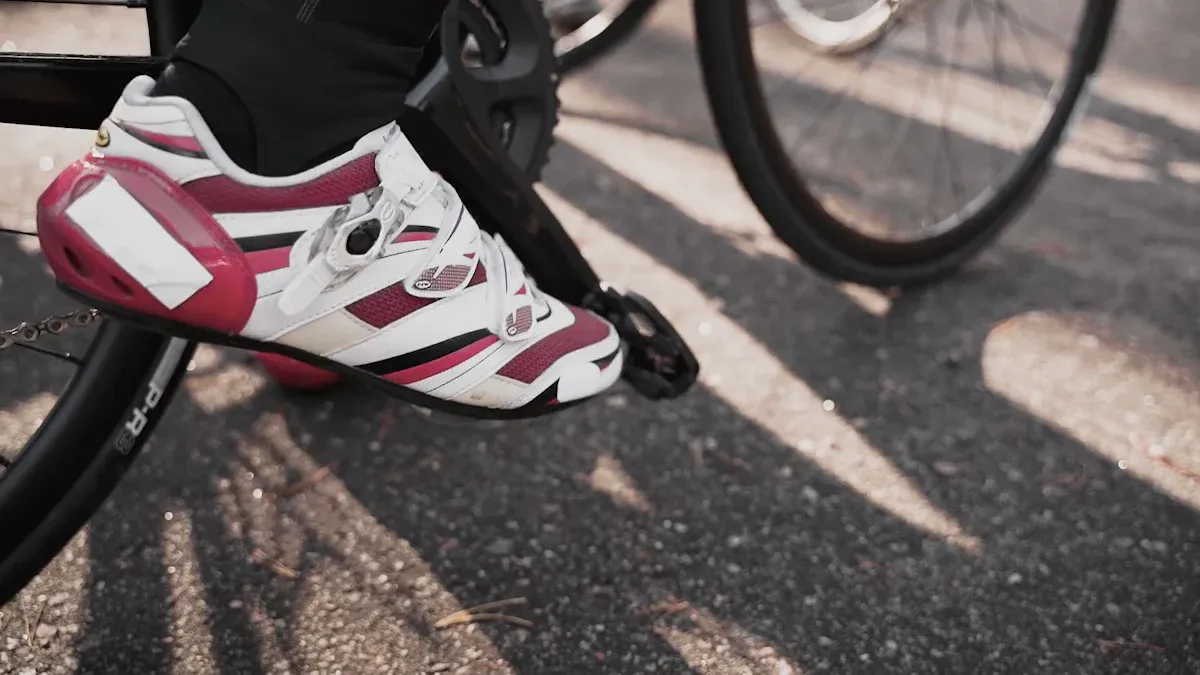
The sole is the heart of mountain bike shoes. It determines how much power you bring to the pedal and how securely you stand on the trail. Stiffer soles transfer your energy directly to the pedal. This helps you ride more efficiently. Flexible soles feel more comfortable, but they can lead to power loss. Manufacturers often measure sole stiffness by the deflection under a 20-kilogram load.
Many mountain bike shoes rely on Vibram soles. These soles offer you optimal grip, whether the ground is wet or dry. Vibram uses special material compounds and designs developed for various pedal types. This ensures you always get the best connection and safety. Vibram soles are durable and robust. They give you stability and traction on any terrain.
Tip: Choose a sole that fits your riding style. For technical trails, you need more grip and stability. For long tours, power transfer is what counts.
Main features of mountain bike shoes at a glance:
Grippy sole for maximum traction
More flexible sole than road bike shoes
Cleat-compatible plate for a secure connection with the pedal
Fit – Comfort and Toe Freedom
The fit determines how comfortable you feel on long rides. Your mountain bike shoes should be snug, but your toes need room. A generous toe box prevents pressure points and ensures a pressure-free fit. This is especially important when you spend many hours in the saddle.
Toe freedom increases comfort on long tours.
A good fit protects against blisters and pain.
Ensure the shoe is neither too tight nor too loose.
Experts recommend: Test different models and pay attention to the toe box. Your feet will thank you on long rides.
Ventilation and Material
The material of your mountain bike shoes influences how well your feet can breathe. High-quality models are often made of mesh or leather. These materials allow air to circulate and wick away moisture. This keeps your feet dry and cool even during strenuous rides.
Manufacturers like Shimano, Mavic, or Vaude use various materials such as synthetic leather, smooth leather, suede, and synthetic fibers. Each material has its own benefits. Mesh ensures the best ventilation. Leather offers more protection and durability.
Breathable materials prevent sweat buildup.
Good ventilation protects against overheating.
The choice of material influences the weight and durability of the shoe.
Note: Consider in what weather and on what terrain you ride the most. Choose the material that fits your needs.
MTB Disciplines and Suitable Shoes
Trail, Enduro, Tour
It is best to choose your mountain bike shoes based on your preferred discipline. For trail, enduro, and touring, you need shoes that offer comfort and protection. Many models feature a TPU-reinforced toe cap or a raised ankle area. These details protect your feet from rocks and roots. Breathable materials ensure a comfortable climate inside the shoe. The sole plays an important role in power transfer and grip on the pedals.
Protection: TPU toe cap, high ankle protection
Comfort: Breathable materials, good fit
Power transfer: Suitable sole for your riding style
For touring, a rubber sole is recommended for more comfort and grip on flat pedals. A nylon sole offers better power transfer but is less flexible. Full carbon soles are very stiff and suitable for athletic riders who want to transfer maximum power to the pedal.
Downhill and Cross-Country
Downhill and cross-country place special demands on your shoes. Downhill shoes protect your feet particularly well. They are built more robustly and weigh more. Cross-country shoes are lighter and less stable so you remain fast and agile.
Shoe Type |
Protection |
Weight |
|---|---|---|
Downhill shoes |
Very robust, protects against injury |
Heavier |
Cross-country shoes |
Less stable, more agility |
Lighter |
For cross-country, you need a stiff sole so you can transfer power optimally during races. Downhill shoes offer you safety during fast descents and jumps.
Mountain Bike Shoes for Different Disciplines
Each discipline demands its own features in a shoe. The following table shows you the most important differences:
Requirements |
|
|---|---|
Cross-Country |
Light, performance-oriented, less comfort |
Trail |
More comfort, less protection and performance |
Enduro |
High comfort, focus on descents |
Downhill |
Protection and performance, suitable for descents |
Tip: Think about which discipline you ride the most. This is how you find the suitable shoe that optimally supports you.
Pedal Types and Shoe Choice
Flat Shoes – Flexibility and Control
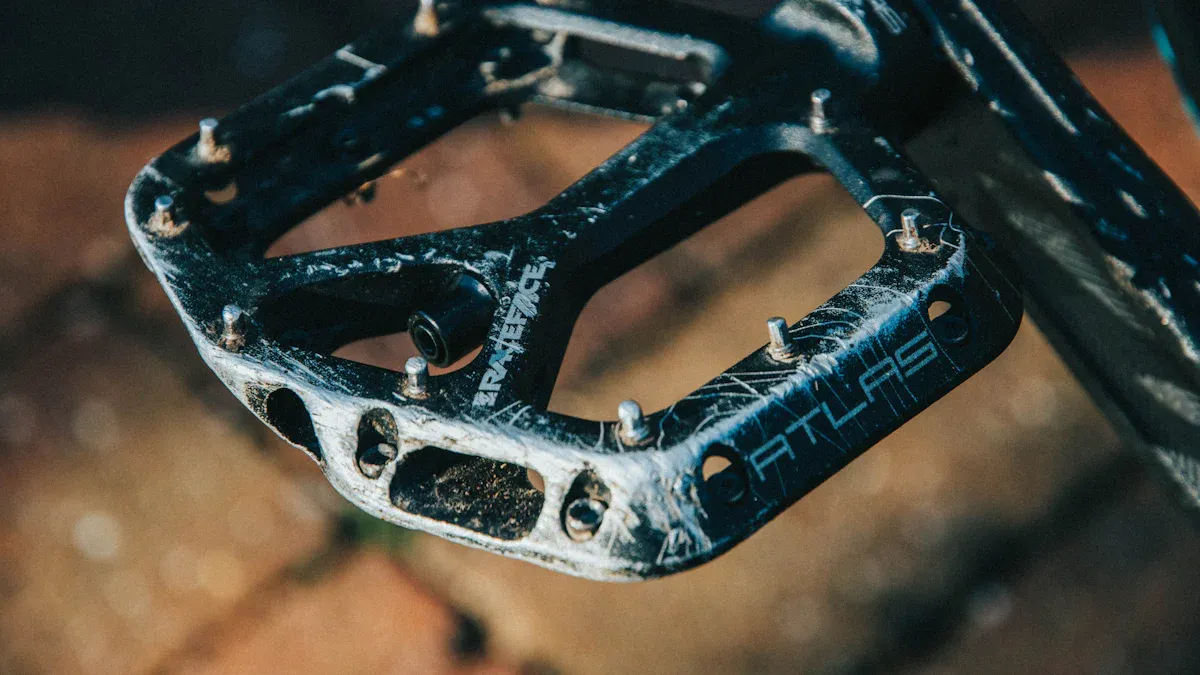
Flat shoes fit platform pedals. This combination is popular with many mountain bikers in Europe. Platform pedals offer you secure hold in the terrain. Flat shoes give you a lot of freedom of movement. You can quickly take your foot off the pedal. This helps you when you are riding on difficult trails.
Current product tests show the advantages of flat shoes:
Flexibility: You simply step on the pedal and can leave it quickly.
Easy handling: You don't have to clip in, which makes stopping easier.
Control: The large contact area improves your foot position.
Tip: Flat shoes with a grippy sole and metal pins on the pedal give you even more hold.
Clipless System – Efficiency and Power Transfer
Clipless pedals connect your shoe firmly to the pedal. Many cross-country and enduro riders use this system. Clipless pedals offer you a firm connection, especially on steep climbs and in uneven terrain. Studies show that clipless pedals allow for higher power output during short sprints. They improve power transfer and give you more control when you want to accelerate quickly.
However, research also shows that the efficiency advantage is not always large. Nevertheless, many riders feel more secure and efficient with a clipless system.
Note: Clipless systems are particularly suitable if you value maximum power transfer and a firm hold.
The Right Shoe-Pedal Combination
The choice of combination depends on your riding style. Pros recommend:
Clipless pedals for cross-country and enduro if you are looking for efficiency and safety.
Flat pedals with metal pins for recreational riders and technical trails if you need flexibility and grip.
Discipline |
Recommended Combination |
|---|---|
Cross-Country |
Clipless pedals + stiff MTB shoes |
Enduro |
Clipless pedals + robust MTB shoes |
Recreational/Trail |
Flat pedals + grippy flat shoes |
The size of the pedal cage changes depending on the discipline. A larger contact area gives you more hold. For technical trails, you need mountain bike shoes that fit your pedal and offer you safety as well as comfort.
Fit and Comfort
Snug fit, but with toe freedom
You feel immediately whether a shoe fits. Your mountain bike shoes should sit snugly on your foot so you don't slip while riding. Nevertheless, your toes need room. A toe box that is too tight presses and can cause pain. Too much room causes your foot to slip back and forth in the shoe. This disrupts control on the trail.
Tip: It is best to try on the shoes in the afternoon. Your feet are then slightly larger, and you get a better feel for the fit.
Ensure that you can wiggle your toes slightly while standing. This ensures comfort, especially on long tours. Many riders underestimate how important toe freedom is. It protects you from blisters and pressure points.
Size Selection and Adjustment
The right size improves your performance and comfort on the bike. A suitable size ensures an ergonomic sitting position. You avoid back pain and knee problems. You have more control over your bike and the handling becomes safer.
Ergonomic sitting position
Fewer back and knee problems
More control and safety
Many mountain bikers have individual problem areas. Pain in the hands, wrists, neck, or back often arises from an incorrect sitting position. A good setup helps to reduce these complaints. You can fix pressure points on the feet through targeted adjustments to the shoe. Carefully heat the shoes or use padding to avoid pressure points. A small pad under the sock often helps to increase comfort.
Note: Test different models and sizes. Every foot is different. Adjust your shoes to your needs so that you have fun riding for a long time.
Compatibility and Decision Support
Cleat and Pedal Systems
You want to ensure that your shoes and pedals match perfectly. Most mountain bike shoes are compatible with different cleat and pedal systems. Cleats are small plates made of metal or plastic. You attach them to the sole of your shoes. While riding, they snap directly into the pedal. This creates a firm connection between you and your bike. This gives you more control and better power transfer.
Many manufacturers rely on the two-hole system. This system is robust and durable. It is especially suitable for trekking, gravel, and mountain biking. The SHIMANO SPD system is very popular. It allows you to walk easily because the cleats are recessed into the sole. Look Keo is more likely to be found on road bike shoes. For mountain bikers, this system is less suitable.
Cleat System |
Description |
Usage |
|---|---|---|
Two-hole cleats |
Robust and durable cleats that are recessed into the sole of the shoe. |
Common in trekking, MTB, and gravel |
SHIMANO SPD |
A widely used system that allows for easy walking. |
Compatible with most MTB shoes |
Look Keo |
More suitable for road bike shoes. |
Not ideal for mountain bike shoes |
Tip: Choose a cleat system that matches your pedal and riding style. Ensure that your shoes have the compatible mounting holes for the desired system.
Choosing shoes step-by-step
Selecting the right shoes can be easy if you follow a step-by-step approach. You should pay attention to three important aspects: compatibility, comfort, and functionality.
Check compatibility
First, check whether your shoes fit your clipless pedals and cleats. This is the only way to achieve optimal performance.Test comfort
Try on different models. Your shoes must not be too tight. This is the only way to avoid painful feet and have more fun while riding.Evaluate functionality
Focus on comfort and functionality. The design is less important. Good shoes support you while mountain biking and improve your performance.
The following table will help you keep track of the most important points:
Aspect |
Description |
|---|---|
Shoes must fit the clipless pedals and cleats used to ensure optimal performance. |
|
Comfort |
Shoes should not be too tight to avoid painful feet and increase riding enjoyment. |
Functionality |
Comfort and functionality are more important than design in order to maximize mountain biking performance. |
Note: Seek advice from a specialist retailer and test different combinations of shoes and pedals. This way, you will quickly find out what suits you best.
With these steps, you will find the right mountain bike shoes for your needs. You will benefit from more comfort, safety, and fun on every trail.
You will find the perfect shoe if you pay attention to fit, material, and pedal compatibility. Many surveys show that comfort and safety are particularly important when making a purchase:
A well-fitting shoe improves power transfer.
Pressure points and blood circulation problems can be avoided.
Experienced bikers recommend different features for each discipline. The following table shows you typical differences between beginners and professionals:
Criterion |
Beginners |
Professionals |
|---|---|---|
Sole stiffness |
Flexible for comfort |
Stiff for maximum power transfer |
Upper material |
More comfortable materials |
High-quality materials like carbon |
Fit |
Comfortable and adaptable |
Precise and performance-oriented |
Functionality |
Basic requirements |
Specific performance requirements |
Test different mountain bike shoes and pay attention to quality. Comfort and safety should always come first.
FAQ
How do I find the right size for mountain bike shoes?
Try the shoes on in the afternoon. Your feet are slightly larger then. Make sure your toes have enough room. You should be able to wiggle your toes slightly while standing.
Are expensive mountain bike shoes always better?
Expensive shoes often offer better materials and workmanship. You get more comfort and durability. However, cheaper models are often sufficient for beginners. Test different shoes and decide what is most important to you.
Can I use mountain bike shoes for other sports?
You can wear mountain bike shoes for hiking or road cycling. However, they are not suitable for all sports. The sole is specifically designed for the pedal. For other activities, you often need other shoes.
How do I properly maintain my mountain bike shoes?
Clean your shoes after every ride with a brush and water. Let them air dry. Avoid direct sunlight or heaters. Use special care products for leather or synthetics so that your shoes last a long time.