
Which men's mountain bike is right for you? You are facing a wide selection – each model has its own strengths. The right choice ensures comfort and real riding pleasure. Many beginners and hobby bikers wonder what they should look out for. With a little knowledge, you can quickly find the right bike for your needs. 🚴
Key takeaways
Choose your mountain bike based on terrain and riding style: Hardtails are lightweight and low-maintenance, while full-suspension bikes offer more comfort on demanding trails.
Pay attention to the correct frame size and wheel size for a comfortable and safe ride; try out different models during a test ride.
Set a realistic budget and invest in essential components like suspension and brakes for increased safety and riding enjoyment.
Good accessories like a helmet, gloves, and appropriate clothing protect you and improve your riding experience.
Have your bike serviced regularly and test it before purchasing to ensure long-lasting enjoyment and optimal performance.
Men's mountain bike: Types
Hardtail
A hardtail only has suspension on the front fork. The rear remains unsuspended. This makes the bike lighter and lower-maintenance. You benefit from a lower weight and high frame stiffness. The suspension travel is usually between 80 mm and 140 mm. Hardtails are particularly suitable for fast rides on forest paths, trails, and gravel roads. They are cheaper than full-suspension bikes and offer direct power transfer. For very difficult trails or jumps, a full-suspension bike is better suited.
Feature |
Hardtail mountain bike (for men) |
Full-suspension mountain bike (for men) |
|---|---|---|
Suspension |
Front only (suspension fork) |
Front and rear (full suspension) |
Suspension travel |
120–180 mm |
|
Weight |
Lighter |
Heavier |
Maintenance |
Low |
Higher |
Use case |
Forest paths, trails, light paths |
Demanding trails, bike parks, downhill |
Comfort |
Less comfort on rough terrain |
Tip: If you value a light, low-maintenance bike and mostly ride on paved paths, a hardtail is right for you.
Full-suspension (Fully)
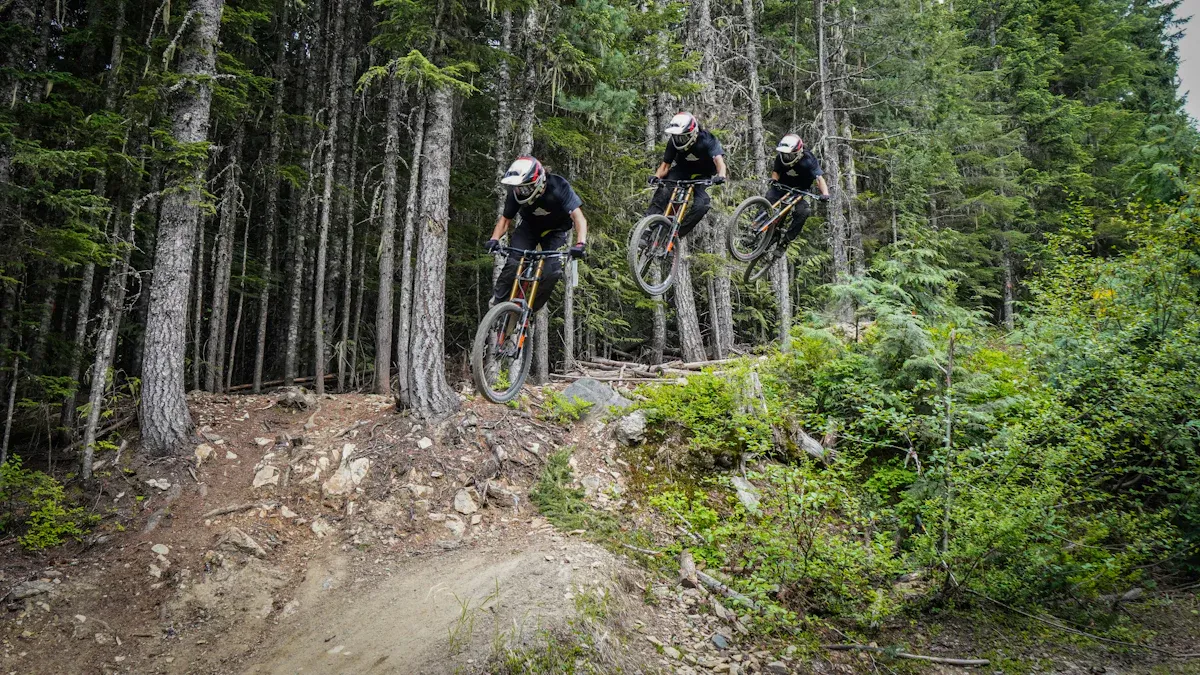
A "fully" has suspension on both the front and rear wheels. This provides more comfort and control, especially on rough or technical terrain. The suspension absorbs shocks and bumps. You will feel safer on challenging trails, when jumping, or during fast descents. Full-suspension bikes are heavier and require more maintenance than hardtails. The bearings and shocks need regular care. For bike park tours, enduro, or downhill use, a full-suspension bike is the best choice.
More comfort and traction due to full suspension
Better control on technical trails
Higher maintenance effort and weight
Cross Country
Cross Country bikes are built for long distances and fast riding. They weigh little and offer efficient power transfer. The geometry is sporty, the wheelbase is short, and the head angle is steep. You sit in an aggressive position, which encourages speed and endurance. The suspension is usually around 100 mm, sometimes 120 mm. Many models are made of lightweight carbon. Lockout functions on the suspension help you save energy during climbs. Cross Country bikes are suitable for competitions, marathon tours, and fast rides.
Note: If you value efficiency, low weight, and long distances, a cross-country mountain bike for men is ideal.
Trail
Trail mountain bikes are all-rounders for varied routes. They offer you comfort and versatility. The suspension is stronger than on Cross Country bikes, usually between 120 mm and 150 mm. Wide tires and a robust geometry ensure stability on rough terrain. You can have fun with a trail bike both uphill and downhill. It is suitable for forest paths, trails, root sections, and smaller jumps. Trail bikes are less specialized than enduro or downhill bikes but are very versatile.
Feature |
Gravel bike |
Trekking bike |
|
|---|---|---|---|
Tires |
Wide, treaded tires for terrain |
Wide tires, no suspension |
Wider tires for comfort and daily use |
Suspension |
Available (hardtail or fully) |
Usually no suspension |
No suspension, comfort through seating position |
Comfort |
High comfort through suspension and stability |
Comfortable on asphalt and gravel |
Very comfortable due to position and accessories |
All Mountain
All Mountain bikes are suitable for almost any terrain. They offer you a suspension travel of 120 to 160 mm. You can use them for both climbing and descending. The geometry is balanced, so you can manage well on long tours and trails. All Mountain bikes are full-suspension and often equipped with an adjustable fork. They are suitable for tours in low mountain ranges, alpine crossings, and technical trails. Small jumps and drops are no problem.
Feature |
All Mountain bikes (men) |
Enduro bikes |
|---|---|---|
Usage |
Tours, climbing, descending, light to medium trails |
Challenging trails, fast descents, jumps |
Suspension travel |
120–160 mm |
140–180 mm |
Special features |
Adjustable fork, versatile |
Wider tires, descent-oriented |
Enduro
Enduro bikes are built for demanding trails and fast descents. They offer you a suspension travel of 140 to 170 mm. The seating position is more upright, and the handlebars are wider. The tires are usually 27.5 inches and particularly wide, which gives you a lot of grip and stability. Enduro bikes soak up large steps and jumps. They are robust and sporty but heavier than other types. They climb acceptably, but their strengths clearly lie in the descent and on single trails. For bike parks and technical descents, an enduro mountain bike for men is the best choice.
Wide handlebars and upright seating position for control
Plenty of suspension travel for comfort and safety during jumps
Robust construction, ideal for bike parks and difficult trails
Note: Taller or heavier riders should look for a stable frame and high-quality components. Many manufacturers offer special frame heights and reinforced parts for increased safety and comfort.
Features
Frame material
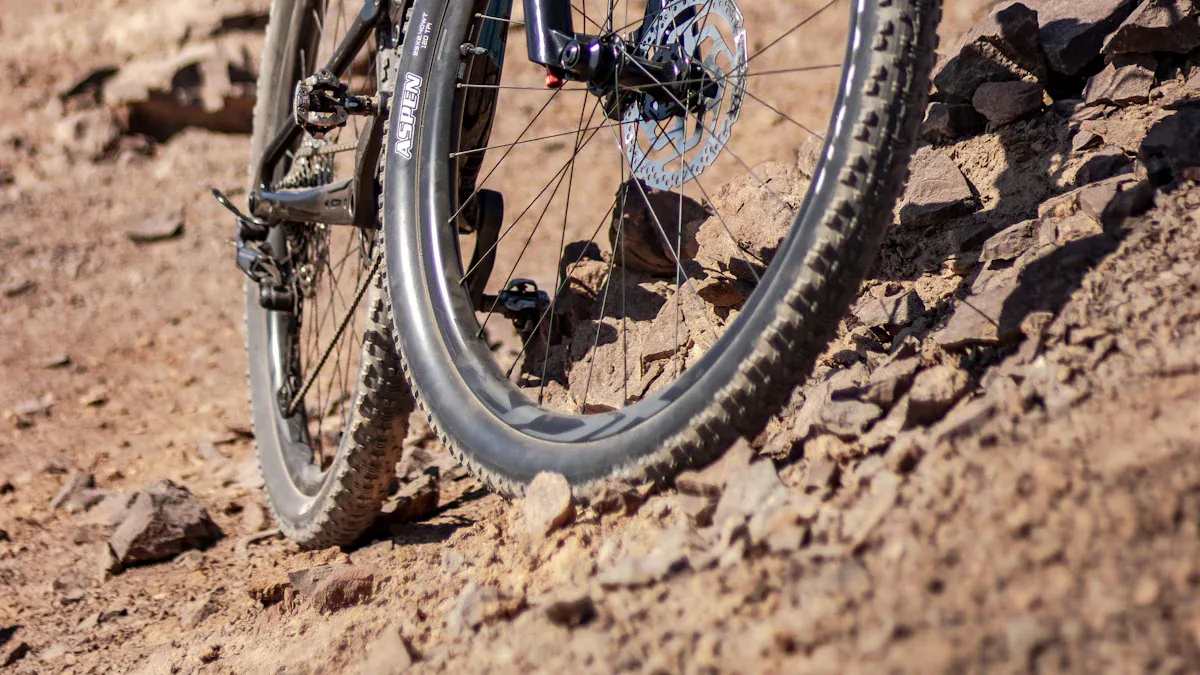
The frame material determines the weight, stability, and price of your mountain bike. Most bikes are made of aluminum or carbon. Aluminum is the most common. It is light, stiff, and affordable. Carbon is even lighter and very stiff. You get a sporty riding feel, but you have to pay more. You rarely find steel on expensive bikes. It is robust but heavy. Titanium is very rare and expensive but almost indestructible.
Frame material |
Frequency |
Advantages |
Disadvantages |
|---|---|---|---|
Aluminum |
Most used |
Light, stiff, cheap, good power transfer |
Slightly heavier than carbon, harder ride |
Carbon |
Second most common |
Very light, stiff, sporty |
Expensive, sensitive to impacts |
Steel |
Rare for expensive bikes |
Very robust, cheap |
Heavy, barely used anymore |
Titanium |
Very rare |
Extremely durable, corrosion-free |
Very expensive, complex manufacturing |
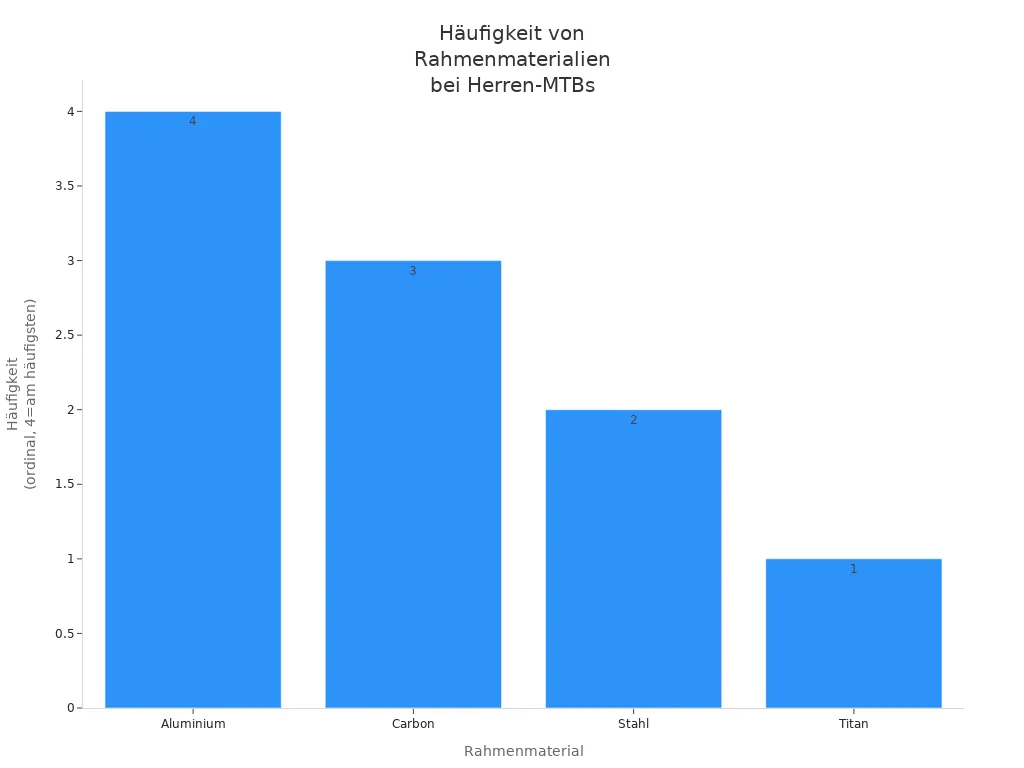
Aluminum offers a good compromise. Carbon saves weight but costs more. Steel can take a lot, but weighs more.
Suspension
The suspension ensures comfort and control. Hardtails only have suspension at the front. Full-suspension bikes have front and rear suspension. More suspension travel helps on rough terrain. Less suspension travel saves weight and makes the bike sportier. Choose your suspension based on your riding style and terrain.
Wheel size
You can choose between 27.5 inches and 29 inches. 29-inch wheels roll more easily over obstacles. They offer more comfort and stability. They are ideal for long tours and fast descents. 27.5-inch wheels are more agile. They are suitable for tight corners and technical trails.
Tip: Consider whether you prefer to ride fast and comfortably or agile and nimble.
Gears
The gearing determines how easily you climb or descend. Shimano and SRAM are the best-known manufacturers. Mechanical gear systems are cheap and easy to repair. Electronic systems shift faster and more precisely but cost more and require a battery. Many mountain bikes use a 1x drivetrain. This gives you fewer gears but less weight and simpler operation.
Gear system |
Manufacturer |
Advantages |
|---|---|---|
Mechanical |
Shimano, SRAM |
Reliable, cheap, easy to maintain |
Electronic |
Shimano, SRAM |
Fast, precise, low-maintenance, but more expensive |
1x drivetrain |
SRAM |
Simple, light, good price-performance ratio |
Weight
Weight influences how easily you can maneuver the bike. Lightweight bikes are better to accelerate and carry. Heavier bikes offer more stability, especially on fast descents. Aluminum and carbon save weight. Steel makes the bike heavier but more robust.
Aspect |
Higher weight |
Lower weight |
|---|---|---|
Stability & safety |
More stability, better traction |
Less stable, but more agile |
Riding dynamics |
Sluggish, less maneuverable |
Better acceleration, more maneuverability |
Handling |
Harder to transport |
Easier to carry and store |
Ergonomics
Proper ergonomics protect you from pain and ensure comfort. Pay attention to the correct frame size. Set the saddle height and saddle tilt correctly. The handlebar position influences your posture and control. Test different settings. Small adjustments often make a big difference. Professional bike fitting helps you find the perfect seating position.
Ergonomic aspect |
Benefit |
Tip |
|---|---|---|
Saddle height |
Prevents knee problems, more comfort |
Inside leg length x 0.883 = saddle height |
Handlebar position |
Better control, fewer complaints |
Adjust to a natural posture |
Frame size |
More comfort and control |
Determine the appropriate size using a calculator |
Test your bike and adjust the settings until you feel comfortable.
Buying Guide
Budget
Before you buy a men's mountain bike, you should set your budget. Prices vary significantly depending on equipment and type. You can get a good race hardtail starting at around €1,500. For a race full-suspension bike, you should plan for at least €3,000. Trail and all-mountain bikes usually start at €2,000. High-quality enduro bikes often cost over €3,500. Consider how often and where you want to ride. Beginners often find the best value for money in the mid-price segment. Do not skimp on important components like brakes or suspension. These parts ensure safety and riding enjoyment.
Tip: Set a realistic budget and set aside some money for accessories and maintenance.
Frame Size
The right frame size is crucial for comfort and control. The best way to determine it is using your body height and inseam. Measure your inseam from the floor to the top edge of a book clamped between your legs. Multiply the inseam by 0.574 for centimeters or by 0.226 for inches. The following table will help you find the appropriate size:
Body height (cm) |
Recommended frame size (cm) |
Recommended frame size (inches) |
|---|---|---|
150-155 |
33-36 |
13"-14" |
155-160 |
35-38 |
14"-15" |
160-165 |
38-40 |
15"-16" |
165-170 |
40-43 |
16"-17" |
170-175 |
42-45 |
16.5"-17.5" |
175-180 |
44-47 |
17.5"-18.5" |
180-185 |
46-49 |
18"-19" |
185-190 |
49-52 |
19"-20.5" |
190-195 |
51-56 |
20.5"-22" |
above 195 |
above 56 |
above 22" |
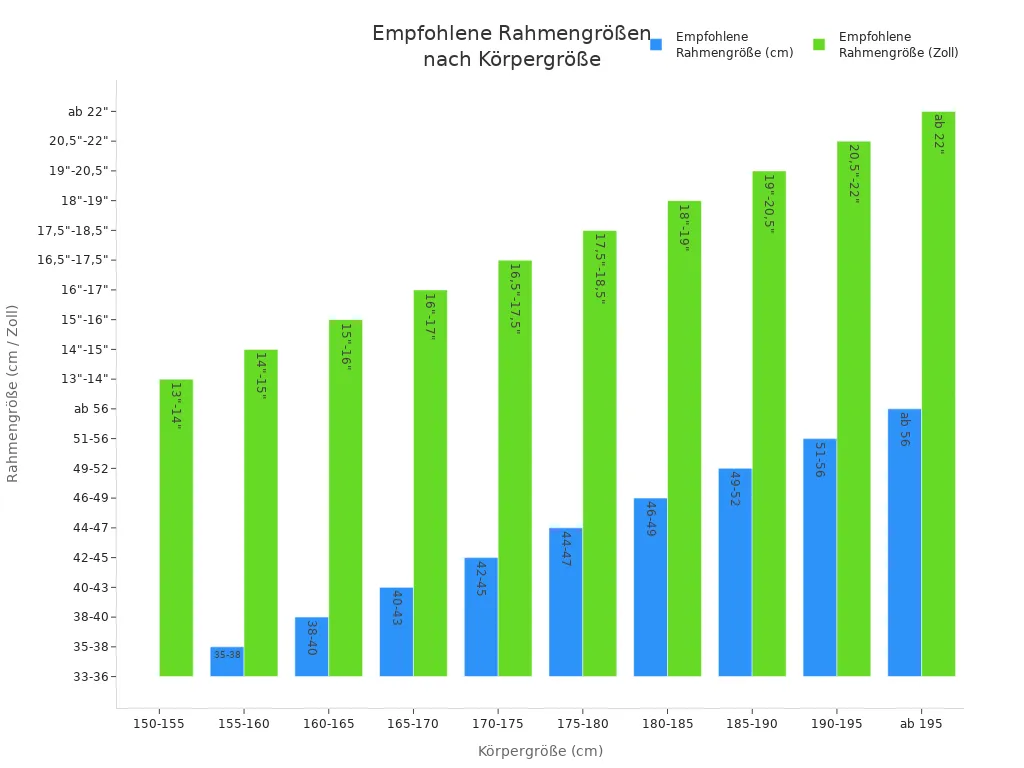
Also, consider your proportions. If you have long legs, choose a larger frame. If you are unsure, try out different sizes. The mountain bike type influences the choice: a larger size is often suitable for a hardtail, while a smaller size is often better for an enduro.
Test Ride
A test ride helps you find the right feel for the bike. You will feel immediately whether the bike suits you. Test different models and frame sizes. Pay attention to the seating position, handlebar width, and suspension. At a specialist retailer, you can get advice and ask questions. Many dealers offer individual adjustments. Use this opportunity to optimize your bike.
Tip: Ride the bike on different surfaces. This will show you how it handles in everyday life and on trails.
Accessories
The right accessories make your riding experience safer and more comfortable. For men, high-quality cycling shorts like the Gonso SQlab Go Bib are recommended. They offer you comfort even on long routes thanks to a pressure-stable pad. The shorts fit snugly, do not slip, and perform well even on the trail. For shoes, the Scott MTB Shr-alp Boa Evo is compelling. It offers good grip, comfort, and stiffness—both on the pedal and when walking.
Basic equipment should include the following items:
Helmet: Protects your head. Choose between a half-shell for easy trails and a full-face helmet for downhill.
Shoes: Ensure grip on the pedal and improve power transfer.
Goggles/Safety glasses: Protect your eyes from dust and debris.
Gloves: Improve grip and protect against injury.
First-aid kit: Helps with minor injuries on the go.
Repair kit: Includes spare tube, tire levers, mini pump, and a multi-tool.
MTB clothing: Breathable shirts, padded cycling shorts, and weather-resistant jackets.
Extras: Fenders, lock, lighting, GPS device, and snacks for energy.
Remember: Good accessories increase safety and riding pleasure.
Buying Online
Many people buy their men's mountain bike online today. You will find a large selection and often low prices. Look for reputable shops with good reviews. Check if the dealer offers returns or exchanges. Read the product descriptions carefully. Compare the geometry and frame size with your measurements. Many shops offer frame size calculators. It is best to order accessories like a helmet or shoes at the same time. After the purchase, you should have the bike checked by a professional.
Tip: Only buy from trustworthy providers and ensure secure payment.
Checklist & Tips
Purchase Checklist
Do you want to find the perfect mountain bike for you? A clear checklist helps you keep track. First, consider which wheel size suits your riding style: 27.5", 29", or a mix. Choose the suspension travel appropriate for the terrain—100 mm is often enough for cross-country, while you may need up to 200 mm for enduro or downhill. Pay attention to the gear ratio range of the drivetrain. With about 500%, you can master even steep climbs. The frame material plays a big role: aluminum is cheaper, carbon saves weight and provides stiffness but costs more.
The number of gears is usually between 8 and 12. Fewer gears often mean more reliability. Check the maximum permissible total weight, especially if you carry a lot of luggage or are heavier yourself. High-quality equipment such as a helmet, pedals, protective gear, and theft protection are part of it. It is best to buy from a specialist dealer where you can get advice and service. You should always keep an eye on maintenance and safety so that you can enjoy your bike for a long time.
Criterion |
Description |
|---|---|
Knobby tread for more grip, special tires for mud or dry conditions |
|
Area of use |
Consider whether you prefer riding uphill, on trails, or downhill |
Seating position |
Sporty or upright – influences comfort and control |
Weight |
Light bike for more agility, heavier for more stability |
Mountain bike type |
Cross-country, trail, enduro, or downhill – depending on your riding style |
Avoiding Mistakes
Many buyers make typical mistakes. You should not just pay attention to how it looks. Always check the frame size and adapt it to your body height. Do not buy a bike that is too cheap, as low-cost components wear out quickly. Do not neglect maintenance. A poorly maintained bike loses safety and riding pleasure. Test the bike before buying to check the seating position and handling. Do not let trends guide you; choose the bike that suits your riding style.
Tip: Ask for a test ride at a specialist dealer and have them show you the most important settings.
Buying Used
A used mountain bike can be worthwhile if you need to watch your budget. Check the condition of the frame, drivetrain, and brakes carefully. Look for cracks, rust, or worn-out bearings. Ask for maintenance records and the origin of the bike. It is best to buy from private individuals with an honest description or from verified dealers. You often get a high-quality bike at a fair price. With a little patience, you will find a model that suits you and will last for many more tours.
Remember: A well-maintained used bike often offers better quality than a new cheap model.
When buying a men's mountain bike, many factors play a role. Experts recommend that you pay attention to the following points:
Choose between hardtail or full-suspension, depending on the terrain and comfort requirements.
Decide on the appropriate wheel size and consider whether a classic MTB or an E-MTB suits your riding style better.
Consider your budget, your physical condition, and the quality of the components.
Your personal riding style and the preferred area of use determine how much suspension travel and what equipment you need. A modern hardtail with a dropper post and wide tires offers you more riding pleasure and safety in the long term. Try out different models and get advice—this way you will find the bike that fits you and supports your health. With the right men's mountain bike, you will enjoy every tour and master new challenges.
FAQ
How do I find the right frame size for my mountain bike?
You measure your inseam and use a frame size calculator. Many manufacturers offer tables. Try out different sizes. This is how you find the best feel for the ride.
Which is better: hardtail or full-suspension?
You choose a hardtail for easy paths and low weight. A full-suspension bike offers you more comfort and control on difficult trails. Consider where you ride most often.
How often should I service my mountain bike?
You check your bike after every ride. Oil the chain, check the brakes, and tighten bolts. An annual check-up at a specialist dealer is recommended.
Which wheel size suits me?
You ride comfortably and quickly over obstacles with 29 inches. 27.5 inches offer you more agility. Test both sizes to find your favorite.
Do I need special accessories for getting started?
You start safely with a helmet, gloves, and padded cycling shorts. A multi-tool and a pump help you on the road. This way you are well prepared.