
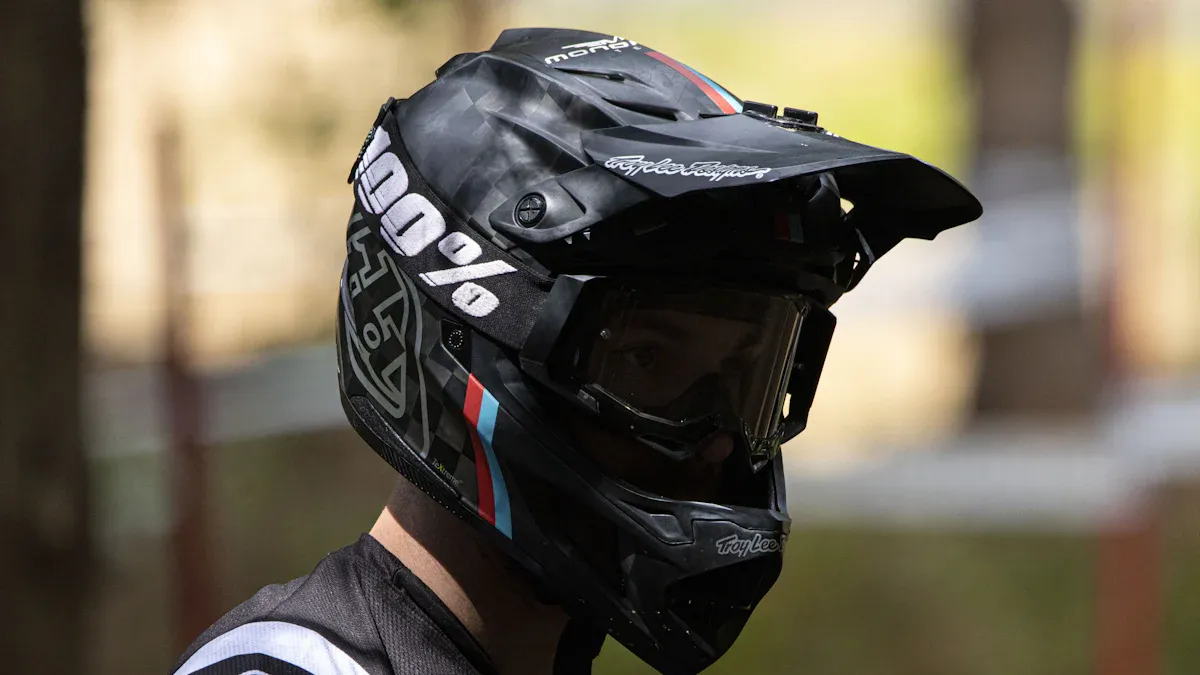
When you are out on the trail, a mountain bike helmet reliably protects you from serious head injuries. Studies show that helmets can prevent up to 80% of severe head injuries. Many models rely on multi-density foam, MIPS technology, and sturdy chin bars to provide optimal protection during crashes. Modern helmets like the Bell Full-10 or Giro Insurgent also offer a lightweight design and excellent ventilation. New features and innovative designs ensure that you are well-equipped for every adventure.
Key Takeaways
A mountain bike helmet protects you against serious head injuries and significantly reduces risks during falls.
Helmets with MIPS technology provide additional protection against dangerous rotational motion during angled impacts.
Good ventilation and a perfect fit ensure comfort and safety on every trail.
Modern helmets feature smart capabilities like NFC, RECCO, or Bluetooth that improve your safety and connectivity.
Choose the right helmet type for your riding style and replace your helmet regularly, especially after crashes or after five years.
Safety Features
MIPS Technology
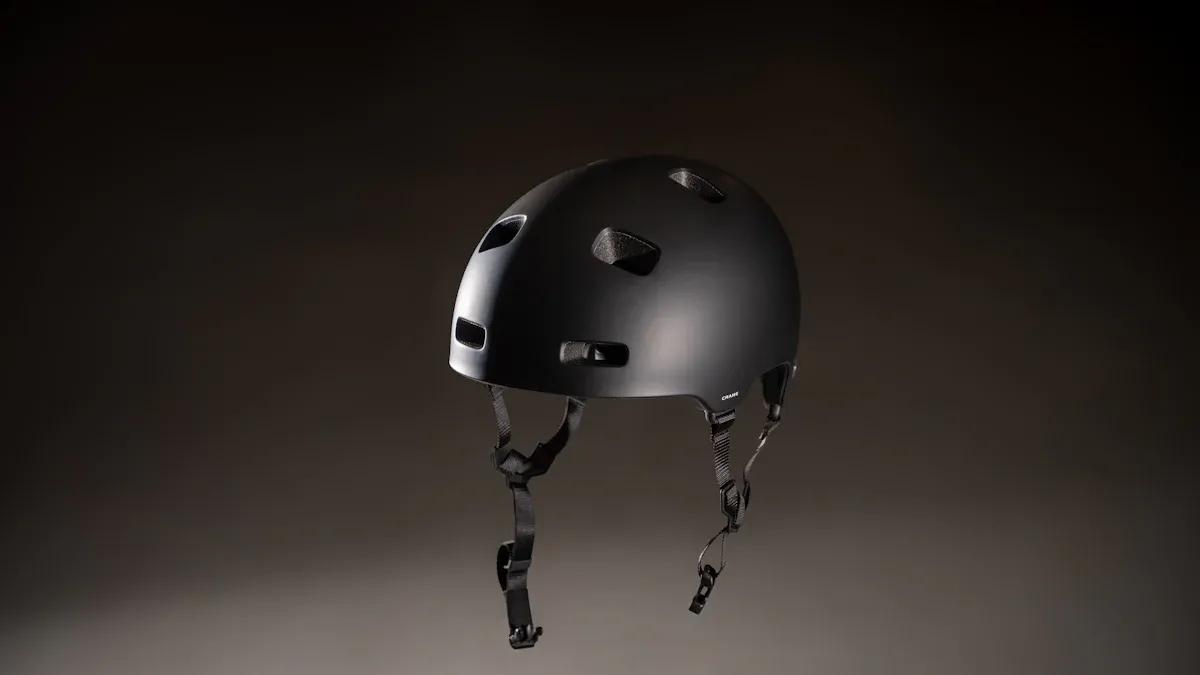
When choosing a modern mountain bike helmet, you should look for MIPS technology. It protects your head particularly well during angled impacts. Many serious brain injuries are caused by rotational forces that affect your head during an oblique impact. MIPS significantly reduces these dangerous forces. Here is how the system works:
MIPS consists of a thin, low-friction layer inside the helmet.
In the event of a fall, the outer shell can shift slightly.
This dissipates rotational energy, keeping your head better protected.
Conventional helmets primarily protect against straight impact forces, but MIPS helmets offer additional protection against rotational movement.
The MIPS Spherical system uses two movable shells for even better protection.
Studies show that helmets with MIPS significantly lower the strain caused by rotational forces. Independent tests confirm this effect, even if further research is ongoing.
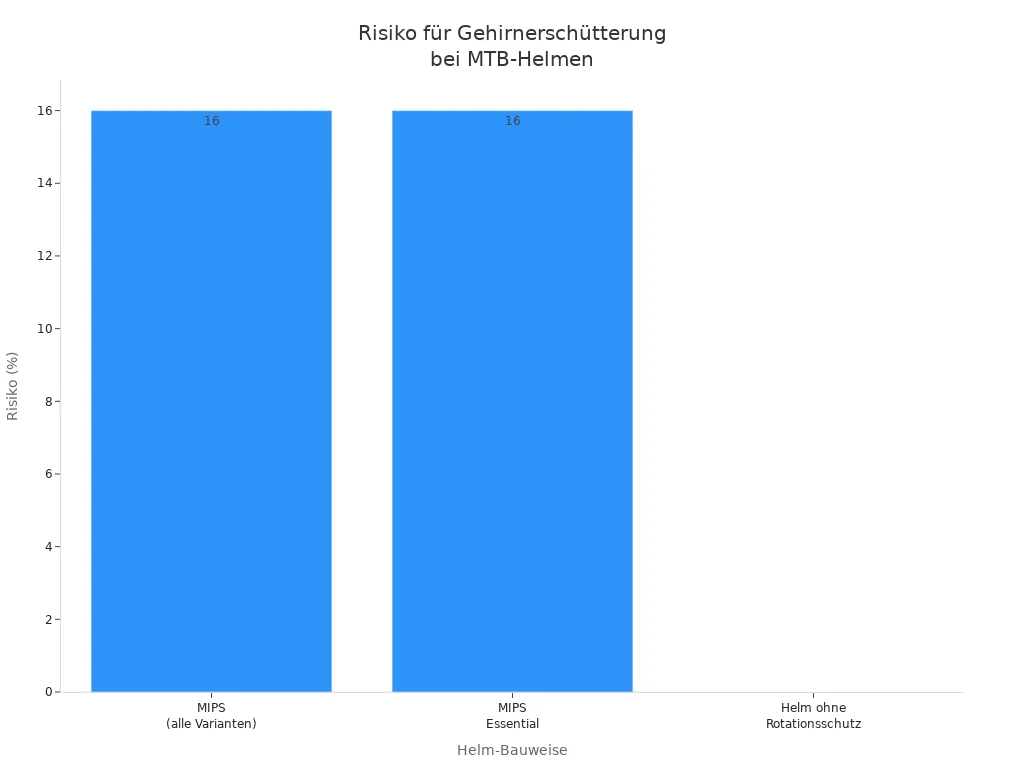
Measurements show that a mountain bike helmet with MIPS reduces the rotational rate of your head during angled impacts by about 40%. The risk of a concussion is consequently reduced from 39% to only 10%. Traditional helmets often transfer rotational forces directly to your head. MIPS helmets offer significantly better protection in this regard.
Tip: Look for the MIPS logo when purchasing. Many top models today rely on this technology.
Material and Construction
The materials and construction of your helmet determine how well it protects you. High-quality models use a combination of a hard outer shell and a shock-absorbing inner layer. You can find the most important materials in this table:
Material |
Function / Impact on Safety |
|---|---|
Hard plastic |
Outer hard shell prevents rapid breakage during crashes |
EPS foam |
Absorbs impact energy, increases safety |
Soft shell |
No hard plastic shell, does not offer sufficient protection during intense impacts |
Many manufacturers use the in-mold process. In this process, production permanently fuses the outer shell with the EPS foam. This makes the mountain bike helmet lighter and increases its protective effect. Models with carbon are particularly stable yet very lightweight. Soft-shell helmets do not offer you sufficient protection and are not suitable for challenging trails.
Ventilation
When mountain biking, you sweat quickly. That is why you need a helmet with good ventilation. Modern helmets often have about eight front and six rear ventilation openings. These ensure a constant airflow and keep your head cool. Large ventilation openings and internal channels further improve air circulation.
Several large openings allow heat to escape.
Adjustable intakes and exhausts ensure optimal cooling.
Removable, washable inner pads increase comfort and hygiene.
Some helmets, such as the Canyon CFR, use special fastening systems that keep the helmet up to 4.8 degrees cooler than traditional models. Wind tunnel tests show that these systems also reduce noise development. This allows you to stay focused and feel comfortable even on hot days.
Fit
The fit determines how safe your mountain bike helmet really is. A helmet only protects you optimally if it fits firmly and comfortably. It must not slip and must sit level on your head. Many current models offer you practical adjustment systems:
BOA dial closures for millimeter-precise adjustment
Adjustable neck supports
Height-adjustable visors
Adjustable Y-straps under the ears
Magnetic strap buckles for easy opening and closing
Experts recommend: Measure your head circumference accurately and choose the appropriate helmet size. A well-fitting helmet absorbs impact forces better and protects you more effectively.
A robust strap system ensures that the helmet remains secure even during quick movements. Height-adjustable headband systems, like on the Bell 4Forty, provide additional comfort. The right fit is the most important criterion for your safety on the trail.
Technology
NFC and Recco
You can significantly increase your safety on the trail using modern technology. Many helmets today offer RECCO® reflectors. These small stickers help rescue teams find you faster after an accident. The technology comes from the ski and snowboard industry and is widespread in outdoor helmets. A special sensor detects the reflector and facilitates search operations. NFC chips are also useful. They store important emergency information like address, allergies, or emergency contacts directly in the mountain bike helmet. Emergency services can read this data at the scene of the accident. This way, you receive faster help in an emergency and treatment proceeds smoothly.
Tip: A helmet with NFC or RECCO® increases your chances of being found and treated quickly after a crash.
Visor
The visor is a typical feature of a mountain bike helmet. It protects your face from the sun, rain, and low-hanging branches. You maintain a clear view even when riding through dense forests. Many visors are adjustable or removable, allowing you to adapt to lighting conditions. Compared to glasses, the visor does not protect the eyes directly but serves as a shield and defense against environmental influences. You will find larger visors, which are also compatible with MTB goggles, particularly on All-Mountain and Downhill helmets.
Visor Type |
Properties |
Advantages |
|---|---|---|
Adjustable |
Adaptable to light and surroundings |
Flexibility |
Removable |
Can be removed |
Versatility |
Large visor |
More protection, often with chin guard |
Ideal for downhill and forest |
Smart Features
New helmets offer many smart functions. You can use Bluetooth to listen to music or talk to other riders. Some models have LED lights and turn signals that increase your visibility. Motion sensors detect accidents and automatically send an emergency call with GPS to your contacts. Walkie-talkie systems enable communication within a team. Many functions are conveniently controlled via app or voice command. The batteries last a long time and are splash-proof. Modern mountain bike helmets combine comfort, safety, and technology.
With smart features, you are not only safer on the road, but also better connected.
Mountain Bike Helmet Models
Trail Helmets
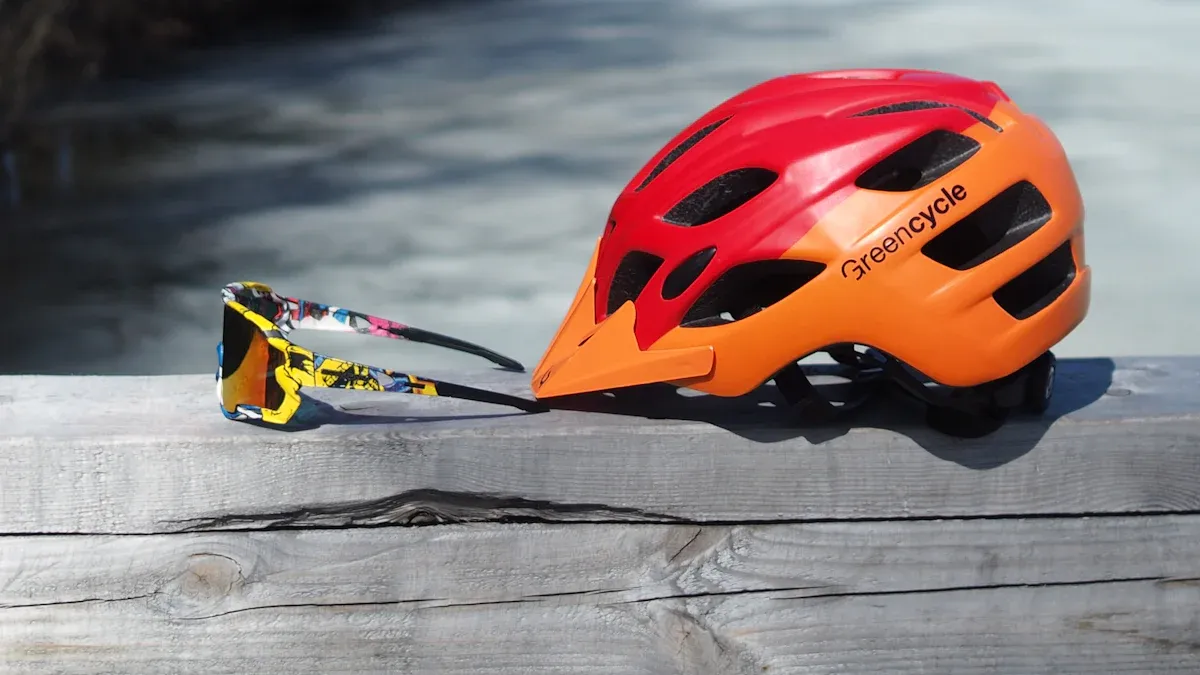
Trail helmets protect you on diverse routes. They offer a good mix of safety, comfort, and ventilation. Many models rely on modern protection systems like MIPS or 360° Turbine Technology. These technologies help reduce rotational forces during crashes. Trail helmets are lightweight and have many ventilation openings. You can often adjust the visor and customize the fit. Brands like Fox, POC, and Giro develop particularly innovative models. The Fox Speedframe Pro, for example, features a magnetic Fidlock buckle and removable pads.
Model Name |
Innovative Features |
Specialties |
|---|---|---|
Fox Speedframe Pro |
Dual-density EPS, Fidlock buckle |
Washable pads, MIPS |
POC Tectal Race MIPS |
MIPS, NFC, good ventilation |
Test winner, high comfort |
Alpina PANOMA 2.0 |
Double In-Mold, ErgoFit Ultra Evo System |
Very good fit |
Tip: Trail helmets are suitable for tours and technical trails. They particularly protect the back of the head and offer room for glasses.
Enduro Helmets
Enduro helmets offer you more protection than trail helmets. They are built more robustly and protect even during fast descents. Many models use high-quality materials like polycarbonate or Kevlar. You will often find an emergency system that allows you to quickly remove the pads. Ventilation remains good, so you don't overheat. Enduro helmets like the FOX Dropframe or the Airoh Aviator are somewhat heavier but offer deeper neck protection and more stability.
Feature |
Enduro Helmets |
Trail Helmets |
|---|---|---|
Weight |
Heavier (approx. 491 g) |
Lighter (approx. 245 g) |
Protection |
Deeper neck protection, robust |
Less comprehensive, lighter |
Ventilation |
Sufficient, but less than trail |
Very good |
Usage |
Rough, descent-oriented tours |
Leisurely to technical trails |
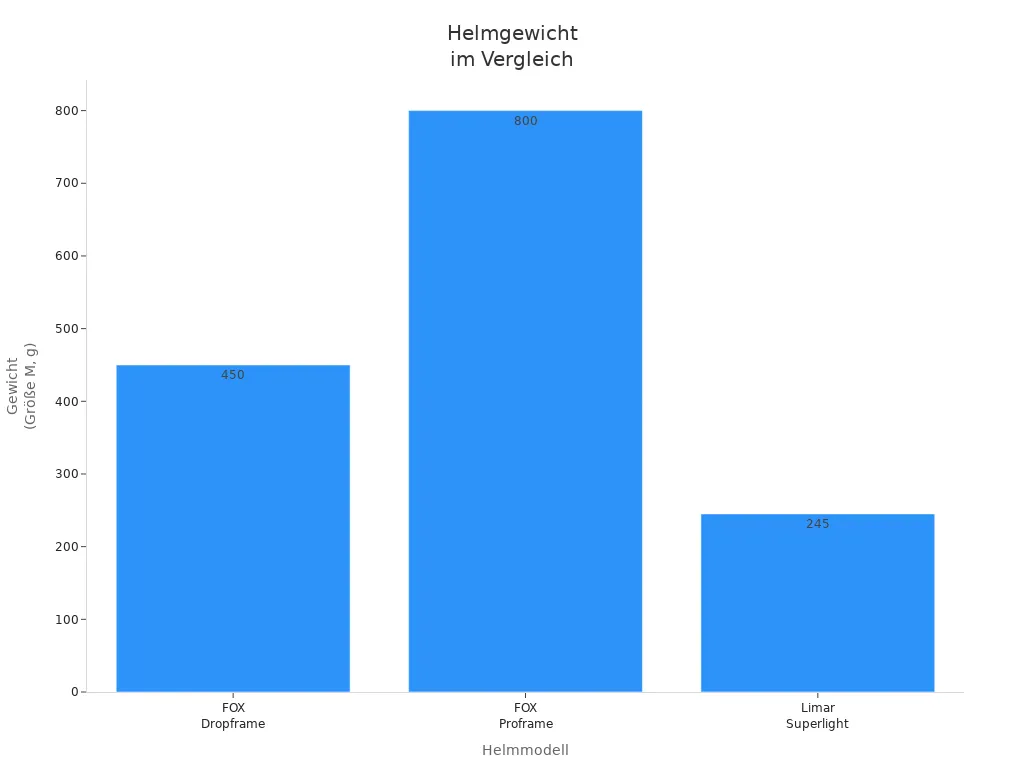
Enduro helmets are ideal if you ride longer and more demanding routes and value maximum protection.
Full-face Helmets
Full-face helmets protect your head, face, and chin. They are the best choice for downhill and bike parks. Accident statistics show that full-face helmets significantly reduce the risk of serious injury. Many models today are lightweight and well-ventilated. Professionals often use helmets like the Bell Sanction or the Fox Rampage. These helmets are made of modern materials like carbon and offer a high level of comfort.
Rank |
Model |
Rating |
|---|---|---|
1 |
Bell Sanction |
very good |
2 |
Rockbros Downhill Helmet |
very good |
5 |
O'Neal Defender 2.0 Wild |
very good |
8 |
POC Tectal Race MIPS NFC |
very good |
10 |
Uvex i-vo 410424010111 |
very good |
You should choose a full-face helmet if you often ride steep descents or jumps. It provides the best protection during high-speed crashes.
Selection and Maintenance
Fit and Size
You should always ensure that your mountain bike helmet fits perfectly. A helmet must sit firmly on your head and should not wobble. The chin strap should be secure but not too tight. Your forehead should be well-covered without the helmet protruding into your face. If you feel pressure points, the helmet does not fit correctly. Measure your head circumference precisely and try on different models. Lightweight helmets offer you more comfort, especially on long tours.
The helmet must not slide.
The size must match your head circumference.
The chin strap should sit comfortably.
Safety Standards
You increase your safety by looking for certifications. A helmet with the EN 1078 mark meets European standards. This norm guarantees that the helmet reliably absorbs and dissipates impact forces during a crash. Modern safety features like MIPS technology provide additional protection against rotational forces. Reflectors and bright colors make you more visible. A smooth surface reduces the risk of snagging during a fall.
Standard |
Meaning |
Benefit |
|---|---|---|
EN 1078 |
European Standard |
Certified Safety |
MIPS |
Rotational protection |
Additional protection |
Comfort and Accessories
You benefit from accessories that increase comfort and safety. Ventilation openings ensure good air circulation and prevent overheating. An adjustable fit system helps you customize the helmet optimally. Many helmets offer extras like eyewear storage, magnetic buckles, or removable pads. Lightweight helmets make long rides more pleasant. Reflectors increase your visibility in traffic.
Tip: Choose a helmet with many ventilation openings and a practical adjustment system. This keeps your head cool even in warm weather.
Cleaning and Replacement
You should clean your helmet regularly. Remove the inner pads and wash them with mild detergent. Wipe the outer shell with a damp cloth. Check the helmet for cracks or damage after every fall. A damaged helmet no longer provides reliable protection. Replace your mountain bike helmet at the latest after five years or after an accident. This way, you stay safe on your rides.
You benefit from helmets with MIPS, good ventilation, and an optimal fit. Check your helmet regularly and replace it after crashes or at the latest after five years. Invest in high-quality models, as comfort and protection go hand in hand.
A safe helmet protects you long-term and increases your riding enjoyment.
Future Trend |
Description |
|---|---|
Honeycomb structure for better impact and rotational absorption |
|
Sustainability |
Recycled materials, regional production, FSC-certified packaging |
Smart Features |
Motion-controlled brake lights, intuitive fit systems |
FAQ
How often should you replace your mountain bike helmet?
You should replace your helmet at the latest after five years. After a crash, you must replace it immediately. Small cracks or visible damage reduce the protective effect.
How do you clean your mountain bike helmet correctly?
Take out the pads and wash them with mild soapy water. Wipe the outer shell with a damp cloth. Avoid aggressive cleaning agents.
Which helmet size fits you?
Measure your head circumference with a tape measure just above the eyebrows. Manufacturers provide the appropriate sizes in centimeters. A helmet fits correctly when it sits firmly but comfortably.
What does the MIPS logo on the helmet mean?
The MIPS logo indicates that the helmet offers additional protection against rotational forces. This technology can significantly reduce the risk of concussions.
Can you also use a helmet for other sports?
You should only use your mountain bike helmet for mountain biking. There are specialized helmets for other sports like skating or climbing with different protective functions.