
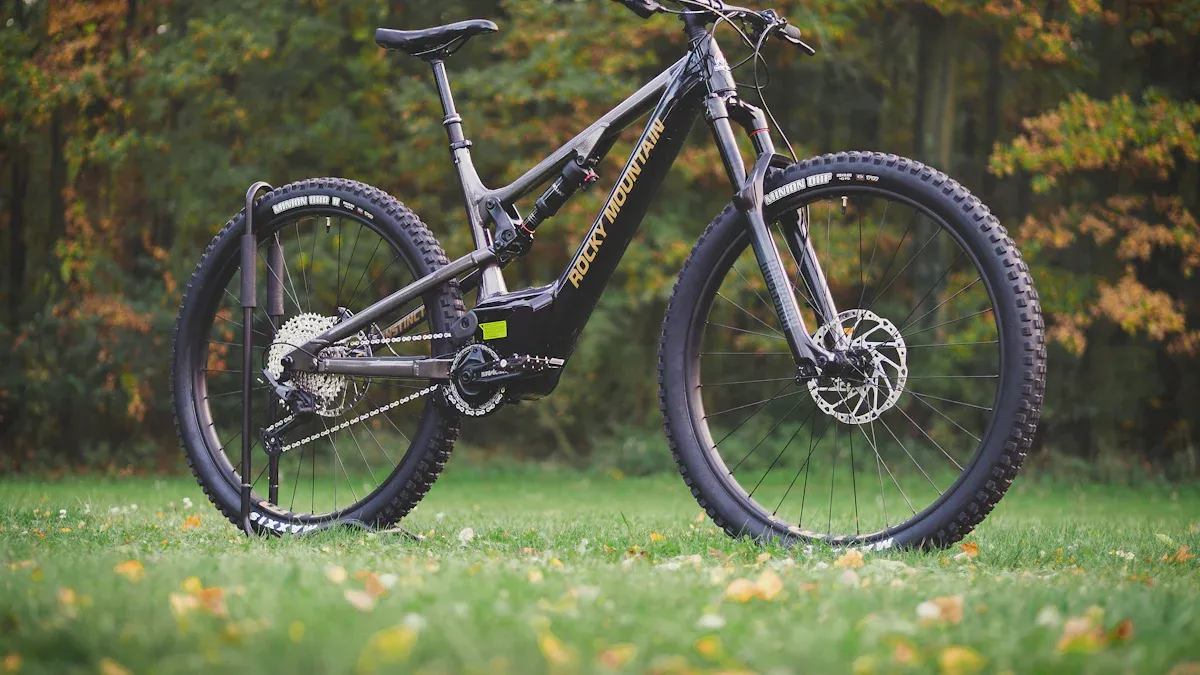
Mountain biking inspires millions of people. Choosing the right mountain bike noticeably influences your riding experience. Different types are suited to different terrain and riding styles. Modern technologies like Shimano STEPS E8000 or Brose Drive S Mag ensure a natural riding feel. Many bikers feel happier and freer when they are active outdoors:
90% of riders report increased well-being.
Nature experiences improve quality of life.
Category |
Number (in millions) |
|---|---|
Total mountain bikers |
16.6 |
Occasional |
12.4 |
Frequent |
4.2 |
Key Findings
Choose the right mountain bike for your riding style. Hardtails are light and efficient, while full-suspension bikes offer more comfort on demanding trails.
Pay attention to terrain types. Forest paths are ideal for relaxed tours, while single trails require technical skill.
Use modern technologies like e-mountain bikes for longer tours. They support you on climbs and make riding more enjoyable.
Protect yourself with the right protective gear. A helmet and protectors keep you safe from injury and increase your security.
Plan your tours carefully. Consider accommodation, breaks, and the weather to ensure a safe and pleasant riding experience.
Mountain Bike Types
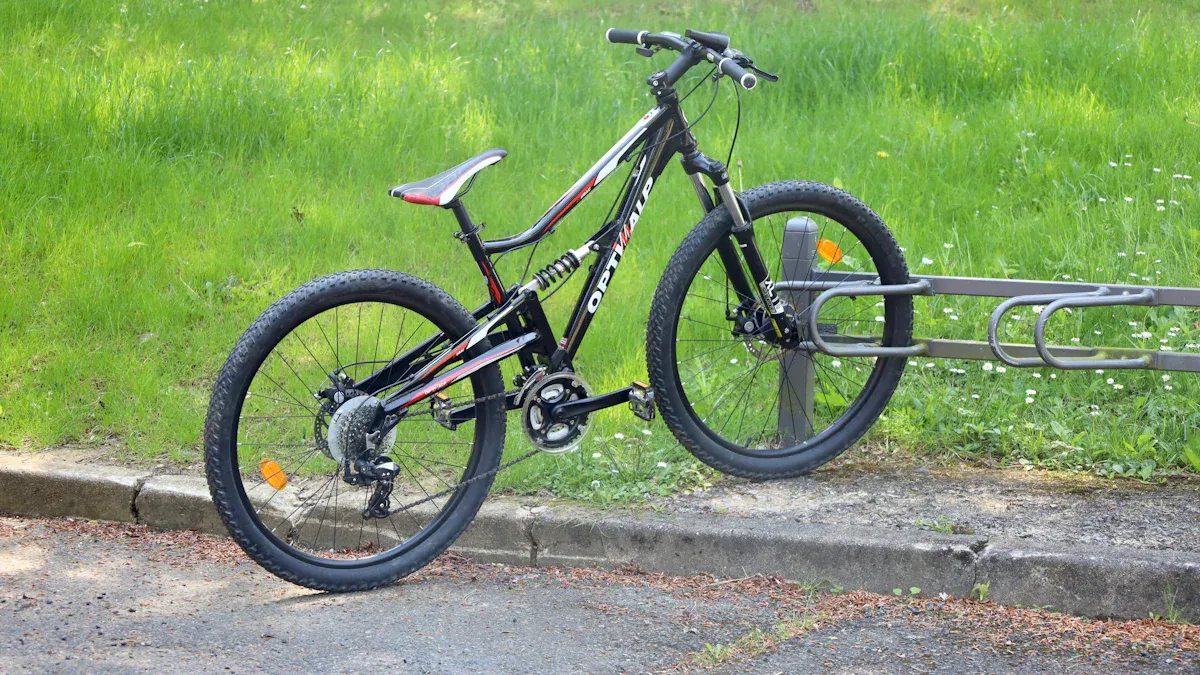
Hardtail
A hardtail only has suspension on the front fork. The rear wheel remains unsuspended. You benefit from a simpler construction and lower weight. Many riders appreciate the better price-performance ratio and low maintenance requirements. Hardtails are particularly suitable for fast training laps on field and forest paths, nature tours, and occasional trails.
Tip: A hardtail is ideal if you are looking for a lightweight and efficient mountain bike for climbs and moderate routes.
Full-Suspension
A full-suspension bike, also known as a "fully," offers you suspension both at the front and the rear. This design ensures maximum riding comfort and control, especially on rough terrain. The suspension eases the strain on your back and increases safety on steep descents. Full-suspension bikes are excellent for challenging trails and long tours.
You enjoy more comfort on long distances.
The suspension helps you to overcome difficult obstacles safely.
Full-suspension bikes offer you stability at high speeds.
Cross Country
Cross Country bikes are lightweight, sporty, and designed for speed. They are suitable for races and long distances on less demanding terrain. The suspension travel is usually 100 to 120 mm. Many models are made of carbon, which reduces weight and increases stiffness. Cross Country is the only Olympic discipline in the mountain biking sector.
Feature |
Description |
|---|---|
Efficiency |
Low weight and high efficiency for long distances |
Comfort |
Dampens vibrations on rough trails |
Speed |
Fast and agile, uphill and downhill |
Suspension travel |
100-120 mm, suitable for various terrains |
Trail Bike
Trail bikes are considered the all-rounders among mountain bikes. They offer you an optimal mix of climbing ability and riding fun on descents. Typical are 120 to 160 mm of front suspension travel and up to 150 mm at the rear. The geometry ensures a comfortable riding position, so you are safe both uphill and downhill. High-quality models are often made of carbon, cheaper ones of aluminum.
Trail bikes perform well in almost every situation.
They offer you efficiency when climbing and safety on descents.
The preferred wheel size is 29 inches.
Enduro
Enduro bikes are built for demanding descents and high speeds. They have a slacker head tube angle and a longer wheelbase, which improves stability. The suspension travel is usually between 160 and 180 mm at the front and 160 to 170 mm at the rear. The bottom bracket is higher to give you more ground clearance on rough terrain.
Enduro bikes offer you plenty of travel for jumps and fast descents.
The geometry ensures stability at high speeds.
You can master difficult trails safely.
Downhill
Downhill bikes are specifically developed for steep and technically demanding descents. They feature a particularly robust construction and very long suspension travel. Safety is the top priority here. Courses are checked by experienced safety officers, and dangerous areas are identified and adjusted early on.
Note: Downhill bikes are only suitable for special courses and require experience in handling high speeds and obstacles.
Fatbike
Fatbikes are recognized by their extremely wide tires. They offer you a lot of stability and traction on snow, sand, or muddy ground. Fatbikes are particularly popular in rural areas and outdoor environments. Their versatility makes them a good choice for difficult terrain.
Fatbikes are ideal for adventures off paved paths.
They offer you safety on slippery surfaces.
You can use them all year round.
E-Mountain Bike
E-mountain bikes have gained significant importance in recent years. They assist you with an electric motor, especially on climbs or long tours. In Europe, their market share is now at 40%. 836,000 e-mountain bikes were sold in 2022, which represents a significant increase. Mountain bikes without a motor now only make up 3% of the market.
Year |
Market share E-MTBs |
Market share mountain bikes without motor |
|---|---|---|
40% |
3% |
Note: An e-mountain bike allows for longer tours and more riding fun, even if you are less fit.
Terrain Types
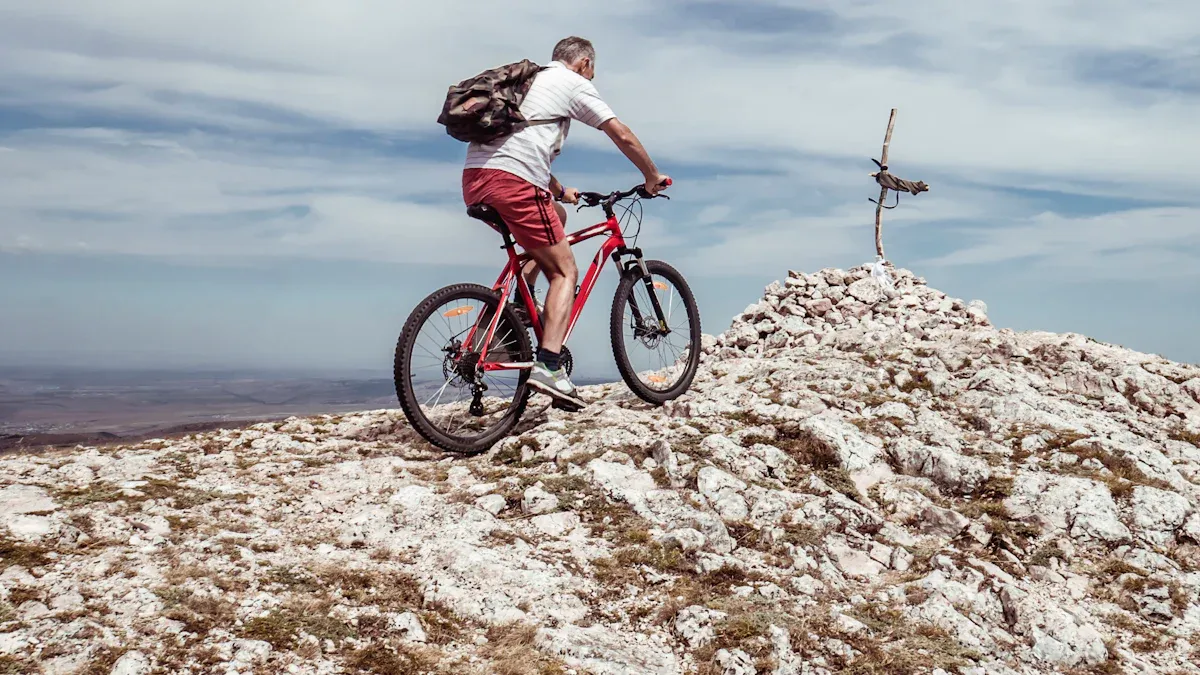
Forest Paths
You often find forest paths in woods and low mountain ranges. They offer you wide, usually well-rideable routes. Many mountain bikers use these paths for relaxed tours or as connections between more demanding trails. You should watch out for other user groups, as hikers and cyclists often share the paths. The trail conditions, steepness, and weather influence your riding technique and risk of falling. Conflicts with other users sometimes arise when paths are too narrow or heavily frequented.
Challenges on forest paths:
Variable trail conditions
Steep passages
Many other users
Weather-related changes
Single Trails
Single trails are narrow paths that often lead through forests or over meadows. They offer you an intense riding experience and place different demands on your technique. Difficulty levels range from very easy to extremely difficult. On single trails, you will find roots, stones, tight corners, and steep sections.
Description |
|
|---|---|
S0 |
very easy, easily rideable |
S1 |
easy, with few obstacles |
S2 |
moderately difficult, some technical demands |
S3 |
difficult, requires experience |
S4 |
very difficult, high technical demands |
S5 |
extremely difficult, unrideable |
The most important features are: trail conditions, obstacles, gradient, and corners.
Mountains
In the mountains, spectacular views and demanding routes await you. You need good preparation and appropriate equipment. A helmet protects your head. For difficult passages, a via ferrata set, crampons, or ice axes can help. In winter, avalanche equipment is important. You should always observe local guidelines to protect nature and yourself. Knee and hip protectors, gloves, and special MTB shoes increase your safety.
Bike Park
Bike parks offer you specially designed tracks with varying levels of difficulty. Modern lifts bring you comfortably to the starting point. Many parks have rental stations, workshops, and catering. Well-known bike parks in Germany are:
Bike Park Name |
Facilities and Offers |
|---|---|
MTB ZONE Bikepark Geisskopf |
16 tracks, lifts, rental, workshop, catering, Flowcountry track, jump line. |
Adventure Bikepark Bad Wildbad |
6 main tracks, shuttle service, bike station, repair service, bike café, kids' area. |
Bikepark Todtnau |
3 main tracks, infrastructure, downhill and freeride. |
MSB-X-Trail Sankt Andreasberg |
9 tracks, lift, enduro style, for beginners and experts. |
Rocky Mountain Bikepark Samerberg |
Main track, single trails, rental, workshop, 200 km of bike paths in the surroundings. |
Urban
You can also discover exciting routes with your mountain bike in cities. Parks, stairs, ramps, and urban obstacles challenge your creativity and technique. Many cities offer special pump tracks or dirt parks for beginners and advanced riders. This allows you to improve your riding technique and learn new tricks.
Tip: Forests, low mountain ranges, and bike parks are among the most popular terrain types in Germany. These regions offer easy and challenging trails for every skill level.
Mountain Bike Components
Frame
The frame is the heart of your bike. It determines how your mountain bike feels and how safely you move on the trail. Aluminum is lightweight and robust, but less stiff. Carbon offers you very low weight and high stiffness but is more susceptible to damage in crashes. Titanium is considered particularly durable and comfortable but costs more. The frame geometry influences handling, stability, and comfort. A stable frame ensures safety, especially on fast descents or jumps.
Tip: Choose the frame material to suit your riding style and terrain.
Suspension
Suspension makes riding on uneven ground more comfortable. It helps you absorb shocks and maintain control. Different systems offer different advantages:
Rear suspension improves shock absorption and braking performance.
Designs such as degressive, linear, or progressive suspension adapt to different conditions.
More suspension travel means more comfort; less travel saves weight.
Tires
Tires connect you to the ground. The tread pattern determines how much grip you have. For trails, you need a good balance of weight, grip, and puncture protection. Enduro tires offer you strong hold on technical routes. Downhill tires ensure maximum traction on steep descents. Fatbike tires are extremely wide and master snow or sand. For the road, smooth treads with low rolling resistance are suitable.
Terrain Type |
Description |
Recommendation |
|---|---|---|
Trail |
Versatile, good grip and puncture protection |
Maxxis MINION DHF EXO TR |
Enduro |
Robust, strong grip for technical trails |
Maxxis MINION DHR II EXO |
Downhill |
Maximum traction and stability |
Maxxis AGGRESSOR EXO TR |
All Mountain |
All-rounder, good grip and puncture protection |
Schwalbe HANS DAMPF |
Fatbike |
Extremely wide, for snow and sand |
Schwalbe Fat Frank |
Road |
Smooth, low rolling resistance |
Schwalbe Super Moto-X |
Brakes
Brakes give you safety. Modern mountain bikes usually use disc brakes. They function reliably even in wet and muddy conditions. Rim brakes are lighter but less effective in bad weather.
Brake Type |
Advantages |
Disadvantages |
|---|---|---|
Disc brakes |
Strong performance in all weather |
Slightly heavier |
Rim brakes |
Light, good in dry conditions |
Weaker in wet and mud |
Drivetrain
The drivetrain determines how easily you shift gears. Mechanical systems are simple and robust. Electronic drivetrains like Di2 or AXS offer you precise and fast gear shifts. There are special drivetrains for e-bikes that are designed for high forces.
Drivetrain System |
Features |
Advantages |
|---|---|---|
Mechanical |
Reliable, without electricity |
Simple, robust |
Electronic (Di2) |
Cable-controlled, very precise |
Fast, less wear |
Electronic (AXS) |
Wireless, high precision |
Modern, ideal under load |
E-bike-specific |
For high forces, durable |
Protects components |
Wheels
Wheels influence how easily you roll over obstacles. New trends like 32-inch wheels make off-road riding easier. Manufacturers like DT Swiss focus on light and robust carbon rims. A patented manufacturing process ensures high quality and durability. The surface comes directly from the mold and requires no post-processing.
Note: Modern wheels offer you more control and safety on every trail.
Riding Technique & Safety
Basic Position
You improve your safety on the mountain bike when you adopt the correct basic position. Keep your center of gravity centered over the bike. Bend your arms and legs slightly so you can better cushion impacts. The pedals are horizontal, your feet remain in a neutral position. Push your hips back slightly and keep your toes pointing forward a bit. With active body tension, you protect your joints and maintain control. A comfortable sitting position helps you maintain balance. Fast reactions are made possible by the correct hip position.
Cornering
When riding through curves, technique and attentiveness are essential. Direct your gaze far forward to the apex of the curve. This is how you set the line and recognize obstacles early. Keep your center of gravity vertical over the bike while you tilt the bike toward the inside of the curve. When riding slowly, the cranks are horizontal. When riding fast, push the outside foot down. Before the curve, reduce your speed and distribute braking force sensibly: about 70 percent front, 30 percent rear. The inside arm remains extended, the outside one angled. Adjust your speed to the curve radius and the terrain.
Obstacles
You often encounter roots, stones, or small jumps on trails. Always scan two to three seconds ahead so you can react in time. Choose the appropriate gear to maintain optimal cadence. Use both brakes and practice controlled braking to maintain control. With the bike-body separation technique, you move your body and bike in opposite directions. This keeps you in balance. Learn to dismount the bike safely, especially on steep terrain.
Tip: Practice riding over obstacles on easy routes first. This will build your confidence and improve your technique.
Protective Gear
The right protective gear keeps you safe regardless of your riding style. Mountain bike helmets are available for various disciplines. Visors offer protection against the sun, insects, branches, stones, and dust. Modern MTB helmets have large ventilation openings and rear head protection. Full-face helmets with a fixed chin bar are particularly suitable for BMX and dirt jumping.
Equipment |
Protective Function |
|---|---|
MTB helmet |
Head, back of head, ventilation |
Visor |
Face, eyes, sun, branches |
Full-face helmet |
Chin, face, falls |
With proper equipment and safe riding technique, you can enjoy every tour and minimize the risk of accidents. 🛡️🚴
Tour Planning & Trail Building
Route Selection
It is best to plan your mountain bike tour carefully. Many factors play a role, especially in alpine terrain. Check accommodations in advance. Many mountain huts are booked up quickly in the high season. Plan your breaks wisely. Two short snack breaks and one stop for a meal are often sufficient. Too many breaks will make you tired. Maintain your concentration until the end of the tour. Fatigue can lead to falls. Remember sun protection. The sun in the mountains is strong. Protect your skin with sunscreen and clothing. Bring spare brake pads. Long descents and changing weather put a heavy strain on the brakes.
Check accommodations in advance.
Plan breaks sensibly.
Maintain concentration until the very end.
Don't forget sun protection.
Bring spare brake pads.
Tip: Adapt the tour to your skill level and the weather conditions. Stay informed about current conditions and possible closures.
Signage
Good signage helps you orient yourself on the route. Many regions use colored signs and symbols. These show you the difficulty level, direction, and important points like places to eat or emergency call points. You often find maps at starting points and intersections. Digital maps and GPS devices offer additional safety. Pay attention to local rules and instructions. Respect closures and nature reserves.
Symbol |
Meaning |
|---|---|
🔵 |
Easy |
🟡 |
Medium |
🔴 |
Hard |
🏠 |
Hut/stop for a meal |
🚑 |
Emergency call point |
Integration of Trails
You experience trails that blend harmoniously into the landscape. Trail builders take care to protect nature. They use existing paths or create new trails with consideration for plants and animals. Wooden constructions like walkways or bridges help to protect sensitive areas. These structures prevent erosion and ensure a safe riding experience. Many trails are created in cooperation with forestry offices and nature conservation authorities. This keeps nature intact while you enjoy varied routes.
Note: Respect nature and stay on the marked paths. This way you contribute to the preservation of the trails and protect the environment.
Purchase & Maintenance
Bike Selection
You face many decisions when choosing a mountain bike. Frame materials play a major role. Recycled aluminum saves energy during production. Bio-carbon compounds reduce CO2 emissions. Many manufacturers pay attention to sustainability today. You will find models that are particularly light and stable. Bosch ABS Pro improves safety and braking behavior for e-mountain bikes. You benefit from modern technologies that make your riding experience safer.
Current trends in bike selection:
Recycled aluminum saves energy.
Bio-carbon compounds lower CO2 emissions.
Bosch ABS Pro ensures more safety.
Flexible sharing models offer you mobility without needing your own bike.
You can also rent a mountain bike. Sharing models often include maintenance and insurance. This way, you keep costs in view and remain flexible.
Equipment
You need the right equipment for your tours. A helmet protects your head. Gloves provide grip and protect against injuries. Protectors secure your knees and elbows. Modern equipment is often made of light and robust materials. Many parts are recyclable. Manufacturers develop components that you can completely reuse at the end of their service life.
Equipment |
Function |
Sustainability |
|---|---|---|
Helmet |
Head protection |
Recyclable materials |
Gloves |
Grip, protection |
Durable |
Protectors |
Protection during falls |
Reusable |
Clothing |
Comfort, protection |
Bio-textiles possible |
Tip: Before purchasing, check whether the equipment fits your riding style and was produced sustainably.
Maintenance
You preserve the lifespan of your mountain bike through regular maintenance. Clean the bike after every tour. Check the brakes and the drivetrain. Oil the chain so it runs smoothly. Many components can be easily replaced today. The "make one out of three" concept helps make old bicycles usable again. You can recycle parts and thus protect the environment.
Maintenance made easy:
Clean the bike regularly.
Check brakes and drivetrain.
Oil the chain.
Use recyclable components.
You will find many workshops that offer sustainable repairs. With good care, your mountain bike will remain ready for use for a long time. 🛠️🚲
You now have an overview of mountain bike types, terrain types, and important components. With the right planning, you will find exciting tours and improve your technique. Choose a bike that fits your riding style. Pay attention to safety and protect nature.
Tip: Start with small adventures and develop step by step. 🚴♂️🌲
Discover new routes.
Learn from other riders.
Enjoy every ride and stay curious.
FAQ
How do I find the right mountain bike for me?
You first check your riding style and the terrain. Hardtail is suitable for beginners and tours. Fully offers you comfort on demanding trails. Test different models at a specialist dealer. Ask for test rides.
What equipment do I need for my first tour?
You start with a helmet, gloves, and weatherproof clothing. Protectors protect your knees and elbows. A water bottle and a small tool kit will help you on the way.
Tip: Always pack a first-aid kit.
How do I properly maintain my mountain bike?
You clean the bike after every ride. Check the brakes and drivetrain regularly. Oil the chain.
Check tires for damage
Replace wear parts in time
What should I do if I have a flat tire on the way?
Stay calm. Remove the wheel. Find the hole in the inner tube. Patch or replace the tube.
Tool |
Purpose |
|---|---|
Tire lever |
Remove tire |
Spare tube |
Replacement |
Pump |
Inflate |