
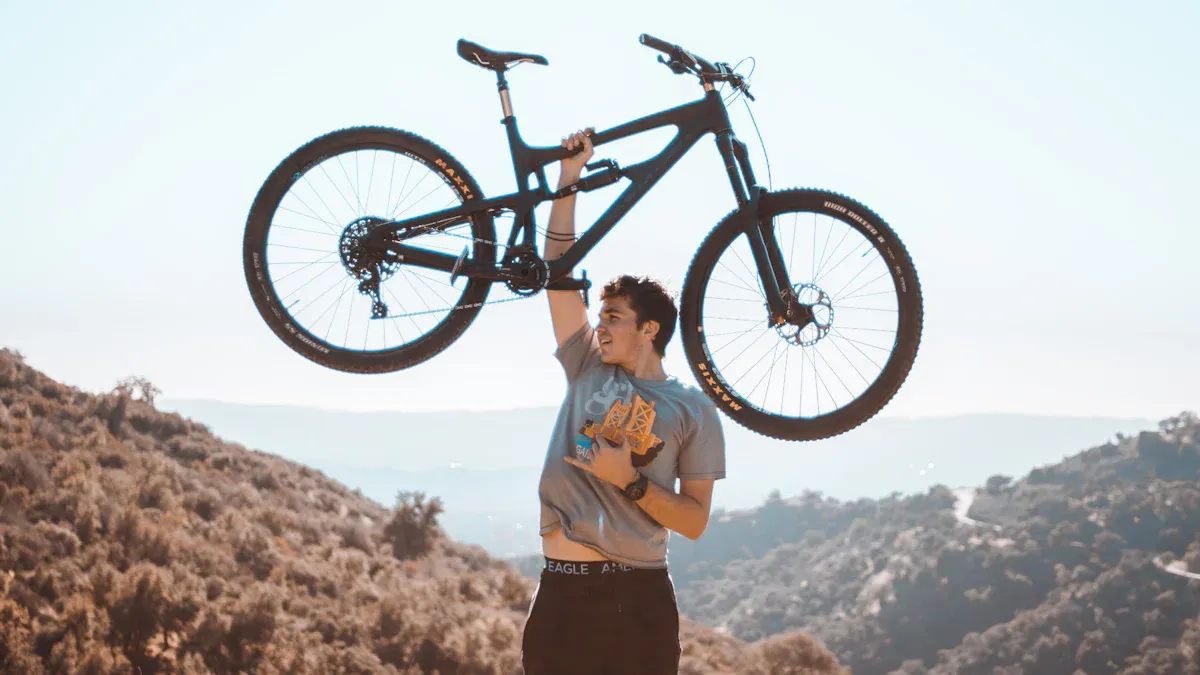
You feel the difference immediately: A full-suspension mountain bike offers you significantly more comfort and control, especially on uneven trails. The suspension absorbs impacts and ensures safety, even when the terrain becomes difficult. This allows you to stay relaxed for longer and experience less fatigue. A full-suspension mountain bike is particularly sensible for you if you often ride off-road, on technical tracks, or on longer tours. Sales figures show just how popular this technology is:
Year |
Total mountain bike sales |
E-mountain bikes |
Bio-mountain bikes |
|---|---|---|---|
2020 |
585,000 |
151,200 |
Key Insights
A full-suspension mountain bike offers more comfort and control on uneven trails. The suspension absorbs impacts and ensures a more pleasant ride.
The improved traction and control of a full-suspension bike help you stay securely in the saddle, even during technical challenges. You can overcome obstacles more easily.
Less vibration thanks to damping reduces fatigue. You stay fit longer and can concentrate better on riding, especially on long tours.
The choice of suspension system should match your riding style. A four-bar linkage is well-suited for steep descents, while a single-pivot design is sufficient for simpler trails.
A full-suspension bike is ideal for riders who are often off-road. It offers more comfort and safety, while a hardtail is lighter and requires less maintenance.
Full-Suspension Mountain Bike: Benefits
Comfort and Damping
You feel the difference immediately when you are out on a full-suspension mountain bike. The suspension absorbs shocks and bumps, so road impacts barely reach the saddle. This makes your ride significantly more pleasant. Studies show that full-suspension frames improve comfort and increase traction. You can ride in a relaxed manner because surface irregularities and obstacles are softened. A well-adjusted rear suspension complements the comfort and ensures a relaxed riding feel, especially on long tours.
Tip: If you are often out on steep descents or rough trails, you will benefit especially from the efficient damping of a full-suspension mountain bike. This makes your ride safer and more pleasant.
Control and Safety
With a full-suspension mountain bike, you maintain control even when the trail becomes technically demanding. The suspension helps you stay in the saddle longer and absorb bumps better. You can overcome obstacles more easily without having to get out of the saddle. This saves energy and gives you more safety. The improved traction on climbs and descents ensures that you can steer your bike efficiently and safely.
You ride more relaxed over roots and rocks.
The suspension supports you during fast directional changes.
You remain confident and safe even in difficult conditions.
Less Fatigue
A full-suspension mountain bike reduces the strain on your body. The damping minimizes vibrations that would otherwise be transmitted directly to you. This means you do not tire as quickly and can concentrate better on riding. Especially on longer tours, you can feel how the suspension supports your endurance. You stay fit longer and can enjoy the ride.
Vibrations are significantly reduced.
You can concentrate on the terrain instead of the jolts.
Your muscles and joints are spared, which improves endurance.
Note: Many riders report that they are less tired and enjoy riding more even after hours in the saddle with a full-suspension mountain bike.
Full-Suspension Technology
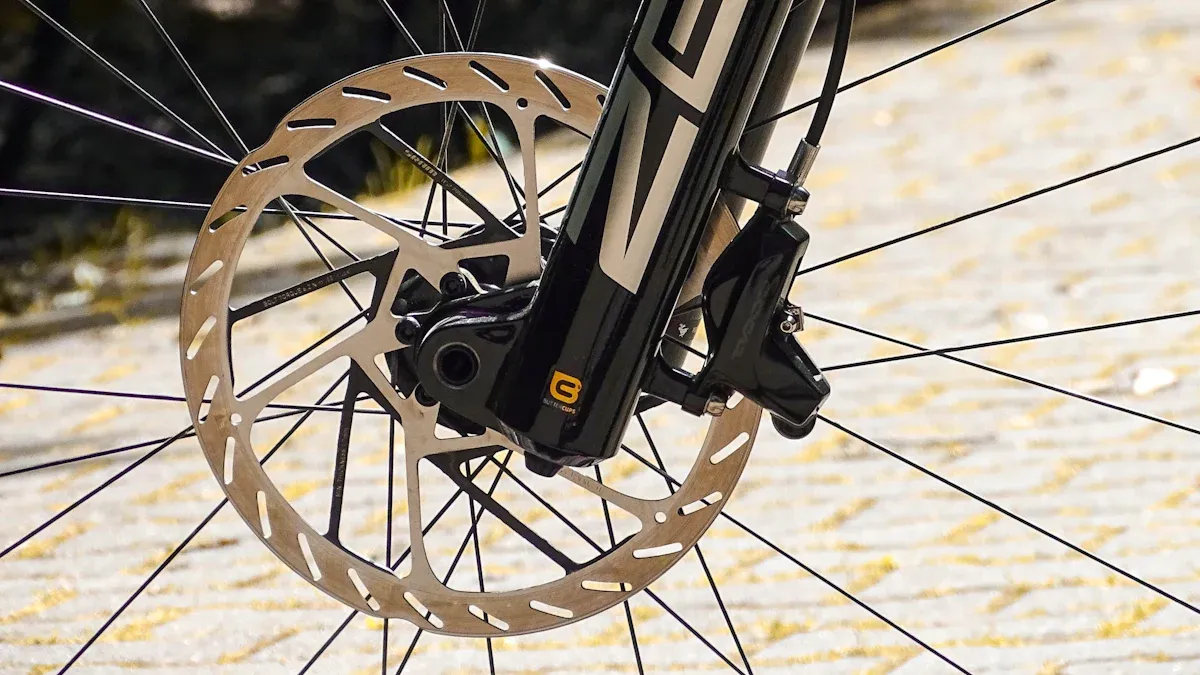
Suspension Systems
You will find different suspension systems on modern mountain bikes. Each system has its own technical features and influences handling. You can see the most important systems in this table:
Suspension system |
Features |
Maintenance intensity |
Stiffness |
|---|---|---|---|
Single-pivot |
One pivot at the bottom bracket, sensitive, but less laterally stiff. |
Low maintenance |
Low |
Multi-link |
At least two pivots, slightly more maintenance-intensive. |
Higher |
Medium |
Four-bar linkage |
Complex pivot and leverage systems, optimized for descents. |
High |
High |
LRS systems |
Special constructions tailored to specific riding conditions. |
Variable |
Variable |
VPP systems |
Innovative systems that minimize drive influences. |
Variable |
Variable |
The development of suspension forks and frames has significantly improved comfort and efficiency. You feel this especially on rough ground. Different rear triangle designs such as single-pivot or twin-link ensure predictable and finely tuned handling. The rear damping evens out bumps and absorbs energy generated by impacts on the rear wheel.
Tip: Choose the suspension system that suits your riding style. A four-bar linkage is suitable for steep descents, while a single-pivot is often sufficient for simple trails.
Components and Functionality
The most important components of a full-suspension mountain bike are the suspension fork and the shock. The suspension fork handles the front wheel suspension and connects it directly to the frame. The shock provides the rear wheel suspension and is connected to the main frame via linkages.
Suspension fork: Dampens shocks at the front wheel and ensures control.
Shock absorber: Absorbs impacts at the rear wheel and increases comfort.
The absorption of shocks depends on the construction of the rear triangle and the characteristics of the shock. Different designs like single-pivot or twin-link influence shock absorption and handling. The so-called wheel rate, i.e., the interplay of leverage ratio and spring rate, is crucial for the efficiency of the damping.
Note: A well-tuned full suspension ensures that you are safe and comfortable even on challenging terrain.
Full-Suspension Mountain Bike vs. Hardtail
Differences
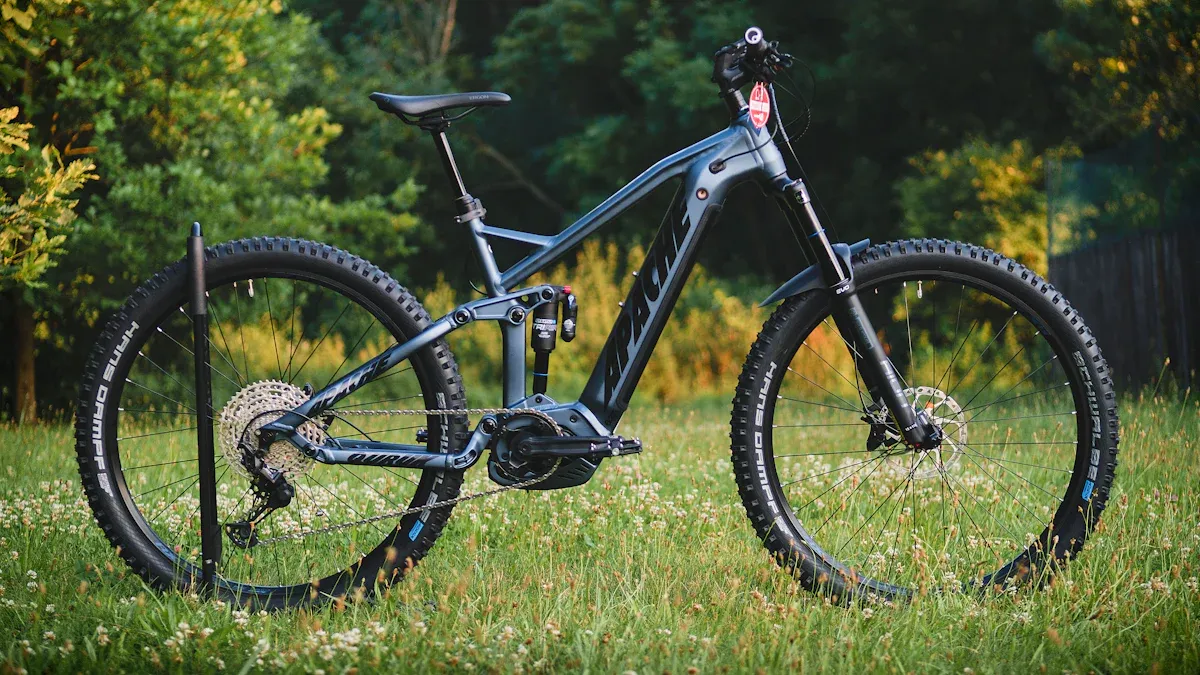
You are often faced with the choice: should it be a hardtail or a full-suspension bike? Both types offer you different benefits. A hardtail only has a suspension fork at the front. The full-suspension bike has a suspension fork at the front and suspension at the rear. You feel this especially on the trail.
Here you can see the most important differences at a glance:
Criterion |
Hardtail |
Full-suspension |
|---|---|---|
Suspension |
Front only |
Front and rear |
Traction and control |
Good on even terrain |
Better on technical trails |
Weight |
Lighter |
Heavier |
Acquisition costs |
Cheaper |
More expensive |
Maintenance |
Less effort |
Higher effort |
In terms of weight, the hardtail is ahead. It often weighs about a kilogram less than a comparable full-suspension bike. This is noticeable on climbs. In terms of comfort, the full-suspension bike scores. The additional suspension provides more cushioning and a more pleasant ride.
Weight (kg) |
Comfort (cushioning) |
|
|---|---|---|
Hardtail |
-1 |
Less comfortable |
Full-suspension |
+1 |
Higher comfort |
Tip: If you value low weight and simple maintenance, a hardtail suits you well. If you want more comfort and control, choose a full-suspension bike.
Areas of use
You should consider where you ride the most. A hardtail is particularly suitable for:
Simple forest paths and gravel tracks
Tours with few technical passages
Riders who prefer a light bike
A full-suspension mountain bike shows its strengths on:
Technically demanding trails with many roots and rocks
Longer tours where comfort is important
Descents where control and safety count
Note: Many beginners start with a hardtail. However, if you are often off-road or value comfort, a full-suspension bike is worth it.
Pros and Cons
Weight and Maintenance
You quickly notice that a full-suspension bike weighs more than a hardtail. The additional weight is due to the complex suspension and the additional components. On demanding trails, however, this extra weight brings you benefits:
You get more comfort and control, especially on difficult routes.
Riding dynamics improve because the bike compensates for bumps better.
You feel safer and have more fun riding.
A hardtail remains lighter and is easier to handle on even paths. Many riders appreciate this if they value efficiency.
Regarding maintenance, you have to plan for more time and money with a full-suspension bike. The suspension and the many pivots need regular care. You should have all bearings and shocks checked and serviced at least once a year. This increases maintenance costs compared to the hardtail.
Type |
Maintenance intervals |
Maintenance costs |
|---|---|---|
Full-suspension |
Higher |
|
Hardtail |
Lower, less maintenance |
Lower |
Tip: If you ride off-road a lot, the additional maintenance is worth it because you get more comfort and safety in return.
Costs and Price-Performance
There are clear differences in price. A full-suspension bike will cost you at least 2,000 euros. You can get a simple hardtail for as little as about 800 euros. Sporty hardtails start at 1,200 euros.
Mountain bike type |
Average acquisition costs |
|---|---|
Full-suspension |
at least 2000 euros |
Hardtail |
from about 800 euros |
Sporty hardtail |
from about 1200 euros |
Trade magazines show that entry-level hardtails cost up to 1,000 euros. A comparable full-suspension bike (fully) costs at least 1,500 euros. The higher price is due to the dual suspension and the more complex technology.
Fullies offer you more comfort and better traction.
The purchase price is about a third higher than for a hardtail.
You must expect higher maintenance costs.
Note: Consider how often and where you ride. Investing in a fully is worth it for demanding trails. A cheaper hardtail is often sufficient for simple routes.
Recommendations
For Beginners
Would you like to start mountain biking? Then you should opt for a full-suspension bike that offers you comfort and safety. Many professional magazines recommend models that are particularly suitable for beginners. They offer easy operation and plenty of riding pleasure:
Trek Powerfly FS 7: Perfect for long tours and trekking.
MERIDA eONE-FORTY EQ: Impresses with its modern design and innovative technology.
Moustache Samedi 29 Trail 8: Guarantees comfort and good trail performance.
CUBE Stereo Hybrid 140 HPC SLT Nyon: Versatile, even for different types of terrain.
SIMPLON Rapcon Pmax: Ideal for very long tours thanks to its dual battery.
Pay attention to important equipment features when buying. Effective shock absorption protects your back. Good brakes ensure safety. A reliable gear system makes riding easier. Lighting is important if you are also out and about in poor light.
Equipment feature |
Description |
|---|---|
Suspension |
Comfort and optimal traction through full suspension |
Brakes |
Effective brakes for safe riding |
Gears |
Simple and reliable operation |
Lighting |
Safety in the dark |
Tip: Comfort and traction help you to safely master even difficult sections.
For Trail Riders
Do you love technical trails and are you looking for maximum riding pleasure? Then you should look for a fully with sufficient suspension travel. For demanding descents, experts recommend suspension travel of up to 170 mm. Models such as the Canyon Neuron:ON CF 7 offer you high riding safety, a powerful motor, and a low weight. The Decathlon Rockrider E-Expl 520 S scores points with its good price-performance ratio.
Important technical features for trail riders:
1x drivetrain for fewer chain problems
4-piston brakes for increased safety
Ergonomic contact points such as saddle and handlebars
Frame materials that influence weight and stability
Suspension travel between 130 and 170 mm ensures comfort and safety on difficult trails.
For Professionals
Do you race or are you looking for maximum performance? Then you need a fully with state-of-the-art technology. Professionals opt for lightweight carbon frames with high stiffness and optimal geometry. High-quality 12-speed derailleur gears allow for fast and precise gear changes. Dampers such as the Float DPS ensure comfortable suspension on fast descents. Many professionals choose suspension forks from Fox or RockShox, which can be adjusted individually.
Lightweight, high-quality components for low weight
Precise shifting systems for fast gear changes
Fox Factory suspension fork with 120 mm travel for demanding terrain
Note: With these innovations, you can achieve maximum control and speed on every trail.
With a full-suspension mountain bike, you benefit from more comfort, better control, and less fatigue. The technology ensures safety on demanding trails. A fully is worth it for you if you are often off-road or value comfort.
Take time for an individual consultation and test different models.
Good advice helps you find the right bike.
Test rides will show you which model suits you best.
FAQ
How do you maintain a full-suspension mountain bike?
You clean the bike after every tour. You regularly check the dampers and bearings. You lubricate the moving parts. You inspect the suspension fork for wear.
Tip: You should have professional maintenance carried out once a year.
Which suspension travel makes sense for you?
You choose the suspension travel according to your intended use.
Intended use |
Recommended suspension travel |
|---|---|
Cross Country |
100–120 mm |
Trail |
120–150 mm |
Enduro |
150–170 mm |
Is a fully suitable for beginners?
As a beginner, you benefit from more comfort and safety. You learn faster because the bike is more forgiving of mistakes. You should look for easy operation.
Note: Many beginners feel safer on the trail with a fully.
How do you distinguish a hardtail from a fully?
You can identify a hardtail by the lack of rear suspension. A fully has suspension both front and rear.
Hardtail: lighter, less maintenance
Fully: more comfortable, better control