
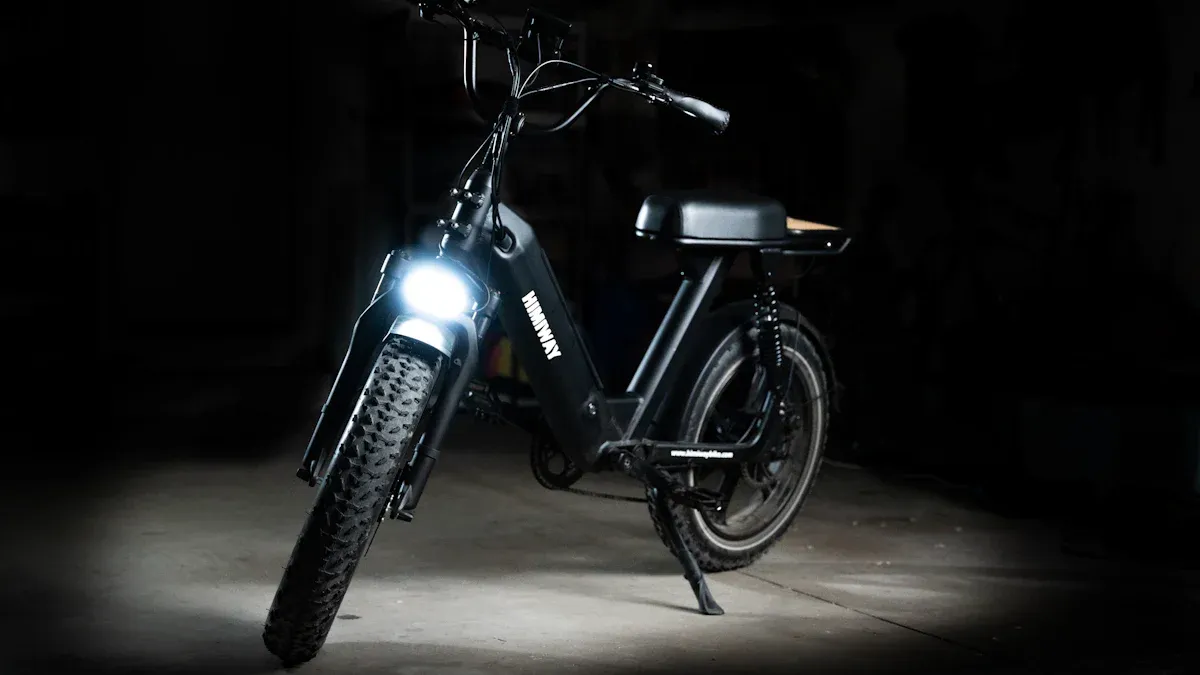
You might be wondering which bike comes out on top on steep climbs, long tours, or technical trails. An e-mountain bike gives you an extra boost when you conquer steep paths or plan longer routes. You feel less exertion and experience greater range. A traditional MTB feels lighter and more direct, especially on challenging trails. Your decision depends on how much assistance you want and what goals you are pursuing.
Category |
Market Share (%) |
Sales Figures (2016) |
Average Price (EUR) |
|---|---|---|---|
E-Mountain Bikes |
39 |
360,000 |
4,217 |
Traditional MTBs |
61 |
1,440,000 |
2,517 |
More and more people are becoming interested in e-mountain bikes. Perhaps you will discover new possibilities for your riding experience by comparing them.
Key Findings
E-mountain bikes offer pedal assistance, which makes riding on steep climbs and long distances easier.
Traditional MTBs are lighter and offer a more direct riding feel, ideal for sporty riders and technical trails.
An e-mountain bike enables longer tours, as the battery often offers a range of 40 to 120 kilometers, depending on usage.
Beginners benefit from e-mountain bikes because they require less physical effort and make riding on new trails easier.
The choice between an e-MTB and a traditional MTB depends on your goals: comfort and range or intensive training and control.
E-Mountain Bike vs. MTB
What is an e-mountain bike?
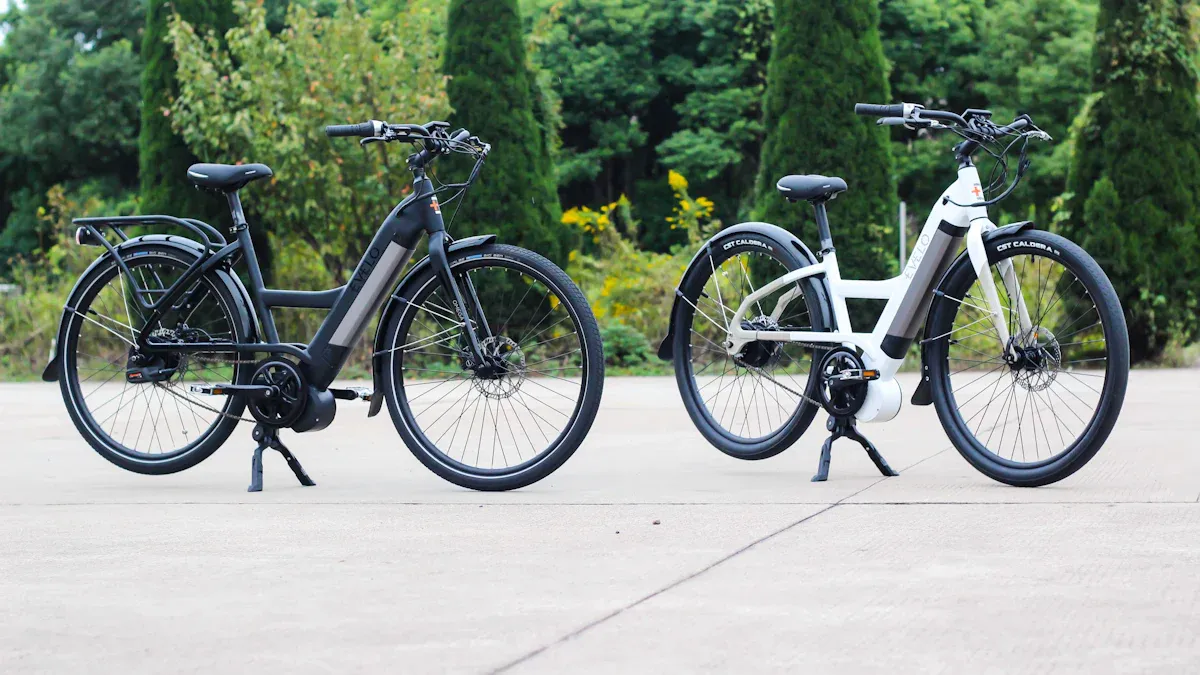
At first glance, an e-mountain bike looks like a normal mountain bike. However, you will find an electric motor and a battery on the frame. The motor assists you while pedaling. This allows you to master steep climbs and long routes with less effort. Many models offer different levels of support. You decide how much help you need.
Here is an overview of typical performance data:
Model |
Motor Power |
Battery Capacity |
|---|---|---|
Bosch (800 Wh) |
High |
800 Wh |
Bosch (625 Wh) |
Medium |
625 Wh |
Bosch (600 Wh) |
Medium |
600 Wh |
Darfon (626 Wh) |
Low |
626 Wh |
An e-mountain bike adds more weight to the scale. The motor and battery make the bike heavier. You notice this when carrying it or making quick changes of direction. In return, you get a comfortable, upright seating position. Handling often feels intuitive and forgiving. Especially on loose ground, you have plenty of traction and safety.
Tip: With an e-mountain bike, you can reach new goals that were previously too far away or too steep.
What is a traditional MTB?
A traditional MTB has no motor at all. You move the bike only with your own muscle power. The weight remains low. You feel every movement directly and have full control. Many riders love this pure riding feel.
The seating position can be more sporty and less comfortable. You need more active steering, especially on technical trails. The handling is more direct but also less forgiving when things get steep or slippery.
Here is a comparison of the most important differences:
Aspect |
E-Mountain Bikes |
Traditional MTBs |
|---|---|---|
Seating Position |
More comfortable and upright seat |
Varies, often less comfortable |
Handling |
Intuitive and forgiving |
Requires more active steering |
Stability |
High, offers safety and stability |
Good, but less forgiving on steep terrain |
Traction |
High traction on loose terrain |
Good, but less effective on rough terrain |
Suitability for Beginners |
Easy to steer, even for beginners |
Can be more challenging |
If you value a lightweight bike and sporty riding, a traditional MTB might suit you better. If you want to ride longer tours or conquer steep mountains, then an e-mountain bike offers you many advantages.
Performance
Steep Climbs
Are you facing a steep slope and wondering which bike will get you to the top faster? With an e-mountain bike, you immediately feel the motor assistance. You have to exert less force and make quick progress. Many riders report that they have fewer knee problems with an e-bike because they can better adjust the pedaling resistance. The walk assist even helps you when the path becomes particularly difficult. Even if you are not very fit, you can master challenging tours.
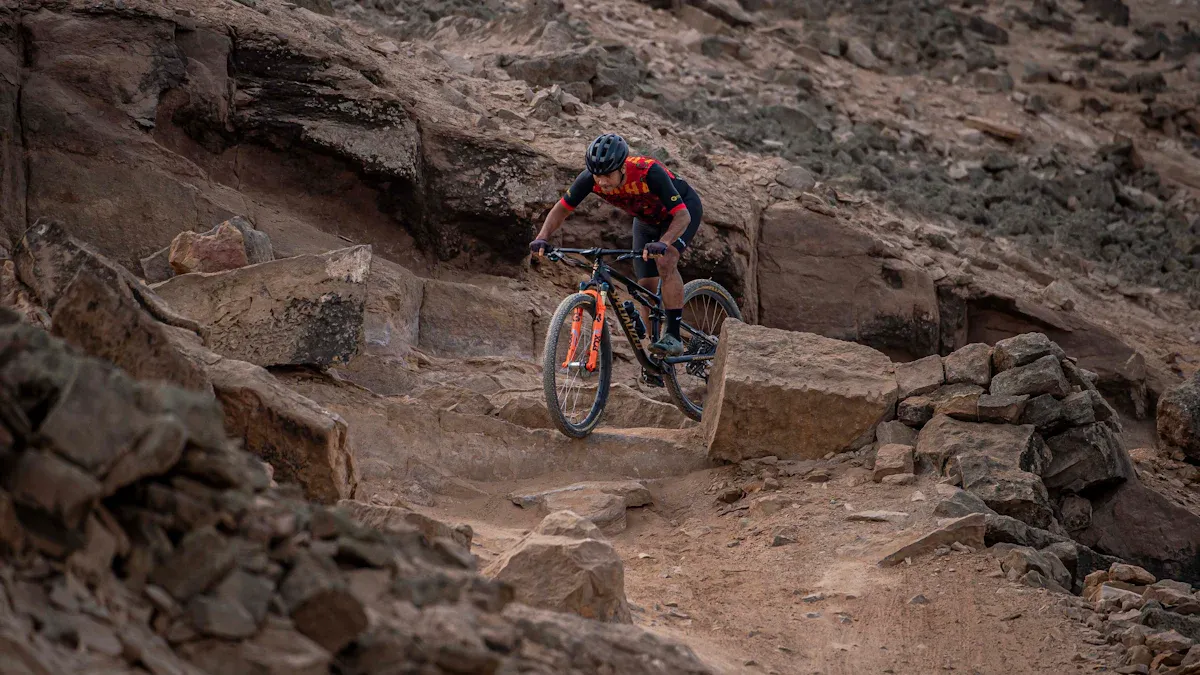
A traditional MTB is lighter. Weight plays a major role when climbing uphill. If you are riding in a sporty manner and every gram counts, you often feel faster on a classic MTB. Nevertheless, you need more endurance and strength to conquer steep climbs.
Tip: With an e-mountain bike, you can ride longer and steeper routes without overexerting yourself.
Comparison at a glance:
E-Bike: Less effort, faster on the mountain, walk assist, suitable for beginners and experienced riders.
MTB: Lighter, more direct riding feel, better for competitions and sporty challenges.
Technical Trails
Technical trails require a lot of control and agility. You often have to make quick changes of direction and steer the bike precisely. An e-mountain bike like the Rotwild surprises many with its good handling, even though it is heavier. The stability and smoothness on rough terrain give you safety. In tight corners, however, you feel the extra weight significantly. The technology is more complex and requires more maintenance.
With a traditional MTB, you often feel more agile. The low weight helps you to take fast corners and overcome obstacles directly. You have full control but also have to work harder when the trail gets demanding.
Advantages on technical trails:
E-Bike: Good stability, smooth riding, effective support on difficult terrain.
MTB: More agility, more direct handling, lower weight.
Long Tours
Are you planning a long tour with many vertical meters? An e-mountain bike will take you further, as long as the battery lasts. Modern models often manage between 40 and 120 kilometers on one battery charge. The range depends on many factors. If you choose a high level of assistance, you consume more energy. Strong headwinds, steep climbs, and a lot of luggage reduce the range. Low temperatures can also weaken the battery.
E-MTB Model |
Battery (Wh) |
Vertical Meters Achieved |
|---|---|---|
Canyon Spectral:On CFR |
720 |
2096 |
With a traditional MTB, you are not dependent on a battery. You can ride as long as your fitness lasts. The weight is lower, but you have to provide all the energy yourself.
Factors that influence range:
Type of usage
Assistance level
Environmental influences
Weight of the bike and luggage
Riding style
Note: Always plan your tour with an e-mountain bike so that you have enough battery for the return trip.
Flat Routes
On flat routes, speed and comfort are key. With an e-mountain bike, you can ride up to 25 km/h as long as the motor is providing assistance. S-pedelecs can reach up to 45 km/h, but they are considered mopeds and require registration.
Type |
Maximum Speed |
Motor Power |
|---|---|---|
Pedelecs |
up to 25 km/h |
max. 250 watts |
S-Pedelecs |
up to 45 km/h |
- |
With a traditional MTB, you are not limited. You can go as fast as your legs can take you. The riding feel is more direct, but you have to provide all the energy yourself.
Conclusion: On flat routes, you enjoy relaxed cruising with an e-mountain bike, while you are sporty and independent with an MTB.
Advantages & Disadvantages
Handling
You feel the difference immediately when riding an e-mountain bike. The motor assistance gives you more traction and comfort, especially uphill. Many riders report that the bike is easy to steer and offers a lot of comfort on tours. However, you do notice the extra weight, especially downhill or in tight corners. The front wheel sometimes lifts early, and the seating position can feel unfamiliar. With traditional MTBs, you enjoy lively handling and direct control. The low weight makes quick changes of direction easy. However, you must exert more force when the terrain is demanding.
Category |
Positive Aspects |
Negative Aspects |
|---|---|---|
Uphill |
Front wheel lifts early |
|
Downhill |
Lively handling |
High weight, sluggish suspension |
Tour |
High ride comfort, simple handling |
Unsteady steering, demanding geometry |
Training Effect
Want to stay fit? With both bikes, you train your endurance. Studies show that riding an e-bike improves your health. The heart rate remains in the optimal range for basic endurance. Regular e-biking can lower the risk of heart attack and dementia. You burn about 300 calories per hour on an e-bike. With a traditional MTB, it is around 400 calories. The harder you ride, the more calories you burn. Uphill and with higher weight, consumption increases.
Tip: Even with motor assistance, the workout remains effective and fun.
Range
With an e-mountain bike, you reach longer distances. The motor helps you ride comfortably even after many kilometers. A modern battery often manages 80 to 100 kilometers, depending on the route, weather, and riding style. Many climbs, headwinds, or cold temperatures reduce the range. If you choose a route with fewer vertical meters, you will go further. With a traditional MTB, you depend only on your own fitness. You can ride as long as you have the strength.
Maintenance & Costs
You should know that an e-mountain bike requires more maintenance. Brakes and tires wear out faster because the bike is heavier. The battery can cause problems and sometimes needs to be replaced. Purchase and repair costs are higher than for a classic MTB. With a traditional bike, maintenance and repairs are usually cheaper and easier. You have less technology that can break down.
Note: Consider how much time and money you want to invest in maintenance before you decide.
Target audiences
Beginners
Are you new to mountain biking and want to have fun right away? An e-mountain bike makes getting started easy. The motor helps you master even steep paths. You can focus on riding technique without getting tired quickly. Many beginners report that they manage longer tours and try out new trails with an e-bike. You have the chance to test different terrains and improve your skills. Endurance no longer plays the main role. This motivates you to get on the bike more often.
Less physical effort thanks to the motor
More opportunities to explore new routes
Focus on riding technique instead of fitness
Motivating experience
Sporty riders
Do you love challenges and want to push yourself to the limit? A traditional MTB offers you a natural riding experience. The bike is lighter and reacts directly to your movements. You train more intensely and feel every trail. Many sporty riders prefer the classic MTB because they are looking for an intense experience. You can increase your fitness and have full control over the bike. While the new light e-MTBs are interesting, true athletes often reach for the traditional model.
Why a traditional MTB?
Light weight for quick maneuvers
Intense training possible
Direct feedback from the ground
Natural riding feel
Touring riders
Are you planning long excursions and want plenty of comfort? An e-mountain bike takes you further, even when the route is demanding. Modern models offer you high safety and lots of riding pleasure. You enjoy more traction and can also manage difficult terrain. Comfort is the priority, but you should consider the higher price and maintenance effort. If you value long tours and relaxed riding, the e-MTB is a good choice.
Advantage e-MTB |
Disadvantage e-MTB |
|---|---|
Comfortable |
Higher price |
Lots of traction |
More maintenance |
Safety and riding pleasure |
Heavier than classic MTBs |
Tip: Think about what kind of rides you enjoy the most. Choose the bike that fits your lifestyle and your goals.
You have now learned the most important differences. E-mountain bikes are a great fit if you want to ride longer tours or are looking for less exertion. Traditional MTBs give you a more intense workout and a genuine connection to nature. Experts recommend:
MTBs for sporty riders and pure riding pleasure
Your fitness, goals, and style are the deciding factors
Tip: Take a test ride and get professional advice. This is how you will find the perfect bike for you!
FAQ
How long does the battery last on an e-mountain bike?
Battery life depends on your riding style, the terrain, and the level of assistance. Usually, you can manage between 40 and 100 kilometers. Cold weather, many climbs, or high speed reduce the range.
Do I still have to pedal on an e-MTB?
Yes, you always have to pedal yourself. The motor only assists you when you pedal. This way, you stay active and still train your muscles.
How heavy is an e-mountain bike compared to a normal MTB?
An e-mountain bike usually weighs 5 to 10 kilos more than a classic MTB. This is due to the motor and battery. You feel this most when carrying it or making quick changes in direction.
Can I ride an e-MTB without the motor?
You can also ride an e-MTB without motor assistance. The bike then rides like a normal MTB, but you have to exert more force because it is heavier.