
Choosing the right motor for your eBike has a huge impact on your riding experience. Different motors suit different needs. Do you want to climb steep terrain or glide quietly through the city? The type of motor plays a crucial role here.
The performance figures of an eBike motor, such as torque and maximum output, are crucial, but its responsiveness and adaptability to different riding styles are also very important. These factors affect how well a rider can make use of the motor's power, which is key to the riding experience.
An efficient motor like the Bosch Performance Line SX uses just 4.34 Wh/km, while other models, such as the Alber Neodrives Z20, require up to 7.63 Wh/km. So your choice should be carefully considered.
Key Takeaways
Choose a mid-drive motor for challenging terrain. It provides good assistance on steep trails and offers stability.
A hub motor is perfect for city riding. It's quiet, requires little maintenance, and is easy to install.
Think about how you ride. Sporty riders tend to like mid-drive motors, while commuters often prefer hub motors.
Check the motor's power. 250 watts are enough for flat routes, while 500 watts are better for hills.
Try out different models to find the right system. The brakes and tires should be good too.
What Is a Mid-Drive Motor?
Definition and How a Mid-Drive Motor Works
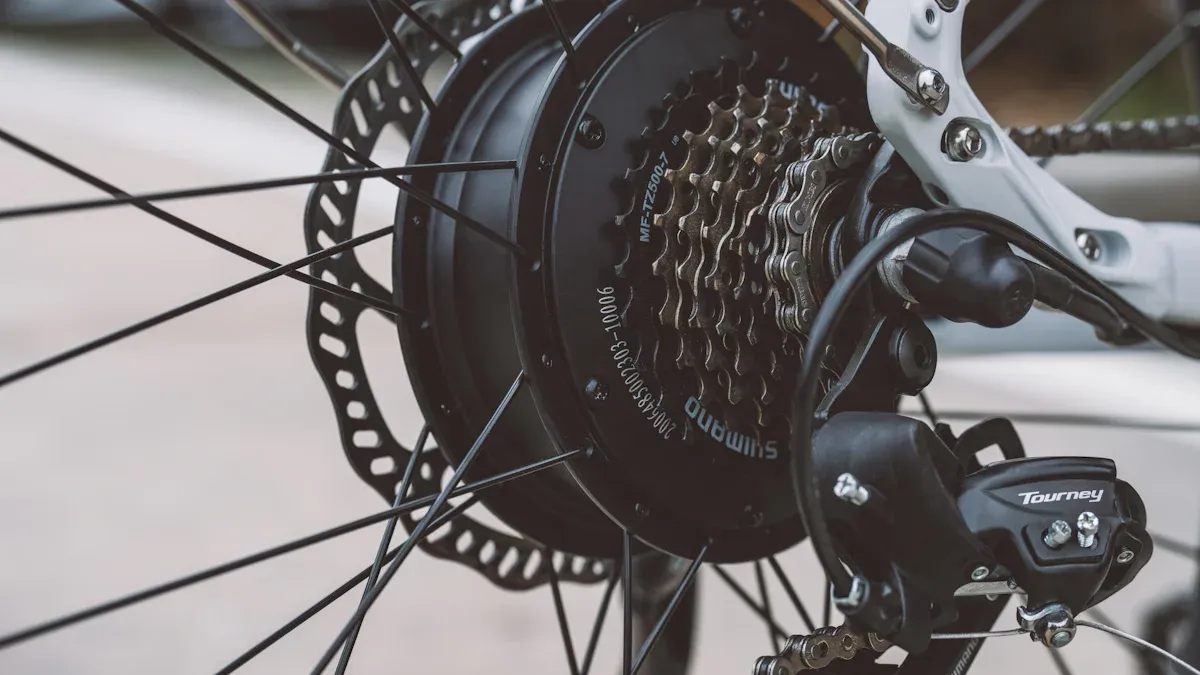
A mid-drive motor, also known as a mid-motor, is mounted directly at your eBike's bottom bracket. This position provides a centralized weight distribution and a low center of gravity, making the bike feel more stable. The motor transfers power directly to the chain, so you feel natural assistance as you pedal.
Technically, a mid-drive motor delivers up to 250 watts, which is the maximum assisted power for pedelecs. The torque, which describes the motor's force, can reach up to 85 Nm in high-end models. This gives you powerful acceleration, especially on steep climbs.
Metric |
Description |
|---|---|
Power (W) |
The amount of energy the motor can deliver. Maximum assistance for pedelecs: 250 watts. |
Torque (Nm) |
The force the motor applies to the drivetrain. Higher torque = better traction on climbs. |
Advantages of a Mid-Drive Motor for Challenging Terrain
A mid-drive motor is ideal if you often ride on challenging terrain. Its central position provides optimal weight distribution, giving you a secure feeling on the bike. The low center of gravity improves stability, especially on uneven ground.
Another advantage is its high responsiveness. The motor reacts directly to your pedaling and provides the assistance you need to tackle steep climbs or technical trails. Mid-drive motors also offer higher peak assistance than hub motors. This makes them the preferred choice for e-mountain bikes and sporty riders.
Tip: If you often ride in the mountains or are planning challenging tours, a mid-drive motor is the best choice for your eBike.
Disadvantages of a Mid-Drive Motor in Terms of Maintenance and Cost
Despite its advantages, a mid-drive motor also has some drawbacks. Transferring power directly to the chain leads to increased wear on the chain, chainring, and cassette. This means you'll need to replace these parts more often.
Maintenance costs are also higher. The motor needs regular inspections to ensure optimal performance. Shifting under load can also cause problems, potentially requiring additional repairs.
If you're on a limited budget or prefer a low-maintenance system, you should take these factors into account.
What Is a Hub Motor?
Definition and How a Hub Motor Works
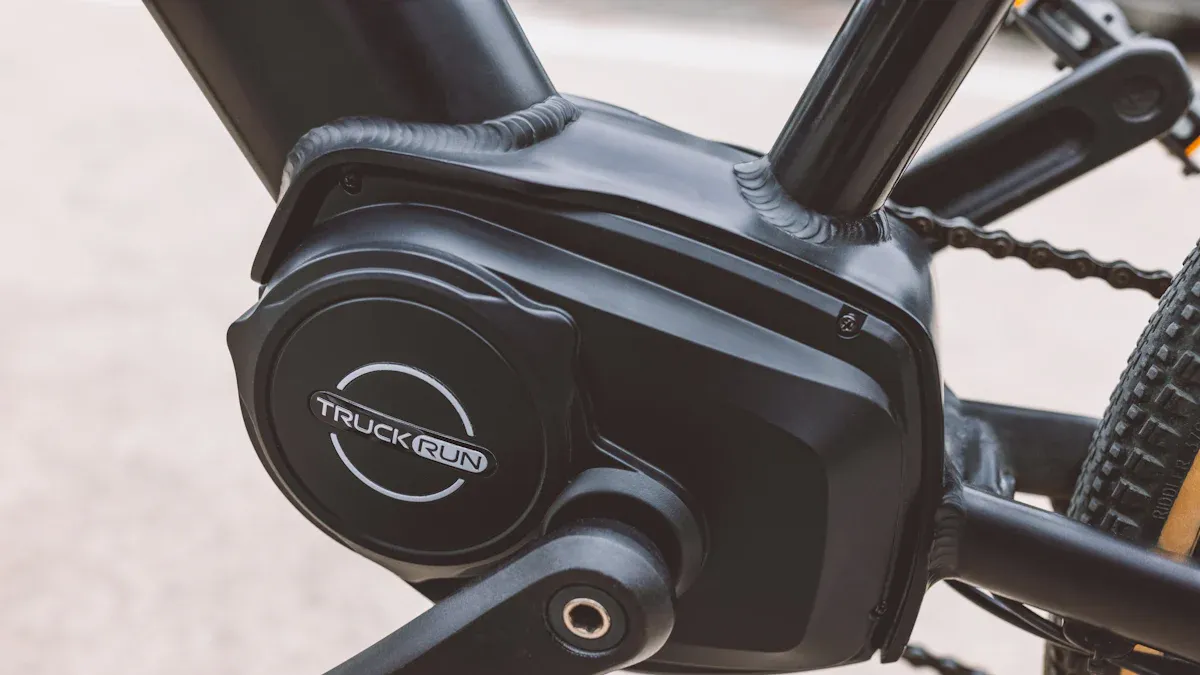
A hub motor is built directly into the hub of the front or rear wheel. This design allows power to be transferred directly to the wheel without requiring additional components such as chains or belts. As a result, the system is low-maintenance and reliable.
A hub motor works in several steps:
Detecting pedaling: Sensors measure the force and speed of your pedaling.
Signal processing in the controller: The controller calculates the assistance needed and regulates the flow of electricity to the motor.
Energy conversion in the electric motor: Electrical energy is converted into mechanical energy as magnetic fields interact inside the motor.
Assisting the rider: The resulting torque is transferred directly to the wheel, providing a smooth and efficient riding experience.
This technology makes the hub motor a popular choice for many eBike riders.
Advantages of a Hub Motor for City Riding and Quiet Operation
A hub motor offers many advantages, especially if you ride in the city. Its quiet operation makes for a pleasant ride without disruptive noise. It's also ideal for flat routes, where it provides smooth assistance.
Another plus is how easy it is to retrofit. You can install a hub motor on almost any bike with little difficulty. This makes it especially appealing if you want to convert an existing bike into an eBike.
Tip: If you're looking for a low-maintenance system that's perfect for city traffic, a hub motor is an excellent choice.
Disadvantages of a Hub Motor on Steep Climbs
Despite its advantages, the hub motor also has weaknesses. It quickly reaches its limits on steep climbs. Direct power transfer to the wheel provides less torque than a mid-drive motor. This can mean you'll have to put in more effort on challenging inclines.
In addition, a hub motor distributes weight unevenly, especially when it's installed in the front wheel. This can affect handling, particularly on slippery or uneven ground.
If you often ride in hilly terrain, you should consider these limitations and perhaps look at a different motor system.
Comparing the Two eBike Motor Systems
A Direct Comparison of the Advantages and Disadvantages
The choice between a mid-drive motor and a hub motor depends on various factors. Both systems have specific strengths and weaknesses that you should know about to make the best decision. The following table gives you a clear overview of the key differences:
Criterion |
Mid-Drive Motor |
Hub Motor |
|---|---|---|
Weight distribution |
Better weight distribution |
Adds weight to the wheels |
Energy efficiency |
Higher energy efficiency |
Lower efficiency |
Maintenance requirements |
Higher maintenance requirements |
Lower maintenance requirements |
Cost |
Higher cost |
Lower cost |
Climbing ability |
Better for hills |
Limited torque |
Riding experience |
More natural feel |
Simpler, but less dynamic |
Note: If energy efficiency and a dynamic riding experience are important to you, a mid-drive motor may be the better choice. A hub motor, on the other hand, is a good fit if you want a low-maintenance, cost-effective system.
When a Mid-Drive Motor Is the Better Choice
A mid-drive motor really comes into its own in challenging riding conditions. If you often ride in hilly terrain or want to tackle steep climbs, a mid-drive motor provides the assistance you need. Its higher torque helps you keep moving effortlessly, even in difficult conditions.
Sporty riders and mountain bikers benefit from the mid-drive motor's centralized weight distribution. This improves stability and handling, especially on technical trails. The higher energy efficiency is also an advantage on longer rides, as the battery lasts longer.
Tip: Planning off-road adventures or want to use your eBike for sporty activities? Then a mid-drive motor is the ideal choice.
When a Hub Motor Is the Better Choice
A hub motor is an excellent choice for city traffic and flat routes. Its quiet operation and low maintenance requirements make it perfect for commuters looking for a reliable, straightforward system. You can also easily retrofit your existing bike with a hub motor, making it especially versatile.
In certain situations, a hub motor offers some surprising advantages. It can perform well on sandy climbs or light terrain thanks to its direct power transfer. Its design also allows for innovative configurations such as all-wheel-drive eBikes, which can be useful for specific applications.
Note: If you're looking for a low-maintenance system for everyday use or value a quiet ride, a hub motor is an excellent choice.
Which eBike Motor Suits Your Riding Style?
Recommendations for Sporty Riders and Mountain Tours
If you ride sportily or enjoy mountain tours, you need a motor system that provides optimal assistance in challenging conditions. A mid-drive motor is the best choice here. It offers high torque to give you the power you need on steep climbs. Models such as the Bosch Performance CX motor are particularly impressive, with a range of 35 to 125 km, depending on speed and riding mode.
A mid-drive motor also provides centralized weight distribution, which improves stability on technical trails. In a comparative test of 15 eBike motor systems, mid-drive motors showed their strengths on gravel paths and steep ramps. They offer a dynamic riding experience and precise control over the power output.
Tip: Choose a model with an output of 250 to 500 watts to ensure you have enough assistance on longer rides and challenging routes.
Recommendations for Commuters and City Riders
For commuters and city riders, a low-maintenance, quiet system is essential. A hub motor meets these requirements perfectly. It operates almost silently and provides smooth assistance, ideal for flat routes and city traffic.
A survey of more than 13,500 participants found that most users ride between 30 and 50 km. A small-battery setup is often sufficient for routes like these. If you have a longer commute, a system such as Bosch DualBattery could be useful, giving you greater range.
Another advantage of a hub motor is how easy it is to retrofit. You can easily install it on an existing bike, making it especially versatile.
Note: If you're looking for a reliable, straightforward system for everyday use, a hub motor is the right choice.
Tips for Choosing Based on Your Individual Needs
Choosing the right eBike motor depends on your individual needs. Think about the routes you ride most often and what you expect from your eBike.
Motor power: 250 watts is enough for city riding. For more challenging routes, consider a model with 500 watts.
Battery capacity: Current models offer capacities between 300 and 625 Wh. Choose a capacity that suits your riding style and planned routes.
Drive type: A mid-drive motor offers stability and a natural riding feel. A hub motor is low-maintenance and ideal for city riding.
Ergonomics: Look for a system with multiple assistance levels. This lets you switch between maximum assistance and an energy-saving mode.
Analyzing an eBike's performance is essential. A good model combines a powerful motor with a high-capacity battery, helping you ride effortlessly even on challenging routes. Lighter models also improve handling and riding dynamics.
Tip: Try out different models to find the system that best suits your riding style. Pay attention to the quality of the brakes and tires, as these affect performance on different surfaces.
The choice between mid-drive and hub motors depends on your individual needs. Both systems have specific strengths and weaknesses that you should consider. The following table summarizes the key differences:
Motor type |
Advantages |
Disadvantages |
|---|---|---|
Mid-drive motor |
- Direct pedaling assistance |
- Increased drivetrain wear |
Hub motor |
- Little to no maintenance |
- Difficult to change the wheel in the event of a puncture |
There is no “best” motor, only optimal solutions for different riding styles. Mid-drive motors are suitable for sporty riders and mountain tours, while hub motors are ideal for commuters and city riders.
Think about the routes you ride and which features are important to you. This will help you find the perfect e-bike motor system for your needs.
FAQ
What is the difference between a mid-drive motor and a hub motor?
A mid-drive motor is located at the bottom bracket and provides a central weight distribution. It is suitable for steep climbs and sporty riding. A hub motor is integrated into the wheel hub, runs quietly, and requires little maintenance. It is ideal for city rides and flat routes.
Which motor is better suited to long distances?
A mid-drive motor is more efficient over long distances because it uses energy more effectively. It also offers a greater range, especially in hilly terrain. However, a hub motor may be sufficient for flat, steady routes if you do not have high performance requirements.
Can I retrofit my bicycle with a hub motor?
Yes, a hub motor is easy to retrofit. You can install one on almost any bicycle. Make sure the frame and electronics are compatible. A conversion kit usually includes the motor, a battery, and the controller.
How much maintenance does a mid-drive motor require?
A mid-drive motor requires regular maintenance. The chain, chainring, and cassette wear out faster. You should inspect and replace these parts regularly. The motor itself also needs occasional inspections to ensure optimal performance.
Which motor is quieter during operation?
A hub motor runs more quietly than a mid-drive motor. Its direct power transfer to the wheel produces very little noise. A mid-drive motor can be audible under heavy loads, especially on steep climbs or during intensive use.
Tip: If a quiet riding experience is important to you, choose a hub motor.