

Caring for your Bosch e-bike battery is the key to a long service life and reliable performance. If you treat your battery optimally, you can achieve up to 1,000 charging cycles, which corresponds to a range of up to 100,000 kilometers. Avoid discharging the battery completely. Charge it at around 30 percent to maximize its lifespan. Store it at temperatures that are neither too hot nor too cold. These simple measures not only save you money but also contribute to environmental friendliness by extending the life of your battery.
Key Takeaways
Charge your Bosch e-bike battery before it drops below 30%. This helps it last longer and stay healthy.
Keep the battery in a dry place at 10–20 °C. This protects it from heat and cold.
Only use the original Bosch charger. It charges safely and effectively.
Wipe the battery with a soft, damp cloth. Do not use harsh cleaners, so as not to damage it.
Check the battery often for damage. In case of problems, go to a specialist dealer.
Optimal charging of the Bosch e-bike battery
Avoiding overcharging and deep discharge
You can significantly extend the life of your Bosch e-bike battery by avoiding overcharging and deep discharge. Overcharging occurs when the battery remains on the charger for a long time even though it is already fully charged. This can damage the cells inside the battery. Deep discharge, on the other hand, occurs when the battery is completely drained and is not recharged within one to two weeks.
💡 Tip: Always charge your battery before it drops below 30 percent. This prevents self-discharge, which can lead to irreparable damage. A typical example is a battery that is ridden almost empty in the autumn and no longer functions in the spring due to self-discharge.
Ideal charging environment: temperature and location
The environment in which you charge your Bosch e-bike battery plays a crucial role in its performance and service life. The ideal temperature for charging is between 12°C and 20°C. Extreme temperatures, whether heat or cold, can negatively affect the chemical processes in the battery.
-
Optimal charging conditions:
Keep the room temperature between 12°C and 20°C.
Charge the battery at a charge level of 30 to 60 percent.
⚠️ Note: Avoid charging the battery in damp or very cold rooms. Moisture can cause corrosion, while cold reduces charging efficiency.
Using the right charger
The right charger is crucial for the safety and efficiency of the charging process. Bosch batteries are specially designed for use with Bosch chargers. These chargers provide the optimal voltage and current to charge your Bosch e-bike battery safely and efficiently.
-
Why the right charger is important:
It protects the battery from overheating.
It ensures a uniform charge, which extends the battery's lifespan.
🛠️ Tip: Use only the original Bosch charger. Other chargers could damage the battery or increase the charging time.
Proper storage of the Bosch e-bike battery
Storage during long breaks
If you are not using your e-bike for a long period, proper storage of the Bosch e-bike battery is crucial. A battery that is stored incorrectly for weeks or months can lose performance or even be damaged.
-
How to store your battery optimally:
Keep the charge level between 30 and 60 percent. This corresponds to about two to three glowing LEDs on the display.
Store the battery in a dry place with a temperature between 10 and 20 °C.
Avoid storing the battery fully charged or completely discharged. Both conditions can significantly shorten the battery's lifespan.
💡 Tip: Check the charge level every few weeks. If the battery drops below 30 percent, recharge it to avoid damage from deep discharge.
Tips for winter storage
In winter, when you may use your e-bike less often, the Bosch e-bike battery requires special attention. Cold can slow down the chemical processes in the battery and impair its performance.
-
Winter storage made easy:
Store the battery in a heated room, ideally at temperatures between 10 and 20 °C.
Keep the charge level at 30 to 60 percent.
Remove the battery from the e-bike if you park it outside or in a cold garage.
⚠️ Note: Never leave the battery at temperatures below –10 °C or above 60 °C. Extreme temperatures can permanently damage the cells.
Protection against moisture and extreme temperatures
Moisture and extreme temperatures are the greatest enemies of your Bosch e-bike battery. They can cause corrosion and disrupt the chemical processes inside the battery.
Storage conditions |
Details |
|---|---|
Temperature |
Dry, between 10 and 20 °C |
Ideal charge level |
Between 30 and 60 % (2 to 3 LEDs) |
Effects of full/empty battery |
Fully charged and fully empty reduces lifespan |
Avoiding extreme temperatures |
Temperatures below –10 °C and above 60 °C should be avoided |
-
How to protect your battery:
Store it in a dry room, away from moisture.
Avoid direct sunlight and high humidity.
Use a protective cover to keep the battery safe from dust and water.
🛠️ Tip: If you are transporting the battery, be sure to store it in a shockproof bag. This protects it from mechanical damage and moisture.
Winter operation of the Bosch e-bike battery
Effects of cold on battery performance
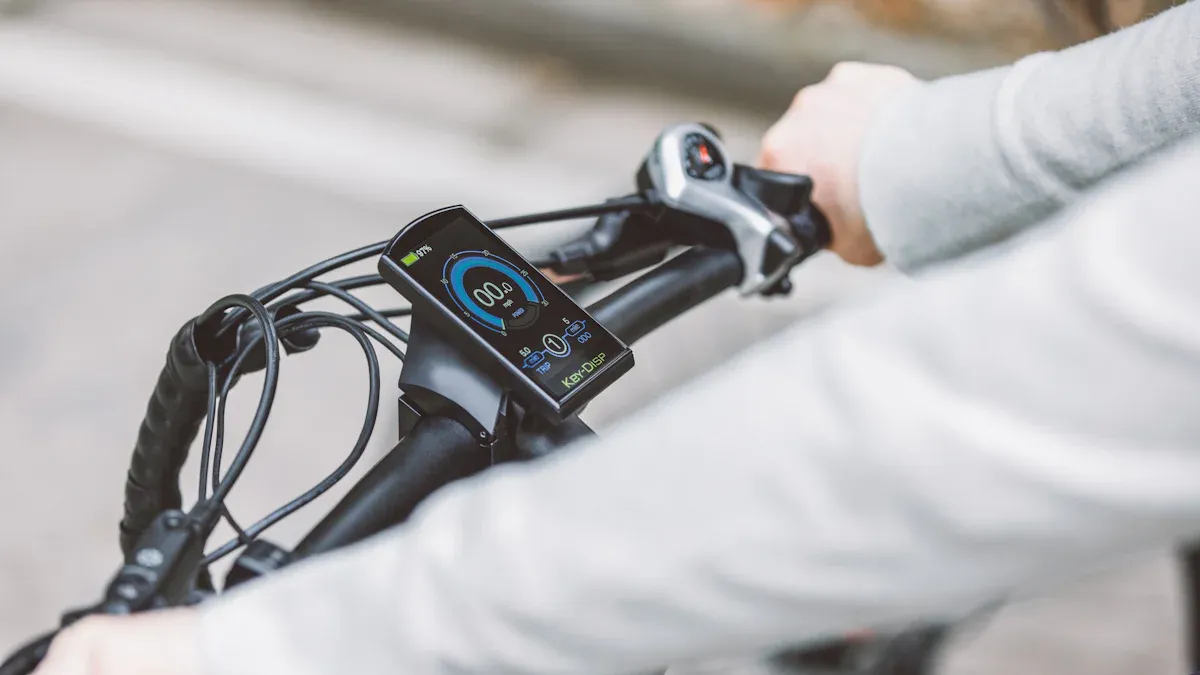
Cold significantly affects the performance of your Bosch e-bike battery. At low temperatures, the chemical processes in the battery slow down. This leads to a lower capacity and a reduced range. Temperatures below 0 °C can reduce performance by up to 30 percent. If you use the battery in extreme sub-zero temperatures, the risk of permanent damage increases.
⚠️ Note: Never charge your battery at temperatures below -5 °C. This can irreparably damage the cells.
Measures to minimize performance loss
You can reduce the effects of cold on your Bosch e-bike battery by taking a few simple steps. After riding in low temperatures, you should remove the battery and store it at room temperature. This helps to stabilize the chemical processes and maintain capacity.
-
Practical tips for minimizing performance loss:
Use an insulating protective cover to shield the battery from cold during the ride.
Avoid long rides at temperatures below 0 °C if possible.
💡 Tip: Plan your rides so that you do not fully discharge the battery. A charge level of 30 to 60 percent is ideal for storage after the ride.
Tips for charging and riding at low temperatures
Charging and riding in the cold requires special care. Always charge your Bosch e-bike battery in a heated room. This prevents damage caused by low temperatures during the charging process. Modern lithium-ion batteries are sensitive to extreme conditions.
-
Recommendations for charging and riding:
Charge the battery at temperatures above 0 °C.
After a cold ride, you should bring the battery to room temperature before charging.
Avoid charging the battery immediately after a cold ride. Wait at least 30 minutes for the temperature to stabilize.
⚠️ Note: At temperatures below 0 °C, the battery loses capacity. Plan shorter rides to optimize the range.
Cleaning and maintenance of the Bosch e-bike battery
Safe cleaning of the battery: What to consider?
Cleaning your Bosch e-bike battery requires caution. Water and cleaning agents can damage sensitive parts. Use a soft, slightly damp cloth to clean the battery. Ensure that no moisture gets into the connectors.
-
Steps for safe cleaning:
Remove the battery from the e-bike.
Wipe it with a dry or slightly dampened cloth.
Check the contacts for dirt and clean them carefully.
⚠️ Note: Avoid aggressive cleaning agents and high-pressure cleaners. These can damage the seals and introduce moisture into the interior of the battery.
Cleaning the e-bike without damaging the battery
When cleaning the e-bike, you should always remove the battery beforehand. This protects it from water and cleaning agents. Use a bucket of water and a mild detergent to clean the frame and wheels.
-
Tips for safe cleaning:
Remove the battery and store it in a dry place.
Clean the e-bike with a sponge or soft brush.
Avoid spraying directly onto the battery's connectors or mount.
💡 Tip: After cleaning, wipe the battery contacts and the mount dry before reinserting the battery.
Avoiding corrosion and contamination
Corrosion and contamination can impair the performance of your Bosch e-bike battery. Keep the battery clean and dry to avoid damage. Store it in a place protected from moisture and dust.
Problem |
Solution |
|---|---|
Moisture |
Dry the battery after every ride. |
Dust and dirt |
Clean the battery regularly. |
Corrosion on contacts |
Use contact cleaner. |
🛠️ Tip: A protective cover can help keep the battery safe from dust and moisture, especially when riding in the rain or on dusty paths.
Inspection and safe transport of the Bosch e-bike battery
Importance of regular inspections
Regular inspections are crucial to ensure the performance and safety of your Bosch e-bike battery. Through a thorough check, you can detect and fix potential problems early.
-
Why inspections are important:
The battery's capacity should be checked regularly. A battery in the red zone can severely limit your e-bike's range.
Sometimes the e-bike does not recognize the battery. An inspection can solve this problem and ensure that the connection between the battery and the bike functions perfectly.
The Battery Management System (BMS) should be checked. Defective cells can cause fire hazards that can be avoided through an inspection.
💡 Tip: Plan an inspection at a specialist dealer at least once a year. This helps to extend your battery's life and minimize safety risks.
Safe transport methods for the battery
Transporting your Bosch e-bike battery requires special caution. Improper transport can damage the battery and impair its performance.
-
How to transport your battery safely:
Use a shockproof bag or a special transport box. This protects the battery from mechanical damage.
Keep the battery dry and away from moisture. Water can damage the contacts and cause corrosion.
Avoid extreme temperatures during transport. Store the battery in a climate-controlled room if you need to transport it for a long period.
⚠️ Note: Never transport the battery loosely in a car or bag. A fall or impact can damage the cells inside and jeopardize safety.
Handling damaged batteries
A damaged Bosch e-bike battery poses a serious safety risk. You should never continue using it or attempt to repair it yourself.
-
Common problems with damaged batteries:
Deep discharge can cause short circuits, which can lead to fires.
A fall can damage the cells in the battery. This can lead to an uncontrolled release of energy.
Using non-original chargers increases the risk of overheating and fire hazard.
-
What you should do:
Take a damaged battery immediately to a specialist dealer or a certified recycling center.
Store it in a safe place, away from flammable materials, until it is disposed of.
Never use damaged batteries, even if they seem to still work.
🛠️ Tip: Check your battery regularly for visible damage such as cracks or dents. If you are unsure, you should always consult an expert.
The service life of your Bosch e-bike battery depends on how you care for it. Charge it under optimal conditions and avoid overcharging or deep discharge. Store it in a dry place at moderate temperatures. Clean it regularly and transport it safely. These measures will preserve performance and extend its service life.
💡 Tip: Implement these recommended practices. You will save money, achieve better range, and contribute to environmental protection.
FAQ
How often should I charge my Bosch e-bike battery?
Charge your battery regularly, ideally before the charge level drops below 30%. Frequent recharging at a moderate charge level extends its service life. Avoid fully discharging the battery.
💡 Tip: Charge the battery after every long ride to keep it ready for use at all times.
Can I use my battery in the rain?
Yes, Bosch batteries are splash-proof and suitable for use in the rain. However, ensure that the contacts remain dry. After your ride, you should clean and dry the battery.
⚠️ Note: Avoid submerging the battery in standing water or deep puddles.
How do I know if my battery needs to be replaced?
A battery that loses significant capacity or requires unusually long charging times should be inspected. Visible damage such as cracks or dents is also an indicator.
-
Signs of a defective battery:
Severely reduced range
Overheating during charging
Error messages on the display
Can I take my Bosch e-bike battery on an airplane?
No, lithium-ion batteries with a capacity of over 100 Wh may not be transported on airplanes. Check with the airline regarding their specific policies.
🛠️ Tip: Plan alternative transport methods if you wish to take your e-bike with you.
What should I do if my battery stops charging?
First, check the charger and the contacts for dirt. If possible, test the battery with a different charger. If it still does not work, contact a specialist dealer.
💡 Tip: Clean the contacts regularly to avoid charging issues.