
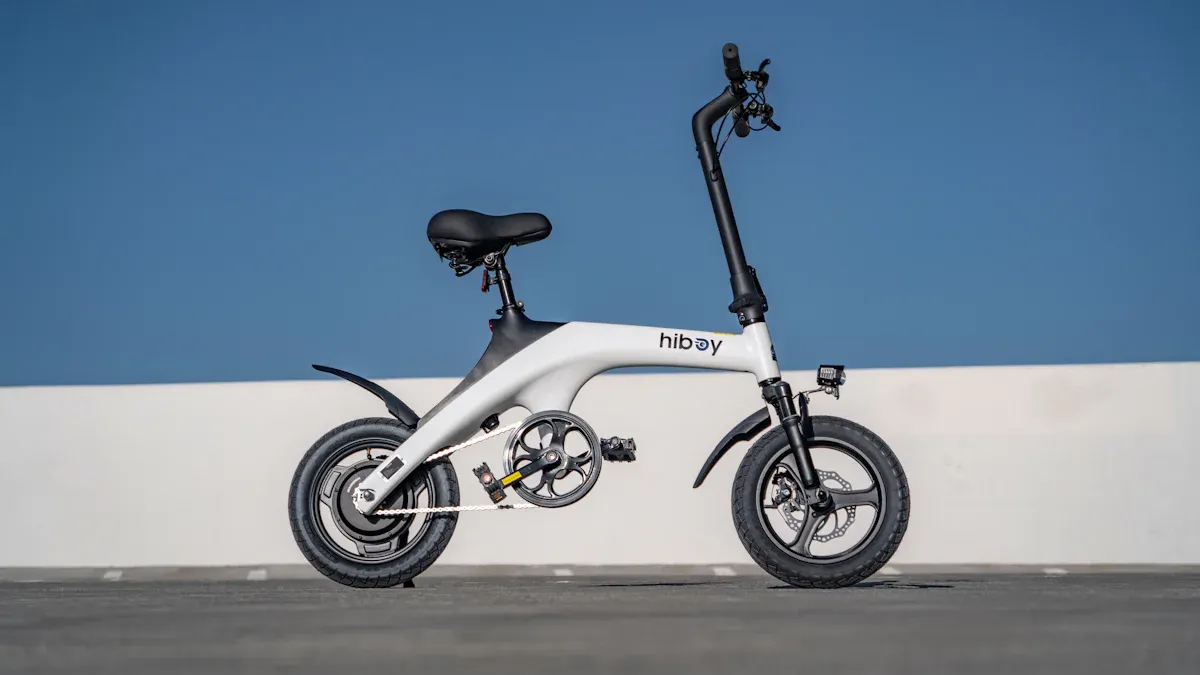
Do you want to get around the city in a flexible, fast, and eco-friendly way in your daily life? A folding e-bike offers you exactly that. Thanks to its compact design, it fits into buses, trains, or even your office. Electric assistance makes riding easier for you, even on short or medium distances. Small wheels ensure fast acceleration in traffic, while the upright seating position keeps you aware of your surroundings. This way, you can effortlessly combine different modes of transport and save time on your way to work, an appointment, or when traveling.
Key Takeaways
Folding e-bikes are foldable and lightweight, ideal for flexible transport in buses, trains, or cars.
Electric assistance makes riding easier, especially on hills and longer routes.
When buying, pay attention to battery range, motor power, and weight to find the right model for your everyday life.
Regular maintenance and good service ensure the safety and long service life of your folding bike.
With a folding e-bike, you save time, protect the environment, and stay mobile and flexible in the city.
Folding E-Bike Overview
Definition
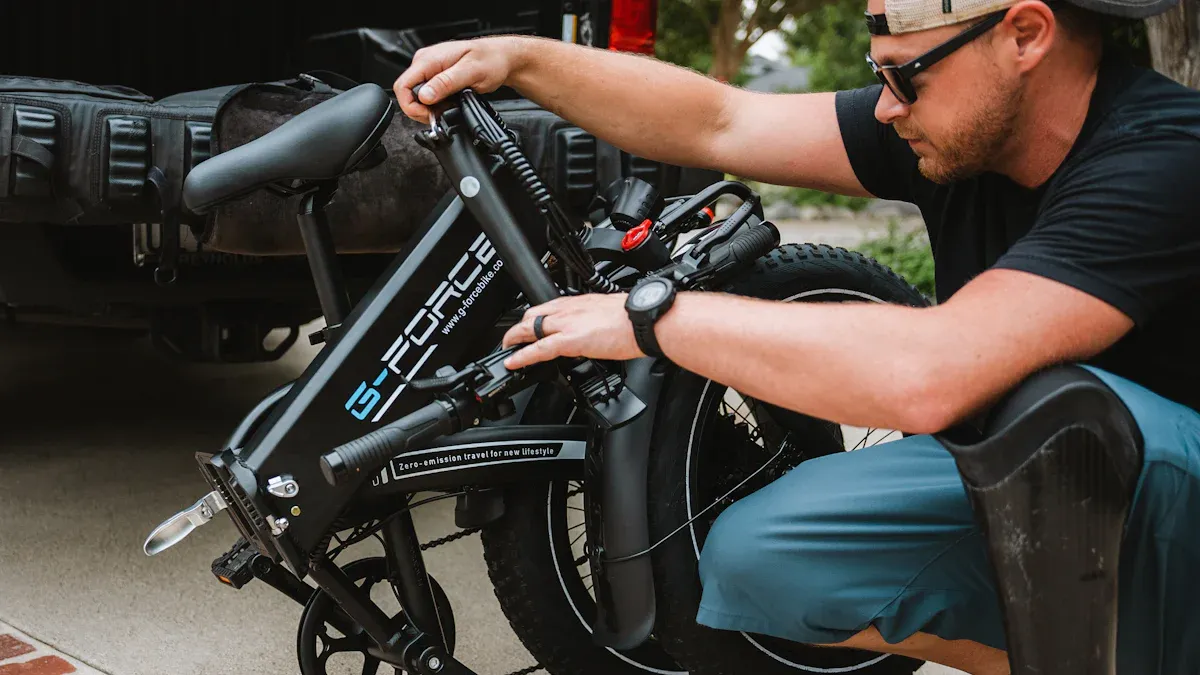
A folding e-bike is a bicycle that you can fold up in a few seconds. It features an electric motor that assists you while pedaling. Its main characteristic is the large folding mechanism on the frame. You can make the bike compact enough to fit into a bus, train, or even an office. Most models have small wheels, often 20 inches, and weigh about 18 to 21 kilograms. This makes them light enough to carry or store.
Tip: When you fold up the folding e-bike, it counts as hand luggage on many modes of transport. You don't need an extra ticket and can take it with you everywhere.
Many people use these bikes for short distances in the city. The electric assistance helps you master hills or longer paths without much effort. This is particularly practical for commuters who want to combine different forms of transport.
Differences from E-Bikes & Folding Bikes
You might be wondering how a folding e-bike differs from other bicycles. The following table shows the most important features:
Feature |
Folding E-Bike |
Folding Bike |
Classic E-Bike |
|---|---|---|---|
Folding mechanism |
Simple, central hinge |
Multiple hinges, very compact |
No folding mechanism |
Wheel size |
20 inches |
16–18 inches |
26 inches or more |
Weight |
12–16 kg |
22 kg or more |
|
Target group |
Commuters, city dwellers, travelers |
Commuters, leisure riders |
General cyclists |
Compactness |
Good, fits in public transport and trunks |
Very compact, ideal for small spaces |
Not foldable, bulky |
Motor |
Yes, up to 25 km/h |
Rarely |
Yes, often more powerful |
With a folding e-bike, you are particularly flexible. You can fold it up quickly and take it with you wherever you go. Compared to classic e-bikes, you save space and time. Folding bikes are even more compact, but often offer less comfort and no motor assistance.
Many commuters, seniors, and travelers benefit from its easy handling and electric assistance. This allows you to reach your destination relaxed and stress-free.
Features
Battery & Range
The battery is the heart of your folding e-bike. Most models for the city have batteries with a capacity between 400 and 500 watt-hours (Wh). This capacity is usually enough for distances of 130 to 200 kilometers. However, the actual range depends on many factors, for example:
Support mode: The higher the selected level, the faster the battery drains.
Terrain: Flat routes consume less energy than hill climbs.
Rider weight and load: More weight means higher energy consumption.
Riding style: Frequent starting and high speeds reduce range.
Battery position: A centrally placed battery ensures better weight distribution and can increase the range.
Tip: A larger battery provides more range, but also makes the bike heavier. Think about how far you actually want to ride in your daily life.
Model type |
Maximum range (km) |
Characteristics and factors |
|
|---|---|---|---|
500 - 800 |
Entry-level |
approx. 20 |
Simpler components, weaker motor |
800 - 1,600 |
Mid-range |
20 - 70 |
Better equipment, stronger motors |
1,600 - 5,000 |
Luxury models |
up to 100 |
Large batteries, high comfort |
Motor & Drivetrain
The motor assists you while pedaling and makes riding easier. Most folding e-bikes have a motor with 250 watts of power. This is the standard value for e-bikes in Germany. There are three main types of motors:
Position |
Pros |
Cons |
Impact on performance |
|
|---|---|---|---|---|
Front motor |
Front hub |
Affordable, easy to retrofit |
Steering can feel heavier |
Weight in front, affects handling |
Rear motor |
Rear hub |
Sporty feel, quiet, reliable |
Complicated installation, coaster brake difficult |
Stable, sporty, but complex installation |
Mid-drive motor |
Bottom bracket |
Optimal weight distribution, natural feel |
More expensive, hard to retrofit, more chain wear |
Very good handling, efficient |
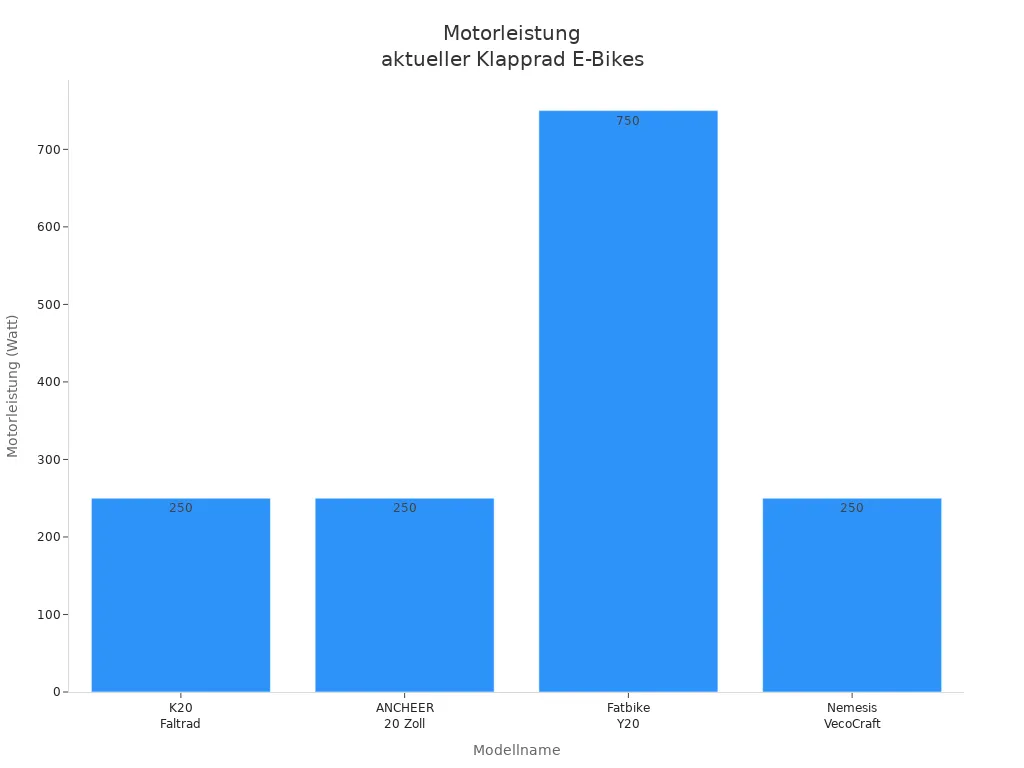
In addition to the motor type, motor strength, battery, and weight also influence riding performance. A mid-drive motor provides a particularly safe and pleasant riding experience, especially on hills.
Folding Mechanism
The folding mechanism determines how quickly and easily you can fold your bike. Most models use a hinge mechanism in the middle of the frame. This allows you to fold the bike in less than 30 seconds. The saddle and handlebars can often be folded in as well. There are also other systems like telescopic or three-point folding mechanisms. These are often lighter or particularly compact but sometimes a bit more complicated to handle.
Folding mechanism |
Prevalence |
Pros |
Cons |
|---|---|---|---|
Hinge mechanism |
Very common |
Fast, simple, robust |
Can be a bit heavier |
Telescopic mechanism |
Less common |
Light, stable |
More complex, more wear and tear |
Three-point folding mechanism |
Innovative |
Very compact, high stability |
Requires getting used to, complex |
Note: A good folding mechanism saves you time and nerves, especially if you switch between modes of transport frequently.
Weight & Transport
Weight plays a major role if you want to carry your folding e-bike frequently or take it on buses and trains. Many models weigh less than 20 kg. Particularly light versions weigh even less than 15 kg. A low weight makes it easier to carry up stairs or store in a car. Aluminum frames provide stability at low weight. Very light models are particularly suitable for short distances and frequent carrying. For longer tours, a larger battery is recommended, although this increases the weight.
Feature / Benefit |
Description |
|---|---|
Weight and size |
Lightweight (from 12 kg), folds compactly, fits in cars, RVs, or apartments |
Transport in public transit |
Often free of charge, no extra tickets needed, flexible in public transport |
Portability |
Integrated handle, foldable luggage rack, easy to carry up stairs |
Quick readiness |
Ready to ride in a few seconds |
Equipment
The equipment determines how comfortable and safe you are on the road. Especially in urban areas, you should look for the following features:
Powerful motor (usually 250 watts), ideally a mid-drive motor for hills.
Battery with at least 400 Wh capacity for sufficient range.
Foldable pedals and seat post for easy storage.
Comfortable saddle with gel padding.
LED lighting front and rear for safety in traffic.
3- to 7-speed gear system, often from Shimano, for flexible riding.
Sturdy mudguards and chain guard against dirt.
Suspension fork for comfort on uneven roads.
Luggage rack for bags or small groceries.
Premium models often offer even more comfort, such as continuously variable hub gears, larger batteries, ergonomic grips, and particularly compact folded dimensions. Budget models focus on solid basic equipment and simple technology but are usually heavier and less comfortable.
Tip: Think about what equipment you really need. Basic functions are often enough for the daily commute, while premium models are worth considering for longer tours.
Pros & Cons
Mobility & Flexibility
With a folding e-bike, you enjoy maximum freedom of movement in everyday life. You can fold the bike up in a few seconds and simply take it with you on buses, trains, or even in a car. The low weight and compact frame make it easy to carry, even if you have to climb stairs. Electric assistance helps you master longer distances or hills without much effort.
Tip: Many users report that a folding e-bike makes them more flexible in switching between different modes of transport, thereby saving time.
Benefits according to user surveys:
Compact, foldable design for easy transport
Electric assistance for longer distances and inclines
Suitable for commuters, leisure users, and travelers
Environment & Sustainability
By using a folding e-bike, you are making an important contribution to environmental protection. The bike runs emission-free and causes no direct exhaust gases. Compared to a car, you save a significant amount of CO₂ per kilometer.
Aspect |
Folding E-Bike |
Car (Passenger Vehicle) |
|---|---|---|
CO₂ emissions per km |
0.147 kg |
|
Operating costs/year |
€80–€120 |
Significantly higher |
Service life |
12–15 years |
- |
You reduce noise and air pollution in the city. At the same time, cycling promotes your health.
Costs
Prices for folding e-bikes vary greatly. You can find entry-level models starting at about 800 euros. For high-quality models with a large battery and powerful equipment, you will pay up to 4,000 euros.
Note: Premium models offer more comfort, longer range, and better components. A cheaper model is often sufficient for casual riders.
Range & Usage
With a folding e-bike, you can comfortably travel short and medium distances. The range depends on the battery, your riding style, and the terrain. For city traffic, 40 to 70 kilometers per charge are usually sufficient.
Ideal for commuting to work, running errands, or for excursions
Not suitable for heavy loads or off-road riding
Without motor assistance, riding is more strenuous than with regular folding bikes
Target Groups
Manufacturers primarily target commuters, city dwellers, and older people. You benefit especially if you are looking for a space-saving, mobile mode of transport.
Perfect for anyone who does not need or want a second car
Practical for users who want to take the bike on public transport
Seniors stay mobile for longer thanks to electric assistance
Top Folding E-Bike Models
Overview
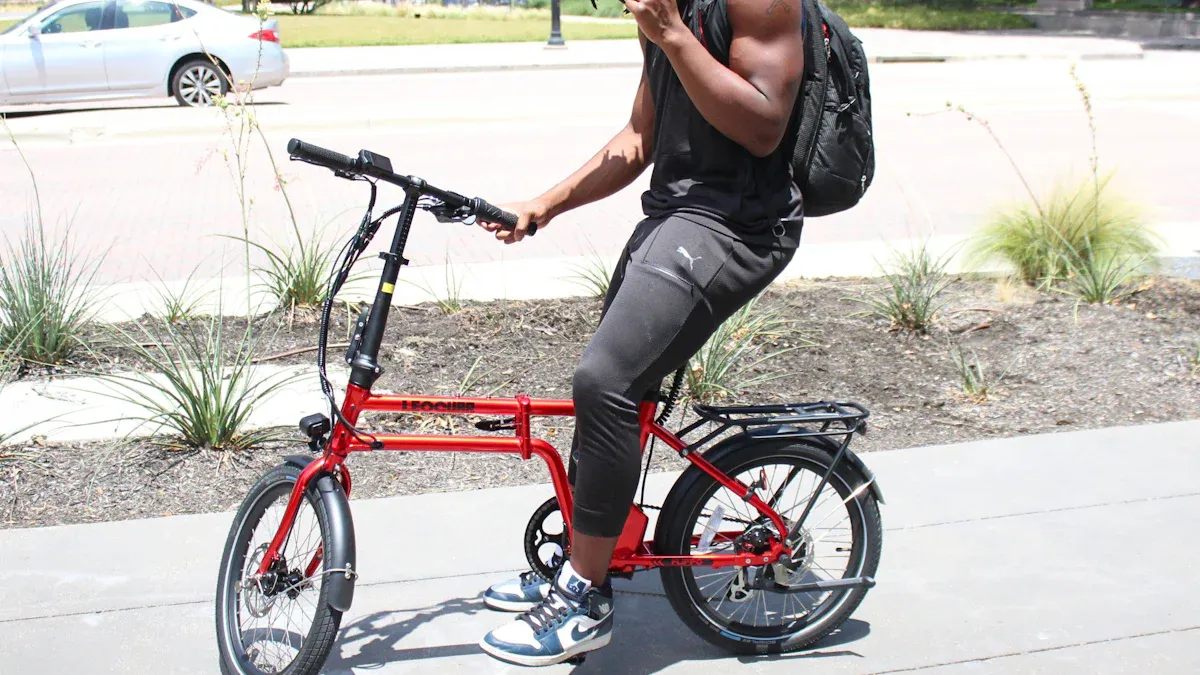
Today you will find a large selection of foldable e-bikes for various purposes. Many models impress with their low weight, powerful motors, and innovative folding mechanisms. Especially in city traffic and for commuters, there are test winners that stand out due to their quality and suitability for everyday use. For leisure and off-road, other models offer more range and comfort on uneven terrain.
Here you can see a selection of popular models and their most important features:
Model |
Motor power |
Range (km) |
Weight (kg) |
Special features |
Advantages |
Disadvantages |
|---|---|---|---|---|---|---|
Brompton Electric C Line |
250 Watt |
approx. 16 |
Excellent folding technology, battery integrated in the frame |
Very compact, stable, high build quality |
High price, range tight for long tours |
|
Hitway BK6S |
250 Watt |
up to 30 |
approx. 22 |
Affordable entry-level model |
Good price-performance ratio, easy handling |
Low range, less powerful |
Kukirin V2 |
250 Watt |
approx. 25 |
light |
Budget-friendly, very compact |
Very cheap, ideal for city, light |
Low range, less comfortable |
- |
- |
11.6 |
Compact folding dimensions, high quality |
Light, good for commuters |
N/A |
|
Ahooga A-Max |
- |
- |
- |
High-quality frame, sporty, without motor |
Stable, sporty, compact |
N/A |
Tip: When comparing, always pay attention to weight, range, and folding dimensions. These factors determine how practical the bike is in everyday life.
City & Commuting
For city traffic and the daily commute, you need a light, compact, and reliable folding e-bike. Many commuters choose models that fold quickly and weigh little. Particularly popular are:
Tern Link D8: At just 11.6 kg, this bike is one of the lightest on the market. It can be folded very compactly and fits into any train or bus. The high-quality workmanship ensures durability.
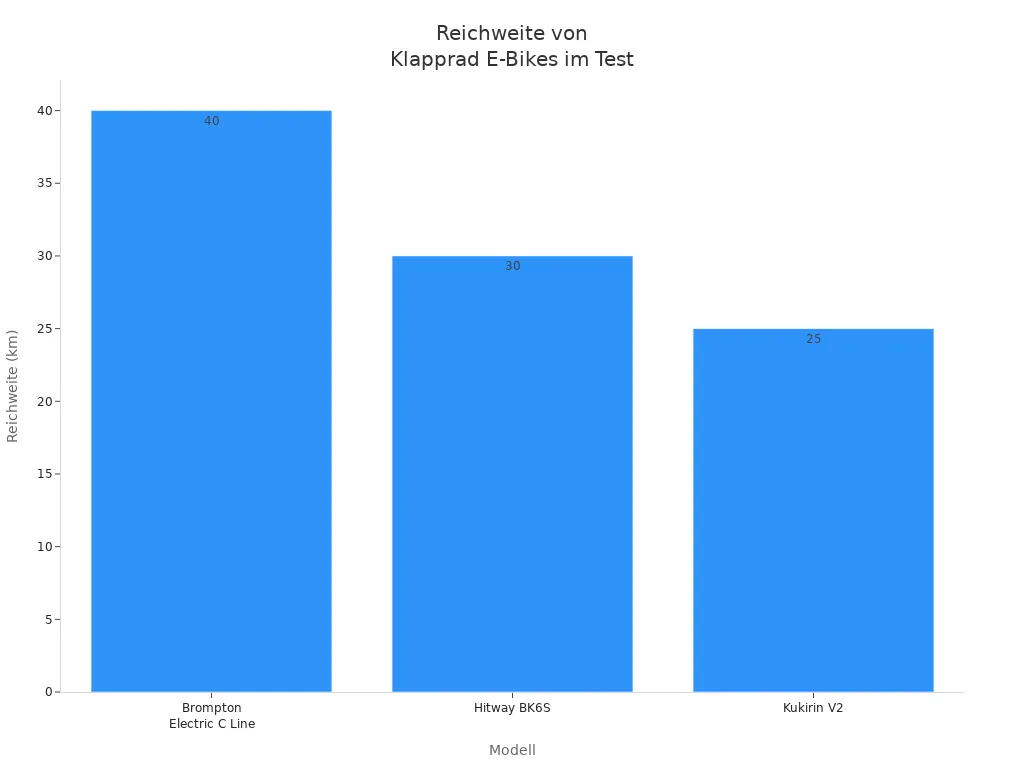
Brompton Electric C Line: This premium model impresses with its excellent folding technology and high stability. The integrated battery enables a range of up to 40 km. The bike is perfect for daily city traffic, but it is more expensive than many other models.
Hitway BK6S and Kukirin V2: Both models offer an affordable entry into the world of folding e-bikes. They are light, compact, and ideal for short distances in the city. The range is 25 to 30 km, which is usually sufficient for everyday life.
Many users report that they can switch between bicycle, train, and bus without any problems using these models. You save time and are flexible on the move.
Leisure & Off-road
Do you want to be mobile outside of the city as well? For leisure and off-road use, you need a folding e-bike with more power, greater range, and robust tires. Experts recommend:
Fafrees F20 X Max: This model has a powerful 500-watt motor and a range of up to 100 kilometers. The wide 20-inch tires offer you good grip and comfort on gravel, forest paths, or uneven terrain. The bike is foldable but slightly heavier than purely urban models.
Engwe Engine X: With 250 watts of motor power, 55 Newton meters of torque, and a SHIMANO 7-speed derailleur, you can master even demanding routes. The full suspension and wide fatbike tires ensure riding fun on any terrain.
Other models like the Engwe EP-2 Pro (750W motor, up to 120 km range) and the Engwe E26 (26-inch tires, high payload, up to 140 km range) are suitable for longer tours and off-road.
Note: Leisure and off-road models are usually heavier and larger. However, they offer you more comfort and safety on long or difficult routes.
Price-Performance
When buying a folding e-bike, the price-performance ratio plays a major role. You can find affordable entry-level models starting at about 999 euros. Premium models cost significantly more, but also offer more comfort, range, and equipment.
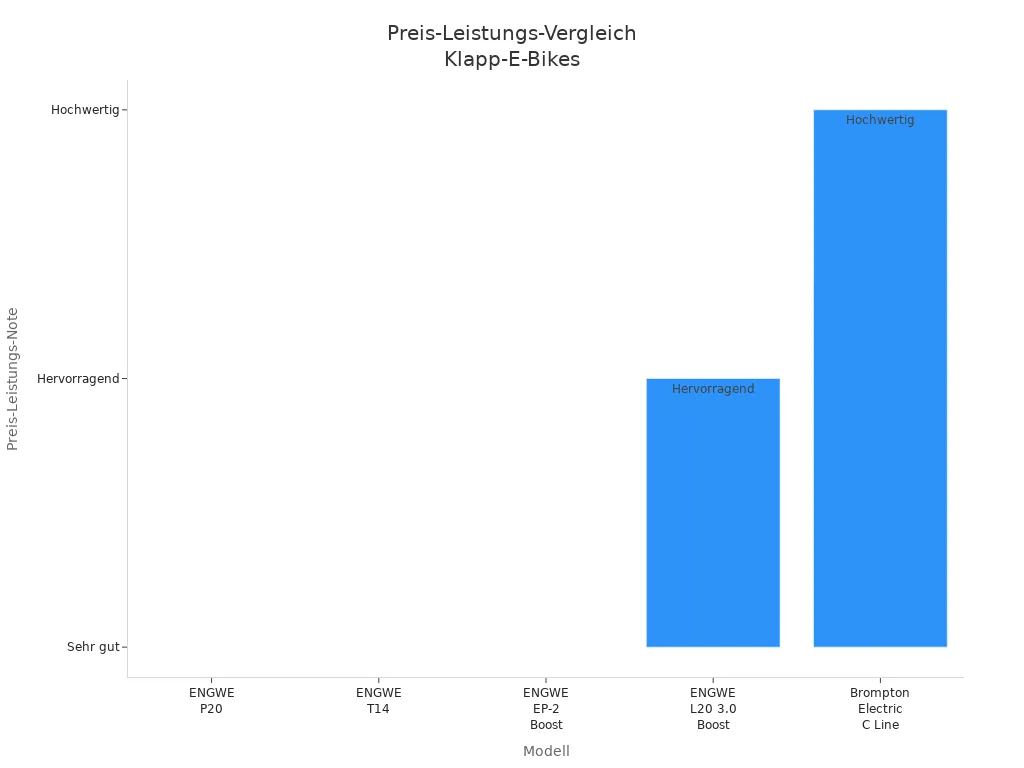
In independent tests, the ENGWE models perform particularly well. They offer you a balanced combination of motor power, range, weight, and folding mechanism. Here is an overview:
Model |
Advantages |
Disadvantages |
|
|---|---|---|---|
ENGWE P20 |
Torque sensor, fast folding (<10 sec.), light, 100 km range, anti-theft protection |
No suspension, not for off-road/steep hills |
Very good, test winner with balanced ratio of price and performance |
ENGWE T14 |
Quadruple suspension, 250W motor, compact, affordable |
Relatively heavy (22.7 kg), low torque |
Very good, best overall package of performance, comfort, and price-performance |
ENGWE EP-2 Boost |
Large tires (20x4 inch), up to 120 km range, 7-speed Shimano, boost button |
Heavy, no quick-charge function |
Very good, robust and versatile with good price-performance ratio |
ENGWE L20 3.0 Boost |
Powerful 250W motor, full suspension, quick-charge function, up to 135 km range |
Relatively heavy, larger design |
Excellent, especially due to equipment and range, special offers available |
Brompton Electric C Line |
Extremely compact, light (17.6 kg), removable battery |
No suspension, higher price |
High quality, but priced higher |
Tip: Think about how often and for what you want to use your folding e-bike. For the daily commute to work, an affordable model is often sufficient. For longer tours or off-road, it is worth investing in a premium model.
Buying Advice
Needs
You should first think about how you want to use your new bike. Do you want to ride to work every day, or are you looking for a flexible vehicle for travel and leisure?
Pay attention to the weight if you have to carry the bike often. A compact design helps you stow the bike easily in a bus, train, or car. The range plays a major role if you are planning longer distances.
Tip: Take a test ride. This way you can find out if the bike suits your riding style and everyday life.
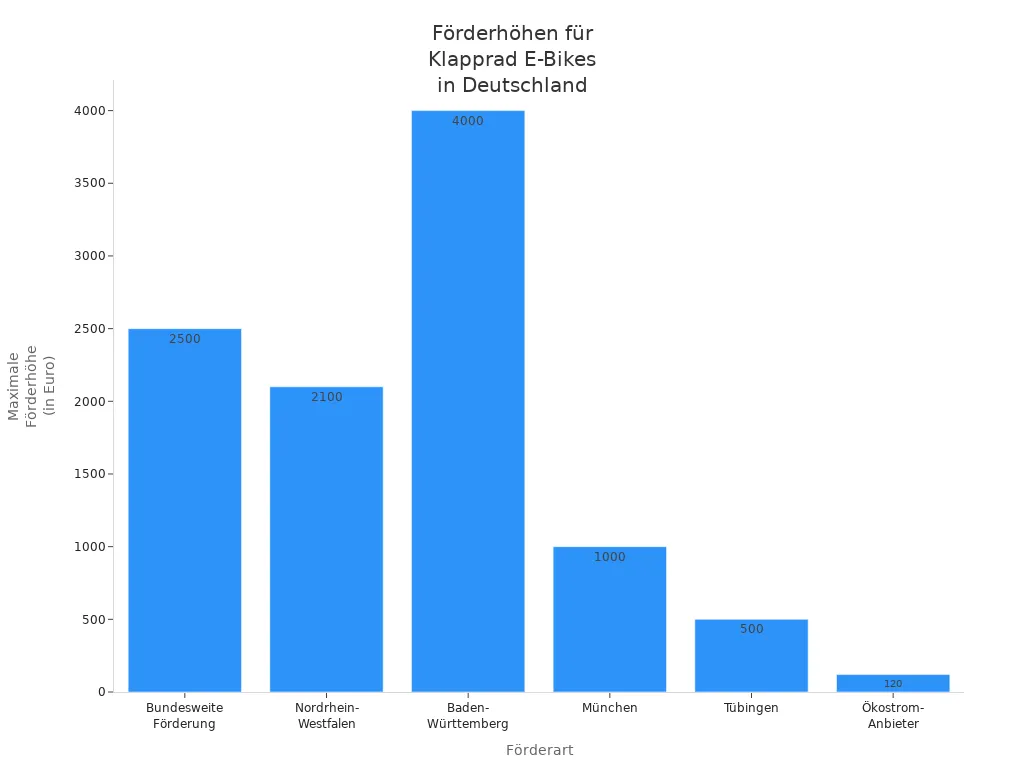
Many cities and states offer subsidies for the purchase of e-bikes. The following table shows you some examples:
Type of subsidy |
Target group |
Subsidy amount / Details |
|---|---|---|
Federal funding |
Commercial users |
30% subsidy on e-cargo bikes, max. 2,500 euros |
North Rhine-Westphalia |
Private & commercial |
Up to 1,000 euros for private individuals, up to 2,100 euros for commercial use for e-cargo bikes |
Munich |
Private individuals |
25% of the purchase price, max. 500 euros for e-bikes, 1,000 euros for e-cargo bikes |
Tübingen |
Private individuals |
Scrappage scheme for old mopeds/scooters, 200 to 500 euros if replaced by an e-bike |
Green electricity providers |
Existing customers |
Subsidies between 100 and 120 euros, sometimes e-bike leasing models via electricity tariffs |
Technology & Quality
You should pay attention to the quality of the components used. A sturdy aluminum frame ensures low weight and long durability. The gearing and brakes must function reliably.
Look for a powerful battery and a motor with at least 250 watts. Modern models offer software updates that improve performance and fix errors.
Tip: Check the warranty conditions. Many manufacturers offer a two-year warranty on the motor and battery.
A separate bicycle insurance protects you against theft, vandalism, and damage to the electronics. Household insurance often does not cover the full damage, especially regarding the motor and battery.
Service & Maintenance
Regular maintenance increases the service life of your bike. Leading manufacturers recommend inspections by specialist personnel.
You benefit from the following service offers:
Inspections and repairs of mechanical and electronic parts
Replacement of brakes, tires, and chains
Maintenance of motor and battery for optimal performance
Mobile repair services directly at your home or workplace
Custom adjustments for more comfort
Service area |
Description |
|---|---|
Inspections & repairs |
Comprehensive inspection and repair of mechanical and electronic components. |
Software updates |
Updating the e-bike software to optimize performance and troubleshoot errors. |
Replacement of wear parts |
Replacement of brakes, tires, chains, and other frequently stressed parts. |
Motor and battery care |
Specialized maintenance and care for electrical drive units and batteries. |
Mobile repair services |
On-site service provided by mobile workshops to carry out repairs conveniently at home or at the workplace. |
Custom adjustments |
Adjustment of the saddle, handlebar grips, and other components for increased comfort. |
Specialized staff & diagnostics |
Qualified technicians with specialized knowledge and diagnostic tools for early error detection. |
Folding bike integration |
Folding bikes are included in the scope of service and receive specialized care. |
Regular service secures your warranty and ensures a safe ride.
In your everyday life, you benefit from a foldable e-bike through flexibility, low weight, and electrical assistance. You can easily transport it on a bus, train, or in a car. Especially as a commuter or city dweller, you save time and stay mobile. Experience how you can simplify your daily routine with modern technology and sustainable mobility. Try out a folding e-bike and discover new possibilities for your trips in the city.
FAQ
How long does it take to charge the battery?
You can usually fully charge your folding e-bike battery in 3 to 6 hours. The exact time depends on the battery capacity and the charger. A fast charger reduces the charging time.
Can I take a folding e-bike on a train or bus?
Yes, you can often transport your folding e-bike for free on a train or bus when it is folded. Many transport companies treat it like hand luggage. Check your provider's rules.
How do I look after my folding e-bike properly?
Tip: Keep your bike clean and regularly check the brakes, the battery, and the chain. Do not let the battery discharge completely. Store the bike in a dry place. This will extend its service life.
Is there a mandatory helmet law for folding e-bikes?
You do not have to wear a helmet if your folding e-bike has a maximum speed of 25 km/h. However, a helmet protects you in the event of an accident. Many experts recommend wearing a helmet.
How heavy is a folding e-bike?
Most models weigh between 15 and 22 kilograms. Lightweight premium models often weigh less than 15 kilograms. The weight influences the convenience of transport.