
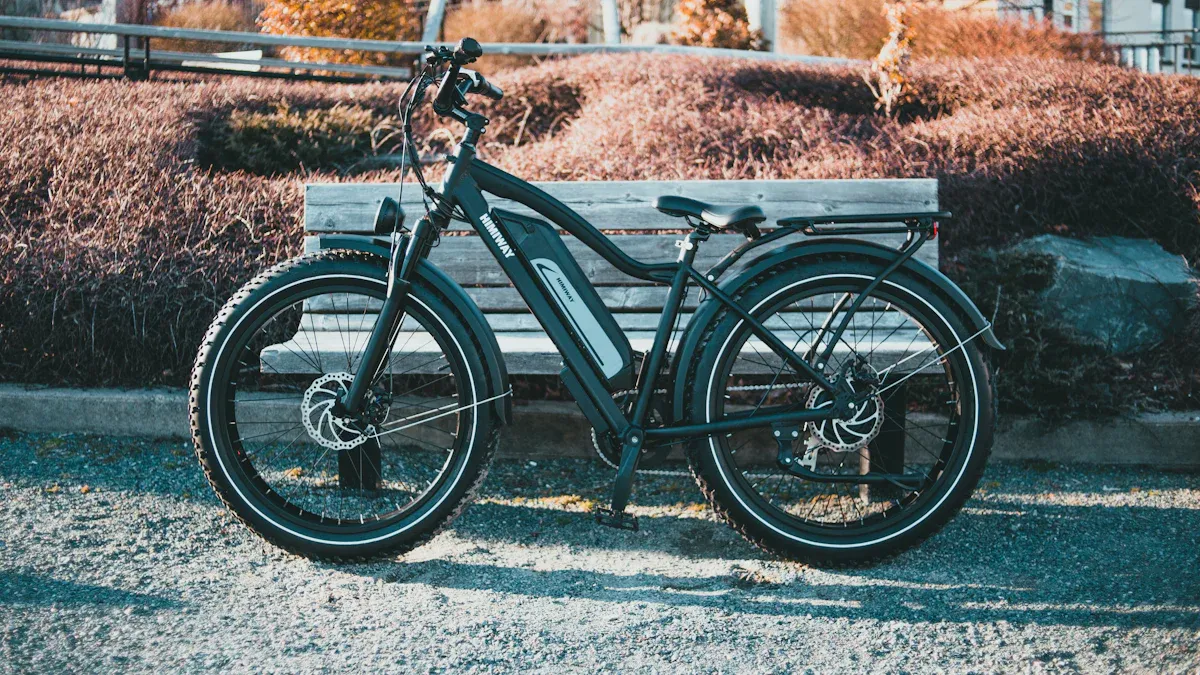
A high-quality e-bike offers you the perfect combination of technology, safety, and comfort. It adapts to your individual needs, whether for commuting, sports activities, or relaxed leisure rides.
Current market analyses show that individual requirements are taken into account when choosing the best e-bike by focusing on the varying riding profiles, areas of use, and personal preferences of buyers. It is emphasized that there is no 'one' best e-bike, but only the one that is best suited for the individual.
To find the best e-bike for yourself, you should pay attention to the right balance between performance, range, and comfort.
Key Insights
Choose an e-bike that suits your riding style. Consider your needs, such as commuting or sports.
Look at the motor position. A mid-drive motor distributes weight better and provides a more natural ride, especially on hills.
Battery capacity determines how far you can ride. A battery with 500 Wh or more is good for long distances.
Maintain your e-bike regularly. Have it checked once a year to keep it safe.
Use smart features like GPS and apps. They make riding easier and safer.
Motor and Performance: The Heart of the Best E-Bike
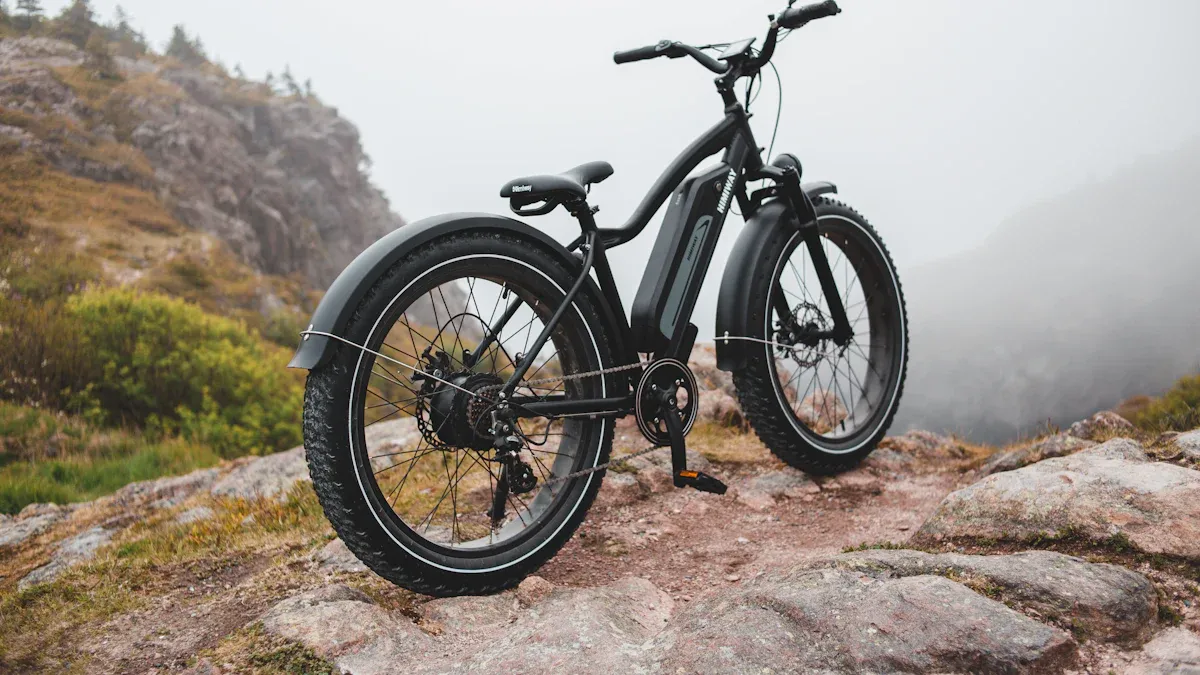
The motor is the heart of every e-bike. It determines how much assistance you receive while pedaling and how efficiently the e-bike operates on different routes. The choice of the right motor depends on your individual requirements, whether for daily commuting, athletic challenges, or relaxed leisure rides.
Types of Motors and Their Pros and Cons
E-bike motors can be divided into three main categories: mid-drive motors, rear hub motors, and front hub motors. Each of these variants has specific pros and cons:
Mid-drive motors: These motors are located in the center of the frame, near the pedals. They offer balanced weight distribution and a natural riding feel. They show their strength especially on steep climbs. However, they are often more expensive and require more maintenance.
Rear hub motors: These motors sit on the rear wheel. They are quiet and efficient, especially on flat routes. However, they can affect handling, as the weight is concentrated on the rear wheel.
Front hub motors: These motors are located on the front wheel. They are cost-effective and easy to install. However, they may offer less traction in wet or slippery conditions.
A technical analysis shows that motor efficiency depends heavily on cadence. The following table compares two popular models:
Motor |
Efficiency at low cadence |
Efficiency at high cadence |
|---|---|---|
Bosch Performance Line CX |
On par with DJI Avinox |
Increasing performance of the Avinox |
DJI Avinox |
On par with Bosch |
Higher efficiency with increasing cadence |
The data is based on thousands of measurement points that show how performance depends on cadence. This helps you choose the right motor for your needs.
Torque and Assistance Levels
A motor's torque directly affects how powerful the pedal assistance is. Higher torque is ideal for steep climbs or heavy loads. For example, the Bafang H410 rear hub motor reacts particularly well to slight inclines and offers a natural riding feel.
Many e-bikes offer multiple assistance levels that you can adjust according to your needs. An example is the Eco mode, which saves energy, while the Sport mode provides maximum power. Modern systems such as the eBike Flow app allow you to precisely adjust riding modes. You can individually set assistance, dynamics, torque, and speed to achieve the best riding experience.
How Motor Position Affects Handling
The position of the motor has a major influence on handling. A mid-drive motor ensures central weight distribution, which improves handling. This is particularly advantageous for mountain bikes or on uneven terrain. Rear hub motors, on the other hand, provide more traction to the rear wheel, which is useful on flat routes. Front hub motors can shift weight to the front wheel, which can be problematic in slippery conditions.
In addition, some motors offer special features such as a hill-start assist. This ensures controlled starting on steep terrain. Such features make the best e-bike not only powerful but also versatile.
Battery and Range: How Far Does the Best E-Bike Take You?
The range of an e-bike depends significantly on the battery capacity and various external factors. If you are looking for the best e-bike for your needs, you should examine the range carefully to ensure it meets your requirements.
The Importance of Battery Capacity
Battery capacity is one of the most important factors determining an e-bike's range. It is specified in watt-hours (Wh) and describes how much energy the battery can store. A 500 Wh battery generally offers a longer range than a 300 Wh battery. If you want to cover longer distances, you should look for a higher capacity.
Tip: Choose a battery that suits your riding style. For commuters, a smaller battery is often sufficient, while for long tours, a powerful battery is useful.
Some modern e-bikes offer the option to integrate a second battery. These dual-battery systems double the range and are ideal for adventure rides or long day trips.
Factors Influencing Range
An e-bike's range is not determined solely by battery capacity. Many external factors play a role and can significantly influence the actual range. The following table shows the most important influencing factors:
Factor |
Description |
|---|---|
Battery capacity |
The more watt-hours (e.g., 500 Wh), the longer the range. |
Motor assistance |
The selected assistance and your own input power influence the range. |
System weight |
Higher weight (rider + bike) reduces range. |
Topography |
More elevation gain requires more energy, reducing range. |
Drive system efficiency |
The efficiency and design of the motor control play a role. |
Temperature |
Temperature can affect performance and range. |
Rolling resistance |
Factors like air pressure, tire tread, and rubber compound are decisive. |
Headwind |
Headwind can negatively affect range. |
Surface |
The surface also influences range. |
For example, if you ride in mountainous terrain, the battery will discharge faster because the motor requires more energy. Cold temperatures can also reduce battery performance. To maximize range, you should regularly check your tire pressure and minimize rolling resistance.
Tips for Maintenance and Extending Battery Life
Proper battery care is crucial for extending lifespan and maintaining your e-bike's range. Here are some practical tips:
Regular charging: Do not wait until the battery is completely discharged before charging it. Keep it charged between 20% and 80% to increase lifespan.
Protection from extreme temperatures: Store the battery at room temperature and avoid direct sunlight or extreme cold.
Cleaning: Keep the battery contacts clean and dry to ensure optimal performance.
Long-term storage: If you are not using the battery for a long time, store it at about 50% charge to prevent damage.
Note: Modern batteries have integrated management systems that prevent overcharging and deep discharge. Nevertheless, you should follow the manufacturer's recommendations to maintain your battery's maximum performance.
With these tips, you can ensure your battery works efficiently and your best e-bike reliably accompanies you on every ride.
Safety: Essential Features for the Best E-Bike
High-Quality Brakes and Their Differences
Brakes play a crucial role in your safety. Two main types dominate the market: hydraulic disc brakes and rim brakes. Hydraulic disc brakes offer strong braking power and work reliably in wet conditions. They are particularly suitable for demanding routes or mountainous terrain. Rim brakes are lighter and easier to maintain but less effective in the rain.
Some e-bikes have combined braking systems that brake both the front and rear wheels simultaneously. These systems improve stability and prevent wheel lock-up. Ensure that the brakes are maintained regularly to keep their full performance.
Lighting and Visibility in Traffic
Good lighting ensures you remain visible in the dark or in poor weather conditions. Modern e-bikes are often equipped with LED headlights that offer high luminosity while being energy-efficient. Taillights with a brake light function further increase your safety by signaling your intentions to other road users.
Reflectors on tires and pedals improve your visibility from different angles. Wear bright clothing or reflective accessories to remain easily recognizable even in low-light conditions. This way, you stay safe on the road, no matter the time of day.
Stability and Frame Construction
The stability of an e-bike depends heavily on the frame construction. Aluminum frames are light yet robust, making them ideal for everyday use. Steel frames offer additional stability but are heavier. This extra weight can improve balance and make acceleration smoother.
E-bikes weigh about 23 kg on average. This weight contributes to stability, especially at higher speeds. Ensure the frame is well-manufactured and has no weak points. A stable frame protects you during sudden maneuvers or on uneven terrain and makes the best e-bike even safer.
Comfort and Design: Why the Best E-Bike Must Also Be Comfortable
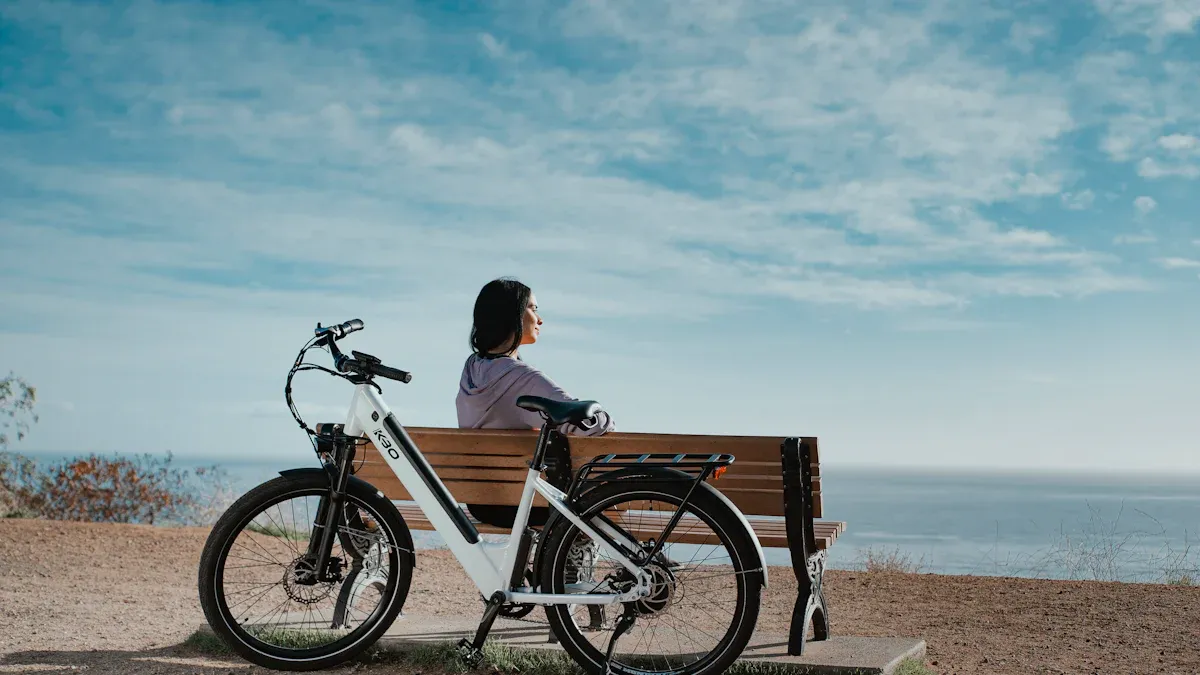
An e-bike should not only be powerful and safe but also offer the highest level of comfort. After all, you spend a lot of time in the saddle, and a comfortable ride makes the difference between a pleasant experience and an exhausting tour.
Ergonomic Shifting and Saddle
Ergonomic shifting and a well-designed saddle are crucial for your riding comfort. They reduce fatigue and promote a natural posture. Manufacturers like Riese & Müller optimize every detail, from the handlebars to the pedal position. This thoughtful design minimizes tension and discomfort, especially on long routes.
Tip: Choose a saddle that fits your riding position. A wider saddle is suitable for upright riding, while a narrower saddle offers more freedom of movement during athletic riding.
Frame Geometry and Weight
Frame geometry directly influences handling and comfort. Models like the Lapierre E-Crosshill 5.2 with short chainstays and adapted stack offer maneuverability and stability. Low weight facilitates handling and improves agility. The following table shows how different frame geometries influence handling:
Model |
Frame Geometry |
Weight |
Handling |
|---|---|---|---|
Lapierre E-Crosshill 5.2 |
435 mm short chainstays, 605 mm stack |
N/A |
More maneuverable, stable due to adapted geometry |
Compact frame geometry |
N/A |
Nimble agility, no instability at high speeds |
A light aluminum or carbon frame can make the best e-bike even more comfortable, especially on longer rides.
Suspension Systems for Different Areas of Use
Choosing the right suspension system depends on your area of use. Different systems offer different advantages:
Full suspension absorbs bumps and ensures maximum comfort on bumpy routes.
Front suspension is lighter and ideal for city traffic.
Rigid forks are suitable for flat routes as they reduce weight and increase efficiency.
Note: Consider where you want to use your e-bike primarily. For off-road adventures, full suspension is indispensable, while front suspension is sufficient for everyday use.
With the right combination of gears, frame, and suspension, your e-bike will not only be powerful but also a faithful companion for every ride.
Additional functions: What makes the best e-bike even better
Smart features like GPS and app integration
Modern e-bikes offer intelligent functions that significantly improve your riding experience. GPS systems and app integration allow for precise navigation and offer additional safety features. With apps like COBI.Bike, you can find charging stations and control your e-bike intelligently. The routing app Komoot suggests routes created by the community and shows points of interest along the way.
Some devices like the Bosch Nyon display and Garmin Edge 1030 Plus offer theft alarms and crash detection. They can record training data and provide weather forecasts. Brightness sensors automatically adjust the display brightness so that you can clearly see everything, even in changing light conditions.
Tip: Use voice navigation and emergency notifications to increase your safety. These features make the best e-bike not only comfortable, but also safer.
Practical accessories for everyday life and leisure
The right accessories make your e-bike more versatile and make everyday life easier. Luggage racks like the Spider Rear Rack from Aeroe allow for the transport of dry bags or small tents, ideal for adventure trips. The Travelmonster Handlebar Bag from Monsterando offers three liters of storage space for tools or clothing and is made of 90 percent recycled PET bottles.
For longer tours, mobile phone mounts are particularly practical. You can securely attach your smartphone and use apps like Komoot for navigation. With these accessories, your e-bike becomes a reliable companion for leisure and everyday life.
Sustainability and environmental friendliness
Sustainability plays an increasingly important role when choosing the best e-bike. Many manufacturers rely on recycled materials and energy-efficient production methods. Accessories like the Travelmonster Handlebar Bag show how recycled materials can be used sensibly.
E-bikes themselves contribute to environmental friendliness, as they offer an emission-free alternative to cars. With an e-bike, you can reduce your CO₂ footprint while enjoying nature at the same time.
Note: Opt for models and accessories that have been produced in an environmentally friendly manner. In this way, you contribute to sustainability and make your best e-bike even better.
The best e-bike combines technology, safety, and comfort to meet your individual needs. A test ride helps you find the right model and test the riding characteristics. Consider how and where you want to use the e-bike. This will help you make the best choice for your daily life or leisure time.
Tip: Note down your requirements before purchasing. This facilitates the decision and leads you to your best e-bike faster.
FAQ
What is the ideal battery capacity for an e-bike?
The ideal battery capacity depends on your riding style. 300–400 Wh is sufficient for short commutes. For longer tours or mountainous terrain, you should choose 500 Wh or more. Consider how far you want to ride before deciding.
How often should I have my e-bike serviced?
You should have your e-bike serviced at least once a year. For intensive use, such as daily commuting or off-road riding, a semi-annual inspection is recommended. Regular maintenance extends the service life and ensures safety.
Can I use my e-bike battery in the rain?
Yes, most e-bike batteries are splash-proof. You can use them in the rain. However, take care to dry the battery after the ride and not to submerge it in puddles. This will keep it functional for longer.
How do I choose the right frame size for my e-bike?
The frame size depends on your height. Many manufacturers offer size charts. Try out the e-bike before buying to ensure it is comfortable. A suitable frame improves control and comfort.
Can I ride an e-bike without motor assistance?
Yes, you can use an e-bike like a normal bicycle. The motor only switches on when you activate it. Without assistance, however, you must take into account the additional weight of the e-bike.
Tip: Try out different assistance levels to find the optimal balance between motor power and your own pedaling for you.