
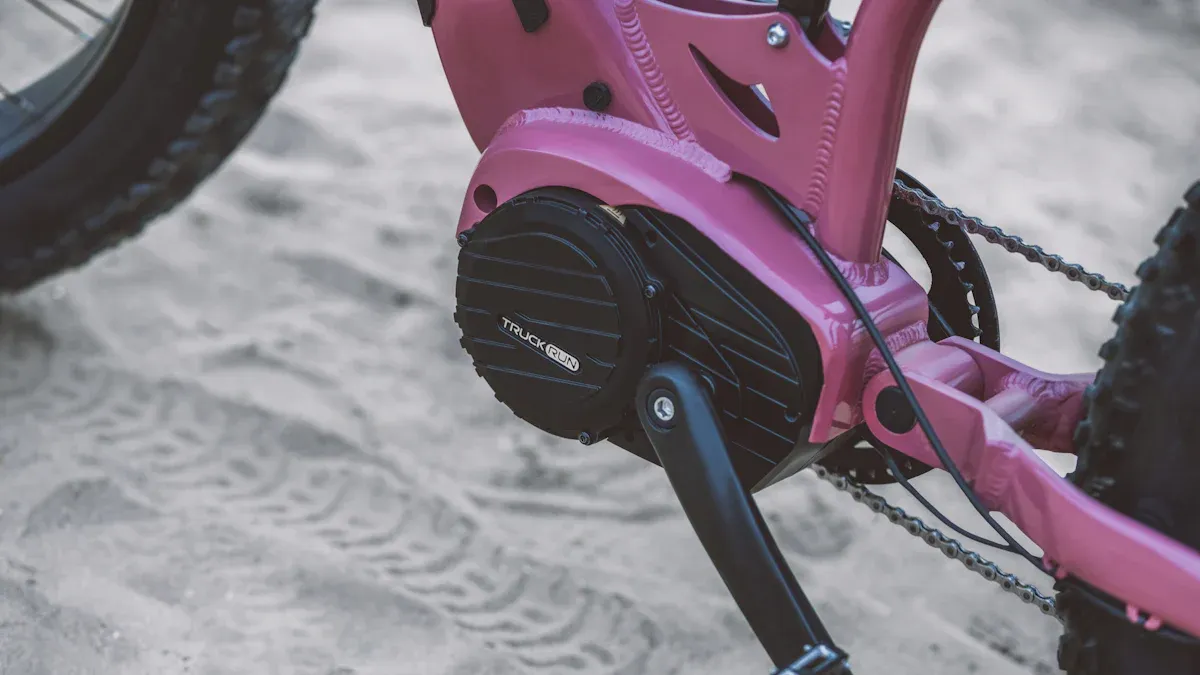
The choice between a chain drive and a belt drive significantly impacts your riding experience. Both systems have unique characteristics that make them attractive for different needs. The chain drive offers versatility and broad compatibility with shifting systems. The belt drive, on the other hand, impresses with its durability and minimal maintenance requirements. If you're wondering which system fits your e-bike better, a closer look at the differences will help. Chain drive vs. belt drive – the decision depends on your priorities.
Key Findings
The chain drive is flexible and affordable, good for athletes.
The belt drive lasts a long time and requires almost no maintenance, great for everyday use.
Chain drives need frequent maintenance, belt drives almost never.
A belt lasts up to 30,000 kilometers, a chain only 10,000.
Your choice depends on your needs and riding habits.
How Chain and Belt Drives Work
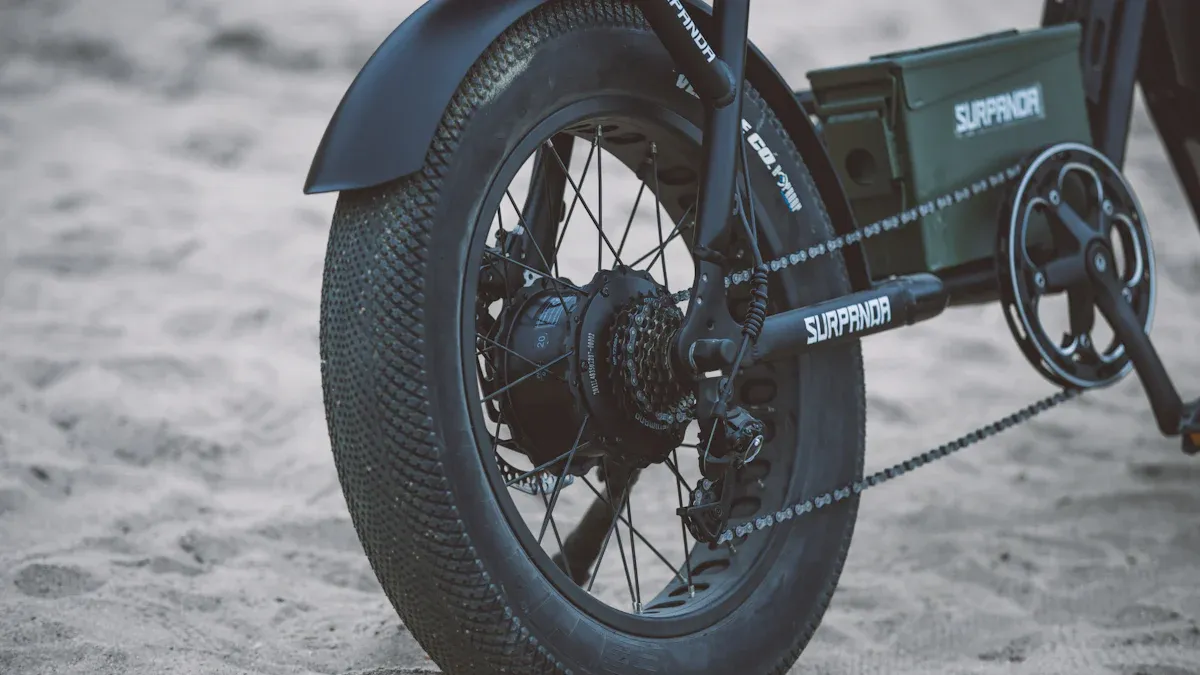
How does a chain drive work?
A chain drive transfers the power you generate while pedaling to the rear wheel. This is done by a robust steel chain that runs over gears, also known as sprockets. The sprockets are made of durable materials to withstand high loads.
Mechanism: The chain meshes with the teeth of the sprockets and the chainring. This efficiently converts pedal power into forward motion.
Maintenance: Regular cleaning and lubrication are necessary to maintain efficiency. You should also check the chain tension to ensure smooth operation.
Repair: One advantage of the chain drive is its simple repairability. You can open and replace the chain at any point if it wears out.
A typical e-bike shows signs of wear on the chain after about 3,000 km. Therefore, regular inspection is important to extend the lifespan of the system.
How does a belt drive work?
The belt drive works with a polymer belt that transfers power from the pedals to the rear wheel. Unlike a chain, the belt requires no lubrication and is less prone to dirt.
Technical Detail |
Description |
|---|---|
Drive Sprockets |
The belt runs over two drive sprockets that transfer the power. |
Compatibility |
Works only with hub gears and bottom bracket gears. |
Ease of Maintenance |
The belt drive is extremely low-maintenance and clean. |
Another advantage of the belt drive is its durability. The belt lasts significantly longer than a chain and runs almost silently. This makes for a pleasant riding experience, especially for frequent riders or in city traffic.
Chain drive vs. belt drive: While the chain drive scores with its versatility, the belt drive convinces with its low maintenance and durability. Your choice depends on which characteristics are more important to you.
Chain drive vs. belt drive: Pros and cons
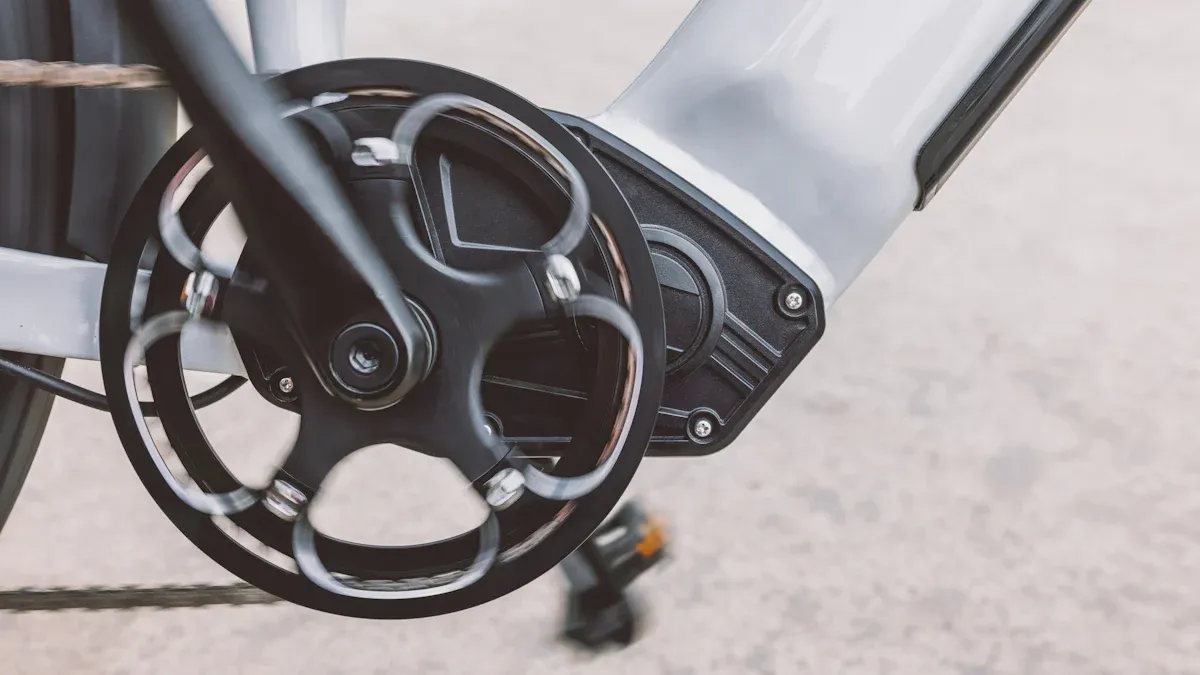
Advantages and disadvantages of the chain drive
The chain drive is a proven system that impresses with its versatility. You can combine it with almost all shifting systems, making it particularly flexible. In addition, the acquisition costs are lower compared to the belt drive.
Advantages of the chain drive:
Cost-effective: The purchase costs are lower, making it attractive for budget-conscious riders.
Simple repair: You can easily replace or repair the chain without special tools.
High efficiency: With proper care, the chain drive offers high energy transfer.
Disadvantages of the chain drive:
Higher maintenance effort: Regular cleaning and lubrication are necessary to maintain performance.
Shorter lifespan: A chain lasts on average only about 3,000 kilometers.
Noise generation: With poor maintenance, the chain can become louder.
Drive System |
Pros |
Cons |
|---|---|---|
Chain drive |
Cost-effective, flexible |
Higher maintenance effort, loud |
Advantages and disadvantages of the belt drive
The belt drive offers you a modern alternative with many advantages, especially if you value durability and maintenance-freedom. It is ideal for frequent riders and everyday use.
Advantages of the belt drive:
Longer lifespan: A belt lasts up to three times longer than a chain, often up to 9,000 kilometers.
Low maintenance: You don't need lubricants, and the belt stays clean.
Quiet: The belt drive runs quietly, which makes the riding experience more pleasant.
Disadvantages of the belt drive:
Higher acquisition costs: The initial costs are higher than with a chain drive.
Complex repair: If the belt needs replacing, opening the frame is often required.
Limited compatibility: The belt drive only works with specific gear systems and frames.
Pro/Con |
Belt drive |
Chain drive |
|---|---|---|
Lifespan |
Shorter lifespan |
|
Maintenance effort |
Maintenance-free |
Regular maintenance required |
Noise generation |
Quiet |
Louder with poor maintenance |
Acquisition costs |
Higher costs |
Lower costs |
Repair effort |
More complex, frame must be opened |
Simpler repair |
Chain drive vs. belt drive: Your choice depends on your priorities. The chain drive offers flexibility and lower costs. The belt drive convinces with durability and minimal maintenance.
Suitability for different areas of use
Chain drive: For sport and performance
If you ride a sporty e-bike, the chain drive is often the better choice. This system offers direct power transmission, which is particularly advantageous at high speeds and with powerful motors. Derailleur gears are ideal for hilly terrain as they allow for precise and fast gear changes. This makes them perfect for mountain biking or other sports activities where you need maximum control and performance.
-
Advantages for athletes:
Easy repair options as replacement parts are widely available.
Adaptability to different shifting systems.
However, the chain drive requires regular maintenance. Dirt and moisture can affect performance, especially during off-road rides. If you are willing to invest some time in maintenance, you will be rewarded with a reliable and high-performance system.
Belt drive: For everyday use and frequent riders
For daily use and frequent riders, the belt drive is an excellent choice. This system is almost maintenance-free and remains reliable for years even with little care. The belt is resistant to rust and salt water, which makes it particularly suitable for winter use. Furthermore, it runs quietly, which makes the everyday riding experience more pleasant.
-
Advantages for everyday use:
No re-tensioning or lubrication required.
High reliability, even with intensive use.
Better efficiency under increasing load.
If you are looking for an e-bike for city traffic or longer commutes, the belt drive offers a clean and durable solution. It is particularly suitable for frequent riders who value comfort and low maintenance.
Chain drive vs. belt drive: While the chain drive wins for sporting challenges and performance, the belt drive scores in everyday life with its durability and ease of care. Your choice depends on your riding style and priorities.
Maintenance and durability
Comparison of maintenance effort
The maintenance effort differs significantly between chain and belt drives. With a chain drive, you have to work on it regularly. The chain requires cleaning and lubrication to function smoothly. Dirt and moisture can impair performance. Especially during off-road rides or in winter, you should maintain the chain more frequently. You should also check the chain tension to avoid wear.
The belt drive, on the other hand, is almost maintenance-free. You don't need any lubricants, and the belt stays clean, even in rain or snow. Dirt and rust have hardly any chance. This saves you time and effort, especially if you use your e-bike daily. Another advantage: the belt runs quietly and evenly without you having to re-tension it.
System lifespan
The lifespan of both systems also shows clear differences. A chain drive usually lasts about 10,000 kilometers before you need to replace the chain. With intensive use or poor maintenance, this lifespan can be shorter. The belt drive offers you a clear advantage here. Thanks to its high carbon content, it is less susceptible to wear. A belt often lasts up to three times longer than a chain. This means you can count on a lifespan of up to 30,000 kilometers.
So, if you are looking for a system that requires less work in the long term, the belt drive is the better choice. Chain drive vs. belt drive – when it comes to durability and maintenance-freedom, the belt drive is clearly ahead.
Cost comparison
Acquisition costs
The acquisition costs differ significantly between chain and belt drives. A chain drive is usually cheaper. You can purchase a new chain for as little as 10 euros. The belt drive, however, starts at about 50 euros. This price difference is also reflected in the total costs of an e-bike. An e-bike with a belt drive often costs more because the frame must be specially adapted.
Drive Type |
Acquisition Costs |
Maintenance Costs |
|---|---|---|
Belt drive |
from 50 euros |
low |
Chain drive |
from 10 euros |
However, the higher acquisition costs of the belt drive can pay off if you are planning for the long term. Especially for frequent riders who value durability and low maintenance, the belt drive is a sensible investment.
Long-term costs
Looking at it long-term, the belt drive offers potential savings. A belt lasts up to 9,000 kilometers, while a chain often needs to be replaced after just 3,000 kilometers. This means that you need to buy replacement parts less frequently for a belt drive. Maintenance costs are also lower with a belt drive. You don't need any lubricants, and the belt stays clean, even in rain or snow.
-
Long-term advantages of the belt drive:
Less frequent repairs.
No costs for lubricants.
Higher lifespan.
The chain drive, on the other hand, requires regular care. You must clean, lubricate, and re-tension the chain. These maintenance tasks increase the total costs over time. A racing cyclist reports that the service life of a chain depends heavily on maintenance. However, high-quality lubricants and regular servicing can reduce costs.
Category |
Chain Drive |
Belt Drive |
|---|---|---|
Maintenance costs |
Higher regular maintenance costs |
Lower maintenance costs |
Longevity |
Shorter service life |
|
Long-term savings |
Fewer long-term savings |
Higher long-term savings |
Chain drive vs. belt drive: If you want to minimize long-term costs, the belt drive is the better choice. It saves you time and money through less maintenance and a longer service life.
Compatibility and Retrofitting
Compatibility with various e-bike types
The choice of drive system depends heavily on compatibility with your e-bike. Chain drives offer you high flexibility, as they are compatible with almost any e-bike frame. You can easily combine them with various shifting systems such as derailleur gears or hub gears. This versatility makes the chain drive the preferred choice if you want to retrofit an existing e-bike.
Belt drives, on the other hand, require special frames designed for the use of a belt. These frames must be split-able, as the belt cannot be opened. Furthermore, belt drives only work with specific shifting systems, such as gear hubs or singlespeed systems. This limits compatibility with conventional e-bikes.
-
Advantages of the chain drive:
Compatible with almost all e-bike frames.
Supports various shifting systems.
Easily retrofittable.
-
Limitations of the belt drive:
Requires special, split-able frames.
Works only with specific shifting systems.
Challenges of retrofitting
Retrofitting a drive system presents you with different challenges. Chain drives are easy to adapt. You can split the chain at any link and close it again. This makes repairs and replacements easier. In addition, spare parts for chain drives are widely available and inexpensive.
Belt drives, however, are more difficult to retrofit. Your e-bike frame must be specially manufactured to accommodate the belt. Furthermore, installing a belt drive often requires a gear hub or a singlespeed system. These technical requirements make retrofitting more complex and expensive.
Drive type |
Retrofittability |
Frame requirements |
|---|---|---|
Belt drive |
Specially manufactured frames required |
|
Derailleur gear |
Can generally be completely replaced or retrofitted |
No special frame requirements |
If you are looking for a flexible and easily retrofittable system, the chain drive is the better choice. The belt drive is more suitable for new e-bikes that are already equipped with the appropriate frames and shifting systems.
The choice between chain drive and belt drive depends on your needs. The chain drive offers you flexibility and lower initial costs. It is particularly suitable for sporty riders who value dynamic shifting systems. The belt drive impresses with its longevity and minimal maintenance effort. It is ideal for high-mileage riders and everyday use.
Chain drive |
Belt drive |
|---|---|
Higher maintenance effort |
Lower maintenance effort |
More susceptible to dirt |
Less susceptible to dirt |
More flexible with shifting |
Less flexible |
Cheaper to purchase |
Higher purchase costs |
Louder |
Quieter |
Shorter service life |
Longer service life |
Chain drive vs. belt drive: For sports and flexibility, choose the chain drive. For everyday use and maintenance-free operation, the belt drive is the better option.
FAQ
Which is more durable: chain drive or belt drive?
The belt drive lasts longer. It often reaches up to 30,000 kilometers, whereas a chain usually needs to be replaced after 10,000 kilometers. If you are looking for a low-maintenance and durable system, the belt drive is the better choice.
Can I convert my e-bike from a chain drive to a belt drive?
That is difficult. A belt drive requires a special frame that is split-able. If your e-bike does not have this frame, retrofitting is not possible. Check the compatibility of your frame beforehand.
Which system is better suited for off-road riding?
The chain drive is better suited for off-road riding. It offers you precise shifting and high efficiency in changing terrain. The belt drive is less flexible and more intended for city traffic or everyday rides.
How often do I have to maintain a chain drive?
You should regularly clean and lubricate the chain, especially after riding in the rain or off-road. A well-maintained chain lasts longer and stays quiet. Plan for maintenance approximately every 500 kilometers.
Is a belt drive really maintenance-free?
Almost. A belt drive requires no lubrication and stays clean. However, you should check it occasionally for tension and wear. With minimal effort, it remains reliable and durable.