
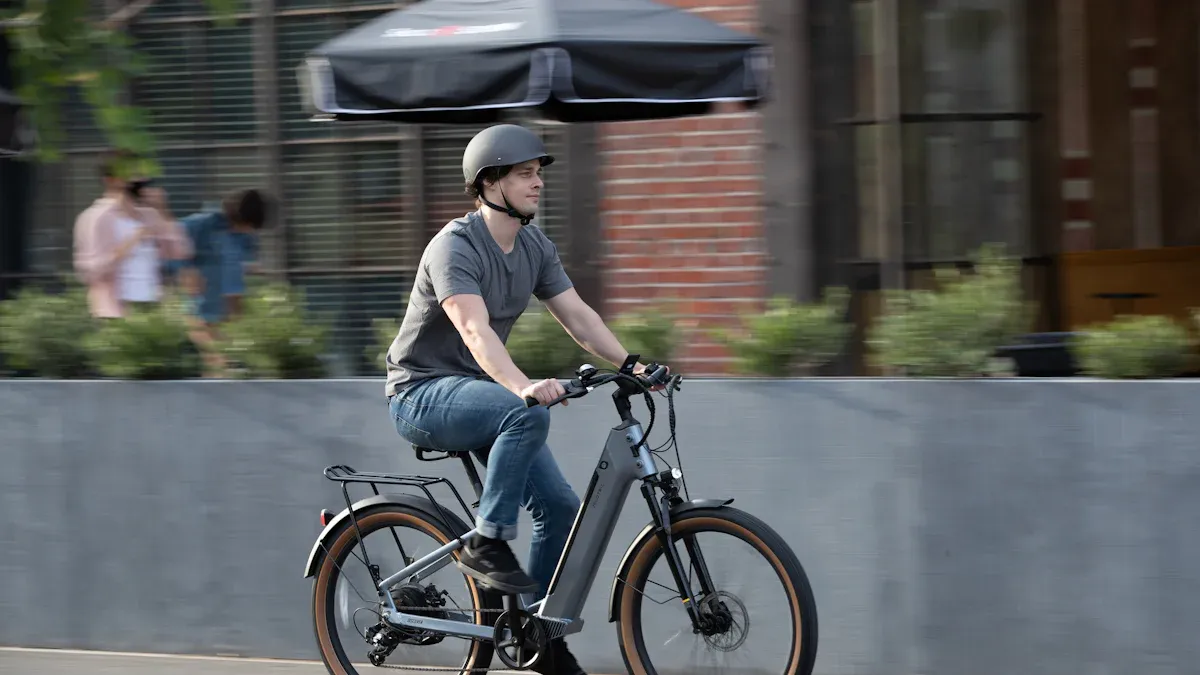
You burn fat extremely effectively on an e-bike. The smart motor provides reliable support, keeping your movement consistently in the optimal aerobic range. This allows you to train significantly longer without overloading yourself quickly. Forget the old prejudice: cycling with a motor isn't "real" exercise!
Your personal weight loss success is based on steady movement at a moderate heart rate. This active sport is extremely gentle on your precious joints and noticeably increases your stamina. You give your metabolism a powerful boost with every ride. The built-in tailwind gives you genuine joy in movement every day. Start your first ride today. You have the full power within you for great success.
Key Insights
E-bike riding is easy on your joints and effectively burns body fat.
Eco mode keeps your pulse in the ideal range for fat burning.
Regular rides to work effortlessly increase your weekly calorie consumption.
A healthy diet significantly enhances your weight loss success with an e-bike.
Physiology: Fat burning with the e-bike
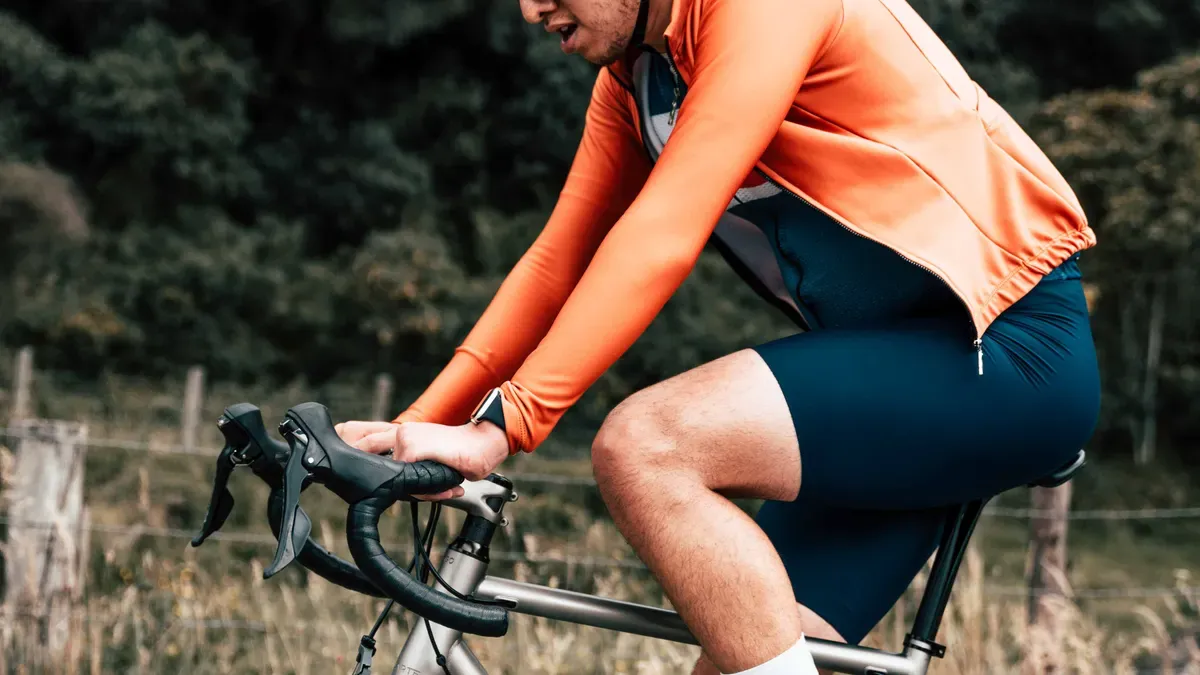
Your personal journey to a healthier life begins with a deep understanding of your own body. Regular movement noticeably stimulates your metabolism. You burn excess body fat most effectively by maintaining the right heart rate.
Aerobic pulse range and Eco mode
Your body draws energy from various storage sources. During moderate exertion, your organism mainly uses your existing fat reserves. Science divides this physical activity into clear heart rate zones:
Zone 1 (50-60% max HR): This range promotes active recovery and initiates fat burning.
Zone 2 (60-70% max HR): This heart rate optimizes your fat burning and sustainably strengthens your base endurance.
At a moderate heart rate (60-70% max HR), fat burning is activated as the primary physiological mechanism.
The precise calculation of your individual maximum heart rate is performed using proven gender-specific formulas such as the Sally Edwards formula. Your ideal training range for fat loss is in the moderate field:
Training Zone |
Heart Rate Range (% of max. heart rate) |
Main Energy Source |
Effect |
|---|---|---|---|
Fat burning zone |
60 - 70 % |
Fatty acids |
Optimal fat burning; light to moderate strain (conversational pace) |
Aerobic zone |
70 - 80 % |
Carbohydrates and fats |
Increase in endurance; strengthening of heart and respiratory system |
Eco mode helps you perfectly maintain these important performance values. Lower assistance keeps your muscles working actively and continuously.
Lower assistance causes the pulse to rise because more pressure comes from the legs. Higher assistance, on the other hand, smooths out exertion spikes... For targeted stimuli, you can incorporate short sections with less motor assistance, followed by a quieter phase in Eco mode. This keeps calorie consumption on the e-bike predictable...
Choose your appropriate mode purposefully on every ride:
Weight loss: Frequently choose Eco or Tour, pedal consciously and actively, and extend ride time; use Turbo selectively for steep sections.
Endurance: Adjust assistance so that your pulse remains stable and you ride at a steady pace.
Everyday use: Choose a level that allows for regular movement without overloading.
Calorie consumption and joint protection
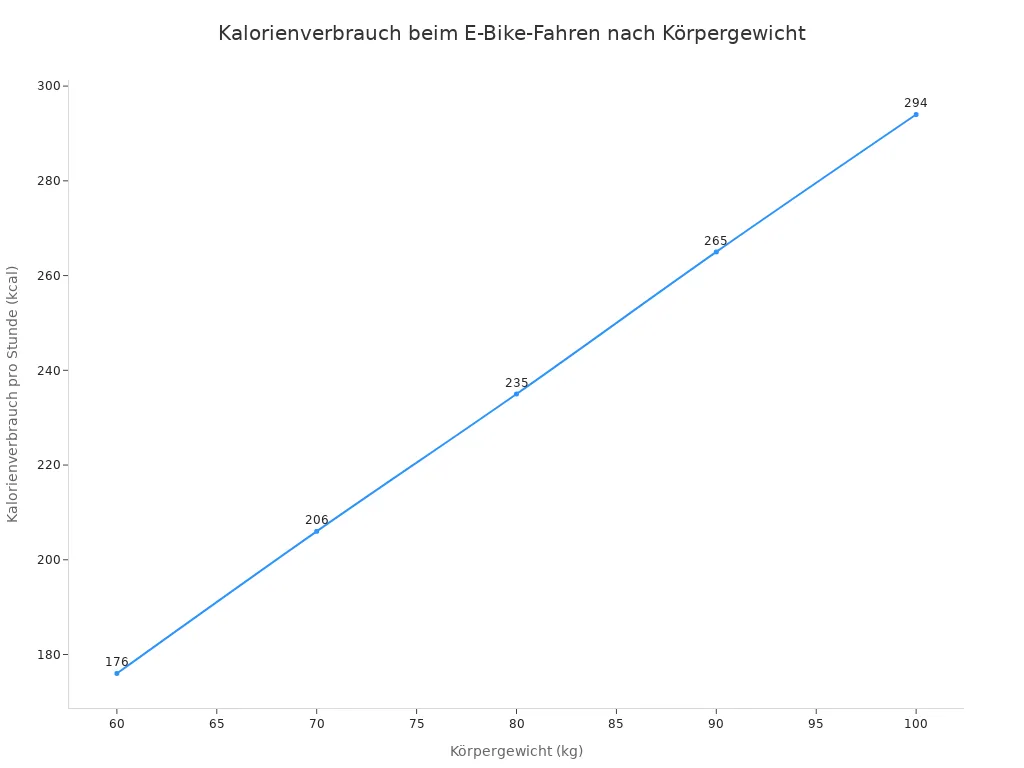
Depending on intensity and body weight, you burn between 100 and 600 kcal per hour. Just 30 minutes of daily riding will sustainably increase your daily energy expenditure and fitness. Heavier individuals burn more energy over the same distance.
Body weight (kg) |
Calorie consumption per hour (kcal) at 16–19 km/h & medium assistance |
|---|---|
60 |
176 |
70 |
206 |
80 |
235 |
90 |
265 |
100 |
294 |
A huge advantage is seen in the protection of your long-term health. Up to 80% of your body weight rests securely on the saddle. This extremely relieves your sensitive joints. Unlike traditional jogging, there are no abrupt impacts. Your knees and spinal discs remain fully protected.
Anderson et al. (2022) investigated the health benefits of commuting with e-bikes in inactive, overweight individuals. The study shows that e-bike riding represents a joint-friendly alternative with measurable health benefits, especially for this target group.
Believe firmly in your own capabilities! You possess all the prerequisites for your personal success. Every single kilometer brings you closer to your target weight. You have the full power within you for your own path.
Training management for weight loss success
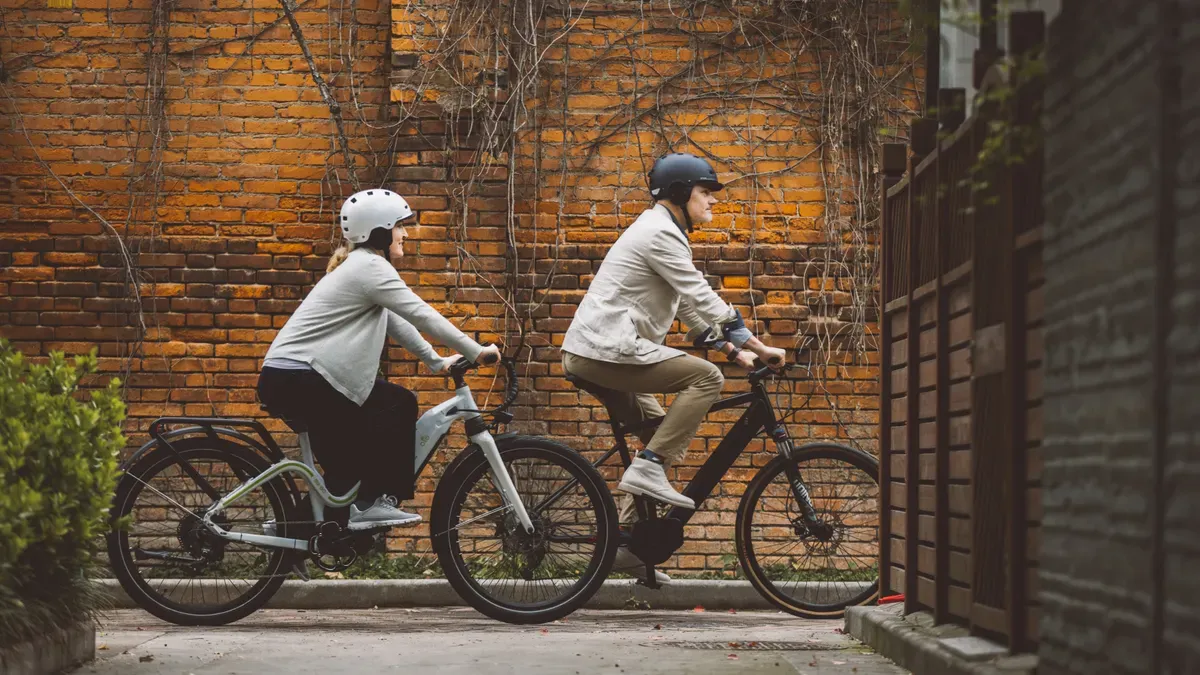
Managing your training determines your long-term weight loss success. You choose the intensity of every single ride yourself. The fine dosage of motor assistance steers your body purposefully into efficient fat burning. This allows you to achieve your athletic goals much faster and remain motivated for the long term.
Heart rate and assistance levels
Your heart rate reliably shows your precise degree of exertion at any time. You calculate your personal maximum heart rate with a simple and proven rule of thumb: 220 minus your current age.
At a value of 60 to 70 percent of your maximum heart rate, you are in the fat-burning zone. In this range, the body increasingly draws on fatty acids for energy. (Example: For a 25-year-old, this corresponds to a pulse between 117 and 137 beats per minute.)
Zone |
Percentage of max. heart rate |
Purpose |
|---|---|---|
Base endurance / Fat metabolism zone |
55–70 % |
Promotion of aerobic energy metabolism, fat burning |
Fat burning zone |
60–70 % |
Maximum fat burning |
High-Intensity Interval Training (HIIT) |
80–90 % |
Afterburn effect, carbohydrate burning |
You control your heart rate via the selectable modes of your motor. Choose the appropriate levels according to your individual goals:
Leisurely ride: Steady speed, little acceleration, low pulse.
Sporty ride: Frequent acceleration, changing assistance, higher pulse. In this scenario, calorie consumption increases significantly.
Lower assistance level: The rider performs more muscle work, which leads to higher calorie consumption.
Higher assistance level: The motor takes on more work, reducing your own physical exertion. This is suitable for recovery phases.
The assistance level influences the intensity with which the muscles are challenged. The lower the assistance level, the more muscle work is required, which leads to higher calorie consumption.
Training plan and daily integration
Consistency beats intensity in effective fat loss. For a lasting health-promoting effect, the World Health Organization recommends at least 150 minutes of moderate physical activity per week. You will easily meet this requirement with great joy.
A study by the Hannover Medical School (MHH) found that e-bike riders are out and about for an average of 135 minutes per week. This means they achieve about two-thirds of the WHO physical activity target.
You can effortlessly increase your weekly calorie deficit by establishing fixed daily habits. Use your two-wheeled vehicle regularly for commuting to work. In this way, you transform your daily commutes directly into valuable training sessions.
Mode of transport |
Calorie consumption per hour |
|---|---|
E-bike (22 km/h) |
200–300 kcal |
Normal bicycle (moderate, 20 km/h) |
400–550 kcal |
Car |
No calorie consumption (0 kcal) |
Choose your suitable sessions for your personal training week according to your own wishes:
Professor's recommendation: For sustainable weight loss, you should ride your bike 3-4 times per week for 60-90 minutes.
Alternative beginner recommendation: As a start, 30 minutes on 3-5 days per week or three 60-minute training sessions are sufficient.
With a 10 km commute (30 min.) by standard bicycle and a 75 kg person, that is about 250 kcal per day or over 50,000 kcal per year – which corresponds to about 7 kg of body fat.
Believe firmly in your own path and your strength! Albert Einstein once said: "Life is like riding a bicycle. To keep your balance, you must keep moving." You possess all the necessary skills for your personal desired result. Start your athletic transformation now and celebrate every single success!
Holistic approach to weight loss
Long-term weight loss success is achieved through the perfect interplay of movement and nutrition. You reach your athletic goals step by step with joy and patience.
"Eat and exercise—both must align!" – Prof. Dr. Ingo Froböse
Calorie deficit and nutrition
You manage your body weight via the right daily energy intake. The body draws energy from the muscles when it needs calories, which leads to muscle loss. Sustainable weight reduction does not require a crash diet, but a step-by-step approach. The body's transition takes between 6 and 9 months.
Combination instead of monotherapy: A combination of a healthy diet and activity will make your weight drop.
Limits of dieting alone: Experience has shown that a diet alone is not always enough to lose weight because the body eventually holds onto its own weight.
Practical implementation: Just 3 training sessions of 1–2 hours per week on the e-bike are enough to boost the metabolism and support weight loss.
Choose your nutrition strategy to match your individual sessions:
Strategy |
Description |
Benefits for fat loss with e-bike |
Source |
|---|---|---|---|
Low-Carb/Ketogenic Diet |
Reduction of carbohydrates to under 50g/day. The body uses fat as its main energy source.
Increased fat burning (fat oxidation), reduction of body fat percentage. Suitable for longer, moderate e-bike rides (base endurance).
[Professional cyclists]
Carbohydrate timing
Targeted intake of carbohydrates before/during/after intensive sessions to maintain performance.
Prevents performance dips during intensive e-bike sessions (e.g., intervals, hill climbs). Protects glycogen stores and maintains fat burning over a longer period.
[Professional cyclists]
Train with empty stores ("train-low") only in the base endurance range. Beginners should use such fasted sessions once a week.
Muscle building and basal metabolic rate
Less muscle mass lowers your basal metabolic rate and increases the risk of the yo-yo effect. Cycling daily for 30 minutes strengthens your leg and back muscles. You maintain your muscle mass and increase your daily energy expenditure even during rest phases.
Two men with a body weight of 80 kg show this clear difference: one has 22 kg of muscle mass, the other 29 kg. The extra 7 kg of muscle mass results in a daily basal metabolic rate difference of 200 calories.
Strength training with moderate weights increases the basal metabolic rate because muscle mass also consumes energy at rest. Anyone who regularly does moderate strength training builds muscle and thereby stabilizes their metabolism.
You hold all the tools for your successful transformation in your own hands. Start your journey toward more vitality now and celebrate every step of progress along your way!
Consistency and the right heart rate control in eco mode will bring you the desired weight loss success. You will reach your athletic goals fastest through this steady, moderate activity.
Integrate your e-bike firmly into your daily routine. For example, use the modern bicycle actively for your daily commute to work. This way, you burn many extra calories without physical overexertion. Your body protects its joints while reliably burning fat.
“Even the longest journey begins with the first step.” – Laozi
Get on your bike today feeling motivated! Start your first moderate ride right now with full joy. Adjust your diet slightly. You have the power for your success within you!
FAQ
How much weight can you lose with an e-bike?
Depending on intensity and body weight, you burn between 100 and 600 calories per hour. Combined with a slight adjustment to your diet, you will achieve a reliable calorie deficit. This is how your body fat melts away step by step.
Which motor level is best for weight loss?
It is best to choose eco mode or the tour level. This low assistance actively challenges your muscles. Your heart rate remains stable in the fat-burning zone. Simply use the turbo level specifically for very steep uphill sections.
Is daily commuting to work enough for success?
Yes, regular commuting increases your weekly calorie deficit effortlessly. Just 30 minutes of daily riding noticeably improves your fitness. You turn your usual routes directly into valuable training sessions and reliably burn fat.
Is e-biking just as effective as normal cycling?
The e-bike is easy on your joints and prevents rapid overexertion. As a result, you often ride longer distances and stay motivated in the long run. The constant movement in the optimal heart rate range makes your training extremely effective.