
Are you looking for the perfect motor for your new e-bike? As a beginner, a mid-drive motor offers you the best all-around package for all types of terrain. Sporty riders in flat areas benefit from the dynamic rear-hub motor. Budget-conscious urban commuters are best off choosing the affordable front-hub motor. Select your favorite based on your daily commute!
Key Takeaways
Mid-drive motors offer beginners the best riding experience for all types of terrain.
High torque is especially helpful on steep hills.
You should always test different e-bikes during a test ride.
Comparison of the three e-bike motor types
Choosing the right drive system determines the entire riding feel on your daily tours. Each motor type brings specific strengths for different terrain profiles and intended uses.
The mid-drive motor as an all-rounder
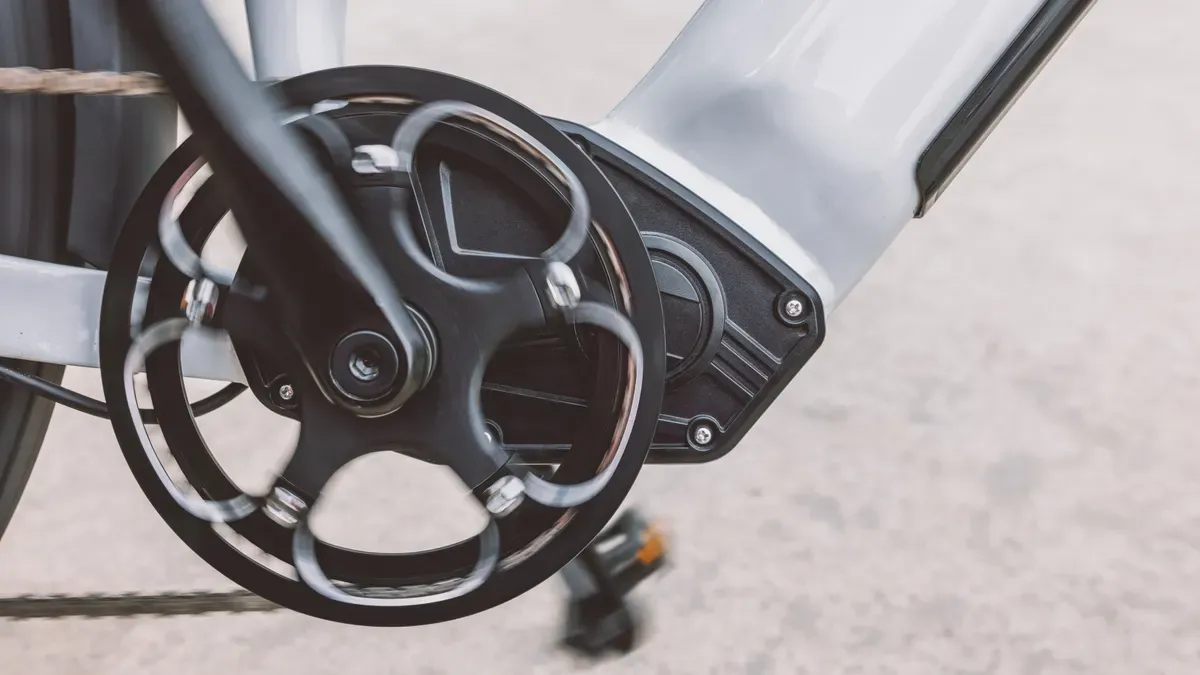
The mid-drive motor is located directly at the bike's bottom bracket. This position has an extremely positive effect on handling and gives you perfect control over your e-bike in any situation.
Pros: The central positioning at the bottom bracket ensures a lower center of gravity and a balanced load distribution. This increases stability and leads to safe handling.
Cons: The system puts more stress on the chain and sprockets than other drive systems.
One important aspect concerns the range and efficiency of the motor on varied terrain:
Motor type |
Influence on maximum range |
Functionality / Reason |
|---|---|---|
Mid-drive motor |
Higher overall efficiency, maximizes range (especially uphill). |
Uses the bike's gears to always work in the optimal RPM range and conserve the battery. |
Rear-hub motor |
Range increase of approx. 5–10% possible under specific conditions. |
Can recover energy when braking on hilly terrain in models with recuperation. |
Due to the direct power transmission to the chain, mid-drive motors cause higher material wear. The following factors cause the greatest stress on the chain and cassette:
Structural feature: The entire motor power, together with your own pedaling force, acts directly on the drivetrain.
Increased load and weight: High vehicle weight increases tensile forces, especially during start-up.
Incorrect handling: Shifting under full load and riding in gears that are too heavy with a low cadence put extreme stress on the material.
Poor maintenance: Dirt from dust or sand acts like sandpaper; insufficient lubrication increases friction.
Hub motors for city and flat land
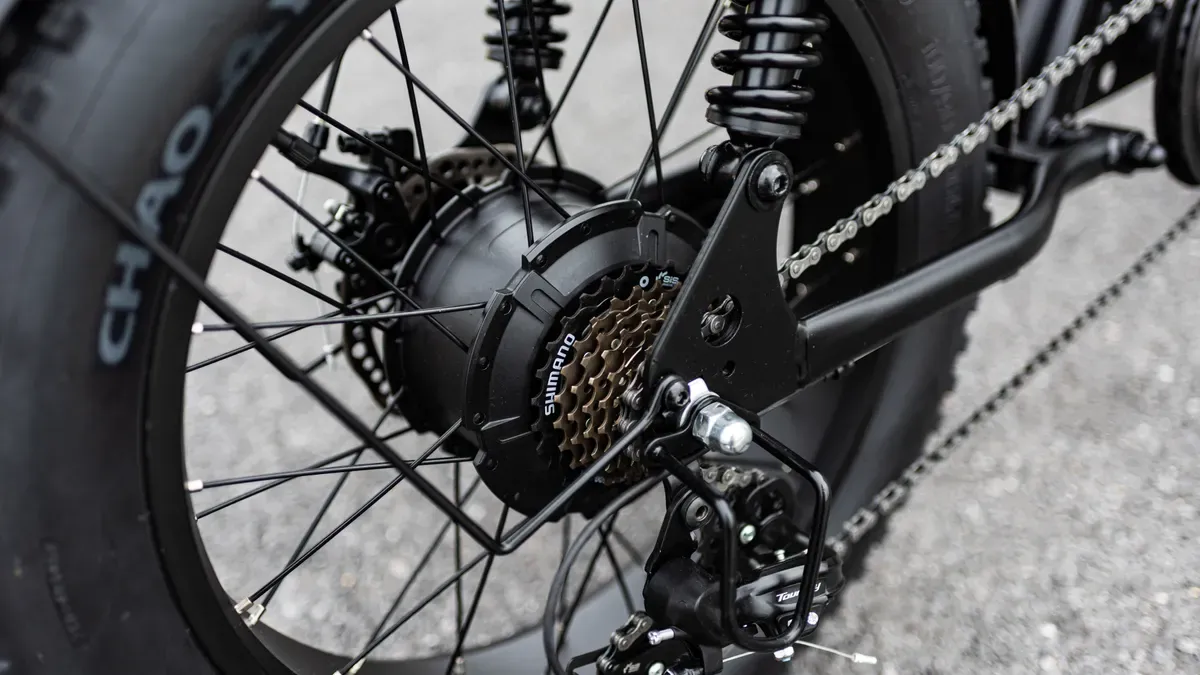
Hub motors are located directly in the center of the front or rear wheel. This design drives the wheels directly, thereby sparing the chain.
A rear-hub motor pushes you powerfully from behind. This feels very sporty and dynamic. A front-hub motor pulls the bike forward and offers an inexpensive option for short distances on flat land. However, changing a tire on a hub motor requires some care.
Aspect |
Procedure / Impact for rear-hub motor |
|---|---|
Additional effort |
Requires professional removal, taking cable routing and electronics into account |
Assembly steps |
Checking the torque retention, tension-free reassembly, and subsequent functional test |
Cost difference |
Higher effort leads to higher repair shop costs (approx. €40 for rear wheel vs. approx. €25 for front wheel) |
Changing the inner tube and tire is slightly more complex compared to other motor types because the motor cable must be disconnected; however, modern plug-in connections limit the extra time required for experts to just a few minutes.
A hub motor is therefore excellent for a city e-bike if you primarily ride on flat terrain.
Properly evaluating performance and key figures
The technical data reveals a lot about the actual strength of the drive. European laws strictly limit the rated continuous power of motors to 250 watts. However, short peak power outputs of up to 750 watts help you when starting at steep traffic lights.
Torque and assistance levels
Torque indicates the motor's actual power in Newton-meters (Nm). Higher values accelerate you noticeably faster and push you effortlessly up steep sections.
Note on range: Higher assistance levels consume more energy. Eco mode conserves your battery and maximizes distance. Turbo mode offers full power but drains the battery very quickly.
Sensitive sensors continuously measure your pedaling force and cadence. This allows the system to dose the motor power extremely smoothly. A natural riding feel is created, and you always retain full control.
Requirement profiles from city to trail
Choose the motor power to match your personal routes. Unnecessarily high power increases weight and shortens battery life.
Terrain type |
Recommended torque |
Intended use |
|---|---|---|
Flat land / City |
30–50 Nm |
Offers relaxed riding on level paths. |
Hills / Tours |
60–70 Nm |
Masters long excursions and moderate inclines. |
Mountains / Trail |
85+ Nm |
Provides maximum climbing power for steep terrain. |
For flat commuting routes, a compact motor is perfectly sufficient. You enjoy easy handling of your bike in everyday traffic. On demanding uphill trails, however, you need powerful motors from 85 Nm. These powerhouses safely push you up over roots and steep ramps. A suitable e-bike motor increases riding pleasure on every tour.
Riding feel and practical criteria when purchasing an e-bike
The riding feel depends significantly on the installed sensor technology. The controller decides how directly the drive responds to your pedaling movement.
Sensor technology and natural pedaling
The sensor technology regulates the power delivery of the motor while riding. Sensitive sensors create a familiar bicycle feel.
Criterion |
Cadence sensor |
Torque sensor |
|---|---|---|
|
Measurement variable |
Number of crank revolutions |
Actual pedaling force applied |
|
Motor control |
Adds power constantly upon movement |
Dynamically adapts motor power to pedal pressure |
|
Riding feel |
Unnatural thrust, delayed response |
Very natural, direct riding feel |
A torque sensor measures the slightest deformations on the axle via strain gauges. As a result, the motor reacts to changes in your pedal pressure without delay.
Behavior without motor and above 25 km/h
Modern drives completely disconnect the motor at higher speeds. An integrated freewheel decouples the motor from the bottom bracket gear from the legal limit of 25 km/h.
Practical tip: Motors like the Bosch Performance Line CX or the BOSCH Active Line Plus offer negligible pedaling resistance. This means you pedal absolutely effortlessly even without motor assistance.
Checklist for the test ride
Thoroughly test your preferred e-bike at a specialist retailer before making your purchase decision. Pay attention to the following points on the test ride:
Adjust ergonomics: Adjust the saddle height and handlebar position for a relaxed riding posture.
Compare drive systems: Cycle through the assistance levels one by one and test the response behavior on inclines.
Check noise development: Ride on a quiet route without traffic noise. Pay attention to motor whirring as well as disturbing frame resonances under full load on steep climbs.
When buying, pay attention to the motor position, appropriate torque, and modern sensors. Visit a specialist retailer now for an extensive test ride. Test different drive systems directly on inclines. In the end, your personal riding feel decides which is the perfect e-bike for your everyday life. 🚴