
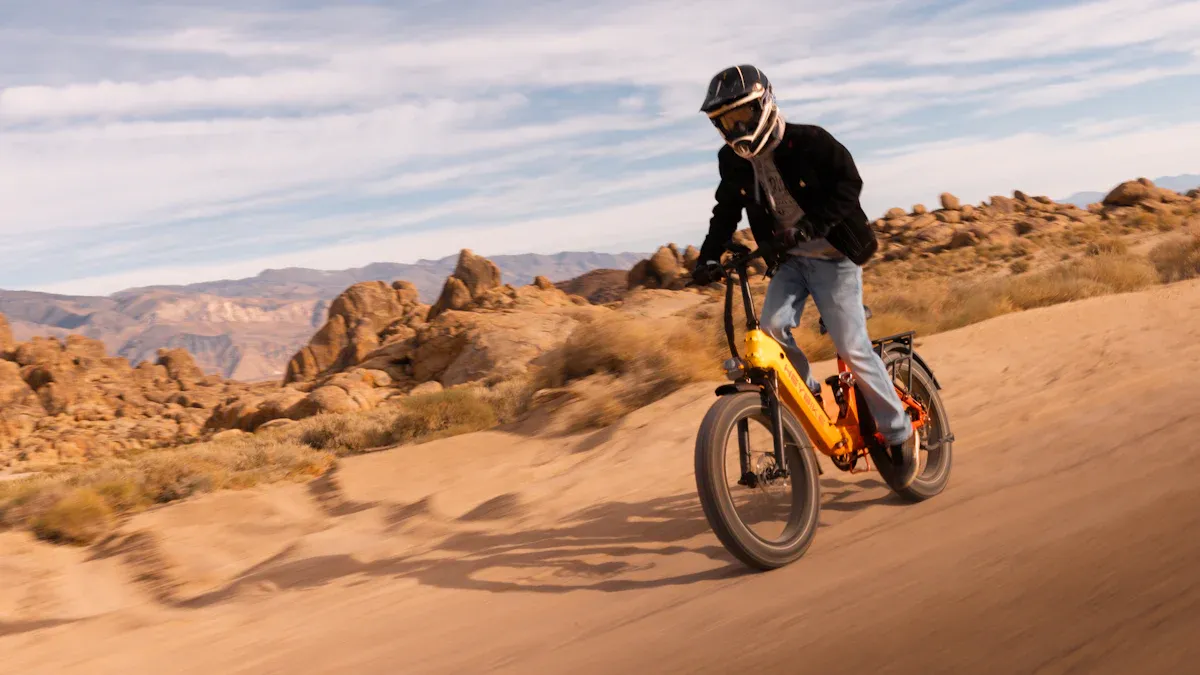
You are facing your first e-bike and might be wondering why choosing the right motor is so important. Your riding style and the terrain profile determine which motor suits you. In 2023, 2.1 million e-bikes were sold. E-mountain bikes lead the market with a 39% share, and cargo bikes are catching up.
Key Takeaways
Choose the motor based on your riding style and terrain. Mid-drive motors are ideal for mountains and tours, while hub motors are suitable for flat city riding.
Pay attention to motor power and torque. 40-60 Nm is sufficient for city riding, while you need at least 60 Nm for steep inclines.
Regular maintenance is important. An annual inspection helps extend the life of your motor and avoid expensive repairs.
E-Bike Motor Types
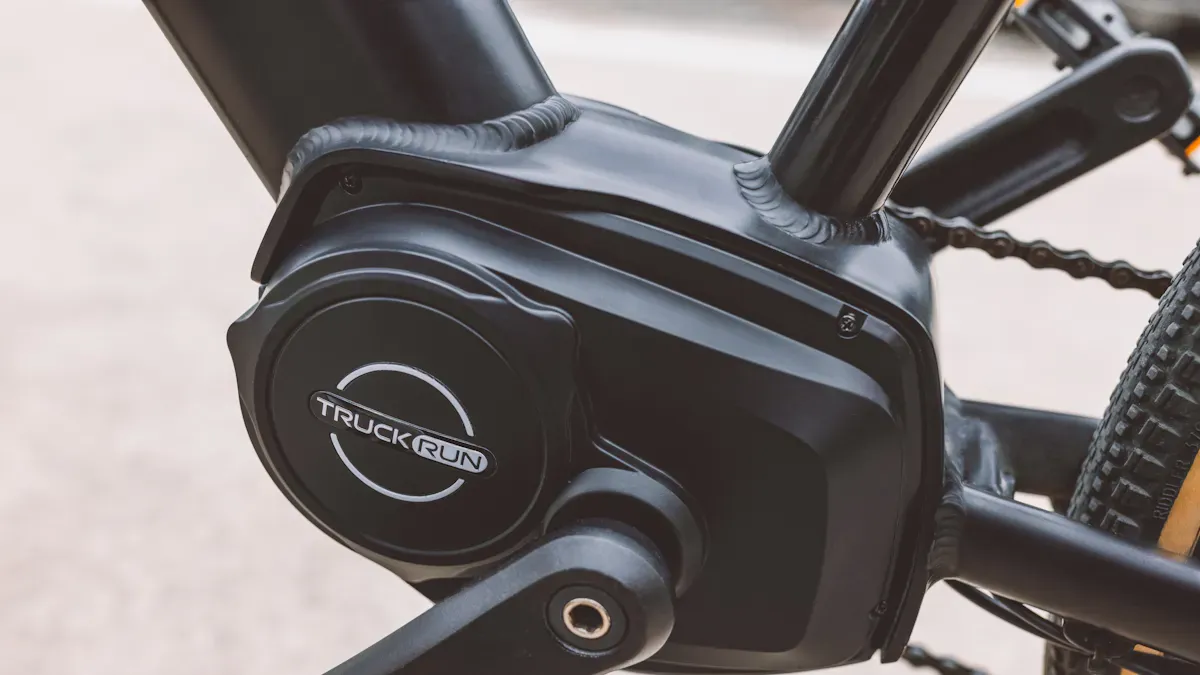
You have a choice between different motor types when buying an e-bike. In Germany, you will find three types:
Front-wheel motor
Mid-drive motor
Rear-wheel motor
Most e-bikes use a mid-drive motor. According to market statistics, mid-drive motors have a share of about 80 percent. Hub motors are less common.
Hub Motor: Advantages & Disadvantages
A hub motor is located either on the front or rear wheel. You will feel the extra weight at the back or front, which influences handling. Especially in curves, the rear wheel can drag more. On uneven terrain, you will notice that the weight at the rear changes the handling. Hub motors are often cheaper and low-maintenance. They are well-suited for flat routes and city rides. If you only ride short distances, a hub motor is usually sufficient.
Mid-Drive Motor: Advantages & Disadvantages
The mid-drive motor is positioned centrally between the wheels. This ensures better weight distribution. You feel more stable, especially on long tours or off-road. Mid-drive motors offer more power and are ideal for steep inclines. They are versatile and fit many types of e-bikes. Experts recommend mid-drive motors for trekking and mountain bikes. The table shows the market shares:
Motor Type |
Market Share |
|---|---|
Mid-drive motor |
Largest market share |
Hub motor |
Less common |
If you want to remain flexible, a mid-drive motor is often the best choice. For city riding, a hub motor is sufficient, but for mountains and tours, you need more power.
Application & Motor Selection
Choosing the right motor depends heavily on where you ride your e-bike. The topography and your daily routes determine which motor variant suits you best. You should consider whether you ride mainly in the city, in the mountains, or flexibly on various paths.
City: What is important?
In the city, you need a motor that supports you reliably and comfortably. Most routes are flat, and traffic lights and stop-and-go are part of everyday life. You benefit from a motor that responds smoothly and requires little maintenance. Many specialist journals recommend specific motors for urban areas. Take a look at the following table:
Motor |
Advantages |
Disadvantages |
|---|---|---|
Owuru |
Pleasant riding feel, smooth gear shifting |
Less powerful, vibrations, less support on hills |
Pinion |
High support, quiet in operation |
Noise in the lower gears, heavier than Owuru |
Valeo |
High support, good performance |
Louder than Owuru, less pleasant with vibrations |
You can ride through the city well with a hub motor or a light mid-drive motor. These motors offer enough support for short distances and ensure a pleasant riding experience. If you live in a hilly city, you should pay attention to stronger motor support. Many manufacturers adapt their motors to the needs of such regions.
Mountains & Tours: What to look for?
Are you planning tours in low mountain ranges or want to conquer steep inclines? Then you need a powerful motor with high torque. Mid-drive motors are the best choice here because they offer more control and performance. For touring riders and e-mountain bikes, experts recommend the following values:
Rider Group |
Recommended Motor Power |
Battery Capacity |
|---|---|---|
Touring riders in low mountain ranges |
500–750 Wh |
|
E-mountain bikes in alpine terrain |
at least 85 Nm |
- |
Heavy riders (over 100 kg) |
at least 75 Nm |
- |
Seniors and comfort-oriented riders |
50–65 Nm |
- |
You should opt for a high-performance mid-drive motor if you ride uphill often. For everyday riding, a less powerful motor is sufficient, but more power is important for tours. Mid-drive motors offer you the best control and help you tackle even steep paths.
Tip: Choose a battery with at least 500 Wh if you plan longer tours. That way, you reach your destination relaxed.
All-rounders: Flexible Solutions
Do you want to remain flexible and use your e-bike for various purposes? Then you need a solution that works both in the city and on tours. There are several motor variants that are suitable as all-rounders:
Power mid-drive motor: Ideal for mountain rides and cargo bikes, for example, Bosch Performance Line CX.
Endurance mid-drive motor: Perfect for city e-bikes, like Bosch Active Line.
Rear-wheel hub motor: Offers elegant support, for example, from Bafang.
Frame motor: Innovative solutions like the Vivax seat tube motor.
Many premium e-bikes rely on mid-drive motors because they are versatile and reliable. You can also choose a rear-wheel hub motor if you prefer sporty dynamics. Front motors are budget-friendly and are often used on city bikes.
Note: Consider how often you want to use your e-bike off-road or on long distances. This is how you will find the right motor variant for your everyday life.
E-Bike Power & Torque
Watts & Newton Meters Explained
You have probably wondered what watts and Newton meters mean for an e-bike. Here is the answer:
Watts measure the power of the motor. It shows you how strong the motor can perform.
Newton meters indicate the torque. It shows how much force the motor exerts when pedaling. This is especially important when you start at a traffic light or want to go up a steep hill.
The power and torque determine how quickly you accelerate and how easy it is to start pedaling. If you often have to stop and start again, you will notice the difference immediately.
Tip: A cadence of over 75 revolutions per minute saves battery and ensures a pleasant riding experience.
Recommendations for City and Mountains
Not every motor suits every application area. Take a look at the typical values:
Application Area |
Torque (Nm) |
|
|---|---|---|
City riding |
40–60 |
250–500 |
Moderate inclines |
50–70 |
500–750 |
Challenging terrain |
over 70 |
750–1000 |
For the city, a motor with 40 to 60 Nm of torque is sufficient. You get enough support for flat paths and stop-and-go. If you plan tours or ride uphill often, you should choose at least 60 Nm. Real mountain fans opt for 75 Nm or more.
City e-bike: 40 to 60 Nm for flat routes.
Trekking and SUV e-bike: 60 to 85 Nm for versatile use.
E-MTB and gravel bikes: 75 to 100 Nm for sporty adventures.
More torque helps you when starting off and on steep passages. High power ensures fast acceleration, even with headwinds or heavy luggage.
Battery & Range

Influence of the Motor
You are surely wondering how the motor influences the range. The answer is simple: the motor determines how far you get with your e-bike. A built-in 250-watt motor gets you about two hours on full power. Manufacturers like Specialized specify up to 5.33 hours for the Turbo Levo 4 off-road if you use an 840 Wh battery with a range extender. The efficiency of the motor plays a major role. Motors from Avinox and S-Works are considered particularly energy-efficient. The maxon AIR S motor reaches an efficiency of 81%. The weight of the bike and your riding style also influence the range. Many e-bike riders travel between 1,500 and 2,000 kilometers per year. As you can see, the choice of motor decides how long you are on the road.
Tips for Combination
Do you want to get the best out of the battery and motor? Then pay attention to the right combination. There are different battery concepts:
Battery Concept |
Capacity (Wh) |
Description |
|---|---|---|
Standard |
500 - 750 |
Internal or external battery |
Mini |
252 - 320 |
Lightweight battery, e.g., FAZUA or Shimano |
Modular |
up to 1,250 |
Expandable with external battery, e.g., Bosch DualBattery system |
The following factors influence the range:
Support level
Terrain and elevation gain
Temperature
Rider weight
Efficiency of the bike
Cadence
Lighter systems achieve more altitude meters per kilogram of battery. You can stay flexible with modular batteries and travel longer distances. Choose a motor with high efficiency and a battery that suits your riding style. This way, you can enjoy every tour without worrying about the range.
Maintenance & Costs
Effort in Comparison
Do you want to know how much care your e-bike motor needs? The differences between hub motor and mid-drive motor are clear:
Hub motors are almost maintenance-free. The system is encapsulated and protects the technology. You rarely have to worry about the drive.
Mid-drive motors need more attention. They transfer more force to the chain and sprocket. This leads to faster wear and tear. Especially under high load, earlier maintenance may be necessary.
You should bring your e-bike in for a system diagnosis once a year. The workshop will then check the software, calibrate the sensors, and check all electrical connections. This keeps your bike reliable.
Tip: Regular maintenance saves money and nerves in the long run. Small checks prevent major damage.
Cost Factors
There are large differences in price. E-bikes in Germany usually cost between 1,500 and 3,000 euros. Models under 1,000 euros often offer 250 to 500 watts of motor power and a range of 30 to 90 kilometers.
Price Range |
Motor power |
Range |
|---|---|---|
Under 1,000 euros |
250 - 500 watts |
30 - 90 kilometers |
1,000 - 3,000 euros |
Varies by model |
Varies by model |
Over 3,000 euros |
Higher motor power |
Longer ranges possible |
Maintenance costs for motors are usually between €200 and €500. Mid-drive motors often result in higher follow-up costs because the chain, sprockets, and cables wear out faster. An inspection costs around €90, which is more than for regular bicycles. The lifespan of a brand-name mid-drive motor is between five and ten years. A two-year warranty generally applies to the motor and electronics.
Note: With regular care and careful riding, you can significantly extend the lifespan of your motor.
You have many options when it comes to e-bike motors. For beginners, experts emphasize the following in particular:
Seating position: You should sit comfortably.
Equipment: An anti-lock braking system (ABS) will help you.
Traction control: You don't need this.
Satisfaction |
|
|---|---|
Trekking e-bike |
High capacity, powerful motor |
City e-bike |
Upright seating position, quiet |
e-Mountain bike |
Lots of energy, power |
S-Pedelec |
Adapted equipment |
Think about what suits you. Get advice from a specialist retailer.
FAQ
How do I find the right motor for my route?
Look at the terrain. Flat paths require less power. Mountains require more torque. Ask your dealer for a test ride.
Do I have to service my e-bike motor regularly?
Yes, you should go for an inspection once a year. This keeps your motor in good shape. Small checks prevent major repairs.
How does my weight affect the motor choice?
Your weight determines how much power the motor needs. If you are heavier, choose a motor with more torque. This allows for a relaxed ride.