
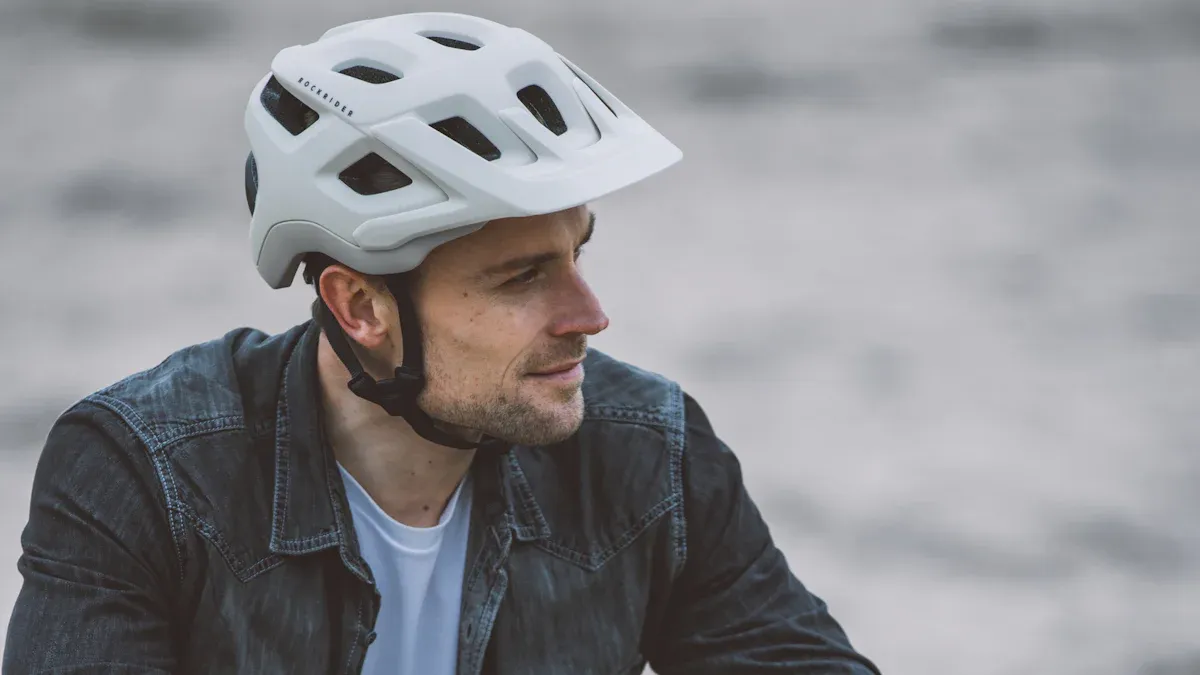
Do you ride an e-bike and wonder if there is a mandatory helmet requirement for e-bikes? The answer depends on the type of e-bike. However, safety should always come first—especially for rental riders. A helmet protects your head and can save lives in the event of an accident. Always observe the applicable regulations.
Key Takeaways
Always wear a helmet. It protects your head and can save lives.
Check the rules regarding mandatory helmet use. This is important, especially for rented e-bikes.
Check your e-bike before every ride. Test the brakes, lights, and tires for safety.
Helmet requirements for e-bikes: Legal foundations
Legal regulations on mandatory helmet use
Mandatory helmet use for e-bikes depends on the type of vehicle. For S-pedelecs, which reach speeds of up to 45 km/h, Section 21a of the German Road Traffic Regulations (StVO) mandates the wearing of a helmet. A bicycle helmet is sufficient, as there are no specific requirements for the helmet itself. Violations of this regulation can result in a fine of 15 euros. For regular e-bikes that travel up to 25 km/h, there is no mandatory helmet requirement by law. Nevertheless, wearing a helmet is strongly recommended to minimize the risk of serious head injuries.
Did you know that 71% of the population in Germany support a general helmet requirement for cyclists? For e-bikes, this approval even rises to 85%.
Differences between pedelec, S-pedelec, and e-bike
The terms pedelec, S-pedelec, and e-bike are often used interchangeably, but they differ significantly. A pedelec only supports you while pedaling and reaches a maximum of 25 km/h. It is considered a normal bicycle and is not subject to a mandatory helmet requirement. S-pedelecs, on the other hand, are faster and can reach up to 45 km/h. Legally, they are considered mopeds and require the wearing of a helmet. E-bikes that can be ridden without pedaling are also motorized vehicles and are subject to specific regulations depending on speed and power.
Vehicle type |
Accident risk compared to normal bicycles |
|---|---|
Pedelecs |
|
E-bikes |
No more dangerous |
S-pedelecs |
Higher risk due to speed |
Age restrictions and driver's license requirements
The use of e-bikes and S-pedelecs is not regulated the same way for all age groups. S-pedelecs require a class AM driver's license, which can be obtained from the age of 16. There are no age restrictions for pedelecs and regular e-bikes. However, statistics show that older people have a higher risk of suffering serious injuries in an accident. The average age for pedelec accidents was 55 in 2021. Interestingly, the number of accidents involving younger riders under 45 is also increasing.
In 2023, nearly a third of those injured in pedelec accidents were under 45 years old.
The number of pedelec accidents involving personal injury has increased more than tenfold since 2014.
Regulations on the use of cycle paths and roads
The use of cycle paths and roads depends on the type of e-bike. Pedelecs may use cycle paths without restriction, while S-pedelecs must travel on the road. In some federal states, there are additional regulations:
Federal State |
Mandatory helmet regulation |
|---|---|
Bavaria |
General mandatory helmet use for all cyclists |
North Rhine-Westphalia |
Mandatory helmet use for children and adolescents up to 18 years |
Baden-Württemberg |
Mandatory helmet use only on designated cycle paths |
Lower Saxony |
No legal helmet requirement, but recommended |
If you rent an e-bike, you should inform yourself about local regulations before setting off. This helps you avoid fines and ensures a safe ride.
Safety regulations for e-bikes in detail
Importance of the helmet for safety
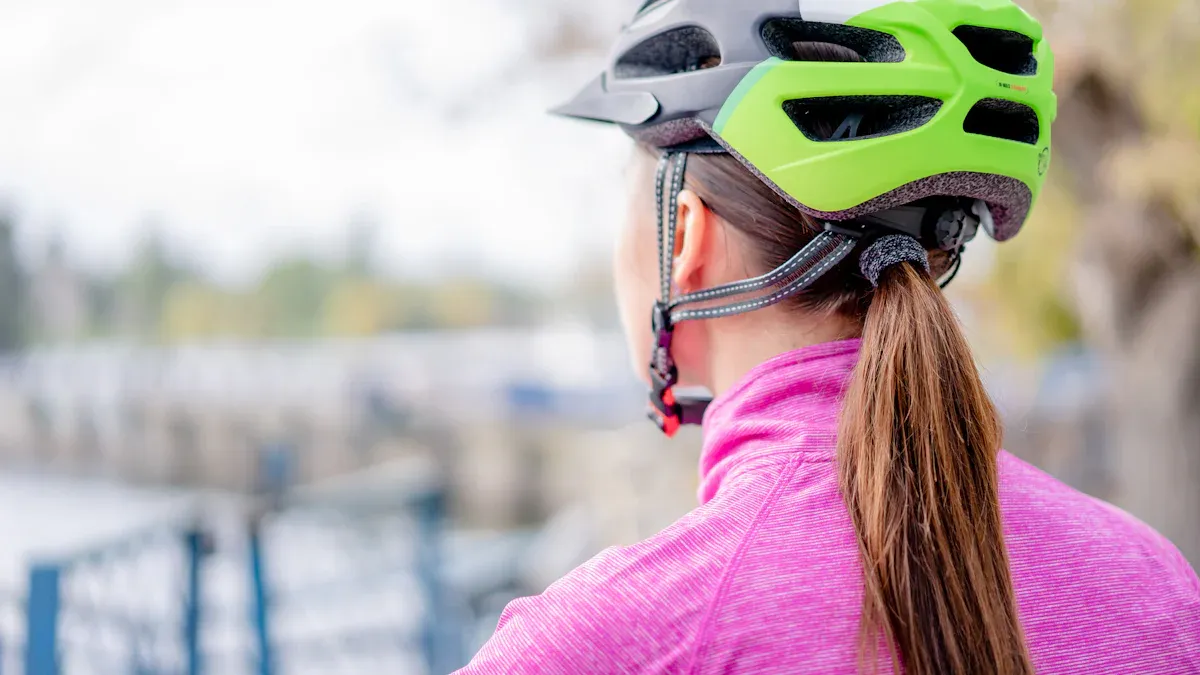
A helmet protects your head and can save lives in an accident. Studies show that helmets reduce the risk of head injuries by 20-80%. A study by the Accident Research of Insurers (UDV) found that only 16% of injured cyclists were wearing a helmet. However, those wearing helmets mostly suffered only minor head injuries. Without a helmet, head injuries are nearly ten times more frequent.
🚴 Tip: Always wear a helmet that is certified according to the NTA 8776 standard. This standard provides additional protection, especially for the back of the head.
Technical requirements for e-bikes
E-bikes must meet certain safety standards to be used safely in traffic. Helmets with TÜV certification offer additional safety because they have undergone rigorous testing. Your e-bike's lighting and reflectors also play an important role. They increase your visibility and significantly reduce the risk of accidents.
Certification/Standard |
Description |
|---|---|
NTA 8776 |
Specific for e-bike helmets, offers additional protection. |
TÜV certification |
Additional testing for increased safety. |
Mandatory helmet use depending on e-bike type
Mandatory helmet use for e-bikes depends on the type of vehicle. For S-pedelecs that travel up to 45 km/h, a helmet is required by law. For pedelecs and normal e-bikes that reach a maximum of 25 km/h, there is no mandatory helmet requirement. Nevertheless, you should always wear a helmet to protect yourself.
📊 Did you know? In 2023, 190 people lost their lives in pedelec accidents. Older people aged 65 and over are particularly at risk.
Best practices for rental riders
Safety check before the ride
Before using a rented e-bike, you should perform a thorough safety check. Check the brakes, lighting, and tire pressure. Functioning brakes are crucial for reacting quickly in dangerous situations. Intact lighting ensures that you are highly visible even in poor light conditions. Ensure that the battery is sufficiently charged to avoid unexpected interruptions during the ride.
🚲 Tip: Test the e-bike in a safe area before you head out into traffic. This allows you to familiarize yourself with the controls and functions.
Wearing a suitable helmet
A helmet is your most important protection in an accident. Studies prove that wearing a helmet significantly reduces the risk of serious head injuries. According to a study by HFC Human-Factors-Consult GmbH from 2017, helmets can prevent 20-80% of head injuries. Another study by the Accident Research of Insurers (UDV) from 2014 shows that only 16% of injured cyclists were wearing a helmet. Helmet wearers, however, mostly suffered only minor head injuries.
Year |
Study |
Result |
|---|---|---|
2017 |
HFC Human-Factors-Consult GmbH |
Helmet can prevent serious head injuries; 20-80% of head injuries are avoided. |
2014 |
Accident Research of Insurers (UDV) |
Only 16% of injured cyclists wore a helmet; helmet wearers suffered only minor head injuries. |
Choose a helmet that fits well and is certified according to the NTA 8776 standard. This standard provides additional protection, especially for the back of the head.
Compliance with traffic rules
Compliance with traffic rules is not only legally required but also an essential contribution to your safety. Always ride on the correct side of the road and observe traffic lights and road signs. Statistics show that the number of accidents involving e-bikes has risen sharply in recent years. In 2014, 2,245 accidents were registered, while in 2021 there were already 17,285. This corresponds to an average increase of 1,880 accidents per year.
Year |
Number of accidents |
|---|---|
2014 |
2,245 |
2021 |
17,285 |
Average annual increase |
1,880 |
⚠️ Note: In 2024, one in six traffic fatalities was a cyclist. A total of 441 cyclists died in accidents, 192 of them on an e-bike.
Defensive riding style and attentiveness
A defensive riding style can save lives. Always maintain a sufficient distance from other road users and avoid risky overtaking maneuvers. Be especially attentive at intersections and junctions, as most accidents occur there. Use your bell to alert others to your presence and maintain eye contact with car drivers to ensure they notice you.
👀 Remember: Distractions such as smartphones or headphones can significantly impair your reaction time. Concentrate fully on the traffic.
International differences regarding mandatory helmet use for e-bikes
Comparison of regulations in European countries
Mandatory helmet use for e-bikes varies greatly between European countries. In some countries like the Netherlands, there is no general mandatory helmet requirement for pedelecs. S-pedelecs, on the other hand, are considered mopeds there and must travel on the roadway. Belgium has created its own category for S-pedelecs, which includes specific regulations for the use of cycle paths. In Denmark, S-pedelecs are permitted to use cycling infrastructure as long as they adhere to the same rules as normal bicycles.
A look at helmet usage rates also shows significant differences:
In countries like Malta, Finland, and Spain, there is a mandatory helmet requirement for e-bike riders outside built-up areas. Australia, New Zealand, and South Africa generally mandate the wearing of a helmet. These differences demonstrate how important it is to inform yourself about local regulations before a trip.
🌍 Tip: Inform yourself in advance about the rules of your destination to avoid fines and stay safe while traveling.
Tips for rental riders traveling abroad
When you rent an e-bike abroad, you should keep some important points in mind. First, check the local regulations regarding mandatory helmet use. In countries like Spain or Slovakia, mandatory helmet use only applies outside of cities. In other countries like Australia or South Korea, wearing a helmet is always mandatory.
Ensure that the rented helmet fits well and meets safety standards. Many rental stations offer helmets that are specifically certified for e-bikes.
🚴 Note: In countries with a low helmet usage rate, such as the Netherlands, you should ride especially carefully. Defensive riding and attentiveness are crucial here.
Additionally, you should be familiar with the country's traffic rules. In some countries, S-pedelecs are permitted to use cycle paths; in others, they must ride on the road. Inform yourself in advance to travel safely and in compliance with the law.
Safety starts with you. Mandatory helmet requirements and safety regulations for e-bikes save lives and reduce injuries.
85% of respondents support mandatory helmet use for e-bikes.
426 cyclists died in traffic in 2020.
🛡️ Tip: Always wear a helmet and check your e-bike before every ride. Your attentiveness and defensive riding style protect you and others.
FAQ
As a rental rider, must I always wear a helmet?
Yes, especially with S-pedelecs. For standard pedelecs, there is no legal requirement, but a helmet protects you from serious head injuries. Safety first!
Which helmets are suitable for e-bikes?
Choose helmets with the NTA 8776 standard. These offer optimal protection, specifically for higher speeds. Ensure a good fit and certified quality.
Am I allowed to use bike paths with a rented S-pedelec?
No, S-pedelecs belong on the road. Familiarize yourself with local regulations to avoid fines and stay safe while riding.
🚴 Tip: Before every ride, check the brakes, lighting, and battery of your rental e-bike. Safety starts with a thorough check!