
Choosing between a hardtail and a full-suspension mountain bike depends heavily on your personal requirements. Are you looking for a lighter and more affordable bike? Then a hardtail might be the better choice. You can find a good hardtail starting at 1200 euros, whereas a high-quality full-suspension bike starts at around 1800 euros. However, full-suspension bikes offer more comfort and control, especially on challenging terrain. Because of their more complex design, they are more expensive, which means that hardtails in the same price range are often better equipped. Consider which features are more important to you before deciding between a hardtail and a full-suspension mountain bike.
Key Takeaways
Hardtails are lighter and cheaper. They are a good fit for beginners and people who ride infrequently and want to save money.
Full-suspension bikes are more comfortable and safer on bumpy paths. They are better for experienced riders who want to tackle difficult trails.
Hardtails are simpler and cheaper to repair. Fewer parts mean less work and lower costs.
Whether you choose a hardtail or a full-suspension bike depends on your riding style and budget. Consider what matters most to you before making your choice.
Look at the wheel size. 29-inch wheels are more comfortable and provide more grip. 27.5-inch wheels are more agile.
What is a hardtail?
Definition and characteristics
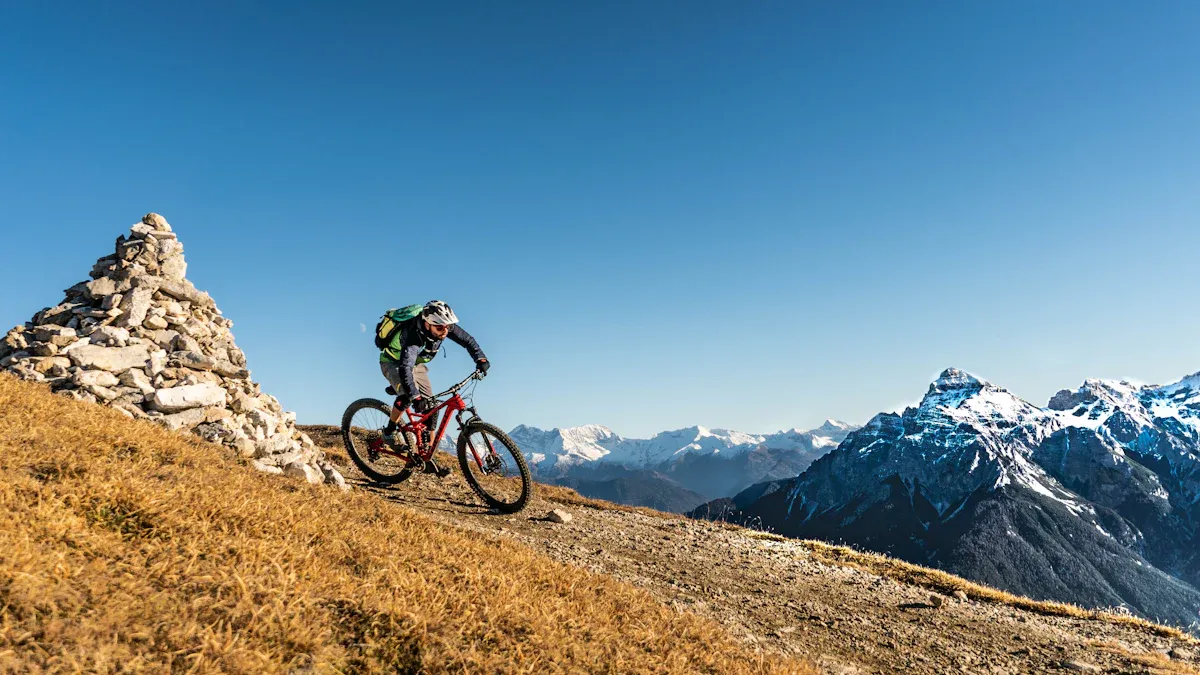
A hardtail is a mountain bike that only has suspension on the front wheel. The rear wheel remains unsuspended, resulting in a rigid frame construction. This design makes hardtails lighter, cheaper, and lower-maintenance than full-suspension bikes. Typically, hardtails feature a suspension fork with 100 to 120 millimeters of travel. They are suitable for various areas of use, ranging from relaxed tours to more aggressive descents.
Feature |
Description |
|---|---|
Rear construction |
Rigid construction without suspension |
Suspension fork |
Uses suspension forks with 100 to 120 millimeters of travel |
Weight and price |
Generally lighter and cheaper than full-suspension mountain bikes |
Riding feel |
Offers a direct riding feel that improves technical skills |
Advantages of a hardtail
Lighter weight (8-13 kg)
Hardtails are lighter than full-suspension bikes. The lower weight makes climbing easier and ensures more agile handling. You will notice the difference, especially on long routes.
More affordable price (from approx. €500–€1200)
A major advantage of hardtails is their price. You can find a good model for as little as 500 euros. In comparison, full-suspension bikes often don't start until 1500 euros. If you have a limited budget, a hardtail offers more features for your money.
Less maintenance due to fewer moving parts
Since a hardtail does not have a rear suspension, there are fewer parts that need maintenance or repair. This saves you time and money in the long run.
More direct riding feel and better power transfer
The rigid rear construction ensures direct power transfer. You feel the ground more intensely, which can improve your riding technique. You will especially benefit from this advantage on smooth trails or asphalt.
Disadvantages of a hardtail
Less comfort on uneven terrain
On uneven terrain like roots or rocks, you will feel every bump. Full-suspension bikes offer significantly more comfort here thanks to their rear suspension. You have to ride more actively to compensate for the impacts.
Less control on technical trails
Technical trails with many obstacles are a challenge for hardtails. Full-suspension bikes offer more control due to their better traction and stability. You will exert more energy on a hardtail to maintain your balance.
Suitable areas of use
Easy trails, asphalt, cross-country races
Hardtails are excellent for easy trails, asphalt roads, and cross-country races. Their low weight and direct power transfer make them ideal for these applications. You can ride efficiently and quickly on smooth paths or easy climbs with a hardtail.
Easy trails: Hardtails are robust and can handle simple trails without any problems. They offer a direct riding feel that helps you feel the terrain better.
Asphalt: On paved roads, you benefit from the rigid rear construction. Power transfer is efficient, and you can reach higher speeds with less energy expenditure.
Cross-country races: Many cross-country riders prefer hardtails. They are lighter, allowing you to climb and accelerate faster during races.
Beginners often report that they feel safer and more in control on a hardtail. They feel especially comfortable on easy trails or asphalt, as the bike is easier to handle.
Ideal for beginners and occasional riders
Hardtails are the perfect choice for beginners and casual riders. They are lighter, cheaper, and require less maintenance than full-suspension bikes. These features make them particularly attractive if you are just starting out with mountain biking.
Easy entry: A hardtail helps you improve your riding technique. It is less forgiving of mistakes, which forces you to ride more precisely and deliberately.
Lower costs: You can start with a hardtail for as little as 500 euros. This makes it easier to find a high-quality model without breaking your budget.
Robustness: Hardtails are stable and can withstand more demanding conditions. Even if you occasionally ride on more difficult trails, you can rely on the reliability of your bike.
A hardtail sharpens your senses and fosters your skills. It offers a direct connection to the trail and helps you become a better rider. Beginners also appreciate the simple maintenance and lower costs associated with a hardtail.
Tip: If you are just starting out or only ride occasionally, a hardtail is the best choice. It provides everything you need to get started without overwhelming you.
What is a full-suspension bike?
Definition and characteristics
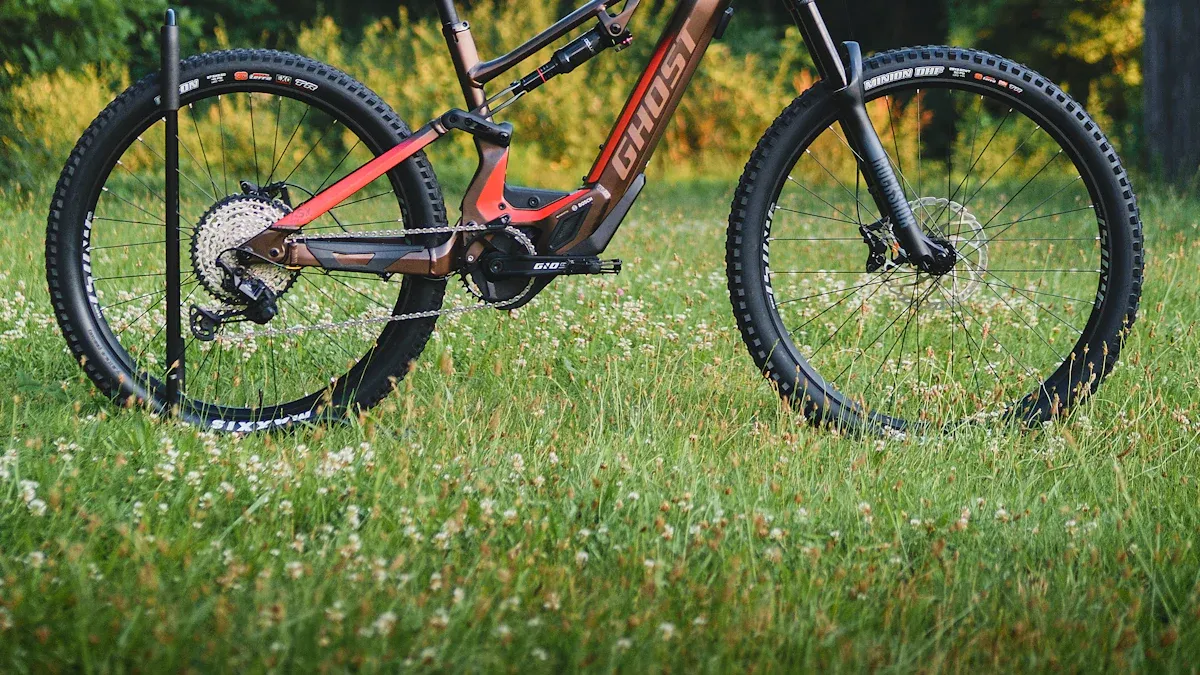
A full-suspension bike, or "fully," is a mountain bike with full suspension. It features both a suspension fork at the front and a rear suspension system. This construction provides more traction and comfort, especially on uneven terrain. Full-suspension bikes are available in various categories, which differ based on their suspension travel and intended use.
Feature |
Description |
|---|---|
Suspension |
Full suspension at both the front and rear, leading to better traction. |
Categories |
Race, marathon, tour, all-mountain, enduro, and freeride. |
Advantages |
Better control and comfort on challenging trails compared to hardtails. |
Categories range from lightweight race models to robust freeriders with extreme suspension travel. There is a suitable full-suspension bike for every riding style.
Advantages of a full-suspension bike
Better traction and stability
The suspended rear axle improves traction significantly. On slippery or rocky trails, your rear wheel remains more stable, giving you more safety. Full-suspension bikes offer optimal grip, even on difficult terrain.
Greater comfort on long and technical routes
Full-suspension bikes dampen impacts and jolts through their suspension. This makes them ideal for long tours or technical trails. You can ride for longer without putting too much strain on your body.
More control on demanding terrain
The suspension ensures better control. You can master obstacles like roots or rocks more easily. You will feel the difference on descents, as the bike stays calmer and more stable.
Disadvantages of a full-suspension bike
Higher weight (from 13 kg)
Due to the additional suspension and a more stable frame construction, full-suspension bikes weigh more than hardtails. This extra weight can be noticeable during climbs.
Higher costs (from approx. €1500–€2000)
The complex design makes full-suspension bikes more expensive. A good full-suspension bike starts at around 1500 euros. In the same price range, you would get a better-equipped hardtail.
More maintenance due to additional moving parts
Full-suspension bikes have more moving parts, such as ball or slide bearings in the rear triangle. These parts wear out faster and require regular maintenance. The rear triangle can cause additional challenges in the workshop.
Tip: Full-suspension bikes are ideal if you frequently ride on demanding trails. They offer comfort, control, and safety, but require a higher budget and more care.
Suitable areas of use
Technical trails, descents, uneven terrain
Full-suspension mountain bikes show their strengths especially on demanding terrain. The full suspension ensures better traction, which gives you more safety on slippery or rocky trails. You can overcome obstacles like roots, rocks, or steep descents more easily. The rear suspension stabilizes your bike and reduces the risk of losing control.
Advantage |
Description |
|---|---|
Traction |
Full-suspension bikes offer better traction on uneven terrain thanks to full suspension. |
Stability |
Stability is increased by the rear suspension, leading to greater safety. |
Comfort |
Comfort is improved by damping shocks and impacts, making longer tours easier. |
On technical trails, you benefit from improved damping. Full-suspension bikes absorb impacts more efficiently, meaning you have to exert less energy. This allows you to ride longer distances without overstraining your body. According to experts, full-suspension bikes also offer higher speeds on rough tracks because they handle bumps better.
Full-suspension bikes are ideal for trails with many obstacles, as they increase control.
The additional traction from the rear shock improves your performance on steep and uneven paths.
Your bike remains calmer on descents, giving you more confidence to ride faster.
Ideal for experienced riders and intensive off-road tours
Full-suspension bikes are excellently suited for experienced riders who prefer technical trails and intensive off-road tours. The suspension helps you ride efficiently even on difficult terrain. You can rely on the bike when you are tackling steep descents or demanding trails.
For long tours, a full-suspension bike offers additional comfort. Damping reduces the strain on your body, allowing you to ride longer and in a more relaxed manner. If you frequently ride on uneven terrain, you will quickly learn to appreciate the benefits of a full-suspension bike. It is the perfect choice for riders seeking maximum control and comfort.
Tip: If you are often out on technical trails or planning intensive tours, a full-suspension bike is the right choice. It provides the safety and stability you need to improve your riding experience.
Cost and maintenance
Price comparison
Cost is a decisive factor when choosing between hardtail and full-suspension mountain bikes. Hardtails are significantly cheaper and available starting at 500 euros. Full-suspension bikes, on the other hand, start at around 1500 euros. The price difference is primarily due to the more complex design and additional components like rear suspension.
Type |
Price range |
|---|---|
Hardtail |
from 500 euros |
Full-suspension bike |
from 1500 euros |
If your budget is limited, you will often get better equipment for your money with a hardtail. Full-suspension bikes in the same price range usually have fewer high-quality components.
Maintenance requirements
Hardtails are simpler and cheaper to maintain. They have fewer moving parts, which reduces maintenance effort. Full-suspension bikes, conversely, require more care, as the rear suspension and additional bearings must be checked and serviced regularly.
Aspect |
Hardtail |
Full-suspension model |
|---|---|---|
Maintenance effort |
Low, fewer moving parts |
|
Suspension fork |
Only suspension fork required |
Suspension fork and shock necessary |
Complexity |
Simpler to maintain |
More complex, more challenges |
While full-suspension bikes (fullies) offer more comfort, this benefit comes with higher maintenance requirements. Ball or plain bearings in the rear triangle and the shock tuning require extra attention.
Recommendation for a limited budget
If your budget is limited, you should opt for a well-equipped hardtail. A poorly equipped full-suspension bike can cause you more problems in the long run.
-
Hardtail benefits on a limited budget:
Higher-quality equipment in the same price range.
Lower maintenance costs.
Tip: A hardtail is the better choice if you want to spend less than 1500 euros. It offers you solid performance and saves you maintenance costs in the long term.
E-Mountain Bikes: Hardtail vs. Full-Suspension
Differences in E-MTBs
Full-suspension E-MTBs offer better traction and comfort
Full-suspension e-mountain bikes score points with their full suspension. This provides better traction, especially on slippery or rocky trails. You will notice that the rear wheel remains more stable, giving you more security. Comfort is also a major advantage. The suspension absorbs shocks and impacts, allowing you to ride longer distances without putting a lot of strain on your body. Full-suspension E-MTBs are particularly suitable for demanding trails and steep descents.
Tip: If you often ride on uneven terrain, you will quickly appreciate the benefits of a full-suspension E-MTB.
Weight plays a minor role in E-MTBs
The weight of an e-mountain bike is less decisive than with conventional bikes. The electric motor compensates for the extra weight and supports you while pedaling. Even on steep climbs, you will hardly notice a difference. Although full-suspension E-MTBs weigh more than hardtail models, the benefits in terms of comfort and control often outweigh this. You can rely on the motor's power to ride even heavier models effortlessly.
Price-performance ratio
Full-suspension E-MTBs may have less high-quality components at the same price
Full-suspension e-mountain bikes are more expensive to manufacture. The additional suspension and more complex construction increase costs. As a result, it can happen that full-suspension E-MTBs in the same price range have less high-quality components than hardtail models. You should pay close attention to the equipment before you decide. A well-equipped hardtail E-MTB can often be the better choice for your budget.
Note: Consider which features are more important to you – comfort and control or high-quality components.
Material choice: Aluminum or Carbon?
Aluminum frames
More robust and cheaper
Aluminum frames are known for their robustness. They withstand shocks and loads well, which makes them ideal for beginners and casual riders. Aluminum is also a cost-effective material. This allows you to get a high-quality mountain bike at an affordable price. Aluminum is particularly widespread among hardtails, as it offers a good price-performance ratio.
Tip: If you have a limited budget, an aluminum frame is an excellent choice. You get a solid and durable bike without having to dig deep into your pockets.
Higher weight compared to carbon
A disadvantage of aluminum frames is their higher weight. They weigh more than carbon frames, which can be particularly noticeable on long climbs. For casual riders, however, this difference is often hardly noticeable. Aluminum still offers you a stable and reliable base for your tours.
Carbon frames
Lighter and more customizable
Carbon frames are significantly lighter than aluminum frames. This lower weight improves acceleration and makes climbing easier. Furthermore, carbon can be shaped more precisely, allowing manufacturers to optimally adapt the frame geometry to different riding styles. This gives you a bike that is both powerful and comfortable.
More expensive and more sensitive
Carbon frames are more expensive to produce. This is reflected in the price, which is often significantly higher than that of aluminum frames. Moreover, they are more sensitive to localized loads. A hard hit can damage the frame, which may require repairs or even a replacement.
Recommendation
Aluminum for beginners and budget buyers
If you are just starting out with mountain biking or have a limited budget, you should choose aluminum. It offers you a robust and inexpensive solution that is sufficient for most areas of use.
Carbon for ambitious riders with a higher budget
For experienced riders who value performance and low weight, carbon is the better choice. It is particularly suitable for competitions or intensive tours where every gram counts.
Note: Consider which features are more important to you – robustness and price or weight and performance.
Which wheel size is ideal?
Choosing the right wheel size significantly influences your riding experience. Two common options are 29-inch and 27.5-inch wheels. Each size has its own advantages and disadvantages that you should know before you decide.
29-inch wheels
Advantages: Better traction, comfort, and speed
29-inch wheels offer you excellent traction. Thanks to the larger contact area with the ground, you have more grip, especially on slippery or rocky trails. These wheels roll more easily over obstacles such as roots or stones. This ensures a more comfortable riding experience. In addition, you can achieve higher speeds on long stretches with 29-inch wheels. They are particularly suitable for cross-country riders and tour enthusiasts.
Tip: If you often ride on uneven terrain or prefer long distances, 29-inch wheels are a good choice.
Disadvantages: Heavier and less agile
The biggest disadvantage of 29-inch wheels is their weight. They are heavier than smaller wheels, which makes accelerating more difficult. Agility also suffers. In tight corners or on technical trails, you may feel less maneuverable. For riders who prefer quick changes of direction, these wheels might be less suitable.
27.5-inch wheels
Advantages: More agile and lighter
27.5-inch wheels are lighter and more maneuverable. They allow you an agile riding behavior, especially on trails with many curves. The lower weight makes it easier for you to accelerate and climb. These wheels are excellent for riders who love technical trails or fast descents.
Note: If you value maneuverability and lightness, 27.5-inch wheels are ideal.
Disadvantages: Less efficient on long distances
On long distances, 27.5-inch wheels show weaknesses. They roll less efficiently and require more energy to maintain speed. They also offer less comfort and traction on uneven terrain. For touring riders or cross-country enthusiasts, they might therefore be less suitable.
Conclusion: Your choice should depend on your riding style and preferred trails.
Frame geometry and size
Importance of frame geometry
Influence on comfort and control
The frame geometry of your mountain bike significantly influences how comfortably and controlled you can ride. Various factors such as handlebar height and saddle position play an important role here. An adjusted saddle position shifts the weight forward and improves grip on the front wheel. The handlebar height determines your body posture and influences comfort on long tours.
A lower handlebar height increases stability when steering, but can reduce grip on flatter trails.
A higher handlebar height ensures a more upright seating position and more even weight distribution. This is less tiring, but less stable on steep descents.
E-mountain bikes have evolved in their geometry to optimize both comfort and control. By choosing the right geometry, you can adapt your riding style to different types of terrain and thus get the best out of your bike.
Adjustment to different riding styles and terrain
The geometry of your bike should suit your riding style and preferred terrain. For technical trails, an aggressive geometry with a steep seat angle is suitable. This ensures an upright position and better control. On long tours or flat stretches, a more relaxed geometry offers more comfort.
Tip: Adjust the handlebar height and saddle position to optimally tune your bike to your needs.
Choosing the right frame size
Tips for determining the right size
The right frame size is crucial for your riding experience. You can determine the frame height by measuring your inseam. Subtract 25 cm from the measured length. It is important that you can safely touch the ground with both feet when standing over the bike.
The reach, i.e., the horizontal distance between the bottom bracket and the head tube, influences the riding feel.
A steep seat angle ensures an upright position, while a flat angle shifts you backwards.
Effects on riding dynamics
The frame size influences how your bike behaves on the trail. A frame that is too small can feel restrictive and make control difficult. A frame that is too large makes the bike less maneuverable. The reach value plays a decisive role here. It determines how stable and secure you feel on the trail.
Note: Test different frame sizes to find the perfect fit for your riding style.
The choice between hardtail vs. full-suspension mountain bikes depends on your individual needs. Hardtails are ideal for beginners, easy trails, and a limited budget. They offer you a direct riding feel and require less maintenance. Fullies, on the other hand, are suitable for experienced riders who are looking for technical trails and maximum comfort. They offer you better control and traction on demanding terrain. Consider which features are more important to you, and choose the bike that best suits your riding style and area of use.
FAQ
What is the main difference between hardtail and full-suspension mountain bikes?
Hardtails only have a suspension fork at the front, while fullies additionally have rear suspension. Hardtails are lighter and cheaper, fullies offer more comfort and control on uneven terrain. Your choice depends on your riding style and area of use.
Which mountain bike is better suited for beginners?
A hardtail is ideal for beginners. It is lighter, cheaper, and easier to maintain. You can improve your riding technique because it is less forgiving of mistakes. Fullies are better for experienced riders who prefer technical trails.
How much should I spend on a good mountain bike?
You can get a good hardtail from 500 euros. Fullies start at around 1500 euros. If your budget is limited, invest in a high-quality hardtail. It offers you more performance for your money.
Are full-suspension mountain bikes harder to maintain?
Yes, fullies have more moving parts, such as the rear suspension, which must be serviced regularly. Hardtails are easier to maintain as they are less complex. Fullies require more time and money for maintenance.
Which wheel size is better for long distances?
29-inch wheels are ideal for long distances. They offer better traction and comfort and roll more easily over obstacles. 27.5-inch wheels are more maneuverable but less efficient on long tours. Choose the size that suits your riding style.