
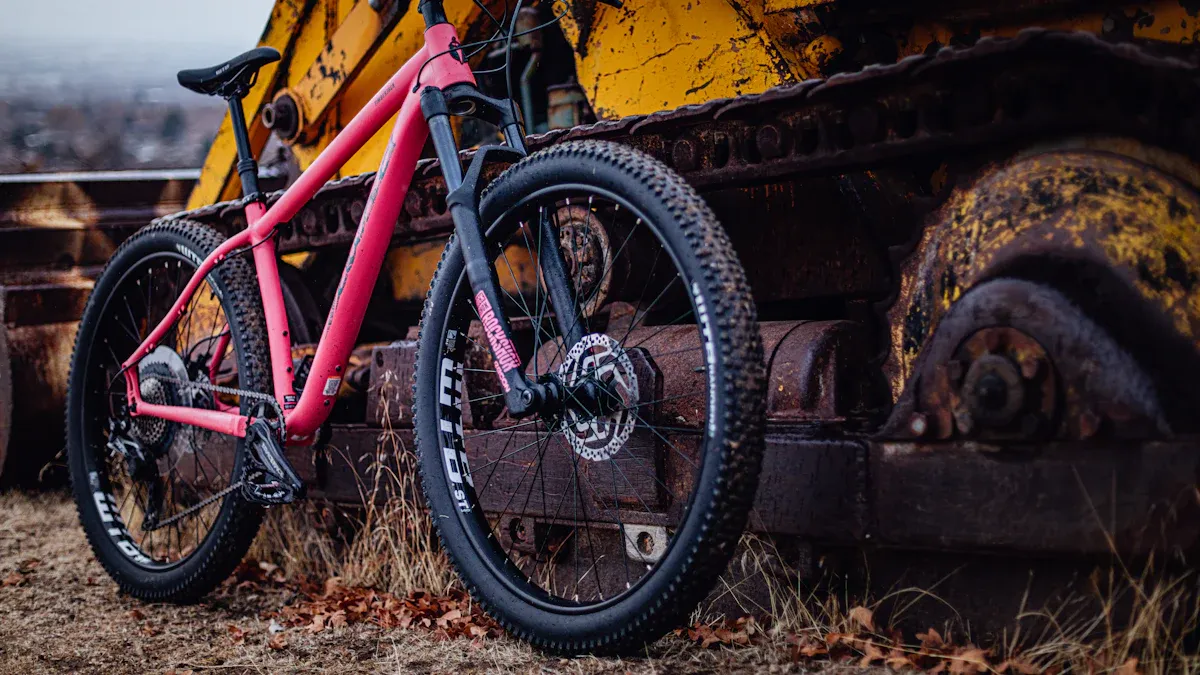
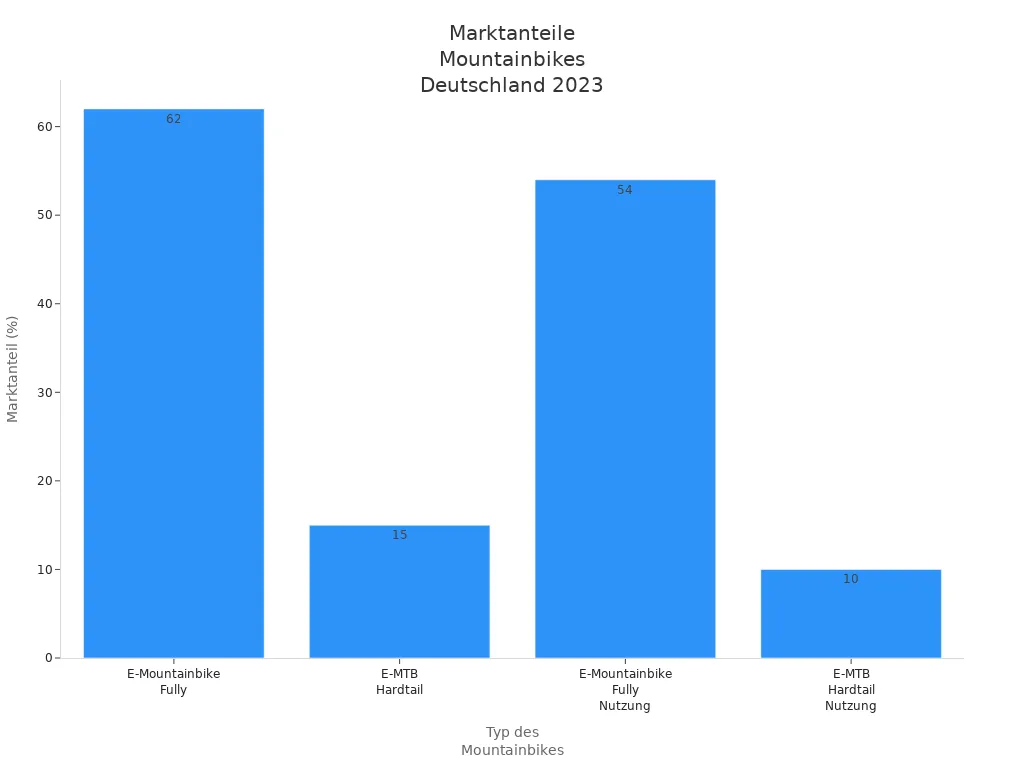
Are you looking for a bike that is lightweight, versatile, and uncomplicated? A hardtail mountain bike is particularly suitable for you if you are a beginner, casual rider, or budget-conscious biker. Low maintenance and lighter weight ensure more control and efficiency on flowy trails or forest paths. Modern hardtails offer you athletic riding fun and innovative technology. The popularity of these bikes has been growing in Europe for years, as shown in the following diagram:
Category |
Hardtail |
Full-Suspension |
|---|---|---|
Price |
More affordable |
More expensive (approx. 70% more) |
Maintenance Effort |
Lower |
Higher (approx. 70% more) |
Suitability for Beginners |
Good for basics |
More complex, less suitable |
Key Takeaways
Hardtail mountain bikes are lightweight and low-maintenance. They offer good control on flat trails and are ideal for beginners and casual riders.
The simple design leads to lower maintenance costs. Fewer moving parts mean less wear and easier care.
A hardtail offers a direct riding experience. Riders feel the terrain better and can specifically improve their technique.
Hardtails are versatile. They are suitable for paved paths, gravel tracks, and flowy trails, making them a good choice for various riding styles.
The choice between a hardtail and a full-suspension bike depends on your riding style. Hardtails are more efficient on easy routes, while full-suspension bikes offer more comfort on technical trails.
Hardtail Mountain Bike: What Is It?
Construction
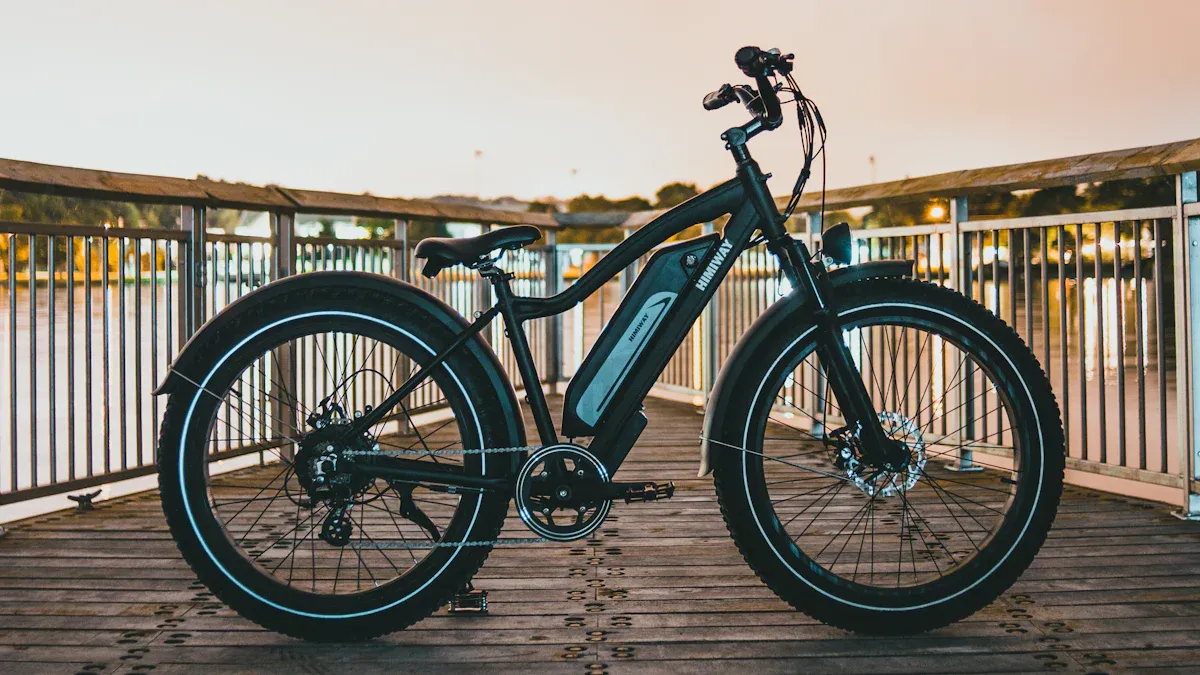
You can recognize a hardtail mountain bike by its clean and simple frame. The special feature: Only the front fork is suspended. The rear triangle remains rigid. This ensures a low weight and makes the bike particularly low-maintenance. The suspension fork usually offers travel of 100 to 120 mm. With this, you can master forest paths, gravel tracks, and flowy trails with ease.
In recent years, manufacturers have introduced many innovations. Today, you can find models with carbon chassis, 29-inch wheels, and wider tires. Some hardtails have flexing chainstays and seat stays. This technology increases comfort, even though the frame is not suspended at the rear.
Tip: A lightweight frame and large wheels provide you with more speed and safety on long routes.
Differences from Full-Suspension
A full-suspension bike, also known as a full-suspension mountain bike, has suspension on both the front and rear wheels. This provides more comfort and better traction on demanding trails. A hardtail mountain bike, on the other hand, remains lighter, more affordable, and easier to maintain.
Here is an overview of the most important differences:
Criterion |
Hardtail |
Full-Suspension |
|---|---|---|
Suspension |
Front only |
Front and rear |
Traction & Control |
Good on flat terrain |
Better on technical trails |
Weight |
Lighter |
Heavier |
Purchase Costs |
Lower |
Higher |
Maintenance |
Less demanding |
Higher effort |
You benefit most from a hardtail on flat paths and easy trails. Full-suspension bikes show their strengths on rough terrain and at high speeds. Consider which routes you prefer to ride before making your decision.
Advantages of a Hardtail Mountain Bike
Weight & Efficiency
A hardtail mountain bike excels due to its low weight. You will feel this advantage especially when riding uphill and on long routes. Most models weigh between 10 and 15 kilograms, while full-suspension bikes are often heavier.
Type |
Weight (kg) |
|---|---|
Hardtail |
10 - 15 |
Full-Suspension |
11 - 17 |
With less weight, you can accelerate faster and use your power more efficiently. On smooth terrain, the hardtail mountain bike transfers energy directly to the rear wheel. This ensures better acceleration and saves you energy. You particularly benefit from this efficiency on flow trails, forest paths, or gravel roads. If you ride an E-mountain bike, the lower weight even extends your battery range.
Hardtails are more efficient on smooth ground, as they can transfer power more directly to the rear wheel.
This leads to better acceleration and a longer battery range.
Maintenance & Costs
With a hardtail mountain bike, you save time and money on maintenance. The design is simple, as there are fewer moving parts installed. This means: less wear, fewer repairs, and lower everyday costs.
Component |
Hardtail Mountain Bike |
Full-Suspension Mountain Bike |
|---|---|---|
Number of moving parts |
Fewer |
More |
Maintenance requirement |
Lower |
Higher |
Weight |
Lighter |
Heavier |
Care effort |
Simpler |
More complex |
Annual maintenance costs average about 383 euros. You pay around 32 euros per month. Per kilometer, maintenance costs you only about 15 cents. You benefit from a robust construction that requires less care. This makes the hardtail mountain bike ideal for athletic riders and anyone who values reliability.
Hardtails have fewer moving parts, which leads to less maintenance.
They are more robust and durable.
Care is simpler and cheaper.
Control & Riding Experience
With a hardtail mountain bike, you experience a direct and intense ride. You feel the terrain and learn to use your riding technique purposefully. Without rear suspension, you must ride actively and use your body control. Many experienced mountain bikers value this intense riding experience.
Hardtails convert the rider's power more directly and are lighter, which improves control.
You benefit from a quick response to steering movements.
On terrain, especially over bumps, you need more technique, as the bike does not compensate for mistakes.
Tip: If you want to improve your riding technique, a hardtail mountain bike offers you the perfect training platform.
Versatility
A hardtail mountain bike suits many areas of use. You can ride it on flowy trails, gravel tracks, forest paths, or long tours. The modern geometry and wide tires ensure stability and safety, even at higher speeds.
Benefit |
Description |
|---|---|
Lightweight |
Effortless climbs thanks to low weight |
Efficiency |
Optimal power transmission due to steep seat angle |
Versatility |
Impresses on trails, gravel tracks, and tours |
Modern Technology |
High-quality components for maximum performance |
The hardtail mountain bike offers safe handling on rough terrain. The frame geometry and the tires give you more grip. This way, you master various types of routes with ease and always have control.
Top Hardtail Mountain Bike Models
Beginners
Do you want to start mountain biking? For beginners, there are many recommendable models in 2024. The Canyon Grand Canyon 8 in particular stands out due to its good price-performance ratio and wide range of applications. It is suitable for tours, trails, and everyday use. The following table shows you a popular beginner model:
Model |
Price |
Features |
|---|---|---|
Canyon Grand Canyon 8 |
1440 € |
Test winner with good price-performance ratio and wide range of applications. |
Models like the Cube Reaction Pro also offer you solid components and low weight. Here, you get a 1x12 Shimano Deore drivetrain and a RockShox Judy suspension fork.
Advanced Riders
Do you already have experience and are looking for more performance? For advanced riders, experts recommend bikes like the Radon Jealous AL 10.0. It scores with a 12-speed XT drivetrain and a Fox 32 fork. The bike is very agile and climbs well. However, it lacks a dropper post as standard. The Specialized Chisel Comp also offers high-quality equipment and is suitable for athletic tours.
High-End
Do you want the maximum in technology and innovation? In 2024, models like the VPace C4M and the Pinarello Dogma XC are in focus. These bikes set new standards in weight, geometry, and material. The Mondraker Chrono Carbon DC was even awarded Bike Of The Year. It features a versatile carbon frame and is suitable for cross country and trails. The Canyon Exceed CF SLX also impresses with top technical performance.
VPace C4M: Lightweight, modern, for ambitious riders.
Pinarello Dogma XC: Racing machine for pros.
Mondraker Chrono Carbon DC: Versatile and award-winning.
Canyon Exceed CF SLX: Top technology for the highest demands.
Price-Performance
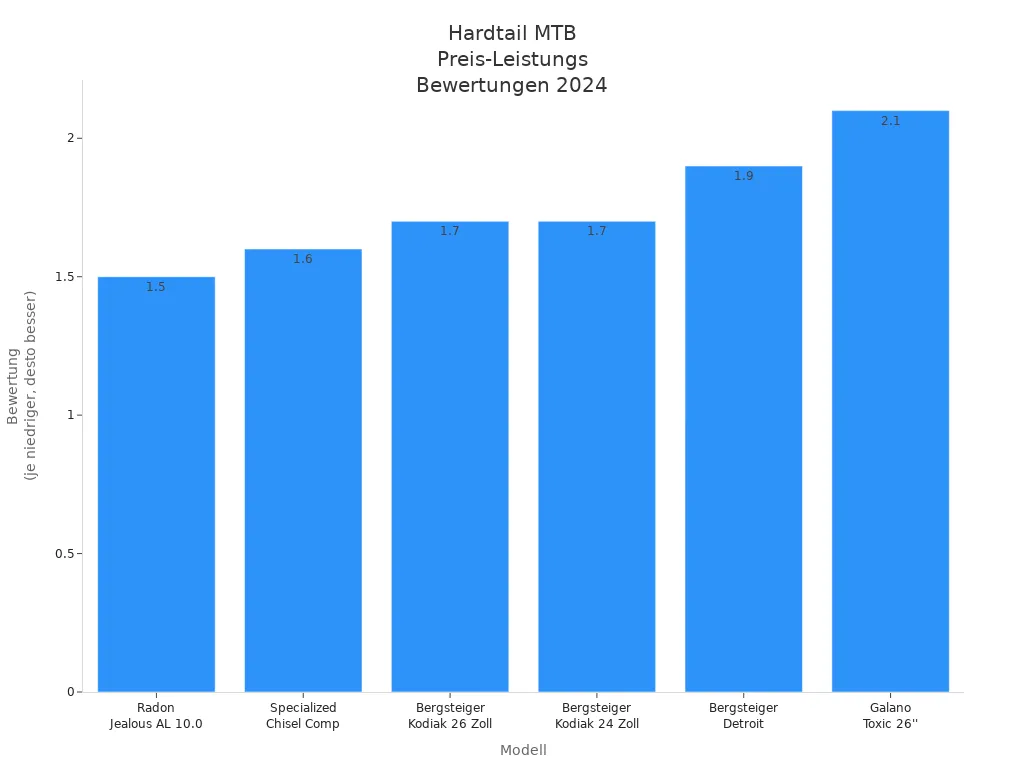
Many riders pay attention to a good price-performance ratio. The following table shows you the best models of 2024 according to test reports:
Rank |
Model |
Rating |
|---|---|---|
1 |
Very good (1.5) |
|
2 |
Good (1.6) |
|
3 |
Good (1.7) |
|
4 |
Good (1.7) |
|
5 |
Good (1.9) |
|
6 |
Good (2.1) |
With a suitable hardtail mountain bike, you will find the right model for every budget and every requirement.
Areas of use
Suitable riders
Would you like to know if a hardtail mountain bike is right for you? Many riders appreciate hardtails for their simplicity and reliability. They are particularly suitable for you if you are looking for an uncomplicated bike and value a direct riding feel. You benefit from a hardtail if you enjoy riding on paved paths or easy trails.
Here you can see who hardtails are especially recommended for:
Rider type |
Recommendation |
|---|---|
Reliable riders |
Hardtail mountain bikes are ideal for riders looking for an uncomplicated bike. |
Riders with physical problems |
Not recommended, as the lack of suspension transfers shocks directly. |
Riders on rough terrain |
Advanced riding skills are required. |
Tip: If you have back problems or often ride on very bumpy trails, you should go for a full-suspension bike. However, for sporty tours, training, and everyday use, the hardtail is often the best choice.
Typical routes
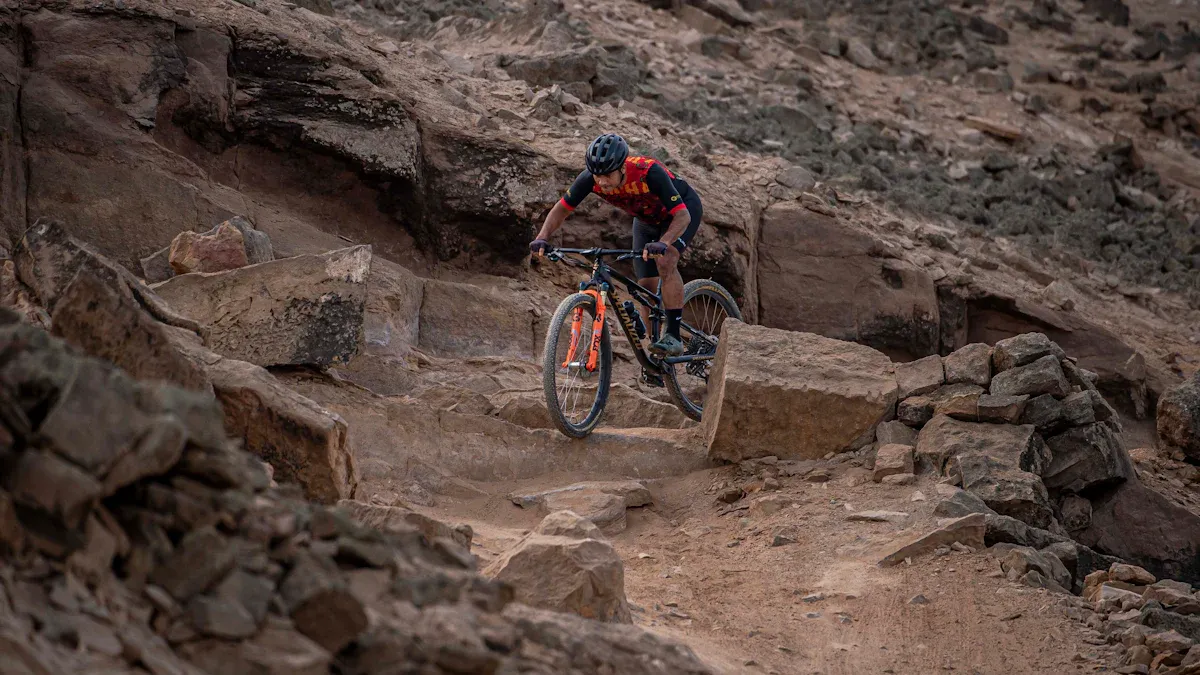
You can ride many different routes with a hardtail mountain bike. The bike feels most comfortable on firm surfaces and easy trails. You will make the best use of a hardtail's advantages on these types of routes:
Paved paths and roads
Forest trails and woodland paths
Gravel tracks and dirt roads
Meadow paths
Flowy trails without major obstacles
Many experts recommend hardtails for cross-country rides and sporty off-road use. You can also use them for longer tours if the terrain is not too technical. High-quality equipment even makes the hardtail usable on more demanding trails, provided you have good riding technique.
Note: For very steep, rocky, or root-filled trails, full-suspension bikes offer more comfort and safety. On long, level routes and fast tours, however, you will often have more fun and less hassle with a hardtail.
Hardtail vs. Full-Suspension
Are you facing the choice between a hardtail and a full-suspension bike? Both bike types have their strengths and weaknesses. A hardtail is lighter and more efficient, especially on long tours and less demanding terrain. You feel the direct power transmission and can accelerate faster. A full-suspension bike offers you more comfort and control, especially on technical trails with many obstacles. The front and rear suspension provide better traction and more safety at high speeds.
Here is an overview of the most important differences:
Type |
Advantages |
Disadvantages |
|---|---|---|
Hardtail |
- Lighter and more efficient on moderate trails and roads |
- Less comfort and safety on demanding trails |
- Higher stiffness and more speed on asphalt and easy terrain |
- Limited grip of the rear tire |
|
- Less maintenance required |
- Often not suitable for extreme trails |
|
Full-suspension |
- More comfort and control on technical trails |
- Higher acquisition costs |
- Better traction and contact with the ground |
- Regular maintenance of the rear shock required |
|
- Optimal for long tours and demanding trails |
- Sometimes lower efficiency uphill |
With a hardtail, you ride faster and easier on forest paths, farm tracks, and gravel roads.
A full-suspension bike gives you more safety on difficult trails and during jumps.
Remember: Choose the bike that suits your riding style and the routes in your area. For beginners, touring riders, and sporty bikers, the hardtail is often the best choice. If you spend a lot of time in alpine terrain or on very technical trails, a full-suspension bike will give you more comfort and control.
A hardtail mountain bike offers you many advantages: You benefit from low weight, low costs, and simple maintenance. You will have a lot of fun, especially on firm paths and flowy trails. Choose a hardtail if you value efficiency and direct control. When choosing, pay attention to the intended use, frame, wheel size, suspension, gearing, and brakes.
Tip: Think about whether you prefer fast XC routes, versatile trails, or technical passages. This way, you will find the right model for your riding style and your terrain.
FAQ
How do you properly maintain a hardtail mountain bike?
Clean the bike regularly with water and a soft brush. Check the chain and lubricate it. Check the brakes and gears. Check the tires for air pressure and damage. This will keep your hardtail reliable for a long time.
What routes is a hardtail best suited for?
A hardtail is best for paved paths, gravel roads, and flowy trails. The bike is suitable for tours, training, and cross-country. It is better to avoid technical trails with many obstacles.
Can you also use a hardtail for everyday life?
You can easily use a hardtail for everyday life. The low weight and simple maintenance are helpful. You can ride to school, work, or go shopping. Many models offer mounting options for luggage racks and mudguards.
What is the difference between 27.5 and 29-inch wheels?
You choose 27.5 inches for more agility and fast corners. 29 inches offer you more stability and better speed on long distances. Both sizes are suitable for hardtails. Your body size and riding style will decide.
How do you find the right frame size?
Measure your inseam and compare it with the manufacturer's specifications. The right frame size ensures comfort and control. Many shops offer online calculators. Test the bike before you buy it, if possible.