
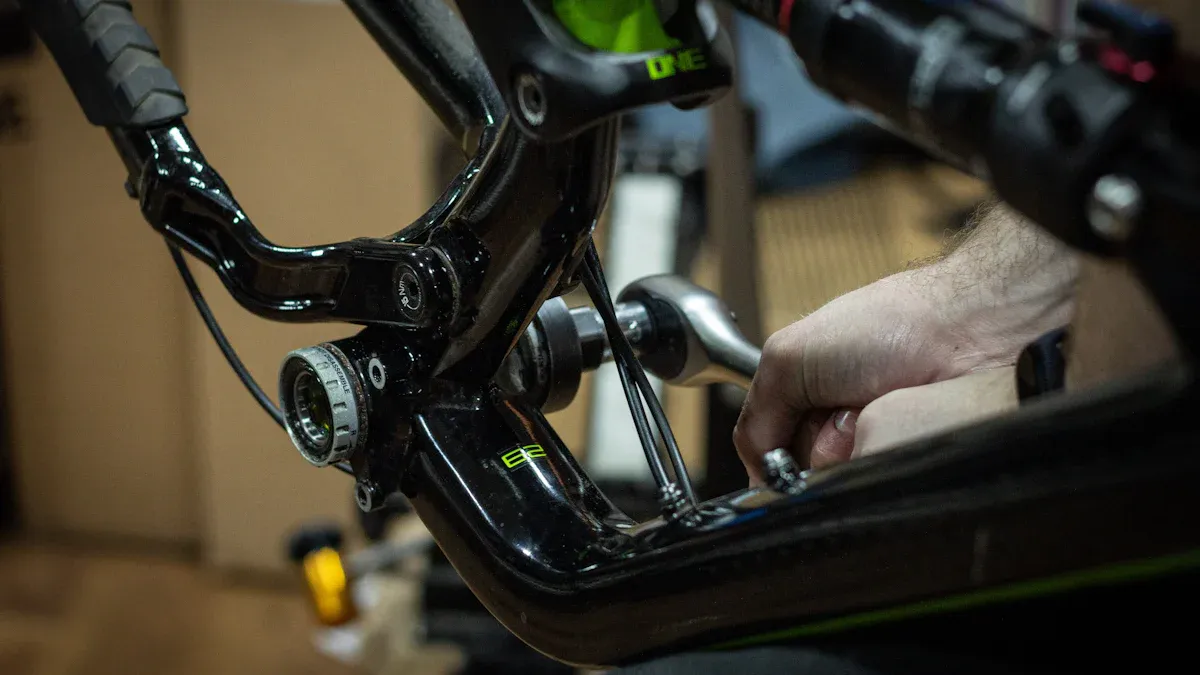
Do you love the feeling of riding your Haibike fully e-bike on the trails? Then you know how important a reliable bike is. Regular maintenance ensures safety and long-lasting riding enjoyment. But how do you actually extend the life of your e-mountain bike? With a few simple steps, you can keep your bike in top shape and always be ready for the next adventure. 🚵♂️
Key Takeaways
Regular maintenance increases your safety and prevents dangerous breakdowns while riding.
A clean chain, well-functioning brakes, and optimal tire pressure ensure more riding fun and better performance.
Maintenance protects your e-bike from rust and wear and preserves its value over the long term.
Charge and store the battery correctly to significantly extend its service life.
Use professional workshops and digital tools to maintain your bike properly and keep track of maintenance intervals.
The Importance of Maintenance
Safety
Your safety always comes first. By maintaining your Haibike fully e-bike regularly, you can detect small problems before they become real hazards. Imagine you are riding down a steep trail and the brakes don't grab properly because they are dirty or worn out. You want to avoid that! Clean lights and reflectors ensure that you are easily seen even in poor lighting conditions. With a simple check before every ride, you protect yourself and others.
Performance
A well-maintained bike simply rides better. When you lubricate the chain and keep the drivetrain clean, everything runs much smoother. You will instantly feel how effortlessly your e-bike moves. The motor also works more efficiently when all parts are clean and intact. Small maintenance tasks, such as tightening screws or checking tire pressure, make a big difference. This is how you get the most out of your Haibike fully e-bike and have more fun on every tour.
Value Retention
Do you want your e-bike to last a long time and hold its value? Then regular maintenance is worth it. Dirt and moisture quickly lead to rust, especially in hard-to-reach places. By keeping your bike clean and checking it regularly, you prevent corrosion. This extends the service life of the chain, gears, and brakes. You also save money by avoiding expensive repairs and component replacements. A well-maintained e-bike fetches a significantly higher price when sold or traded in. Even small investments in maintenance pay off!
Tip: A quick check after every ride and a thorough cleaning every few weeks are often enough to keep your bike in good condition.
Maintenance Intervals
Time-Based Intervals
You might be wondering how often you should maintain your Haibike fully e-bike. The rule of thumb: you should have a thorough inspection done at least once a year. Many workshops even recommend checking your bike twice a year—at the start and the end of the season. This allows you to detect wear early and stay safe on the road. After the third major inspection, simply continue with regular maintenance. You are often in luck during the winter: workshops are less busy, and you can get an appointment more quickly.
Tip: Plan your maintenance during the winter months. Then your bike will be in top shape for the start of the season!
Mileage and Operating Hours
It's not just time that counts, but also distance. After about 2,000 kilometers or 100 operating hours, you should have your e-bike thoroughly inspected. Some parts require attention even more frequently. For example, you should check your brakes every 1,000 to 1,200 kilometers and replace them if worn. Check the chain regularly using a chain checker tool. If it is too stretched, replace it immediately to protect the chainring and cassette.
Check the brakes after every long tour.
Inspect the chain and lubricate it regularly.
Have the suspension serviced at least once per season.
Seasonal Checks
Every season brings its own challenges for your e-bike. In spring and autumn, a complete check is worthwhile. Before winter, you should thoroughly clean your bike, oil the chain, and inflate the tires to the maximum. Charge the battery to 30–70% to prevent damage. It is best to store your bike at 10–15°C and remove any salt residue. Leather parts benefit from a little leather oil.
Maintenance Area |
Seasonal Recommendation / Figures |
|---|---|
Brakes |
Replace disc brakes every 1,000–1,200 km or when worn |
Inspection |
Annual inspection; some recommend every 500 km |
Winterization |
Clean bike, oil chain, inflate tires, charge battery to 30–70% |
Storage |
Ideal temperature 10–15°C, remove salt, care for leather parts |
Battery |
Charge to 30–70% before winter break, monitor self-discharge |
Workshop Times |
Use winter months for maintenance as workshops are less busy |
With these intervals, your Haibike fully e-bike will remain reliable and ready for every adventure!
Haibike Fully E-Bike Maintenance
Cleaning
Do you want your Haibike fully e-bike to always look and function at its best? Then you should clean it regularly. Ideally, use lukewarm water, a sponge, and a mild bicycle cleaner. Avoid pressure washers! The strong water jet can damage bearings, electronics, and seals. Wipe the frame, rims, and derailleur carefully. Use a soft brush to reach difficult areas. After washing, dry your bike with a clean cloth. This prevents rust and ensures everything lasts a long time.
Tip: A clean bike is not only more fun to ride, but it also helps you identify minor damage early!
Drivetrain & Chain
The drivetrain is the heart of your Haibike fully e-bike. It deserves special attention. You should clean the chain regularly and lubricate it with a special e-bike chain oil. This keeps it smooth and quiet. Due to the motor's power, the chain is under high stress. Without maintenance, it wears out much faster than on regular bikes. A well-maintained chain lasts on average 3,000 to 5,000 kilometers. You can use a chain checker to see if it needs replacing. By keeping the chain clean and replacing it in time, you also protect the chainring and cassette from costly damage. Measurements show: A well-maintained chain remains efficient for longer and ensures your drivetrain works powerfully.
Clean the chain after rides in mud or rain.
Lubricate it after every thorough cleaning.
Check chain wear every few weeks.
Brakes & Tires
Reliable brakes and good tires are essential for every tour. Check before every ride if the brake pads still have enough material. If you hear a grinding noise when braking or feel that the braking power is decreasing, you should replace the pads. Also, inspect the brake discs for wear and contaminants. The tires also deserve attention. Check the tire pressure regularly. Too little air makes riding difficult and increases the risk of punctures. Too much air reduces grip. It is best to remove small stones or thorns from the tread immediately.
Note: With well-maintained brakes and tires, you are safer and have more control on every trail!
Screws & Connections
Your Haibike fully e-bike consists of many parts that must be firmly connected. Regularly check all screws and connections. Especially after rough rides, some screws may loosen. Use a torque wrench to carefully tighten them without damaging anything. Follow the manufacturer's specifications for the correct torque. Don't forget the seat post, handlebars, and pedals. If everything is secure, your bike will run quieter and you will avoid unpleasant surprises on the road.
Check the most important screws once a month.
Tighten if necessary, but don't over-tighten.
Also check the thru-axles and quick-release levers.
With these simple steps, your Haibike fully e-bike remains reliable, safe, and ready for every adventure!
Battery Care
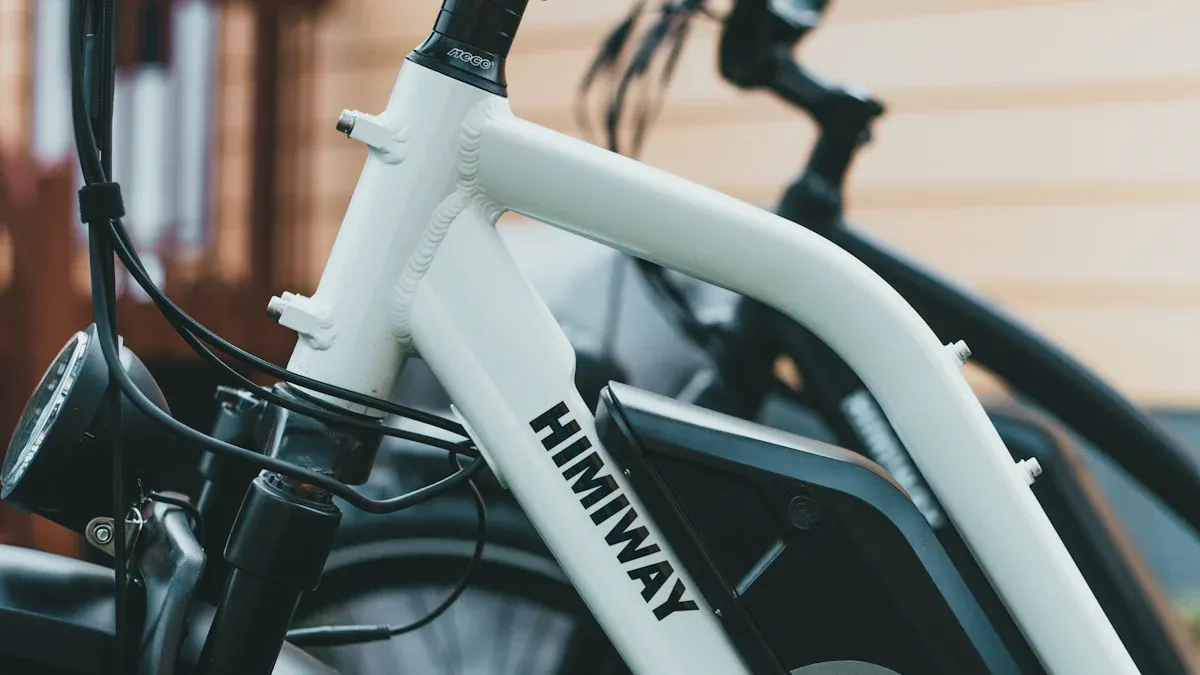
Haibike Fully E-Bike Battery
The battery is the heart of your Haibike fully e-bike. Nothing happens without it. To enjoy your battery for a long time, you should treat it well. Although modern lithium-ion batteries are robust, they still need some attention. You can significantly extend the life of your battery by following a few simple rules.
Charging & Discharging
You should never let your battery run completely empty. It is best to charge it after every ride or at the latest when the charge level falls below 20%. Deep discharge can damage the battery and significantly reduce its performance. If you are not using your bike for an extended period, charge the battery every 60 days. This keeps it fit and helps you avoid nasty surprises the next time you start your ride.
Tip: Always charge the battery at room temperature. Extreme cold or heat during charging will damage the battery.
Storage
If you are not going to use your Haibike fully e-bike for a long time, proper storage is especially important. Here are a few simple rules for battery storage:
Before long breaks, charge the battery to about 30–70%. This protects it against deep discharge.
Store the battery in a dry, frost-free place. The ideal temperature is between 10 and 20 °C.
Avoid direct sunlight and excessive heat. Heat can permanently damage the battery.
Keep the battery away from moisture and heat sources. A well-ventilated room is perfect.
Only reinsert the battery into the bike just before your next ride.
A battery typically lasts for 500 to 1,000 charging cycles, which corresponds to about 3 to 5 years. With proper care, you can make the most of this time and save yourself the cost of expensive replacements.
Tools & Equipment
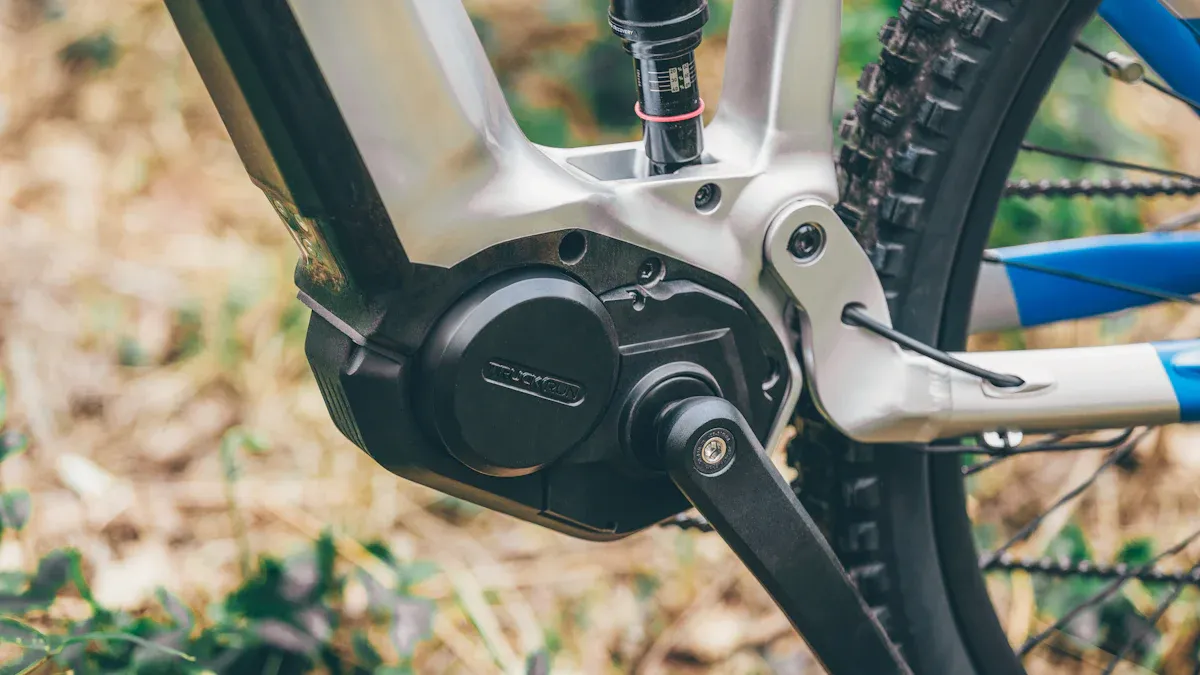
Basic Equipment
With the right basic equipment, you are well-prepared for most maintenance tasks on your Haibike fully e-bike. Many repair manuals recommend a solid selection of tools that you should always have ready:
Wrenches (8–17 mm)
Phillips and flat-head screwdrivers
Combination pliers
Bike multi-tool
Air pump with pressure gauge
Puncture repair kit
With these tools, you can handle almost all standard tasks. Pay attention to quality, as cheap tools can slip or damage screws. A torque wrench helps you tighten screws with the correct torque, avoiding damage to the frame or sensitive parts.
Tip: A multi-tool fits in every backpack and will save you on the road during small breakdowns!
Specialized Tools
Some e-bike tasks require special tools. Especially when dealing with brakes, the motor, or electronics, you should use the correct tools. For maintaining disc brakes, for example, you need:
Bleed kit (specific to the manufacturer, e.g., Shimano, SRAM, Magura)
Mineral oil or brake fluid
Bleed blocks
Brake piston tool
Open-end wrenches (7 mm, 8 mm)
Torx keys (T25, T10)
Torque wrench with bit attachments
A bottom bracket tool and a caliper can also be useful. Always wear protective gloves when working on brakes. Use only the tools recommended by the manufacturer to preserve your warranty and avoid functional issues.
Cleaning Agents
The right cleaning agents not only keep your bike clean but also protect the technology. Suitable for your Haibike fully e-bike are:
Product |
Effect |
|---|---|
Removes dirt, mud, oil, and grease; gentle on paint and materials |
|
Drivetrain degreaser |
Thoroughly cleans chain and gears, removes oil and wax |
Chain oil |
Ensures smooth operation, protects against rust and wear |
Contact spray |
Maintains electrical contacts, prevents corrosion |
Silicone spray |
Protects seals and plastic parts |
Only use mild, material-friendly cleaners. Many products are biodegradable and environmentally friendly. Avoid high-pressure washers, as they can damage electronics and bearings.
Note: A clean bike rides better and stays fit longer!
Professional Workshop
When is it necessary?
Sometimes you simply cannot get further with home remedies. Especially with your Haibike fully e-bike, there are situations where it is better to let a professional handle it. Never attempt complex repairs to the motor or electronics yourself. Even a small mistake here can have major consequences. Caution is also advised with battery problems.
Many e-bikers experience, for example, that the battery is suddenly deeply discharged. In this case, only targeted charging treatment by professional personnel helps. If you have charged irregularly, uneven cell voltages can occur. Only in a workshop can experts perform a special charging cycle that brings the battery back into balance.
Some riders notice that their e-bike suddenly delivers less power in extreme temperatures. This is where experts install temperature monitoring systems to ensure your battery remains optimally protected. You also cannot perform software updates for the battery or motor yourself. The workshop ensures your system is always running on the latest version.
Tip: If you are unsure whether a problem can be solved at home, it is better to consult a professional once more. That way, you'll be on the safe side!
Typical cases for the professional workshop:
Irregular cell voltage after incorrect charging
Performance loss in heat or cold
Necessary software updates
Advantages
You benefit in several ways when you regularly take your Haibike full-suspension e-bike to a professional workshop. The pros identify faults that you might overlook. They have the right tools and are familiar with the latest technologies.
You should have your bike completely checked once a year. The workshop checks all safety-relevant parts, adjusts the brakes, and inspects the electronics. This keeps your bike reliable and allows you to focus fully on riding.
Many workshops also offer you a maintenance plan. This ensures you never forget an important check. You receive tips on how to maintain your bike at home and can always turn to the experts if you have questions.
More safety on every tour
Longer lifespan for battery and motor
Retention of value through professional care
Always up-to-date software and technology
With regular visits to the professional workshop, your Haibike full-suspension e-bike stays fit for any adventure!
Digital Tools
Maintenance Apps
Do you want to make the maintenance of your Haibike full-suspension e-bike even easier? Then why not try out a maintenance app! Many apps help you keep track of all important checks. You can enter maintenance intervals, receive reminders, and see at a glance when the next service is due. This saves you time and ensures you don't forget any important tasks.
Digital maintenance documentation tools make caring for your e-bike much more efficient. They plan and monitor all maintenance intervals for you. With reminder functions and analytics, you always know how your bike is doing. The apps show you if something is wrong and help you identify problems early. This allows you to act in time and avoid surprising costs. Many users report having fewer breakdowns and their bike lasting longer when using an app.
Here are popular features of maintenance apps:
Maintenance scheduler with calendar function
Reminders for service appointments
Log of work performed
Analysis of wear parts
Care tips
Tip: Many apps are free and work on your smartphone or tablet. Just give one a try!
Digital Instructions
Are you sometimes unsure how to properly perform maintenance? Digital instructions help you step-by-step. Many manufacturers offer video tutorials or illustrated PDF guides. You can access them at any time, whether at home or on the road.
With digital instructions, you quickly learn how to change the chain, adjust brakes, or store the battery correctly. The explanations are often easy to understand and show you every step. Many guides even offer interactive elements or short quizzes so you can test your knowledge.
Advantage |
Description |
|---|---|
Step-by-step |
You see exactly what needs to be done |
Always available |
You always have the instructions at hand |
Multimedia |
Videos, images, and texts help with learning |
With digital tools and instructions, you are well-equipped. This keeps your Haibike full-suspension e-bike always in top shape! 🚴♀️
Checklist
Maintenance Steps
With a clear checklist, you always stay on top of things. This ensures you don't forget any important steps and your Haibike full-suspension e-bike remains reliable. Many professionals recommend performing maintenance at least twice a year – preferably after winter and after autumn. Here you will find the most important steps you should complete regularly:
Cleaning: Wash your bike with warm water and a mild bicycle cleaner. Avoid using a pressure washer to keep bearings and electronics protected.
Chain & Drivetrain: Check the chain for wear, clean it, and oil it. Inspect the gears and cassette for damage.
Brakes: Check the brake pads and discs. Ensure they are securely fastened and check the brake fluid.
Gears: Test the functionality and adjust if necessary. Shift the chain to the smallest sprocket to avoid tangles.
Battery: Check the charge level, contacts, and capacity. Charge the battery regularly and store it in a dry place.
Electronics & Lighting: Test all electrical components, especially the lights and reflectors.
Safety Check: Take a close look at the frame, handlebars, saddle, and wheels. Look for cracks or other damage.
Accessories: Check luggage racks, mudguards, and kickstands for secure fit.
Test Ride: Take a short ride. Test the brakes, gears, suspension, and handling.
Tip: Always use the appropriate tools and observe safety instructions, especially when working on brakes and electronics.
Inspection & Documentation
Do you want to know when you did what? Then keep a simple maintenance log. Write down when you checked or replaced which parts. This way, you can recognize patterns and detect wear at an early stage. Many apps help you with this and remind you of the next checks.
Maintenance step |
Date completed |
Next appointment |
Notes |
|---|---|---|---|
Chain oiled |
|||
Brakes checked |
|||
Battery charged |
|||
Lights checked |
With good documentation, your bike will stay in shape for longer. You always have everything in view and can go on tours feeling relaxed! 🚴♂️
With a few simple steps, you can keep your Haibike full-suspension e-bike in great condition for a long time. Clean your bike regularly, check the chain, brakes, and battery, and tighten bolts. Small maintenance steps make a big difference.
Stay on top of it and keep implementing the tips – that way, you will enjoy every tour safely and with full power!
FAQ
How often should I clean my Haibike full-suspension e-bike?
You should clean your e-bike after every muddy or wet tour. In dry weather, a thorough cleaning every two to three weeks is sufficient. This keeps your bike in good condition for longer and helps you spot small damages immediately.
Can I also charge the battery outdoors?
You should always charge the battery at room temperature. It is often too cold or too hot outdoors, which harms the battery. It is best to charge it indoors, where it is dry and not too warm.
What do I do if my e-bike makes strange noises?
If you hear unusual noises, first check the chain, brakes, and bolts. Often, a bit of oil or tightening a bolt is all it takes. If the noise persists, have your bike checked at the workshop.
Do I have to use special cleaning agents?
Normal bicycle cleaners are usually sufficient. Avoid aggressive household cleaners, as they attack paint and seals. A special chain oil protects the drivetrain. For the electronics, you can use contact spray.
How do I store my e-bike correctly in winter?
Store your e-bike in a dry, frost-free place. Charge the battery to 30–70%. Remove the battery and store it at 10–20 °C. Check the tire pressure and oil the chain before storing it.