

Are you wondering whether insurance for your e-bike is mandatory? The answer is: in most cases, it is not required, except for certain high-speed models. Many people want to know how to protect themselves against theft and what coverage an insurance policy offers.
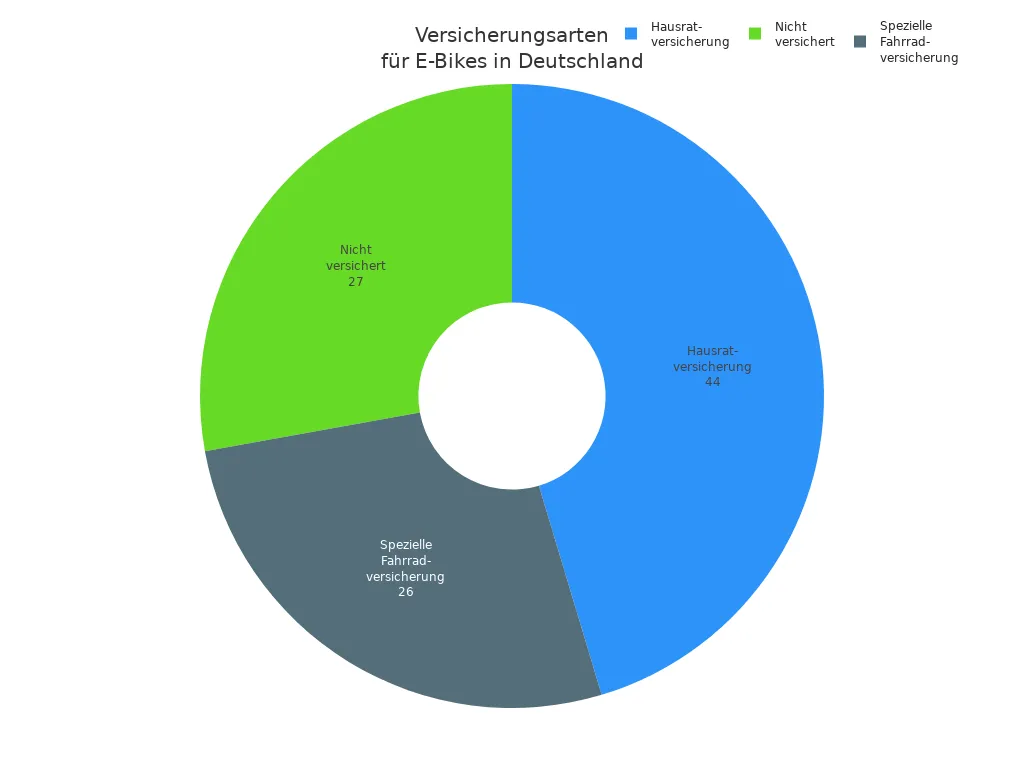
Statistics show that 27% of e-bikes in Germany are not insured, 44% are covered by home contents insurance, and 26% have a specialized bicycle insurance policy:
Insurance Type |
Percentage |
|---|---|
Not insured |
27% |
Via home contents insurance |
44% |
With specialized bicycle insurance |
26% |
In this article, you will receive practical advice on selection and protection, even if you are buying a used bike.
Key Findings
E-bike insurance is often not mandatory, except for high-performance models. Check your bike's technical specifications.
E-bikes that travel faster than 25 km/h or have a motor output of more than 250 watts require an insurance license plate and liability insurance.
Theft and breakdown protection are important features of e-bike insurance, helping you avoid financial loss in the event of theft or mechanical failure.
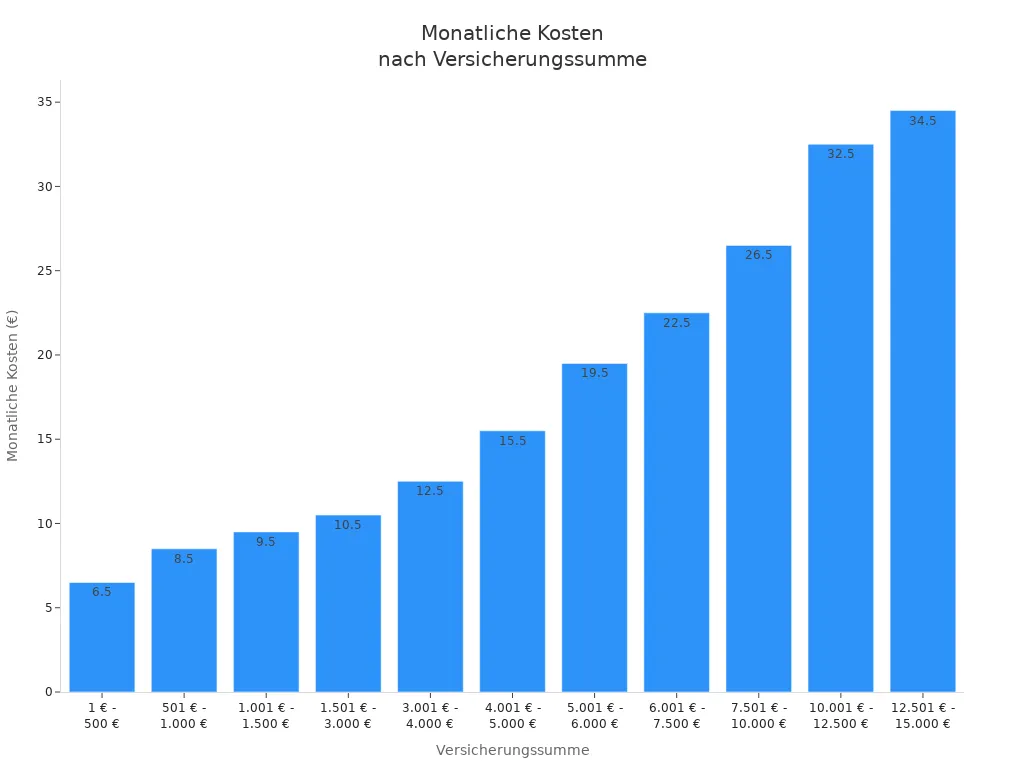
The cost of e-bike insurance varies depending on the value and age of the bike. Entry-level models cost about 70 euros per year, while more expensive ones can cost up to 500 euros.
Always secure your e-bike to a fixed object with a high-quality lock. This is often a prerequisite for insurance coverage.
E-Bike Insurance Mandates & Differences
Insurance requirements for e-bikes and pedelecs
Do you want to know if you need to purchase insurance for your e-bike or pedelec? Legal regulations differ depending on the type. Pedelecs are legally considered bicycles. You do not need insurance if your motor has a maximum output of 250 watts and assistance stops at 25 km/h. E-bikes that travel faster or have higher motor power require an insurance license plate. S-pedelecs are classified as mopeds. You must purchase liability insurance and attach a license plate.
Tip: Check the technical data of your e-bike to determine if insurance is mandatory.
Differences: E-bike, Pedelec, S-Pedelec
The differences between these three types are important for determining insurance requirements. The following table shows the key characteristics:
Type |
Assisted Speed |
Motor Power |
Legal Status |
|---|---|---|---|
Pedelec |
up to 25 km/h |
max. 250 W |
Bicycle |
S-Pedelec |
up to 45 km/h |
max. 4,000 W |
Moped |
A pedelec only assists you while pedaling and stays below 25 km/h. An S-pedelec travels up to 45 km/h and has a higher motor output. E-bikes that operate without pedal assistance are considered light mopeds or scooters. You require a driver's license and an insurance license plate.
When is an insurance license plate necessary?
An insurance license plate is required if your e-bike travels faster than 25 km/h without pedal assistance or has a motor output exceeding 250 watts. S-pedelecs always require a plate and liability insurance. You must be at least 16 years old and possess a class AM or B driver's license. Use of bike lanes is generally prohibited for S-pedelecs.
Pedelecs: No license plate, no insurance mandate
High-performance e-bikes: License plate and insurance mandate
S-pedelecs: License plate, liability insurance, driver's license, helmet mandatory
With this information, you can easily determine which rules apply to your e-bike.
E-Bike Coverage & Protection
Which risks are covered?
You want to know which risks an e-bike insurance policy covers. Insurance providers offer protection for various types of damage. The following table shows the most important risks and their descriptions:
Risk |
Description |
|---|---|
Personal injury |
Protection in case of injury to other road users, e.g., during accidents. |
Property damage |
Coverage for damage to vehicles, buildings, or other objects. |
Financial loss |
Protection against financial consequences caused to third parties by accidents. |
Theft & Vandalism |
Protection in the event of theft or damage to the e-bike. |
Battery & Electronics |
Insurance against electronic damage, e.g., due to a short circuit. |
Natural disasters & accidents |
Protection against damage from external factors such as storms or hail. |
Animal & marten bites |
Protection against damage caused by animals or marten bites. |
With this overview, you can identify which risks an e-bike insurance policy covers.
Theft and breakdown protection
You may wonder what theft and breakdown protection means. Insurance protects you from financial consequences if your e-bike is stolen or damaged. Breakdown protection includes various services to assist you in an emergency. The following table shows what coverage you can expect:
Service |
Details |
|---|---|
Roadside assistance |
Support starting from 10 km from your residence |
Towing service |
Recovery and return transport of the e-bike |
Replacement bike |
Up to 7 days, max. 50 euros per day |
Accommodation costs |
Up to 5 nights, max. 80 euros per night |
Emergency hotline |
24-hour service |
You receive assistance in the event of breakdowns and accidents. The insurance organizes the return transport of your bike and provides you with a replacement. These services ensure you stay mobile even if your e-bike is not operational.
Worldwide insurance coverage
You might want to know if your e-bike is covered worldwide. Some providers offer global protection. The following table shows which insurers provide this service:
Provider |
Description |
|---|---|
GVO |
The e-bike insurance from GVO protects your bike worldwide, 24/7. Requirement: Secured with a standard bicycle lock. |
ERGO |
Worldwide all-round protection for e-bikes. |
Adam Riese |
Protection far beyond standard theft insurance, incl. battery, electronics, accident, and repair coverage. |
For worldwide protection to apply, you must fulfill certain requirements:
You use a secure and roadworthy lock (D-lock, folding lock, or chain lock).
You can prove the use of the lock when filing a claim.
You keep the purchase receipt for the lock.
Your e-bike is secured to a fixed object.
The battery is also secured against theft if it is included in the coverage.
With these conditions, your e-bike remains protected while abroad.
Reporting a claim correctly
You want to know how to properly report a claim. The following steps will guide you:
Report robbery, theft, vandalism, fire, or explosion to the police.
Collect important documents such as invoices for the security lock, the e-bike, and photos of the damage.
Inform your insurance company immediately about the damage or theft.
Tip: Keep all documents and receipts in a safe place. This allows you to respond quickly in the event of a claim.
Following these steps ensures that your insurance will process the claim promptly.
Insurance types for e-bikes
Home contents vs. specialized insurance
You can insure your e-bike through your home contents insurance or a specialized policy. Both types differ significantly. The following table shows the key differences:
Criterion |
Home Contents Insurance |
Specialized E-Bike Insurance |
|---|---|---|
Compensation amount |
Current value replacement |
Replacement value full comprehensive insurance |
Scope of coverage |
Burglary, tap water, fire |
Theft, parts theft, accident damage, vandalism, technical defects |
Insurance costs |
Cheaper, but limited protection |
Higher, but comprehensive protection |
With home contents insurance, you are protected against burglary, water damage, fire, hail, and storms. A specialized insurance policy offers you more comprehensive protection. It also covers theft, parts theft, accident damage, vandalism, and technical defects. With a specialized policy, you typically receive the full replacement value, whereas home contents insurance often only pays the current market value.
Liability for e-bikes
For certain e-bikes, liability insurance is legally required. This obligation depends on motor power and speed. If your e-bike reaches more than 25 km/h, you need an insurance license plate as proof of coverage. For slower models, it is not mandatory, but personal liability insurance protects you against damage you might cause to others.
Tip: Check the technical specifications of your bike to determine if you need liability insurance.
When is extra insurance worth it?
Extra insurance is particularly worth it if your bike has a high value. For simple bicycles or those rarely kept outdoors, home contents insurance is often sufficient. A specialized bicycle insurance policy offers you more comprehensive protection, for example, in case of theft and accident damage. The premium depends on your place of residence, the new purchase price, and the age of your bike.
Expensive e-bikes benefit from extra insurance.
Home contents insurance usually does not cover the full new purchase price.
Specialized insurance policies offer protection against theft, accidents, and technical defects.
With this information, you can better decide which type of insurance makes sense for you.
E-Bike Costs & Purchase
How much does e-bike insurance cost?
You want to know how much insurance for your e-bike costs. Prices vary depending on the value of the bike and the provider. The following table shows the average annual premiums:
E-bike value |
Average premium (annual) |
|---|---|
Budget e-bikes |
70 - 80 euros |
Average |
approx. 200 euros |
More expensive e-bikes |
300 - 500 euros |
Some insurance companies even offer plans starting at 37 euros per year. The costs increase if your bike is more expensive or you want more coverage.
Factors influencing the premium
Many factors determine how high your premium will be. You can find the most important ones in this table:
Factor |
Description |
|---|---|
Purchase price of the e-bike |
The price you paid for your bike. |
Age of the e-bike |
How old your bike is. |
Equipment |
Extras like GPS or special locks. |
Scope of coverage |
Which damages and risks the insurance covers. |
Term |
How long the contract runs. |
Payment intervals |
Whether you pay monthly or annually. |
Amount of deductible |
How much you pay yourself in the event of a claim. |
The value of your bike has a major influence on the premium. Expensive bikes cost more because the risk of theft and damage increases. Always state the correct value so that you receive enough money in the event of a claim.
Tips for taking out insurance & buying used
When taking out an insurance policy, you should keep a few things in mind:
Have your purchase receipt ready. Insurance companies often require proof.
Not all providers insure used bikes. Check the terms and conditions.
The age of the bike plays a role. Many insurance companies only accept new models or ones that are a few years old.
Secure your bike with a high-quality lock. Combination locks are often not permitted.
Some insurance companies require the lock to cost at least 49 euros.
Tip: Keep the receipt for the lock in a safe place. You will need it in the event of a claim.
Precautions & securing
Always secure your bike to a fixed, immovable object. Lock both the frame and the wheels. Many insurance companies require certain types of locks or security levels. Find out what requirements your provider has. This protects your bike and ensures you comply with the terms of your insurance.
You can see that e-bike insurance is often sensible, but not always mandatory. Costs depend on the value and age of your bike. When taking out a policy, you should pay attention to the following criteria:
Coverage for accident damage and accessories
Term and deductible
Protection abroad and breakdown service
Insurance for used bikes
Use of a high-quality lock
Individual consultation helps you find the optimal coverage. Precautions such as secure storage and regular maintenance remain essential. Insurance does not replace physical security, but complements it.
FAQ
What is the difference between an e-bike and a pedelec?
An e-bike can move even without pedaling. A pedelec only provides assistance when you pedal. Pedelecs are classified as bicycles. High-performance e-bikes require a license plate.
What does e-bike insurance cover?
E-bike insurance protects you against theft, vandalism, and accident damage. Many plans also offer protection for breakdowns, battery defects, and natural disasters. Always check the specific benefits in your contract.
What does e-bike insurance cost on average?
Costs depend on the value of your e-bike. Budget models cost about 70 euros per year. Expensive e-bikes can cost up to 500 euros annually. Extras like breakdown protection increase the price.
What must I consider when securing my e-bike?
You should always secure your e-bike with a high-quality lock. Attach it to a fixed object. Many insurance companies require a specific type of lock. Keep your purchase receipt in a safe place.