

Are electric bikes for kids safe? The answer depends heavily on choosing the right one. A bike that fits the child's height ensures stability and confidence. Children between 100 and 110 cm tall ideally use 12 to 16 inches. For taller children, 18 to 20 inches are more suitable. An unsuitable model can negatively affect the sense of safety. Smaller and lighter bikes make control easier and increase the fun of riding. Make sure your child can operate the kid's e-bike safely to avoid accidents.
Key Takeaways
Choose the right e-bike size. 12-16 inches fit children who are 100-110 cm tall. Taller children need 18-20 inches.
Prioritize safety. Good brakes, lights, and speed limits are important. They make riding safer and boost your child's confidence.
Wear protective gear. A well-fitting helmet, knee pads, and elbow pads are essential. They help prevent injuries.
Keep the bike well-maintained. Check the brakes, tires, and battery regularly. This keeps it safe and makes it last longer.
Think about the environment. Kids' e-bikes save CO₂ and are sustainable. They help protect the world for the future.
Safety for Electric Bikes for Kids
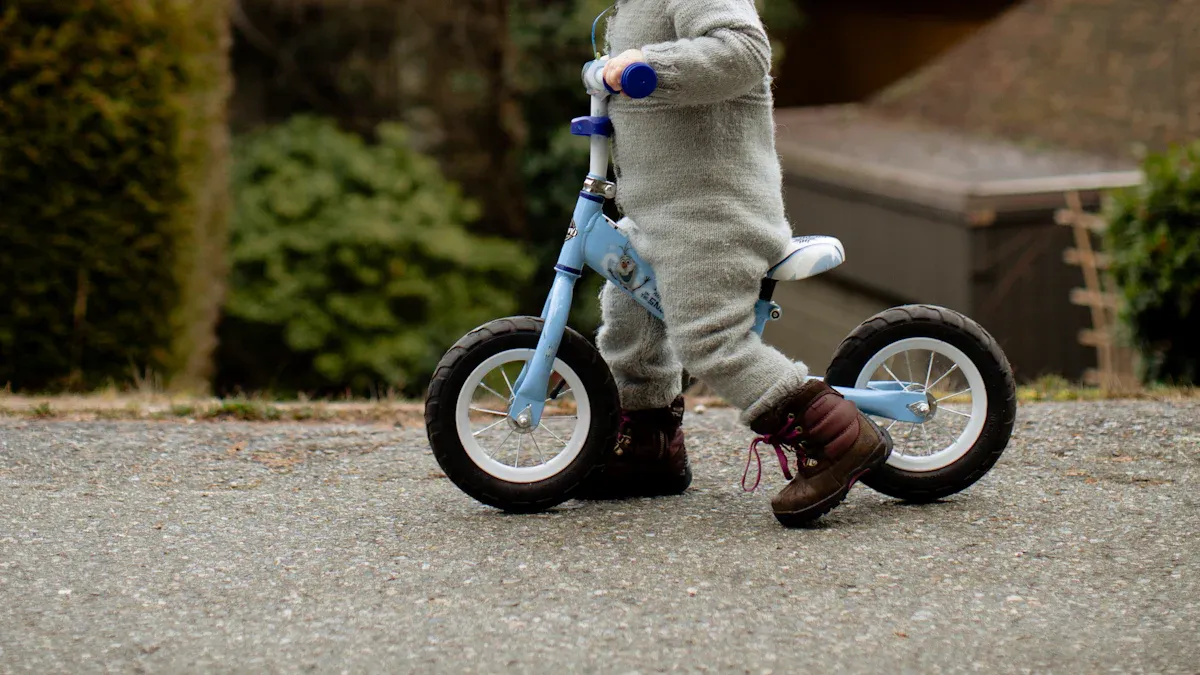
Important safety features of modern kids' e-bikes
Modern electric bikes for kids are equipped with numerous safety features that minimize the risk of accidents. Among the most important are:
Lighting systems: LED lights at the front and back ensure better visibility, especially in poor lighting conditions.
Brakes: High-quality disc brakes or V-brakes provide reliable braking power, even in wet conditions.
Speed limit: Many models have a maximum speed of 20 km/h to make control easier.
Frame stability: Lightweight yet sturdy aluminum or steel frames increase stability and safety.
Certifications: Make sure the kid's e-bike meets the applicable safety standards. The table below shows some important certifications:
Category |
Standards and Certifications |
|---|---|
E-bike safety |
ANSI/CAN/UL 2849, EN 15194, EN 17128 |
Bicycle safety |
ISO 4210, ISO 8098, 16 CFR 1512 |
Battery safety |
EN 50604-1, ANSI/CAN/UL 2271, UN 38.3 |
Protective clothing and equipment – What is essential?
The right protective clothing is crucial to avoid injuries. Here is some essential equipment:
Helmet: A well-fitting helmet protects the head in case of falls. Statistics show that accidents with serious head injuries increase drastically without a helmet.
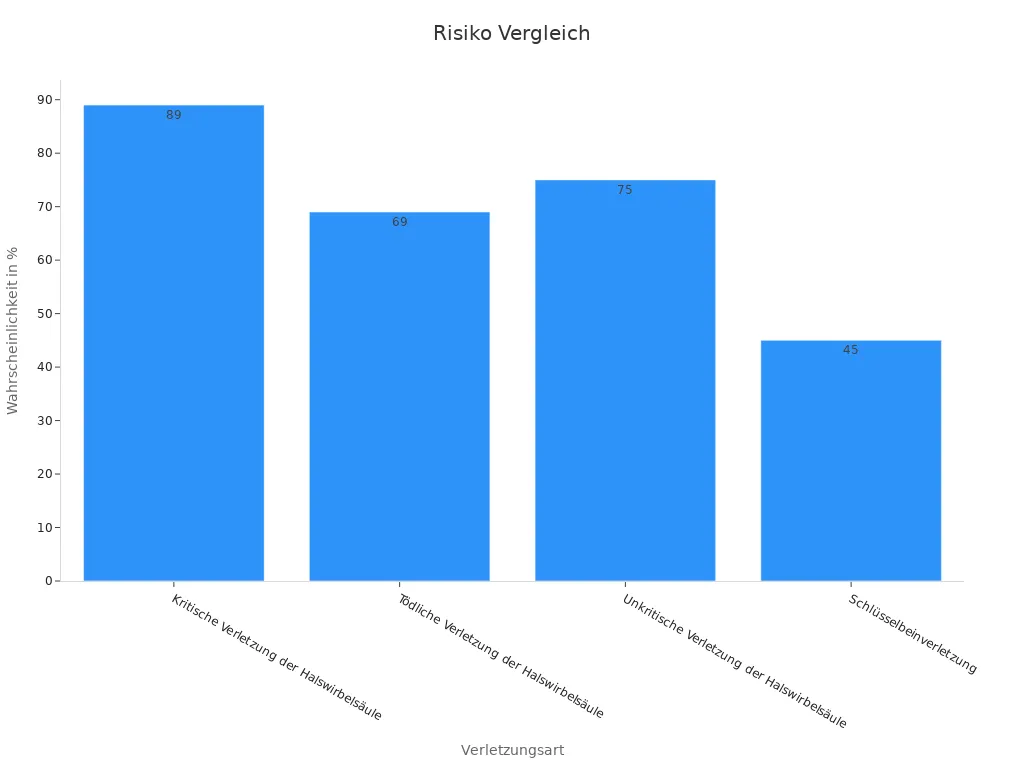
Neck brace: Especially when riding off-road, a neck brace protects the cervical spine. It reduces the risk of critical injuries by up to 89%.
Knee and elbow pads: These protect against scrapes and bruises.
Gloves: They offer better grip and protect the hands in case of falls.
Tip: Choose lightweight and well-fitting protective clothing that does not restrict your child's freedom of movement.
Tips for safe riding and proper usage
Safe riding begins with proper preparation and usage of the kid's e-bike. Here are some important tips:
Regular practice: Let your child practice in a safe environment before heading out onto the road.
Learn traffic rules: Explain the most important traffic rules and practice them together.
Adjust speed: Your child should always ride at a speed they can safely control.
Bike maintenance: Check the brakes, tires, and battery regularly.
A study from Freiburg shows that four out of five injuries happen without any collisions. This highlights the importance of practice and safe behavior.
Note: Children often do not recognize hazards in time. Accompany them on their first rides to support them.
Models of electric bikes for kids
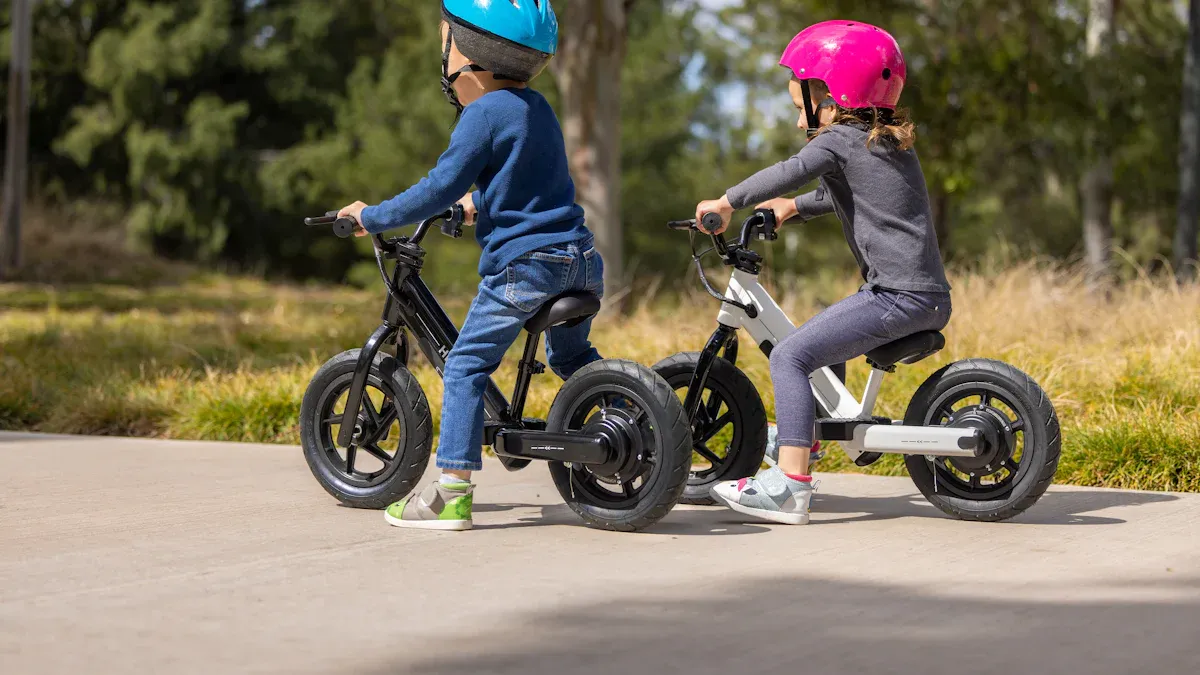
Types of kids' e-bikes – Mountain bikes, city bikes, and more
Electric bikes for kids come in various types tailored to different needs. Mountain bikes are excellent for outdoor adventures. They offer sturdy frames, wide tires, and good suspension to navigate uneven paths safely. City bikes, on the other hand, are ideal for everyday use. They are lighter, have narrow tires, and often feature a luggage rack that makes it easier to transport school supplies.
Another type is the e-cargo bike. These models are perfect for family outings. They offer space for luggage or even a small passenger. Sales figures show that e-cargo bikes are becoming increasingly popular:
Model Type |
2023 Sales |
2022 Sales |
Growth (%) |
|---|---|---|---|
E-cargo bikes |
165,000 |
14.5 |
|
Cargo bikes |
235,250 |
212,800 |
10.5 |
Bike trailers |
206,000 |
293,000 |
N/A |
Models for younger vs. older children
Choosing the right model depends heavily on your child's age and height. For younger children, smaller models with 12 to 16 inches are ideal. These bikes are lighter and easier to control. They often have a speed limit to increase safety. Older children need larger models with 18 to 20 inches. These offer more stability and are suitable for longer distances.
Make sure the bike "grows" with your child. Many models have adjustable saddles and handlebars that can be adapted to the child's height. This keeps the kid's e-bike usable for several years.
Popular brands and manufacturers of kids' e-bikes
Some brands have specialized in electric bikes for kids and offer high-quality models. Among the most popular manufacturers are:
Cube: This German brand is known for its sturdy and safe kids' bikes. It sells the second-most kids' bikes in Germany, after Puky.
Puky: A classic among kids' bike manufacturers. Puky offers a wide range of models for different age groups.
Woom: This brand places special emphasis on lightness and ergonomics. Their bikes are ideal for younger children.
Tip: Read customer reviews to better understand the pros and cons of individual brands. This will help you find the perfect kid's e-bike for your child.
Buying tips for kids' electric bikes
The right size and appropriate weight
The size and weight of a kid's electric bike play a crucial role in safety and comfort. A bike that is too big or too heavy can make control difficult and reduce riding enjoyment. You should consider your child's height to choose the right frame size. For younger children, models with 12 to 16 inches are suitable, while older children cope better with 18 to 20 inches.
The weight of the bike is also important. A lightweight aluminum or carbon frame makes handling easier and reduces the strain while riding. Ensure that the total weight of the bike, including accessories like a luggage rack or child seat, is not too high.
Tip: Check the possibility of mounting a child seat and pay attention to the maximum permissible total weight. This is particularly important if you want to use the bike for family outings.
Battery life and charging time – What parents should look out for
Battery life and charging time are critical factors when choosing a kid's electric bike. A 500-watt-hour battery is generally sufficient for short to medium distances. However, you should check the bike's range, as this depends on the assistance level, the terrain, and the rider's weight.
Chargers with 4-amp power take about 4 hours and 40 minutes to fully charge the battery. Chargers with 2 amps can take up to 8 hours and 50 minutes. If you use the bike regularly, a faster charger makes sense.
-
Important points regarding battery life:
A powerful battery ensures a longer range.
The range depends on the selected assistance level.
Note: Plan charging times carefully, especially if the bike is used daily.
Price-performance ratio and warranty options
The price-performance ratio is a decisive factor when buying a kid's electric bike. You should consider your child's specific requirements to ensure the bike meets their needs. Models in the lower price segment cost between €1,000 and €2,500. These are suitable for daily use and short distances. Bikes in the mid-price segment (€2,500 to €4,000) often offer better features and a longer range. Premium models starting from €4,000 are ideal for sporty use and longer distances.
Warranty options are also important. Many manufacturers offer a warranty on the frame and the battery. You should carefully review the warranty terms to ensure you are covered in the event of a defect.
-
Important aspects when buying:
Suitability for mounting a child seat.
Maximum permissible total weight and safety of the luggage rack.
Tip: Compare different models and brands to find the best price-performance ratio. Customer reviews can help you with your decision.
Eco-friendliness and sustainability
Electric bikes for kids are not only a practical choice for everyday life, but also an eco-friendly alternative to other modes of transport. By choosing a kid's e-bike, you are actively contributing to protecting the environment and promoting a sustainable future.
Why are electric bikes for kids eco-friendly?
Using a kid's e-bike significantly reduces CO₂ emissions. Compared to cars or motorcycles, e-bikes produce no direct emissions. This means your child is traveling in an eco-friendly way without affecting air quality.
Another advantage is the low energy consumption. An e-bike requires only a fraction of the energy a car consumes. With a fully charged battery, your child can often ride up to 50 kilometers – and that with minimal power consumption.
Did you know?
According to a study by the German Environment Agency, an e-bike saves an average of 90% of CO₂ emissions per kilometer compared to a car.
Sustainable materials and production
Many manufacturers today place great value on sustainable materials and production methods. Frames made of recycled aluminum or steel are not only durable but also resource-efficient. Some brands even use biodegradable packaging to further reduce their ecological footprint.
When you buy an electric bike for kids, pay attention to the following aspects:
Recycled materials: Frames and components made from recycled metal or plastic.
Durability: High-quality materials that guarantee a long lifespan.
Sustainable production: Manufacturers that focus on eco-friendly processes.
How can you further promote sustainability?
You can further increase the eco-friendliness of a kid's electric bike by taking a few simple measures:
Regular maintenance: A well-maintained bike lasts longer and requires fewer spare parts.
Battery recycling: Drop off old batteries at collection points instead of throwing them away.
Energy-efficient charging: Charge the battery only when necessary, and use green electricity if possible.
Resale or donation: If your child grows out of the bike, sell it or donate it to a charitable organization.
Tip: Find out about local recycling programs for e-bike batteries. Many cities offer special collection points.
Benefits for the next generation 🌱: By buying your child an electric bike, you teach them to act environmentally conscious. Children who learn early to use sustainable modes of transport often develop a stronger awareness for protecting the environment.
A kid's e-bike is more than just a means of transport.: It is a step towards a greener future. You are not only helping the environment but also helping your child become a responsible adult.
Remember: Every little contribution counts. With a kid's e-bike, you make a big difference for the environment and the next generation. 🌍
Additional tips for parents
Preparing children for riding a kid's e-bike
The right preparation for your child is crucial to making riding an electric bike safe and enjoyable. Start with an introduction to the bike's basic functions. Show your child how to turn the motor on and off, change the assistance levels, and use the brakes correctly.
Tip: Practice in a safe environment like an empty parking lot or a quiet park. This allows your child to get to know the bike without pressure.
Explain the meaning of traffic rules and practice them together. Children should know how to behave at intersections, use hand signals, and be mindful of other road users.
A gradual introduction to riding in traffic makes sense. Start with short distances and increase the difficulty slowly. Accompany your child on their first rides to provide a sense of security and correct any potential mistakes.
Regular maintenance and care for safety and durability
A well-maintained children's e-bike remains safe and durable. Regularly check the brakes, tires, and battery. Ensure that the brake pads are not worn down and that the tires have the correct air pressure.
Clean the bike after every ride, especially if it has been used off-road. Dirt and dust can impair the mechanics. Use a soft cloth and mild detergent to clean the frame and components.
Note: Charge the battery only with the charger recommended by the manufacturer. This extends the battery's lifespan and prevents damage.
Schedule regular inspections at a specialist dealer. A professional check can identify and resolve problems early on.
When a children's e-bike is the right choice
A children's e-bike is ideal if your child needs to cover longer distances or rides in hilly terrain. It offers assistance that makes riding easier and increases the fun factor.
For children who are already confident riding a regular bike, an e-bike is a good next step. It promotes independence and boosts self-confidence.
Remember: A children's e-bike is not a toy. It should only be used if your child shows the necessary maturity and responsibility.
By following these tips, riding a children's e-bike will become a safe and enriching experience for your child. 🚴♂️
Children's e-bikes offer you a safe and entertaining way to introduce your child to mobility and the joy of cycling. With the right preparation and selection of the appropriate model, you can ensure your child's safety.
Tip: Inform yourself thoroughly about safety features and models before making a decision.
Regular maintenance of the bike extends its lifespan and ensures a reliable riding experience. 🚴♀️ Children learn to take responsibility and act in an environmentally friendly manner.
FAQ
Are children's e-bikes suitable for every age?
Children's e-bikes are suitable for children from about 6 years old. Younger children should practice on conventional bicycles to improve their balance and coordination. Make sure that the model fits your child's height and developmental stage.
How long does the battery of a children's e-bike last?
Battery life depends on capacity and usage. An average battery lasts 30 to 50 kilometers. Factors such as assistance level, weight, and terrain influence the range. Charge the battery regularly to extend its lifespan.
Can my child use an e-bike in traffic?
Children may use e-bikes in traffic if they know the traffic rules and are able to ride safely. In Germany, the minimum age for pedelecs is 14 years. For younger children, protected paths or parks are better suited.
How do I properly maintain a children's e-bike?
Clean the bike regularly with a damp cloth. Check the brakes, tires, and battery weekly. Charge the battery only with the original charger. Schedule annual inspections at a specialist dealer to ensure safety.
What does a good children's e-bike cost?
A good children's e-bike costs between €1,000 and €4,000. The price depends on the brand, features, and quality. Models in the mid-price segment often offer the best value for money. Compare different options to find the right bike.
Tip: Check for offers and discounts regularly to save money.