
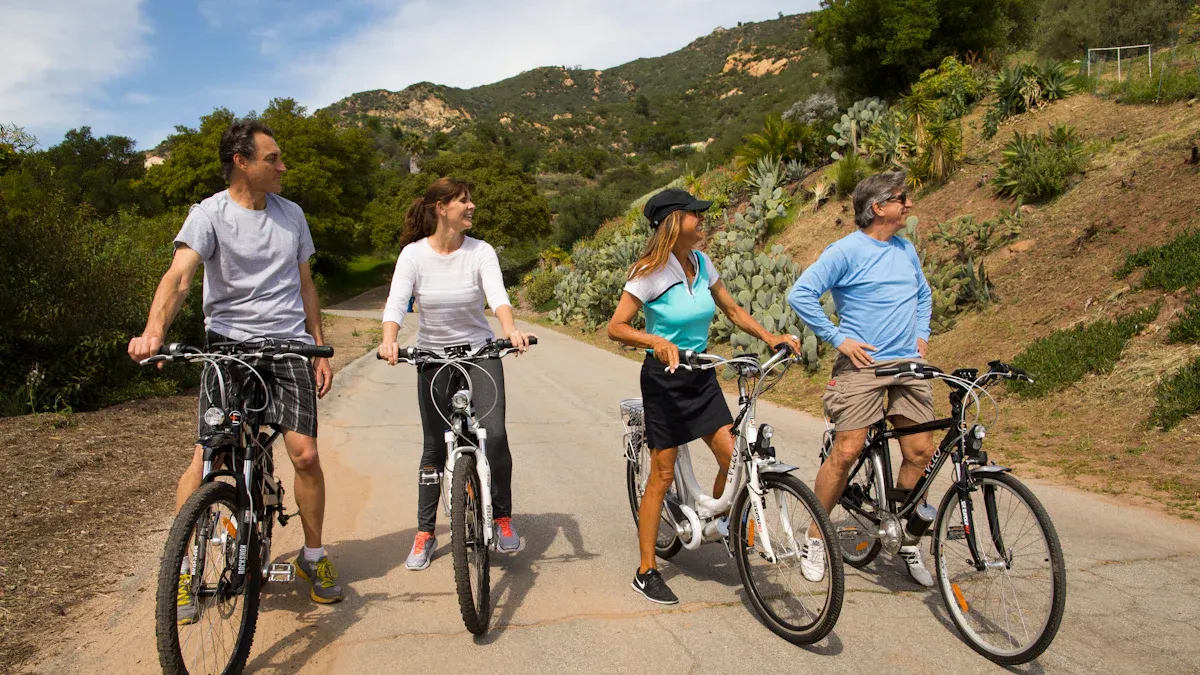
E-bikes for travel offer a perfect combination of comfort and adventure. They allow for longer distances without great effort while simultaneously promoting your health. In 2023, 43.1% of vacation travelers used e-bikes. With the right choice, such as a battery of at least 500 Wh, every trip becomes an unforgettable experience.
Key Takeaways
Choose an e-bike with a 500 Wh battery. This allows you to ride 80 to 100 km, ensuring a relaxed journey.
Check out the types of e-bikes: Trekking and SUV bikes are stable and comfortable for long rides. Folding and compact bikes are great for the city.
Try out different e-bikes. Pay attention to comfort, motor power, and riding position. This is how you will find the best bike.
Categories of E-bikes for Travel
Trekking E-bikes: Stability and Versatility for Long Tours
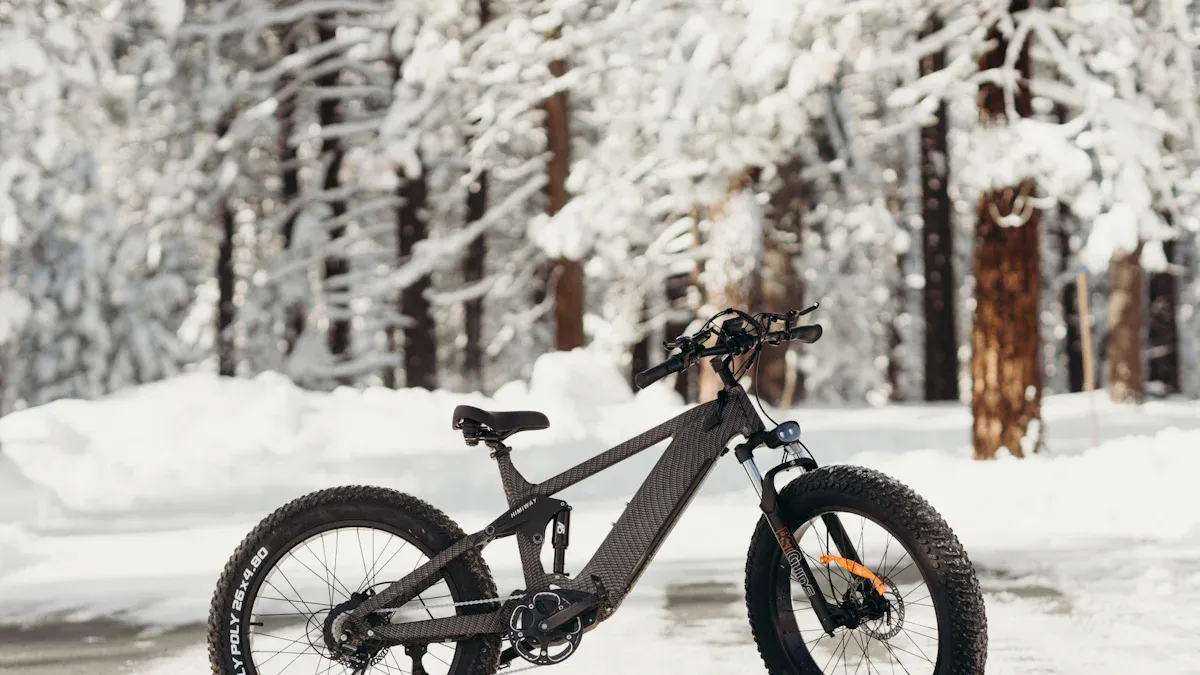
Trekking e-bikes offer you the perfect combination of stability and comfort. They are excellently suited for long tours as they are equipped with a torsionally rigid frame and stable rims. A moderate riding position of about 60 degrees ensures relaxed cycling, while the suspension smooths out bumps on roads, forest paths, or gravel. Luggage racks and panniers are easy to attach, making them ideal for trips with gear. These all-rounders are suitable for both long distances and daily commuting.
SUV E-bikes: Comfort and Robustness for Mixed Terrain
SUV e-bikes combine the features of trekking and mountain bikes. They offer you comfort and robustness on mixed surfaces. With 100–140 mm of suspension travel and brakes from the mountain bike sector, you can master even challenging routes. The ergonomic riding position provides additional comfort. The recommended tire pressure is between 1.6 and 4.5 bar, with 2.8 bar considered optimal to ensure a balance of comfort and stability.
Gravel E-bikes: Sportiness and Speed for Off-road Adventures
Gravel e-bikes are the right choice if you want to travel sportily. They reach speeds of up to 25 km/h on asphalt while offering the freedom to ride on unpaved paths. Lightweight motor systems and a low center of gravity ensure a safe and dynamic riding experience. These models allow you to take longer tours with more elevation gain and steeper climbs.
Folding and Compact E-bikes: Practicality and Mobility for Urban Travel
Folding and compact e-bikes are ideal for city travel. They are easy to transport and fit into public transport. Many models are considered luggage and can be taken along free of charge. These e-bikes offer you maximum flexibility and mobility, especially when you frequently switch between different modes of transport.
E-mountain Bikes: Performance for Steep Climbs and Difficult Terrain
E-mountain bikes are the best choice for you if you want to tackle steep climbs and difficult terrain. Hardtail models combine lightness and efficiency while offering direct power transmission. They have been tested both in the lab and on trails, proving their robustness and effectiveness.
Cargo E-bikes: Load Capacity for Trips with Heavy Luggage
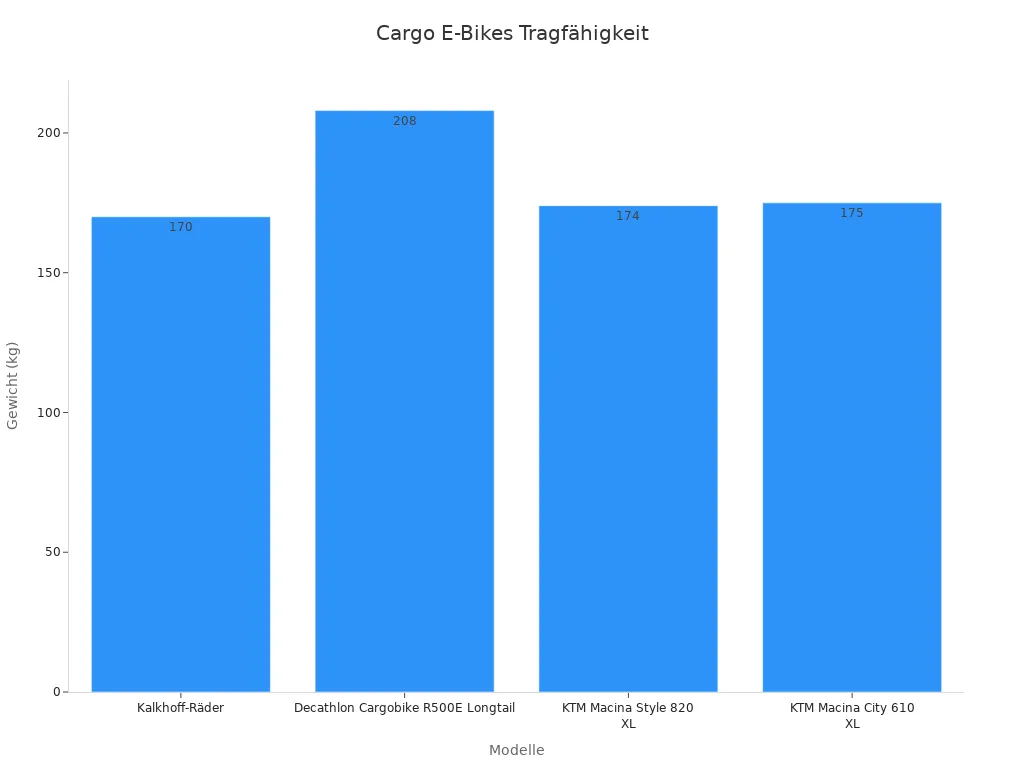
Cargo e-bikes are ideal if you want to transport heavy luggage. Models like the KTM Macina City 610 XL offer a load capacity of up to 175 kg. Some longtail models, such as the Decathlon Cargobike R500E, can even carry up to 208 kg. These e-bikes are perfect for trips with a lot of equipment or shopping.
Important Criteria for Choosing a Travel E-bike
Range and Battery Capacity: How Far Can You Ride?
The range of an e-bike depends heavily on the battery capacity. For travel, you should opt for a battery with at least 500 Wh, which enables a range of 80 to 100 km. If you are planning longer tours, batteries with 600 to 750 Wh or even 800 Wh are ideal, as they can cover distances of up to 130 km. The following table gives you an overview:
Battery Capacity (Wh) |
Range (km) |
|---|---|
300-400 |
55-70 |
500 |
80-100 |
600-750 |
Longer distances |
800 |
up to 130 |
Tip: Also consider charging options on the go, such as charging stations at hotels or restaurants.
Motor Power and Type: Mid-drive, Rear-hub, or Front-hub Motor?
The choice of motor influences the riding feel and performance of your e-bike. A mid-drive motor offers you a natural riding experience and is particularly suitable for steep climbs thanks to high torque of up to 85 Nm. Rear-hub motors are ideal for sporty riders, while front-hub motors represent a cost-effective option.
Motor Type |
Characteristics |
Advantages |
|---|---|---|
Mid-drive |
Centered on the frame, optimal weight distribution, high torque up to 85 Nm |
Natural ride feel, ideal for steep climbs |
Front-hub |
Easy to install, less traction in slippery conditions |
Affordable, quieter than mid-drive motors |
Rear-hub |
Sportier ride feel, popular with e-road bikes and city bikes |
Affordable, quieter than mid-drive motors |
Comfort and Equipment: Suspension, Riding Position, and Accessories
Comfort is crucial for long trips. An upright riding position is suitable for city and trekking bikes, while sporty e-mountain bikes require a forward-leaning posture. Individual adjustments to the saddle and handlebars increase comfort. Also pay attention to the suspension: models like the CONWAY offer 100 mm of travel, which effectively smooths out bumps.
Note: Luggage racks and panniers are indispensable for trekking bikes, while city bikes are often equipped with lights and brakes.
Weight and Transportability: Lightness vs. Stability
The weight of an e-bike influences both stability and transportability. Light models such as folding and compact e-bikes often weigh under 20 kg and are suitable for commuters. Heavy models like e-mountain bikes or trekking bikes can weigh over 25 kg, which makes transport more difficult.
Light models: Ideal for commuters who need to carry their bike or take it on public transport.
Heavy models: Offer more stability but are harder to transport.
Price-Performance Ratio: What Do You Get for Your Budget?
The prices for e-bikes vary greatly depending on the model and equipment. A good trekking bike like the Giant Explore E+ Pro 1 costs around 4099 euros, while a high-quality cargo bike like the Tern GSD S00 is at 6399 euros. The following graphic shows the price range of different e-bike categories:
Tip: Invest in a model that offers a range of at least 80 to 100 km and has a battery of 500 Wh or more.
Recommendations for Various Travel Scenarios
City and Short-distance Travel: Practical and Compact Models
For city and short-distance travel, compact and folding e-bikes are a great choice. These models are lightweight, space-saving, and easy to transport. They fit easily into public transport and are ideal for commuters or travelers who frequently switch between means of transport. According to the Zweirad-Industrie-Verband, electrically assisted bikes for urban use account for 76.5 percent of the market share. This shows how popular these models are for city traffic.
Tip: Ensure that your e-bike has good lighting and stable brakes to navigate city traffic safely.
Long Tours and Mixed Surfaces: Trekking and SUV E-bikes
For long tours and mixed surfaces, trekking and SUV e-bikes are the best choice. These models offer you stability, comfort, and versatility.
Trekking e-bikes are excellent for longer distances beyond commuting.
SUV e-bikes combine sporty features with comfort and are ideal for off-road routes.
Good suspension and an ergonomic riding position increase comfort on long rides.
Essential equipment includes stable fenders, powerful lighting, and a high-quality luggage rack.
SUV bikes have evolved from sporty mountain bikes to more comfortable models. They are particularly suitable for gentle dirt paths and uneven forest trails.
Off-road Adventures and Sporty Rides: Gravel and E-mountain Bikes
For sporty riders and off-road adventures, gravel and e-mountain bikes offer the perfect combination of performance and speed. Gravel bikes are lightweight and allow you to ride on both asphalt and unpaved paths. E-mountain bikes, on the other hand, are designed for steep climbs and difficult terrain.
Note: Choose a model with a powerful motor and robust suspension to safely master even challenging routes.
Traveling with Luggage or Heavy Loads: Cargo E-bikes and Accessories
Cargo e-bikes are ideal if you are traveling with a lot of luggage or heavy loads. These models offer high load capacity and are perfect for longer trips with equipment.
Model |
Permissible Total Weight |
|---|---|
Decathlon Cargobike R500E Longtail |
up to 208 kilograms |
Upstreet3 |
150 kg |
Some models can even transport up to 200 kg total weight. With suitable accessories like luggage racks and panniers, you can make your trip even more comfortable.
Buying Guide for the Perfect Travel E-bike
Tips for the Test Ride: What Should You Look For?
A test ride is the most important step in finding the right e-bike. It gives you the opportunity to test the ride feel and controls. Pay attention to the following points:
Range: The e-bike should handle at least 80 to 100 km per day.
Battery capacity: A battery with 500 Wh is standard; 600 to 750 Wh is better.
Comfort and ergonomics: Check the riding position, saddle, and handlebar height.
Motor control: Test how the motor adjusts to different riding conditions.
Tip: Have the functions of the e-bike explained to you in detail. Take your time to understand the motor control and handling.
Additionally, you should look for modern features like integrated LED lights, GPS tracking, and anti-theft protection. These increase safety and comfort on trips.
Choosing the Right Dealer: Advice and Service
A good dealer offers you not only a large selection but also competent advice. Look for a specialist shop that allows test rides and helps you adjust the e-bike. Make sure that the dealer also offers maintenance and repair services.
Note: A dealer with a good reputation and positive reviews is often the best choice.
Checking Equipment and Quality: Frame, Brakes, Battery, and More
The quality of your e-bike determines its longevity and safety. Here are the most important aspects:
Aspect |
Description |
|---|---|
Frame Material |
Aluminum is light and affordable; carbon offers more stability. |
Brake Technology |
Hydraulic disc brakes like Shimano XT provide reliable braking power. |
Battery Capacity |
Lithium-ion batteries with 500 to 750 Wh enable ranges of 80 to 130 km. |
Tip: For longer tours, batteries with 800 Wh or more are ideal, even if they increase the weight.
A high-quality e-bike combines robust materials, powerful brakes, and high battery capacity. Ensure that all components meet your requirements.
Trends and Innovations in the E-bike World
Hybrid Models: Combination of Sportiness and Comfort
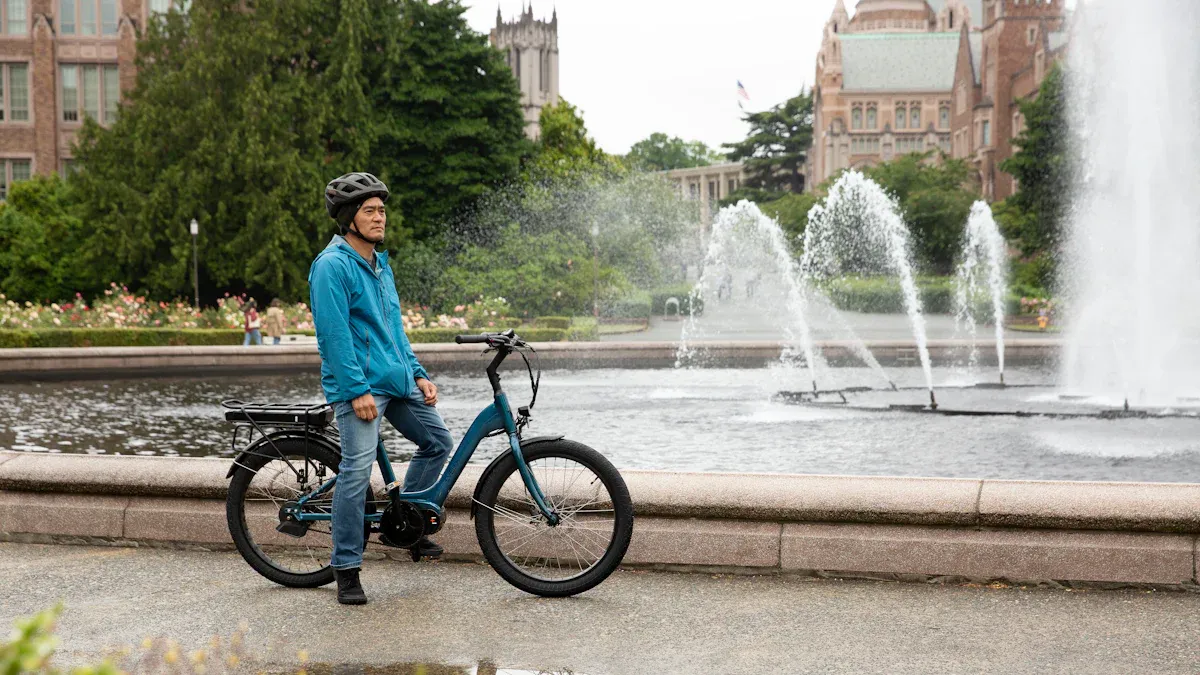
Hybrid e-bikes combine the best features of trekking and mountain bikes. They offer you a perfect balance between sportiness and comfort. These models are suitable for different terrains and riding styles. With an upright riding position and robust suspension, you can ride comfortably on both asphalt and unpaved paths. The automatic transmission, which is considered an innovation starting in 2025, makes riding even easier.
Tip: Hybrid models are ideal if you are looking for versatility and are on the road both in the city and on longer tours.
Sustainable Manufacturing: Climate-neutral and Resource-saving Production
Sustainability is playing an increasingly important role in the e-bike world. Manufacturers are increasingly focusing on climate-neutral production methods and recyclable materials. These developments help to reduce environmental impact. The Bicycle Industry Association (ZIV) has revised its estimate of e-bike lifespans upwards. This shows that the technology is becoming not only more durable but also more sustainable.
Note: When buying a new e-bike, look for manufacturers that use environmentally friendly production processes. This way, you can reduce your ecological footprint.
Bikepacking: Multi-day trips with e-bikes and light luggage
Bikepacking with e-bikes is becoming increasingly popular. It allows you to take on multi-day tours with minimal luggage. Almost all pedelec classes are suitable for such adventures. Gravel bikes and randonneurs, in particular, offer sporty characteristics and are available with an electric drive. Choosing the right e-bike depends on the route and your personal preferences.
Gravel bikes are light and ideal for unpaved paths.
Trekking e-bikes offer comfort and stability for longer tours.
Tip: Plan your route carefully and use charging stations at hotels or restaurants to charge your battery on the go.
Choosing the perfect travel e-bike depends on several factors. A range of at least 80 km, a battery with 500 Wh or more, and a robust frame are essential. The following table summarizes the most important criteria:
Criterion |
Recommendation |
|---|---|
Range |
At least 80 to 100 km per day |
Battery capacity |
At least 500 Wh, better 600-750 Wh |
Motor type |
Mid-drive motor recommended |
Torque |
At least 60 Nm |
Frame material |
Aluminum or steel |
Brakes |
Hydraulic disc brakes |
Tires |
Wide, reinforced tires recommended |
Tip: Test different models and discover which one best suits your needs. Plan your next trip and enjoy the freedom an e-bike offers! 🚴♂️
FAQ
What range should an e-bike for travel have?
For travel, you need a range of at least 80 km. Batteries with 500 Wh or more are ideal for covering longer distances without any problems.
How do I properly maintain my e-bike battery?
Charge the battery at room temperature and avoid extreme temperatures. Store it at 40–60% charge if you are not going to use it for an extended period.
Can I take an e-bike on public transport?
Yes, many foldable or compact e-bikes are considered pieces of luggage. Check the transport rules of your public transport provider in advance.
Tip: Before your trip, check whether your e-bike meets the requirements of public transport. This will help you avoid unexpected problems.