
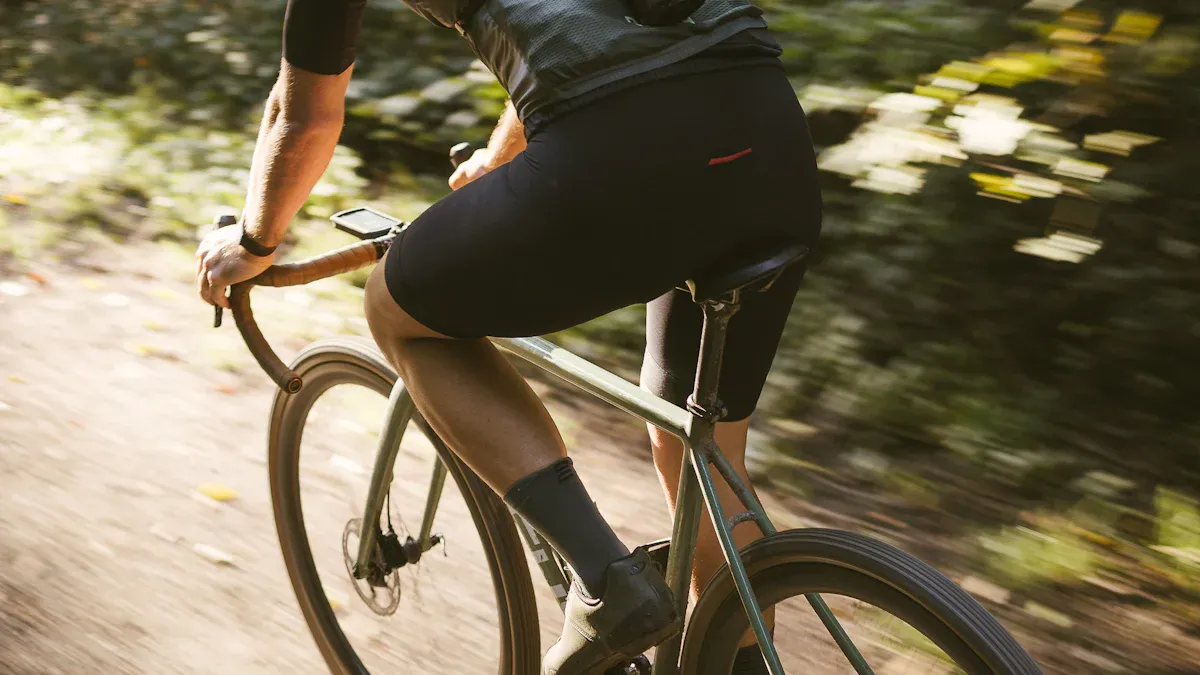
Are you wondering what you should really look out for when buying a used gravel bike? Poor external condition often indicates that the bike has been poorly maintained. Hairline cracks in the frame, especially on carbon ones, usually remain undiscovered. You should check the tires, brakes, and chain carefully. A test ride will help you identify hidden defects. Consider whether a written purchase agreement including the frame number provides you with additional security. This is how you find a used gravel bike that suits you and won't result in any nasty surprises.
Key Takeaways
Before buying, check the frame size, the condition of the frame and components, and the wear and tear of important parts like the chain and brakes.
Always take a test ride on different surfaces to test handling, brakes, and shifting.
Use a written purchase agreement with the frame number to protect yourself legally and avoid theft.
Compare prices and offers carefully, look for realistic pricing, and negotiate politely to find a fair bargain.
Buy from specialist dealers or verified sellers if you want more security, a warranty, and service.
Used gravel bike: Inspection criteria
Size & Geometry
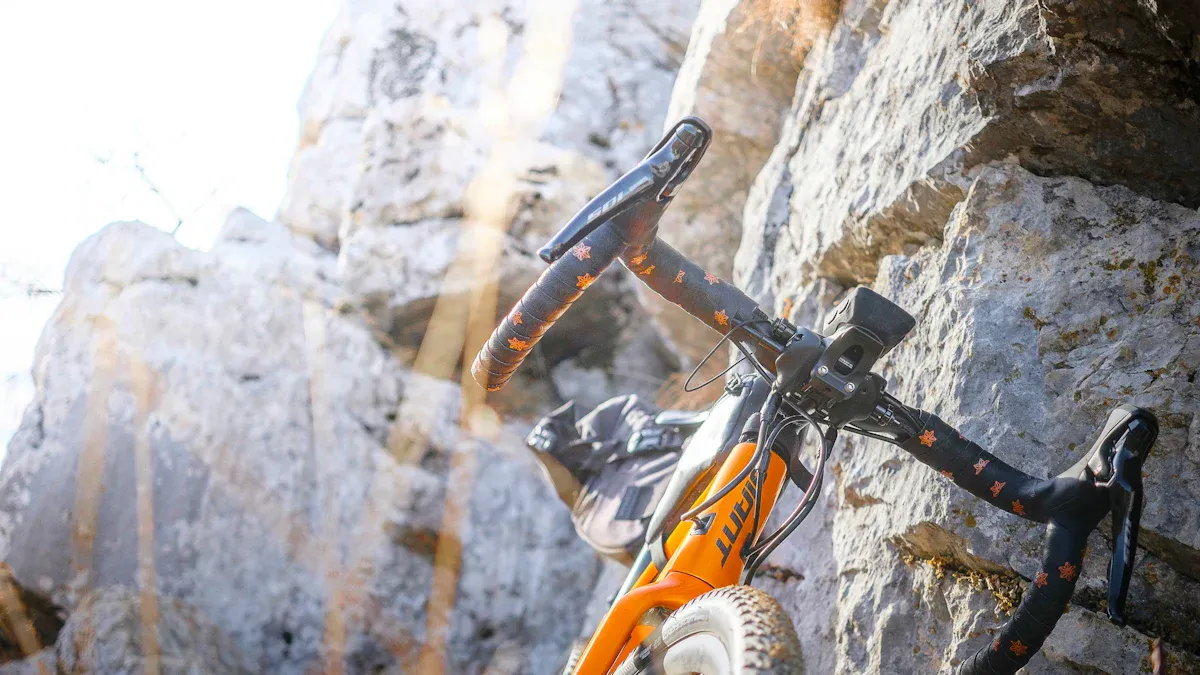
Do you want to ensure your new-to-you used gravel bike really fits you? Then pay attention to the correct frame size and geometry first. The size is based on your body measurements, similar to a road bike. A slightly larger frame is often suitable for long tours, while a smaller one is better for short, sporty rides. The geometry determines how the bike rides: a slack head tube angle and a high stack provide more comfort and stability on gravel. The seating position is usually more upright than on a road bike. This gives you more control, especially off-road. You can make small adjustments later using the stem, saddle, or handlebars. Programs like bike fitting help you find the perfect setup.
Tip: Test different frame heights and geometries before making your decision. This way, you will find the used gravel bike that really suits you.
Frame & Material
The frame material affects weight, comfort, and price. The two most common materials are aluminum and carbon. Here is an overview:
Frame material |
Advantages |
Disadvantages |
|---|---|---|
Aluminum |
Robust, durable, cheaper, good for beginners and touring |
Heavier, less comfortable, transmits more vibrations |
Carbon |
Very light, dampens vibrations, sporty, targeted stiffness possible |
More expensive, more sensitive to falls, repairs are complex |
When buying, check whether the frame has visible damage such as dents, cracks, or corrosion (in the case of aluminum). For carbon frames, you should pay particular attention to hairline cracks.
When in doubt, have a professional take a look, especially with carbon.
Checking components
The components determine how reliably and comfortably your used gravel bike rides. Check the following points:
Ask the seller how long and how intensely the bike was used.
Ask to see service intervals and receipts.
Check the serial number to rule out theft.
Check whether parts have been replaced and if there are any known defects.
Compare the price with similar offers.
Look at the bike in person and take it for a test ride.
If possible, take someone along who knows about bikes.
Use a checklist so you don't forget anything.
Assessment notes |
|
|---|---|
Bolts |
Are the heads clean and not stripped? |
Drivetrain |
Does every gear shift cleanly? No grinding noises? |
Brakes |
Do they function reliably? What is the wear like? |
Crash damage |
Are there scratches on the derailleur, pedals, saddle, or handlebars? |
Frame and fork |
Are there visible cracks, dents, or corrosion? |
Saddle/seatpost |
Firm seat, no corrosion? |
Handlebar/stem |
Does the handlebar turn easily? Is there any play in the bearings? |
Wheels |
Do they run true? Is there any bearing play? |
Spokes/rims |
Are they undamaged? |
Bottom bracket |
No lateral play, smooth operation? |
Pedals |
Do they turn easily, are the threads in good condition? |
Tires |
Rubber and sidewalls undamaged? |
Drivetrain
The drivetrain is the heart of your used gravel bike. This is where you will often find the most wear-and-tear parts:
Chain, cassette (sprockets), and chainring wear down over time.
Drivetrain: All gears should shift cleanly and without noise.
Bottom bracket: The crank must not have any lateral play and must turn easily.
Pedals: Must turn easily and must not have damaged threads.
A worn-out drivetrain can quickly become expensive. Ask when the parts were last replaced.
Wear parts
You must regularly replace wear parts such as chains, brake pads, and tires. This costs money and time. Here is an overview of the typical costs:
Wear part |
Average costs (incl. installation) |
|---|---|
Chain replacement |
|
Cassette |
approx. €60 |
Chainrings |
over €100 |
Brake pads |
€7 to €37 |
Tires (per unit) |
approx. €30 |
Shock/fork service |
€50 to €100 |
Bearing maintenance |
€9 to €14 |
Check how heavily the wear parts have been used before buying. This allows you to better assess whether the offer is truly a bargain.
Test ride
A test ride is mandatory! Test the used gravel bike on different surfaces such as asphalt, gravel, and forest paths. Pay attention to:
Braking performance (hydraulic disc brakes are ideal, especially in wet conditions)
Shifting behavior and smoothness
Fit and seating comfort
Noises or vibrations in the frame
Adjust the saddle and handlebar to fit you for the test ride. This way, you will quickly notice if the bike is right for you.
Many dealers do not offer test rides. With private sales, you can often test them – take this opportunity!
Seating position & comfort
The seating position affects your comfort and control. On a used gravel bike, you usually sit slightly more upright than on a road bike. This is easier on the back and neck, especially on long routes.
You can adjust the seating position individually:
Shorten or raise the stem if you are too stretched out.
Reposition or replace the saddle if it doesn't fit.
Adjust handlebar width to your shoulders (for gravel bikes, approx. 2 cm wider than for road bikes).
Change the handlebar height using spacers.
Adjust the handlebar tilt so that no pressure points occur.
Mount the shifters and grip positions so that your wrists remain neutral.
Make small adjustments after every test ride until everything feels right.
Adjustment aspect |
Description |
|---|---|
Handlebar width |
Measure shoulder width, choose approx. 2 cm wider than road bike |
Handlebar height |
Adjust with spacers, set to sporty or comfortable |
Saddle |
Measure sit bone distance, choose appropriate saddle |
Ergonomics |
Slight elbow bend to dampen vibrations |
Documents & Proof
When buying a used gravel bike, you should pay attention to the correct documentation. A written purchase agreement is not mandatory, but it is highly recommended. It protects you from trouble if there are any problems later.
Important points for the contract:
Record the frame number, condition, purchase price, and name and address of the seller.
Get all original documents (e.g., warranty card, service booklet).
Check the frame number online to rule out theft.
Both parties should sign the contract.
For the test ride, the seller may request an ID as a deposit.
Honest information about damages and defects is mandatory.
A purchase agreement helps you prove ownership, especially in the event of theft.
A purchase agreement helps you prove ownership, especially in the event of theft.
Used gravel bike: Price & Budget
Market prices
Do you want to know how much you have to pay for a used gravel bike? Prices have changed significantly in recent years. In 2022, prices rose due to high demand and supply problems. Many people wanted a new bike, but there weren't enough available. In 2023, the situation eased. Dealers and manufacturers offered discounts because fewer people were buying. Nevertheless, some models have become more expensive, even if they have remained technically the same. New gravel bikes often cost over €2,000. This also affects the second-hand market. The selection is better now, but prices remain high. It is worth comparing different offers before you decide.
Fair offer
Recognizing a fair offer is not that difficult. First, look at the age and condition of the bike. A three-year-old gravel bike with low mileage and good maintenance is worth more than an older, heavily used model. Pay attention to the equipment: high-quality drivetrain, carbon frame, or special wheels increase the price. Compare similar offers on different platforms. This will give you a feel for the market value.
Tip: If an offer is much cheaper than others, check it extra carefully. Sometimes a hidden defect is behind it.
Here is a small overview of how the price can be broken down:
Condition |
Price (approx.) |
|---|---|
As new |
70-80% of the new price |
Well used |
50-70% of the new price |
Heavily used |
30-50% of the new price |
Price negotiation
You can almost always negotiate when buying a used gravel bike. Many sellers already expect a small discount. Prepare yourself well: note down any defects or wear and tear you find during your inspection. Address these points politely. Ask if the price is still negotiable.
Here are a few tips for price negotiation:
Remain friendly and objective.
Show that you have done your research.
Mention specific reasons for your price proposal (e.g., worn tires).
Set a limit that you will not exceed.
Be ready to say no sometimes.
Many sellers will agree to a fair counter-offer if you remain polite.
Maintenance costs
Don't forget: Even after the purchase, costs will arise. You must regularly replace wear parts such as chains, brake pads, or tires. Sometimes the bike needs a service, for example on the shock or the bearings. Plan these costs when setting your budget.
Here is an example of typical maintenance costs:
Maintenance part |
Costs (approx.) |
|---|---|
Chain replacement |
€20 |
Cassette |
€60
Brake pads
€7–€37
Tires (per unit)
€30
Fork service
€50–€100
A bargain can quickly become expensive if you have to replace many parts. Always factor in the maintenance costs.
Sources & Offers
Online platforms
You will find the largest selection of used gravel bikes on online platforms such as BuyCycle, Bike Exchange, or eBay Kleinanzeigen. There, you can filter specifically by brand, size, and price. Many offers come from private individuals, but dealers are also represented. Online, you often have the chance to get a good price. Ensure that you can rate the seller and that there is a legal notice (impressum). A test ride is sometimes possible, especially with local offers.
Tip: Look closely at the photos and ask for more images if you are unsure.
Dealers & Refurbished
Specialized dealers and providers of refurbished bikes offer you many advantages. The bicycles are technically checked, maintained, and refurbished. Wear parts are replaced, and you often receive a warranty as well as a right of return. The condition is documented transparently, sometimes even with 360-degree photos. This gives you security that you rarely have with private sales.
Refurbished gravel bikes are checked and maintained
You get a warranty and right of return
The condition is clearly documented
Service partners are available nationwide
Private sales usually do not offer a warranty or right of return
Feature |
Dealer (Refurbished / Commercial) |
Private Seller |
|---|---|---|
Warranty |
No warranty |
|
Right of return |
14-day right of return |
No right of return |
Condition of the bikes |
Professionally checked and documented |
Condition often unknown |
Purchase security |
High due to warranty and right of return |
Higher risk |
Local shops
In a local bike shop, you can view and test a used gravel bike directly. The bikes are usually maintained and in good condition. You get personal advice and can take a test ride. The prices are often a bit higher than online, but you have more security and service.
Personal contact
Higher prices, but less risk
Finding a bargain
Do you want to get a real bargain? Then monitor the market regularly. Check the prices and compare different offers. Always take a test ride and look closely at the bike on-site. Be flexible with the choice of model and negotiate politely. Especially at the start of the season or after trade fairs, you can often find affordable used gravel bikes. Use various sources such as flea markets, forums, or friends.
Take a test ride
Inspect the bike on-site
Take your time and look at the details
Remain flexible
Negotiate well
Look for favorable times
Use different sources
Pay attention to reputation
Be cautious of offers that are too cheap
Avoiding fraud
Do you not want to take any risks? Then check the seller thoroughly. Trustworthy sellers speak openly about defects and prior damage. Ask about age, mileage, and service history. Let them show you the original receipt and check the number of previous owners. For online purchases, you should look for a legal notice and clear contact details.
Tip: Always get a written purchase contract and pay only after handover. Personal collection and a test ride protect you from unpleasant surprises.
Checklist
Checkpoints
Before you decide on a used gravel bike, you should use a clear checklist. This way you won't forget any important points. Here are the most important checkpoints that you should go through before buying:
Does the frame size match your body height?
Are you sitting comfortably and securely on the bike?
Are bearings, wheels, tires, brakes, and gears in good condition?
Is there any visible damage such as cracks, dents, or heavy wear?
Do the gears work in all speeds?
Is the frame straight? It is best to test this during a test ride, even riding no-handed.
Is the price correct compared to similar offers?
Is there a purchase contract with the frame number and all important details?
Tip: Use this list during your inspection and check off every point. This way you ensure that you are not taking any risks.
Before buying
Do you want to be on the safe side? Then follow these steps before you buy a used gravel bike:
Check the frame size and seating position.
Check all important components such as bearings, wheels, tires, brakes, and gears.
Take a test ride and pay attention to handling.
Compare the price with similar models in advertisements or forums.
Estimate the value based on age and equipment.
Look out for critical defects such as warped frames or heavy wear.
Insist on a written purchase contract.
With this sequence, you will quickly find out if the bike really suits you.
After buying
After the purchase, maintenance begins. To ensure your new used gravel bike lasts a long time and stays safe, you should do the following:
Clean the bike thoroughly to discover hidden damage.
Use a cloth for fine cleaning after the rough wash.
Oil the chain and inflate the tires.
Check sensitive parts like carbon or CNC-machined components very carefully.
Only have the suspension fork maintained by professionals if you do not have special tools.
This way your bike remains safe and you will enjoy it for a long time!
Do you want to find a used gravel bike safely and cheaply? Then focus on these key factors:
Choose well-known components such as Shimano or SRAM.
Pay attention to the right frame size.
Consider your riding style.
Prefer starting with a simple model.
Technical criteria are more important than color.
Use specialized marketplaces like buycycle for verified quality.
For further tips, platforms like Buycycle.de and Fitstore24.com can help. There you will find advice, buyer's guides, and service offers. Use the checklist and stay alert – that way, buying is really fun! 🚴
FAQ
How do I know if the gravel bike was stolen?
Ask for the frame number and check it online, for example in bicycle databases. Let them show you the original receipt.
Tip: A reputable seller will provide you with all information voluntarily.
Do I have to draw up a contract for a private purchase?
You should always draw up a written contract. This protects you in case problems arise later. Note the frame number, price, and condition.
A contract protects you from trouble and helps in case of theft.
Which wear parts should I check first?
Look at the chain, cassette, brake pads, and tires. These parts wear out the fastest.
Check if the chain is rusting.
Check the brake pads.
Look at the tire sidewalls.
Can I test the gravel bike before buying?
You can often take a test ride with private sellers. Test the bike on asphalt and gravel. Pay attention to brakes, gears, and comfort.
Ask the seller beforehand if a test ride is possible.
What do I do if I discover a defect after the purchase?
Contact the seller immediately. With dealers, you often have a warranty. Private sellers are only liable for hidden defects.
Seller
Warranty?
Dealer
Yes, usually 1 year
Private
Only in case of fraud