
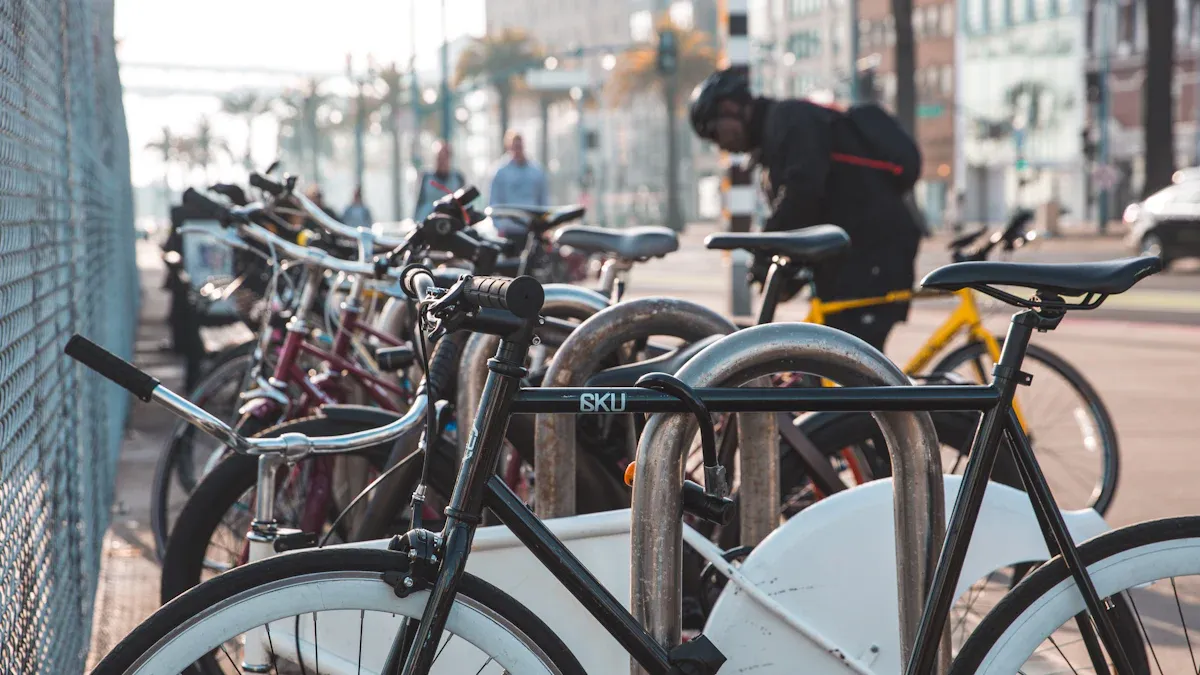
Bicycle theft is a growing problem. In Germany alone, around 260,000 bicycles are stolen every year. Particularly expensive models like e-bikes are increasingly attracting the attention of thieves. This is where GPS trackers come into play. They allow you to locate your bicycle in real time and quickly recover it in the event of a theft. The Munich police reported over 6,000 bicycle thefts in 2022, which underscores the need for such technologies. Combined with sturdy locks, GPS trackers for bicycles and e-bikes offer an effective solution for protecting your property.
Key takeaways
GPS trackers help you find your bicycle quickly.
Combine GPS trackers with strong locks for increased protection.
Hide the GPS tracker well so that thieves cannot see it.
Check the battery often to ensure the tracker is always running.
Park your bicycle securely and use a bicycle pass.
How GPS trackers and Bluetooth trackers work
How GPS trackers work
GPS and GSM technology for real-time tracking
GPS trackers use satellites to determine their position precisely. They receive signals from multiple satellites and calculate their exact geographic location from them. Using an integrated SIM card, they transmit this information over mobile networks to your smartphone or an app. This allows you to track the location of your bicycle or e-bike in real time. If your bicycle is moved, you will receive a notification with its current position. This technology is similar to that of navigation systems and offers a reliable way to quickly recover stolen bicycles.
Differences between GPS trackers and Bluetooth trackers
GPS trackers offer a longer range and more precise tracking because they use satellites and mobile networks. Bluetooth trackers, on the other hand, work over short distances, usually up to 100 meters. They send a secure signal that is detected by nearby devices. These trackers are ideal for searching in the immediate vicinity, while GPS trackers are better suited for longer distances.
Pros and cons of Bluetooth trackers
Compact size and energy efficiency
Bluetooth trackers like the Apple AirTag or Samsung SmartTag are small and light. They can be attached to your bicycle inconspicuously. Their energy efficiency is a major advantage, as the batteries often last for months. In addition, they use crowd GPS networks to transmit their location if other devices are nearby.
Limited range and dependence on other devices
However, the range of Bluetooth trackers is limited. They only work within a radius of about 100 to 150 meters. They also rely on the proximity of other devices to send location data. This makes them less effective if your bicycle is far away.
Built-in GPS sensors in e-bikes
Integration into the drive system and use of the e-bike battery
Many modern e-bikes feature built-in GPS sensors. These are often hidden in the frame or drive system and use the e-bike battery as a power source. Manufacturers such as Riese & Müller rely on such technologies to prevent thefts.
Benefits like motion alarms and backup batteries
Built-in GPS sensors offer additional features such as motion alarms. As soon as your e-bike is moved, you receive an alert. Some models feature backup batteries that provide power to the tracker even if the main battery is empty. These technologies make GPS trackers for bicycles and e-bikes an effective security solution.
Popular GPS and Bluetooth tracker models
PowUnity BikeTrax
PowUnity BikeTrax is one of the most popular GPS trackers for bicycles and e-bikes. You can install it inconspicuously inside the motor cover of your e-bike. The tracker uses the drive battery as a power source, so you don't have to worry about frequent charging. With real-time tracking, you can monitor the location of your bicycle via an app at any time. Motion alarms inform you immediately if your bicycle is moved. The long battery life and precise tracking make this tracker particularly effective.
Costs:
The purchase price for PowUnity BikeTrax is €199.90. There are also annual follow-up costs for using the mobile connection.
Apple AirTag and Samsung SmartTag
Bluetooth trackers like the Apple AirTag and Samsung SmartTag offer you a compact and energy-efficient solution. They use crowd GPS networks to transmit your bicycle's location if other devices are nearby. These trackers are particularly practical for searching in the immediate vicinity.
Limitations:
The range is limited, usually to only 100 to 150 meters. Additionally, these trackers have anti-stalking features that can limit their use. If your bicycle is far away, they are less effective.
Vodafone Curve Bike and Bikefinder
Vodafone Curve Bike and Bikefinder combine GPS technology with practical designs. The Curve Bike tracker is integrated into a taillight, while the Bikefinder is attached to the handlebars. Both models offer you reliable real-time tracking and motion alarms.
Costs and monthly fees:
The purchase cost for the Vodafone Curve Bike is 119 euros, with monthly fees starting at 1.99 euros. The Bikefinder costs just under 200 euros, with fees ranging between 2.29 euros and 8 euros.
System |
Purchase cost |
Monthly fees |
|---|---|---|
Vodafone Curve Bike |
119 euros |
from 1.99 euros |
Bikefinder |
just under 200 euros |
between 2.29 euros and 8 euros |
With these models, you can effectively protect your bicycle or e-bike and quickly recover it in the event of theft. GPS trackers for bicycles and e-bikes offer you a modern and reliable security solution.
Installation and use of GPS trackers
Tips for installation
Hidden placement on the frame or saddle
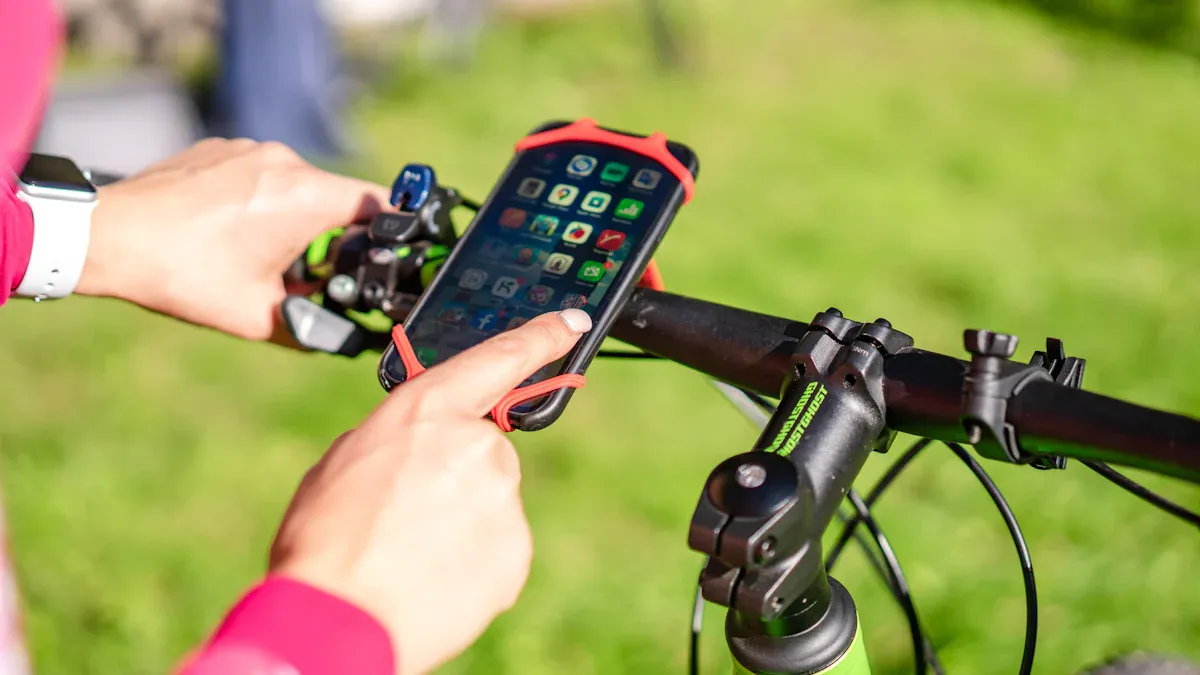
The correct placement of your GPS tracker is crucial for the security of your bicycle. Hide the tracker in inconspicuous places, such as inside the frame or under the saddle. These positions make it harder for thieves to discover the tracker. Models like the BikeTrax from PowUnity show how effective an invisible installation can be. The tracker is mounted in the motor compartment of the e-bike and remains almost invisible to thieves. With a Google rating of 4.9 out of 5 stars from 105 reviews, users confirm the effectiveness of this method.
Ensuring the tracker cannot be easily removed
Make sure that the GPS tracker is firmly mounted to the bicycle. A stable attachment prevents the tracker from being easily removed. Many trackers, such as the BikeTrax, are compatible with all e-bikes and use the drive battery as a power source. This firm integration makes it difficult for thieves to remove the tracker and allows you to locate your bicycle in 146 countries worldwide.
Maximum security through proper use
Regular check of battery charge
A GPS tracker only works if the battery is charged. Check the charge level of your tracker regularly to ensure that it is ready for use at all times. Some models offer a backup battery that powers the tracker even if the main battery is empty. This keeps your bicycle protected even during long periods of inactivity.
Use of apps for real-time tracking and motion alerts
Modern GPS trackers for bicycles and e-bikes work with apps that offer you real-time tracking and motion notifications. As soon as your bicycle is moved, you will receive an alert on your smartphone. This feature helps you to react quickly and track your bicycle in the event of a theft. GPS trackers use mobile networks to tell you the position of your bicycle, similar to navigation systems. This technology has proven itself in many areas and is an effective solution for theft prevention.
Combination with other security measures
Sturdy locks as the first line of defense
A high-quality lock is the basis for protecting your bicycle. U-locks or chain locks made of hardened steel offer the best resistance against theft attempts. Models such as the ABUS Granit X-Plus 540 or the ABUS Bordo Combo 6100 have received excellent ratings in tests. The Granit X-Plus 540, in particular, impressed with a test score of "2.1" from Stiftung Warentest.
Tip: Pay attention to material thickness and a complex locking mechanism. These features make it harder for thieves to pick or break the lock.
Another example is the ABUS U-lock with a 100-decibel alarm. It detects unauthorized movement and emits a loud alarm that scares off potential thieves. Such features significantly increase the security of your bicycle.
Smart locks for additional protection
Smart locks combine technology with security. Models such as the ABUS 770A SmartX use Bluetooth to connect to your smartphone. You can unlock and lock the device without a key. Additionally, a 100-decibel alarm function warns if the lock is tampered with.
These locks offer you not only convenience but also effective protection. The app connectivity allows you to receive notifications if there are any tampering attempts. Combined with a GPS tracker, you can quickly recover your bicycle in the event of theft.
Secure parking and bicycle pass
A secure parking spot is crucial to avoid theft. Choose well-lit and busy places to minimize the risk.
Note: Document your bicycle's data in a bicycle pass. This can be kept digitally or on paper.
The Munich police confirm that the combination of a bicycle pass and GPS tracking increases the chances of getting a stolen bicycle back. With a GPS tracker, you can transmit the exact position of your bicycle, which makes recovery easier.
The combination of GPS trackers with traditional security measures offers you comprehensive protection against bicycle theft. GPS trackers increase the chances of recovering stolen bicycles, especially in the case of expensive e-bikes. Security apps complement physical locks with features like motion alarms and remote access.
GPS trackers enable the precise location of your bicycle.
Alarms and trackers provide additional security, but do not replace a sturdy lock.
Systems like the frame lock from "I lock it" combine physical security with GPS tracking and alarm features.
Invest in high-quality security solutions to optimally protect your bicycle. 🚴♂️
FAQ
1. How long does a GPS tracker battery last?
The battery life depends on the model. Some trackers use the e-bike battery and last for months. Others have integrated batteries that last 1 to 3 weeks depending on usage. Check the charge level regularly to ensure functionality.
2. Can a GPS tracker work without a mobile network?
No, GPS trackers require mobile networks to send location data. Without a network, you cannot track the position of your bicycle in real time. Bluetooth trackers, however, work nearby even without a mobile connection.
3. Are GPS trackers waterproof?
Most GPS trackers are splash-proof or waterproof. Check the device's IP protection class before purchasing. A tracker with IP67 or higher offers protection against rain and dust, ideal for outdoor use.
4. Can I install a GPS tracker myself?
Yes, the installation is simple. Many trackers can be attached inconspicuously to the frame or in the motor compartment. Follow the manufacturer's instructions to ensure that the tracker is firmly mounted and cannot be easily removed.
5. How much do GPS trackers for bicycles cost?
Prices vary depending on the model. Simple Bluetooth trackers start at 30 euros. High-quality GPS trackers like the PowUnity BikeTrax cost about 200 euros, plus annual fees for mobile usage.
Tip: Choose a model that fits your needs and your budget. An expensive tracker is especially worth it for high-quality bicycles and e-bikes.