
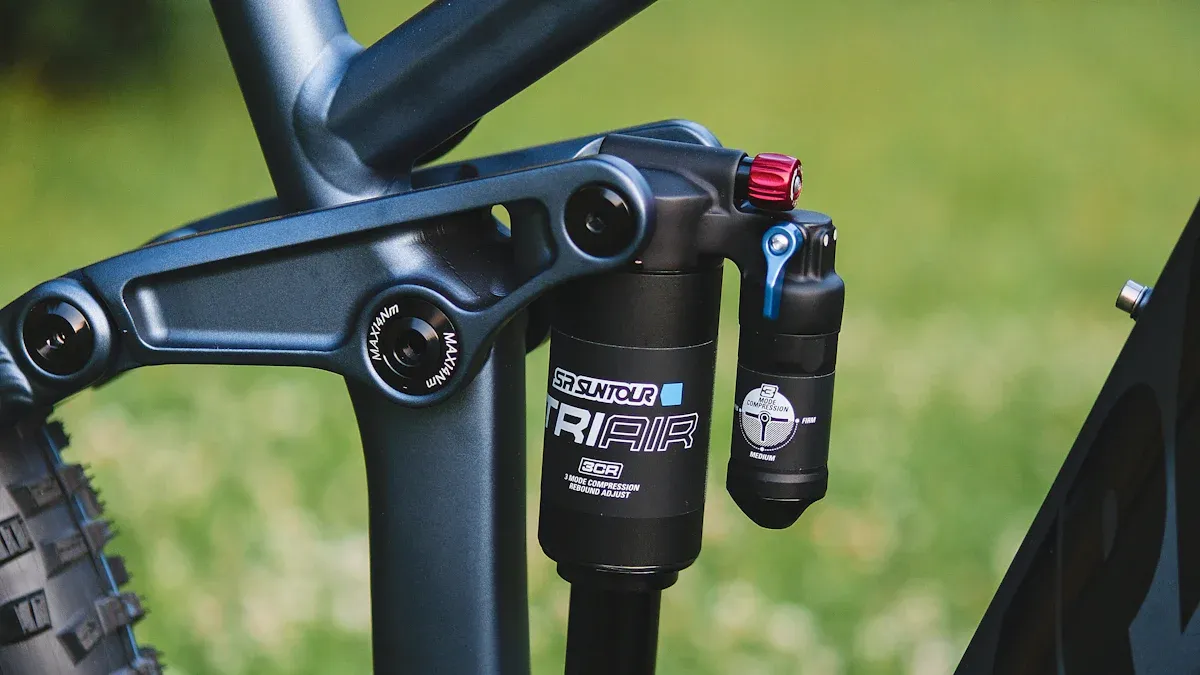
Do you want to know how a full-suspension MTB differs from a hardtail? The biggest difference lies in the riding feel. Full-suspension bikes have a rear suspension. This provides more comfort and control, especially on rough trails. Hardtails are lighter and easier to maintain. In terms of price, full-suspension bikes are significantly more expensive. The following table shows how popular the individual types are in Germany:
Type |
Market Share |
|---|---|
E-Mountainbike Full-Suspension |
|
Hardtail |
16 % |
There are also big differences in price:
Type |
Price Range |
|---|---|
Full-suspension |
|
Hardtail |
from approx. €1000 |
Recommendation |
at least €1500 |
Key Findings
Full-suspension mountain bikes offer front and rear suspension, which allows for more comfort and control on uneven trails.
Hardtails are lighter and easier to maintain, ideal for beginners and less technical routes.
Choosing between a full-suspension and a hardtail depends on your riding style and the terrain you ride on.
Full-suspension bikes are more expensive to purchase and maintain, but offer better traction and stability on challenging trails.
For beginners, a hardtail is often the better choice, while experienced riders benefit from the advantages of a full-suspension bike.
Full-Suspension MTB vs. Hardtail
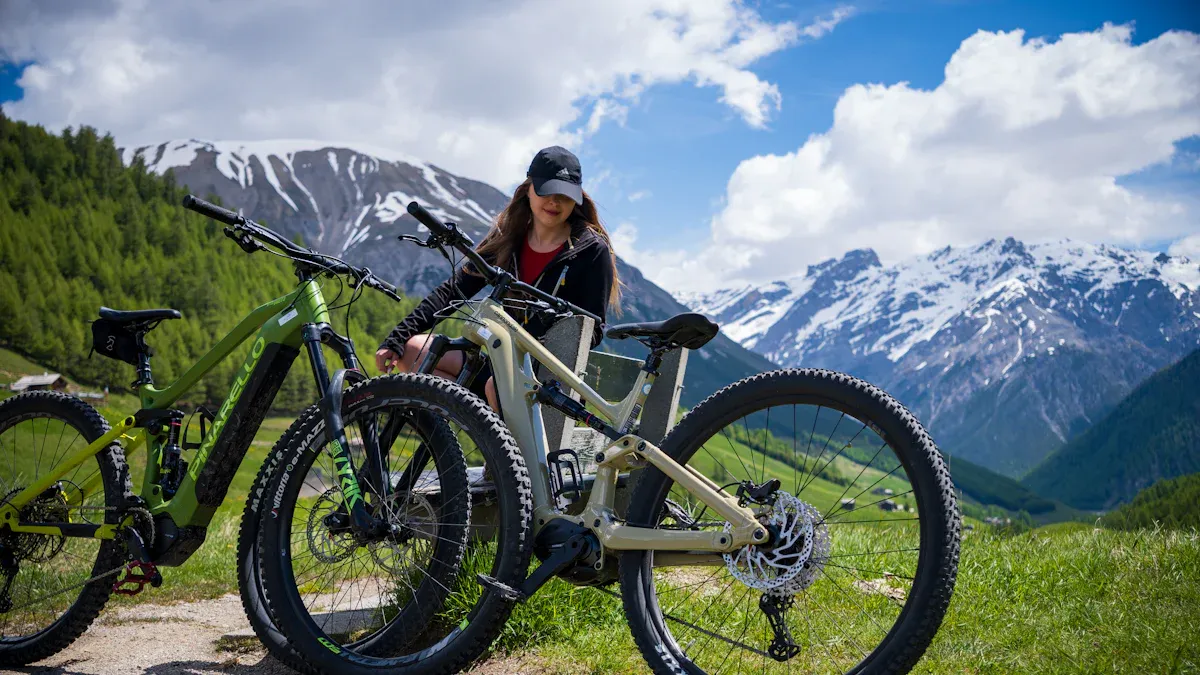
What is a full-suspension MTB?
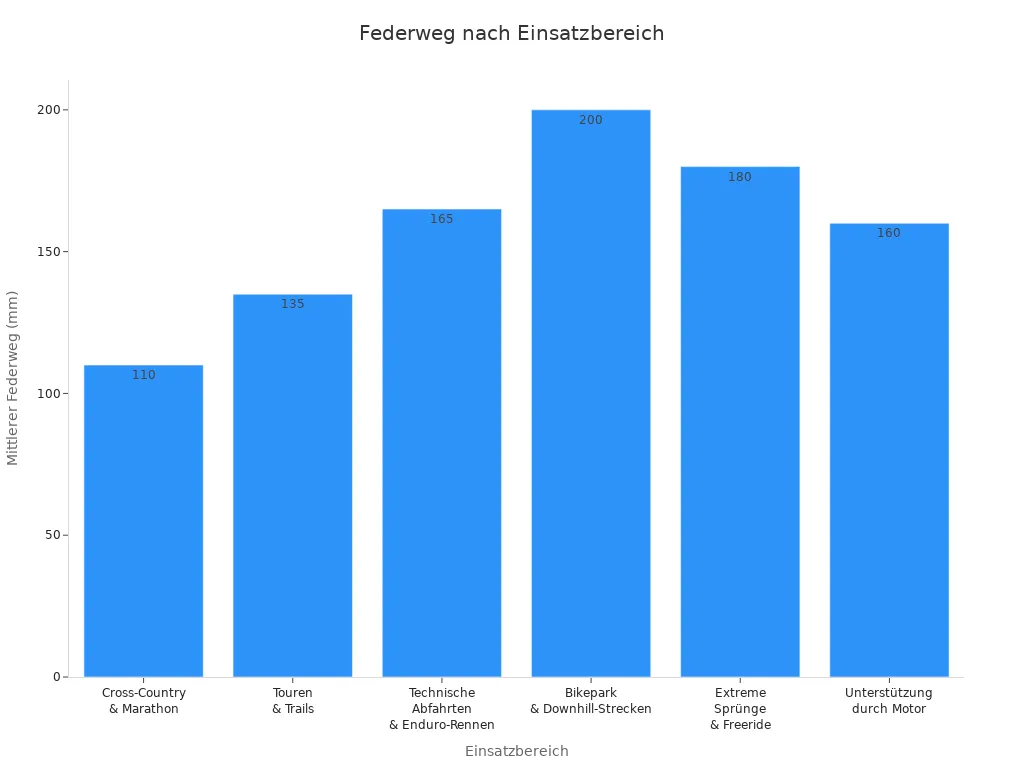
A full-suspension mountain bike has suspension on the front and rear wheels. This design ensures a particularly comfortable riding experience. You feel fewer jolts when riding over roots, stones, or potholes. Rear suspension improves traction and gives you more control on demanding trails. Different models are suitable for different areas of use. The following table shows you which types of full-suspension MTBs exist and how much travel they offer:
Application Area |
Recommended Full-Suspension |
Typical Travel Range |
|---|---|---|
Cross-Country & Marathon |
XC Full-suspension |
100–120 mm |
Touring & Trails |
Trail bike |
120–150 mm |
Technical Descents & Enduro |
Enduro Full-suspension |
150–180 mm |
Bike Park & Downhill Tracks |
Downhill Full-suspension |
180–220 mm |
Extreme Jumps & Freeride |
Freeride Full-suspension |
160–200 mm |
Motor Support |
E-Full-suspension |
150–170 mm |
With a full-suspension MTB, you can master steep descents, technical trails, and long tours with plenty of comfort.
What is a hardtail?
A hardtail mountain bike only has a suspension fork on the front wheel. The rear frame remains rigid. You benefit from a lighter weight and simpler maintenance. Hardtails are particularly suitable for beginners riding on forest paths, gravel roads, or light trails. They offer direct power transfer and a sporty riding feel. Many riders appreciate their robustness and simple handling.
Main Differences
Are you wondering how both types differ in detail? The following table provides a quick overview:
Feature |
Hardtail Mountain Bikes |
Full-Suspension Mountain Bikes |
|---|---|---|
Suspension |
Front suspension only |
Front and rear suspension |
Weight |
Lightweight |
Slightly heavier |
Comfort |
Less comfort on uneven terrain |
High comfort and optimal traction |
Area of use |
Touring, Cross-Country |
Marathon, technical trails |
Tip: Hardtails are lighter and more robust. Full-suspension bikes offer maximum ride comfort and better traction.
The technical differences are primarily visible in the suspension and damping:
Full-suspension MTBs offer full suspension for more comfort and control.
Hardtails only have suspension on the front wheel, which leads to less comfort.
Full-suspension bikes are usually heavier and cost more because they have additional suspension components.
If you often ride on challenging trails, you will benefit from rear suspension. It improves comfort and traction on uneven tracks. You have more grip when riding over stones, roots, or small obstacles. The suspension helps you absorb shocks and maintain control.
Type |
Front Suspension |
Rear Suspension |
Comfort Level |
|---|---|---|---|
Full-suspension |
Yes |
Yes |
High |
Hardtail |
Yes |
No |
Medium |
Hardtails are suitable for cross-country racing and forest paths.
Full-suspension bikes are designed for comfort and stability, offering safe handling on technical trails.
With this information, you can better estimate which bike type suits your riding style.
Advantages of Full-Suspension MTBs
Comfort and Control
With a full-suspension MTB, you enjoy more comfort and control on every trail. Full suspension ensures your rear wheel always maintains ground contact, even on uneven surfaces. This allows you to overcome roots, stones, and potholes much more comfortably. Many studies show that suspension effectively levels out bumps and improves power transfer. You feel the difference, especially on long routes: you sit more comfortably and can concentrate better on your riding.
Tip: The suspension of a full-suspension MTB increases traction and gives you confidence, even when the trail becomes technically demanding.
Full suspension absorbs shocks and protects your spine.
You have more reserves in difficult situations.
Comfort is especially decisive during long races or tours.
Stability on Trails
A full-suspension MTB offers significantly more stability on technical trails than a hardtail. Rear damping ensures your bike remains stable during fast descents and in corners. You will master demanding routes with many roots and stones with confidence. Professionals value innovative suspension and special trail tires, which provide grip and control.
Feature |
Benefit for you |
|---|---|
Suspension system |
More control and performance on any terrain |
Trail tires |
Better grip and high stability |
Frame |
Optimal power transfer and safety |
Reduction of Fatigue
The suspension of a full-suspension MTB noticeably relieves your body. You need to use less energy to absorb shocks. Your muscles stay more relaxed, especially on long tours or bumpy paths. The strain on your spine is reduced, which lowers the risk of muscle tension and fatigue.
Suspension reduces peak loads.
You still feel fit even after many kilometers.
Long rides become more pleasant and healthier for your back.
Components of a Full-Suspension MTB
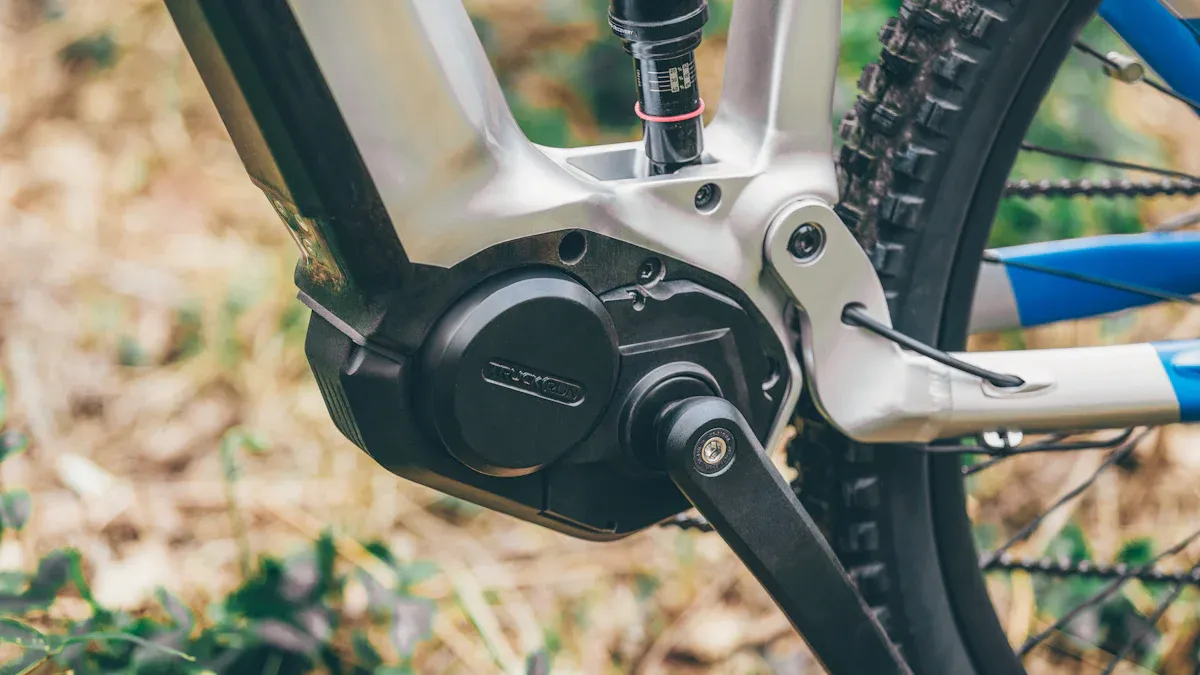
Frame and Shock
The frame is the heart of your full-suspension MTB. Manufacturers primarily rely on aluminum or carbon. Aluminum is robust and affordable. Carbon is lighter and stiffer, but also more expensive. The choice of material affects the weight and stiffness of your bike.
Material |
Properties |
|---|---|
Aluminum |
Affordable, robust, often used in lower-priced models. |
Carbon |
Lighter and stiffer, used in more expensive models, but costlier to produce. |
Shock |
Mainly air spring elements; coil shocks are also available, offering more sensitive damping. |
You will mostly find air spring elements in the shocks. They can be easily adjusted to your weight and riding style. Coil shocks offer particularly sensitive damping but are heavier. You often encounter them on enduro or downhill bikes.
Suspension Systems
A full-suspension MTB has a suspension system at the front and rear. Most models use dual suspension. This means both the front and rear wheels are suspended. This is how you enjoy more comfort and control on every trail.
Damping System |
Description |
|---|---|
Simple system, often in the XC sector, fewer pivot points. |
|
Four-bar linkage |
Widely used, utilizes a double swingarm for more control. |
Dual-link |
Shorter levers, influence the movement of the rear end. |
Six-bar linkage |
Modern design, combines several links for optimal performance. |
You can choose between air suspension and coil suspension. Air suspensions are light and easy to adjust. Coil suspensions are particularly robust and suitable for extreme descents. Many bikes combine both systems to achieve the best riding performance.
Tip: Suspension evens out bumps and ensures you maintain control even on rough terrain.
Technology and Maintenance
A full-suspension MTB is technically more complex than a hardtail. You have more moving parts to maintain. This includes bearings, shocks, and the suspension. Maintenance is more intensive because you have to regularly check the bearings, service the brakes, and maintain the chain. You should also check the suspension settings.
Bike type |
Maintenance effort |
|---|---|
Full-suspension |
Intensive |
Hardtail |
Low |
Typical tasks include checking the bearings, tightening bolts, and inspecting the tires. For e-bikes, you also need to check the electrical contacts. If you maintain your bike regularly, it will remain reliable and safe.
You should maintain the shocks regularly.
Check the headset bearing play.
Watch out for obvious defects on the frame and suspension.
With good care, you will enjoy long-lasting riding fun and safety on every trail.
Comparison of riding behavior and use
Terrain and trails
Do you want to know which bike is the best choice for which terrain? The differences are particularly evident on different trails. According to experts, full-suspension mountain bikes are suitable for demanding routes. Here you will find typical areas of use:
Downhill and enduro trails with large obstacles like rocks and roots.
Technically demanding trails where rear suspension provides more comfort and control.
All-mountain and big mountain trails, ideal for long and high-alpine routes.
Fast descents where stability and control are important.
Uneven or loose surfaces like mud or sand, where you get better traction.
Long-distance rides where shock absorption increases comfort.
Hardtails are more efficient on flat and less technical trails. They require precise line choice and good riding technique from you when the path gets tougher.
Beginners vs. advanced riders
Your riding ability plays a major role in choosing a bike. Beginners and children often benefit from a lightweight hardtail. It works especially well on moderate terrain and during climbs. As your riding technique advances, you will appreciate the advantages of a full-suspension bike. It offers you more control and safety on descents.
“A hardtail is of course much more direct, but it can also be hard on your body. I’m 51 myself and only ride hardtails on the road now. My bunny hop record was 74 cm with a Yo Eddy, I would never manage that with a full-suspension bike.”
Hardtails offer you good value for money. They are less complex, lighter, and cheaper. Fewer moving parts mean less maintenance. The direct contact with the trail rewards good riding technique.
Full-suspension bikes show their strengths on rough ground. They offer you higher grip when riding uphill and are particularly effective for trail rides downhill.
Price and maintenance
You should also keep costs in mind. Full-suspension mountain bikes are more expensive and require more maintenance than hardtails. Annual maintenance costs can break down as follows:
Maintenance type |
Costs (in Euros) |
Frequency |
|---|---|---|
Shock and fork service |
up to 100 |
once a year |
Dropper post maintenance |
up to 100 |
after warranty |
Adjust rear hub bearings |
approx. 9 |
regularly |
Grease rear hub bearings |
approx. 14 |
regularly |
Hardtails are cheaper to purchase and maintain. You save money and time if you decide on a hardtail. A full-suspension MTB requires more care, but also offers you more comfort and control on difficult trails.
Bike type recommendation
Who is a full-suspension bike suitable for?
Are you looking for a mountain bike that offers you comfort and control on demanding routes? Then a full-suspension bike suits you. You benefit particularly if you are often out on trails, doing downhill or enduro rides. The full suspension helps you absorb shocks and ride safely over roots and stones. Many experts recommend full-suspension bikes for a broad target group. Older people and people with physical limitations experience more safety and comfort. You can enjoy riding with different fitness levels.
Tip: A full-suspension bike is suitable for you if you value comfort and frequently ride on technical terrain. You master difficult descents and long tours more relaxed.
Advantages of a full-suspension bike for you:
You get more control on rough trails.
You feel safer on fast descents.
You can ride longer distances without tiring quickly.
You benefit from better traction on loose ground.
If you are often out in the mountains or on demanding routes, you will quickly feel the advantages of a full-suspension MTB.
For whom is a hardtail better?
Are you a beginner or do you mostly ride on flat, less technical paths? Then a hardtail fits you. You benefit from a lower weight and simple maintenance. Many experts recommend hardtails for touring, marathon, and cross-country racing. You improve your riding technique because the bike gives direct feedback. The following table shows you the most important advantages of a hardtail:
Advantage |
Description |
|---|---|
Efficiency |
You ride more easily on flat routes and inclines. |
Weight |
Your bike is lighter than a full-suspension bike in the same price range. |
Maintenance |
You save time and money because fewer parts need to be maintained. |
Price |
You pay less for a hardtail than for a full-suspension bike. |
Improvement of riding technique |
You learn faster because the bike makes higher demands on you. |
Experienced mountain bikers say that hardtails are particularly suitable for less demanding terrain. You get direct power transfer and can score points on tours or at cross-country races. The following table shows you the comparison:
Aspect |
Hardtail mountain bikes |
Full-suspension mountain bikes |
|---|---|---|
Suitability for terrain |
Less demanding, flat terrain |
Demanding conditions (roots, stones) |
Weight |
Lighter |
Heavier, better suspension |
Maintenance |
Less effort |
More effort |
Costs |
Cheaper |
More expensive |
Power transfer |
Direct |
Energy saving on uneven surfaces |
Areas of use |
Tours, marathon, cross-country |
Trails, off-road adventures |
Note: A hardtail is ideal for you if you are just starting with mountain biking or are looking for a lightweight, low-maintenance bike.
Summary for your decision:
Choose a full-suspension bike if you need comfort and control on technical trails.
Decide on a hardtail if you are a beginner, value low weight, and mostly ride on simple paths.
Your budget plays an important role. Full-suspension bikes cost more and need more care. Hardtails are cheaper and easier to maintain.
You have now learned the most important differences between full-suspension and hardtail bikes.
A full-suspension bike offers you comfort and control on difficult trails.
A hardtail scores with low weight and simple maintenance.
Tip: Choose a full-suspension bike if you often ride on technical routes and are looking for comfort. Decide on a hardtail if you are a beginner or mostly ride on simple paths. Consider which terrain you prefer and how much care you want to invest.
FAQ
How often should you maintain the suspension on a full-suspension bike?
You should maintain the suspension at least once a year. If you frequently ride on demanding trails, a check-up every six months is recommended. This keeps your bike safe and ensures the suspension functions optimally.
Is a full-suspension mountain bike suitable for beginners?
A full-suspension bike offers you a lot of comfort and control. For beginners, a hardtail is often better because it is lighter and cheaper. You will learn riding technique faster with a hardtail.
How much extra weight does the full suspension add?
The full suspension increases the weight of your bike by about 1 to 2 kilograms. You will feel the difference especially when riding uphill. A hardtail remains lighter and easier to handle.
Can you also use a full-suspension bike for tours?
You can use a full-suspension bike for tours. The suspension provides comfort on long routes. You benefit especially on uneven paths and during longer descents.
Which bike is better for children?
Children often ride better with a hardtail. The bike is lighter and easier to control. You can learn riding technique faster and have less maintenance effort.