
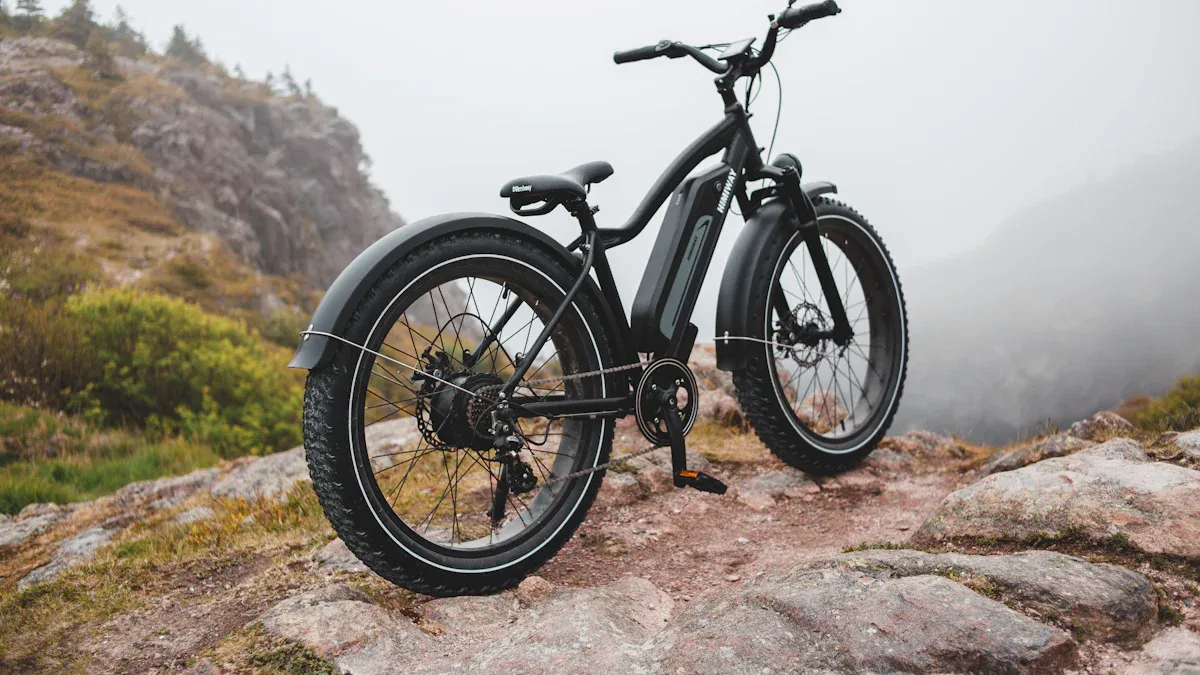
Full-suspension e-bikes offer you an unparalleled riding experience. The suspension provides more comfort and stability, especially on uneven paths. You can effortlessly master challenging terrain and even attempt jumps. These bikes make climbing easier for you and increase the fun on descents. An e-MTB supports you both on the ascent and descent, allowing you to enjoy longer tours. Thanks to their versatility, full-suspension models are suitable for almost all applications. The complete guide helps you find the ideal model for your needs.
Key Takeaways
Full-suspension e-bikes are comfortable and safe on bumpy paths. The suspension absorbs shocks and makes riding more pleasant.
A powerful motor helps you when riding uphill. Motors from Bosch or Shimano are particularly good.
The frame is important. Aluminum is sturdy, carbon is lighter and more durable. Choose according to your riding style.
Maintain your e-bike regularly. Check the brakes, chain and suspension often to keep it safe.
Try out different e-bikes. A test ride helps you find the right model.
Complete Guide: What is a full-suspension e-bike?
Definition and distinction from other e-bike types
A full-suspension e-bike, also known as a "Fully", is an electric bicycle with suspension on both the front and rear wheel. This double suspension provides optimal damping and increases riding comfort, especially on uneven terrain. Compared to other e-bike types, such as city or trekking e-bikes, full-suspension models are specially designed for demanding routes and sporty use.
A look at the differences between full-suspension e-bikes and other categories shows why they are better suited for certain applications:
Category |
Features |
Advantages |
|---|---|---|
Full-suspension e-bike |
Lightweight (e.g. 18.6 kg), innovative motor integration, high energy efficiency |
Optimal performance for sporty riders and everyday use |
Other e-bike categories |
Different technologies, heavier, less optimized for energy efficiency |
Less range and performance compared to full-suspension e-bikes |
With a full-suspension e-bike, you can not only tackle steep climbs but also master difficult descents safely. This versatility makes it a popular choice for adventurers and everyday riders alike.
Differences between hardtail and full-suspension e-bikes
Hardtail and full-suspension e-bikes differ primarily in their suspension. While a hardtail only has front suspension, a Fully offers additional rear wheel suspension. These differences directly affect comfort, control and usage options:
Feature |
Hardtail Mountainbike |
|
|---|---|---|
Suspension |
Fully suspended |
Front suspension only |
Comfort |
High comfort in difficult terrain |
Low comfort on uneven terrain |
Absorb shocks |
Yes |
No |
Traction |
Better traction |
Lower traction |
Control |
More control |
Less control |
With a full-suspension e-bike, you enjoy better traction and more control, especially on technical trails. A hardtail, on the other hand, is more suitable for less demanding routes or beginners who prefer a lighter and cheaper model.
Typical use cases for full-suspension e-bikes
Full-suspension e-bikes are ideal for riders who want to move in challenging terrain. They are often used in the following areas:
Mountain biking: Perfect for steep climbs, technical descents and trails with many obstacles.
Enduro and Downhill: The suspension absorbs shocks and ensures safety at high speeds.
Everyday and leisure: Even on cobblestones or forest paths, they offer high comfort and stability.
With a full-suspension e-bike, you can expand your limits. It allows you to explore new routes while always maintaining control. Whether you are out for sport or just want to ride comfortably – a Fully offers you the necessary flexibility.
Performance features and functions
Suspension systems: Advantages and how they work
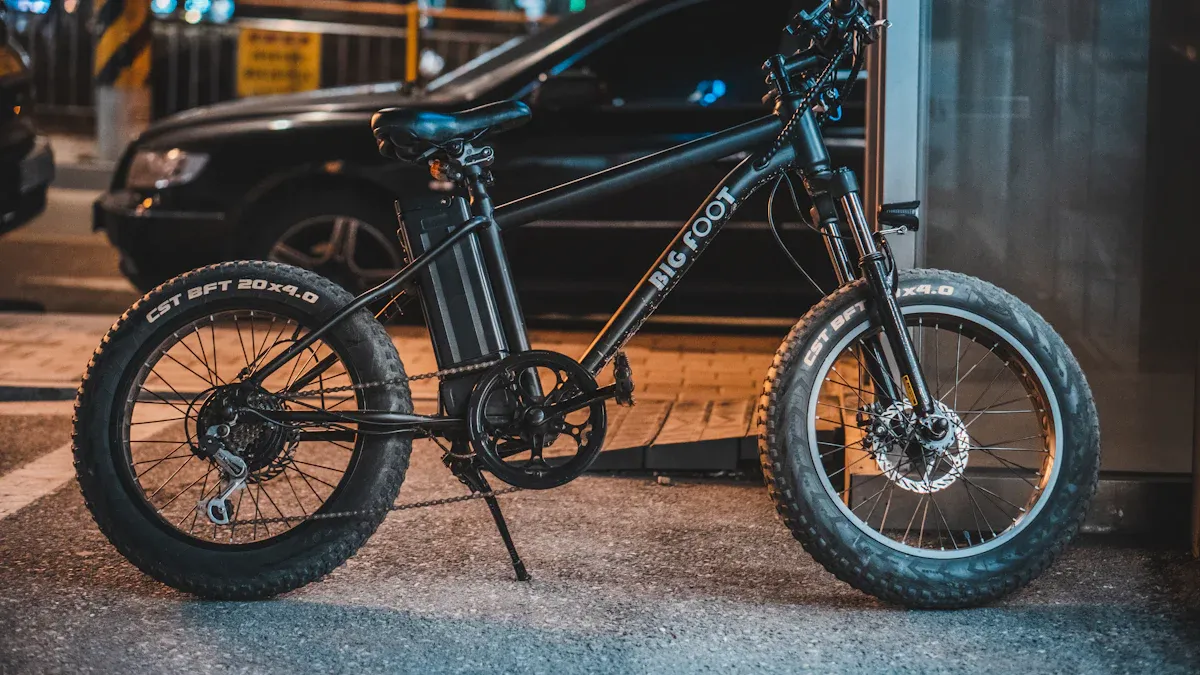
The suspension systems of a full-suspension e-bike play a crucial role in your riding performance. They provide comfort, stability and control, especially on uneven terrain. Modern suspension technologies offer you numerous adjustment options to optimally tune the bike to your needs.
Some of the most important adjustment options include:
Flip-Chip function: This allows you to adapt the riding behavior to different trail conditions. You can choose between an aggressive position for fast terrain or an XC-oriented riding style.
Geometry adjustment: With this function, you can change the head tube and seat tube angles, bottom bracket height and rear wheel size.
Maestro Suspension Technology: This system offers you active and efficient suspension through strategically placed pivot points.
Adjustment options |
Description |
|---|---|
Geometry adjustment |
Influences head tube and seat tube angles, bottom bracket height and rear wheel size. |
Flip-Chip hardware |
Allows adjustments to the upper linkage of the rear suspension. |
Maestro Suspension |
Offers an active and efficient suspension system through strategically positioned pivot points. |
In addition, hydro-pneumatic suspension systems improve the riding dynamics and comfort. Studies show that these systems offer optimal stability through precise gas volume control. The construction according to the Horst-Link principle also helps to keep the rear wheel stable during climbs and ensure efficient power transfer.
Motor power and torque: Important aspects
The motor power and torque are crucial for the performance of your full-suspension e-bike. A powerful motor supports you on steep climbs and ensures a dynamic riding experience.
Most modern e-mountain bikes use powerful mid-drive motors from Bosch, Shimano or Yamaha. These offer a torque of up to 85 Nm, which guarantees you excellent support on demanding routes. An example is the Bosch Performance CX motor, which with its maximum torque of 85 Nm offers a solid foundation for the performance of a full-suspension e-bike.
Another highlight is the Specialized 2.2 motor in the S-Works Turbo Levo. With a torque of 90 Nm, it allows you to master even the steepest climbs effortlessly. These motors are not only powerful but also efficient, so you can cover longer distances with less energy expenditure.
Battery capacity and range: What to look for?
The battery capacity determines how far you can ride with your e-bike before you have to recharge the battery. For short and medium distances, a battery with 500 watt-hours is usually sufficient. However, if you are planning longer tours, you should look for a larger battery capacity.
Some examples from practical tests:
With a 500-watt-hour battery, you can cover up to 85 kilometers in Eco mode on flat terrain.
At maximum support, the same battery lasts for about 20 kilometers uphill.
However, the range depends on several factors:
Temperature: Cold temperatures can reduce battery performance.
Route profile: Steep climbs consume more energy.
Own effort: The more you pedal yourself, the longer the battery lasts.
For long-distance riders, a battery with higher capacity is worth it to maximize the range. Make sure that the battery is easily accessible and easy to charge to make your everyday life easier.
Frame materials and weight: Influence on performance
The frame material of your full-suspension e-bike directly influences the performance and riding feel. It determines the weight, stability and durability of the bike. When choosing a model, you should know the properties of the different materials to make the best choice for your needs.
The most important frame materials and their properties
The most common materials for e-bike frames are aluminum and carbon. Each material offers specific advantages that affect the riding dynamics:
Aluminum:
Aluminum frames are robust and affordable. They offer a good stiffness-to-weight ratio. With technologies like ALUXX SLR aluminum, the tubes become thinner and lighter without compromising stability.Carbon:
Carbon frames are lighter and offer higher impact resistance. Through technologies like carbon nanotube technology (CNT), the impact resistance is increased by 14 times, while the weight is reduced by up to 100 grams.
Weight measurements and performance advantages
The weight of a frame influences your speed and agility. Lighter frames make handling easier, especially on technical trails. Here are some examples of frame models and their technologies:
Frame model |
Weight (g) |
Technology |
|---|---|---|
KAVENZ VHP 16 - 2022 |
3,969 |
Custom configuration, high pivot point, 160 mm suspension travel |
SCOR 4060 LT - 2022 |
N/A |
Carbon nanotube technology, Advanced Forged Composite, ALUXX aluminum technologies |
ALUXX SLR aluminum |
N/A |
20% thinner and lighter tubes, optimal stiffness-to-weight ratio |
How does weight influence your riding style?
A light frame improves acceleration and makes climbing easier. Technologies like Optimized Carbon Lay-Up place reinforcing carbon fibers only where they are needed. This minimizes weight without compromising stability.
💡 Tip: If you are looking for an e-bike for technical trails or long tours, you should consider a model with a carbon frame. It offers you the perfect balance between lightness and durability.
Conclusion
The frame material and weight are crucial for the performance of your full-suspension e-bike. Aluminum frames offer you a solid and affordable option, while carbon frames impress with their lightness and impact resistance. Choose a model that suits your riding style and requirements to get the best out of your e-bike.
Advantages and disadvantages of full-suspension e-bikes
Advantages: Comfort, off-road capability, safety
Full-suspension e-bikes offer you numerous advantages that improve your riding experience. The biggest advantage is comfort. The suspension absorbs bumps such as roots, stones or potholes. You feel fewer vibrations and can cover longer distances without fatigue.
Off-road capability is another plus. With a full-suspension e-bike, you master demanding trails, steep climbs and technical descents. The suspension ensures better traction, so you are safe even in difficult conditions.
Safety also plays an important role. The suspension stabilizes your bike and prevents you from losing control at high speeds. Especially on descents or unpredictable obstacles, it protects you from falls.
💡 Tip: If you often ride on uneven terrain, a full-suspension e-bike is the ideal choice. It offers you comfort, control and safety – whether you are out for sport or just want to ride comfortably.
Disadvantages: Cost and maintenance effort
Despite the many advantages, there are also some disadvantages you should consider. Full-suspension e-bikes are more expensive than hardtail models. The complex suspension and high-quality materials drive up the costs.
The maintenance effort is also higher. The suspension systems require regular care to maintain their function. You must check seals, bearings and shock absorbers and replace them if necessary.
Disadvantage |
Description |
|---|---|
Cost |
Higher price due to complex technology and high-quality materials. |
Maintenance |
Regular maintenance of the suspension systems is required. |
If you are willing to invest in quality and maintenance, you will be able to fully utilize the benefits of a fully suspended e-bike. It is worth weighing the long-term benefits against the higher purchase costs.
Buying Guide for Fully Suspended E-Bikes
Important Criteria: Intended Use, Suspension Travel, Motor and Battery Position
When buying a fully suspended e-bike, you should consider several key criteria to find the perfect model for your needs. These aspects play a crucial role:
Intended Use: Consider where you mainly want to use your e-bike. Fully suspended models are ideal for technical trails and demanding terrain. They offer you stability and comfort on uneven surfaces.
Suspension Travel: The length of the suspension travel affects off-road capability. A suspension travel of 130–170 mm is considered an all-rounder and is suitable for most routes. For particularly rough terrain, you need more suspension travel.
Motor and Battery Position: The central placement of the motor and battery in the bottom bracket area ensures an optimal center of gravity. This improves the balance and handling of your bike.
Criterion |
Description |
|---|---|
Suspension Travel |
A suspension travel of approx. 120–170 mm offers very good riding characteristics. |
Position of Motor and Battery |
Central mounting optimizes the center of gravity and stability. |
Intended Use |
Perfect for long tours and demanding terrain. |
💡 Tip: Choose a model that suits your preferred intended use. This way, you can fully utilize the potential of your e-bike.
Test Ride: What to Look Out For?
A test ride is essential before you decide on a fully suspended e-bike. It gives you a feel for the handling and helps you make the right choice. Pay attention to the following points:
Comfort: Test the suspension on uneven terrain. Can you feel how well it absorbs shocks?
Handling: Try cornering and steep climbs. A good e-bike should be stable and easy to control.
Motor Assistance: Switch between the assistance levels. The motor should operate smoothly and powerfully.
Fit: Make sure that the frame size fits your body size. Only then can you ride comfortably and safely.
🚴 Note: Take your time for the test ride and test the bike in different situations. This way, you will find out if it meets your expectations.
Buying New or Used: Pros and Cons
You can buy a fully suspended e-bike either new or used. Both options have their pros and cons:
-
Buying New:
Advantages: You get the latest technology, a full warranty, and an unused bike.
Disadvantages: Higher purchase costs.
-
Buying Used:
Advantages: Lower price and often good quality with well-maintained models.
Disadvantages: No warranty and possible wear on important components.
Purchase Option |
Advantages |
Disadvantages |
|---|---|---|
New |
Latest technology, warranty, unused |
Higher costs |
Used |
Lower price, often good quality |
No warranty, possible wear |
💡 Tip: Check the condition of the battery, motor, and suspension on used e-bikes. This way, you avoid unexpected repair costs.
With these tips, you are well prepared to find the ideal fully suspended e-bike. Whether new or used – make sure it meets your requirements and brings you joy for a long time.
Care and Maintenance
Tips to Extend Service Life
Proper care of your fully suspended e-bike significantly extends its service life. With a few simple measures, you can maintain the functionality and performance of your bike in the long term:
Perform regular inspections. An initial check should be done after six months, then annually. During this, the brakes, gears, and motor are checked.
Charge the battery in a dry environment at room temperature. Extreme temperatures and direct sunlight damage the battery.
Store the battery in winter at a capacity of 30–60 %. This protects it from deep discharge.
Clean your e-bike regularly, especially after rides off-road. Remove dirt from the chain, sprockets, and suspension.
💡 Tip: Use special cleaning agents for e-bikes so as not to damage sensitive parts like the motor.
Regular Maintenance: What Should Be Checked?
Regular maintenance is crucial to ensure the safety and performance of your e-bike. Pay attention to the following points:
Brakes: Check the brake pads and brake fluid. You should replace worn pads immediately.
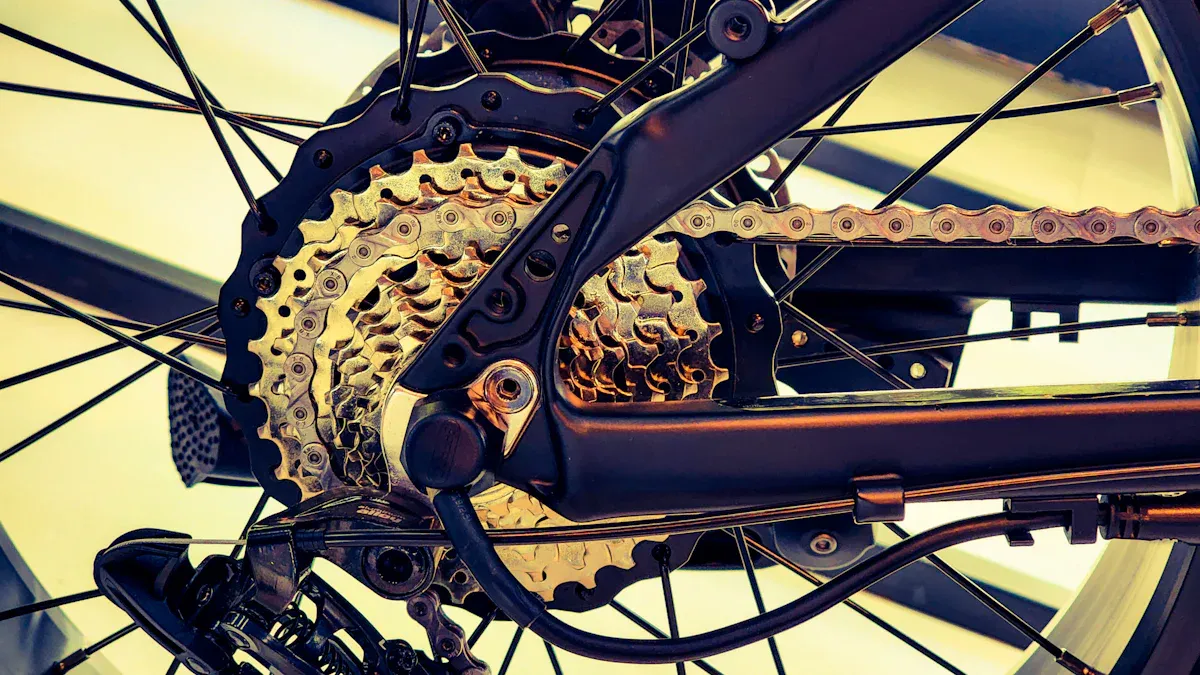
Chain and sprockets: Lubricate the chain regularly and check the wear of the sprockets.
Suspension: Check the shock absorbers and seals for leaks. Adjust the air pressure to your weight and riding style.
Tires: Check the tire pressure and tread. Good grip is especially important off-road.
🚴 Note: Have complex work such as motor or electronics maintenance performed by a specialist dealer.
Common Problems and Their Solutions
Even with good care, problems can occur. Here are some common challenges and how to solve them:
Poor braking performance: Clean the brake discs and check the pads. Replace them if they are worn.
Creaking noises in the frame: Retighten the screws and check the bearings. A loose bearing can be the cause.
Battery problems: If the battery does not charge, check the contacts for dirt. Clean them carefully with a dry cloth.
Shifting problems: Adjust the gears and check if the derailleur is bent.
💡 Tip: Always keep a small repair kit handy. It helps you fix minor problems on the go.
With these care and maintenance tips, your fully suspended e-bike will stay in top condition. This way, you can look forward to every ride without unpleasant surprises.
Fully suspended e-bikes offer you numerous advantages. They combine comfort, off-road capability, and safety. The suspension systems, powerful motors, and high-quality frame materials make them an ideal choice for demanding routes. You can master sporting challenges with them as well as enjoy relaxed tours.
💡 Recommendation: Invest in a fully suspended e-bike if you value versatility and riding fun. The higher initial investment pays off through longevity and better performance.
Don't forget to take a test ride. Test different models and make sure they meet your individual needs. This way, you will find the perfect bike for your adventure! 🚴♂️
FAQ
What is the difference between a fully suspended e-bike and a hardtail?
A fully suspended e-bike has suspension in the front and rear. It offers more comfort and control on uneven terrain. A hardtail only has front suspension. It is lighter and cheaper, but is better suited for simple routes.
How do I care for the suspension of my e-bike?
Clean the suspension regularly with a soft cloth. Avoid pressure washers, as they can damage the seals. Check the air pressure and shock absorbers. Have the suspension serviced by a specialist dealer once a year.
How long does the battery of a fully suspended e-bike last?
The service life of a battery is approximately 500–1,000 charge cycles. This corresponds to 3–5 years, depending on usage. Charge the battery at room temperature and avoid deep discharges to extend its service life.
Can I use a fully suspended e-bike for everyday use?
Yes, fully suspended e-bikes are also suitable for everyday use. They offer comfort on cobblestones and forest paths. Look for a model with moderate suspension travel to achieve a good balance between off-road capability and everyday usability.
What range can I expect with a fully suspended e-bike?
The range depends on the battery capacity, the terrain, and the assistance level. With a 500-Wh battery, you can ride up to 85 kilometers in Eco mode. Steep climbs and high assistance levels reduce the range.
💡 Tip: Plan your tours and charge the battery in time so that you do not experience any surprises on the go.