
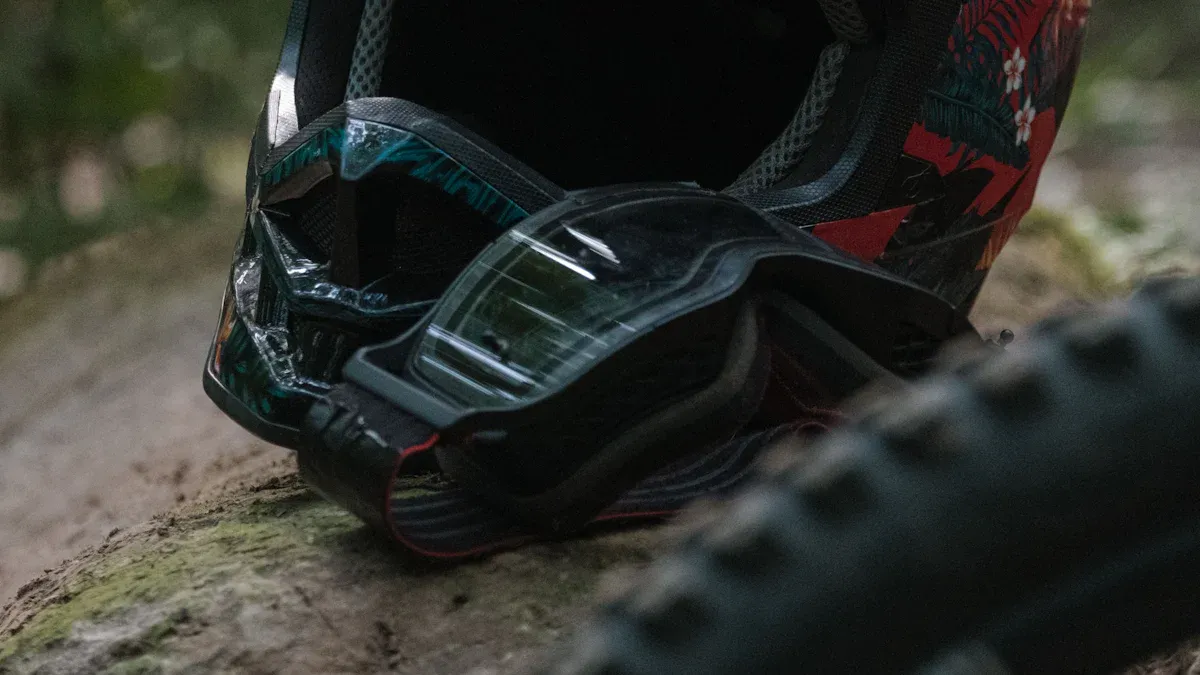
Are you looking for maximum protection while mountain biking? A full face MTB bike helmet gives you exactly that. Safety comes first: A certified helmet fits securely and protects your head all around. A well-fitting helmet not only increases safety but also comfort. The best models offer you effective ventilation and modern technologies like MIPS to reduce the risk of injury.
Aspect |
Why is it important? |
|---|---|
Safety standard |
Only certified helmets provide top-tier protection. |
Fit |
A firm fit provides protection and feels good. |
Ventilation |
More comfort, less heat buildup. |
MIPS |
Additional protection during crashes. |
Key findings
A certified full face helmet offers maximum protection. Look for safety certifications such as ASTM, CPSC, and CE.
The fit is crucial for both safety and comfort. Try out different models to find the best fit.
Ventilation is important to prevent heat buildup. Choose helmets with strategically placed openings for a comfortable climate.
MIPS technology reduces the risk of brain injuries during angled impacts. Invest in helmets with this technology for added protection.
Helmet weight affects comfort. Lighter helmets are ideal for long tours, while heavier models offer more protection.
Safety features
Protection technologies
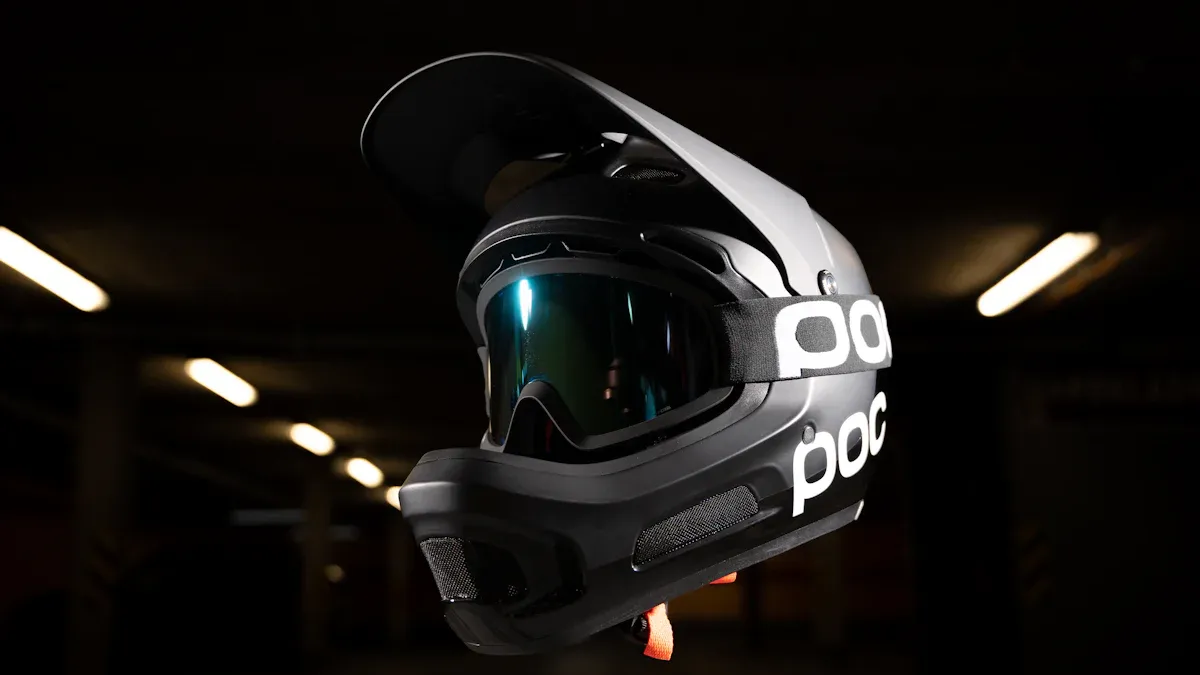
Do you want to know how a full face MTB bike helmet protects your head? Here are the most important technologies that offer you more safety:
MIPS technology: This technique protects you from rotational forces that occur during angled impacts. It can significantly reduce the risk of brain injuries.
Mips Spherical: Two movable shells provide even better protection in complex impact scenarios.
POC Spin: Special pads absorb rotational energy, similar to MIPS.
Koroyd: Thin tubes buckle upon impact and reduce the energy acting on your head.
;
Take a look at the difference:
Technology |
Protection type |
Special feature |
|---|---|---|
MIPS technology |
Protection against rotational forces |
Reduces the risk of severe brain injuries during angled impacts |
Conventional helmets |
Protection during linear impacts |
Only work for direct, straight impacts – which rarely happen |
Material and construction
Material and construction determine how stable and safe your full face MTB bike helmet really is. Here is what counts:
Material |
Advantages |
|---|---|
Lightweight, impact-resistant, absorbs shocks well |
|
Polycarbonate |
Very stable, protects against external influences |
In-mold technology |
Composite construction for optimal safety and weight |
One-piece helmets offer you the highest protection.
Two-piece models are more flexible but often less robust.
Polycarbonate and composite fibers make the helmet particularly durable.
The MIPS system improves protection during side impacts.
Certifications
You should always look for the right certifications. They show you if your helmet is truly safe:
Certification |
Meaning |
|---|---|
Standard for downhill helmets |
|
CPSC (16 CFR 1203) |
US standard for bicycle helmets |
CE (EN 1078:2012+A1:2012) |
European standard for bicycle helmets |
Tip: A certified full face MTB bike helmet protects you not only in the bike park but also on demanding trails. Always check for the certification mark!
Comfort
Fit
Do you want your helmet to fit perfectly? The fit determines whether you feel safe and comfortable. Every head is shaped differently. Manufacturers use different head forms, which is why a helmet from brand A often fits better than one from brand B. It is best to try out several models before deciding.
Height adjustment and an adjustment dial help you optimally adjust the helmet.
Design features such as padding and shape play a major role.
Technology |
Description |
|---|---|
DIAL FIT system |
You can quickly and easily adapt the helmet to your head shape. |
HARDSHELL construction |
Offers you strong impact protection and stability. |
Ventilation slots |
17 aerodynamic slots ensure air circulation and comfort. |
Tip: Use the adjustment systems of your helmet and test different models until you find the perfect fit.
Ventilation
You know the feeling: in summer, it quickly gets hot under the helmet. Ventilation is therefore super important. Strategically placed openings direct air directly inside and ensure a pleasant climate for your head. Some models like the POC Kortal Race Mips or the Specialized Prevail 3 offer really powerful ventilation.
Helmet |
Ventilation |
Rating |
|---|---|---|
Sweet Protection Bushwhacker 2Vi Mips |
Reaches limits on hot days. |
|
O`Neal Blade Polyacrylite Strike |
3.5/5 ⭐️ |
Comfortable, but a bit heavy. |
Poc Kortal Race Mips |
5/5 ⭐️ |
Top ventilation. |
Specialized Prevail 3 |
5/5 ⭐️ |
Ventilation is top-notch. |
Oakley DRT5 Maven Mips |
4/5 ⭐️ |
Strap triangles are a bit fiddly. |
Fox Speedframe Pro |
4/5 ⭐️ |
Large openings ensure strong airflow. |
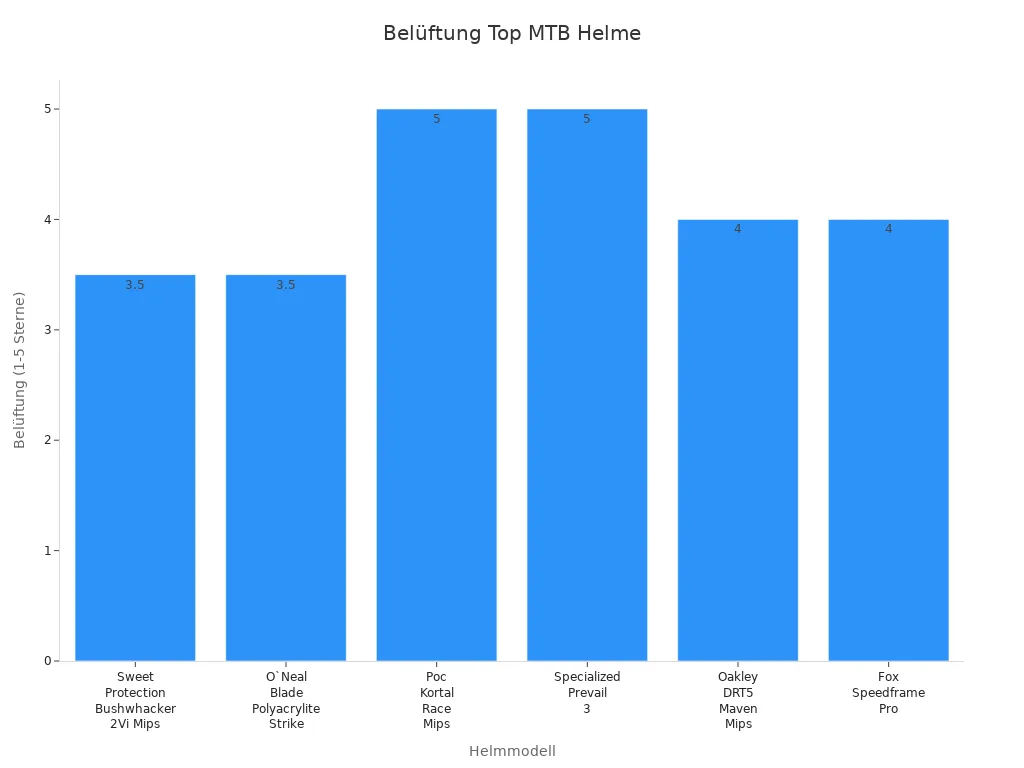
Note: Some helmets like the POC Otocon Race MIPS get warmer in the heat, especially with a mudgrill. This can limit breathability.
Weight
You feel the weight on every ride. A lightweight full face MTB bike helmet makes long tours more comfortable. Enduro riders often choose lightweight helmets because they also ride uphill. Downhill riders accept more weight, as they usually only do short descents.
Helmet weight |
Comfort impact |
|---|---|
Over 700 g |
Better ventilation and less strain on long rides |
Downhill riders accept heavier helmets for maximum protection.
Enduro riders prefer light helmets for more comfort.
Padding
The padding ensures a comfortable fit. High-quality materials absorb sweat well and can often be cleaned in the washing machine. Thick padding increases comfort but can also lead to more sweating.
Padding varies depending on the manufacturer and model.
Washable pads are practical.
More padding = more comfort, but sometimes also more heat.
Fastening
The fastening must be easy to use and hold securely. Many helmets rely on click buckles or magnetic closures. You can open and close the helmet quickly, even with gloves on. A good closure gives you a secure feeling and keeps the helmet firmly on your head.
Tip: Test the closure before buying. It should be easy to operate and not press against your skin.
Top full face MTB bike helmet selection
Comparison
Do you want to know which full face MTB bike helmet really convinces in tests? Here you will find a quick overview of the best models from current comparisons. The table shows you how the helmets performed:
Rank |
Helmet model |
Rating |
|---|---|---|
1 |
very good |
|
2 |
good |
|
3 |
good |
|
4 |
very good |
|
5 |
very good |
|
6 |
very good |
|
7 |
very good |
|
8 |
very good |
|
9 |
very good |
10
very good
As you can see, many helmets receive a "very good" rating. This shows that you have a wide selection of safe and high-quality helmets to choose from today.
Models
Now let's get into the details. Here you will find the most important features of the most popular models. This will help you better decide which full-face MTB bike helmet is right for you.
Helmet model |
Features |
Price |
|---|---|---|
Removable chin bar, 17 vents, removable visor |
from €73.44 |
|
Fox Rampage Comp |
Full-face helmet, comprehensive protection, designed for downhill and freeride |
€209.99 - €233.99 |
Uvex jakkyl HDE 2.0 |
Similar features, details not specifically described |
N/A |
Do you want to know how the helmets compare in terms of weight and ventilation? Take a look at the following chart. It shows you how light the helmets are and how many ventilation openings they have:
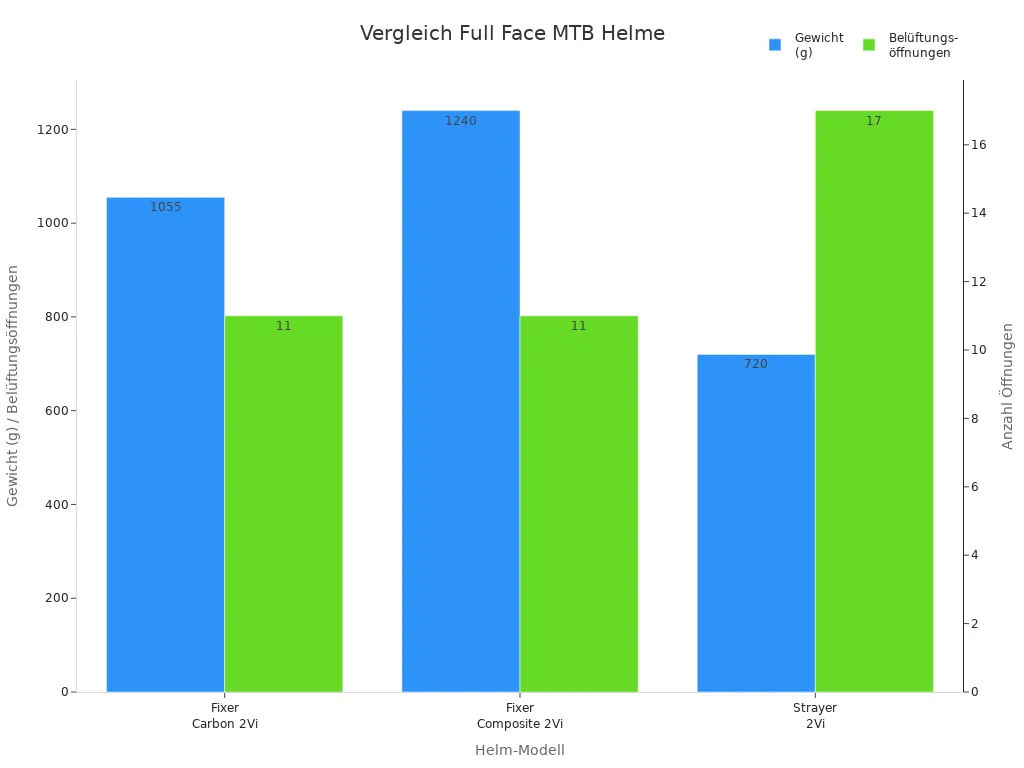
Some models, such as the Strayer 2Vi Mips, are particularly lightweight and have many ventilation openings. This ensures more comfort, especially on long rides.
Pros & Cons
Every full-face MTB bike helmet has its strengths and weaknesses. Here is an overview of the most important pros and cons:
Pros |
Cons |
|---|---|
* Deep back-of-head area * Dynamic shape * Temple protection * Sturdy chin bar * Additional visor * Lightweight |
* Not very aerodynamic * No individually adjustable sizes |
Many helmets offer you deep protection at the back of the head and also protect the temples. This gives you a sense of security on the trail. A sturdy chin bar protects your face in the event of a fall. A disadvantage: some helmets cannot be perfectly adjusted to every head shape.
Recommendations
Are you looking for the best full-face MTB bike helmet for your type of riding? Here are my tips for you:
For downhill and extreme trails:
The Fox Rampage offers maximum protection and is very popular with professionals. It is perfect for steep descents and tough riding.For the bike park:
The IXS Trigger FF Mips is lightweight, well-ventilated, and has a comfortable fit. You can wear it all day without it pinching.For beginners or occasional riders:
The Leatt Gravity 1.0 is simple, lightweight, and affordable. It protects you reliably during your first bike park visits.For comfort and long tours:
The Endura Hummvee Plus Mips scores points with good ventilation, low weight, and quick-drying padding. The Scott Arx MTB helmet is also very light and doesn't pinch, even after hours on the bike.For the best value for money:
The Cratoni C-Maniac impresses with its removable chin bar, many ventilation openings, and a fair price. The Uvex Quatro and the Alpina Carapax also perform very well in tests.
Tip: Try on different models and pay attention to fit, weight, and ventilation. This is the only way to find the helmet that truly fits you. Safety and comfort always come first!
You now have an overview of the most important criteria for your full-face MTB helmet. Pay attention to fit, ventilation, safety certifications, and comfort. For maximum protection, choose a model with deep back-of-head protection and a sturdy chin bar. Looking for flexibility or low weight? Then check out helmets with a removable chin bar or particularly lightweight versions.
Criterion |
Why it matters |
|---|---|
Fit |
Ensures safety and comfort |
Ventilation |
Keeps you cool on long rides |
Safety |
Protects your head and face |
Try out different models and find the helmet that suits your riding style. Trends like convertible helmets make biking even more versatile! 🚴♂️
FAQ
How do I find the right helmet size?
Measure your head circumference with a tape measure just above your eyebrows. Compare the result with the manufacturer's size chart. The helmet should fit firmly but not press. Try different models to find the best fit.
Can I also use a full-face helmet for normal bike rides?
You can, but a full-face helmet is often heavier and warmer than a normal bicycle helmet. For leisurely rides, a lightweight half-shell helmet is usually sufficient. However, in the bike park or on trails, you need the extra protection.
How often should I replace my helmet?
Replace your helmet after five years at the latest. After a fall, you should replace it immediately, even if you see no damage. Small cracks or invisible damage can significantly reduce its protective effect.
What is the difference between MIPS and normal helmets?
MIPS protects you better in angled impacts. The technology reduces rotational forces on your brain. Normal helmets only offer protection against direct impacts. With MIPS, you are safer on the trails.
Do I need to clean my helmet regularly?
Yes, you should! Remove the padding and wash it by hand or in the washing machine. Wipe the outer shell with a damp cloth. This keeps your helmet hygienic and smelling fresh.