
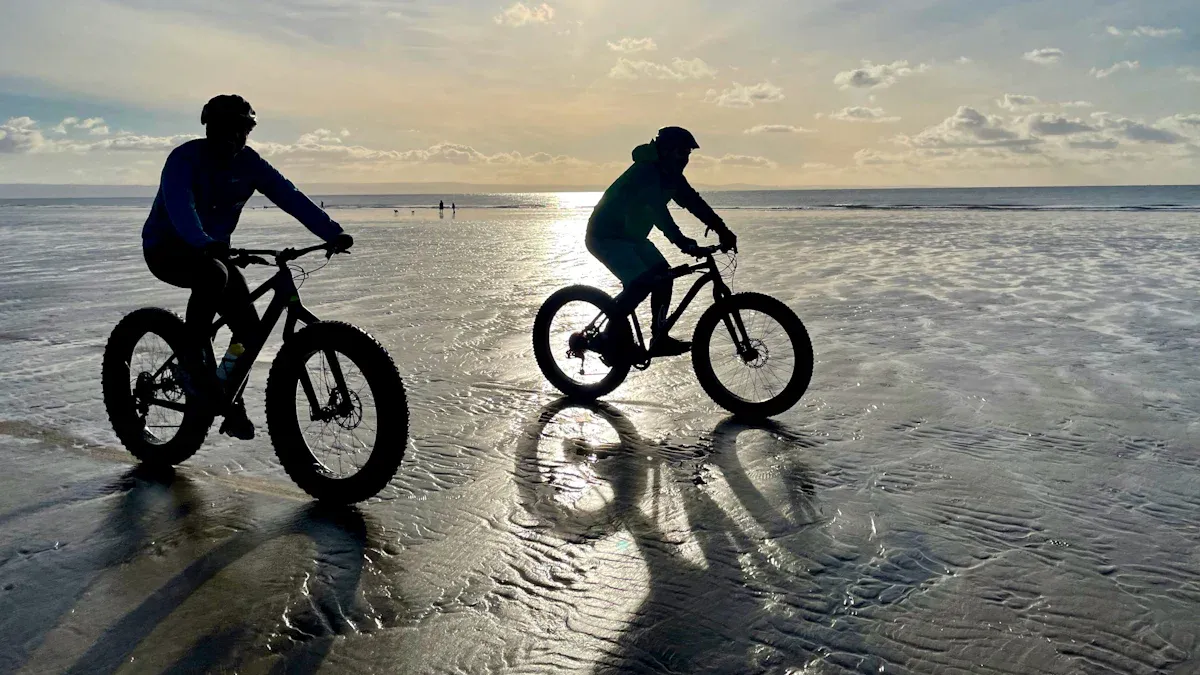
With a fatbike, you discover a bicycle that features extra-wide tires. These tires offer many advantages if you want to ride on snow, sand, or mud. They provide good grip, comfort, and stability, whether you are out in winter or summer. Riding is fun because you can explore new paths and master various surfaces safely.
Wide tires increase traction and give you more control on slippery surfaces.
Large tires absorb shocks and make the riding experience pleasant.
Fatbikes are suitable for adventures, everyday use, and touring.
You will find answers to all important questions in this guide, regardless of whether you are a beginner or an experienced rider.
Key Takeaways
Fatbikes have extra-wide tires that provide more grip and safety on snow, sand, and mud.
Low tire pressure makes for a comfortable ride and absorbs shocks on uneven terrain.
Fatbikes are versatile and ideal for adventures, daily commutes, and long tours with heavy gear.
E-fatbikes offer electrical assistance, making it easier to ride long distances and hills.
With the right accessories and maintenance, your fatbike will remain durable and turn every ride into a pleasure.
Fatbike Basics
What is a fatbike?
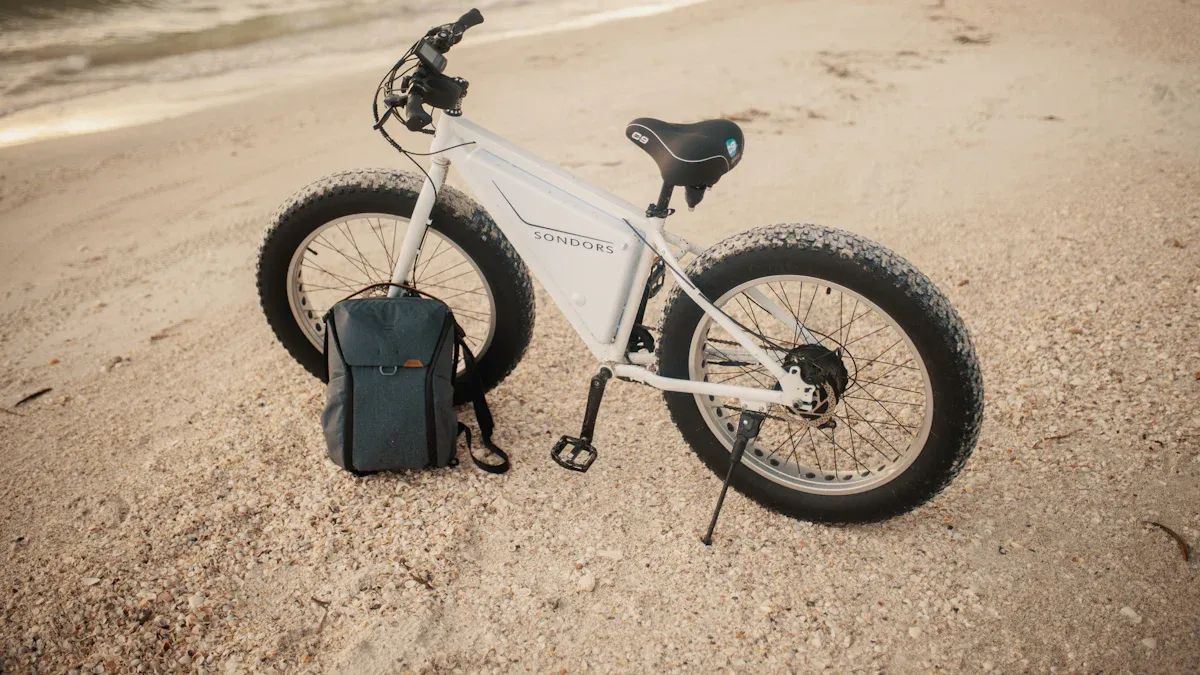
You can identify a fatbike immediately by its extremely wide tires. These tires measure at least 4 inches, often up to 5 inches. They roll over snow, sand, or mud with very low air pressure. This provides plenty of traction and a smooth ride. The rims are also wider than those on other bicycles. The frame is specially built to ensure the thick tires have enough room. Many fatbikes possess robust components that function reliably even under difficult conditions.
Tip: With a fatbike, you can also ride on surfaces where normal bicycles would get stuck.
History
The development of the fatbike began in 2007 in Alaska. Cyclists there wanted to be able to ride in winter and on snow. Early models had experimental frames and extra-wide hubs. By 2009, even wider rear hubs and tubeless tires were added. From 2012, manufacturers developed even sturdier rims and frames made of aluminum or carbon. Today, you can find modern fatbikes that are lightweight, stable, and technologically mature.
2007: First fatbikes in Alaska with wide hubs.
2009: Introduction of tubeless tires and even wider rear triangles.
2012: Lightweight rims and new frame materials.
Today: Fatbikes with aluminum or carbon frames for every adventure.
Differences from mountain bikes
Fatbikes differ significantly from mountain bikes. You can see the most important differences in this table:
Feature |
Fatbike |
Mountain Bike |
|---|---|---|
Tire width |
At least 4 inches, often 4.8-5 inches (approx. 100-127 mm) |
Typically 1.8 to 2.6 inches (approx. 45-66 mm) |
Tire pressure |
Low (5-15 PSI) |
Higher (22-35 PSI) |
Wheel size |
Mostly 26” or 27.5” |
26” to 29” |
Hub installation width |
Larger (e.g., 15×150 mm front) |
Smaller (e.g., 12×100 mm) |
Area of use |
Soft surfaces (snow, sand, mud) |
Technically demanding trails |
Traction & comfort |
Higher due to wide tires and low pressure |
More agile and faster due to narrower tires |
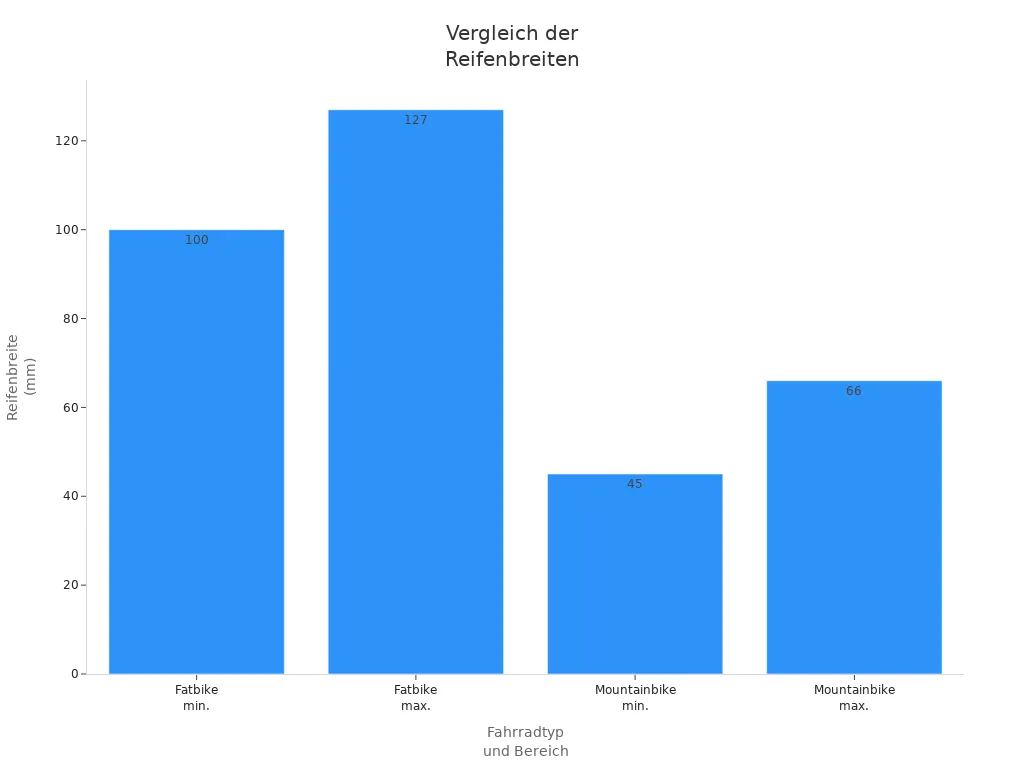
With a fatbike, you feel more grip and safety, especially on slippery paths. The wide tires smooth out unevenness better. You can ride more safely with less experience and have more control, even when the surface is difficult.
Fatbike Advantages
Traction and stability
With a fatbike, you master difficult surfaces like snow, sand, or mud. The wide tires and low tire pressure provide a large contact patch with the ground. As a result, you get more grip and slide less. Especially on snow and sand, the tires distribute weight better. You do not sink in and can ride safely. Stability increases when you are out on loose or rocky terrain.
The wide contact area gives you more stability and control.
You benefit from better traction on slippery surfaces.
The tires prevent sinking into soft ground such as sand or snow.
You can adjust the tire pressure to further improve grip.
Tip: If you lower the air pressure, you significantly increase traction on snow and sand.
Fatbikes are also suitable for heavier riders. The robust construction and resilient tires carry heavy loads and offer you safety, even if you are transporting luggage.
Comfort and suspension
You feel the difference immediately when riding a fatbike. The wide tires with low air pressure absorb shocks and bumps. You ride comfortably, even when the path is bumpy. Many fatbikes do not have a classic suspension fork because the tires already handle a lot of the damping. On soft surfaces like snow or sand, you enjoy a pleasant riding experience.
Some models offer a special suspension fork that further increases comfort on rough trails. These suspension forks are often developed for extreme conditions. They protect you and the equipment from hard impacts. You fatigue less and maintain control, even when the path suddenly becomes rocky.
Advantage |
Description |
|---|---|
Shock absorption |
Wide tires cushion bumps and provide a smooth ride |
Comfort |
You feel fewer vibrations and can enjoy longer tours |
Control |
Suspension fork and tires offer you safety on challenging terrain |
Durability |
Fatbikes are designed for high weights and large loads |
Fun factor
With a fatbike, you discover new paths and experience adventures. You can ride through snow, roll along the beach, or explore muddy trails. The versatility makes every ride exciting. You are not dependent on paved roads and can enjoy nature.
You master various types of terrain and always have control.
The high stability gives you safety, even during fast rides.
Fatbikes are suitable for everyday use and adventure, whether you are commuting or planning tours.
The robust construction allows you to transport heavy loads and ride longer distances.
Note: Many users report that the fatbike is also suitable for everyday use, especially if you often ride on uneven terrain.
The combination of comfort, stability, and versatility ensures a unique riding experience. You have fun, whether you are out on your own or trying out new routes with friends.
Areas of use
Terrain and adventure
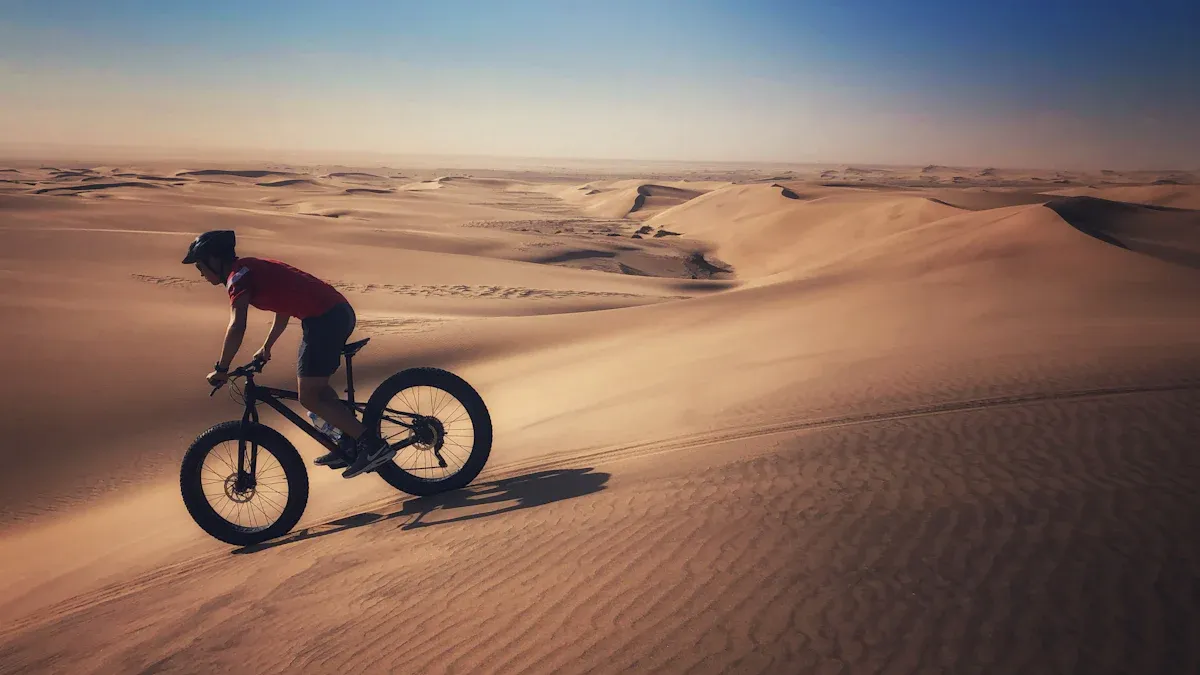
You can explore many different types of terrain with a fatbike. The wide tires give you safety and grip on sand, snow, mud, gravel, and even rocky paths. You ride effortlessly over dunes, dikes, snowy paths, or through the woods. The tires prevent sinking into loose ground and provide buoyancy. You cross obstacles like stones and roots with ease.
"Of course, that's what they were built for. The thick tires cushion everything."
If you adjust the air pressure, you increase comfort and grip. You will feel the difference especially on sandy paths. You master slippery surfaces like ice or wet stones safely and enjoy the adventure in nature.
Sand, snow, mud, and gravel are ideal surfaces.
Beaches, deserts, snowy areas, and forest paths offer exciting challenges.
Stones and roots are cushioned by the wide tires.
Everyday use and touring
You can use a fatbike not only for adventures but also in everyday life. The wide tires provide comfort on asphalt and protect your back from shocks. In the city, you enjoy a pleasant riding experience, even in bad weather. The stylish design makes the fatbike an eye-catcher.
In rural areas, you benefit from the off-road capability. You ride over unpaved paths, snow, or mud without having to get off. The tires provide extra grip and stability. On longer tours, the robust suspension system protects you from fatigue. Luggage racks allow you to take multi-day trips.
You are less prone to flats.
The tires absorb shocks and increase comfort.
You can use the fatbike for outdoor adventures and as an everyday bike.
E-fatbike
E-fatbikes combine the advantages of a fatbike with electrical assistance. Demand has been rising since 2014, especially in the Netherlands and Germany. Electrical assistance makes long distances and steep climbs easier for you. You can cover distances of 60 to 80 kilometers per charge. Manufacturers like Himiway offer popular models.
Category |
Change compared to 2022 |
|
|---|---|---|
E-Mountain bikes |
39 % |
Leader in e-bike sales |
E-Cargo bikes |
9 % |
Growth of 14.5 % |
Total e-bikes |
53 % |
Overtake classic bicycles |
In Germany, clear rules apply to e-fatbikes: The motor power may not exceed 250 watts, assistance ends at 25 km/h, and it only occurs while pedaling. You do not need a license or registration as long as your e-fatbike meets these requirements.
Tip: Observe the StVZO (German road traffic regulations) for lighting and equipment to ensure you are riding safely.
Selection & purchase
Frame & geometry
When purchasing, you should look for a sturdy frame. Aluminum and carbon are light and robust. A low step-through makes getting on and off easier. The geometry determines how comfortably you sit. A long wheelbase ensures more smoothness. Pay attention to a high load capacity if you are a heavy person or transport a lot of luggage.
Tires & tread
The choice of tire tread depends on the area of use. For snow and ice, studded tires like the 45Nrth Dillingers are suitable. In mud, you need a massive tread with a soft rubber compound. On solid ground, 45Nrth Hüsker Düs roll particularly well. For various surfaces, the Ground Control 4.6 by Specialized is versatile. Surly Bud and Lou offer plenty of traction if the frame is wide enough. For fast rides in summer, 29Plus tires like the Bontrager Chupacabra and Maxxis Chronicle are suitable.
Surface / Area of use |
Recommended tire treads / characteristics |
|---|---|
Snow and ice |
45Nrth Dillingers with studs |
Mud |
Massive tread, soft rubber compound |
Solid ground |
45Nrth Hüsker Düs |
All-round |
Ground Control 4.6 (Specialized) |
High traction |
Surly Bud and Lou |
Summer, cross-country |
29Plus: Bontrager Chupacabra, Maxxis Chronicle |
Tip: Always adjust the air pressure to the terrain. This improves traction and riding comfort.
Drive & Gearing
For e-models, you will usually find mid-drive or rear-hub motors. Mid-drive motors are centrally located and provide even power transmission. Rear-hub motors offer plenty of thrust, especially off-road. Front motors are more suitable for short distances in the city. The choice of drive affects how you steer the bike and how much assistance you receive.
Brakes
Hydraulic disc brakes offer you the best braking power. They work reliably even in wet and muddy conditions. You need less force on the brake lever and can easily modulate the braking effect. Mechanical disc brakes are cheaper but not as powerful. Rim brakes and drum brakes are less suitable for wide tires.
Accessories
For transport, you need special bike racks with high load capacity and wide rails. Brands such as Thule, Uebler, and Atera offer suitable models. Loading ramps help you with the loading process. Extended ratchet straps secure the tires. A sturdy aluminum luggage rack is practical for tours.
Note: In Germany, an e-model may have a maximum output of 250 watts and provide assistance up to 25 km/h. You do not need a driver's license if you follow these rules.
Usage & Maintenance
Riding Behavior
You will immediately feel the difference when you adjust your tire pressure correctly. Low air pressure provides more grip on snow and sand. Excessive air pressure makes the ride bumpy and reduces control. You should check the air pressure regularly and adjust it to the ground surface.
Tip: Ride with lower air pressure on soft ground and increase it on firm surfaces.
Pay attention to the handling in different conditions. The wide tires offer you safety on slippery paths. You can overcome obstacles like rocks and roots more easily. Check your tire tread to ensure you always have enough traction.
Maintenance
You extend the lifespan of your tires if you maintain them well. Here you will find important tips:
Check the air pressure regularly within the recommended range.
Check the tires for cracks or cuts.
Monitor the tread for wear.
Clean the bike to remove dirt and moisture.
In winter, switch to tires with good tread or special winter tires.
A clean chain and well-maintained suspension ensure a comfortable ride. Store your bike in a dry and protected area to prevent corrosion.
Caution: Excessive air pressure and improper storage lead to faster wear and tear.
Transport
It is best to transport your bike using a special bike rack. The Atera Strada E-Bike XL is particularly suitable for wide tires and large frames. The extended rails and the large distance between the bikes provide safety. Robust materials like steel and aluminum make the rack stable and lightweight. Innovative strap systems hold your bike securely. The platform tilt function allows you to access the trunk without having to remove the bikes. Lockable locks protect your bike from theft.
In everyday life, you can also use a cargo bike with a powerful e-drive. The large cargo area and the sturdy design make transport easy and flexible. Specialized providers can advise you and help with maintenance.
You benefit from wide tires that offer safety and comfort on snow, sand, and mud. Winter sports enthusiasts and outdoor fans experience new adventures because they remain active even in winter. The bike is suitable for beginners due to its stability and easy handling. Advanced riders use it for demanding tours. Try it out for yourself and discover how versatile your riding experience can become!
Take the first step and enjoy every ride – regardless of the weather.
FAQ
How much air pressure should you use for a fat bike?
You should adjust the air pressure to the terrain. On snow or sand, 0.5 to 0.8 bar is often sufficient. On asphalt, you can choose up to 1.2 bar. Check the pressure regularly for optimal traction and comfort.
Can you use a fat bike in everyday life?
Yes, you can also ride a fat bike in everyday life. The wide tires offer you comfort on cobblestones and rough paths. Many riders use their fat bike for commuting or shopping.
How heavy is a fat bike?
A classic fat bike usually weighs between 15 and 20 kilograms. E-fat bikes are often heavier and weigh up to 30 kilograms. The weight depends on the frame material and the equipment.
Do you need special bike racks for transport?
Tip: Use bike racks with wide rails and high load capacity.
Standard racks often do not fit. Brands like Thule or Atera offer suitable models for fat bikes.
Are there fat bikes for children?
Yes, some manufacturers build fat bikes for children. The frames are smaller and lighter. Children benefit from the stability and the fun of riding on snow or sand. Ask your specialist retailer about suitable models.