
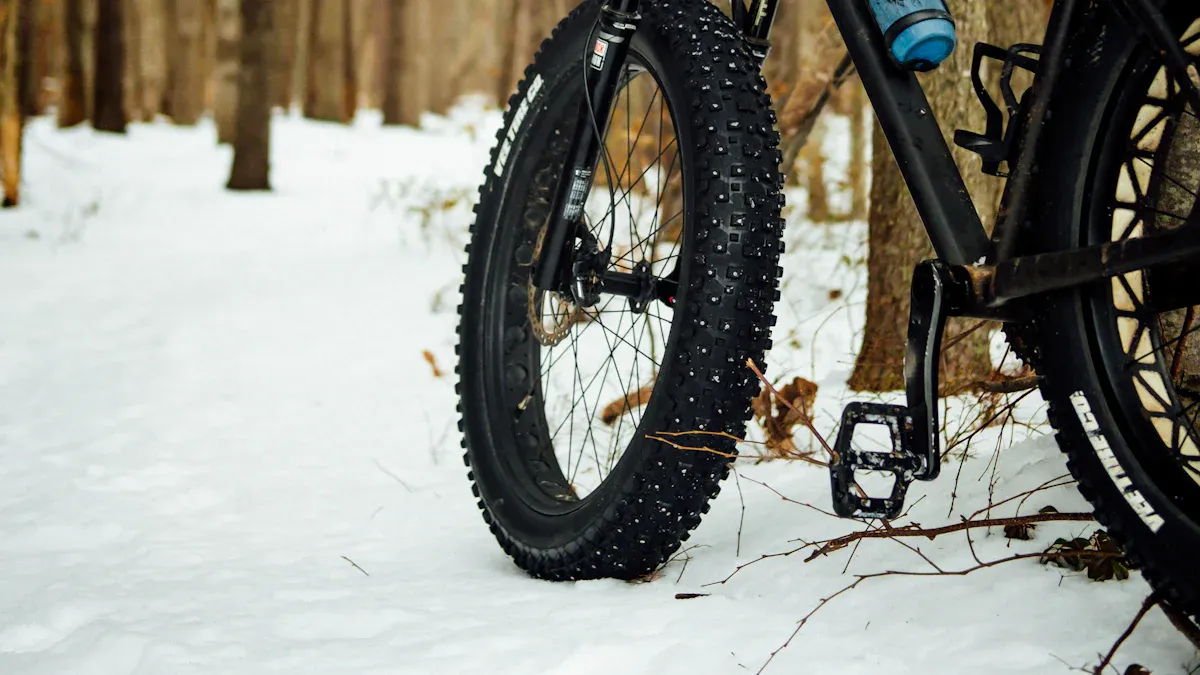
You see a bike with especially thick tires and ask yourself: What makes a fatbike so special? These bicycles have tires that are often 4 to 5 inches wide. This prevents you from sinking into snow, sand, or mud. The special design with wide hubs and a reinforced frame provides high stability. Through the low tire pressure, fatbikes offer you good cushioning and plenty of grip. Converting a normal bicycle is not possible because the frame and fork are specially adapted.
Key Findings
Fatbikes have very wide tires with low air pressure, which provide secure grip and comfort on snow, sand, and mud.
The robust frame and strong brakes make fatbikes stable and safe, even with heavy luggage or on difficult terrain.
The upright seating position offers comfort and good control, especially on long tours and uneven surfaces.
Fatbikes are versatile, ideal for off-road adventures, and comfortable in city traffic, even with electrical assistance.
Regular maintenance of tires, brakes, and chain ensures a long service life and safe riding.
Fatbike Features
Tires
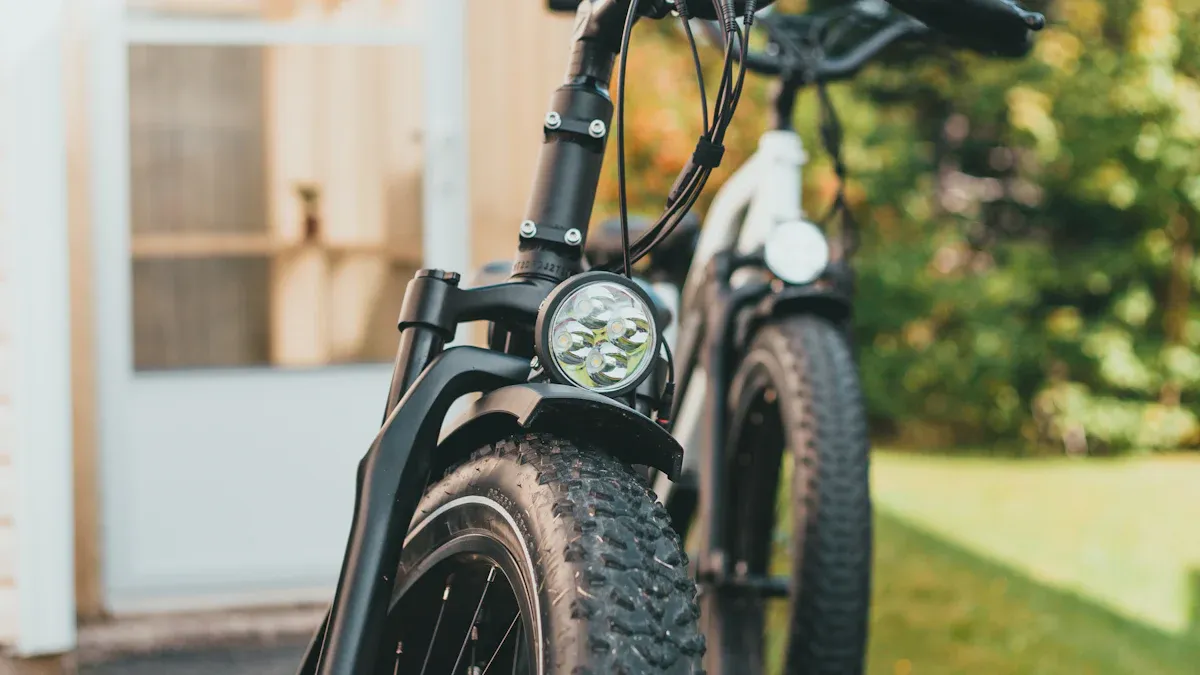
You recognize a fatbike immediately by its exceptionally wide tires. They usually measure between 3.8 and 4.8 inches, making them twice as wide as the tires of a mountain bike. This width ensures that you do not sink into snow, sand, or loose terrain. The tires can be ridden with very low air pressure, often around 0.5 bar. This creates a large contact area, providing excellent traction. The low air pressure acts like a suspension and significantly increases comfort. Small adjustments to the air pressure noticeably change the handling. You benefit from more grip and cushioning, especially on soft ground. However, the tires are heavier and roll more slowly on firm trails than narrower models.
Tip: Regularly check the air pressure of your fatbike tires. A difference of just 0.1 bar can significantly influence the ride feel.
Frame
The heart of a fatbike is its robust frame. It is usually made of aluminum, carbon, or more rarely, steel. Aluminum frames are light and durable, making them ideal for off-road use. Carbon offers an even longer service life and low weight, but is more expensive. Steel frames are particularly durable but are used more often in heavier models. The frame construction differs significantly from other bicycles. It is built wider to accommodate the thick tires and large hubs. The reinforced construction provides stability even when you are transporting heavy loads or riding on rough terrain.
Material |
Advantages |
Disadvantages |
|---|---|---|
Aluminum |
Light, robust, affordable |
|
Carbon |
Very light, durable |
Expensive |
Steel |
Extremely robust, durable |
Heavy |
Brakes
You need reliable brakes on a fatbike, as the wide tires and higher weight demand strong braking power. Hydraulic disc brakes are the first choice here. They offer you precise modulation of braking power and ensure safety, whether you are riding on wet sand or steep gravel. The brakes react quickly and reliably, even on long descents. To ensure the brakes always function optimally, you should maintain them regularly. This includes bleeding the hydraulic system and checking the brake fluid. Clean brake discs and intact pads are important for consistent braking performance.
Note: Make sure that the brake lines and the hydraulic system have no leaks. This is the only way to keep the braking power constant and safe.
Seating Position
The seating position on a fatbike is usually upright and comfortable. You sit relaxed, the back remains straight, and the shoulders are relieved. Wide, soft saddles and handlebars swept back increase comfort further. This posture is particularly suitable for long tours and ensures a good view of the surroundings. Off-road, the upright position helps you to distribute weight evenly and keep the center of gravity low. This allows you to maintain control, even when the terrain becomes difficult. On steep descents, you can shift your weight backward to improve traction.
The weight is distributed evenly across the pedals.
The low center of gravity ensures stability.
On descents, you shift your weight backward for more control.
With these features, a fatbike offers you comfort, safety, and control – whether you are riding through the city or off paved paths.
Advantages & Applications
Terrain
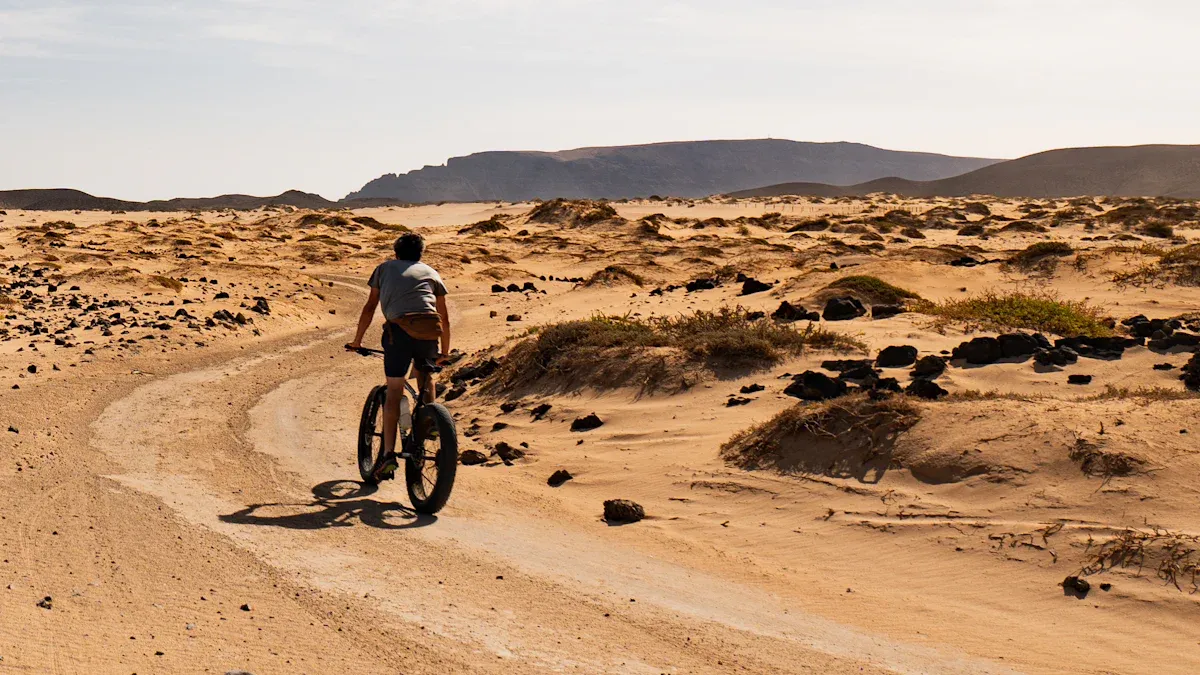
Do you want to ride on snow, sand, or gravel? Then a fatbike offers you many advantages. The wide tires ensure a large contact area. As a result, you get more grip on slippery and soft ground. You don't sink; you roll along safely. The tires absorb shocks and vibrations, making riding on uneven ground more pleasant. You cross obstacles like stones or roots more easily because the bike remains stable. You benefit especially in winter from high traction and safety. Electric models additionally help you on long distances or steep climbs.
Tip: With a fatbike, you can explore snow-covered forest paths or sandy dunes without having to dismount.
-
Advantages off-road:
Very good grip on snow, sand, and mud
High stability when encountering obstacles
Comfort through shock-absorbing tires
Less risk of punctures
City
The fatbike also shows its strengths in the city. The wide tires offer you comfort on cobblestones and curbs. You feel fewer vibrations and ride more safely over bumps. Many models are approved for road use. Electrical assistance makes commuting easier, especially on inclines or longer journeys.
You enjoy stability and comfort on asphalt and pavement.
E-fatbikes help you reach your destination faster and in a more relaxed manner.
Some models can even carry two people or heavy loads.
The robust construction ensures durability in everyday use.
Rider Weight
Fatbikes are particularly suitable for heavier riders. Many models carry up to 150 kg, some even up to 180 kg or more. The stable construction and wide tires offer you safety and comfort, even at higher weights. You don't have to worry about the bike giving way under you.
Note: If you have a higher body weight or often transport luggage, a fatbike is a very good choice.
Comparison with Other Bicycles
Mountain Bike
You might wonder how a fatbike differs from a mountain bike. The differences are significant, especially in the tires and riding style. Fatbikes have very wide tires, usually between 3.8 and 5 inches. Mountain bikes, by contrast, have narrower tires that are often less than 2.5 inches wide. The fatbike's wide tires offer a larger contact area, providing more grip and stability on soft or loose terrain such as sand, snow, or mud. Mountain bikes perform better on firm ground and technical trails because they are lighter and more agile.
Here is an overview of the most important differences:
Feature |
Fatbike |
Mountain Bike |
|---|---|---|
Tire width |
Significantly narrower |
|
Air pressure |
Low (5–14 PSI) |
Higher (22–35 PSI) |
Traction |
Very good on loose ground |
Less on soft ground |
Stability |
High, even with obstacles |
Lower on difficult terrain |
Frame |
Especially robust |
Conventional |
Suspension |
Optional, for comfort |
Standard, but less extreme |
Field of use |
Snow, sand, mud, rocks |
Firm trails, technical courses |
Tip: If you frequently ride on snow, sand, or very rough terrain, the fatbike offers more safety and comfort. Mountain bikes are better suited for fast rides on firm paths.
Trekking Bike
Trekking bikes differ even more from fatbikes and mountain bikes. They are built for long distances on asphalt and paved paths. The tires are narrow and run at high air pressure. You benefit from low rolling resistance and can ride easily and quickly. Trekking bikes offer you many mounting options for luggage racks, mudguards, and lighting systems. They are well-suited for everyday use and touring on cycle paths.
If you mainly ride on streets or cycle paths, a trekking bike is the best choice. You ride comfortably and efficiently. For adventures away from paved paths, however, you should opt for a fatbike or mountain bike.
Fatbike: Best choice for extreme terrain, snow, sand, and difficult conditions.
Mountain bike: Good for technical trails and firm off-road routes.
Trekking bike: Optimal for long tours on asphalt and cycle paths.
Purchase Criteria
Size
The right size determines how comfortable you feel on your fatbike. Pay attention to a suitable frame size that fits your height. Good ergonomics ensure that you sit relaxed and master long distances without discomfort. The frame geometry, ergonomic grips, and a seating position tailored to you significantly improve the ride quality. Wide, non-slip pedals give you safety, especially off-road.
Tip: Try out different frame sizes before you decide. This is how you find the best seating position for your riding style.
Equipment
When purchasing, you should pay attention to the most important equipment features. Wide tires from 3.8 inches offer you stability and comfort on snow, sand, and mud. A robust frame withstands heavy loads. Many fatbikes feature electric assistance, which makes riding on inclines or into headwinds easier.
Here is an overview of the materials:
Material |
Weight |
Durability / Robustness |
Features |
|---|---|---|---|
Carbon |
Very light |
Less robust against impacts |
High performance, but more delicate |
Aluminum |
Light |
Resistant to impacts |
Good price-performance ratio |
Titanium |
Light |
Very robust, corrosion-resistant |
Expensive, flexible |
Steel |
Heavy |
Very robust, durable |
Comfortable, but high weight |
Also, pay attention to the motor power and battery capacity when choosing an e-fatbike. Adjustable assistance levels and optional extras like a throttle increase comfort.
Maintenance
Fatbikes are sturdily built and generally require little maintenance. However, the wide tires wear out faster and need to be replaced more often. Tubeless tires offer advantages, but require more care when sealing.
Important components you should maintain regularly:
Chain: Clean and oil it regularly.
Rear derailleur and joints: Keep all moving parts smooth.
Suspension fork and shock: Clean the stanchions and have them serviced annually.
Brakes: Keep brake discs and pads clean; avoid getting oil on them.
Electronic parts (for e-bikes): Protect contacts and plug connections from moisture.
Note: A well-maintained fatbike rides safer and lasts longer. Schedule regular checks so that you are always ready to go.
With a fatbike you can master snow, sand, mud, and uneven terrain safely. The wide tires offer you comfort, traction, and stability. You benefit from a robust construction and an upright riding position.
Fatbikes are suitable for you if you are looking for off-road adventures, want to ride in any weather, or value comfort as a commuter. Families and outdoor fans also benefit from their versatility:
Large tires and low air pressure ensure riding fun on any surface.
Robust construction withstands even high loads.
Electric assistance makes long tours and steep climbs easier.
A fatbike is right for you if you are looking for a versatile bike for both the city and nature.
FAQ
How much does a fatbike weigh?
A fatbike usually weighs between 14 and 18 kilograms. Models with an electric motor are heavier. You feel the weight mainly when carrying it or climbing stairs. When riding, the higher weight provides more stability.
Can you use a fatbike for everyday commuting?
You can easily ride a fatbike in everyday life. The wide tires offer you comfort on cobblestones and curbs. Many models feature lights and luggage racks. You benefit from safety and versatility.
How do you properly maintain the wide tires?
You should check the air pressure regularly. Use a special pump for high volumes. Remove small stones from the tread. Inspect the tires for cracks or cuts. This will extend their lifespan.
Is a fatbike suitable for children?
Fatbikes are also available in children's sizes. Pay attention to the weight and frame size. Children benefit from the stability and safe riding feel. You should always ensure you choose the right size.
Do you need special clothing for a fatbike?
You do not need special clothing. Weatherproof jackets and sturdy shoes are sufficient. In winter, gloves and a hat help. Reflectors increase your visibility.
Tip: Always wear a helmet for added safety!