
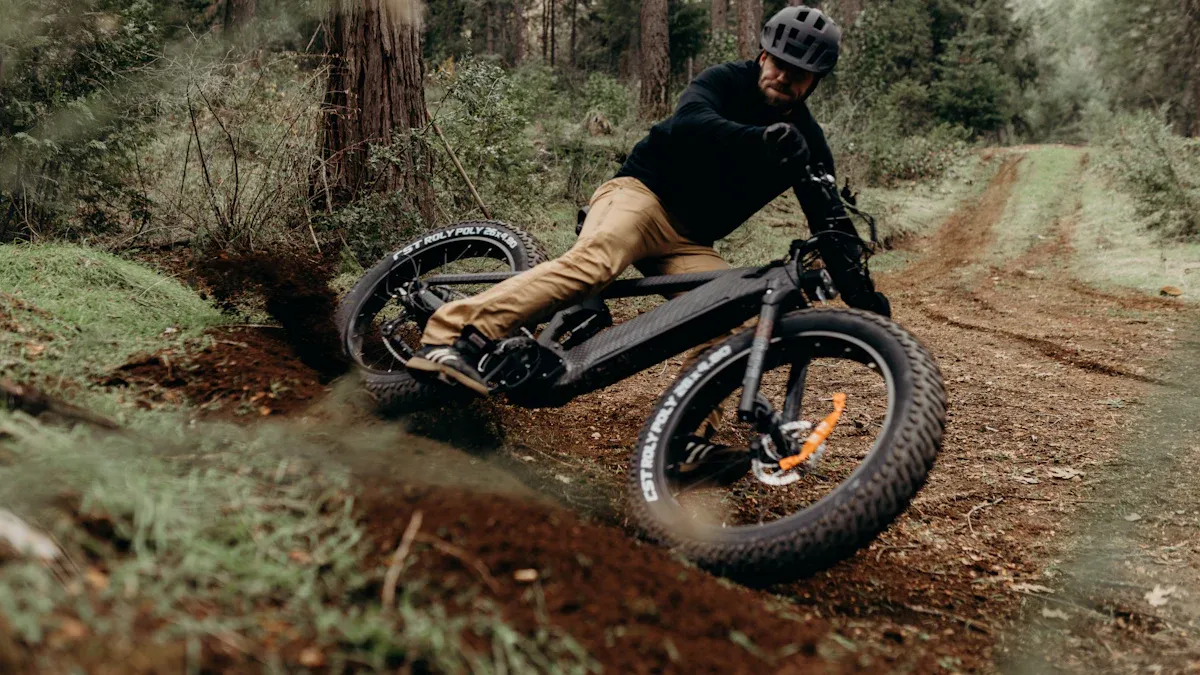
Fat tire e-bikes offer you a unique way to explore any terrain. Their wide tires provide stability and grip, even on challenging surfaces like sand or snow. You can easily tackle muddy paths or rocky trails with them. These bikes are built for adventure and give you the freedom to discover new places without worrying about the terrain. An electric bicycle fat bike combines power and versatility to deliver an unparalleled riding experience.
Key Takeaways
Fat tire e-bikes are stable and safe on any terrain. They’re perfect for outdoor adventures.
The thick tires make riding more comfortable and safer. They absorb shocks well, especially on long rides.
When buying, check the motor and battery. This helps ensure your e-bike is powerful and can go the distance.
Maintain your tires regularly, including keeping them at the right pressure. This is important for safety and performance on different surfaces.
Fat tire e-bikes are versatile. You can easily ride them through snow, sand, and mud.
What Are Fat Tire E-Bikes?
Definition and Key Features
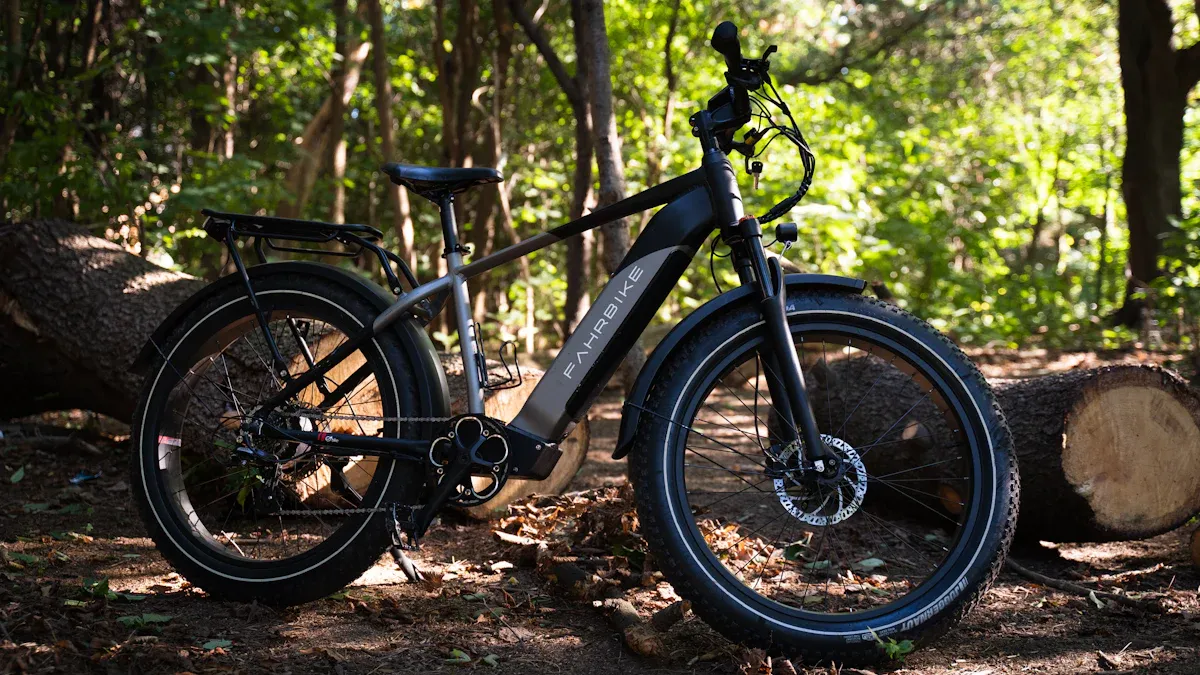
Fat tire e-bikes are electric bicycles equipped with particularly wide tires. These tires start at around 3 inches wide and can be up to 4.8 inches wide. They offer exceptional stability and traction that conventional e-bikes can’t match. The wide tires allow you to ride effortlessly over difficult terrain such as sand, snow, or mud.
Another important feature is the powerful electric motor. It assists you on steep climbs or long rides. The combination of wide tires and motor power makes fat tire e-bikes an ideal choice for adventurers and outdoor enthusiasts.
How Do Wide Tires Work?
The wide tires on a fat tire e-bike distribute your weight more evenly across the ground. This means you’re less likely to sink into soft surfaces like sand or snow. The larger contact patch provides more grip and stability, even on slippery or uneven surfaces.
A typical tire is 4.8 inches wide and has an ETRTO size of 120-559. These figures indicate the tire’s width and inner diameter in millimeters. The TPI (threads per inch) value is often 60 or 120. A lower TPI value makes the tire more durable, while a higher value makes it more flexible and lighter.
Tip: Be sure to adjust your tire pressure to suit the terrain. Low pressure (e.g., 5–15 PSI) improves traction on soft surfaces, while higher pressure is more efficient on firm ground.
Differences from Conventional E-Bikes
Fat tire e-bikes differ from conventional e-bikes in several ways. The most noticeable feature is their wide tires, which provide better stability and traction. Conventional e-bikes often have narrower tires that are less suited to challenging terrain.
Another difference is riding comfort. The wide tires act like natural suspension and absorb shocks more effectively. This lets you enjoy longer rides without sacrificing comfort. Fat tire e-bikes are also often built more robustly to withstand the demands of off-road adventures.
Versatility is another advantage. While conventional e-bikes are mainly suited to roads and bike paths, you can explore almost any terrain on a fat tire e-bike. Whether it’s sandy beaches, snow-covered paths, or muddy trails, a fat tire e-bike is a reliable companion.
Benefits of Fat Tire E-Bikes
Improved Traction and Stability
Fat tire e-bikes offer exceptional traction and stability on any surface. The wide tires distribute your weight evenly and prevent you from sinking into loose surfaces like sand or snow. Thanks to their voluminous tires and low air pressure, you’ll maintain a secure grip even on rough terrain.
The heavy-duty tires help you maintain your grip on virtually any surface.
The extra-wide wheels provide virtually unlimited grip, especially on ice or snow.
Tests show that fat tire e-bikes offer better traction on practically any surface.
With a fat tire e-bike, you can safely ride on surfaces that are inaccessible to other types of bicycles. Whether it’s gravel roads, muddy paths, or snow-covered trails, you’ll stay stable and safe at all times.
Versatility on Snow, Sand, and Mud
A fat tire e-bike is the perfect companion for any adventure. Its wide tires make it easy to tackle different types of terrain. On snow, they provide the grip you need to move forward safely. On sand, they keep you from sinking, and on muddy paths, they provide stability.
The versatility of these bikes makes them ideal for outdoor enthusiasts. You can explore beaches, ride through snowy forests, or tackle muddy trails. An electric bicycle fat bike gives you the freedom to discover new places without worrying about the terrain.
Comfort and Safety on Longer Rides
Fat tire e-bikes offer not only stability but also a high level of comfort and safety. The wide tires act like natural suspension and effectively absorb shocks. This lets you enjoy longer rides without putting strain on your body.
Ultra-wide tires increase safety, especially on rough terrain.
The sturdy frame provides greater comfort, even on long rides.
Durable wheels are less prone to punctures and can withstand even challenging conditions.
With an electric bicycle fat bike, you can safely tackle hills, muddy paths, and snow-covered routes. It’s suitable for a range of weather conditions and gives you the confidence to take on any challenge.
What to Consider When Buying a Fat Tire E-Bike
Motor Power and Battery Capacity
Motor power and battery capacity are key to your fat tire e-bike’s performance and range. A powerful motor ensures you can tackle steep climbs and challenging terrain with ease. Typical motors have a standard speed of 25 km/h, while some models can reach a top speed of up to 45 km/h.
Battery capacity determines how far you can ride on a single charge. Models with a capacity of 768 Wh or 48V 16Ah can offer a range of up to 120 km, depending on your riding style and the terrain.
Motor Power |
Battery Capacity |
Top Speed |
Range |
|---|---|---|---|
250W |
768Wh |
25 km/h |
60–120 km |
250W |
48V 16Ah |
- |
- |
Tip: Think about how you plan to use your e-bike. For longer rides or hilly terrain, you’ll need a higher battery capacity and a powerful motor.
Tire Quality and Size
Tire quality and size affect the stability, traction, and versatility of your fat tire e-bike. Typical fat tires are 3 to 5 inches wide. Wider tires offer more stability and grip, especially on soft surfaces like sand or snow.
The ETRTO size indicates the tire’s width and inner diameter, e.g., 120-559 for a 4.8-inch tire. The TPI (threads per inch) value affects the tire’s flexibility and weight. A lower TPI value makes the tire more durable, while a higher value makes it lighter and more flexible.
Feature |
Description |
|---|---|
Tire Width |
Typical fat tire widths start at 3 inches and can reach up to 5 inches. |
ETRTO Size |
Example: 120-559 for a 4.8" tire, where 120 indicates the width and 559 the inner diameter. |
TPI |
Threads per inch, typically 60 or 120, affects the tire’s flexibility and weight. |
Durometer |
Indicates the softness of the rubber, measured on the Shore hardness scale, and affects grip and wear. |
Rubber Compound |
Silica compounds offer better traction in cold weather than carbon-black-based compounds. |
Note: Make sure the tires are suited to your preferred terrain. Wider tires at lower pressure are ideal for snow and sand.
Suspension and Frame Material
Suspension and frame material play an important role in the comfort and durability of your fat tire e-bike. A sturdy frame made of aluminum or carbon fiber is lightweight and durable. These materials provide the stability you need for demanding rides.
A front suspension fork or full suspension adds comfort by absorbing shocks on uneven terrain. The voluminous tires at low pressure also act as an additional suspension element and increase traction with a larger contact patch.
Choose durable, lightweight frame materials such as aluminum or carbon fiber.
An e-bike with a front suspension fork or full suspension offers more comfort and shock absorption.
Voluminous tires at low pressure increase traction and act as an additional suspension element.
Tip: If you often ride on uneven terrain, invest in a full-suspension model. It offers maximum comfort and protects your body from jolts.
Weight and Portability
The weight of a fat tire e-bike is an important consideration, especially if you need to transport or carry it often. Fat tire e-bikes are often heavier than conventional e-bikes because of their wide tires and sturdy frames. An average model weighs between 25 and 35 kilograms. While this extra weight provides stability and durability, it can make transportation more difficult.
If you often need to load your e-bike into a car or carry it up stairs, look for a lighter model. Aluminum or carbon fiber frames are a good choice. They offer a good balance of weight and stability. Some models are even foldable, which makes them much easier to transport.
Tip: Consider how often you’ll need to transport your e-bike. If you want to take it on public transit regularly, choose a model weighing less than 30 kilograms.
Improving Portability
Some fat tire e-bikes include special features that make them easier to transport. These include:
Folding frames: These models fold down compactly and fit in smaller cars or storage spaces.
Removable batteries: A removable battery reduces the weight when carrying the bike.
Carry handles: Some models have built-in handles that make lifting easier.
Feature |
Benefit |
|---|---|
Folding Frame |
Saves space and makes it easier to transport the bike in a car or train. |
Removable Battery |
Reduces the weight when carrying the bike and makes charging the battery easier. |
Lightweight Frame |
Aluminum or carbon fiber make the e-bike lighter and easier to carry. |
Note: If you need to transport your e-bike often, invest in a model with these practical features.
Value for Money
Value for money is an important factor when buying a fat tire e-bike. These bikes are often more expensive than conventional e-bikes, but they also offer more features and benefits. Prices start at around €1,500 for entry-level models and can reach €5,000 or more for premium models.
A higher price doesn’t always mean better quality. Make sure the e-bike meets your needs. Think about which features matter to you. A powerful motor, high battery capacity, and durable tires are often worth the investment if you regularly ride on challenging terrain.
What to Look For
Motor and Battery: A powerful motor and long-lasting battery often justify a higher price.
Frame Material: Lightweight, durable materials such as aluminum or carbon fiber add value.
Additional Features: Folding frames, removable batteries, or full suspension can affect the price.
Price Range |
Features |
|---|---|
Entry-Level Models |
Basic features, suitable for easy trails and short rides. |
Mid-Range |
Better motors and batteries, ideal for regular rides on challenging terrain. |
Premium Models |
High-quality materials, powerful motors, long battery life, and additional features. |
Tip: Set a budget and compare different models. Make sure the e-bike has the features you really need.
Good value for money means getting an e-bike that meets your requirements without paying more than necessary. Invest in quality that will bring you lasting enjoyment.
Top Fat Tire E-Bike Models and Recommendations
Beginner-friendly models
If you’re new to the world of fat tire e-bikes, there are several models that are particularly well suited to beginners. These bikes offer a good balance of performance, comfort, and price. They’re ideal for gaining some initial experience on different types of terrain.
Himiway Zebra: This model impresses with its versatility. It’s suitable for both roads and off-road trails.
Scott Big Ed Fatbike: A rugged, powerful bike designed specifically for beginners looking for a reliable fat bike.
Fafrees FF20 Polar: With its impressive range, this model is perfect for off-road adventures.
Silverback Scoop Fatty: This bike delivers solid performance and is a great choice for beginners looking to explore the fat bike market.
These models will help you get started with fat tire e-bikes safely and comfortably.
Premium models for experienced riders
For experienced riders looking for more power and high-end features, premium models leave nothing to be desired. These bikes offer advanced technologies and a better riding experience.
Model |
Build quality |
Ride quality |
Price |
|---|---|---|---|
CMACEWHEEL V20 |
Not premium quality |
Clumsy on rough terrain |
|
RadRover 6 Plus |
High quality |
Better handling |
N/A |
Engwe Engine Pro |
High quality |
N/A |
N/A |
Himiway Cruiser |
N/A |
Better-tuned suspension |
N/A |
Juiced Bikes RipCurrent S |
N/A |
Easier handling |
N/A |
These models allow you to tackle challenging routes while enjoying a comfortable ride.
Models with special features (e.g., foldable, extra-large batteries)
If you’re looking for innovative features, there are fat tire e-bikes with special functions that enhance your riding experience. These models are ideal for riders who value technology and customization options.
Long battery life: Perfect for long rides without frequent recharging.
Thick tires: They offer improved stability and traction on any surface.
Advanced suspension systems: These ensure maximum comfort, even on rough terrain.
Smart technology: Some models feature mobile apps and GPS tracking, providing you with additional control and security.
Customization options: You can tailor your bike to your personal needs to get the most out of your adventure.
An electric bicycle fat bike with features like these is a great choice if you’re looking for a modern, versatile bike.
Tips for using an electric bicycle fat bike
Caring for and maintaining wide tires
The wide tires on your fat tire e-bike need regular care to ensure their performance and safety. You should keep them in good condition at all times, especially if you often ride on challenging terrain. Here are some tips:
Adjust tire pressure: Keep the pressure between 5 and 15 PSI, depending on the surface. Lower pressure improves traction on soft ground.
Use tubeless systems: These reduce rolling resistance and lower the risk of punctures.
Add sealant: It protects the tires from small punctures and keeps them ready to ride for longer.
Inspect your tires regularly: Look for cracks, wear, or debris that could compromise safety.
Tip: Choose tires with a suitable TPI rating. A lower TPI makes the tire more durable, while a higher rating makes it more flexible and lighter.
Safety tips for all-terrain riding
Safety comes first on every ride. You can ride more safely on an electric bicycle fat bike by keeping a few important points in mind:
Use wide tires: They provide excellent traction and stability, even on slippery surfaces.
Adjust tire pressure: On black ice, ride with less-inflated tires to improve grip.
Check your disc brakes: Reliable brakes are essential for control and safety, especially on descents.
Wear protective gear: A helmet and reflective clothing increase your safety, especially in low-light conditions.
Note: Wide tires act like extra suspension and reduce the risk of slipping on uneven terrain.
Adapting to different types of terrain
Fat tire e-bikes are suitable for almost any terrain. Their design lets you adapt to different conditions:
Snow and ice: The large tires provide excellent grip and prevent you from sinking in. Reduce the tire pressure for more traction.
Sand: Wide tires distribute weight evenly and make riding on soft surfaces easier.
Gravel and mud: The tires dig into the ground and provide stability. A suspension fork increases comfort on uneven terrain.
Fat tire e-bikes were originally developed for harsh conditions like those found in Alaska. Their massive tires and large contact patch make them ideal for technical climbs and descents.
Tip: Adapt your riding style to the terrain. On soft ground, ride more slowly to maintain control.
Fat tire e-bikes offer you numerous advantages. They let you explore any terrain safely and comfortably. The wide tires provide stability and traction, while the electric motor gives you extra power.
Tip: Try a fat tire e-bike and discover just how versatile and fun it is!
Whether it’s snow, sand, or mud—with a fat tire e-bike, you’re ready for any adventure. It’s more than a bicycle; it’s your key to limitless freedom. 🚴♂️
FAQ
What is the ideal tire pressure for fat tire e-bikes?
The ideal tire pressure depends on the terrain. For soft surfaces like sand or snow, choose 5–15 PSI. On firm ground, 20 PSI is more efficient.
Tip: Check the pressure regularly to ensure the best performance and safety.
How do I care for the wide tires on my fat tire e-bike?
Clean the tires after every ride, especially after riding through mud or sand. Check regularly for cracks or debris. Use sealant to prevent small punctures.
Note: Tubeless tires reduce the risk of punctures and make maintenance easier.
Can I use a fat tire e-bike in winter?
Yes, fat tire e-bikes are ideal for winter. The wide tires provide excellent grip on snow and ice. Reduce the tire pressure for more traction.
Tip: Use tires with a special rubber compound designed for cold temperatures.
How far can I ride on a single battery charge?
The range depends on the battery capacity, terrain, and your riding style. A 768 Wh battery provides a range of 60–120 km.
Tip: Fully charge the battery and avoid extreme temperatures to extend its lifespan.
Are fat tire e-bikes suitable for beginners?
Yes, they’re ideal for beginners. The wide tires provide stability and safety, even on uneven terrain. Choose a beginner-friendly model with moderate motor power.
Note: Practice on easy routes before exploring challenging terrain.