
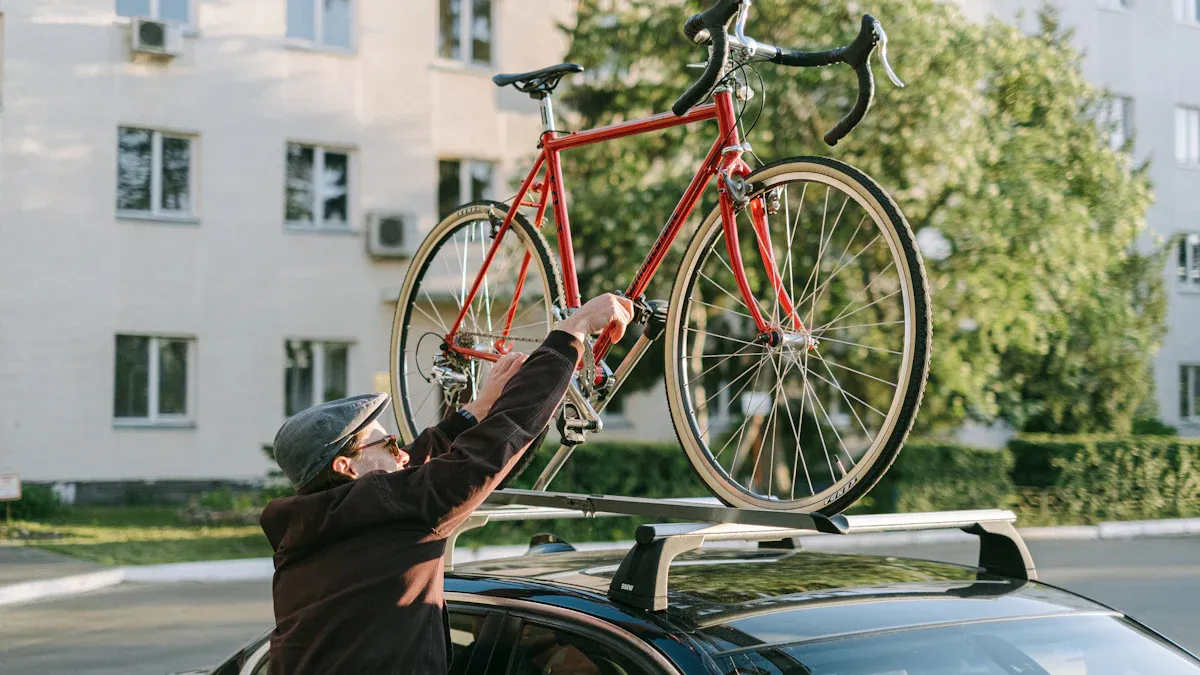
With the right bike rack for 2 e-bikes, you can transport your e-bikes safely and securely. Make sure to pay attention to the correct load capacity, remove batteries and displays, and fasten all parts securely. In Germany, there are clear regulations: the load may protrude by a maximum of 20 cm on each side, and the taillights and license plate must remain visible. Securing the load according to Section 22 of the Road Traffic Regulations (StVO) is mandatory. This guide will help you easily implement all requirements – whether you are a beginner or experienced.
Topic |
Regulation / Recommendation |
|---|---|
Maximum vehicle width incl. rack |
2.55 m |
Lateral protrusion |
|
Taillights and license plate |
Must remain visible |
Bike rack payload |
Observe max. payload according to manufacturer; e-bike rack recommended |
Load securing |
Bikes must be securely fastened (Section 22 StVO) |
Key takeaways
Choose a bike rack with at least 60 kg load capacity; tow-hitch racks are ideal for stable mounting.
Remove batteries and displays before transport to protect electronics from damage.
Secure the e-bikes firmly with support arms and straps, ensuring even weight distribution and distance.
Lighting and license plate must remain visible; install a light bar and a third license plate if necessary.
Adjust your driving style, drive slower, and regularly check the fasteners during the trip.
Preparation
Choosing a bike rack for 2 e-bikes
If you want to transport two e-bikes, you need a suitable bike rack for 2 e-bikes. Ensure that the rack offers a load capacity of at least 60 kg. Tow-hitch racks are particularly stable and well-suited for heavy e-bikes. They are easily attached to the trailer coupling and often feature a folding mechanism, so you can continue to use the trunk. Rear-mounted racks are an alternative if your car does not have a trailer coupling. However, check if the trunk lid can support the weight. Roof racks are usually unsuitable for e-bikes, as the roof load capacity is often too low.
Feature |
Tow-hitch rack |
Rear rack |
|---|---|---|
High (from 50 kg, better 60 kg) |
Lower, special models needed |
|
Mounting |
On the trailer coupling, very stable |
On the trunk lid, vehicle-dependent |
Advantages |
Simple, stable, trunk accessible |
Space-saving, no trailer coupling required |
Disadvantages |
Observe nose weight, more expensive |
Lower load capacity, visibility restricted |
Tip: Look for TÜV or GS certificates and ensure that taillights and license plates remain visible.
Preparing the e-bikes
Before transport, remove the batteries and displays from your e-bikes. This protects the electronics from impacts, moisture, and heat. Store the parts safely in the car, preferably in a padded bag. Also, remove all loose items such as bags, baskets, or child seats. Check that no sharp or pointed parts are protruding. Protect exposed contacts with a cover to prevent water ingress. A protective cover for the e-bike provides additional protection against dirt and rain.
Remove battery and display and store securely.
Ensure the e-bike protrudes by no more than 20 cm on each side.
Checking accessories
For safe transport, you need the right accessories. Have tension straps, loop ropes, and locks ready to firmly secure the e-bikes to the bike rack for 2 e-bikes. A bike cover protects against wind and weather. Special frame and pedal protection sets prevent scratches. Before starting the journey, check that the permitted total weight of the rack and e-bikes is not exceeded. You can find this information in your rack's operating manual and in the vehicle registration documents. Bike racks with TÜV or GS marks offer tested safety.
Tension straps and loop ropes
Anti-theft locks
Check load capacity and nose weight before every trip
Note: Check the fasteners and accessories before every trip to ensure safe transport.
Assembly
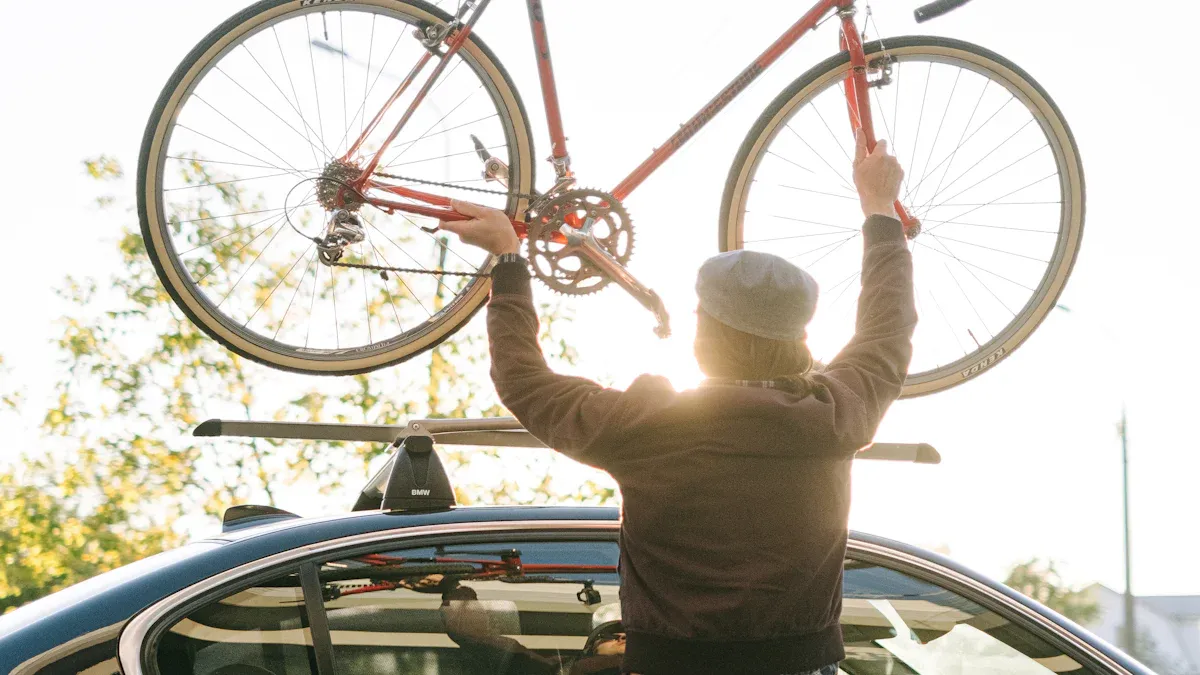
Attaching the rack
You should always mount the bike rack for 2 e-bikes according to the manufacturer's instructions. Start by attaching it to the trailer coupling. Many models offer tool-free clamping levers or quick-release fasteners. These systems make installation easier and ensure a secure hold. Fold out the rails and move the brackets into the correct position. Carefully lift or roll your e-bikes onto the rack. Secure the bikes with lockable frame holders and wheel straps. Ensure that the heavier e-bikes are closer to the vehicle. This optimally distributes the weight and prevents overloading.
Before you drive off, check the permitted payload and the maximum nose weight of your car. Always keep sufficient distance between the e-bikes so that they do not touch. Remove delicate parts like displays and batteries to reduce the weight. Re-check the fasteners after driving for a few kilometers. The recommended maximum speed with a mounted rack is 130 km/h.
Tip: A quick check before every trip increases safety and prevents nasty surprises.
Lighting and license plate
the lighting on the bike rack must always be visible and functional. Taillights, brake lights, and the official license plate are mandatory. If the bikes obscure the taillights or the license plate, you must attach a light bar and a third license plate to the rack. The lights may be slightly set back, but reflectors must be no more than 150 mm away from the vehicle width. The total width of your car with the rack and bikes must not exceed 2.55 meters. Laterally, the rack including bikes may protrude by a maximum of 20 cm on each side.
Requirement |
Description |
|---|---|
Taillights and reflectors must be clearly recognizable |
|
License plate |
License plate must be legible; attach a third plate to the rack if necessary |
Protrusion |
Maximum 20 cm per side, total width maximum 2.55 m |
Lighting position |
Lights may be slightly set back, reflectors max. 150 mm set back |
Approval |
Lighting must be type-approved and functional |
Ensure that all lights have an official approval mark. Battery-powered and removable lights are allowed as long as they function reliably. Check before every trip that everything is mounted correctly. This will help you avoid fines and ensure maximum safety.
Fastening
Positioning e-bikes
You should always place your e-bikes evenly and stably on the rack. Balanced weight distribution is crucial for driving safety. When placing two e-bikes on a bike rack for 2 e-bikes, the best approach is as follows:
Place the e-bikes in opposite directions on the rack. This prevents handlebars and pedals from touching or getting tangled.
Maintain sufficient distance between the bikes. If space is tight, you can place soft protection, such as a foam mat, between the bikes.
Remove all loose attachments so nothing slips or gets lost.
Ensure that the heavier e-bike is closer to the vehicle. This keeps the center of gravity low and stability high.
The trailer coupling should always be clean and free of grease so the rack holds securely.
Tip: Uneven weight distribution can lead to instability and dangerous swaying. The risk increases, especially at higher speeds. Place the load as low and as close to the vehicle as possible.
Securing tightly
For the secure attachment of your e-bikes, use special support arms and straps. These ensure that the bikes stay firmly on the rack even during heavy braking or cornering. There are various systems that are particularly suitable for e-bikes:
Product name |
Features |
Suitability for e-bikes |
Special features |
|---|---|---|---|
Uebler spacer frame holder support arm with ratchet strap |
Variable length, bracket mount 35 mm, for frames up to 120x80 mm, rubberized, anti-theft protection with lock, quickly removable |
Suitable for robust and carbon frames, ideal for e-bikes |
Lock with selectable code, strong rubber coating protects against scratches |
Atera frame holder spacer bike gripper arm |
Length 310 mm, bracket mount 30 mm, tensioning mechanism, strongly rubberized |
Fits all frame sizes, including e-bikes |
Retrofit lock, protection against scratches |
Thule wheel shoe with clip for rim straps |
For wheel fixation, clips for rim straps included |
Additional fixation of the tires, suitable for e-bikes |
Increases the stability of the wheel fixation |
Attach the support arms so that they do not damage the frame. Rubberized pads prevent scratches. Secure the wheels with sturdy rim straps. Check that all straps are tight but do not pinch sensitive parts.
Note: A quick pull test on each support arm will show you if everything is firm. Re-check the fixation after a few kilometers.
Protective measures
Sensitive parts of your e-bikes need special protection during transport. Use special protective covers and sets to avoid damage:
Protect the handlebars with a waterproof handlebar cover. This keeps cables and displays dry and undamaged.
Use neoprene frame and pedal protection sets to prevent scratches. These sets are especially suitable if two e-bikes are standing close to each other.
Cover the motor with a matching neoprene cover. This protects against spray and dirt.
Remove the battery and store it in a padded bag inside the car. Protect the battery contacts with a neoprene cover or protective cap.
Always secure the e-bike with tension straps to minimize movement and impacts.
Anti-theft protection is also important. High-quality locks offer the best protection here. The following table shows you the differences:
Lock type |
Security |
Handling |
|---|---|---|
Simple cable locks |
Low security, easy to break |
Flexible, small, good for carrying |
High-quality U-locks |
Very secure, robust, hard to break open |
Often heavier, but easy to attach to the bike |
Chain locks |
Very secure, thick links |
Less flexible, but very robust |
Folding locks |
Secure, depends on material and workmanship |
Must fit the frame geometry, easy to attach to the bike |
Combination U-lock + cable lock |
High security and flexibility |
Flexible, easy to transport |
Always lock your e-bike to the rack using a high-quality lock. A U-lock or chain lock offers the best protection.
Attach the lock so that it is difficult to access and fits as tightly as possible around the frame and wheel.
Take the battery and display with you or lock them separately.
GPS trackers and alarm systems provide additional security.
Avoid parking your vehicle in isolated areas if possible.
Tip: Specialized e-bike insurance protects you from financial loss in an emergency.
Transport and tips
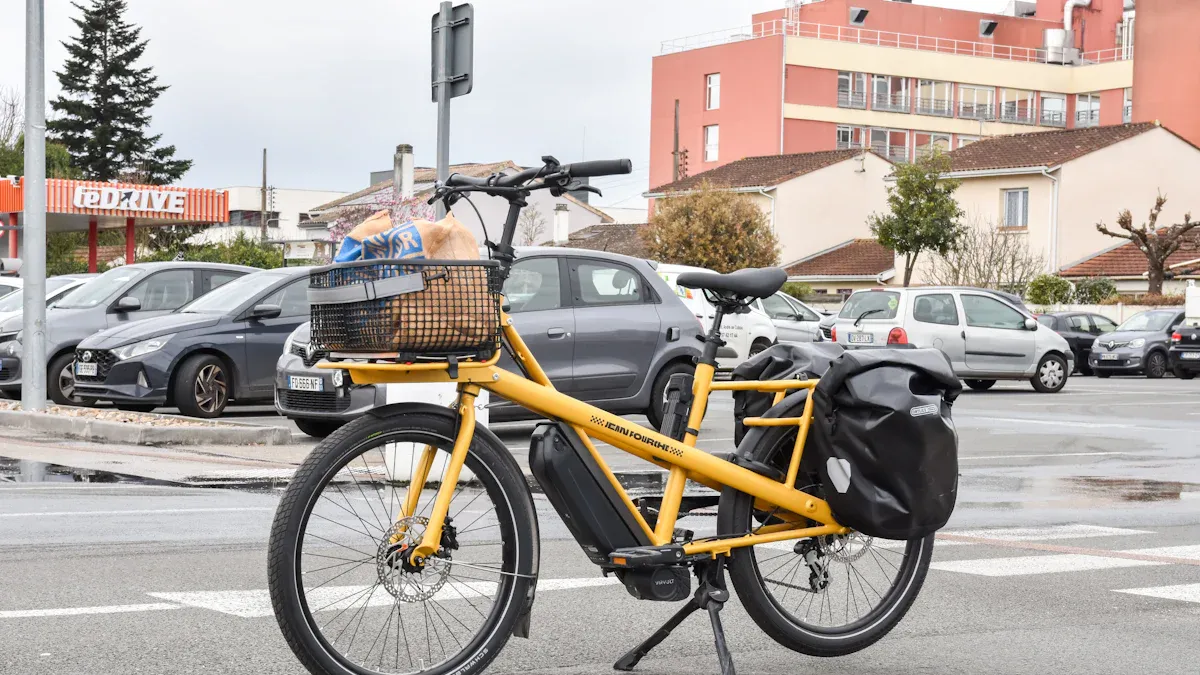
Adjusting your driving style
You should adjust your driving style when carrying two e-bikes on the rear. A loaded carrier changes your car's handling. The weight on the rear lightens the front axle and shifts the center of gravity backward. This makes your vehicle more susceptible to crosswinds and increases braking distance. The car will react differently than usual, especially during rapid lane changes or sudden braking.
Tip: Reduce your speed and increase the distance to the vehicle in front. This allows you to react more safely.
The recommended maximum speed is usually 120 km/h (75 mph). Premium rear carriers allow up to 130 km/h (80 mph), provided no other regulations apply. However, the actual speed also depends on road signs. In some countries, like the Netherlands, the limit is only 100 km/h (62 mph) when using a bike carrier.
Carrier type |
Recommended maximum speed |
Special notes |
|---|---|---|
Standard rear carrier |
120 km/h |
Suitable for most vehicles |
Premium rear carrier |
Up to 130 km/h |
Higher stability at higher speeds |
A bike carrier mounted on the trailer hitch only slightly increases air resistance. The additional fuel consumption remains low. Nevertheless, you should watch out for strong winds and poor road conditions. Check the fastenings regularly, especially after driving on bumpy sections.
Avoiding mistakes
Many mistakes during e-bike transport are easy to avoid. Insecure fastenings, incorrect positioning, or exceeding the load capacity can quickly lead to damage or even fines. Before every trip, you should check the weight of your e-bikes and the maximum load capacity of the carrier. Remove heavy parts like batteries and carefully secure all straps and mounts.
-
Check before and during the trip:
Secure fastening of all bicycles
Condition of the trailer hitch and screws
No loose accessories on the bike
Caution: If you neglect these checks, you risk damage to your e-bike or vehicle and, in the worst case, loss of insurance coverage.
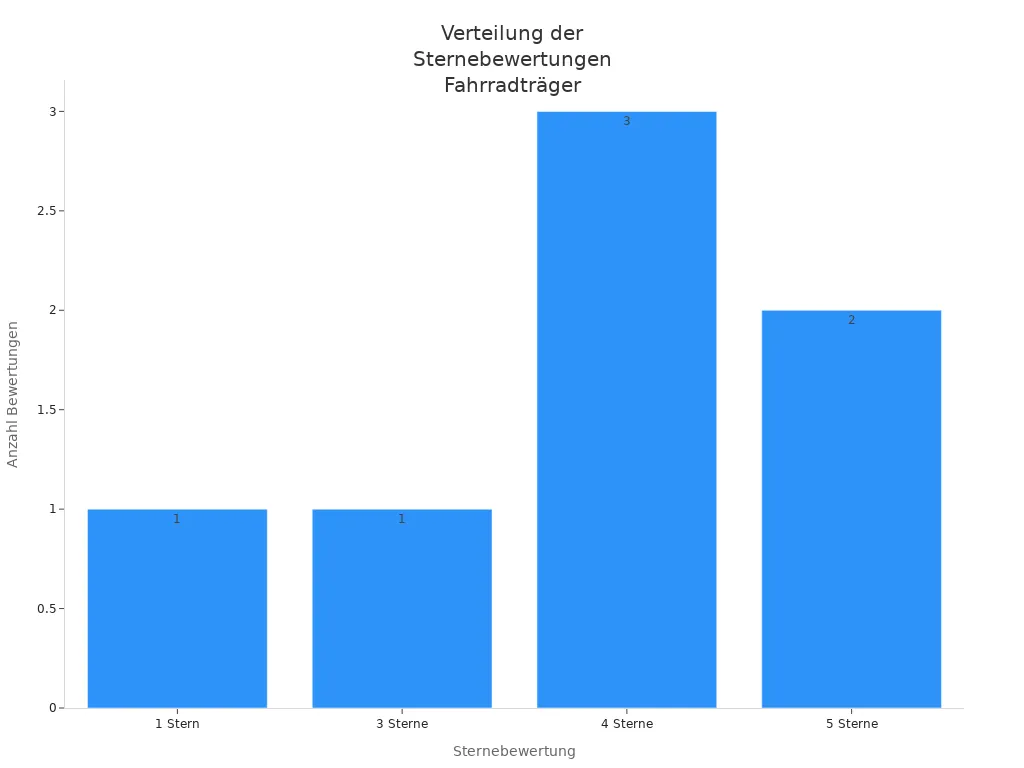
Regular breaks help you check the load. Many users report that ergonomic handles on the carrier make loading and unloading much easier. Most bike carriers for two e-bikes receive good ratings if they are sturdily built and easy to operate.
If you follow these tips, you will transport your e-bikes safely and without stress.
To ensure you transport your e-bikes safely, follow these steps:
Cover the e-bike and secure all loose parts.
Attach the carrier correctly and check the lighting.
Fix the e-bikes in place using clamping arms and foot straps.
Maintain distance and do not exceed the maximum speed.
By following these instructions, you will extend the life of your equipment and enjoy relaxed trips with your bike carrier for 2 e-bikes. Nothing stands in the way of your next adventure! 🚴♂️
FAQ
Do I always have to remove the batteries during transport?
Yes, you should always remove the batteries. This protects them from vibrations, moisture, and theft. It is best to store the batteries in the car in a padded bag.
How do I prevent scratches on my e-bikes?
Use protective covers for the frame and pedals. Soft materials like neoprene or foam protect sensitive areas. Keeping a small distance between the bikes also helps.
Can I drive through any car wash with a bike carrier?
You should not use a car wash with a bike carrier mounted. The carrier and the e-bikes could be damaged. Remove the carrier before washing your car.
How do I secure my e-bikes against theft?
Use high-quality locks, such as U-locks or chain locks. Lock the e-bikes directly to the carrier. A GPS tracker provides additional security.
What should I do if my bike carrier obscures the taillights?
Problem |
Solution |
|---|---|
Taillights obscured |
Mount a light bar with taillights and a license plate holder to the carrier. |