
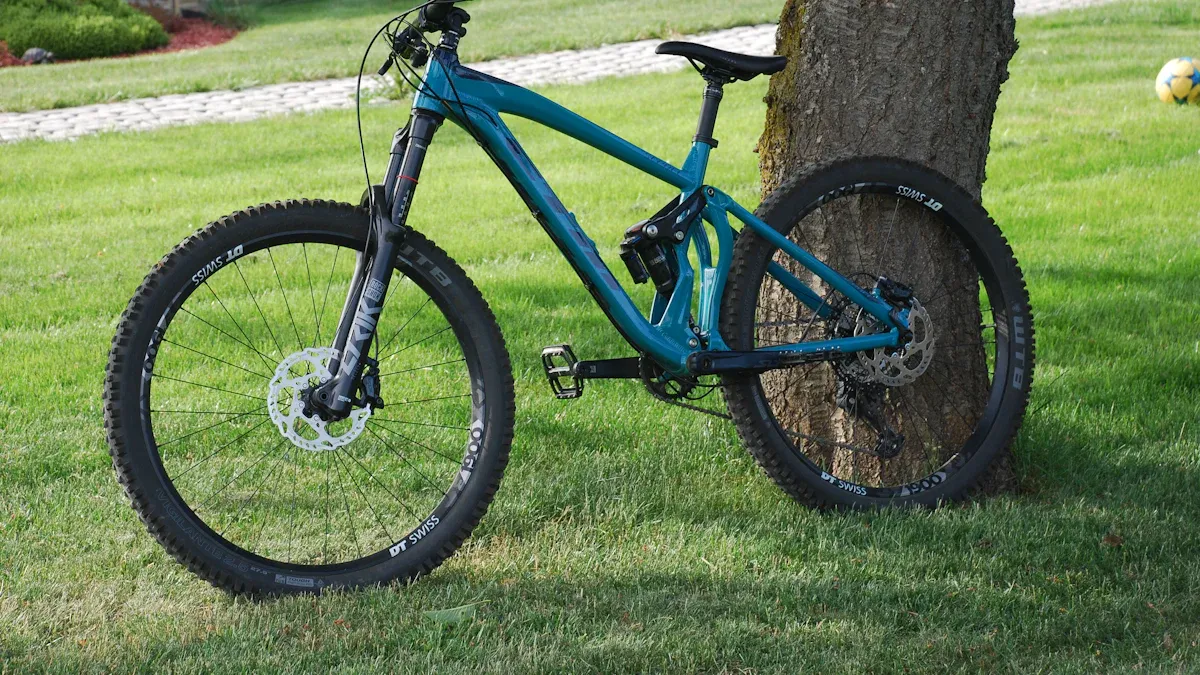
What equipment do you really need when you start mountain biking or have already mastered a few trails? Many rely on functional bags, sturdy shoes, a good pump, and a repair kit to be prepared for anything on the go. A safe helmet protects you on every ride. The right mountain bike equipment helps you avoid forgetting anything and choose items specifically suited to your style. Always adapt your gear to your tour and your own personal needs. This ensures you stay safe and comfortable on the road.
Key Insights
Safety is the top priority in mountain biking: Always wear a well-fitting helmet and protectors to avoid injuries.
Choose breathable and comfortable clothing as well as suitable shoes to improve comfort and control on the trail.
Always carry essential gear such as a multitool, spare parts, a pump, and a patch kit to fix breakdowns quickly.
Transport your gear using a backpack or saddlebag, depending on the length of the tour and your needs, and stay well-hydrated with a suitable hydration system.
Plan your gear carefully and use checklists to be optimally prepared and safe on every tour.
mountain bike equipment
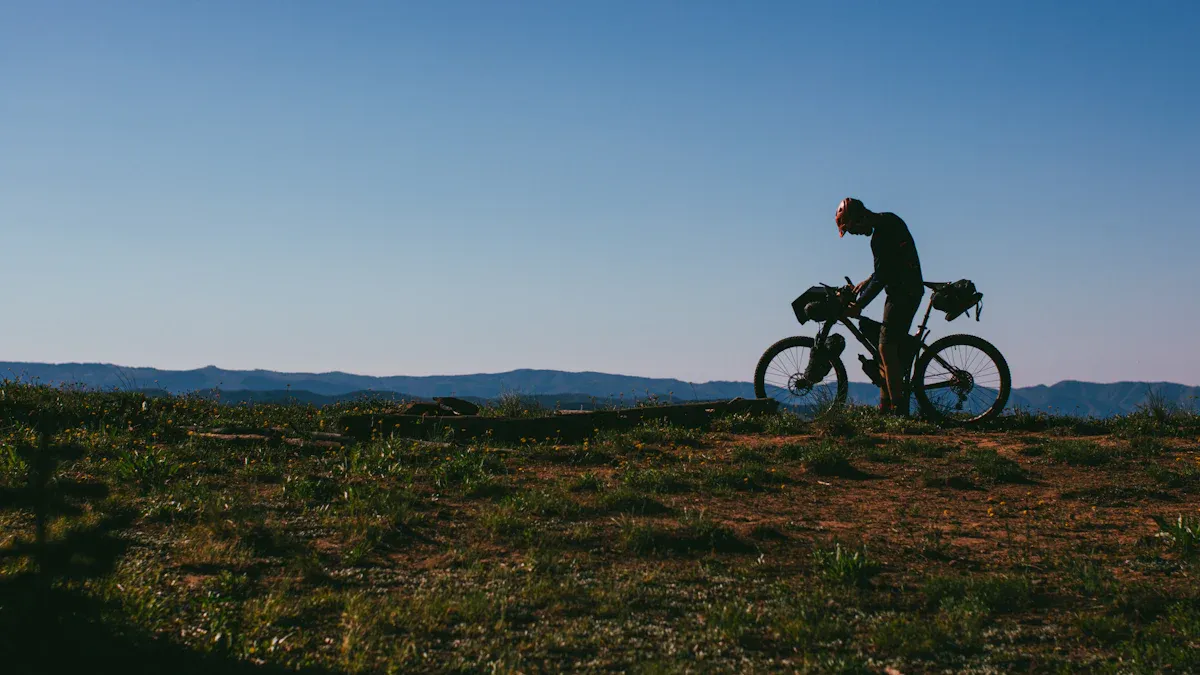
The right mountain bike equipment depends on whether you are a beginner or an expert. You will find a list here, sorted by importance and area of use, so you can specifically select what you need for your tour.
Tip: Before every ride, consider what kind of terrain you are riding on and how challenging the route is. Always adapt your mountain bike equipment accordingly.
Safety
Safety always comes first. A dedicated mountain bike helmet protects your head better than a road cycling helmet. For beginners, a helmet with in-mold construction and a visor is often sufficient. Experts opt for helmets with MIPS or even full-face helmets for increased protection.
You should also think about protectors. Beginners often use simple knee and elbow pads. Experts wear additional back and neck protectors, especially on difficult trails.
Full-finger gloves always provide good grip and protect your hands. Protective eyewear keeps out dust and branches. For beginners, sports glasses are often enough; experts choose specialized models.
Clothing
Breathable clothing ensures you feel comfortable. A jersey wicks away sweat. Padded shorts protect you from pressure points. Mountain biking shoes provide traction on the pedals. Socks and rain gear round off your mountain bike equipment.
Technical Gear
You should always have a multitool, spare parts, and a patch kit with you. A pump helps with a flat. A bike computer or GPS assists with navigation.
Transport
A backpack offers space for tools and supplies. A saddlebag is suitable for short trips. A hydration system ensures you have enough water.
Extras
A small first-aid kit is always essential. Toiletries and snacks make longer tours more pleasant. Lights and a lock increase security. For multi-day tours, you can bring a tent and sleeping bag.
Safety
Helmet
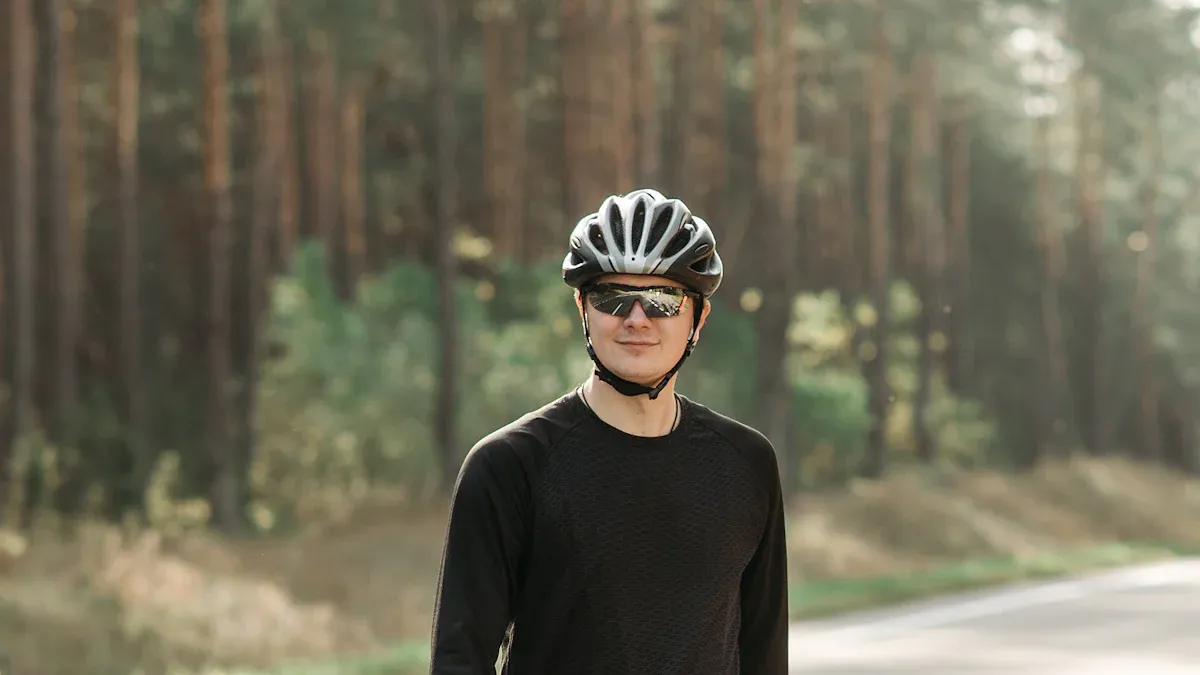
Your helmet is the most important safety accessory when mountain biking. It protects your head during falls and can prevent serious injuries. Modern mountain bike helmets with MIPS technology offer particularly high protection. Scientific research shows that helmets with MIPS significantly reduce rotational forces during a fall. The risk of a concussion decreases by about 50%. The MIPS shell converts dangerous rotational energy into less harmful movement. You should always wear a helmet that fits well and covers your head completely. For demanding trails, a full-face helmet is recommended.
Tip: Regularly check that your helmet is still intact. Replace it immediately after a fall or if there is visible damage.
Protectors
Protectors guard you against injuries to your arms, legs, and hips. You need extra protection especially on descents and difficult trails. Knee and elbow pads make sense for beginners. Expert mountain bikers often use back and neck protectors. A scientific study shows that hip protectors reduce the impact force in falls. They significantly lower the risk of severe fractures. You can easily wear protectors under your clothes. They hardly restrict your freedom of movement and noticeably increase safety.
Eyewear
Glasses protect your eyes from dust, insects, and the sun. Small stones or branches often fly through the air on the trail. Sports glasses with UV protection keep these dangers away. You can see better and react faster. Clear lenses are suitable for cloudy days. Tinted lenses help in bright sun. The glasses should fit well and not slip.
Note: Choose glasses with ventilation so they do not fog up.
Gloves
Gloves are indispensable for mountain biking. They offer protection and comfort. Reports show that gloves prevent skin abrasions and protect the back of the hand with padding. The cushioning absorbs shocks and vibrations, which prevents wrist pain, especially on long rides and uneven terrain. Gloves improve your grip on the handlebars, even with sweaty hands or in rain. They keep your hands warm and flexible. You can choose between short-finger and long-finger gloves. Try on different models to get the best freedom of movement.
Gloves protect against injuries during falls.
They absorb shocks and prevent blisters.
They improve grip and control.
They offer warmth and flexibility.
Tip: Padding that is too thick can reduce control on the handlebars. Choose gloves that fit well and do not constrict.
Clothing
Jersey
You need a jersey that is breathable and comfortable. Modern mountain bike jerseys are usually made of synthetic fibers like polyester or blends with polyamide. These materials wick moisture away from your skin quickly and dry fast. Merino wool is a good alternative if you value warmth and odor resistance. It absorbs a lot of moisture without feeling wet and prevents unpleasant sweat odors. For year-round use, tight-fitting synthetic sports apparel is recommended. The layering principle ensures a pleasant climate, whether you are riding uphill or taking a break.
Tip: Choose jerseys with flat seams to avoid chafing.
Shorts
Padded mountain bike shorts increase your comfort and protect you on long tours. You can choose between bib shorts with straps and non-bib models. Bib shorts offer thicker padding and do not slip. Non-bib shorts are lighter and more flexible, but the padding is thinner. The fit is crucial so that you do not get friction or pressure points.
Model Type |
Comfort |
Protection |
|---|---|---|
Bib shorts |
Thicker padding, secure fit |
Better cushioning, does not slip |
Non-bib |
Lighter, airier, more flexible |
Less padding, less protection |
Make sure the shorts are made of breathable fabrics and have flat seams. This ensures your comfort while riding remains pleasant, even on long trips.
Shoes
Mountain bike shoes are one of the most important contact points with your bike. They provide control and safety. Enduro shoes combine stability, grip, and comfort. Robust materials and grippy soles ensure a firm hold, even on muddy or rocky trails. For flat pedals, you need shoes with a flat, grippy rubber sole. Clipless pedals require a stiff sole with cleats. Shoes with reinforced toe and heel areas protect you from impacts and uneven terrain.
Grippy soles offer optimal traction.
Water-repellent properties are useful in changing weather.
Socks
Socks made of breathable materials like merino wool or synthetics keep your feet dry. They prevent blisters and ensure a pleasant wearing experience. In winter, thicker socks provide warmth, while thin models are better in summer.
Rain Gear
A rain jacket is part of the basic equipment, especially in cool weather or for long tours. Many mountain bikers find rain pants less important, as bike shorts dry quickly. Waterproof socks and gloves are useful in the rain. A lightweight, packable rain jacket protects you from wind and moisture. It keeps your torso warm, even when you aren't pedaling on descents.
Note: Proper care and re-waterproofing of your rain gear maintain breathability and reliably protect you in bad weather.
Technical Gear
Multitool
You should always have a multitool with you. It helps you carry out small repairs right on the trail. Experts recommend robust multitools with grippy bits. The most important tools are Allen keys up to 8 mm, a T25 Torx, a spoke wrench, and a chain tool. For long tours, a multitool with many functions is suitable. Test your multitool before every ride to make sure everything works. Avoid unnecessary extras to save weight.
Multitool |
Functions (Selection) |
Weight |
Special Features |
|---|---|---|---|
Xtreme FT 85 |
Allen keys, Torx T25, screwdriver, spoke wrench |
85 g |
Compact, light, ideal for short tours |
Crankbrothers M19 |
Allen keys, Torx, spoke wrench, chain tool |
175 g |
Many functions, robust, weather-resistant |
Mini air pump for dampers |
N/A |
Damper pressure adjustment on the go |
|
Schwalbe Multitool |
Wrench for valve cores |
N/A |
Specifically for tubeless tires |
Tom Ritchey Torque Key |
Torque wrench with bits |
N/A |
Precise adjustment for carbon parts |
Spare Parts
You should carry spare parts like a spare inner tube, valve cores, and a master link. A spoke wrench helps with loose spokes. A small repair kit fits in every bag. This way, you are prepared for breakdowns and can continue riding quickly.
Pump
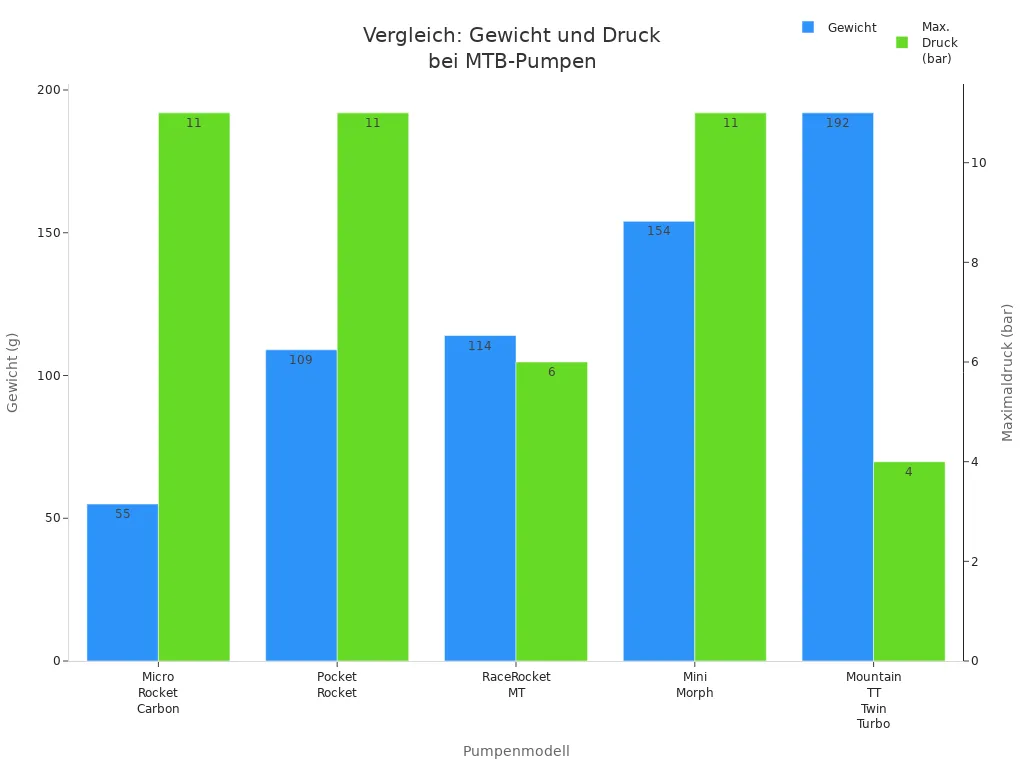
A good pump is important for every mountain biker. Lightweight models like the Topeak Micro Rocket Carbon weigh only 55 grams and fit in any bag. Pumps with an extendable hose, like the Topeak RaceRocket MT, make pumping easier. For large tires, pumps with a high air volume per stroke are particularly efficient. The Topeak Mountain TT Twin Turbo offers fast inflation but is heavier.
Patch Kit
A patch kit is part of the standard equipment. You can use it to quickly fix small holes in the inner tube. A kit with self-adhesive patches saves time. For tubeless tires, you need special sealants and valve tools. This keeps you flexible and able to fix almost any breakdown.
Bike Computer
A bike computer helps you plan and monitor your tours. Modern devices show speed, distance, and ride time. Many models offer GPS navigation, heart rate monitoring, and altitude measurement. You can easily attach them to the handlebars. The battery life is often enough for long tours. Devices like the Garmin Edge 530 or Wahoo Elemnt Bolt 2 are waterproof and robust. For beginners, models like the Bryton Rider 420 or Sigma Rox 4.0 are suitable. You can sync your data with your smartphone and improve your performance.
Tip: Choose a bike computer with an easy-to-read display and long battery life. This way, you always have a clear overview, even in difficult conditions.
Transport
Backpack
A backpack is part of the basic equipment for many mountain bikers. You can safely stow tools, spare parts, provisions, and clothing in it. You especially benefit from the large storage space on longer tours. Many models offer special compartments for tools and an integrated hydration bladder.
However, a backpack covers your back. This often leads to sweat accumulation and can cause pressure points. Shoulder straps sometimes restrict freedom of movement. In the event of a fall, a backpack protects your back, especially if a protector is integrated.
The following table shows you the most important differences between a backpack and a saddlebag:
Category |
Backpack |
Saddlebag (Hipbag) |
|---|---|---|
Storage space |
Plenty of room, ideal for long tours |
Less room, for short tours |
Freedom of movement |
Restricted by shoulder straps |
More freedom of movement |
Comfort |
Can lead to sweat and pressure points |
Better ventilation, less weight |
Protection |
Back protection possible in case of falls |
No back protection |
Accessibility |
Contents harder to access |
Easy access to pockets |
Saddlebag
A saddlebag, also known as a hip bag, is particularly suitable for short tours or if you want to take little luggage with you. It offers you more freedom of movement because your back remains free. The weight is distributed on the hips, which increases comfort.
However, saddlebags have less storage space. You can usually only store the essentials such as a multitool, spare tube, and snacks. On rough terrain, the bag can sway. It is less suitable for dropper posts and offers no back protection in the event of a fall.
Many mountain bikers appreciate the better ventilation and quick access to the contents. However, for longer tours, the space is often not enough.
Tip: Think about how much you really need to take with you before every tour. For day tours with a lot of equipment, a backpack makes sense. For short, quick rides, a saddlebag is often enough.
Hydration system
When mountain biking, you lose a lot of fluid through sweating. You should drink regularly to stay fit and focused. Sports doctors recommend drinking enough in advance for tours up to 60 minutes. If your ride lasts longer, start after 20 minutes with small portions of about 150 ml. You should drink a maximum of one liter per hour so that your body can absorb everything. Sodium-rich drinks compensate for mineral loss.
Hydration systems such as hydration backpacks with an integrated bladder are particularly practical for longer tours. You carry the water close to your back and can drink via a tube without stopping. Many models offer up to 6 liters of capacity and additional storage space for provisions and clothing.
Manufacturers like DEUTER or YEAZ focus on breathable straps and a non-slip fit. For shorter tours, a water bottle is often enough. Some bikers use inexpensive systems with a PET bottle and tube that require little maintenance and are reliable.
Note: Choose a hydration system that suits the length and intensity of your tour. This way, you will always stay well-hydrated and capable of performing.
Additional
First aid
You should always have a small first-aid kit with you. This allows you to quickly treat scrapes, cuts, or bruises. A good kit contains bandages, gauze pads, wound dressings, disinfectant, disposable gloves, and a rescue blanket. A small pair of scissors helps in cutting bandages. A pressure bandage can be life-saving in case of heavy bleeding. Many experts recommend attending a first-aid course with a focus on mountain biking. This way, you know exactly how to act correctly in an emergency.
Purpose |
|
|---|---|
Bandages, gauze pads |
Treating minor wounds |
Wound dressings, pressure bandage |
Protection for major injuries |
Disinfectant |
Cleaning the wound |
Disposable gloves |
Hygiene when helping |
Rescue blanket |
Protection against cold |
Small scissors |
Cutting bandages |
Hygiene
On long tours, you need hygiene articles. Wet wipes, disinfectant gel, and a small towel fit into any bag. They help you clean your hands and face. A trash bag ensures that you take your waste back with you. This protects both yourself and nature.
Provisions
You lose a lot of energy when mountain biking. Always take enough water and snacks with you. Cereal bars, bananas, or nuts quickly give you new energy. Dextrose helps with a sudden drop in energy. For longer tours, small, easily digestible meals are suitable.
Light
Good lighting is important for your safety. A bright front light like the Sigma Aura 80 ensures good visibility. A rear light with a brake light function makes you visible to others. Helmet lights always point where you are looking. Reflectors on spokes and clothing increase visibility in road traffic. Pay attention to weatherproof, battery-powered lamps with a long runtime.
Tip: Choose lamps with different brightness levels. This way, you can adjust the light to the environment.
Lock
Protect your mountain bike with a high-quality lock. A U-lock like the Granit Plus from ABUS offers a lot of security. Folding locks are flexible and practical for when you're on the go. Chain locks protect against cutting. Invest at least 10% of the bike's value in a good lock. For expensive bikes, a combination of two different types of locks is recommended.
Lock type |
Advantage |
|---|---|
U-lock |
Very secure, deterrent |
Folding lock |
Flexible, easy to transport |
Chain lock |
Robust, hard to break |
Navigation
A GPS device helps you find the right path. Devices like the Garmin Edge 830 or Sigma ROX 12.1 EVO offer precise navigation, long battery life, and are built robustly. They show you maps, altitude, and speed. Many models also work offline and are waterproof. This way, you will always find your way back even on unknown trails.
Bikepacking
For multi-day tours, you need special equipment. Pack light and functional. Use waterproof frame bags, handlebar bags, and saddlebags for your luggage. A sleeping mat and a sleeping bag ensure comfort at night. Functional clothing using the layering principle keeps you warm and dry. Think of tools, spare parts, and a small lamp. This way, you are well-prepared for every adventure.
Advanced
Components
If you want to take your mountain bike to the next level, you should pay attention to high-quality components. They noticeably improve performance. Experts recommend, for example, larger wheels. With 29 inches at the front and 27.5 inches at the rear, you roll over obstacles more easily and have more control. Modern shifting groups with only one chainring at the front make shifting easier and the bike lighter. Thru-axles ensure more stability. Press-fit or BSA bearings last longer and are easier to maintain. A telescopic seatpost (dropper post) gives you more comfort and control on terrain.
Motors with high performance and low resistance help you to ride well on E-MTBs even without motor support. A geometry with a steep seat angle and a comfortable posture brings you advantages on long tours. High-quality suspension forks like the Rockshox Lyrik improve the riding feel, especially downhill.
Component |
Advantage |
|---|---|
Wheel sizes |
Better performance, more control |
Shifting groups |
Easier shifting, less weight |
Thru-axles (Boost) |
More stability and stiffness |
Bearing types |
Longer durability, easy maintenance |
Dropper post |
More comfort and control on terrain |
Care
Regular maintenance keeps your mountain bike in top shape. You should clean the frame and chain after every ride. Use special bicycle cleaners and a soft brush. Lubricating oil protects the chain against rust and ensures quiet riding. Regularly check the brakes and tire pressure. Replace worn brake pads in time. Check the suspension fork and the shock absorber for leaks. A well-maintained bike rides more safely and lasts longer.
Tip: A maintenance schedule helps you not to forget any important steps. Write down when you checked or changed which parts.
Special equipment
As an advanced mountain biker, you need special equipment for more safety and comfort.
Wear a helmet with MIPS technology or a removable chin guard for downhill tracks.
Flexible protectors for knees, shins, elbows, and back protect you in case of falls.
Choose shoes with a stiff, grippy sole that fit your pedals.
Rely on tear-resistant, breathable clothing with reinforcements in key areas.
MTB gloves offer you grip and protect against injuries.
Sports glasses or goggles protect your eyes from the sun, dust, and branches.
A bicycle computer helps you with navigation and training control.
Frame protection like chainstay protectors saves your bike from rock chips.
A hydration backpack ensures enough water, even if a bottle cage doesn't fit.
With this equipment, you are well-prepared for demanding trails.
Checklist
You want to ensure you don't forget anything on your next tour? With this checklist, you have all important things in view. Print it out or download it to your smartphone. This way, you can quickly check before every ride whether your mountain bike equipment is complete.
Category |
Equipment |
Done? |
|---|---|---|
Safety |
Helmet, protectors, glasses, gloves |
[ ] |
Clothing |
Jersey, shorts, shoes, socks, rain gear |
[ ] |
Technology |
Multitool, spare parts, pump, repair kit, bike computer |
[ ] |
Transport |
Backpack/saddlebag, hydration system |
[ ] |
Additional |
First aid, hygiene, provisions, light, lock, navigation, bikepacking |
[ ] |
Advanced |
Components, care, special equipment |
[ ] |
Tip: Adapt the checklist to your tour and your skill level. Not every track needs the same equipment. Think about what you really need.
Download
You can download or print the checklist as a PDF. Simply click on the following link:
Mountain bike equipment checklist – PDF download
With this list, you won't forget any important mountain bike equipment again. You are always well-prepared and can fully concentrate on your adventure.
With the right mountain bike equipment, you protect yourself and increase your riding enjoyment. Safety and comfort always come first. Studies show that wide tires, good brakes, and suitable suspension significantly improve your riding experience:
Equipment feature |
Effect on safety and comfort |
|---|---|
Tires |
More grip and control |
Brakes |
Better braking power |
Suspension |
Fewer shocks, more comfort |
Regularly adapt your equipment to your tours. This way, you enjoy every ride and stay safe on the go.
FAQ
How often should you check your mountain bike equipment?
You should check your equipment before every ride. Inspect your helmet, brakes, tires, and lights. This allows you to spot minor damage early on. Safety always comes first.
What kind of clothing is suitable for changeable weather?
Use the layering principle. Wear several thin layers. Use a lightweight rain jacket. This way, you can quickly adapt to sun, wind, or rain.
What belongs in a first-aid kit for mountain bikers?
Pack plasters, gauze bandages, disinfectant, disposable gloves, and an emergency blanket. A small pair of scissors is helpful for cutting materials to size. With these items, you can quickly treat minor injuries.
What is the best way to carry water on the trail?
Tip: Use a hydration pack with a tube. This allows you to drink while riding without having to stop. For short trips, a water bottle in a bottle cage is often sufficient.
Do you need special shoes for mountain biking?
Yes, special MTB shoes provide you with more grip and control. They have high-traction soles. If using clipless pedals, use shoes with cleats. Flat pedal shoes offer a firm footing on standard pedals.