
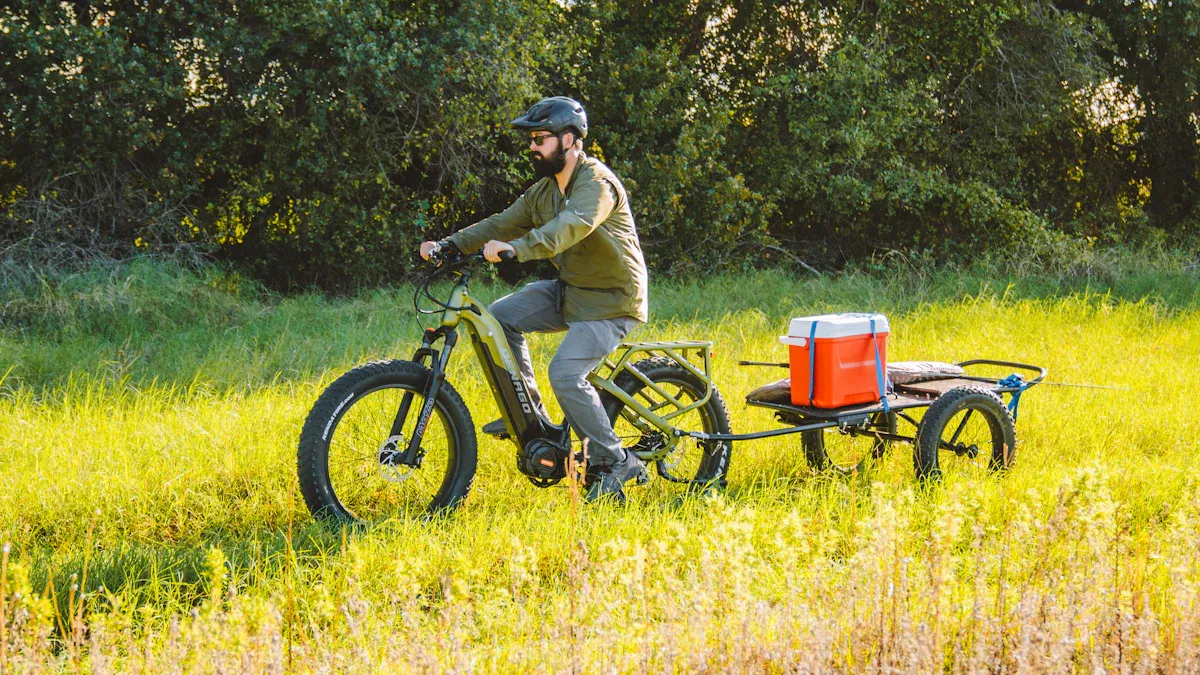
You can usually install an e-bike bicycle trailer hitch without any problems. When doing so, pay attention to important compatibility factors:
Maximum permissible total weight
Axle type (quick-release, thru-axle, solid axle)
Stable attachment to the rear axle
Legal regulations state that e-bikes with a trailer may travel at a maximum of 25 km/h. The minimum age is 16. Safety and proper installation ensure a relaxed ride.
Key takeaways
Before purchasing, check whether your e-bike and trailer are compatible with the hitch, especially the frame material and axle type.
It is best to mount the hitch on the rear axle for more stability and a lower center of gravity.
Choose the appropriate hitch system (axle hitch, frame hitch, or seat post hitch) based on usage and trailer weight.
Observe the legal requirements: Maximum 25 km/h, minimum age 16, and compliance with the permissible total weight.
Regularly check the hitch and all connections before every ride to ensure safety and long-term durability.
Compatibility
Bicycle type and frame
You should first check whether your e-bike is suitable for an e-bike bicycle trailer hitch. Most modern e-bikes with aluminum or steel frames offer stable mounting points for hitches. Models with fixed mounting points on the chainstay are particularly suitable. You can securely attach the hitch here. With carbon frames, there is an increased risk of damage, as the material is sensitive to tensile stress.
Tip: The rear axle is the best place for installation. It ensures a low center of gravity and more stability when riding with a trailer.
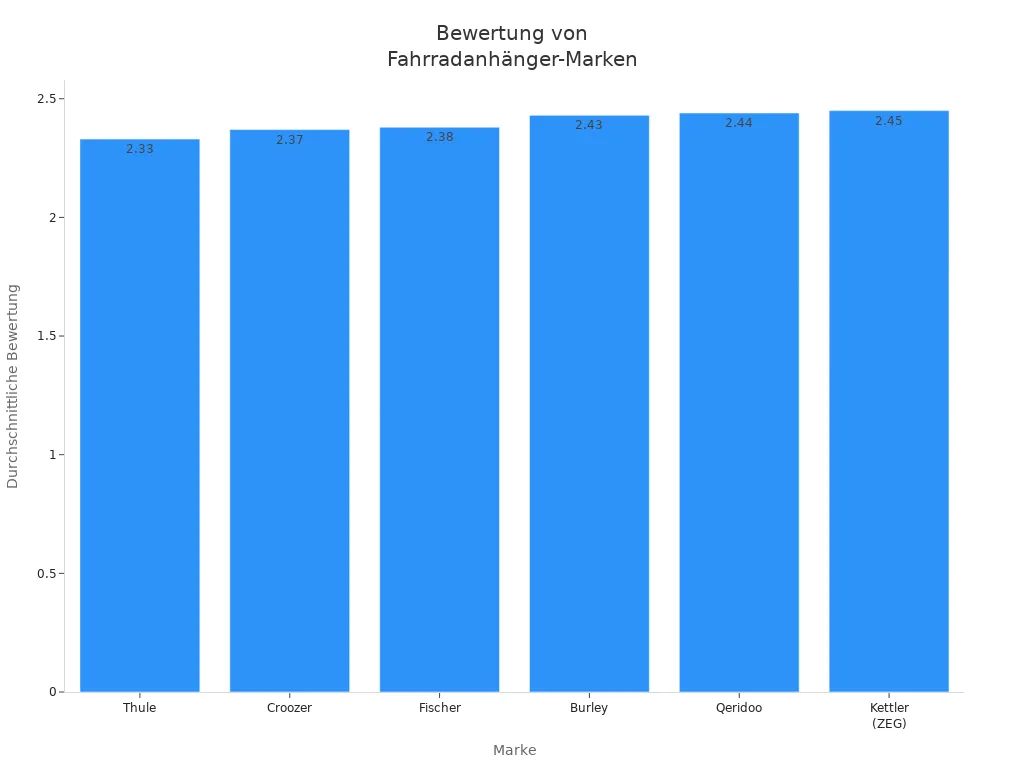
Many well-known brands such as Thule, Croozer, Burley, and Qeridoo offer trailers that are compatible with most e-bikes. The following table shows popular models and their features:
Model |
Type |
Hitch type |
Features |
Suitability for e-bike |
|---|---|---|---|---|
Thule Chariot Cross 2 |
Child trailer |
Axle hitch (ezHitch) |
Comfortable, weatherproof, suspension |
Generally suitable |
Croozer Kid Vaaya 2 |
Child trailer |
Axle hitch |
Sustainable materials, taillight |
Generally suitable |
Burley Flatbed |
Cargo trailer |
Axle hitch |
Lightweight, flexible loading |
Generally suitable |
Qeridoo KidGoo 2 |
Child trailer |
Axle hitch |
Good price-performance ratio |
Generally suitable |
Axle types
The type of axle on your e-bike influences the selection and installation of the e-bike bicycle trailer hitch. There are three main types:
Axle type |
Prevalence in e-bikes |
Influence on hitch installation |
|---|---|---|
Thru-axle |
Widely used in modern e-bikes |
Often requires special adapters due to precise dimensions and threads; installation with a torque wrench is recommended. |
Quick-release |
Common in e-bikes |
Hitch can be installed with a longer axle if the thread is too short; simple installation via clamping lever. |
Solid axle |
More common in older bicycles |
Requires sufficient thread and potentially an axle adapter for stable hitch installation; less relevant for e-bikes. |
Thru-axle: You must check the axle diameter and thread. You usually need a suitable adapter for installation. A torque wrench helps to fasten the hitch securely.
Quick-release: Open the clamping lever, insert the adapter, and tighten everything by hand. If the thread is too short, you can use a longer axle.
Solid axle: Check whether there is enough thread available. If necessary, use an axle adapter. The hitch must be firmly and stably seated.
Adapters like the Qeridoo thru-axle adapter or polygon adapter help you combine different axle and hitch systems.
Permissible weight
The permissible total weight plays an important role in safety. According to the current planning of the Federal Ministry of Transport, the maximum total weight for bicycle trailers without their own braking system is intended to be 50 kg in the future. This regulation also affects trailers on e-bikes. If your trailer exceeds this limit, an automatic braking system is mandatory. The regulation is still under review, but you should adhere to this limit to ensure you are riding safely and in accordance with the law.
Note: The Road Traffic Licensing Regulations (StVZO) also stipulate that you may travel at a maximum of 25 km/h with a trailer and e-bike. S-pedelecs are not approved for trailer operation. The minimum age for pulling a trailer with an e-bike is 16 years.
E-bike bicycle trailer hitch: Systems
If you want to mount a trailer to your e-bike, you have a choice between different hitch systems. Each system has its own advantages and is suitable for different purposes. Many manufacturers offer universal hitches that fit various axle types such as quick-release, thru-axle, or solid axle. Always look for a TÜV or GS certificate when purchasing. These seals stand for tested safety and high-quality standards.
Axle hitch
The axle hitch is the most common system for the e-bike bicycle trailer hitch. You mount it directly to the rear wheel axle of your e-bike. This ensures a low center of gravity and a stable connection between the bicycle and the trailer. Installation is usually quick and straightforward. Many models can be adapted to various axle types using adapters.
Advantages of the axle hitch:
Quick installation and removal
Good stability, even with heavier loads
Universally usable for many e-bikes
Tip: Ensure that the hitch is firmly seated and checked regularly. This prevents it from loosening while riding.
Many axle hitches are TÜV-certified. High-quality models offer additional safety features such as lockable hitch carriers, handle safety locks on the ball head, and theft protection. Some systems have folding mechanisms so that you can remove the trailer more easily.
Frame hitch
You attach the frame hitch to the frame of your e-bike, usually to the chainstay. It is particularly suitable if your e-bike already has special drill holes or mounting points. The connection is very stable and permanent. This is a particular advantage if you use the trailer regularly or transport heavy loads.
You mount the frame hitch directly to the frame, often at existing mounting points.
The connection remains firm and secure even under heavy loads.
A frame hitch is ideal for long-term use.
By comparison, the axle hitch is located on the rear wheel axle and is faster to install.
With sensitive frame materials like aluminum or carbon, you should pay attention to protecting the frame.
Note: Before installation, check whether your frame is suitable for a hitch. Damage can occur with carbon frames.
Many e-bike bicycle trailer hitch systems with frame mounting are also TÜV or GS-certified. They often offer lockable frame holders and additional theft protection.
Seat post hitch
You attach the seat post hitch under the saddle to the seat post. This system is primarily suitable for lightweight trailers or short distances. Installation is simple and quick. You can use the hitch on almost any bicycle.
Seat post hitches offer you a lot of flexibility. They are particularly practical if you only use the trailer occasionally. However, you should not exceed the maximum payload. The higher weight on the frame increases the risk of tipping and can impair safety.
Seat post hitches have a higher center of gravity than axle or frame hitches. This affects riding stability. Especially with heavy loads or fast cornering, the bike can tip over more easily. One-piece hitches are stable but limit maneuverability. Two-piece systems offer more freedom of movement and are better suited for city traffic.
Remember: For heavy loads or longer rides, you should choose an axle or frame hitch instead. These systems offer more stability and safety.
Many seat post hitches are universally usable, but not all are TÜV-certified. When buying, pay attention to tested safety and the maximum vertical load.
Axles
Choosing the right axle is crucial for the safe installation of your bicycle trailer hitch on your e-bike. You will find three main types: quick-release, thru-axle, and solid axle. Each type has its own advantages and unique features.
Quick-release
Quick-releases are very popular and are frequently used on e-bikes. You can install them simply and quickly. The rear axle is the preferred location for the hitch because it offers stability.
You open the quick-release with a lever.
Installation is successful in just a few steps.
Quick-releases are especially suitable for standard bicycles without special axles.
If the axle is too short, you can replace or turn it around.
Tip: Always check if the axle is long enough. This ensures the hitch is seated securely and firmly.
Thru-axle
You will often find thru-axles on modern e-bikes. They offer high stability, but installation is slightly more demanding. The old axle usually does not fit the hitch. You must replace it and pay attention to length, mounting shape, and thread pitch.
Thru-axles are available in different thread pitches (1.0 / 1.5 / 1.75).
You often receive spacers, nuts, and star washers for adjustment.
For special hitches like the CE hitch, you sometimes need a special polygon.
With Bulls dropouts, an additional screw clamp is necessary.
Note: You should always attach the safety strap. It offers additional security if the hitch fails.
Solid axle
Solid axles are usually found on older bicycles. Installing the hitch is possible if the thread length is sufficient. Otherwise, you need an adapter. Special adapters, such as those from Weber, ensure a stable connection.
Feature |
Description |
|---|---|
Adapters fit according to the hitch brand, often universal or specifically for Weber |
|
Thread sizes |
FG 9.5, FG 10.5, M10 x 1.00, M12 x 1.00, M12 x 1.25 |
Compatible hitch brands |
Universal adapter for many brands, special adapters for Weber |
Weber-specific adapters |
Polygon shape, suitable for Weber hitches type E, EL, ES |
Material quality |
High-quality materials ensure stability and longevity |
Selection criteria |
Hitch brand, hitch type, and thread size of the axle |
Remember: Always choose the appropriate adapter for your axle and hitch. This keeps the connection safe and reliable.
Installation
Preparation
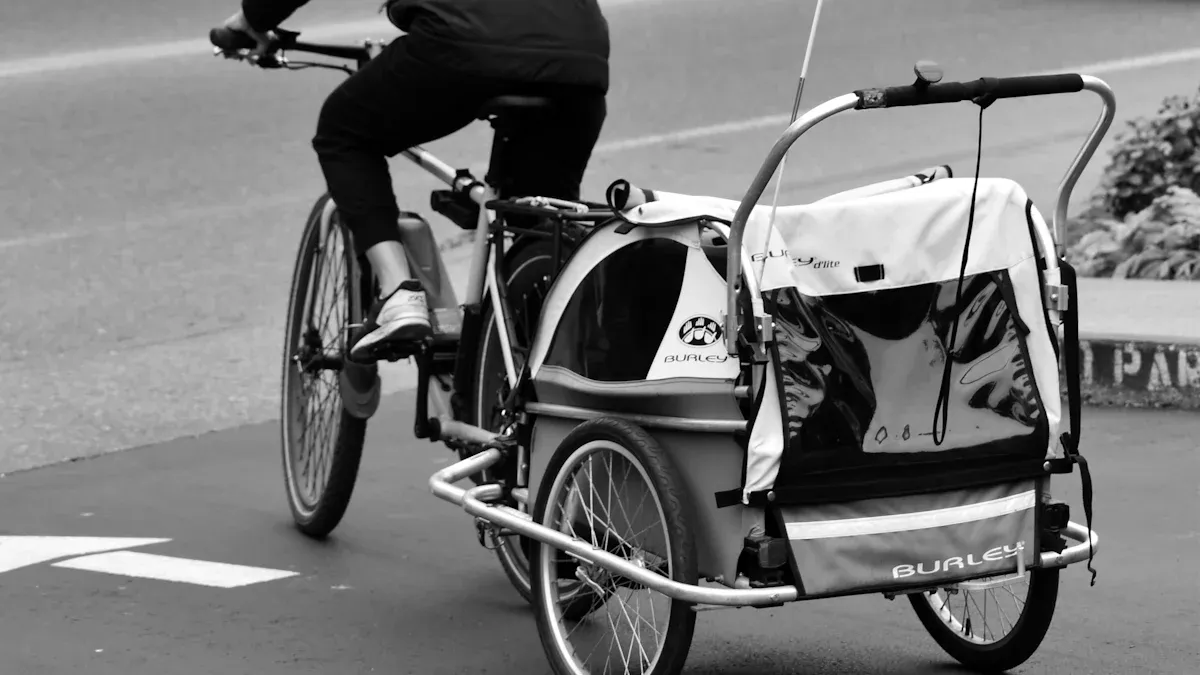
Before installation, you should check whether your trailer and the e-bike bicycle trailer hitch match your e-bike. Check whether the hitch is suitable for your axle type. Have all necessary parts and adapters ready. Check the length of the axle. If it is too short, you must replace it. Always attach the hitch to the rear axle. The safety tether offers additional protection. Do a short test ride before the first trip. This way you can see if everything is sitting securely.
Tip: A hitch anti-rotation device prevents the connection from turning or loosening during the ride.
Installation on quick-release
You can easily mount the hitch on quick-release skewers. Open the tension lever. Slide the hitch over the axle. Close the lever again. Check that the hitch is firmly seated. If the thread is too short, use a longer quick-release axle. You do not need any special tools. The assembly can be done in just a few simple steps.
Tools for quick-release skewers:
No special tools required
Possibly a longer axle and hand tools
Mounting on a thru-axle
For thru-axles, you need a torque wrench. Completely remove the thru-axle. Choose an axle with a hitch of the appropriate length. Position the hitch at a 90-degree angle. Tighten the axle with the nut and washer. Check the compatibility of the adapter. Adjust the hitch so that the trailer is connected without tension.
Steps for thru-axle:
Have the hitch and adapter ready
Attach and tighten the hitch
Mounting on a solid axle
Remove the nut from the solid axle. Place the hitch between the axle and the nut. Tighten the nut securely. Check that there is at least 15 mm of thread available. If the thread is too short, use an adapter. For hub gears, a special adapter is recommended to avoid damage.
Checklist for solid axle:
Insert the hitch
Tighten the nut
Use an adapter if necessary
Inspection and security
You should check all connections after assembly. The hitch must not have any play. Tighten all nuts and bolts firmly. Check the safety strap. Test the connection with a short test ride. This ensures that the trailer does not tilt or detach.
Note: Assembly instructions and tutorials will help you with every step. Proper attachment ensures safety on every ride.
Safety

Legal requirements
You must observe important rules when riding with a trailer on an E-bike. These regulations protect you and others in road traffic. Here are the most important points:
Your E-bike must have a maximum speed of 25 km/h. S-pedelecs with higher speeds may not tow a trailer.
You must be at least 16 years old to use a child trailer.
A maximum of two children up to 7 years old may sit in the trailer. They must be buckled up. A helmet is recommended.
The trailer needs a secure hitch, suspension, and straps.
The connection between the bicycle and the trailer must be firm. Detachment while riding must not happen.
You must not exceed the permissible total weight of the E-bike and trailer. The limit is usually 250 kg.
Separate weight limits and construction regulations apply to cargo trailers.
Your trailer must meet the DIN EN 15918 standard and bear a GS or TÜV seal.
Lighting and reflectors are mandatory so that you are clearly visible in traffic.
Tip: Check the details in your vehicle registration and comply with the StVZO (German Road Traffic Licensing Regulations). This keeps you on the safe side.
Theft protection
You can protect your trailer and the hitch from theft using various measures. The following table shows the protection levels and suitable methods:
Protection level |
Measure |
Description |
|---|---|---|
Low protection |
Plug lock, lock cylinder |
Protects only against opportunistic thieves. |
Medium protection |
Box lock with locking bolt |
Hardened steel, better protection, placed over the hitch. |
High protection |
Certified trailer locks |
High-quality materials, often required by insurers, maximum protection. |
Further tips:
Use lockable systems and sturdy frame mounts.
Choose a secure parking spot, for example, a garage.
Reflectors and lighting increase visibility and deter thieves.
Maintenance
Regular maintenance extends the lifespan of your hitch and ensures safety. You should observe the following steps:
Clean the hitch roughly with water and a soft brush.
Wash it with warm water and a mild detergent.
Dry all parts well. Lubricate moving parts and protect them from rust.
Regularly check all bolts, straps, and clamps.
Always comply with the maximum load capacity and the assembly instructions.
Note: Check that the connection is firm before every ride. This prevents accidents and ensures you stay safe on the road.
Pay attention to the following points during purchase and assembly:
Always check the compatibility of the hitch, axle, and frame.
Choose a robust, tested hitch system suitable for your E-bike.
Observe the manufacturer's approval and permissible weight limits.
Comply with the DIN EN 15918 standard and regularly check all connections.
Regular maintenance and compliance with traffic rules ensure maximum safety – especially when traveling with children or animals.
FAQ
Can I mount any bicycle trailer to my E-bike?
You can mount many trailers to your E-bike. Always check whether the hitch and axle fit together. Pay attention to the permissible weight and the manufacturer's specifications. Not every trailer is suitable for every E-bike.
Do I need special tools for assembly?
Usually, simple tools like an Allen key or a torque wrench are sufficient. For thru-axles, you sometimes need a suitable adapter. Most manufacturers provide instructions.
How often should I check the hitch?
You should check the hitch before every ride. Ensure it is firmly seated and secure all bolts. Check regularly for wear or rust. This is how you ride safely.
Am I allowed to tow a trailer with an S-pedelec?
No, you are not allowed to use a trailer with an S-pedelec. Traffic regulations only permit trailers on E-bikes with a maximum speed of 25 km/h. S-pedelecs are too fast and are not approved for this.
What should I do if the hitch does not fit?
First, check the axle type and the hitch mount. Many manufacturers offer adapters. Ask your specialist retailer for suitable solutions. This way, you will quickly find the right connection for your E-bike.