
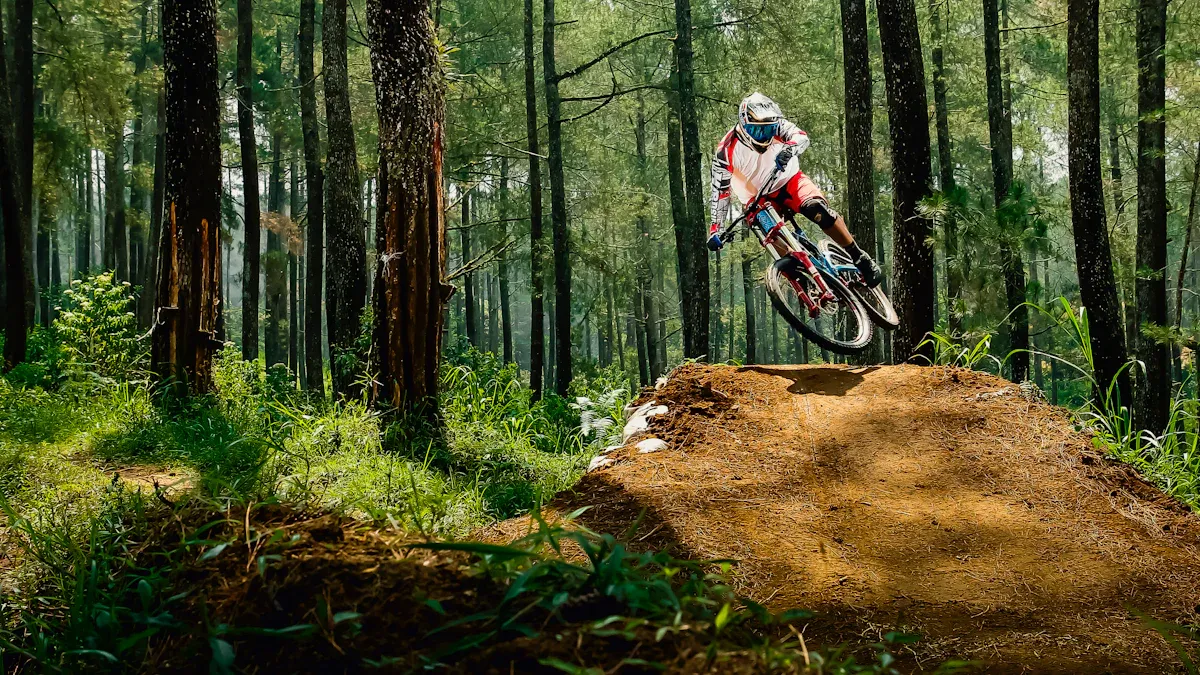
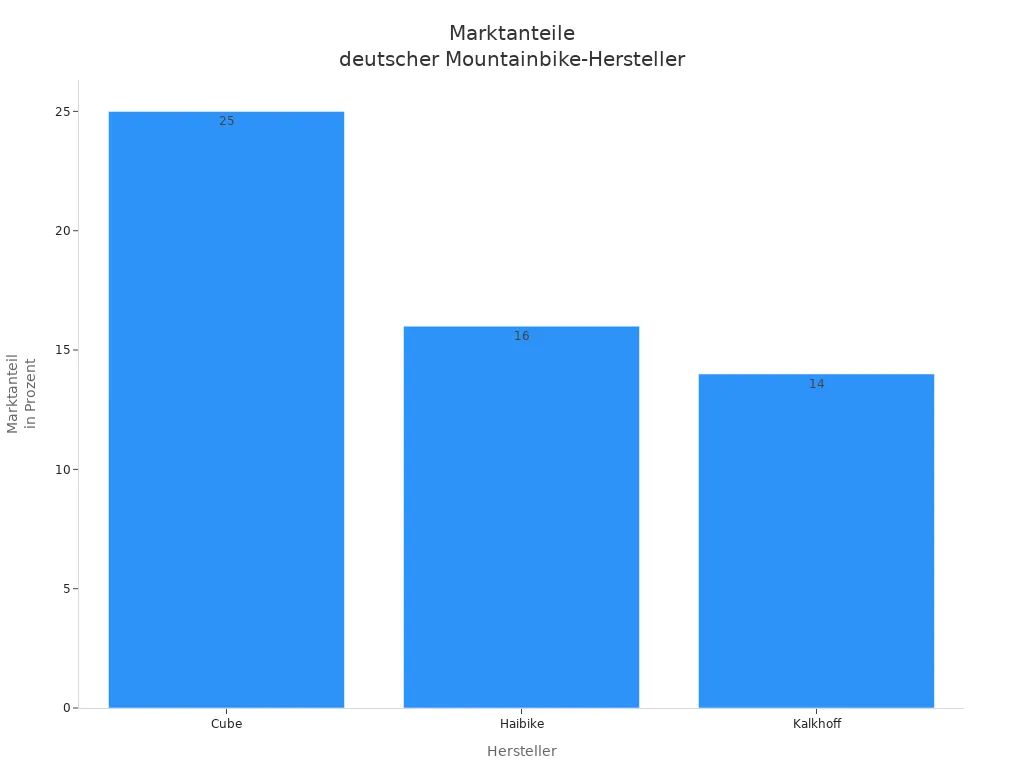
Which mountain bike is right for you? In Germany, more and more people are choosing an electric-assisted mountain bike. E-mountain bikes now account for around 40% of the e-bike segment, while classic mountain bikes are becoming less common. The most popular brands like Cube and Haibike offer many variants for different requirements.
You can find mountain bikes for almost any terrain and riding style. New models offer you technology, comfort, and fun – whether you are a beginner or already have experience.
Key takeaways
Choose your mountain bike to suit your riding style and terrain so you can have more fun and safety while riding.
Pay special attention to the correct frame size, as it ensures comfort and good control on the bike.
Compare equipment and material carefully to find a lightweight, safe, and durable mountain bike.
Always take a test ride and seek advice from experts to discover the perfect model for you.
Invest in good accessories like a helmet, lock, and lights to be safe and relaxed on the road.
Mountain bike – choosing made easy
Decision-making factors
Would you like to buy a mountain bike? Then you should consider a few important points to ensure you find the right model. Many buyers underestimate the huge selection and technical differences. They often don't pay enough attention to the correct wheel size, the appropriate frame size, or the bike category for their intended use. Especially when buying online, you rarely check the fit thoroughly because a test ride is missing. The decision between a full-suspension bike and a hardtail is often difficult. Full-suspension bikes offer more comfort and safety, but are more expensive and require more maintenance. Hardtails are lighter and cheaper. Your budget plays a major role, as does the availability of the models. You should always get advice and compare the most important factors.
Here you will find an overview of the most important decision-making factors:
Factor |
Description |
|---|---|
Frequency of use |
How often you use the mountain bike |
Terrain |
Whether you ride on flat paths, mountains, or trails |
Riding style |
Cross-country, trail, downhill, or all-mountain |
Suspension |
Front suspension or full suspension |
Frame material |
Steel, aluminum, or carbon |
Wheel size |
26, 27.5, or 29 inches – affects agility and rollover characteristics |
Gearing |
Number of gears and quality |
Weight and handling |
Lightweight bike for better control |
Bike size |
Appropriate frame size for comfort and control |
Budget |
How much money you want to invest |
Accessories & safety |
Additional equipment like disc brakes |
Tip: The right frame size is especially important. Tools like the Perfect Positioning System help you find the optimal size. This ensures you sit comfortably and have full control over your bike.
Riding style and terrain
Your riding style and the terrain determine which mountain bike suits you. If you mostly ride on flat or hilly paths, a hardtail or a lightweight E-MTB is suitable. These bikes are efficient and roll easily over obstacles with large 29-inch wheels. For technical, rocky terrain, you need a full-suspension bike with long travel. It offers you better traction and control. If you love steep descents, choose a downhill bike with maximum suspension travel and strong brakes. For soft surfaces like snow or sand, fat bikes with wide tires are ideal. E-mountain bikes help you on long distances and steep climbs.
Components also play a big role. Aluminum frames are light and robust, carbon frames are even lighter and stiffer. Hydraulic disc brakes ensure safety on challenging trails. You should coordinate all these features with your riding style and the terrain so that you have fun and comfort while riding.
Mountain bike types
Hardtail
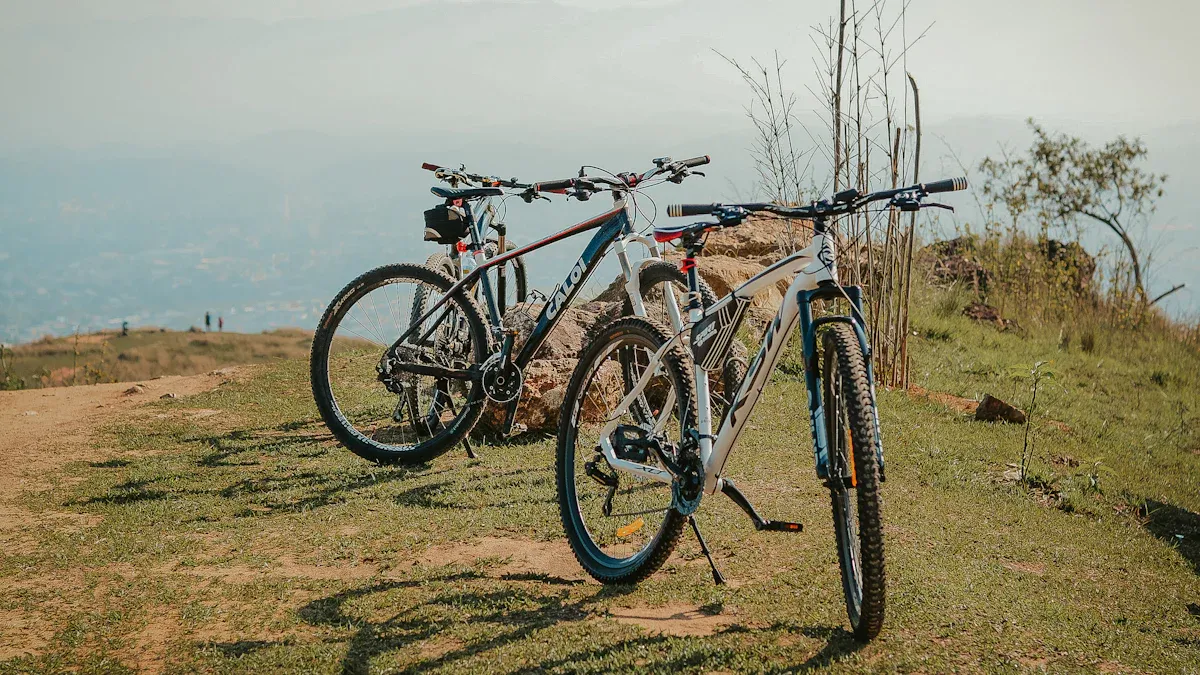
A hardtail only has suspension at the front. This makes the bike lighter, cheaper, and lower in maintenance. You benefit from direct power transmission and a sporty riding feel. Hardtails are particularly suitable for long tours, cross-country routes, and firm paths. They are ideal for beginners and anyone looking for an uncomplicated mountain bike.
Tip: Hardtails are perfect if you value efficiency and a low weight.
Full-suspension (Fully)
Full-suspension bikes (Fullies) have suspension on the front and rear wheels. This ensures more comfort and control on uneven terrain. You can master technical trails, roots, and rocks more safely. Full-suspension bikes are more expensive and heavier than hardtails, but offer more riding pleasure and safety on demanding descents.
Cross-country
Cross-country bikes are light, agile, and designed for speed. They usually have 100–120 mm of suspension travel and often a stiff carbon frame. You use them for fast rides on forest paths, gravel, and easy trails. The sporty riding position helps you ride efficiently and master steep climbs as well.
Feature |
Cross-country mountain bike |
|---|---|
Weight |
Very light |
Suspension travel |
100–120 mm |
Frame material |
Carbon or aluminum |
Usage area |
Racing, fast trails, tours |
Trail
Trail bikes are true all-rounders. They offer you a suspension travel of 120–150 mm and are suitable for varied tours. You can ride efficiently uphill with them and have a lot of control downhill. Trail bikes are suitable for beginners and advanced riders looking for a versatile bike for different routes.
All-mountain
All-mountain bikes combine versatility with riding fun. They usually have 130–160 mm of suspension travel and are lighter than enduro bikes. You use them for longer tours, challenging trails, and small jumps. The geometry ensures agility and good climbing properties.
Enduro
Enduro bikes are built for fast, technical descents and jumps. They offer you up to 180 mm of suspension travel and robust components. You benefit from high stability and safety on difficult trails. Enduro bikes are heavier but ideal if you are often out in rough terrain.
Downhill
Downhill bikes are specialists for steep, extremely demanding descents. They have a very stable frame, up to 250 mm of suspension travel, and strong brakes. You usually use them in the bike park or on special downhill tracks. They are difficult to ride uphill, but offer maximum control downhill.
Fatbike
You can recognize fat bikes by their extremely wide tires. These offer you a lot of grip on snow, sand, or mud. The tires often handle the damping so that you can ride comfortably even without suspension. Fat bikes are ideal if you want to explore new paths off of established trails.
E-mountain bike
E-mountain bikes support you with an electric motor. This makes it easier for you to master steep climbs and long tours. In Germany, e-mountain bikes are particularly popular and make up a large part of the market. They are suitable for anyone who rides longer distances or is more frequently in the mountains.
Characteristics of mountain bikes
Suspension
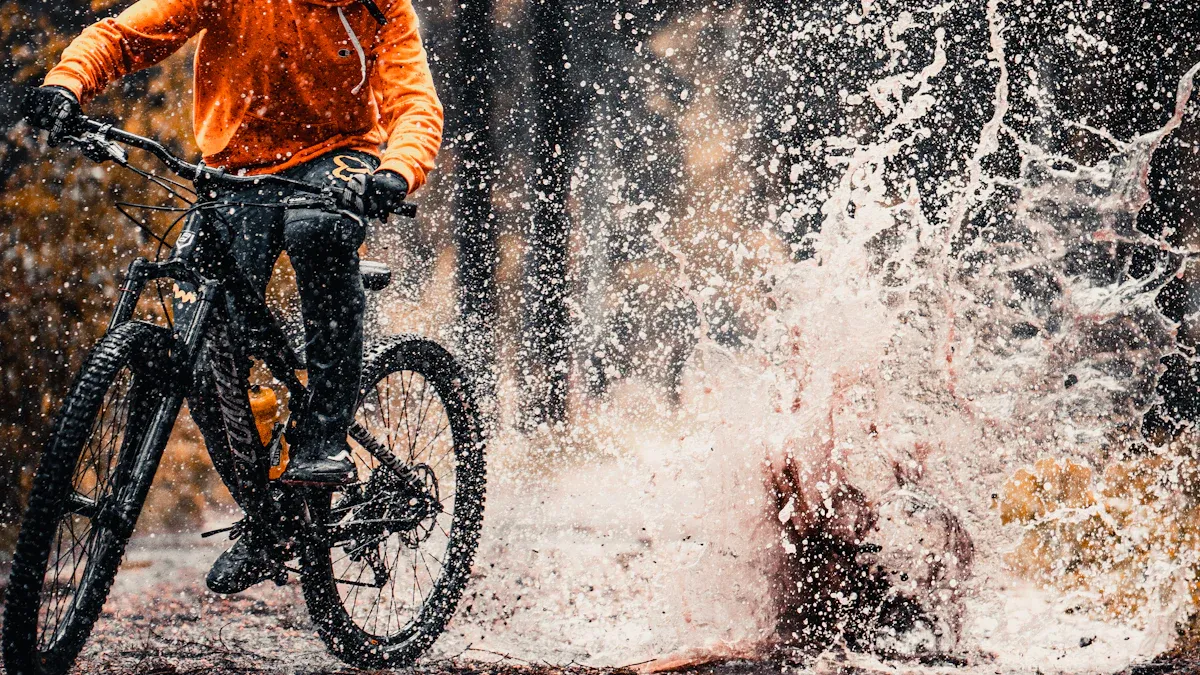
The suspension determines how comfortably and safely you ride in terrain. It absorbs shocks and ensures that your tires always maintain contact with the ground. A hardtail only has a suspension fork at the front. That is enough for easy trails and tours. A full-suspension bike also has rear-wheel suspension. With this, you can also master rough roots and stones. Modern suspension systems can often be locked so that you don't lose energy uphill. Air suspension systems are light and can be individually adjusted. Steel springs offer a particularly sensitive response but are heavier. Good suspension increases control, comfort, and safety on every trail.
Frame material
The frame material influences the weight, stiffness, and durability of your bike. Aluminum is light, robust, and inexpensive. Carbon is even lighter and very stiff, but more sensitive to falls and more expensive. Steel frames are durable and comfortable but weigh more. Titanium is considered particularly noble, but is rare and expensive.
Frame material |
Advantages |
Disadvantages |
|---|---|---|
Aluminum |
Light, cheap, does not rust |
Transmits vibrations more strongly |
Carbon |
Very light, stiff, comfortable |
Expensive, sensitive |
Steel |
Robust, durable, comfortable |
Heavier, can rust |
Titanium |
Durable, low-maintenance |
Very expensive |
Wheel size
The wheel size influences how your mountain bike rides. Large 29-inch wheels roll more easily over obstacles and offer a lot of stability. They are suitable for long tours and tall riders. 27.5-inch wheels are more agile and accelerate faster. They offer space for wider tires and more grip. Some bikes combine both sizes: 29 inches at the front for stability, 27.5 inches at the rear for agility.
Tip: Choose the wheel size to match your riding style and body height.
Tire tread
The tire tread provides contact with the ground. Knobby tires offer a lot of grip on loose surfaces. A fresh tread on the front tire is especially important for safety. Worn-out knobs reduce traction, especially in curves and when braking. Different profiles are suitable for different conditions: coarse knobs for mud, fine ones for dry trails.
Brakes
Modern mountain bikes mostly use hydraulic disc brakes. They offer strong braking power, even in wet and muddy conditions. The size of the brake discs varies depending on the intended use. Larger discs provide more braking performance. Rim brakes can almost only be found on older or very cheap models today. For challenging terrain, disc brakes are the best choice.
Handlebar width
The handlebar width influences how safely you can steer your bike. A wide handlebar gives you more control and stability, especially on technical trails. Narrower handlebars make the bike more agile, for example in tight curves. The correct width depends on your riding style and shoulder width. A wide handlebar with a short stem ensures a direct, stable steering feel.
A suitable handlebar improves your control and makes riding safer and more enjoyable.
Finding the perfect model
The best way to select the right mountain bike is to follow a step-by-step approach. This will help you find a model that fits your riding style, budget, and requirements.
Analyzing your riding style
First, you should clarify your riding style and intended use. Think about whether you prefer riding on forest paths, in the mountains, on trails, or for daily commuting. Different types of mountain bikes offer different advantages:
Hardtail and cross-country bikes are particularly suitable for beginners. They are lightweight, efficient, and low-maintenance.
Full-suspension, trail, and enduro bikes offer more comfort and control on demanding terrain.
Fatbikes are ideal for snow and sand, while e-mountain bikes support you on long tours and climbs.
Tip: The better you know your riding style, the easier it is to find the right mountain bike for you.
Setting a budget
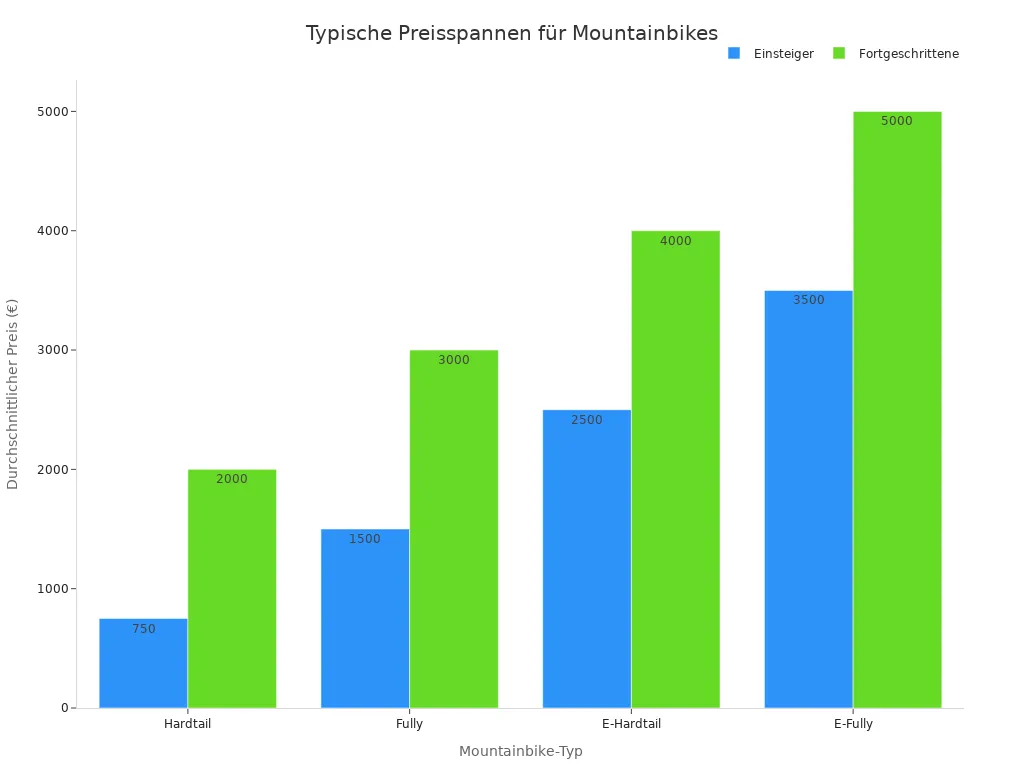
Set a realistic budget. The price range for mountain bikes is wide and depends on features, materials, and technology. Beginners can find solid models starting at 500 euros. Advanced riders often invest more for better components and lower weight.
Mountain Bike Type |
Beginner (price range) |
Advanced (price range) |
|---|---|---|
Hardtail |
€500 – €1000 |
€1000 – €3000 |
Full-suspension |
€1000 – €2000 |
€2000 – €4000 |
E-Hardtail |
€2000 – €3000 |
€3000 – €5000 |
E-Full-suspension |
€3000 – €4000 |
€4000 – €6000 |
An example of an affordable and versatile beginner bike is the Rockrider Race 720. It costs about 1299 euros and features an aluminum frame, a suspension fork with 100 mm of travel, and a modern 1x12 drivetrain.
Comparing features
Carefully compare the features of different models. The most important components influence handling and maintenance:
Drivetrain: Modern 1x or 2x drivetrains with 10–12 gears offer you a wide range.
Brakes: Hydraulic disc brakes ensure safety in any weather.
Tires: Wide, knobby tires with a diameter of 27.5 or 29 inches offer plenty of grip.
Wheels: Lightweight and stable wheels improve handling.
Suspension: Hardtails only have front suspension, while full-suspension bikes have it front and rear.
Frame: Aluminum, carbon, or titanium affect weight and comfort.
Handlebar and stem: Wide handlebars (72–80 cm) and short stems increase control.
Geometry: The head tube angle and frame shape determine how agile or smooth your bike rides.
Make sure the features match your riding style and the intended terrain.
Choosing the frame size
The correct frame size is crucial for comfort and safety. Here is how to find it:
Measure your inseam: Stand barefoot with your back against a wall and hold a book between your legs.
Measure from the top edge of the book to the floor – that is your inseam.
Multiply your inseam by 0.574 to calculate the frame size in centimeters.
Alternatively, multiply your inseam by 0.226 to get the frame size in inches.
Test different frame sizes, as the optimal size also depends on the area of use.
Size charts offer orientation, but individual measurement is more accurate.
Tip: Try out different sizes to find the best riding feel.
Test ride and consultation
A test ride is essential before you make a decision. This is how you feel directly whether the bike suits you. Experts recommend:
Schedule appointments at several dealers to test different models.
Check the seating position, riding feel, and handling.
Test the drivetrain, brakes, and suspension on different surfaces.
Get advice from a specialist dealer—they will ask about your riding style, budget, and intended terrain.
Include accessories like a helmet, pedals, and a lock in your budget.
Ask about discounts and services such as suspension tuning or component adjustments.
Choose consultation appointments outside of peak hours so you can test in peace.
A good dealer will take their time and help you find the perfect model.
Tips for making your decision
Avoiding mistakes
Many people make typical mistakes when buying a mountain bike. You can easily avoid these if you are attentive. Here are the most common pitfalls:
Choosing the wrong frame size: A bike that is too big or too small is unsafe to ride. Measure your inseam precisely and try out different sizes.
Focusing too much on appearance: A cool design looks good, but it won't help you if the bike doesn't suit your riding style.
Choosing cheap components: Don't skimp on brakes or the drivetrain. Good technology ensures safety and riding fun.
Not taking a test ride: Always test the bike before buying. It's the only way to know if it really suits you.
Forgetting accessories: Without a helmet, lock, or lights, you are not riding safely.
Tip: Don't be blinded by sales offers. Quality always pays off!
What to watch out for?
You should pay attention to a few important points when buying. These will help you find the best mountain bike for you:
Fit: The bike must match your body height.
Weight: A lighter bike is easier to control.
Suspension: Choose suspension suitable for the terrain.
Brakes: Hydraulic disc brakes offer more safety.
Service: A good dealer offers advice and maintenance.
Criterion |
Why is it important? |
|---|---|
Fit |
More comfort and control |
Weight |
Easier handling |
Brakes |
Safety in any weather |
Service |
Longer bike lifespan |
Accessories
The right accessories make your riding experience safer and more enjoyable. You should pay attention to these items:
Helmet: Protects your head in the event of a fall.
Lighting: Makes you visible in the dark.
Lock: Secures your bike against theft.
Cycling gloves: Improve grip and protect your hands.
Water bottle: Keeps you hydrated on long rides.
Multitool: Helps you with minor repairs on the go.
Always remember: With the right accessories, you'll be safer and have more fun on the trail! 🚴♂️
You have now learned the most important criteria for choosing your mountain bike. Pay attention to frame size, features, and your riding style. Test different models and get tips from a specialist dealer. With the right knowledge, you'll quickly find the right bike. Look forward to exciting tours and a safe riding experience—your new adventure is already waiting! 🚵♀️
FAQ
How do I find the right frame size for my mountain bike?
Measure your inseam and calculate it using a formula. Many dealers offer online calculators. You can also take a test ride. This way, you'll feel whether the bike suits you.
What is the difference between a hardtail and a full-suspension bike?
A hardtail only has front suspension. A full-suspension bike has suspension at the front and rear. You get more comfort on difficult paths with a full-suspension bike. A hardtail is lighter and cheaper.
How often should I service my mountain bike?
You should check your bike regularly. Inspect the brakes, chain, and tires after every ride. A service at a specialist dealer is recommended once a year.
Do I need an expensive mountain bike for beginners?
No, you can start with an affordable model. Pay attention to good brakes and the correct frame size. You can upgrade later once you have more experience.
Which accessories are important for mountain bikers?
A helmet always protects you. Gloves, a water bottle, and a lock are also part of the equipment. For longer tours, a multitool for minor repairs is recommended.